
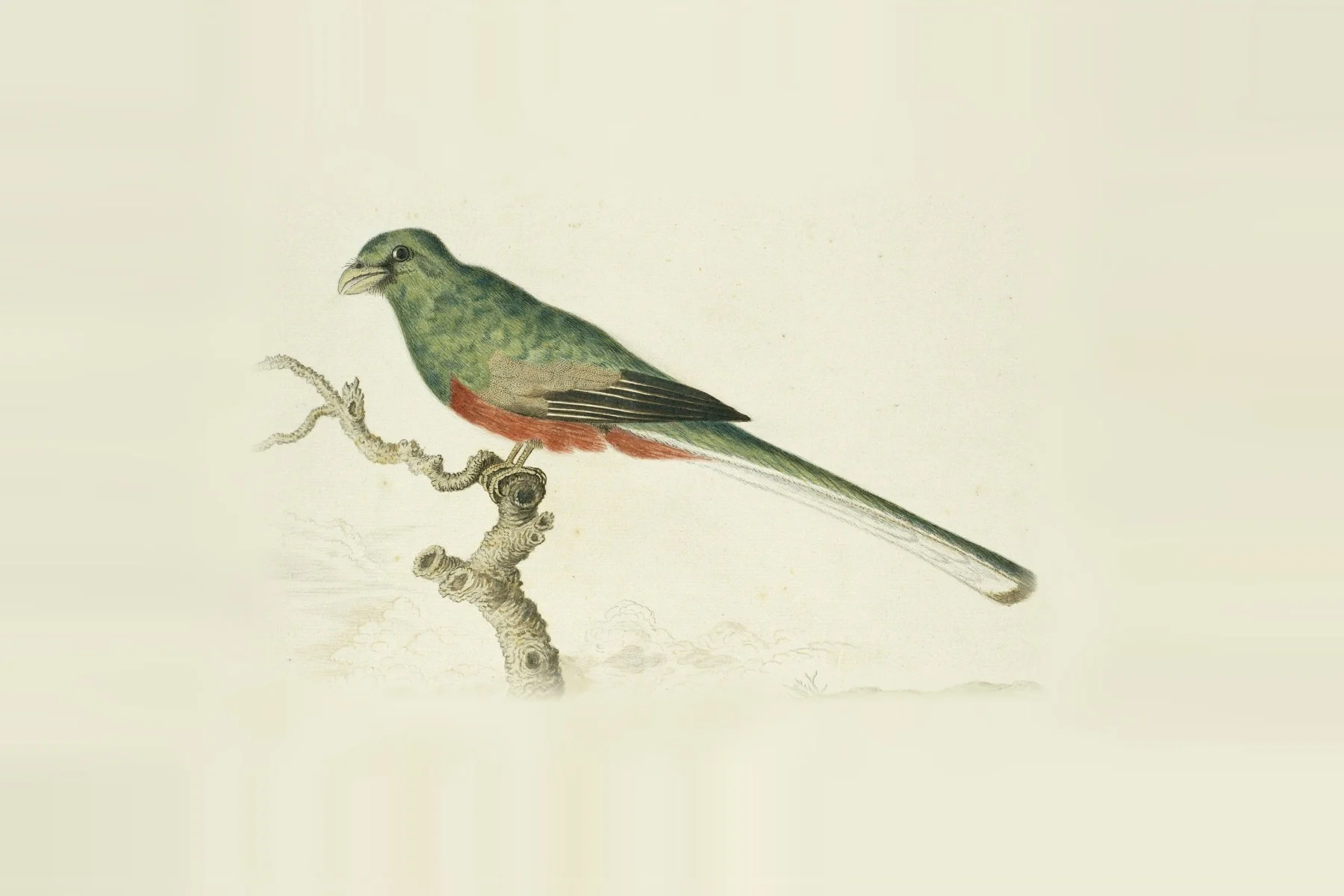
Where to See a Narina Trogon
A red and green forest bird that vanishes the moment it turns its back. Where to look from South Africa northwards, finding one by its call, and the stays beside its forests.
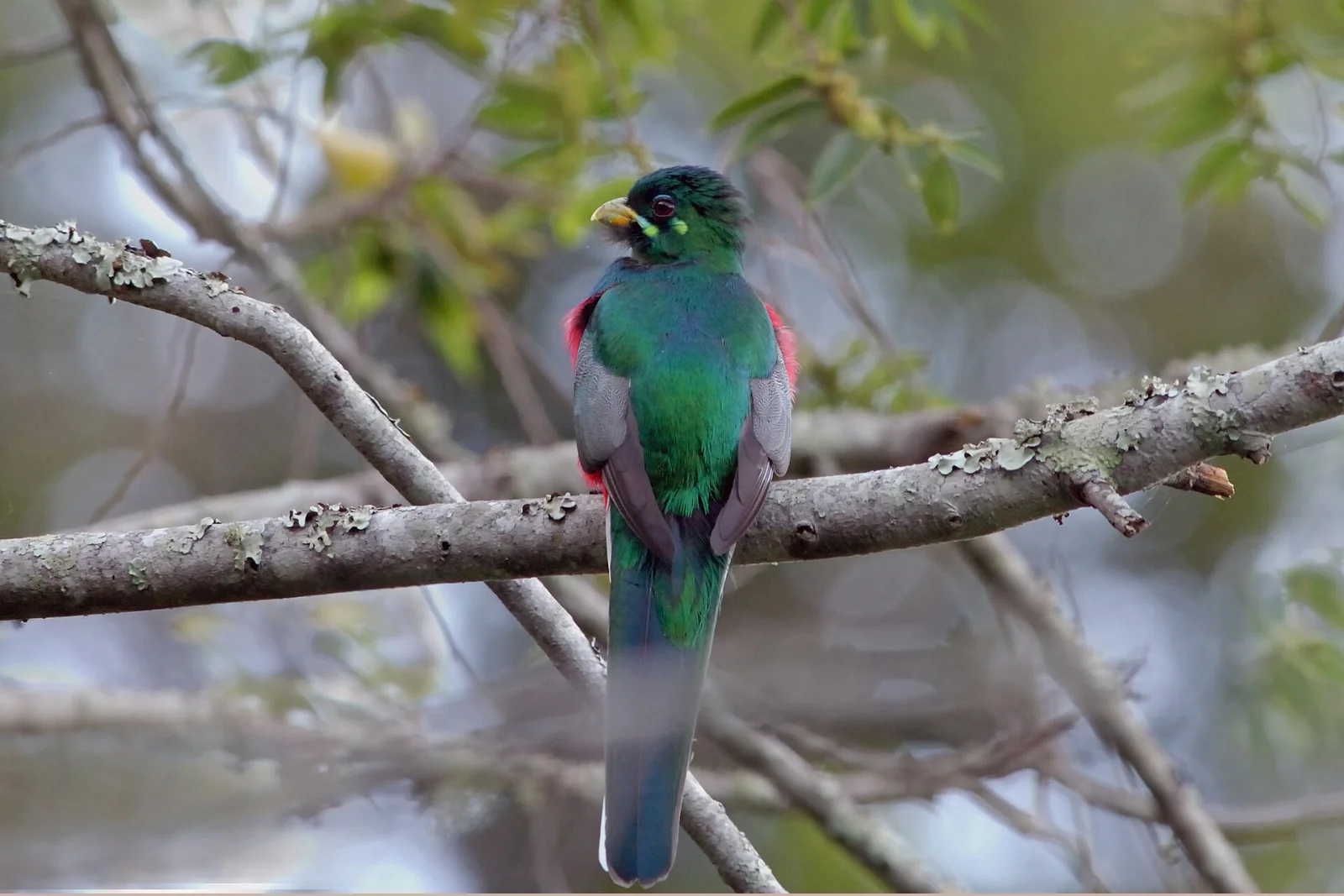
A male Narina Trogon is bright red below and green above, yet a bird that colourful is easy to miss in a forest, because from behind it is a green shape among green leaves. All that red is on the side facing away from you, which seems unfair. The call, a low hoot that only the male gives, is the best way to find one. In effect, the bird has to tell you where it is.
The species is widespread, from Sierra Leone and Ethiopia south to the eastern side of South Africa, and is listed as Least Concern. In South Africa it is a bird of forest and thick riverine woodland, and every site below is a place where BirdLife South Africa’s GoBirding guides, a park authority or the lodge itself names it.
What you are looking for
The Narina Trogon is 32 to 34 cm long. Both sexes are green above, with a metallic blue-green gloss on the tail, and the 3 outer tail feathers on each side are tipped and edged white, so a perched bird seen from below shows a pale undertail. The male is bright red below, with bare green skin at the gape and around the eye. The female has a brown face and chest, blue skin around the eye and a duller red belly. Young birds look like females but have white tips to the inner wing feathers, a detail that matters only once you have actually found one.
It eats mainly insects and other small invertebrates, with the odd small rodent or reptile, and nests in a tree hollow. The name comes from a Khoi word for flower, recorded by the French explorer François Levaillant (for once, a bird’s name that flatters it), and the type specimen of the nominate race came from Knysna.
Some populations stay put all year. Others move, and birds from higher ground drop to lower levels seasonally, which is one reason a forest that is quiet in one month can hold a calling male in another. Trogons do not leave a forwarding address.
How to listen for it
The call is the way in, and it sounds rather less glamorous than the bird looks. It is a low, grating hoot, repeated in a short series, and only the male gives it, to hold a territory or attract a mate. While he calls, he puffs out a bare blue-green patch of skin on his throat, and both sexes may fluff out the breast feathers in display. Subtle it is not, once you are close enough to see it.
- Walk slowly and stop often. On a forest trail, pause and listen, and note the direction of any series of hoots before you move towards it.
- Check the perches below the crown. A canopy hide or boardwalk, such as those at Grootvadersbosch and Dlinza, lets you look into the mid levels of the forest rather than up at them.
- Look for the tail. From below, the white outer tail feathers show as a pale panel under a green bird.
- Use a guide where one is offered. Several of the stays below have guides who lead birding walks on their own ground.
The forest sites in South Africa
Woodbush and Magoebaskloof, Limpopo
GoBirding calls the Woodbush Forest Drive one of the best forest birding sites in Limpopo, if not the country, and lists Narina Trogon among its forest birds with Black-fronted Bushshrike, Cape Parrot, Orange Ground Thrush and Green Twinspot. The drive is on gravel and needs good clearance, though the forest is worth the rattling. Our Magoebaskloof birding guide covers the route.
Magoebaskloof Birders’ Cottages are 3 self-catering cottages on Dragonwyck Farm, about 2 km down a dirt road off the R71. The farm has a hide in its own house forest, forest trails and a feeding table at the cottage called Narina, which sets the right expectations, and names Narina Trogon on its list of 152 species. It is BirdLife Recommended, from R580 per person sharing a night from March 2026 to February 2027. Kuhestan Organic Farm has self-catering studios and cottages beside Woodbush Forest Reserve, about 45 minutes from Tzaneen, arranges guided birding with a local guide and names Narina Trogon from its forest edge.
The Soutpansberg and the escarpment
Leshiba Wilderness is on the Soutpansberg, 36 km west of Louis Trichardt, with bushveld and mountain forest. Its list has 214 species, among them Narina Trogon, Crowned Eagle and Knysna Turaco, and guided walks include birding, though they depend on the season and the guide roster. A high-clearance vehicle or the lodge’s mountain transfer is needed to reach reception.
In Mpumalanga, BirdLife’s Below the Escarpment route from Dullstroom lists Narina Trogon in its top 10 (see Dullstroom and the Mpumalanga grasslands). Mbizane Escarpment Retreat in Schoemanskloof is BirdLife Recommended, with 2 lookout towers, guided hikes booked at reception and a list of 93 forest and cliff birds that includes Narina Trogon.
Grootvadersbosch, Western Cape
Grootvadersbosch Nature Reserve is near Heidelberg in the Overberg. CapeNature says more than 196 species are regularly seen there, including Narina Trogon, Crowned Eagle and Striped Flufftail, and the reserve has 2 hides in the indigenous forest, built to look into and over the canopy, precisely where a trogon would rather you did not look. Grootvadersbosch Cabins are CapeNature’s self-catering cabins inside the reserve, reached through Suurbraak off the N2 east of Swellendam and then on gravel.
The Garden Route forests
GoBirding’s guide to the Diepwalle, Kom se Pad and Gouna loop above Knysna calls the Forest Decks campsite a very good spot for Narina Trogon. Knysna, below the loop, is where the type specimen came from, so the bird has deep roots on the Garden Route. On the Crags plateau, the small forest patch behind Nature’s Way Farm Stall holds the species, with a free permit and map from the farm stall. GoBirding’s Tsitsikamma page also lists it. Our Garden Route birding guide has the route, the permits and the fees.
Eastern Cape thicket and river forest
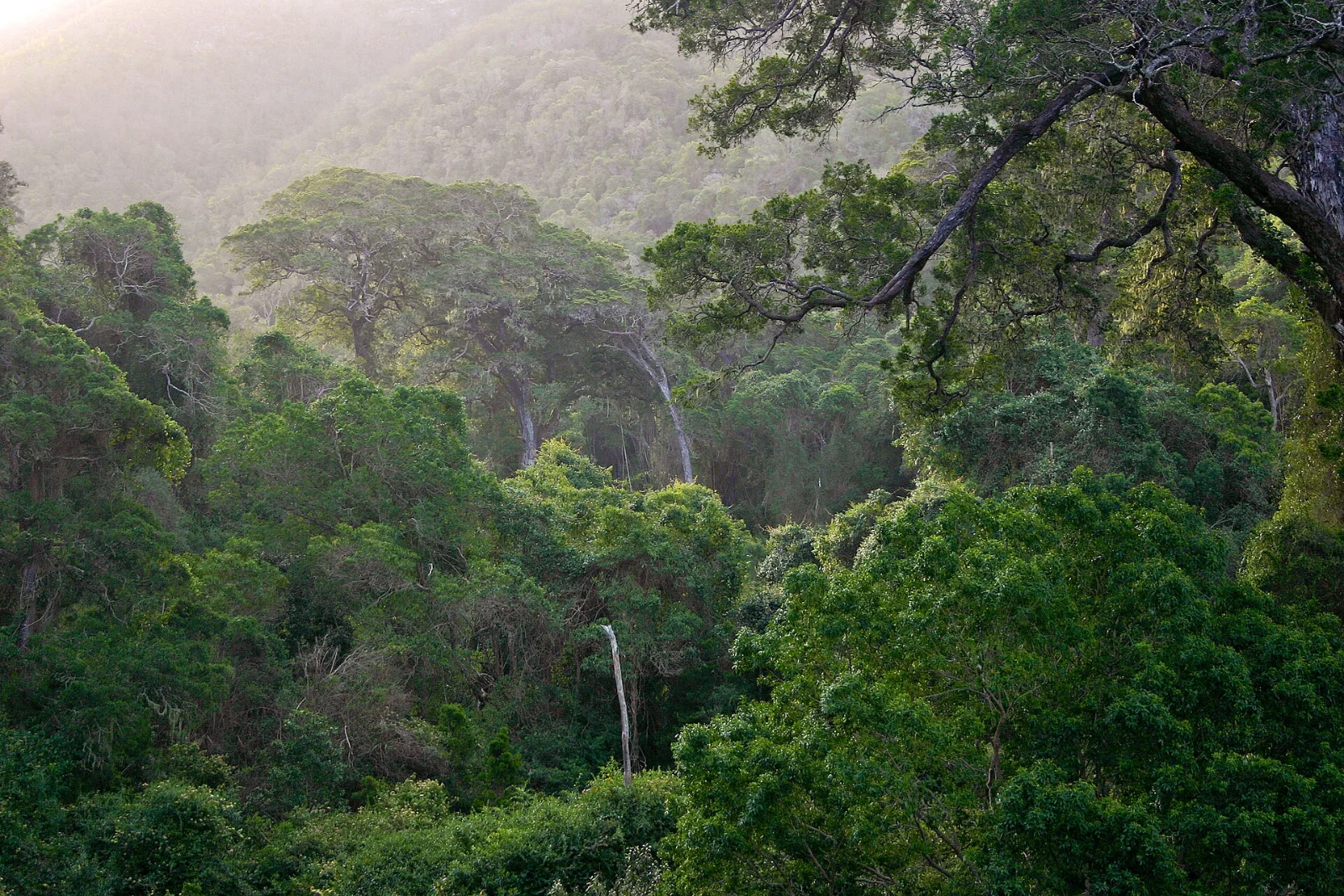
Two listed reserves name the bird, and both have the thick forest it likes. Kariega Game Reserve, near Kenton-on-Sea, publishes a list of more than 350 species with Narina Trogon, African Finfoot and Giant Kingfisher, has indigenous forest along its rivers and invites guests to ask rangers for bird-focused outings. It is fully inclusive, from R7,600 per person sharing a night at Main Lodge in the May to August 2027 low season. RiverBend Lodge, on a private concession inside Addo Elephant National Park, is BirdLife Recommended, has a bird hide and runs specialist birding drives; it names Narina Trogon and Knysna Turaco from its riverine bush and Albany thicket, from R5,800 per person a night, bed and breakfast, May to September 2027.
Durban and southern Zululand
Near Durban, GoBirding lists Narina Trogon at Krantzkloof Nature Reserve in Kloof and at Umdoni Park on the South Coast. At Eshowe, the Dlinza Forest Aerial Boardwalk runs 125 m through the canopy to a tower 20 m high, and GoBirding names Narina Trogon there with Crowned Eagle and both hornbills. It is the rare chance to look a forest bird in the eye rather than up its tail. See birding near Durban.
St Lucia and Mkhuze
In iSimangaliso, GoBirding lists Narina Trogon on the iGwalagwala trail at St Lucia village, with Livingstone’s Turaco and Green Malkoha. At Mkhuze, the guided fig forest walk beside Nsumo Pan, limited to 8 people and booked at reception, targets Narina Trogon and Green Malkoha, 2 birds that share a talent for keeping out of sight. Our Zululand guide has the details.
Malkoha Lake St. Lucia on the Kwa-Nibela Peninsula is BirdLife Recommended, with sand forest and coastal woodland, a small photography hide and guides who lead birding walks and can look for requested species; Narina Trogon is on its list. Emdoneni Lodge, at Bushlands near Hluhluwe, names Narina Trogon, African Broadbill and Pink-throated Twinspot, suggests birding from its verandas and on the farm’s walk, and starts at R1,215 per person sharing, bed and breakfast.
Pafuri, Kruger
GoBirding’s list for the tall riverine forest on the Luvuvhu includes Narina Trogon, and SANParks lists it at the Pafuri Picnic Site, where you may get out of the car, a rare freedom in Kruger. Pafuri Camp is on the river in the Makuleke concession and BirdLife Recommended, though flood damage means you should confirm which tents are open. Baobab Hill House, near Pafuri Gate, offers bird-focused walks and drives and private guiding. More in Pafuri: Kruger’s northern birding hotspot.
At a glance
| Site | Habitat | How you bird it | Stay nearby |
|---|---|---|---|
| Woodbush, Magoebaskloof | Afromontane forest | Gravel forest drive, farm hide | Magoebaskloof Birders’ Cottages, Kuhestan |
| Grootvadersbosch | Indigenous forest | 2 canopy hides | Grootvadersbosch Cabins |
| Diepwalle and the Crags | Afromontane and coastal forest | Forest Decks campsite, farm stall patch | None listed yet |
| Dlinza, Eshowe | Coastal scarp forest | Aerial boardwalk and tower | None listed yet |
| St Lucia and Mkhuze | Coastal and fig forest | iGwalagwala trail, guided fig forest walk | Malkoha Lake St. Lucia, Emdoneni |
| Pafuri, Kruger | Riverine forest | Picnic site on foot, lodge walks | Pafuri Camp, Baobab Hill House |
Further north
The range runs north to West Africa and Ethiopia, and several listed camps beyond South Africa name the bird.
In Zimbabwe’s Mana Pools, Mhara River Camp has 6 tents on a private concession above the Chitake River, with guided birding walks and bird baths in view of the patios. It names African Pitta and Narina Trogon and gives November to April as its season. Mana Pools Safari Lodge, 12 chalets on the floodplain about 15 km upstream of Nyamepi, lists Narina Trogon among the birds seen often around it. See Mana Pools birding.
In Malawi, Bua River Lodge has safari tents on and beside the Bua River in Nkhotakota Wildlife Reserve, about 200 km north of Lilongwe. Its guides take guests birding along the river and in the miombo, it reports more than 280 species for the reserve and names Narina Trogon, from US$139 per person, half board.
In Tanzania, the Elephant Caves Trail at Endoro on the Ngorongoro highlands, walked with a local guide, is a forest site where a 2024 Birding Ecotours group recorded the species; the NCAA charges US$17.70 a head for the trail. Our Tanzania birding guide covers it.
When to go
The bird is present all year at most South African sites, but you find it by voice, so go when the males are calling and get onto the trail early. The bird will not come looking for you. Birds from higher ground move to lower levels seasonally, so a highland forest can be quieter in some months than in others. The northern camps that name it give the rains as their birding season: November to April at Mhara River Camp, and November to March for birding at Baobab Hill House.
Where to stay
The places in this guide, with what each offers a birder:
| Place to stay | Where | For birders | From |
|---|---|---|---|
| Magoebaskloof Birders’ Cottages | Dragonwyck Farm, Magoebaskloof | BirdLife Recommended, forest hide, feeding table, 152 species | R580 pp sharing, self-catering |
| Kuhestan Organic Farm | Beside Woodbush Forest, Limpopo | Guided birding with a local guide, forest edge | Ask the lodge |
| Leshiba Wilderness | Soutpansberg, Limpopo | 214 species, Narina Trogon, guided walks include birding | Ask the lodge |
| Mbizane Escarpment Retreat | Schoemanskloof, Mpumalanga | BirdLife Recommended, 2 lookout towers, guided hikes | R3,800 per tent, without breakfast |
| Grootvadersbosch Cabins | Near Heidelberg, Western Cape | 2 forest canopy hides, 196+ species | R1,375 per cabin for 2, self-catering (off peak) |
| Kariega Game Reserve | Near Kenton-on-Sea, Eastern Cape | 350+ species, bird-focused outings on request | R7,600 pp sharing, fully inclusive (2027 low season) |
| RiverBend Lodge | Addo Elephant National Park | BirdLife Recommended, bird hide, specialist birding drives | R5,800 pp B&B (2027) |
| Malkoha Lake St. Lucia | Kwa-Nibela Peninsula, KwaZulu-Natal | BirdLife Recommended, photography hide, guided birding walks | Ask the lodge |
| Emdoneni Lodge | Near Hluhluwe, KwaZulu-Natal | Veranda and farm-walk birding, African Broadbill | R1,215 pp sharing B&B |
| Pafuri Camp | Makuleke, northern Kruger | BirdLife Recommended, on the Luvuvhu River | R8,450 pp sharing all-inclusive |
| Baobab Hill House | Near Pafuri Gate, northern Kruger | Bird-focused walks and drives, private guiding | Ask the lodge |
| Mhara River Camp | Mana Pools, Zimbabwe | Guided birding walks, bird baths, African Pitta | Ask the lodge |
| Mana Pools Safari Lodge | Mana Pools, Zimbabwe | Birdwatching tours, Narina Trogon seen often | Ask the lodge |
| Bua River Lodge | Nkhotakota Wildlife Reserve, Malawi | Guided river and miombo birding, 280+ species | US$139 pp, half board |
Ranges, rates and access change. Facts were checked on 13 November 2026 against BirdLife South Africa’s GoBirding site guides, CapeNature, SANParks and each place’s own website as summarised on its Birding Dispatch listing. Confirm trail access and opening times locally.
More from the Journal
 Woodpeckers of Southern Africa, Including the One That Doesn’t Need TreesSouthern Africa's woodpeckers, from the Cardinal in every bushveld tree to the Ground Woodpecker that lives on treeless mountain slopes and eats almost nothing but ants.
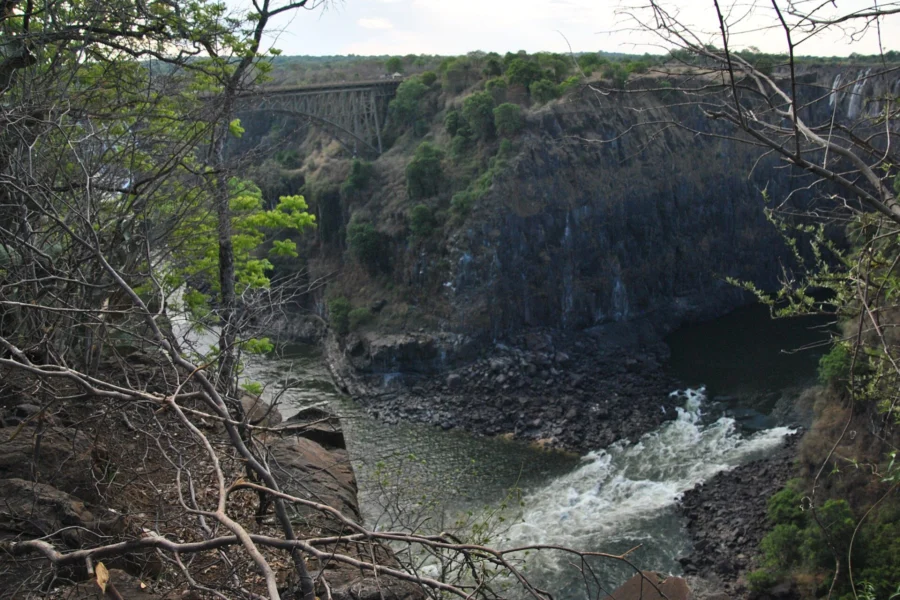 Where to See a Taita Falcon: the Strijdom Tunnel, the Blyde Cliffs and the Batoka GorgeA stocky falcon smaller than a pigeon, a handful of cliffs and surveys that keep coming back empty. Where it still nests, how to look, and the 2 roosts beside its cliffs.
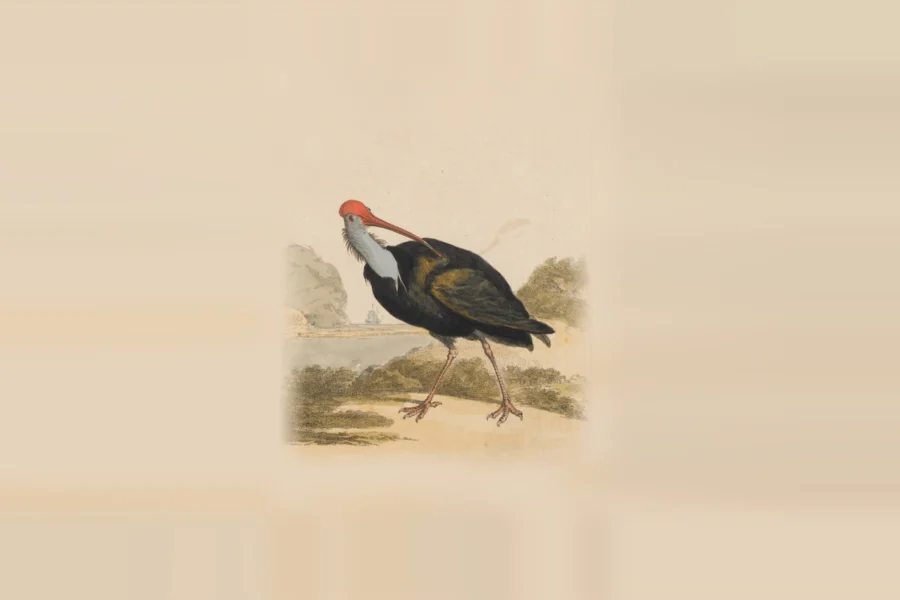 Where to See a Southern Bald Ibis: the Breeding Cliffs, Dullstroom, Wakkerstroom and LesothoA red-capped grassland ibis that nests on cliffs over waterfalls and feeds on burnt veld and maize stubble. The colonies you can watch, the fields to scan, and where to stay.
The Pigeon Post
Every Thursday: 1 bird, 1 place to go and 1 place to stay, by email. Sign up and get our printable checklist of the 163 endemics of southern Africa.