
Woodpeckers of Southern Africa, Including the One That Doesn’t Need Trees
Southern Africa's woodpeckers, from the Cardinal in every bushveld tree to the Ground Woodpecker that lives on treeless mountain slopes and eats almost nothing but ants.
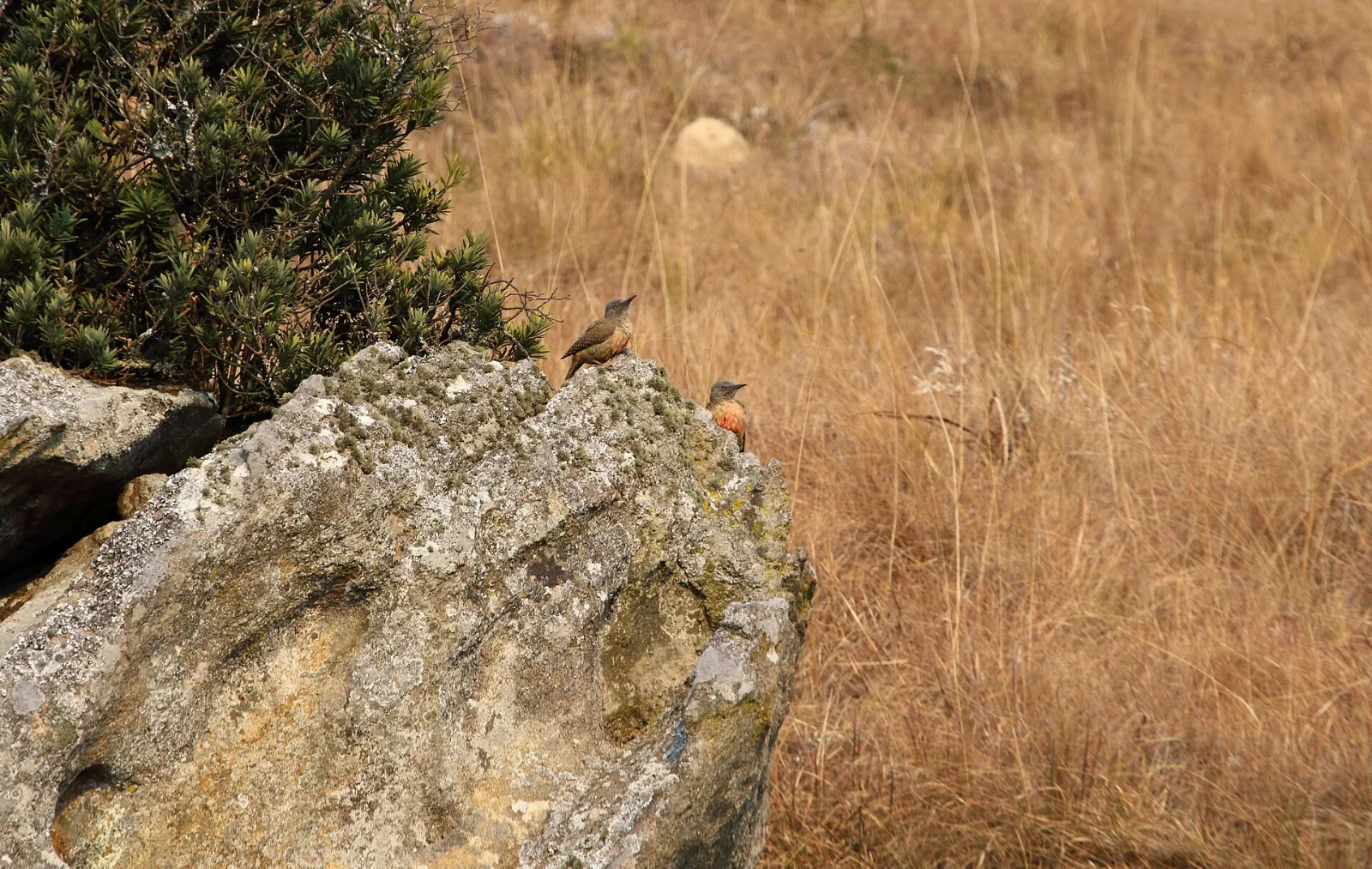
The Ground Woodpecker has given up on trees. It lives on rocky, boulder-strewn mountain slopes, usually in treeless grassland and shrubland, and Iziko Museums’ Biodiversity Explorer puts ants at about 99.8% of its diet. It digs into ant nests below the surface and licks up the contents with a sticky tongue, and it nests in a tunnel that both birds dig into an earth bank. It is, in short, a woodpecker that has taken up mining.
It is also endemic to South Africa, Lesotho and Eswatini, which makes it one of the region’s prize birds. The rest of southern Africa’s woodpeckers are more conventional, tapping their way along branches from the Lowveld to the Garden Route, but each has its own habitat, and between them they cover almost every kind of woodland in the region.
The woodpeckers at a glance
| Woodpecker | Where it lives | Egg-laying |
|---|---|---|
| Ground | Rocky mountain slopes, Western, Eastern and Northern Cape, Lesotho, Free State | July to December |
| Cardinal | Woodland and savanna across most of sub-Saharan Africa | July to December |
| Golden-tailed | Riparian, miombo and mopane woodland, north and east | August to December |
| Bennett’s | Deciduous woodland and savanna with tall trees | August to February |
| Bearded | Deciduous woodland and savanna, north-east | April to December |
| Knysna | Coastal Western and Eastern Cape, parts of KwaZulu-Natal | August to November |
| Olive | Evergreen forest on the escarpment and south coast | August to November |
| Red-throated Wryneck | Grassland with sparse trees, Limpopo to Eastern Cape | August to February |
The Ground Woodpecker
Biodiversity Explorer places the Ground Woodpecker in the hilly and mountainous country of the Western, Eastern and Northern Cape, Lesotho and the Free State, on rock- and boulder-strewn slopes. Egg-laying runs from July to December, peaking in August and September.
Golden Gate Highlands National Park is a reliable place to look. BirdLife South Africa’s GoBirding guide lists it as a key species there, says it is typically seen perched on large rocks, and points to the area around the self-catering huts at the Basotho Cultural Village rest camp as productive. The Free State birding guide covers the park. It also turns up on the list of South Africa’s endemic birds, along with most of the region’s other specials.
The bushveld woodpeckers
The Cardinal Woodpecker is probably the most common and widespread of all Africa’s tree-dwelling woodpeckers, Biodiversity Explorer says, found across most of sub-Saharan Africa apart from dense equatorial forest and arid areas, and most common in woodland and savanna. It is an agile forager: it gleans ants and termites from bark and leaves, breaks open seed pods and even eats fruit. Egg-laying runs from July to December, peaking from August to October.
The Golden-tailed Woodpecker is fairly common in Zimbabwe, Mozambique, Botswana, parts of Namibia and north-eastern South Africa, preferring riparian, miombo and mopane woodland. It taps and probes branches for insects and licks them up with a barbed tongue, and it may also break into insect nests. Both sexes dig the nest, usually a hole on the underside of a branch, and egg-laying runs from August to December.
Bennett’s Woodpecker spends more time on the ground than most of its relatives. It lives in deciduous woodland and savanna with tall trees, from Tanzania to Botswana, Zimbabwe, north-central Namibia, Mozambique and north-eastern South Africa, and feeds mainly on ants, their eggs and pupae, digging into underground nests and scooping them up with a sticky tongue. Egg-laying runs from August to February.
The Bearded Woodpecker is fairly common in Mozambique, Zimbabwe, northern Namibia and north-eastern South Africa. It dislikes dense forest, preferring deciduous woodland and savanna, where it taps and probes branches for insects. Its egg-laying season is unusually long, from April to December, peaking from May to August.
The forest and coastal woodpeckers
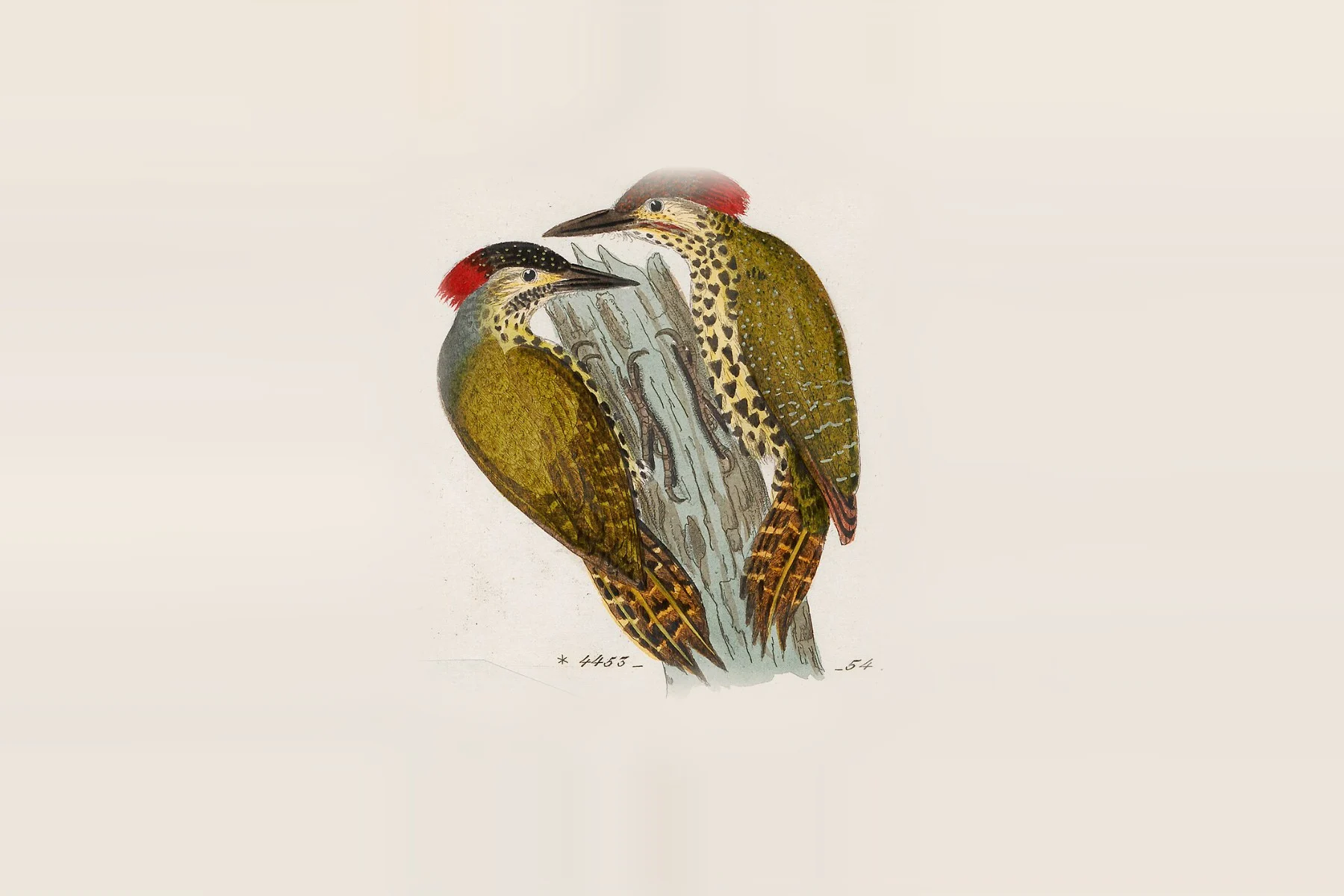
The Knysna Woodpecker, the bird on the plate at the top of this page, is endemic to South Africa, found around the coast of the Western and Eastern Cape and in small parts of KwaZulu-Natal. Biodiversity Explorer lists thornveld, euphorbia thicket, riparian woodland, coastal White Milkwood thickets and montane forest among its habitats. It searches dead branches for invertebrates and gleans ants from branches and leaves. Both sexes dig the nest, usually a hole on the underside of a branch, often reused; egg-laying runs from August to November, peaking in October. The Garden Route birding guide covers the coast where it lives.
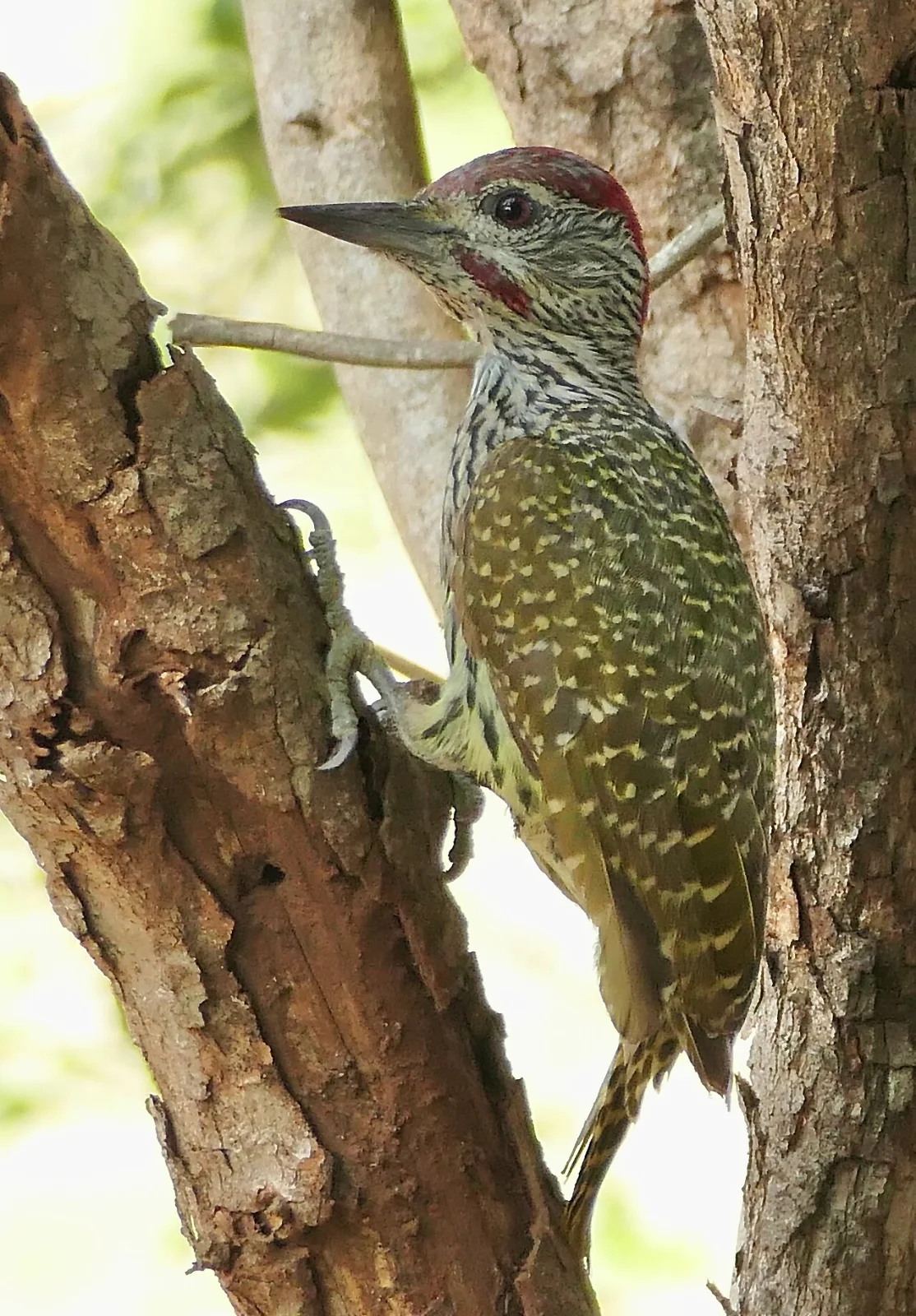
The Olive Woodpecker has 2 isolated populations in Africa, one in Central Africa and one in South Africa, along the escarpment and the southern coast. It prefers evergreen forest, occasionally venturing into fynbos and suburban gardens, and forages in the upper canopy, probing and pecking branches and licking up prey with a barbed tongue. Egg-laying runs from August to November.
The wryneck
The Red-throated Wryneck is a woodpecker relative with a taste for the ground. Biodiversity Explorer says it lives only in grassland with sparse trees, from Limpopo to the Eastern Cape, and feeds exclusively on ants and termites, often digging into ant nests and licking them up with a sticky tongue. It usually nests in tree holes made by other birds, and egg-laying runs from August to February, peaking in October. Golden Gate’s GoBirding guide lists it among the common birds around Glen Reenen rest camp.
Where to stay
Places in the directory that name a woodpecker:
| Place to stay | Where | For birders | From |
|---|---|---|---|
| Ouberg Private Nature Reserve | Near Montagu, Western Cape | BirdLife Recommended; Ground Woodpecker and Karoo larks | R175 per camper; tents from R900 |
| Potkook Mountain Experience | Piketberg mountains, Western Cape | BirdLife Recommended; Ground Woodpecker, Protea Seedeater | R2,985 pp per day, fully inclusive (2026, groups of 6+) |
| Moolmanshoek Private Game Reserve | Near Ficksburg, Free State | Ground Woodpecker and Bearded Vulture named | About R1,500 pp, bed and breakfast |
| Walkerbouts Inn | Rhodes, Eastern Cape | Ground Woodpecker and Drakensberg Rockjumper named | Ask the lodge |
| Elands Valley Stone Lodge | Near Dullstroom, Mpumalanga | Olive and Ground Woodpecker named | Ask the lodge |
| Kwendalo | Plettenberg Bay, Western Cape | BirdLife Recommended; Knysna Woodpecker named | Ask the lodge |
| Fynbos Ridge Country House | Plettenberg Bay, Western Cape | Knysna Woodpecker and Knysna Turaco named | R3,300 per night |
| Stanford Lake Lodge | Haenertsburg, Limpopo | BirdLife Recommended; Olive Woodpecker named | R1,088 for 2, self-catering (2026) |
| Verkijken Farm | Haenertsburg, Limpopo | BirdLife Recommended; Olive Woodpecker in Woodbush forest | Ask the lodge |
| Tandweni Villa | Pongola Game Reserve, KwaZulu-Natal | BirdLife Recommended; Bearded Woodpecker named | Ask the lodge |
| Lekkerwater Beach Lodge | De Hoop Nature Reserve, Western Cape | Cardinal Woodpecker among coast and fynbos birds | R7,700 pp sharing, all meals (April to July 2026) |
Woodpeckers are easiest to find by sound: listen for tapping and for the calls of a pair keeping in touch. Facts were checked on 15 November 2026 with Iziko Museums’ Biodiversity Explorer, BirdLife South Africa’s GoBirding guide to Golden Gate and the Birding Dispatch listings. Rates change each season; check with the place before you book.
More from the Journal
 Where to See a Taita Falcon: the Strijdom Tunnel, the Blyde Cliffs and the Batoka GorgeA stocky falcon smaller than a pigeon, a handful of cliffs and surveys that keep coming back empty. Where it still nests, how to look, and the 2 roosts beside its cliffs.
 Where to See a Southern Bald Ibis: the Breeding Cliffs, Dullstroom, Wakkerstroom and LesothoA red-capped grassland ibis that nests on cliffs over waterfalls and feeds on burnt veld and maize stubble. The colonies you can watch, the fields to scan, and where to stay.
 Where to See a Crab-plover: Bazaruto, Mida Creek, Zanzibar, Mafia and the Odd One at Kosi BayA black-and-white shorebird with a bill like pliers, the only member of its family. Where it winters on the East African and Mozambique coasts, how to time the tide, and where to stay.
The Pigeon Post
Every Thursday: 1 bird, 1 place to go and 1 place to stay, by email. Sign up and get our printable checklist of the 163 endemics of southern Africa.