
Pafuri: Kruger’s Northern Birding Hotspot
Crooks' Corner, the Luvuvhu riverine forest, the fever-tree floodplain and the Makuleke mopane, with the specials found nowhere else in Kruger, what the 2026 floods changed, and where to stay.
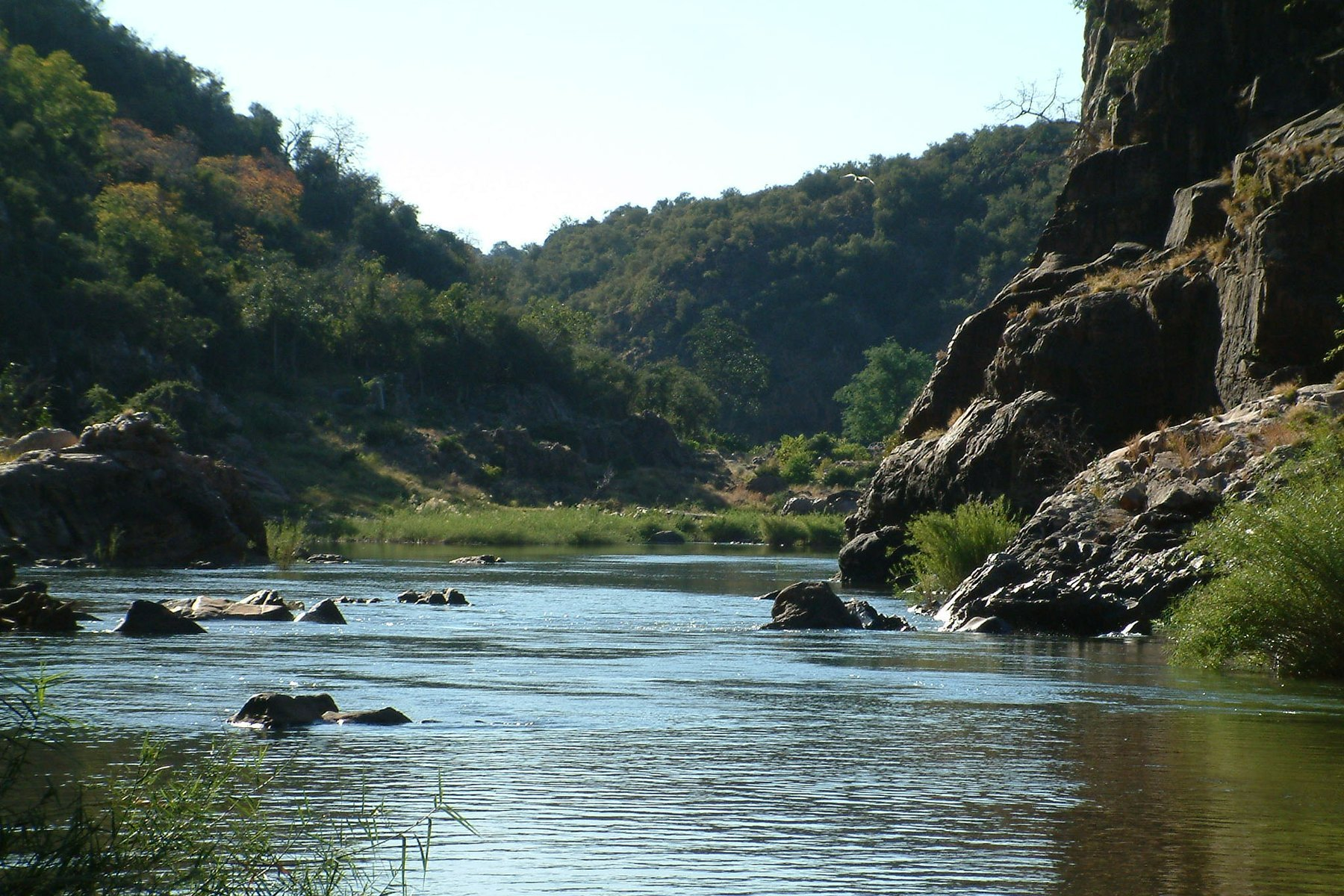
At the northern tip of the Kruger National Park, the Luvuvhu River runs out of Lanner Gorge, across a floodplain of fever trees and nyala trees, and into the Limpopo at Crooks’ Corner. BirdLife South Africa’s GoBirding guide calls Pafuri one of the best areas of the park for birding, if not the best, because many of its species are found nowhere else in Kruger. Several of them reach the southern edge of their range here and occur nowhere else in South Africa, so for a South African lister this corner of the park is less a detour than a pilgrimage.
The land north of the Luvuvhu is the Makuleke Concession. The Makuleke community won it back in 1998, in what Daily Maverick describes as South Africa’s first successful land claim, and it remains under the protection of the park. Day visitors may drive the public roads; the lodges on the concession hold the right to guided drives after dark, and that decides where a birder should sleep.
At a glance
| Place to stay | Where | For birders | From |
|---|---|---|---|
| Pafuri Camp | Luvuvhu River, Makuleke | BirdLife Recommended, Important Bird Area, 2 activities a day | R8,450 pp sharing all-inclusive |
| Baobab Hill House | Near Pafuri Gate, Makuleke | Bird-focused walks and drives, private guiding, checklists | Ask the lodge |
| Hutwini Walking Camp | Makuleke | Guided walks morning and evening, April to October | R8,450 pp sharing, full board (2026 season, expired) |
Crooks’ Corner and the rivers
Crooks’ Corner is the triangle of land at the confluence, where South Africa, Zimbabwe and Mozambique meet. It takes its name from the ivory poachers and gun-runners who used it in the late 19th and early 20th centuries, because a step across a river put them in another country’s jurisdiction. Today the only things lurking on the Limpopo sandbanks are storks and lapwings, and the viewpoint is all theirs.
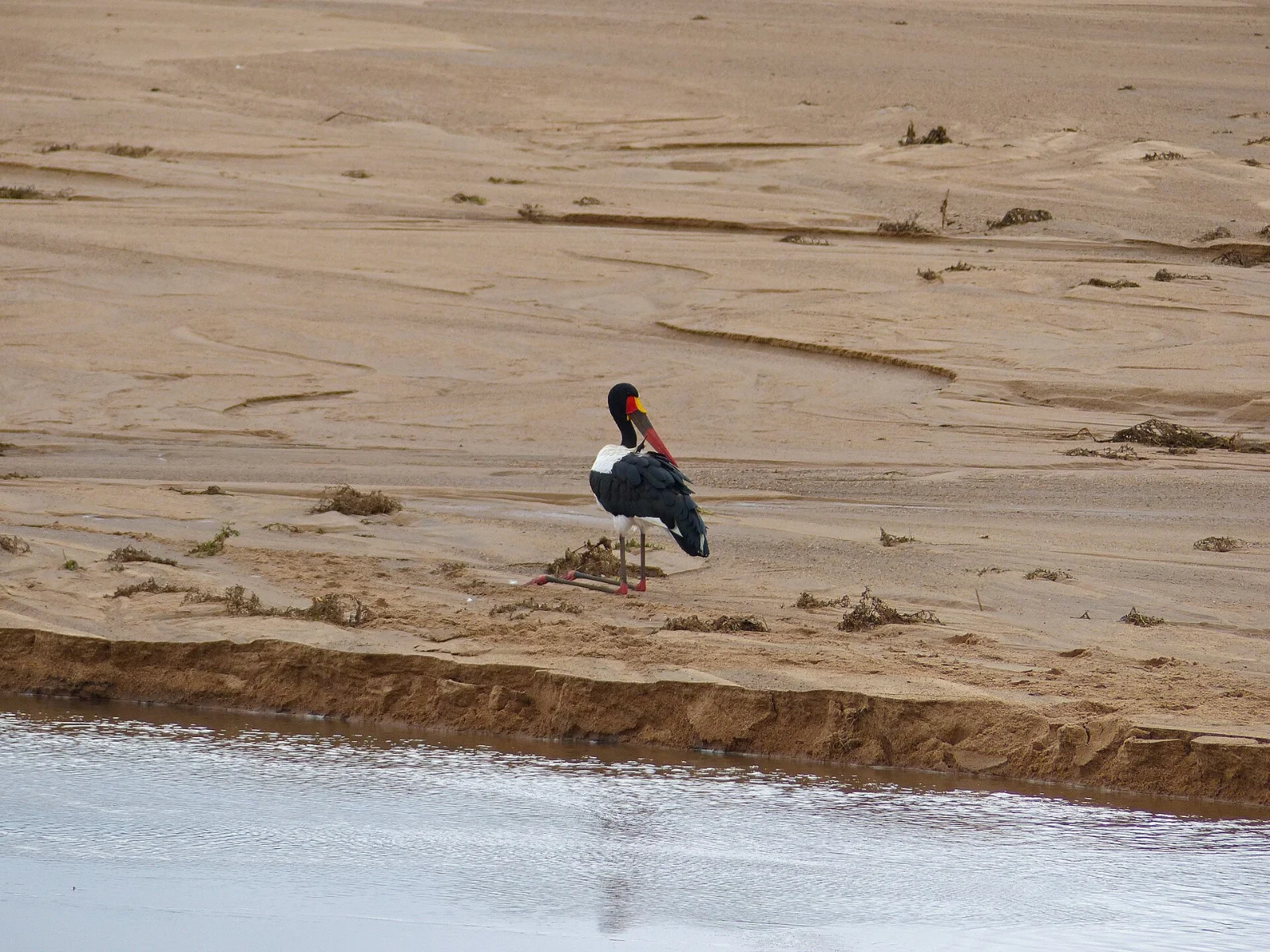
GoBirding says the Luvuvhu usually holds small numbers of White-crowned Lapwing and Saddle-billed Stork, with numbers rising and falling with the water. Scan the sandbanks at the confluence for both, and the tall riverine trees along the Luvuvhu for a roosting Pel’s Fishing Owl, a bird that has made a career of not being found.
The riverine forest and the picnic site
The Luvuvhu is lined with tall riverine forest, and GoBirding gives a long list for it: Retz’s Helmetshrike, Burnt-necked and Green-capped Eremomelas, Yellow-breasted Apalis, Eastern Nicator, Trumpeter and Crowned Hornbills, Narina Trogon, White-browed Robin-chat, Black-throated Wattle-eye, Bearded Scrub Robin and Gorgeous Bushshrike, with Thick-billed Cuckoo and Broad-billed Roller in summer. Coveys of Crested Guineafowl come out onto the roads in the early morning and late afternoon. Check the dense overhanging growth for African Finfoot and White-backed Night Heron. Reading the list aloud takes about as long as a morning’s drive.
The Pafuri Picnic Site is the place to look for most of them, because visitors may get out of their cars there, and stiff legs are a small price for this list. In summer, River Warbler and Thrush Nightingale sing from the thickets, and GoBirding says both are easiest to find in March, when they are most vocal: 2 skulkers that give themselves away by refusing to keep quiet.
The 2026 floods have changed the picture. An early recovery update listed the Pafuri picnic site as closed, and no later notice confirming its reopening could be found by 13 November 2026. Reports from later in the year say Pafuri Gate is operating again. Check the SANParks Kruger Roads Register before driving north.
The Luvuvhu bridge, the S63 and the raptors
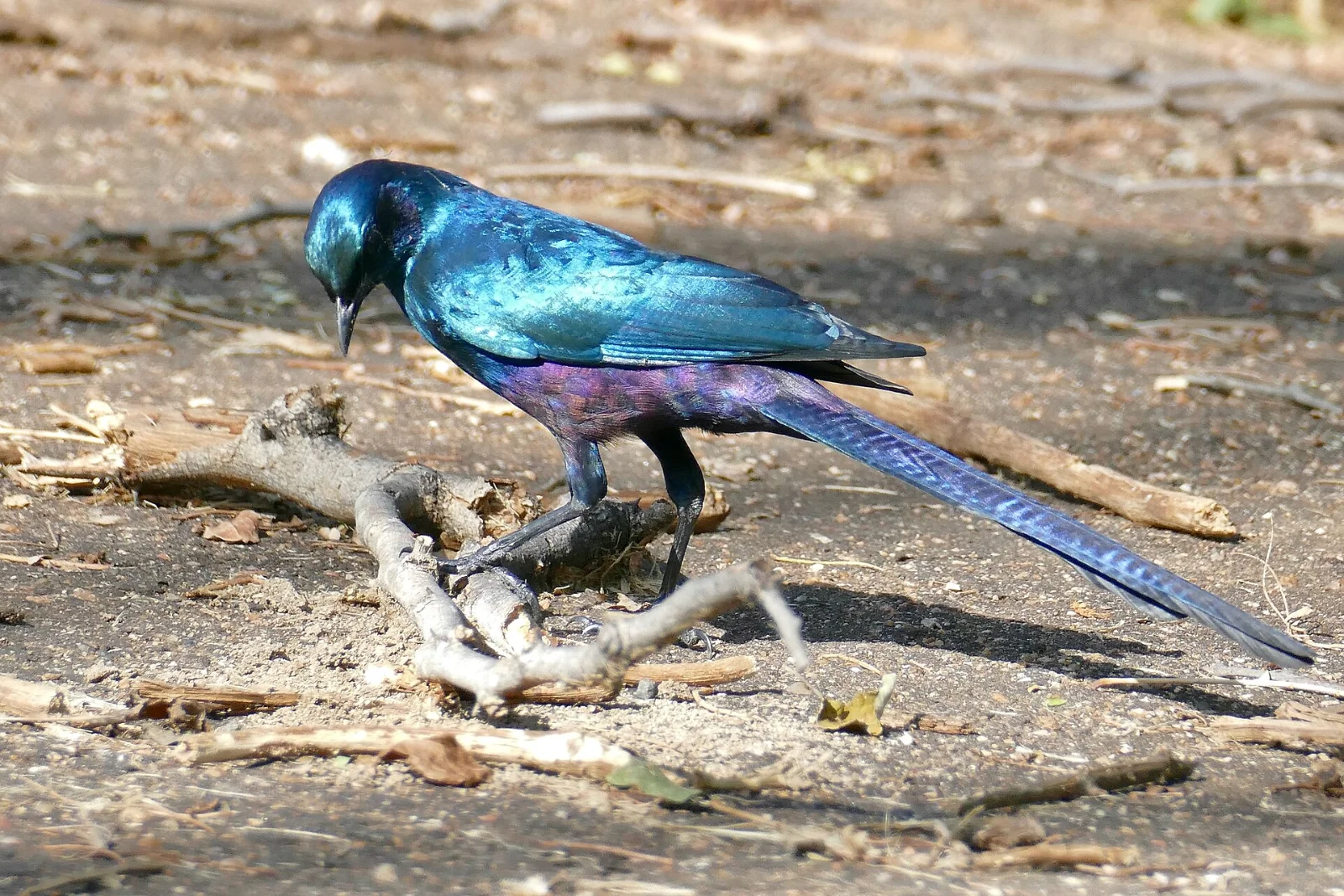
Overhead, watch for Mottled and Böhm’s Spinetails, and keep your neck loose. GoBirding names the bridge over the Luvuvhu on the road to Pafuri Gate as a good place to see them, and Meves’s Starling feeds in the trees around it.
The S63, which follows the Luvuvhu east towards Crooks’ Corner, runs through open palm savanna. GoBirding says it is the best route for the scarce Dickinson’s Kestrel and for the localised Lemon-breasted Canary. Pafuri is also raptor country: GoBirding lists African and Ayres’s Hawk-Eagles, up to 4 species of vulture (White-headed, White-backed, Lappet-faced and Hooded), African Harrier-Hawk, Martial and Verreaux’s Eagles and the Bateleur on this article’s header, painted more than 200 years ago and still dressed for an evening out.
The Makuleke mopane
For the dry-country specials, cross the Pafuri bridge into the Makuleke Concession and follow the tar road towards the gate. GoBirding asks birders to stay on the tar and not to take the secondary roads, which are for the lodges’ guided drives. Search the mopane along the road for Racket-tailed Roller, Arnot’s Chat, the scarce White-breasted Cuckooshrike and the rare Three-banded Courser. That is 4 good reasons to drive a tar road very slowly.
The concession is also where to look for Pel’s Fishing Owl and White-backed Night Heron after dark. GoBirding says both are best searched for along the northern bank of the Luvuvhu at night, and that guided drives after dark are allowed for guests of the lodges there. For the owl in detail, see how to find Pel’s Fishing Owl.
What the 2026 floods did
In early 2026, heavy rain on the Soutpansberg sent the Luvuvhu out of Lanner Gorge in a flood that Daily Maverick’s Don Pinnock described in March. Unlike the floods of 2000 and 2013, when the Limpopo was also high and the Luvuvhu backed up slowly across the floodplain, the Limpopo stayed low and the Luvuvhu cut into its sandy banks at every bend. At Pafuri Camp the bank retreated by up to 30 m in places; the river lounge deck, 4 tents and the dining lapa were lost. RETURN Africa told the paper that the camp would be rebuilt, further back from the new bank. The Outpost closed for flood repairs and told Safari Dispatch it expects to reopen in March 2027, by 1 April at the latest.
Where to stay
RETURN Africa runs 3 of the 4 listed places, as its Pafuri Collection. The company leases the land from the Makuleke community, pays 10% of gross revenue to the community and employs almost 70 Makuleke staff, according to Daily Maverick. GoBirding lists the collection as BirdLife Recommended.
Pafuri Camp is on the Luvuvhu, BirdLife South Africa Recommended and inside the Kruger National Park and adjacent areas Important Bird Area. Before the flood it had 19 river-view tents on raised walkways, including family tents, with a child rate for ages 3 to 17. Its 2026/27 rack rate starts at R8,450 per person sharing a night, with all meals and 2 activities a day. Given the flood damage, confirm which tents and areas are open before you book.
Baobab Hill House is a private house of 4 bedrooms for up to 8, north of the Luvuvhu near Pafuri Gate, self-catering or fully catered and open all year. RETURN Africa gives a count of over 450 species for Pafuri. Guests can take bird-focused walks or drives, ask for private guiding and join the Pafuri Birding Challenge, and checklists are kept at reception. The fact sheet gives November to March as the best months for birding. For a group of birders, a private house with a guide on request is the most flexible way to work Pafuri, and nobody has to negotiate breakfast times with strangers.
Hutwini Walking Camp has 4 tents for up to 8, opens from April to October and takes no one under 16. Rates from R8,450 per person sharing a night in the 2026 season, R12,640 single, include meals, local drinks and morning and evening guided walks; an impact levy of R690 per adult a night is charged for the first 3 nights. It suits a birder who wants the riverine forest on foot rather than from a vehicle, at the pace of a bird call rather than an engine.
The Outpost stands on a ridge above the Luvuvhu in the 24,000 ha Makuleke concession, which the lodge says holds the Southern Hemisphere’s largest fever-tree forest. It records more than 350 species and offers birding with walks and drives. Its 12 suites are open on 3 sides, and children must be 10 or over. It is closed until early 2027.
Not yet in the directory: Punda Maria Rest Camp, the SANParks camp 60 km south of Pafuri and GoBirding’s usual base for day trips, and the EcoTraining camp in the Makuleke Concession, which GoBirding lists as BirdLife Recommended.
Guides, gates and fees
GoBirding lists 4 BirdLife South Africa Community Bird Guides who work northern Kruger: Christopher Nethonzhe, Khotso Snymes, Lungile Mteyane and Samson Mulaudzi, with their numbers on its Pafuri page. SANParks guided activities are booked at Punda Maria reception.
From Johannesburg, take the N1 to Makhado and the R524 for about 140 km to Punda Maria Gate, 5 to 6 hours in all, according to GoBirding. Punda Maria camp is 10 km inside the gate and Pafuri another 60 km north. Pafuri Gate, on the R525, is the closer entry for the Makuleke lodges. SANParks allows no late admission at Pafuri Gate, so time the drive, and resist the third stop for a raptor on a pole. Day visitors staying at Punda Maria should leave at gate opening and drive straight up for a full day.
The SANParks daily conservation fee for international adults is R692 from 1 November 2026 to 31 October 2027, and R140 for South Africans, according to the 2026/27 rate card as reported by The Rio Times. Check the private concession’s own levies when you book.
When to go
GoBirding says birding is best from November to March, when the summer migrants arrive, though winter from May to July still produces a long list. March is the month for River Warbler and Thrush Nightingale, when the thickets do the talking. Hutwini is open only from April to October, so a summer visit means Pafuri Camp or Baobab Hill House. Summer is also flood season; after 2026, keep the itinerary flexible and check the roads each morning.
Rates, openings and road access change, and Pafuri’s have changed more than most in 2026. Facts were checked on 13 November 2026 with each listing on Birding Dispatch, BirdLife South Africa’s GoBirding guide to Pafuri, Daily Maverick, SANParks and The Rio Times. Confirm what is open with SANParks and the lodges before you go.
More from the Journal
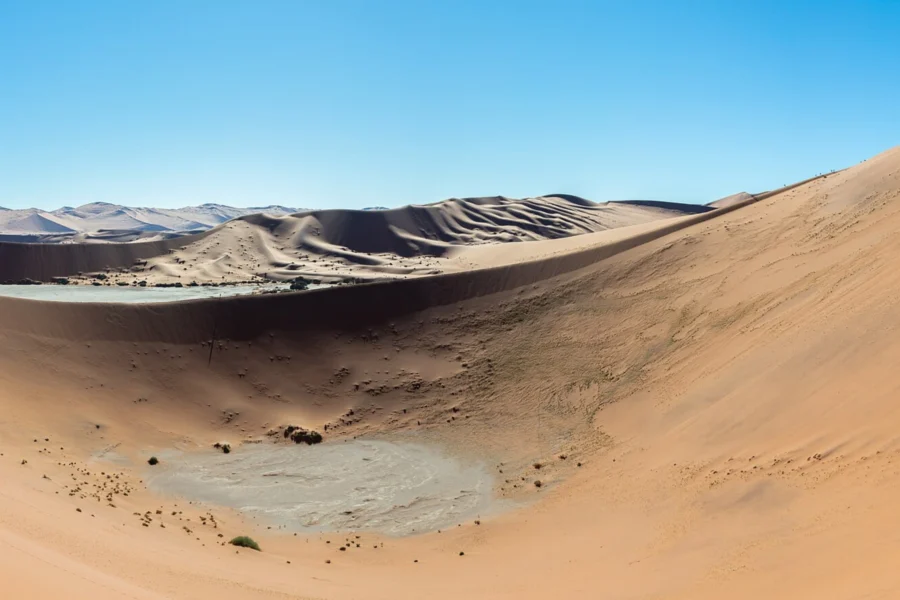 Namib-Naukluft and Sossusvlei for Birders: Dune Lark, Desert Raptors and the Naukluft SpecialsA lark that lives on the dunes and nowhere else, Lappet-faced Vultures nesting in the desert, coursers on the gravel plains and the northern specials around the Naukluft cliffs, in one of Africa's largest parks.
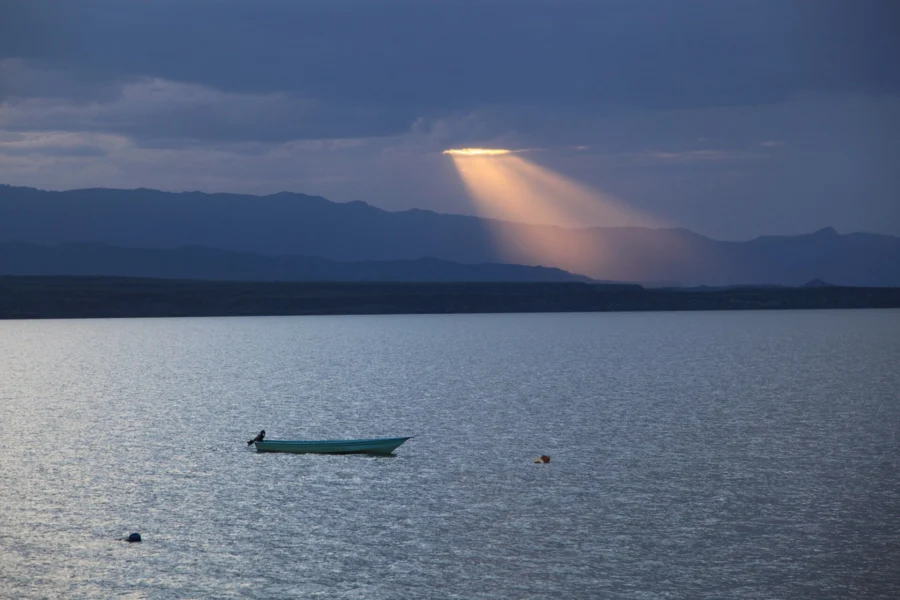 Lake Baringo and Lake Bogoria Birding: The Owl Walks, the Cliffs and the FlamingosA local guide who knows where every nightjar and eagle-owl slept last night, thorn scrub full of hornbills, a Goliath Heron colony on a rock, and the flamingo lake next door that keeps rising.
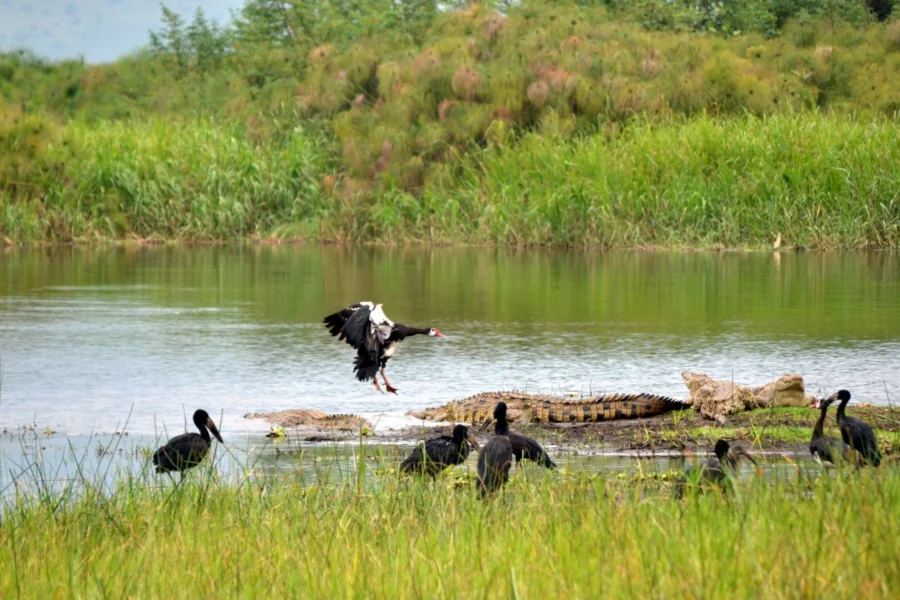 Akagera Birding: Rwanda’s Savanna, Lakes and Papyrus, and the Shoebill ChancesRed-faced Barbet in the southern woodland, Papyrus Gonolek and Carruthers's Cisticola in the swamps, a lake of hippos and lapwings, and a Shoebill that hides in the wetlands more than it shows.
The Pigeon Post
Every Thursday: 1 bird, 1 place to go and 1 place to stay, by email. Sign up and get our printable checklist of the 163 endemics of southern Africa.