
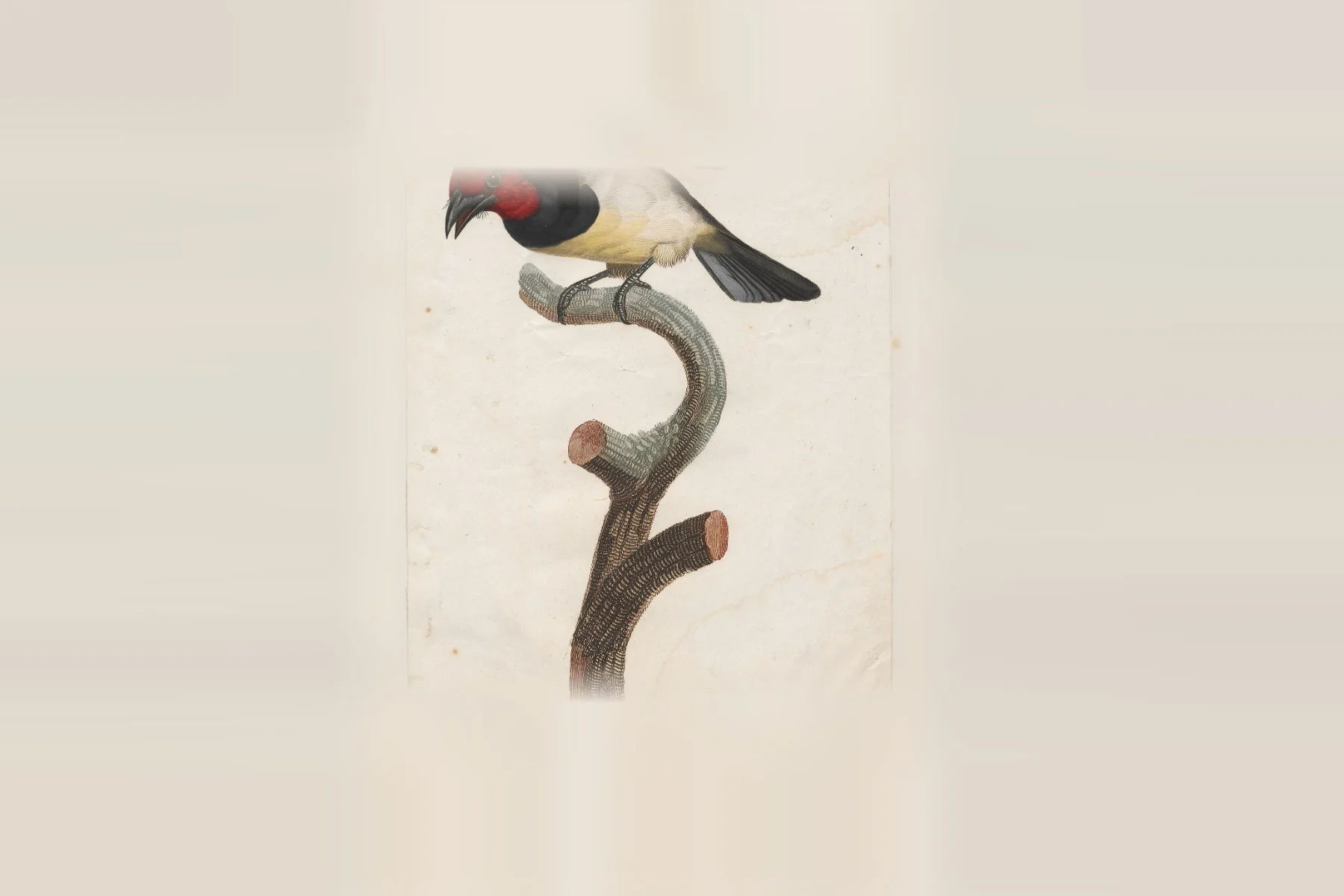
Barbets and Tinkerbirds of Southern Africa: Crested Barbet, the Duets and the Specials
A barbet that evicts other birds from their nests, a pair that sings in duet, and a green special found in South Africa in just one forest. The region's barbets and tinkerbirds.
A Crested Barbet does not just defend its nest hole. According to Iziko Museums’ Biodiversity Explorer, it defends it so vigorously against other hole-nesting birds that it sometimes evicts them from their own active nests. For a fruit-and-insect eater with a speckled yellow face and a shaggy crest, it has the temperament of a nightclub bouncer.
Barbets and tinkerbirds are the region’s stocky, heavy-billed hole-nesters, cousins of the woodpeckers and the honeyguides. Most of them are noisy, several sing in pairs, and the tinkerbirds are small enough to be heard far more often than seen. This guide covers the main species and where to find them.
The barbets at a glance
| Bird | Where it lives | Egg-laying | Notes |
|---|---|---|---|
| Crested Barbet | Zimbabwe, Botswana, Mozambique, Free State to Limpopo | All year, peak September to December | Woodland, gardens |
| Black-collared Barbet | Northern Namibia, Botswana, Mozambique, eastern South Africa | September to February in South Africa | Duets; nests in dead fig branches |
| Acacia Pied Barbet | Namibia, Botswana, Zimbabwe, South Africa | August to April | Semi-arid savanna, now gardens |
| White-eared Barbet | Mozambique, eastern Zimbabwe to KwaZulu-Natal | August to March | Cooperative breeder |
| Green Barbet | Ongoye Forest only, in South Africa | November to January | Threatened in southern Africa |
| Whyte’s Barbet | Southern Tanzania to eastern Zimbabwe and central Mozambique | September to January | Miombo with wild figs |
| Yellow-fronted Tinkerbird | NE Namibia, Botswana, Zimbabwe, Mozambique, NE South Africa | Not given in the source | Nests in dead branches |
| Red-fronted Tinkerbird | Southern Mozambique to the Eastern Cape coast | Not given in the source | Mostly South Africa |
| Yellow-rumped Tinkerbird | Evergreen lowland forest, east coast | October to March in South Africa | Honeyguide host |
Crested Barbet
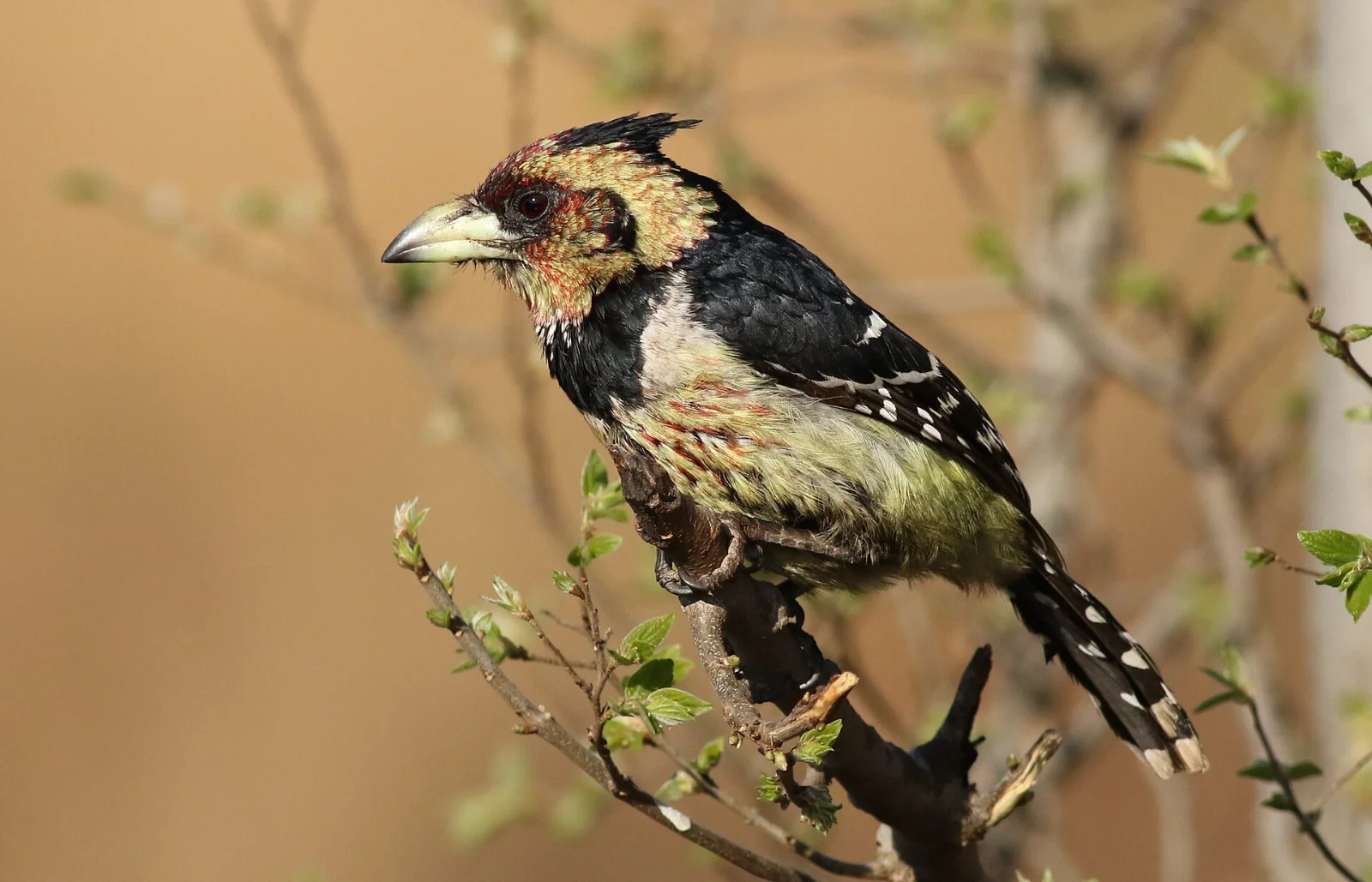
Biodiversity Explorer says the Crested Barbet is common in a wide range of woodland, in Zimbabwe, Botswana, Mozambique and from the Free State to Limpopo, preferring moist or dry open woodland such as miombo and mopane. It is omnivorous, eating mostly insects when fruit is scarce, and the chicks are fed only on insects. Both birds dig the nest chamber on the underside of a dead branch, and they lay 2 to 5 eggs and incubate them for about 17 days. Egg-laying runs all year, peaking from September to December. It has been recorded as a host of both the Greater and Lesser Honeyguide, so its belligerence does not always pay.
Gardens with fruiting trees are worth watching for it, and our guide to attracting birds to your garden covers what to plant and put out.
Black-collared Barbet and the duets
The Black-collared Barbet, red-faced and black-collared on the plate at the top of this page, is one of the most common barbets in Africa. Biodiversity Explorer places it in northern Namibia, northern and eastern Botswana, Mozambique and the eastern half of South Africa. It eats mainly fruit, especially figs, plus insects and nectar. Both birds dig the nest hole, usually on the underside of a dead branch of a softwood tree such as a wild fig; the chicks stay in the nest for about 33 to 36 days. In South Africa, egg-laying runs from September to February.
It is also the duet specialist. Wikipedia describes it as one of many duetting species in its genus, using duets in its daily life, and notes that its loud duet is often rendered as “too-puddly too-puddly” It is a host of the Greater, Lesser and Scaly-throated Honeyguides. Our guide to learning bird calls has more of the memory phrases South African birders use.
Acacia Pied, White-eared, Green and Whyte’s Barbets
The Acacia Pied Barbet is nearly endemic to southern Africa, common in Namibia, Botswana, Zimbabwe, southern Mozambique and South Africa. It is mainly a bird of semi-arid savanna, but Biodiversity Explorer says it has recently spread into grassland, fynbos, orchards and suburban gardens, helped by introduced trees, especially acacias, which it uses for nest sites. It eats fruit, insects, aloe nectar and even flower petals.
The White-eared Barbet ranges from Tanzania and Kenya to Mozambique and KwaZulu-Natal, and in southern Africa is locally common in the moist miombo and mahobohobo woodland of Mozambique and eastern Zimbabwe. It is a cooperative breeder: the breeding pair, often with helpers, dig the nest chamber.
The Green Barbet is the special. Biodiversity Explorer says it has isolated populations from Tanzania southwards, and in South Africa is found only in Ongoye Forest in KwaZulu-Natal, mostly coastal scarp forest with many fig trees. Because its range here is so small, it is listed as threatened in southern Africa. It eats almost only fruit, especially figs, and nests in a small chamber dug into a dead, decaying tree trunk. From Mtunzini, Oliver’s Tale arranges birding trips to Ongoye for it, and the Kosi Bay and Maputaland coast guide covers the coastal forests to the north.
Whyte’s Barbet lives from southern Tanzania through Zambia and Malawi to eastern Zimbabwe and central Mozambique, in well-developed miombo on granite, especially with plenty of wild figs. Its nest branch often carries several holes from different seasons, and it may take over the old nest of a Black-collared Barbet.
The tinkerbirds
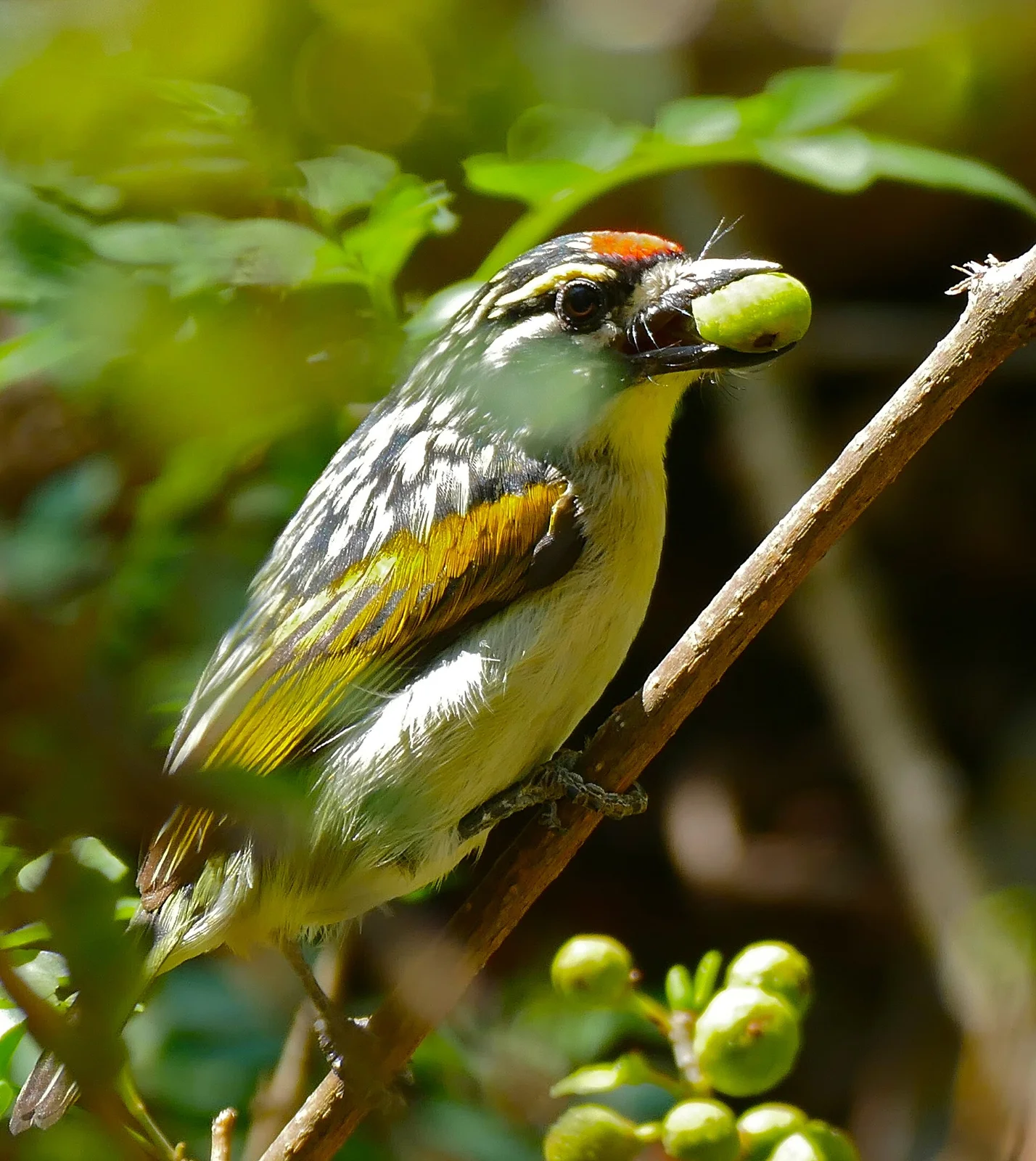
The tinkerbirds are the smallest members of the family. The Yellow-fronted Tinkerbird lives in north-eastern Namibia, including the Caprivi, northern and south-eastern Botswana, Zimbabwe, Mozambique and north-eastern South Africa, and digs its nest into a dead branch at least 10 cm wide. The Red-fronted Tinkerbird has 2 isolated populations, one in north-east Africa and one largely restricted to South Africa, from the southern tip of Mozambique along the coast to the Eastern Cape. The Yellow-rumped Tinkerbird prefers evergreen and moist lowland forest on the east coast; in South Africa it lays from October to March, and it is a recorded host of the Scaly-throated Honeyguide.
Where to stay
Places in the directory that name a barbet or tinkerbird:
| Place to stay | Where | For birders | From |
|---|---|---|---|
| Makulu Birders House | Rust de Winter, Limpopo | BirdLife Recommended; Acacia Pied, Black-collared and Crested Barbet | Ask the lodge |
| Wilge River Bush Camp | Near Bronkhorstspruit | BirdLife Recommended; Acacia Pied Barbet named | Ask the lodge |
| Pomeroy Lodges | Kleinemonde, Eastern Cape | BirdLife Recommended; Black-collared Barbet; 130 species | Ask the lodge |
| Oliver’s Tale | Mtunzini, KwaZulu-Natal | BirdLife Recommended; trips to Ongoye for Green Barbet | Ask the lodge |
| Umlani Bushcamp | Timbavati, Limpopo | Crested Barbet named | R7,761 pp sharing, fully inclusive (2026; levy R660 extra) |
| Mvuu Lodge | Liwonde National Park, Malawi | Crested Barbet on the Shire River | US$465 pp (2026) |
| Luwawa Forest Lodge | Viphya Plateau, Malawi | Whyte’s Barbet among its specials | Ask the lodge |
Barbets are easiest to find at fruiting fig trees and by their calls. Facts were checked on 15 November 2026 with Iziko Museums’ Biodiversity Explorer and the Birding Dispatch listings. Rates change each season; check with the place before you book.
More from the Journal
 Woodpeckers of Southern Africa, Including the One That Doesn’t Need TreesSouthern Africa's woodpeckers, from the Cardinal in every bushveld tree to the Ground Woodpecker that lives on treeless mountain slopes and eats almost nothing but ants.
 Where to See a Taita Falcon: the Strijdom Tunnel, the Blyde Cliffs and the Batoka GorgeA stocky falcon smaller than a pigeon, a handful of cliffs and surveys that keep coming back empty. Where it still nests, how to look, and the 2 roosts beside its cliffs.
 Where to See a Southern Bald Ibis: the Breeding Cliffs, Dullstroom, Wakkerstroom and LesothoA red-capped grassland ibis that nests on cliffs over waterfalls and feeds on burnt veld and maize stubble. The colonies you can watch, the fields to scan, and where to stay.
The Pigeon Post
Every Thursday: 1 bird, 1 place to go and 1 place to stay, by email. Sign up and get our printable checklist of the 163 endemics of southern Africa.