
How to Attract Birds to Your Garden in South Africa: Plants, Water, Feeders and Nest Boxes
What a 2024 sugar-water experiment at Grootbos found, the indigenous plants that bring in sunbirds, fruit-eaters and nesting birds, how to set up water and feeders, owl houses and their prices, and places to stay whose gardens show it working.
In a 2024 experiment at Grootbos Private Nature Reserve near Gansbaai, researchers put sugar-water feeders into young fynbos and counted the visits. In winter, when few plants were in flower, birds came to the feeders 679 times. In spring, with the veld in bloom, they came only 90 times, and visited flowers far more than feeders in both seasons. Given the choice, the birds preferred the real thing. The study, by Asekho Mantintsilili, Sjirk Geerts, Colleen Seymour and Anina Coetzee, makes the case for planting before feeding: give birds flowers, fruit and insects, and the feeder becomes a top-up for the lean months rather than the main restaurant.
Plant first
BirdLife South Africa suggests indigenous trees, bushes, grasses and other plants as the alternative to buying bird food, since they feed birds and give them places to nest. Anton Crone, editor of African Birdlife, calls indigenous planting the ultimate way to attract birds. Indigenous plants and local birds evolved together, and the plants offer nectar, fruit, seed and the insects that insect-eaters hunt: a full menu, with no feeder to refill.
These are from Witkoppen Wildflower Nursery’s list of 10 bird plants, with the SANBI account for Cape honeysuckle. Choose the ones that grow in your region and rainfall.
| Plant | What it offers | Brings in (per the source) |
|---|---|---|
| Cape honeysuckle (Tecomaria capensis) | Nectar, flowering sporadically all year | Sunbirds, its main pollinators (SANBI) |
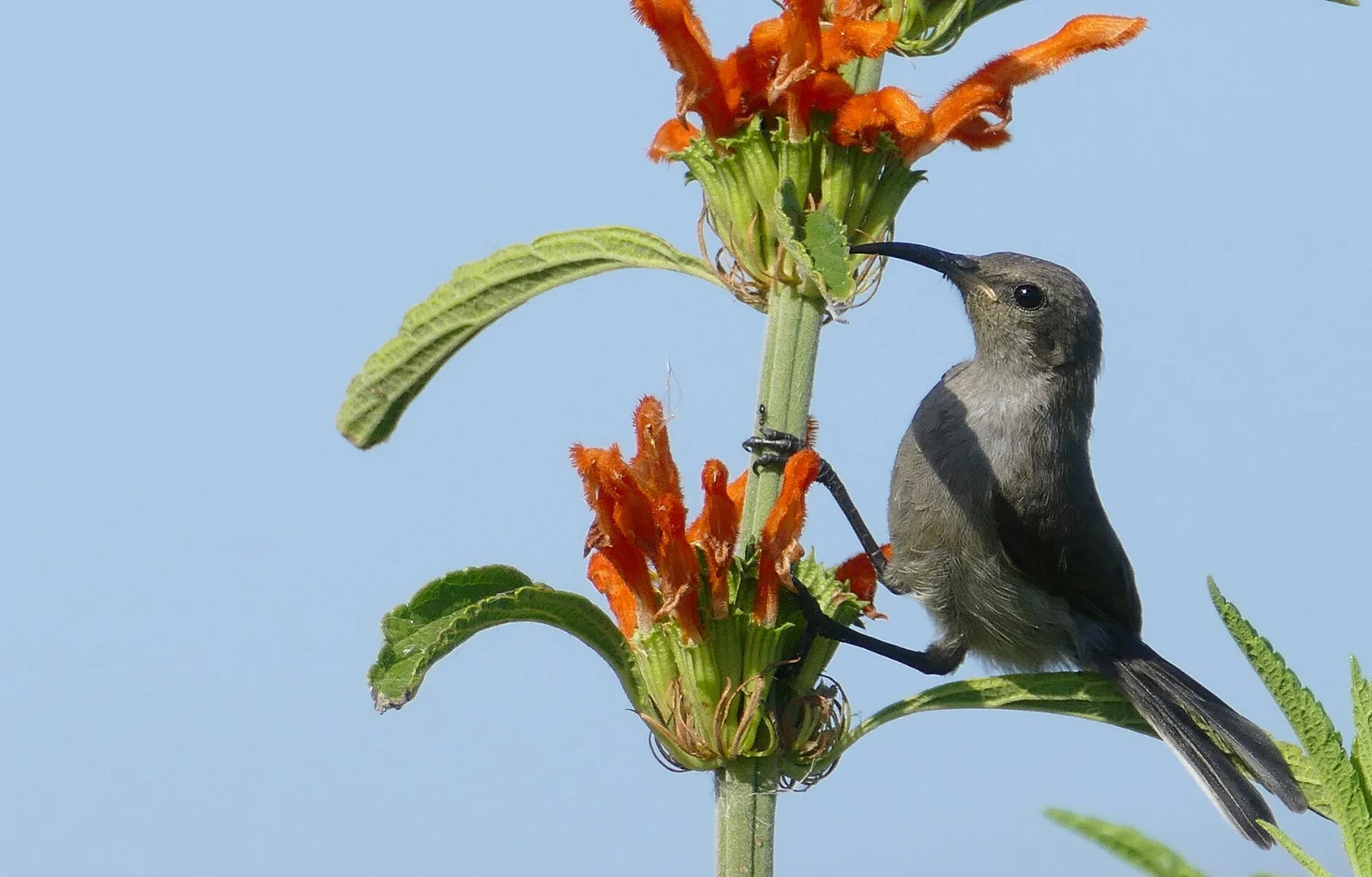
| Wild dagga (Leonotis leonurus) | Nectar, most of the year, peak in autumn | Sunbirds and other nectar-feeders |
| Aloes | Nectar and flowers; large plants for nesting | Sunbirds, orioles, bulbuls |
| Tree fuchsia (Halleria lucida) | Nectar, fruit, insects, nest sites | Nectar- and fruit-eaters |
| Carnival bush (Ochna serrulata) | Black berries on red sepals | Many fruit-eaters, including Red-eyed Dove |
| Crossberry (Grewia occidentalis) | Fruit that stays on for months | Fruit-eating birds |
| Big num-num (Carissa macrocarpa) | Red fruit; dense, spiny cover | Fruit-eaters; small birds nest in it |
| Sweet thorn and other Vachellia | Seeds, gum, insects; thorny nest sites | Canaries, parrots, many nesting birds |
Witkoppen’s planting tips are practical. Plant an exposed nectar plant such as Cape honeysuckle or wild dagga near a tree fuchsia, whose flowers hide among the leaves, so passing sunbirds find the garden and then discover the rest. Give wild dagga a hard cut each spring to stop it going woody. Cape honeysuckle tolerates drought, suits a water-wise garden and can be trimmed into a hedge, though SANBI notes it has naturalised in parts of Australia, where it is listed as invasive, so plant it only within its South African range. The bluebush, Diospyros lycioides, fruits only on female plants, so buy one already in berry rather than gamble.
For a bigger garden, Witkoppen adds the jacket plum, Pappea capensis, a medium tree with a rounded crown whose fruit draws fruit-eating birds and which offers nest sites. It is also a larval food plant for at least 3 butterfly species in Gauteng, including the Pearl-spotted Charaxes, and the caterpillars in turn feed insect-eating birds, which is less pleasant for the caterpillars. That chain, from plant to insect to bird, is the reason indigenous planting brings in more than the nectar and fruit specialists.
Water
A bird bath is often the quickest win. BirdLife South Africa advises keeping the water shallow, because small birds need to stand in it, not swim, and notes that the small fountains sold at nurseries are popular with garden birds. Place it where cats and dogs cannot reach it.
The pull of water is easy to see at Zimanga near Mkuze, where more than 80 species have been recorded at the Mkhombe bird-bath hide alone, which is a lot of customers for one bath. The reserve says its bird baths work best from April to October, when water elsewhere dries up, so expect a garden bath in a summer-rainfall area to be busiest in the dry months.
Feeders, and what each brings in
BirdLife South Africa’s guidance matches food to bird: seed brings in seedeaters, fruit brings in barbets and other fruit-eaters, and mealworms bring in flycatchers. Its position statement on feeding wild birds, dated 2019 and among the statements BirdLife says are under review, advises feeding judiciously so that birds do not become dependent on it, placing feeders at least 1 m off the ground, and not using honey. It also notes that most bird-pollinated plants in South Africa produce nectar of 10 to 20% sucrose.
Sugar water is the feeder with the most research behind it, with the sunbirds as willing test subjects. The Grootbos team found that a few feeders did not reduce sunbird visits to flowers in fynbos with no history of feeding, and could give birds extra food when flowers were scarce. They also cite earlier work in suburban gardens beside fynbos, where feeders reduced visits by sunbirds and sugarbirds to the flowers of one of 2 Erica species studied. If you live on the edge of fynbos, plant first and feed lightly.
Nest boxes and owl houses
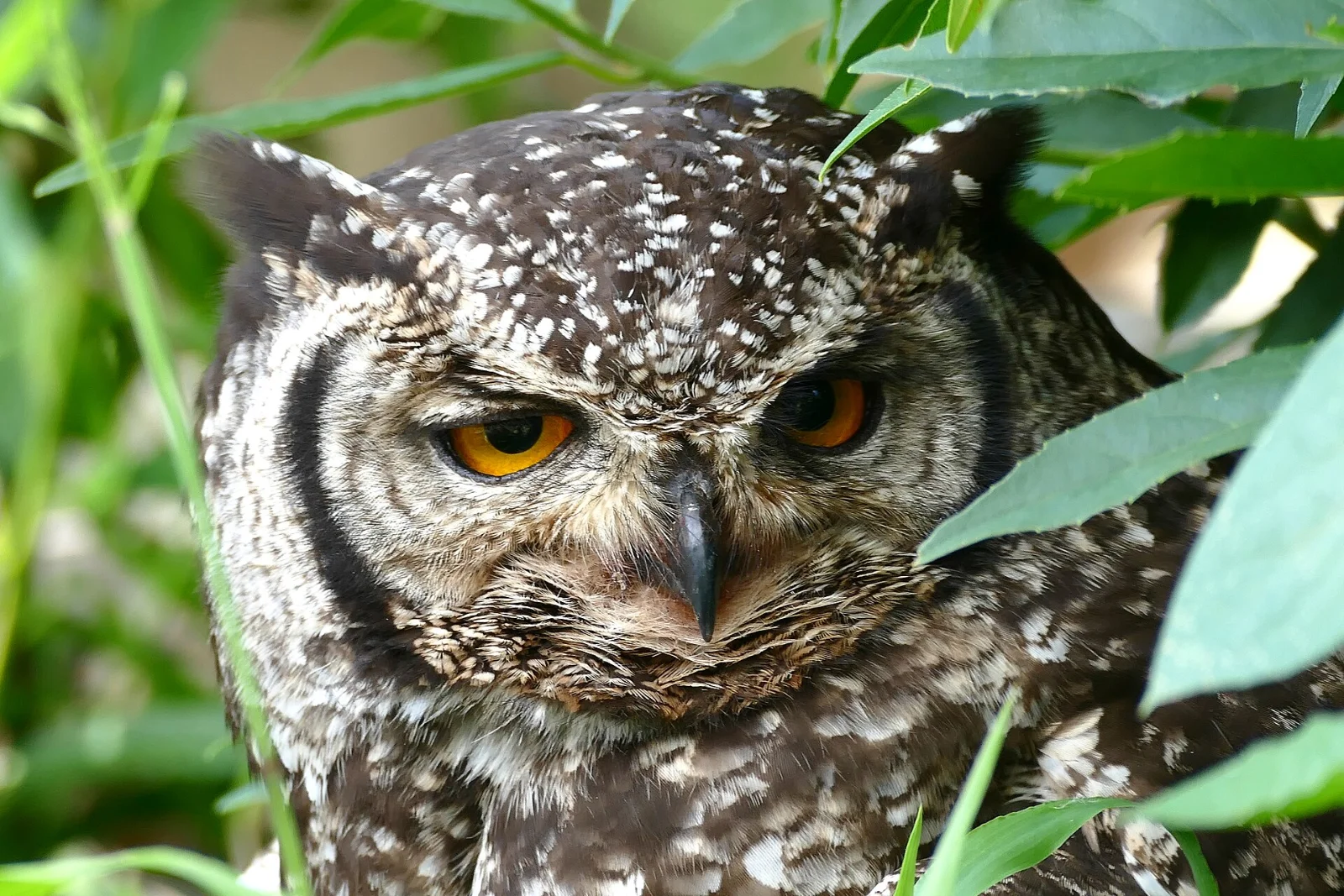
Owls do not build nests, which makes them the natural tenants of the bird world. The Owl Rescue Centre says 12 owl species occur in South Africa and 2 of them, Barn Owl and Spotted Eagle-Owl, commonly breed in owl houses, which it designs for each species. It sells a Spotted Eagle-Owl house for R1,150 and a Barn Owl house for R1,400, excluding delivery and installation; it installs in Johannesburg and Pretoria for R200 a house and couriers countrywide.
If you would rather build one, BirdLife South Africa publishes plans by Gerry Cassidy. The boxes use untreated tongue-and-groove pine on a 30 mm by 30 mm frame, treated on the outside only with a lead-free preservative. A Barn Owl box has a single small entrance with a 15 cm by 10 cm landing ledge; a Spotted Eagle-Owl box has large openings on all 4 sides. In both, the bottom of the opening sits high enough that chicks cannot fall out, the roof overhangs by 5 cm, and pine needles make the best nest lining because they do not rot.
For barbets, BirdLife South Africa suggests a sisal nesting log, and thorny trees and dense shrubs give smaller birds safe places to build.
Cats
A garden that draws birds will draw the neighbourhood cats, who like birds for their own reasons. BirdLife South Africa’s position statement on domestic and feral cats encourages owners to keep cats indoors or contained, and supports fitting a collar and bell, which it says can cut predation of birds by more than half. Keep feeders and baths where cats cannot reach them, as BirdLife advises for dogs too.
Count what comes
Once the garden is working, record it: a garden list is the one bird list you can add to in slippers. BirdLasser lets you log each species with a time and place, and a garden list can become a card for the Southern African Bird Atlas Project 2 in your pentad. Our guide to birding apps and field guides explains how, and the beginners’ guide lists the garden birds most people see first.
Gardens to learn from
Several places in the directory are, in effect, demonstration gardens with rooms attached.
Random Harvest Country Cottages at Muldersdrift is built around indigenous gardens and an indigenous nursery, with birdwatching benches, self-guided trails and a 178-species checklist. In Johannesburg, Liz at Lancaster in Craighall Park is BirdLife Recommended and has a garden feeding tray; rooms start at R600 per person sharing, room only.
On the West Coast, Farr Out Guest House in Paternoster has bottle feeders you watch from the veranda, among fynbos and a planted garden. In Simon’s Town, Avian Leisure has a fynbos garden and feeders that bring in sunbirds and Cape Sugarbird. At Plettenberg Bay, Fynbos Ridge Country House spreads feeding trays and bird baths across the grounds and lists about 90 species, among them Swee Waxbill and Forest Canary; rooms start at R3,300 a night. And Grootbos Private Nature Reserve, where the 2024 feeder study was done, records 118 species and offers guided birding outings.
Further north, Magoebaskloof Birders’ Cottages has a feeding table at Narina Cottage. In the Drakensberg, Mkomazana Mountain Cottages near the Sani Pass and Montusi Mountain Lodge near Bergville both put out feeders. In Zimbabwe, the tents at Mhara River Camp above the Chitake River have bird baths in view of the patios, so the birds come to the guests.
Where to stay
The places in this guide, with what each offers a birder:
| Place to stay | Where | For birders | From |
|---|---|---|---|
| Random Harvest Country Cottages | Muldersdrift, Gauteng | Indigenous gardens and nursery, trails, 178-species checklist | Ask the lodge |
| Liz at Lancaster | Craighall Park, Johannesburg | BirdLife Recommended, garden feeding tray | R600 pp sharing, room only |
| Farr Out Guest House | Paternoster, West Coast | Bottle feeders watched from the veranda, fynbos garden | R820 pp sharing, room only (winter 2026) |
| Avian Leisure | Simon’s Town, Cape Peninsula | Fynbos garden and feeders for sunbirds and Cape Sugarbird | Ask the lodge |
| Fynbos Ridge Country House | Plettenberg Bay, Garden Route | Feeding trays, bird baths, about 90 species | R3,300 a night |
| Grootbos Private Nature Reserve | Near Gansbaai, Western Cape | 118 species, guided birding outings, 2024 feeder study site | R8,450 pp sharing, full board (special) |
| Magoebaskloof Birders’ Cottages | Magoebaskloof, Limpopo | Feeding table at Narina Cottage, forest hide, 152 species | R580 pp sharing, self-catering |
| Mkomazana Mountain Cottages | Sani Pass, southern Drakensberg | Feeders, birding tours with Birds and Beyond | Ask the lodge |
| Montusi Mountain Lodge | Near Bergville, northern Drakensberg | Feeders, Southern Bald Ibis, Southern Ground Hornbill | R3,680 pp DB&B |
| Mhara River Camp | Chitake River, Mana Pools, Zimbabwe | Bird baths in view of the tent patios, guided walks | Ask the lodge |
Plant ranges and rainfall differ across South Africa, so ask a local indigenous nursery what suits your garden. Facts were checked on 13 November 2026 with BirdLife South Africa, SANBI, Witkoppen Wildflower Nursery, the Owl Rescue Centre, Zimanga and the published Grootbos study; place details are from each listing’s own website. Prices change; confirm them before you buy or book.
More from the Journal
 Do You Need a Spotting Scope? When a Scope Helps, What to Look For and Where It MattersA scope turns grey dots on a mudflat into Curlew Sandpipers and Red Knots. When it earns its place in the car, the features that matter, and why 60x fails at noon.
 Your First Birding Safari: What to Expect, From the 05:30 Gate to the Evening ListHow a birding safari day runs, what the guide does, why the vehicle stops for a brown bird when there is an elephant over there, and the other things first-timers find odd.
 How to Log Your Bird Sightings: eBird, BirdLasser or SABAP2?eBird wants short checklists with counts, BirdLasser wants the same bird logged again and again, and SABAP2 wants 2 hours in one square. What each is for, and how to feed all 3.
The Pigeon Post
Every Thursday: 1 bird, 1 place to go and 1 place to stay, by email. Sign up and get our printable checklist of the 163 endemics of southern Africa.