
How to Learn Bird Calls in Southern Africa: Memory Phrases, Apps and the First 20 Calls
The memory phrases South African birders use, from "work harder" to Piet-my-vrou, the apps that teach calls and the ones that only guess, and 20 calls to learn first.
Every summer the Red-chested Cuckoo repeats the same phrase over and over, often through the heat of the day, with the stamina of a car alarm. Afrikaans named the bird for the sound: Piet-my-vrou. Robert Ball, a former Londolozi ranger, hears it as a bird calling for its partner, “Piet, my wife”.
Learning calls is how a birder turns a wall of noise into a list of species. Ball makes the case with cisticolas: small, plain birds that are hard to tell apart by sight, whose calls do the identifying because the birds themselves refuse to. The Atlas of Southern African Birds says much the same of the Woodland Kingfisher, whose trilling call is what draws attention to it.
Start with the birds you hear every day
The garden is the cheapest classroom: you hear the same loud, common birds every day and can check each call against the bird making it.
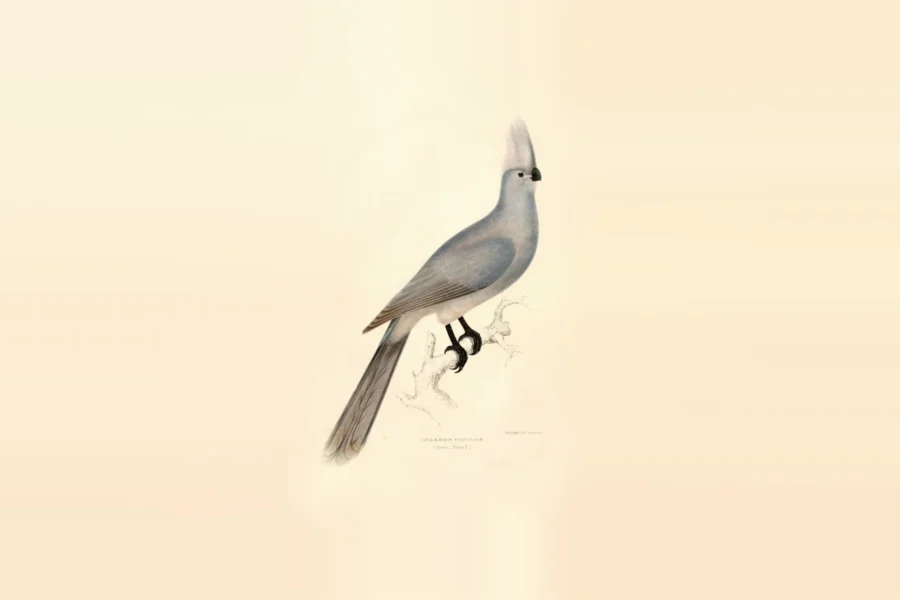
The Hadeda Ibis names itself. Its loud “haa-haa-haa-de-dah” is given mostly in flight, as the birds leave their roost trees in the morning and come back in the evening, which makes it the least optional alarm clock in the country. The Grey Go-away-bird has a nasal “kweh” or “go-way”, with the last syllable drawn out and falling. The Blacksmith Lapwing takes its name from its metallic “tink, tink, tink” alarm, which sounds like a hammer striking an anvil.
Doves are the best lesson in why calls matter. The Ring-necked Dove, still called Cape Turtle Dove by many birders, and the Red-eyed Dove look alike at a glance. The Biodiversity and Development Institute’s garden bird guide separates them by voice. The Ring-necked Dove’s 3-syllable croon is “Tell fa-ther” or “Work hard-er”, stressed on the second syllable; the Red-eyed Dove sings “I AM the red-eyed dove”, with the weight on “AM”, in case anyone doubted it.
Use memory phrases, then let them go
Phrases like these are hooks rather than transcriptions: they give the brain somewhere to file a rhythm. Play a recording of the real bird straight after reading the phrase, and say the phrase in the bird’s rhythm rather than your own.
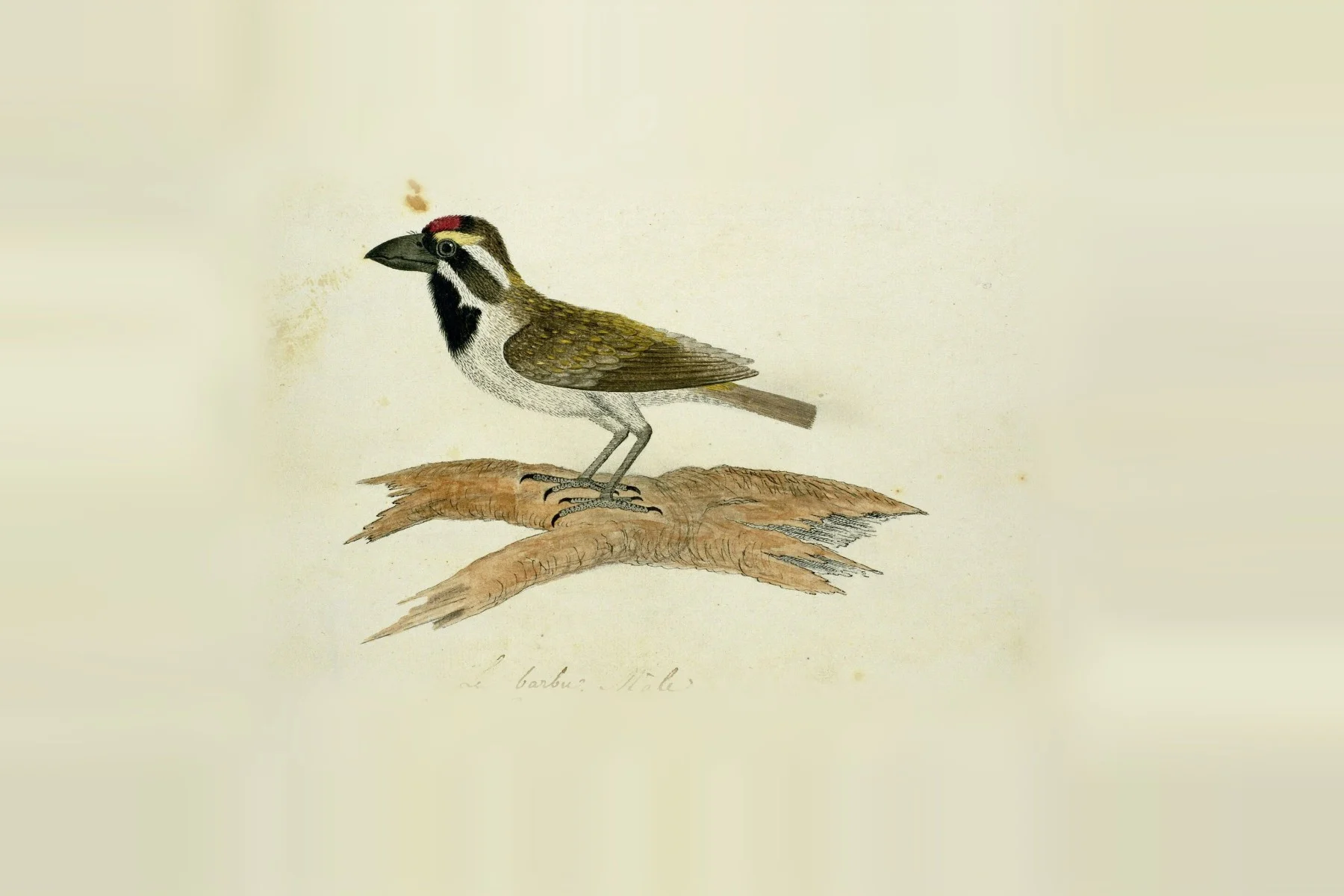
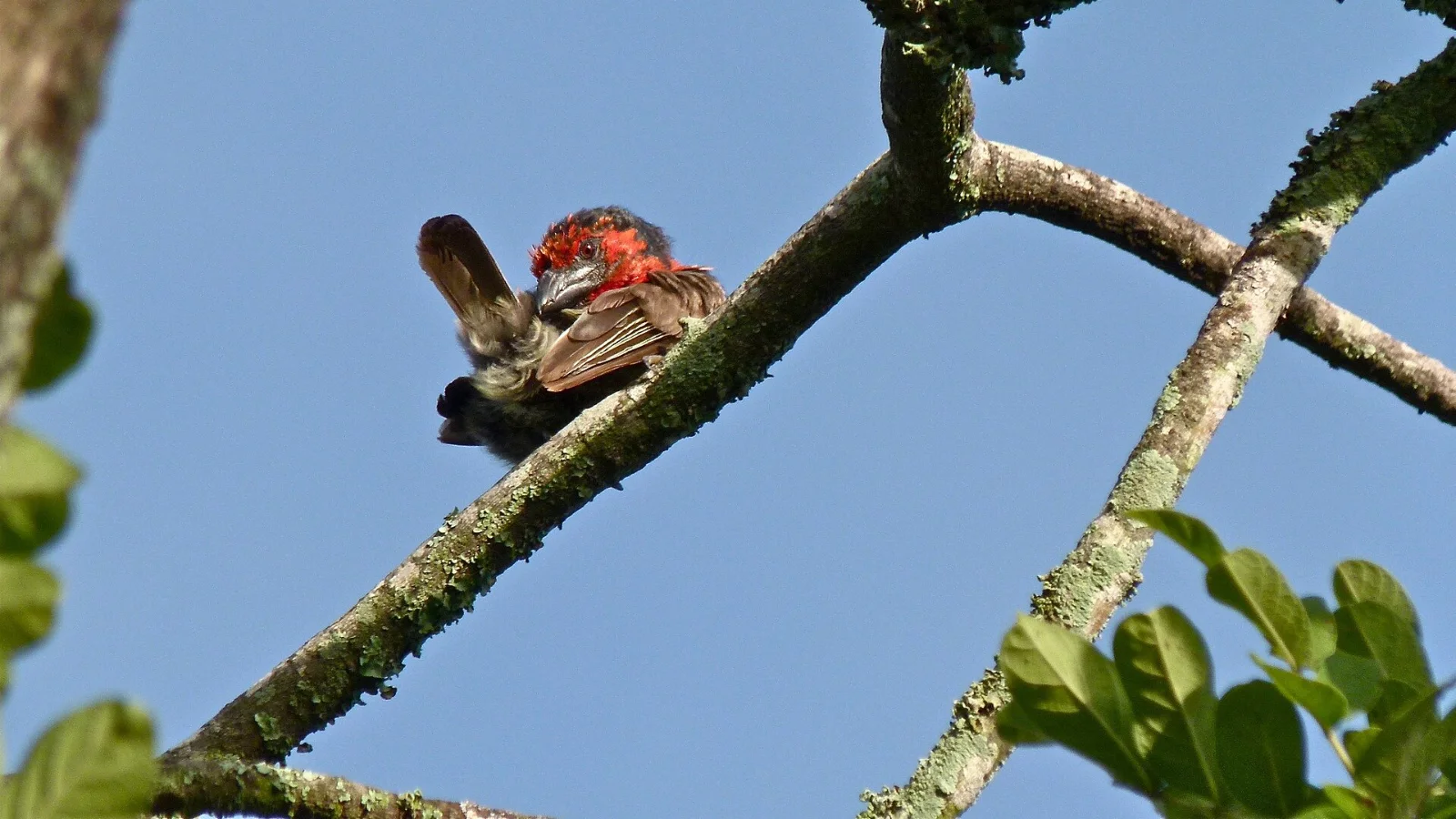
Some of the best-known phrases come from the Lowveld. The Kruger birding site run by Siyabona Africa renders the mournful Emerald-spotted Wood Dove as “my father’s dead, my mother’s dead, oh oh oh”, possibly the gloomiest memory phrase in birding, and the White-browed Robin-Chat’s warning as “don’t you do it, don’t you do it”. Black-collared Barbet pairs sing in synchronised duets that sound like “two puddy two puddy”. Ball hears the Orange-breasted Bushshrike asking “Coffee, tea, or me?” and compares Burchell’s Coucal to water being poured from a long-necked bottle.
Duets are worth learning as duets. Ball notes that Southern Boubou pairs take turns, each answering the other, so what sounds like a single bird is often a pair finishing each other’s sentences.
The 20 calls to learn first
The list mixes garden birds found across much of South Africa with the bushveld voices of Kruger and the Lowveld. Find each bird in your field-guide app and play it until you can name the bird before the picture comes up, or until the household asks you to stop.
| Bird | What to listen for | Good to know |
|---|---|---|
| Hadeda Ibis | Loud “haa-haa-haa-de-dah” | Mostly in flight, to and from roost trees at dawn and dusk |
| Ring-necked Dove | “Tell fa-ther” or “work hard-er”, stress on the second syllable | Also called Cape Turtle Dove; almost everywhere in South Africa |
| Red-eyed Dove | “I AM the red-eyed dove” | Looks like the Ring-necked Dove; the call settles it |
| Emerald-spotted Wood Dove | Mournful, falling “my father’s dead, my mother’s dead, oh oh oh” | A bushveld sound, often in the heat of the day |
| Grey Go-away-bird | Nasal “kweh” or “go-way”, the last syllable falling | Loudest when disturbed |
| Blacksmith Lapwing | Metallic “tink, tink, tink” | The alarm call; any wetland, even a leaking trough |
| African Fish Eagle | Piercing, echoing cry | Calls perched or in flight, all year; the female’s call is deeper |
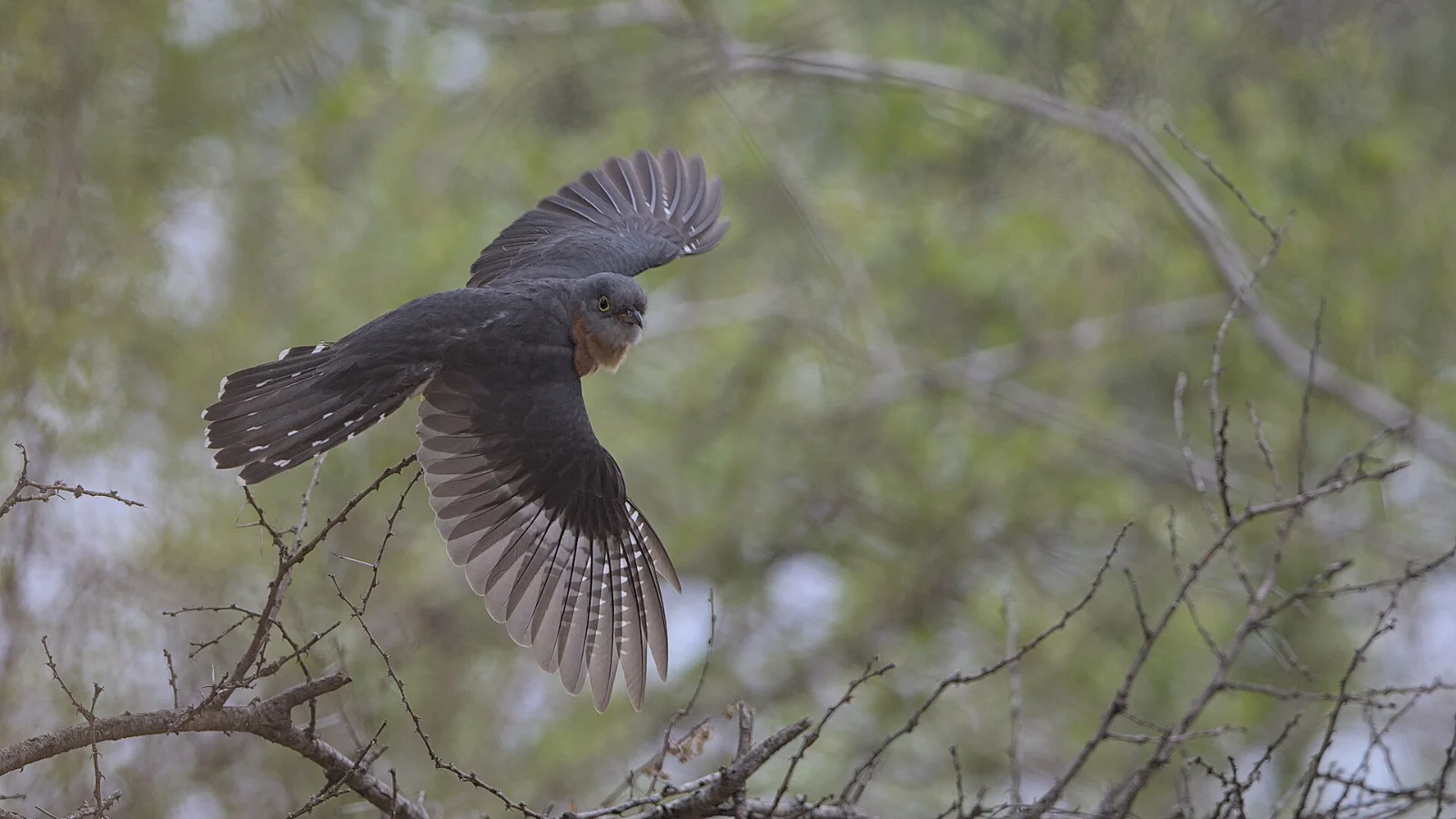
| Red-chested Cuckoo | “Piet-my-vrou”, repeated | A summer visitor, often calling in the heat of the day |
| Diederik Cuckoo | Persistent “deed-deed-deed-deed-er-ick” | The name is an Afrikaans rendering of the call |
| Woodland Kingfisher | High, laughing start falling into a long trill, “kri-trrrrrr” | A summer visitor, here from October or November until April |
| Black-collared Barbet | Duet, “two puddy two puddy” | Partners call in synchrony |
| White-browed Robin-Chat | Rich song including “don’t you do it, don’t you do it” | Part of the bushveld dawn chorus |
| Orange-breasted Bushshrike | “Coffee, tea, or me?” | Calls from thick, leafy cover, from first light |
| Gorgeous Bushshrike | Loud, brassy whistled duets with crackles | A summer voice of the Kruger bush |
| Southern Boubou | Pair duet, each bird answering the other | Stays hidden in dense vegetation |
| Burchell’s Coucal | Bubbling, like water poured from a bottle | Known as the rain bird |
| Purple-crested Turaco | Starts softly, builds to a repeated “kok kok kok” | On Siyabona’s winter bushveld list |
| Chinspot Batis | Descending 3-note whistle | The male calls from a prominent perch |
| African Scops Owl | Insect-like trill | Almost constant once night falls |
| Pearl-spotted Owlet | Calls mostly at night | Small birds mob it by day, drawn by its calls |
The cuckoos and the Woodland Kingfisher are summer visitors, and the Siyabona site lists them in its summer bushveld soundtrack rather than its winter list. Our guide to summer migrants gives the arrival dates.
Learn by habitat, not by list
Birds you hear together are the ones you confuse, so learn them together. Firefinch, the app by Faansie Peacock and the developer Plofskaap, builds its call game around this. Whistlr plays a call and asks you to name the bird, starting with multiple choice and moving on to typing the answer as you improve, across 4 levels of difficulty. It brings back the birds you get wrong more often, a method called spaced repetition, and its habitats include bushveld, fynbos, highveld, wetland, night birds and Lesotho. The forest habitat is free; the rest need a subscription. Since October 2026 it can also turn your own target list into a quiz, which is homework a birder actually wants.
On the South African App Store on 14 November 2026, Firefinch was free to download, with the full plan at R89.99 a month or R899 a year. Our guide to birding apps and field guides compares it with the others.
Apps: libraries first, guesses second
A call library and a call identifier do different jobs. The library teaches; the identifier guesses.
Sasol eBirds costs R399.99 once and has more than 1,200 calls covering 888 species, with a Quick-Play button for calls on the menu. Its AI Bird Call ID, which suggests a species from a recording, is an optional subscription at R179.99 a year or R29.99 a month.
Roberts Birds is a free download that needs a core subscription of R299.99 a year to work. It has more than 2,200 calls, lets you search by call among other features, and runs without an internet connection once installed, so it works in remote places.
Merlin is free and has been downloaded more than 33 million times, but in Africa its Sound ID has a hard limit. Adam Cruickshank of Birding Ecotours explained in January 2026 that it needs at least 150 recordings of a species in the Macaulay Library before it can identify it, and that in most African countries fewer than 30% of species have that many. Even common birds fall short: the Crested Barbet had more than 46,000 eBird observations but only about 110 sound recordings. Firefinch added its own identifier, Ask Lori, as a beta feature in October 2026, and says it is still learning, which puts it in good company.
Use any identifier as a lead. Check its answer against the recordings in a library app, and against the habitat you are standing in.
Record what you hear, and give it back
The gap in recordings is something birders can close. The Big Year of African Sounds, run by the Cornell Lab of Ornithology with partners including BirdLife South Africa, aims to record more than 1,500 species in more than 50 African countries. According to Birding Ecotours, all it takes is an eBird account and a smartphone: record in the field, then upload the sound to your eBird checklist. Recordings of common birds count as much as rarities, so the Hadeda outside the window can finally contribute to science.
For listening without a phone, BirdLife South Africa’s Dawn Chorus series, made with Fine Music Radio and Guy Gibbon Bird Calls, lists 73 short episodes on its web page, each built around a single species, from Blue Crane to Knysna Turaco.
After dark
Night birds are learned by ear, since the eyes have nothing to work with. The African Scops Owl’s trill and the Pearl-spotted Owlet’s calls are the place to start: the BDI’s account notes that the owlet hunts and calls mostly at night, and that its calls bring small birds in to mob it by day. Our guide to owls you can find without a guide covers the Kruger camps where they are resident.
Where to stay
The directory has a place that publishes the calls of its own birds:
| Place to stay | Where | For birders | From |
|---|---|---|---|
| Magoebaskloof Birders’ Cottages | Magoebaskloof, Limpopo | Dragonwyck Farm bird calls page, forest hide, 152 species | R580 pp sharing, self-catering |
Call descriptions are from the sources listed below and were checked on 14 November 2026. App prices are from the South African App Store on that date and change often; check before you buy.
More from the Journal
 Do You Need a Spotting Scope? When a Scope Helps, What to Look For and Where It MattersA scope turns grey dots on a mudflat into Curlew Sandpipers and Red Knots. When it earns its place in the car, the features that matter, and why 60x fails at noon.
 Your First Birding Safari: What to Expect, From the 05:30 Gate to the Evening ListHow a birding safari day runs, what the guide does, why the vehicle stops for a brown bird when there is an elephant over there, and the other things first-timers find odd.
 How to Log Your Bird Sightings: eBird, BirdLasser or SABAP2?eBird wants short checklists with counts, BirdLasser wants the same bird logged again and again, and SABAP2 wants 2 hours in one square. What each is for, and how to feed all 3.
The Pigeon Post
Every Thursday: 1 bird, 1 place to go and 1 place to stay, by email. Sign up and get our printable checklist of the 163 endemics of southern Africa.