
Kosi Bay and the Maputaland Coast: Palm-nut Vultures, Mangroves and Sand Forest
Palm-nut Vultures, the vultures that live in palm swamps, Mangrove Kingfisher in the estuary, sand forest twinspots and apalises inland at Tembe and Ndumo, and the coastal stays from Kosi Bay to Mtunzini.
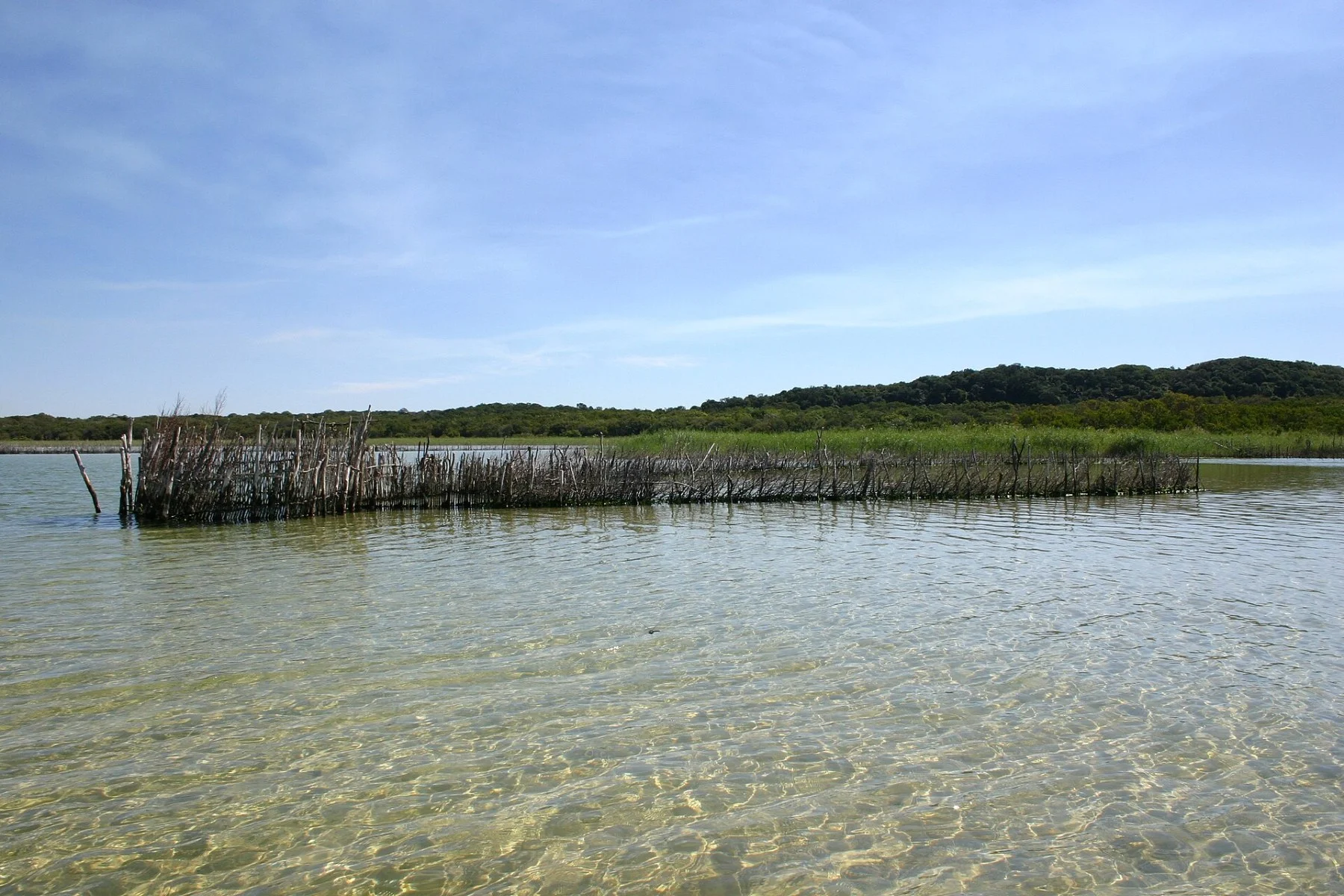
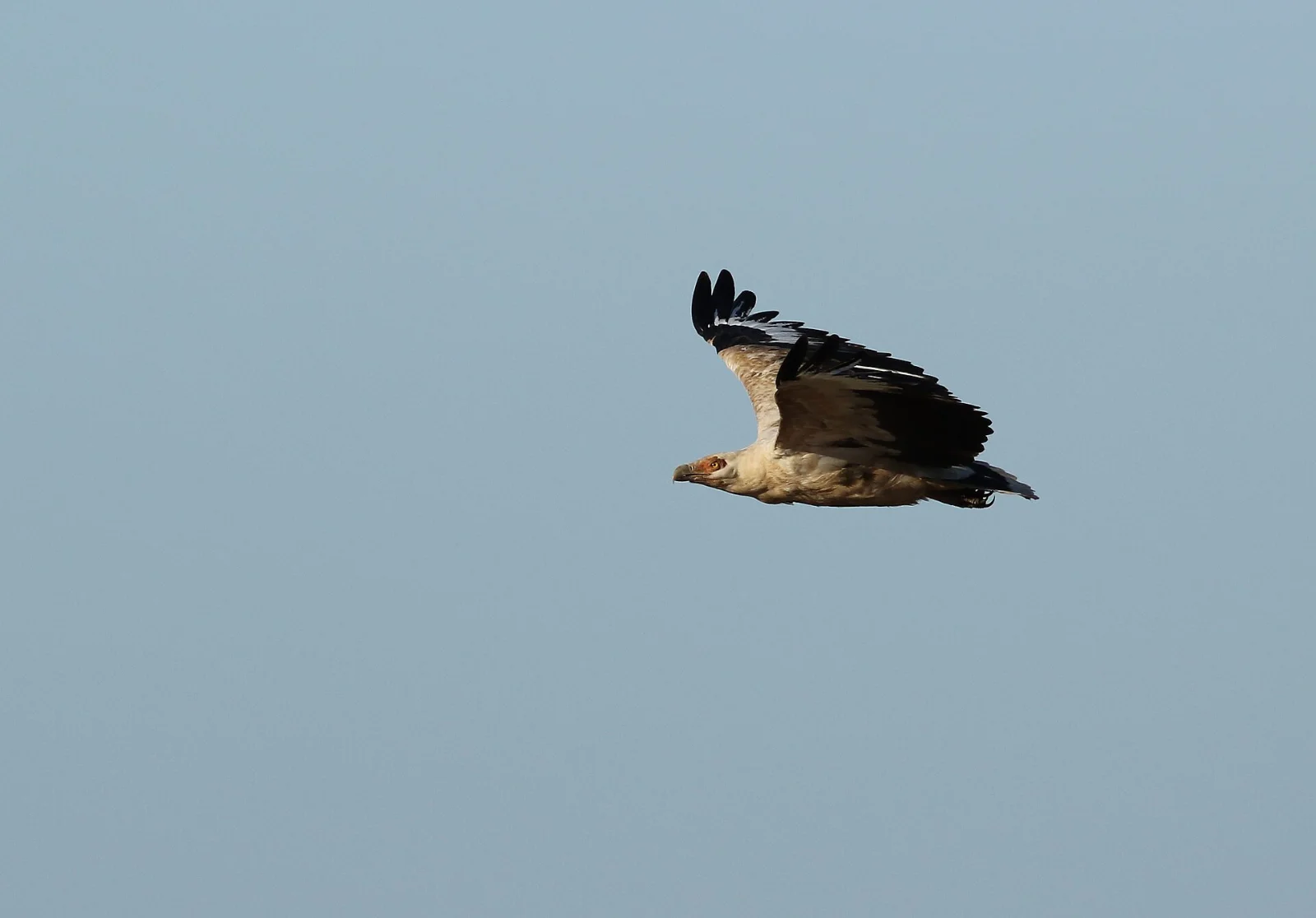
At Kosi Bay, the vulture to look for lives in the palm swamps. The Raphia palm forests on the fringes of the southern lakes hold relatively large numbers of Palm-nut Vulture, and BirdLife South Africa’s GoBirding guide calls Kosi one of the most reliable sites for the species anywhere in southern Africa. From a boat on the lakes, the birds can be seen patrolling the shoreline with African Fish Eagles and Western Ospreys, all 3 of them common here, which makes the shoreline a busy piece of airspace.
Kosi Bay is the last stop on the South African coast before Mozambique, in the extreme north-east of KwaZulu-Natal, and GoBirding says it offers some of the most exciting birding in southern Africa. The region around it is Tongaland, or Maputaland, flanked by the Lebombo Mountains to the west and the Indian Ocean to the east, and it carries many tropical birds found nowhere else in the country, so a good number of range maps in the field guide end right here.
The lakes and the Raphia swamps
The Kosi Bay Nature Reserve covers about 1,000 ha, including a chain of 4 linked lakes of fresh and brackish water, fed by the Siyadla and Nswamanzi rivers. GoBirding says the lakes are best explored by boat. Reedy channels hold Rufous-winged Cisticola, African Reed Warbler and African Marsh Harrier, and quiet backwaters attract Malachite Kingfisher, African Pygmy Goose and White-backed Duck. A night trip on the narrows can sometimes be arranged, and on it, sightings of Pel’s Fishing Owl are regular.
The swamp forest is a canoe trip, and the paddling is the price of admission. GoBirding recommends paddling up the Siyadla River at the southern end of the fourth lake, a route that regularly produces African Finfoot, Western Osprey, African Pygmy Goose, Southern Brown-throated Weaver and Purple Heron.
The estuary, the mangroves and Mangrove Kingfisher
At the northern end of the lake system, the estuary opens to the sea, leaving sandbanks, mudflats and, in GoBirding’s words, some of the most diverse and extensive mangrove swamps anywhere in South Africa. Summer is the season for waders here: Common Greenshank and Curlew Sandpiper, with relatively large numbers of Eurasian Whimbrel, Eurasian Curlew and Bar-tailed Godwit, small numbers of Greater and Lesser Sand Plovers at times, and, with luck, a Crab-plover in the mangroves. Black and Rufous-bellied Herons, Little and Lesser Crested Terns, Giant Kingfisher, Greater and Lesser Flamingos and Saddle-billed Stork are on the same list.
The mouth is also one of the most reliable sites in South Africa for Mangrove Kingfisher, a range-restricted bird that GoBirding says is best found by its loud and distinctive call. Learn the call before you go; it is the bird’s giveaway in thick mangroves, where the bird itself is in no hurry to be seen. For the rest of the family, see Kingfishers of southern Africa.
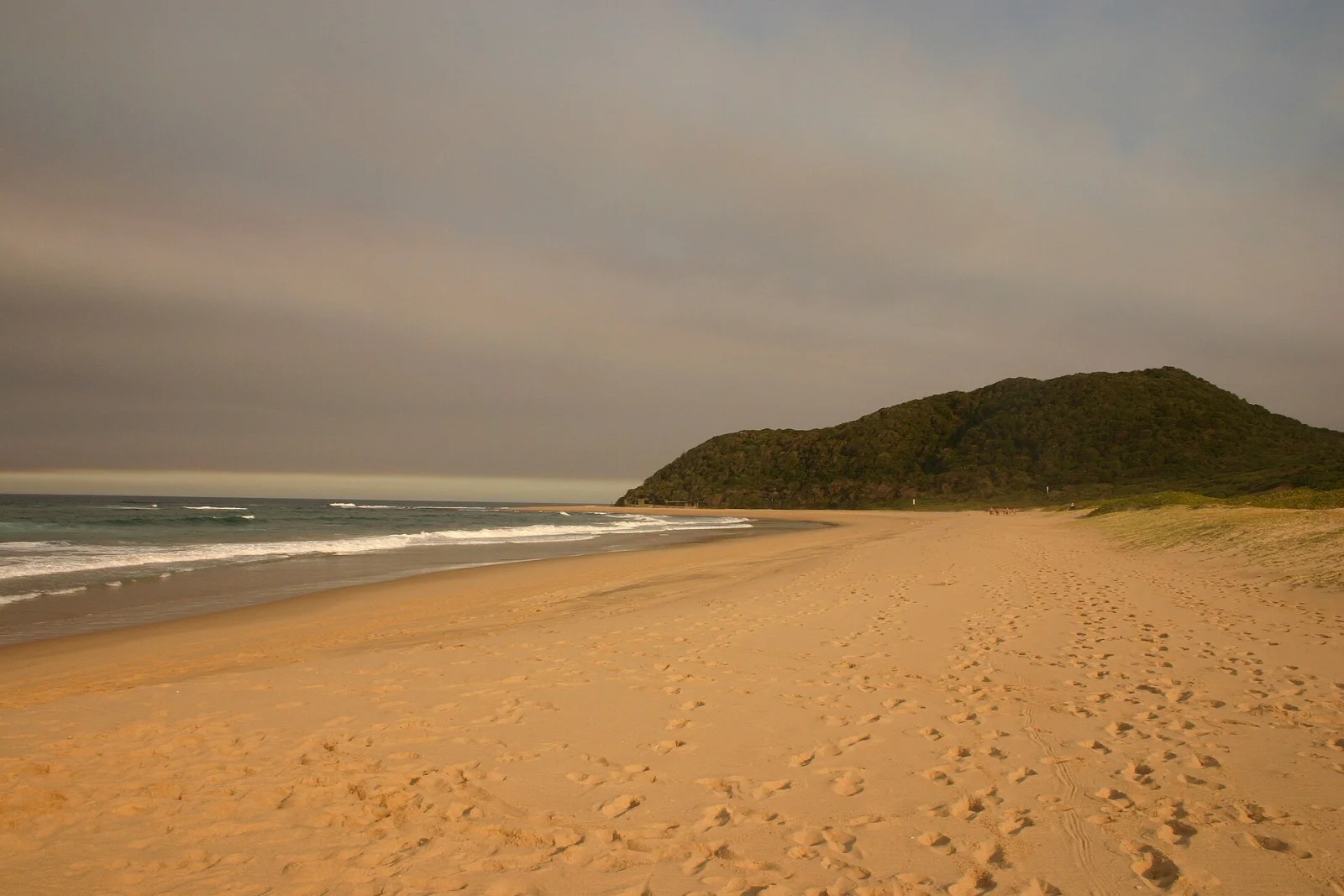
GoBirding notes that the lodges and the Kosi mouth can only be reached in a high-clearance 4×4, and that other tracks in the area generally need one too. The reserve gates are open from 06:00 to 18:00.
The coastal forest
The forest around the lakes is the other half of Kosi. GoBirding’s list for it is long, so take a breath: Square-tailed Drongo, Black-bellied Starling, Woodward’s Batis, Narina Trogon, Green Malkoha, African Broadbill, Grey Cuckooshrike, Yellow-rumped Tinkerbird, Chorister and Red-capped Robin-Chats, Olive and Gorgeous Bushshrikes, Blue-mantled Crested Flycatcher, Rudd’s and Yellow-breasted Apalises, Eastern Nicator, Terrestrial Brownbul, Yellow-bellied Greenbul, Trumpeter Hornbill, Livingstone’s Turaco, and Spectacled and Dark-backed Weavers. Overhead, African Cuckoo-hawk and Southern Banded Snake Eagle hunt along the forest edge, and the very range-restricted Plain-backed Sunbird turns up occasionally.
Open patches break the forest. The grassland holds Black-bellied Bustard, Flappet and Rufous-naped Larks, Croaking Cisticola and Shelley’s Francolin, with European Roller in summer and African Stonechat in winter. The moist grassland and swamp to the south and west of Kosi hold all 3 longclaws, Cape, Yellow-throated and Rosy-throated, along with Lesser Jacana, Blue-billed Teal, Pale-crowned Cisticola and African Wattled, Senegal and Black-winged Lapwings.
GoBirding’s key species for the area sum up the draw: Pink-throated and Green Twinspots, Palm-nut Vulture, African Cuckoo-hawk, Gorgeous Bushshrike, Crab-plover and Mangrove Kingfisher.
Inland: Tembe and Ndumo
Inland, GoBirding describes Tongaland as the floodplains of the Phongolo and Mkhuze rivers, with shallow pans, Lala palm savanna and clumps of bush and forest. It names Ndumo Game Reserve and Tembe Elephant Park as the 2 premier sites on this route, with Ndumo holding the highest bird list of any protected reserve in South Africa. Together they are the country’s top destinations for the full set of sand forest specials: Pink-throated Twinspot, Neergaard’s and Plain-backed Sunbirds, Rudd’s Apalis and African Broadbill. African Pygmy Goose and Lesser Jacana can be common on the floodplains, and the surrounding habitat holds impressive numbers of Pel’s Fishing Owl, Palm-nut Vulture, Lemon-breasted Canary, Rosy-throated Longclaw and Black-throated Wattle-eye. GoBirding adds that access to both reserves is very good.
Ndumo, with its fig forest and pans, has its own section in the Zululand birding guide. Kosi Forest Lodge runs guided tours to Tembe from the coast, and on the drive north from Mkuze, Jozini Tiger Lodge on the lake at Jozini can arrange a qualified guide for birding walks along the shore, and names Pel’s Fishing Owl in the floodplain and fig forest nearby.
Getting there
GoBirding’s route runs from Hluhluwe on the R22 towards Sodwana Bay and Mbazwana, about 124 km past Mbazwana and Mseleni to a large traffic circle, then right towards KwaNgwanasi, also called Manguzi, 23 km further on. Kosi Bay lies due east of the town, signposted from it.
Sodwana Bay, signposted off the same road, is the other coastal base. Sodwana Bay Lodge gives more than 500 species for the area, and reception books a guided bird walk on the Ngoboseleni Trail, including a 3-hour forest walk. The birds it names, Neergaard’s Sunbird, Rudd’s Apalis, Pink-throated Twinspot, African Broadbill, Lemon-breasted Canary and Tambourine Dove, are a fair summary of the coast’s sand forest and thicket.
Further south: Mtunzini
Palm-nut Vulture also appears on the lists of 2 stays far to the south, at Mtunzini, about 90 km north of King Shaka International Airport. Both are BirdLife South Africa Recommended. Oliver’s Tale points guests to Umlalazi Nature Reserve and its lagoon, and to Ongoye Forest for Green Barbet. Quintasol puts its count at about 380 species, can arrange a local BirdLife-trained guide and an early breakfast basket, which is the correct way to treat a birder, and names Palm-nut Vulture, Black Coucal, Mangrove Kingfisher, African Finfoot and Green Twinspot. For the forests between Mtunzini and Durban, see birding near Durban.
When to go
Summer is the wader season at the Kosi mouth and the time for European Roller in the grassland, and Kosi Forest Lodge’s turtle-tracking outings run only from 15 December to 15 January. Winter brings African Stonechat to the grassland. GoBirding gives no season for the Palm-nut Vultures, fish eagles and ospreys on the lakes, which it calls common: they are there.
Where to stay
The places to stay on the Maputaland and Zululand coast, in the order they appear above:
| Place to stay | Where | For birders | From |
|---|---|---|---|
| Kosi Forest Lodge | Kosi Bay, iSimangaliso, South Africa | BirdLife Recommended, Raphia forest walk, canoeing, Palm-nut Vulture | R3,745 pp sharing, meals and 3 activities |
| Jozini Tiger Lodge and Spa | Jozini, northern KwaZulu-Natal | Guided birding walks, Pel’s Fishing Owl nearby | R1,264 a room, B&B |
| Sodwana Bay Lodge | Sodwana Bay, KwaZulu-Natal | Guided bird walk, Neergaard’s Sunbird, Rudd’s Apalis | Ask the lodge |
| Oliver’s Tale | Mtunzini, KwaZulu-Natal | BirdLife Recommended, Palm-nut Vulture, Green Barbet | Ask the lodge |
| Quintasol | Mtunzini, KwaZulu-Natal | BirdLife Recommended, local guide, Palm-nut Vulture, Mangrove Kingfisher | Ask the lodge |
Access, gate times and lodge details change, and the Kosi tracks need a 4×4. Facts were checked on 14 November 2026 with BirdLife South Africa’s GoBirding guide to Kosi Bay and Tongaland and each listing on Birding Dispatch. Confirm transfers and activities with the lodge before you travel.
More from the Journal
 Namib-Naukluft and Sossusvlei for Birders: Dune Lark, Desert Raptors and the Naukluft SpecialsA lark that lives on the dunes and nowhere else, Lappet-faced Vultures nesting in the desert, coursers on the gravel plains and the northern specials around the Naukluft cliffs, in one of Africa's largest parks.
 Lake Baringo and Lake Bogoria Birding: The Owl Walks, the Cliffs and the FlamingosA local guide who knows where every nightjar and eagle-owl slept last night, thorn scrub full of hornbills, a Goliath Heron colony on a rock, and the flamingo lake next door that keeps rising.
 Akagera Birding: Rwanda’s Savanna, Lakes and Papyrus, and the Shoebill ChancesRed-faced Barbet in the southern woodland, Papyrus Gonolek and Carruthers's Cisticola in the swamps, a lake of hippos and lapwings, and a Shoebill that hides in the wetlands more than it shows.
The Pigeon Post
Every Thursday: 1 bird, 1 place to go and 1 place to stay, by email. Sign up and get our printable checklist of the 163 endemics of southern Africa.