
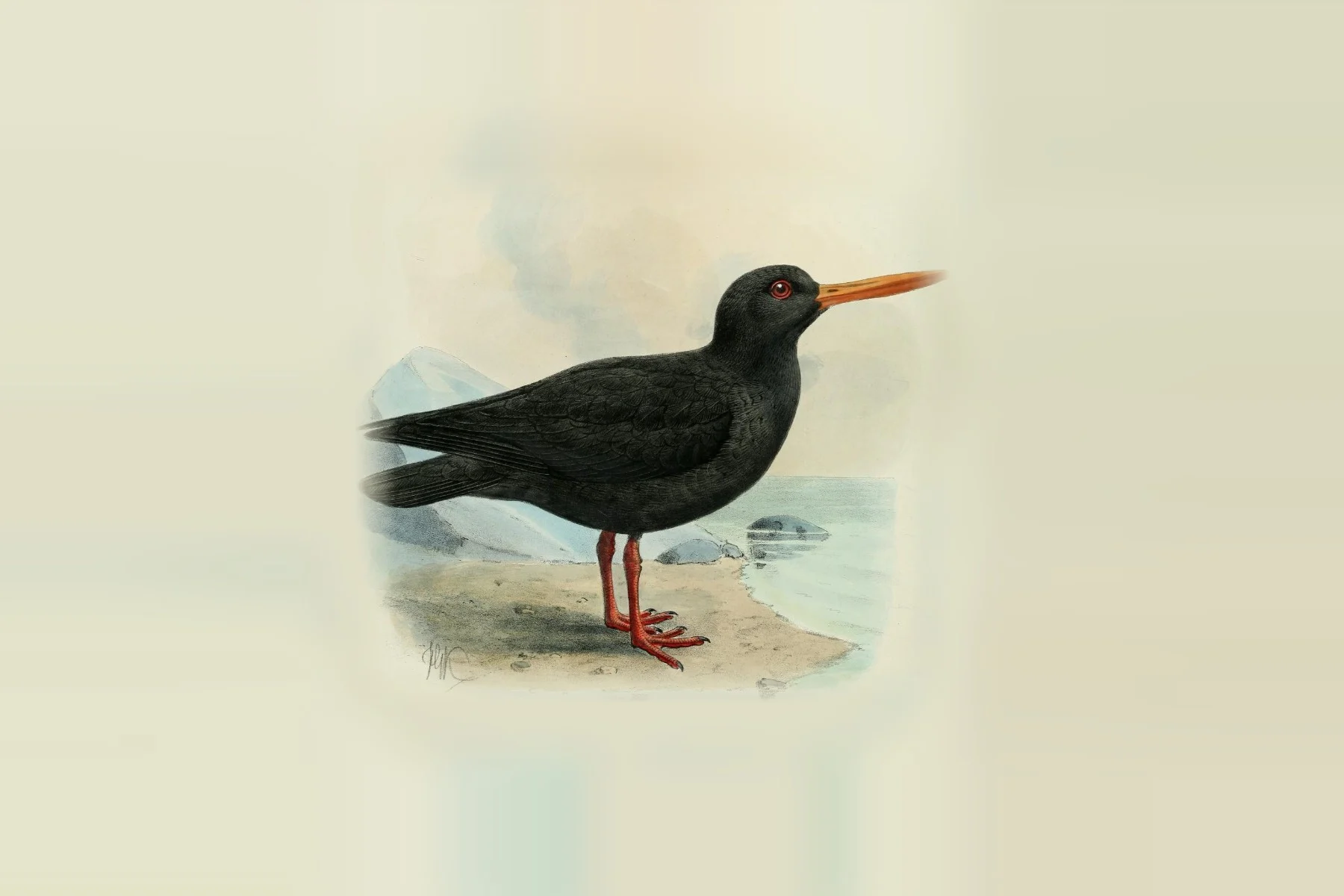
Where to See an African Oystercatcher: the Black Oystercatcher’s Comeback, From the West Coast to De Hoop
In the 1980s it was on the global Red List. Then the cars left the beaches and an alien mussel arrived. How the Cape's black oystercatcher recovered, and where to see it.
In the summer of 2010/11, Peter Ryan of the Percy FitzPatrick Institute counted 278 km of the Western Cape coast, repeating counts made by the Western Cape Wader Study Group some 30 years earlier. The news for the migrant waders was grim: Sanderling and Curlew Sandpiper were down by more than 90%. One shorebird had gone the other way. The FitzPatrick report on the counts says numbers of African Oystercatchers had increased, and gave 2 reasons: a conservation campaign that included closing beaches to private vehicles, and, mostly, a great deal more to eat.
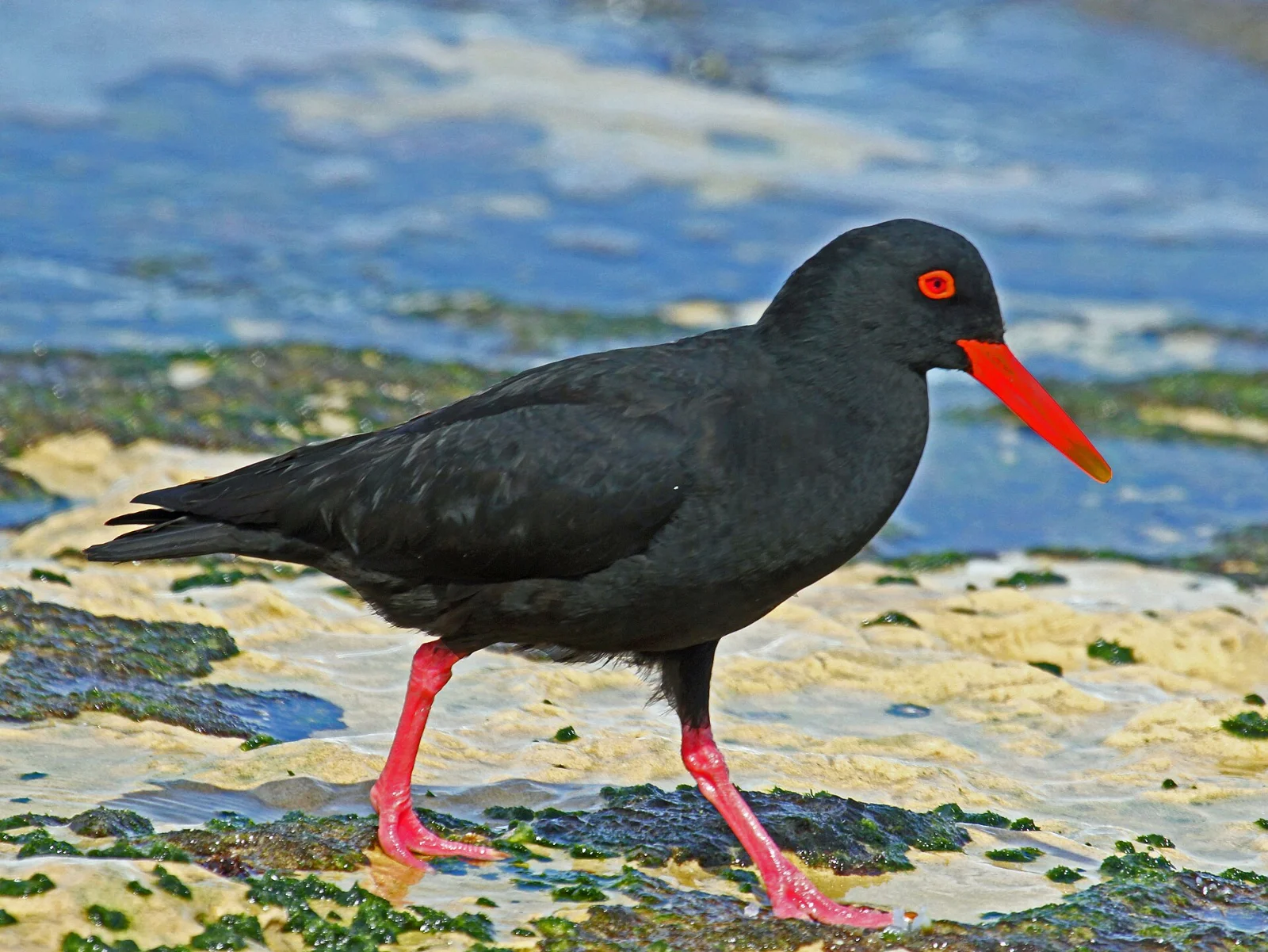
That is a rare kind of bird story, and a useful one, because the African Oystercatcher is now one of the easiest coastal endemics to find. Loud, black and armed with a bright red bill, it is about as hard to overlook as a fire engine parked on the rocks.
A note on the name. BirdLife South Africa made it Bird of the Year in 2018 as the African Black Oystercatcher, and its 2026 checklist lists it as African (Black) Oystercatcher, so both names are in use. The Afrikaans name is Swarttobie.
The sites at a glance
| Where | What the sources say | Best time | Where to stay |
|---|---|---|---|
| Cape of Good Hope, Table Mountain National Park | Common on the rocks; Olifantsbos beach good | Any month | Avian Leisure (Simon’s Town) |
| Koppie Alleen, De Hoop Nature Reserve | Large numbers on the rocky shore | Any month; whales in winter and spring | Lekkerwater Beach Lodge, De Hoop Collection |
| Bot River Lagoon, near Hermanus | Named from the estate’s eco-cruise | Any month | Benguela Cove Lagoon Wine Estate |
| Velddrif and Rocherpan, West Coast | Named on both properties’ bird lists | Any month | Quagga River Lodge, Rocherpan Nature Reserve |
| Walvis Bay and Lüderitz, Namibia | Most of the Namibian records | Any month | Not covered here |
A bird that was in trouble
The Atlas of Southern African Birds, compiled from the first bird atlas, describes the African Black Oystercatcher as endemic to the coast of southern Africa, with a world population of fewer than 5,000 birds. More than half lived in the south-western Cape, and 29% on offshore islands of Namibia and the Cape. In the 1980s the species was on the global Red List.
Phil Hockey of the FitzPatrick Institute set out the problem in Africa Birds & Birding in 2009. Oystercatchers breed in the open, on the ground, at the height of the summer holidays, when people crowd the coast. Eggs were trampled or deserted, and dogs and off-road vehicles destroyed eggs and killed chicks. The atlas adds that vehicles parked for long periods near a nest can make the parents desert it, and that Kelp Gulls take eggs and chicks on the islands.
The birds’ own biology makes losses hard to absorb. Hockey wrote that oystercatchers can live for 40 years or more and keep the same partner on the same territory for at least 20 years, but rear only 1 brood a year, and most successful pairs raise a single chick. Because they live so long, a pair needs to raise just 1 chick every 3 years to keep the population stable. The most dangerous time in an oystercatcher’s life is the first 10 days after hatching.
How the cars left and the mussels came
The pressure eased on several fronts. Coastal protection increased, some beaches banned dogs in season, and South Africa excluded off-road vehicles from its beaches. Hockey credited all 3 with easing the pressure.
Then came the twist nobody planned. In the late 1970s an alien mussel from Europe, Mytilus galloprovincialis, arrived at Saldanha Bay. It spread along almost the whole of the oystercatcher’s range and in many places became the birds’ main prey. It stays exposed for longer in the tidal cycle than the native mussels, and it has added to the total amount of food on the shore. An invasive species doing a native bird a good turn is not the usual plot. On parts of the south coast the native brown mussel still dominates.
The result, by Hockey’s count in 2009, was a rise of almost 50% in 30 years, fast for a bird that breeds so slowly. The breeding range had also crept east, with at least 2 pairs nesting on the southern KwaZulu-Natal coast. There are now so many adults that young birds may wait 10 years or more for a territory; Hockey called this pool of non-breeders “floaters”, a cushion against the occasional mass die-off from disease or toxic shellfish. In 2018, BirdLife South Africa reported that the species had been downlisted from Near Threatened to Least Concern.
Hockey also added a warning: breeding success falls in hot summers, so a warming climate is the next test.
Where to look
The atlas says the oystercatcher prefers coasts with a mix of rocks and beaches, eats mainly molluscs, and is densest on offshore islands. Adults are largely sedentary, so a good stretch of rocky shore keeps its birds.
The Cape Peninsula. BirdLife South Africa’s GoBirding guide to the Cape of Good Hope section of Table Mountain National Park calls the African Oystercatcher common on the rocks beside the Cape of Good Hope parking area, and names Olifantsbos beach on the Atlantic side as good for oystercatchers and White-fronted Plovers, with Whimbrel and Ruddy Turnstone in summer. Our Cape Peninsula guide covers the rest of the long weekend. In Simon’s Town, Avian Leisure is BirdLife South Africa Recommended, has 2 self-catering apartments above Boulders Beach with a rocky shore below, and helps guests plan their own outings.
De Hoop. GoBirding’s De Hoop guide says the rocky shoreline at Koppie Alleen, in the marine reserve, is home to large numbers of African Oystercatchers, while the open sand suits White-fronted Plovers. The same shore is famous for the Southern Right Whales that come to calve, so this is one of the few places where a birder and a whale-watcher can stand in the same spot and both be happy. Lekkerwater Beach Lodge, a 7-suite lodge inside the reserve, names the African Oystercatcher and runs guided marine walks; De Hoop Collection runs the rest of the reserve’s accommodation and has a guide for bird walks of 1 to 3 hours. The Overberg birding guide has the vlei, the vultures and the wheatlands.
The Bot River Lagoon. Near Hermanus, Benguela Cove Lagoon Wine Estate is BirdLife South Africa Recommended, reports 86 species for the Bot-Kleinmond estuary and names the African Oystercatcher among the birds seen from its Lady Bonnie eco-cruise.
The West Coast. At Velddrif, Quagga River Lodge publishes its own guide to the lower Berg River estuary, with 44 species profiled and more than 200 recorded between Velddrif and the mouth at Laaiplek; the African Black Oystercatcher is on it. About 25 km north, CapeNature’s Rocherpan Nature Reserve has 8 self-catering cabins, 3 hides on its seasonal vlei and a beach, and names the oystercatcher too. The waders guide explains the tides and the summer migrants you will see on the same mud.
The edges of the range. The atlas recorded the bird from the Kunene River to the Msikaba River in the Eastern Cape, with only 4 isolated records from KwaZulu-Natal at the time. North of Port Nolloth, most records came from around Walvis Bay and Lüderitz. Birds at the far ends of the range are mostly young non-breeders, which can wander more than 250 km.
Sharing the beach in summer
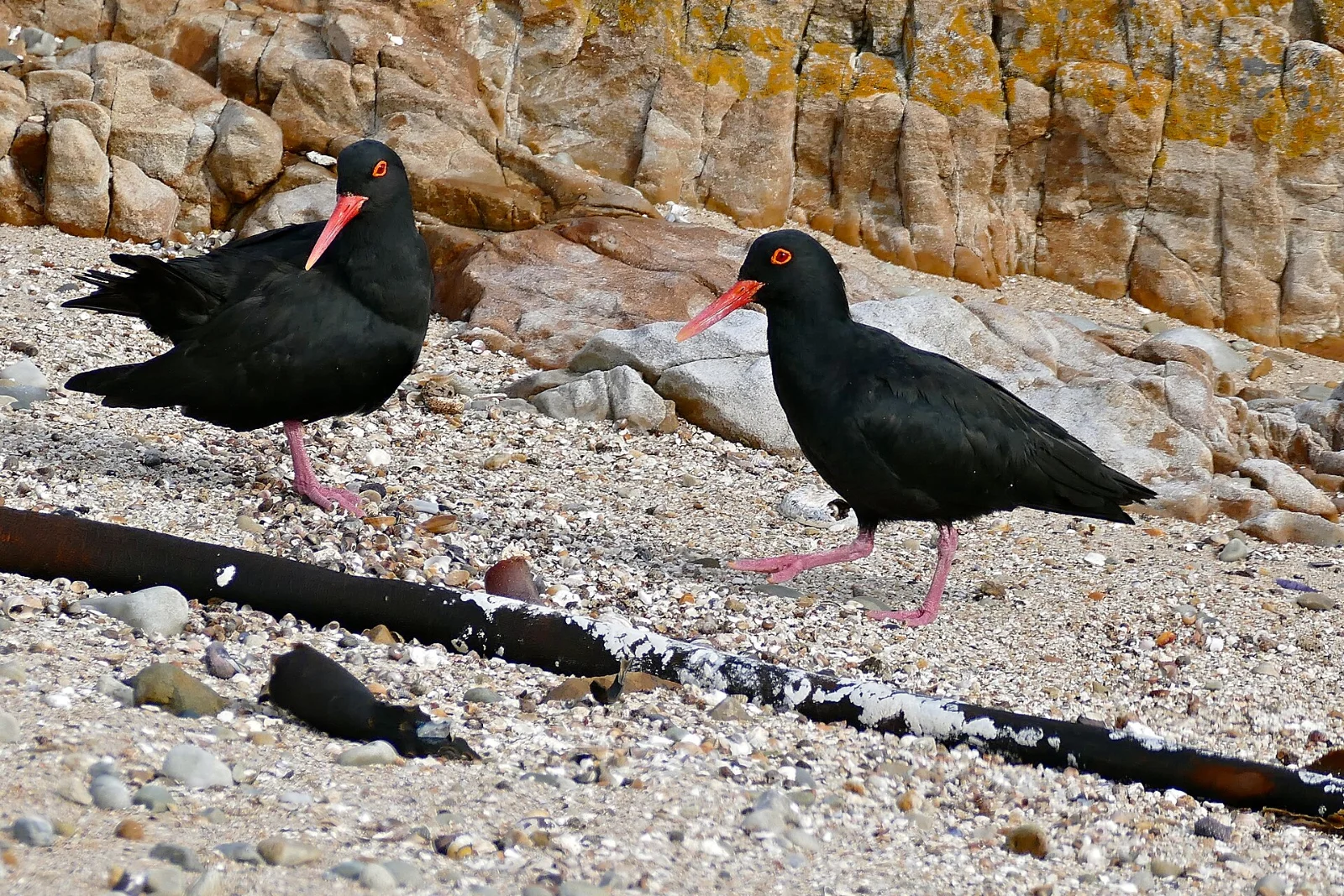
Breeding runs from October to April and peaks in December and January, according to the atlas: exactly when the beaches are fullest. The nest is a bare scrape on sand, shingle or pebbles within about 30 m of the high-water mark, with usually 2 eggs, so it is easy to walk right past one without knowing.
Give any pair that keeps calling at you a wide berth, walk on the wet sand well below the nest line, keep dogs on a lead and never drive on a beach. Hockey noted that chicks leave the nest within a day of hatching but depend on their parents for food for months, because prising mussels and limpets off rocks takes practice. A chick kept away from its parents by people on the beach is a chick that is not being fed.
Where to stay
The places in this guide along the oystercatcher’s coast:
| Place to stay | Where | For birders | From |
|---|---|---|---|
| Quagga River Lodge | Berg River, Velddrif | Own Berg estuary bird guide, oystercatcher named | R1,300 a chalet, self-catering |
| Rocherpan Nature Reserve | North of Velddrif, West Coast | 3 hides, beach, oystercatcher named | R1,430 per 2-person cabin, self-catering (off peak) |
| Avian Leisure | Simon’s Town, Cape Peninsula | BirdLife Recommended, rocky coast below | Ask the lodge |
| Benguela Cove Lagoon Wine Estate | Bot River Lagoon, Hermanus | BirdLife Recommended, eco-cruise, oystercatcher named | Ask the lodge |
| Lekkerwater Beach Lodge | De Hoop Nature Reserve | Guided marine walks, oystercatcher named | R7,700 pp sharing, all meals (2026) |
| De Hoop Collection | De Hoop Nature Reserve | Guided bird walks, shoreline and vlei | R2,150 per rondawel, room only (Oct 2026 to Sep 2027) |
Bird numbers change and rates change each season. Facts were checked on 15 November 2026 with the Atlas of Southern African Birds, the Percy FitzPatrick Institute, Africa Birds & Birding, BirdLife South Africa and its GoBirding guides, the species account on Wikipedia and each place’s listing on Birding Dispatch.
More from the Journal
 Woodpeckers of Southern Africa, Including the One That Doesn’t Need TreesSouthern Africa's woodpeckers, from the Cardinal in every bushveld tree to the Ground Woodpecker that lives on treeless mountain slopes and eats almost nothing but ants.
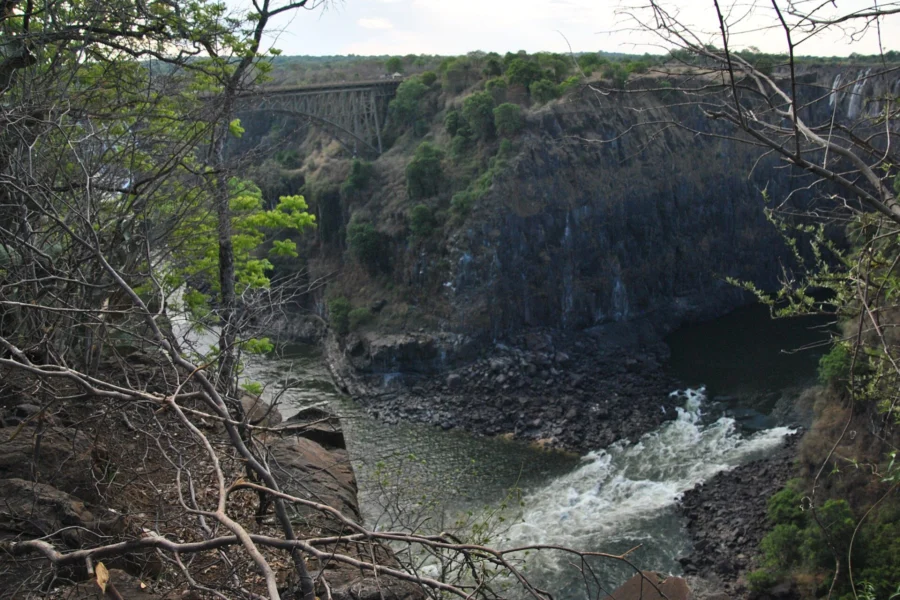 Where to See a Taita Falcon: the Strijdom Tunnel, the Blyde Cliffs and the Batoka GorgeA stocky falcon smaller than a pigeon, a handful of cliffs and surveys that keep coming back empty. Where it still nests, how to look, and the 2 roosts beside its cliffs.
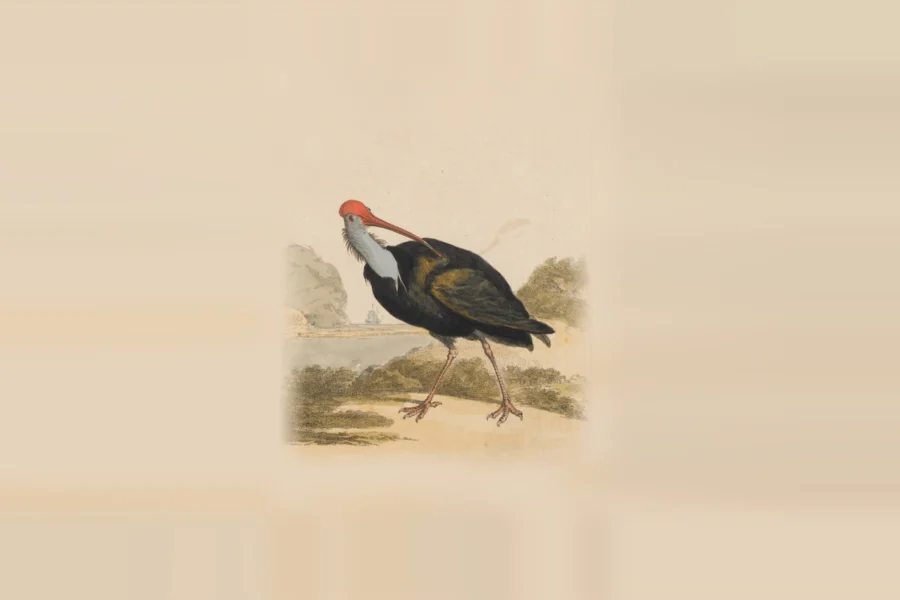 Where to See a Southern Bald Ibis: the Breeding Cliffs, Dullstroom, Wakkerstroom and LesothoA red-capped grassland ibis that nests on cliffs over waterfalls and feeds on burnt veld and maize stubble. The colonies you can watch, the fields to scan, and where to stay.
The Pigeon Post
Every Thursday: 1 bird, 1 place to go and 1 place to stay, by email. Sign up and get our printable checklist of the 163 endemics of southern Africa.