
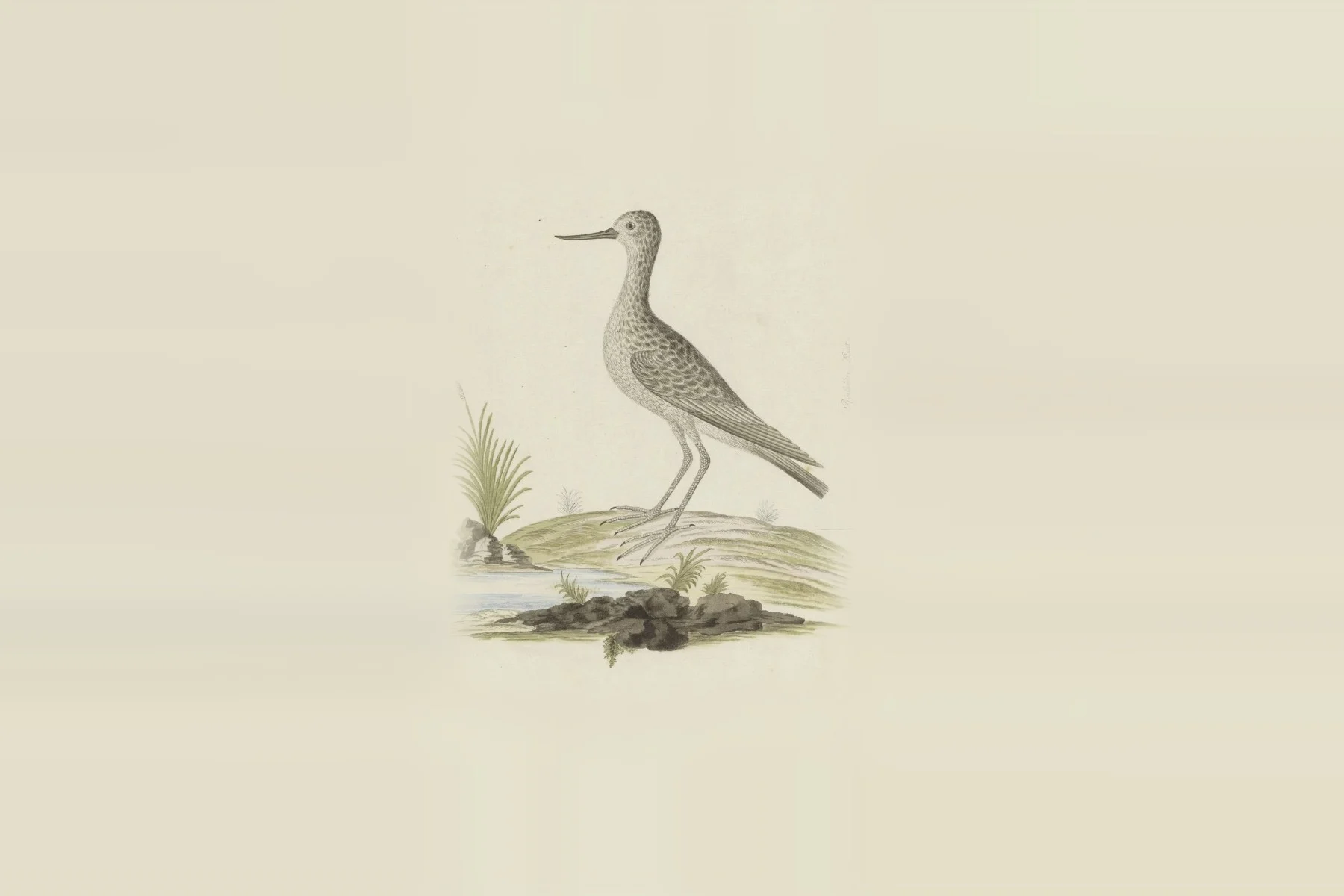
Waders of Southern Africa: the Summer Shorebirds, the Estuaries and How to Tell Them Apart
Every spring, tens of thousands of Palearctic waders fly from the far north to spend summer on southern Africa's mud. When each arrives, which residents stay, how to use the tide, and where to stay.
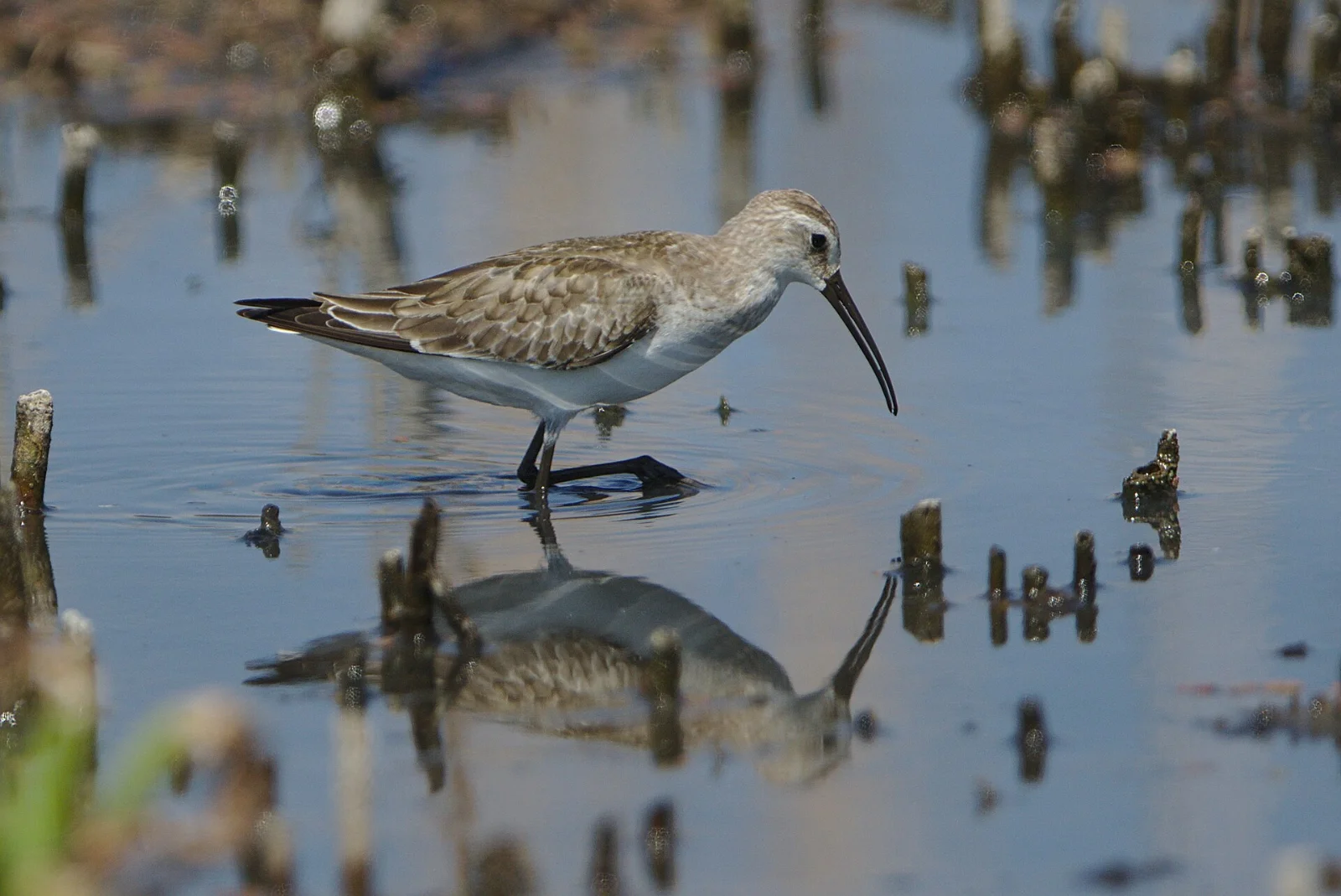
On a summer count at a southern African coastal wetland, more than half the waders are usually Curlew Sandpipers, which simplifies the counting and complicates the scanning. The Atlas of Southern African Birds says so in its account of the species, and gives the numbers that made Langebaan Lagoon famous: a median of 21,000 Curlew Sandpipers across 11 midsummer counts, with 19,000 at Walvis Bay and 11,000 at Sandwich Harbour in Namibia. They arrive from August to October, adults first, and leave in March and April; some stay through the winter.
That is the shape of wader birding here. Most of the birds on the mud are Palearctic migrants that breed far to the north and spend the southern summer on lagoons, estuaries, salt works and pans: they get 2 summers a year and never see a winter they can avoid. A smaller group of residents is here all year, and one of them, the African Oystercatcher, is found nowhere else, which makes it the local in a crowd of tourists. BirdLife South Africa’s 2026 checklist uses the names below; it lists the Curlew Sandpiper as Vulnerable in South Africa.
The summer visitors
| Wader | When it is here (Atlas) | Where it gathers | Note |
|---|---|---|---|
| Curlew Sandpiper | August to October, to March and April | Langebaan, Walvis Bay, Sandwich Harbour | Long, down-curved bill |
| Little Stint | Summer; few stay in winter | Inland pans such as Barberspan, and the coast | Breeds at 1 year old, so seldom stays |
| Common Greenshank | Late July to February | Langebaan, Berg River estuary | First to leave, first to return |
| Grey Plover | September to April | Estuaries; high-tide roosts | Black armpits in flight |
| Bar-tailed Godwit | Summer | Walvis Bay Lagoon, Langebaan, Berg River | About 2,600 in the region |
| Ruddy Turnstone | Summer | Langebaan | Median count of 1,976 at Langebaan |
| Eurasian Whimbrel | August to October, to March and April | Estuaries such as the Swartkops | Bill about twice the head length |
| Terek Sandpiper | Summer | Richards Bay, Langebaan | 500 at Richards Bay, the largest count |
The Common Greenshank leaves earliest of the waders, from February, and starts returning in late July. The largest concentrations are at Langebaan Lagoon and the Berg River estuary, with more than 400 birds regularly recorded at each. Ruff in southern Africa are overwhelmingly females; September is the month their numbers rise fastest, and March and April are the main departure months. About 78,000 Sanderlings, a third of the combined Greenland and Siberian population, migrate to southern Africa. That is a great many small grey birds on a great many beaches.
The Eurasian Whimbrel and the Eurasian Curlew are the pair to be careful with: the Atlas notes that the Whimbrel’s bill is about twice the length of its head, while the curlew’s is about 3 times. Birders are reduced to measuring noses. BirdLife South Africa lists the Grey Plover as Near Threatened in South Africa and Vulnerable globally, the Ruddy Turnstone as Near Threatened and Vulnerable, and the Sanderling as Near Threatened in South Africa.
The residents
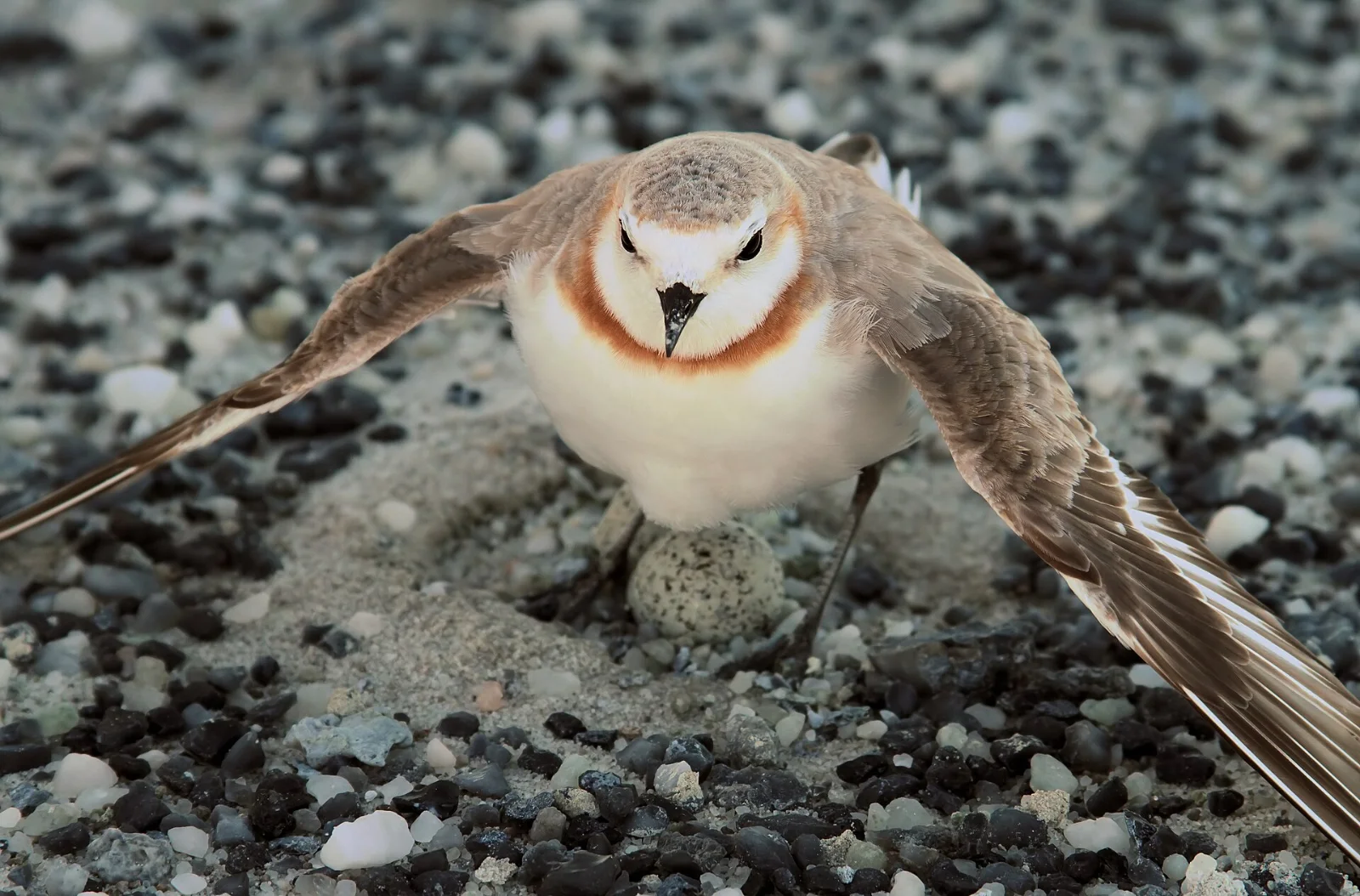
Chestnut-banded Plover. The rarest of the region’s small breeding plovers, with an estimated 6,000 to 7,000 birds, and listed as Vulnerable in South Africa. In Namibia it moves to coastal sites such as Walvis Bay Lagoon and Sandwich Harbour when inland habitats dry up; on the east coast it occurs where there are extensive shallow bays, such as Richards Bay.
White-fronted Plover. A coastal resident, with about 18,000 birds in Namibia and South Africa. Numbers at the Berg River estuary triple in winter, so its off season is its busy one.
Kittlitz’s Plover. The largest recorded concentration was 3,700 birds on the Berg River estuary in January 1976.
Three-banded Plover. It uses the widest range of wetlands of any wader in the region, from any freshwater shoreline to farm dams. It is not fussy, and it is everywhere.
African Oystercatcher. Listed by BirdLife South Africa as African (Black) Oystercatcher, it is endemic to the region, with a world population of fewer than 5,000 birds, over half of them in the south-western Cape and 29% on offshore islands of Namibia and the Cape. It breeds on beaches from October to April, peaking in December and January, which is also the holiday season, so the birds and the beach umbrellas want the same sand.
How to watch: tides and hides
Time a visit to the tide. The waders already do. The Atlas notes that Grey Plovers gather in roosts at high tide, often mixed with other large waders, and the Coordinated Waterbird Counts (CWAC), run by the University of Cape Town’s FitzPatrick Institute since 1992, count estuaries at high tide for the same reason: the waders are then concentrated above the high-water mark. Arriving an hour or 2 before high water lets you watch the birds move up the shore as the mud floods, and spares you a long walk to a distant line of dots.
The project began as part of South Africa’s commitment to international waterbird conservation. CWAC’s volunteers monitor more than 400 wetlands, with a summer count from mid-January to mid-February and a winter count in July.
West Coast National Park has 2 hides at Geelbek, on Langebaan Lagoon, plus hides at the Abrahamskraal waterhole and below the Seeberg viewpoint; see the West Coast National Park guide. In Namibia, the Walvis Bay guide covers the lagoon and salt works. The waders are part of a much larger arrival each spring, covered in summer migrants.
Where the waders are
The West Coast. Langebaan Lagoon holds South Africa’s biggest numbers of Curlew Sandpipers, and the Berg River estuary at Velddrif matches it for Common Greenshanks and once held 3,700 Kittlitz’s Plovers. Quagga River Lodge publishes its own guide to the lower Berg River estuary, profiling 44 species in salt marsh, mudflats, reedbeds and tidal channels, and says more than 200 species have been recorded between Velddrif and the river mouth at Laaiplek.
Namibia. Walvis Bay and Sandwich Harbour are both Ramsar wetlands. They held 19,000 and 11,000 Curlew Sandpipers in the Atlas counts, and Chestnut-banded Plovers move to them when the inland pans dry.
The east coast. Richards Bay has the region’s largest Terek Sandpiper count and the shallow bays that Chestnut-banded Plovers use on that coast.
The south coast. On the Bot River Lagoon near Hermanus, Benguela Cove Lagoon Wine Estate reports 86 species for the Bot-Kleinmond estuary, names Chestnut-banded Plover, African Oystercatcher and Caspian Tern, and runs the Lady Bonnie eco-cruise on the lagoon. Further east, Lekkerwater Beach Lodge in De Hoop gives more than 260 species for the reserve and names African Oystercatcher, Caspian Tern and both flamingos along its coast.
Inland. Pans fill and dry with the rains, and the waders follow the water. At Barberspan in the North West, Heritage View Birding Retreat has its own access to the reserve and a private hide about 100 m away, and names Little Stint and Curlew Sandpiper; the reserve’s count is more than 360 species. Near Bronkhorstspruit, Wilge River Bush Camp publishes its own river checklist of 409 species and names Pied Avocet and Little Bittern. In Botswana, Nata Lodge runs guided drives into the Nata Bird Sanctuary, near where the plover in the photograph above was nesting.
When to go
From November to February most of the summer visitors are present, and January and February are the months of the CWAC summer counts. In winter the residents have the shore largely to themselves, apart from the young Curlew Sandpipers and others that stay behind and skip the long flight.
Where to stay
Places in the directory beside lagoons, estuaries, pans and hides:
| Place to stay | Where | For birders | From |
|---|---|---|---|
| Quagga River Lodge | Berg River, Velddrif | Own Berg estuary bird guide; 200+ species; Pied Avocet | Ask the lodge |
| Rocherpan Nature Reserve | North of Velddrif, West Coast | 3 hides on the vlei; 183 species | R1,430 per cabin for 2 (off peak) |
| Benguela Cove Lagoon Wine Estate | Bot River Lagoon, near Hermanus | BirdLife Recommended; Chestnut-banded Plover; lagoon eco-cruise | Ask the lodge |
| Lekkerwater Beach Lodge | De Hoop Nature Reserve | African Oystercatcher, Caspian Tern, guided marine walks | R7,700 pp sharing, all meals (2026) |
| In Toto Retreat | Sedgefield, Garden Route | BirdLife Recommended; Wilderness Lakes hides nearby | Ask the lodge |
| Heritage View Birding Retreat | Barberspan, North West | BirdLife Recommended; private hide; Little Stint, Curlew Sandpiper | Ask the lodge |
| Wilge River Bush Camp | Near Bronkhorstspruit, Gauteng | BirdLife Recommended; 409-species list; Pied Avocet | Ask the lodge |
| Makakatana Bay Lodge | Lake St Lucia, KwaZulu-Natal | Resident birder; morning wetlands outing | R10,880 pp sharing, fully inclusive |
| Nata Lodge | Nata, Botswana | Guided drive into Nata Bird Sanctuary; 165 species | Ask the lodge |
Wader counts rise and fall from year to year, and the Atlas numbers come from counts made in the 1970s to the 1990s. Facts were checked on 14 November 2026 with the Atlas of Southern African Birds, BirdLife South Africa, SANParks, the CWAC programme and the Birding Dispatch listings. On beaches in summer, keep well clear of nesting oystercatchers and plovers.
More from the Journal
 Woodpeckers of Southern Africa, Including the One That Doesn’t Need TreesSouthern Africa's woodpeckers, from the Cardinal in every bushveld tree to the Ground Woodpecker that lives on treeless mountain slopes and eats almost nothing but ants.
 Where to See a Taita Falcon: the Strijdom Tunnel, the Blyde Cliffs and the Batoka GorgeA stocky falcon smaller than a pigeon, a handful of cliffs and surveys that keep coming back empty. Where it still nests, how to look, and the 2 roosts beside its cliffs.
 Where to See a Southern Bald Ibis: the Breeding Cliffs, Dullstroom, Wakkerstroom and LesothoA red-capped grassland ibis that nests on cliffs over waterfalls and feeds on burnt veld and maize stubble. The colonies you can watch, the fields to scan, and where to stay.
The Pigeon Post
Every Thursday: 1 bird, 1 place to go and 1 place to stay, by email. Sign up and get our printable checklist of the 163 endemics of southern Africa.