
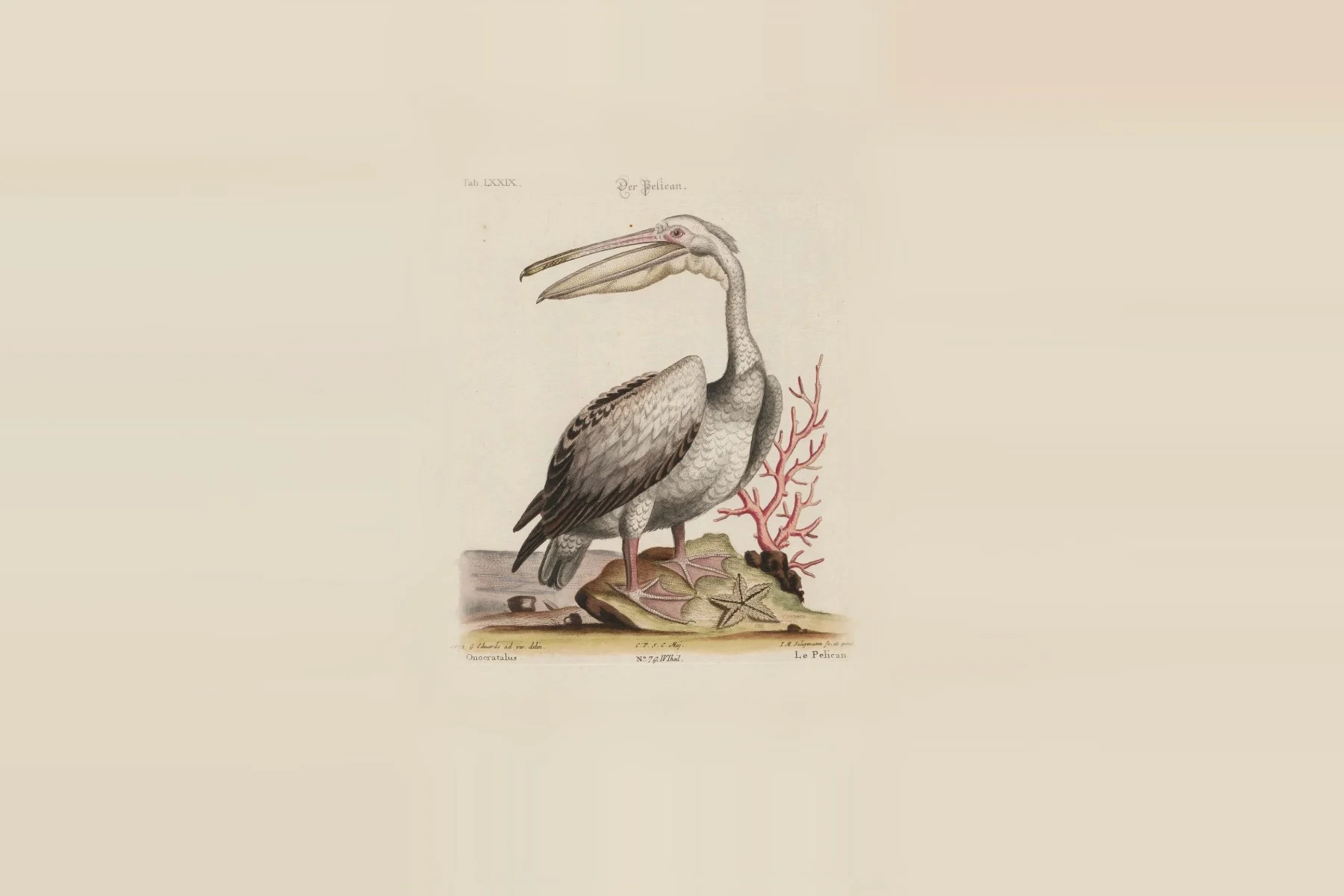
Where to See Pelicans in Africa: Great White and Pink-backed, Colony by Colony
Africa holds 80% of the world's breeding Great White Pelicans, while the scarcer Pink-backed nests up in flooded trees. The colonies, telling the 2 apart, and where to stay nearby.
While they are breeding at Lake St Lucia, Great White Pelicans regularly fly about 100 km to feed on the Pongolo River floodplain. That one line in the Atlas of Southern African Birds says a lot about pelicans: they need safe islands to nest on and plenty of fish within reach, and they will put up with a commute most office workers would resign over to have both.
The pelicans of Africa south of the Sahara are the Great White and the Pink-backed, and BirdLife South Africa’s 2026 checklist lists both as Vulnerable in South Africa, though neither is threatened globally. They differ in more than size: the Great White nests in crowded colonies on the ground and fishes in groups, while the Pink-backed nests in trees and usually fishes alone, the introvert of the pair.
The 2 at a glance
| Pelican | Population | Nests | Feeds |
|---|---|---|---|
| Great White | About 75,000 pairs breed in Africa, 80% of the world’s total; about 6,000 pairs in southern Africa | Colonies on islands, including artificial ones | Shallow, warm fresh or alkaline water, lagoons, estuaries |
| Pink-backed | 4,000 to 6,000 pairs worldwide; fewer than 250 pairs in southern Africa | Colonies in flooded trees, sometimes reeds | Usually alone, sometimes communally in deep water |
How to tell them apart
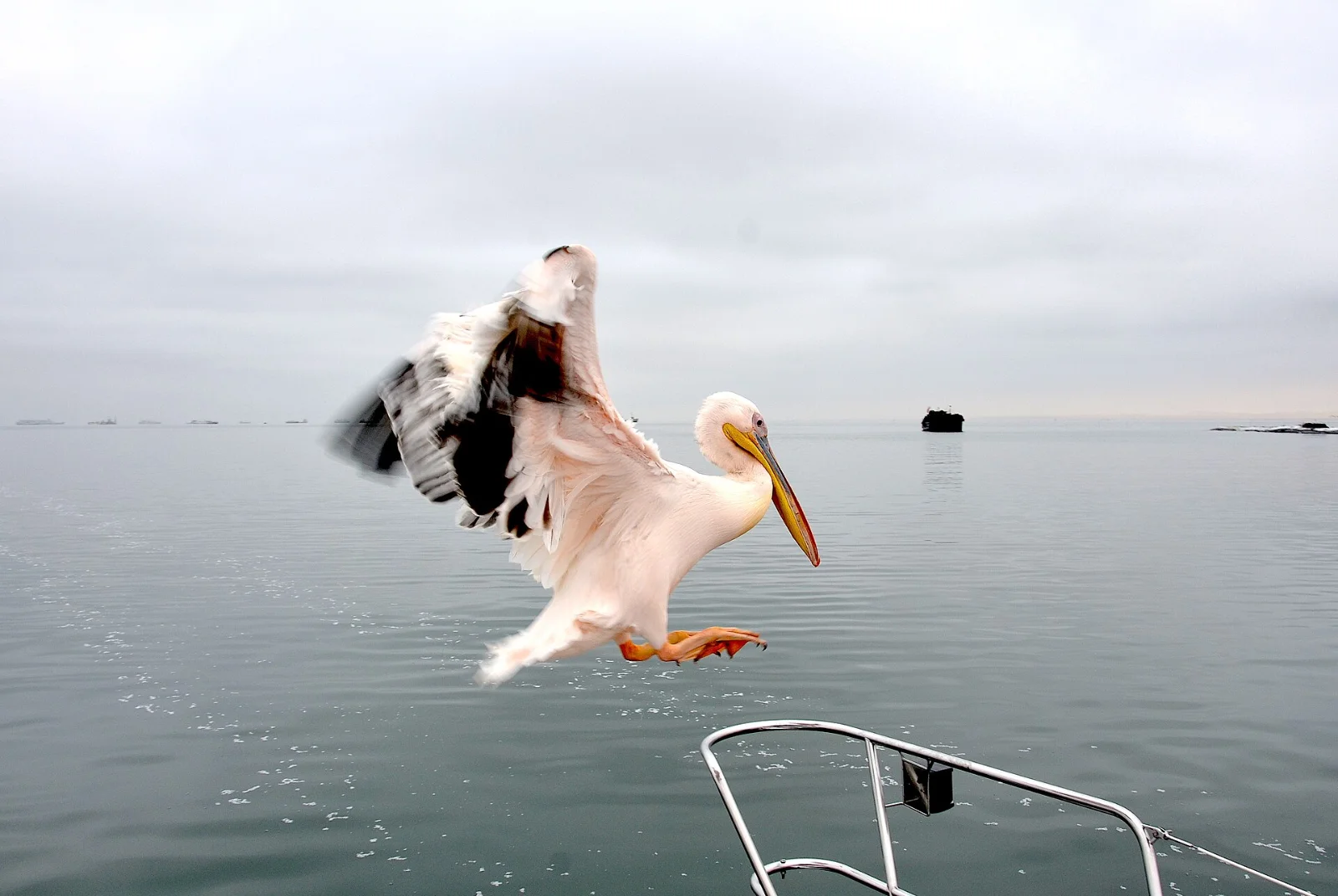
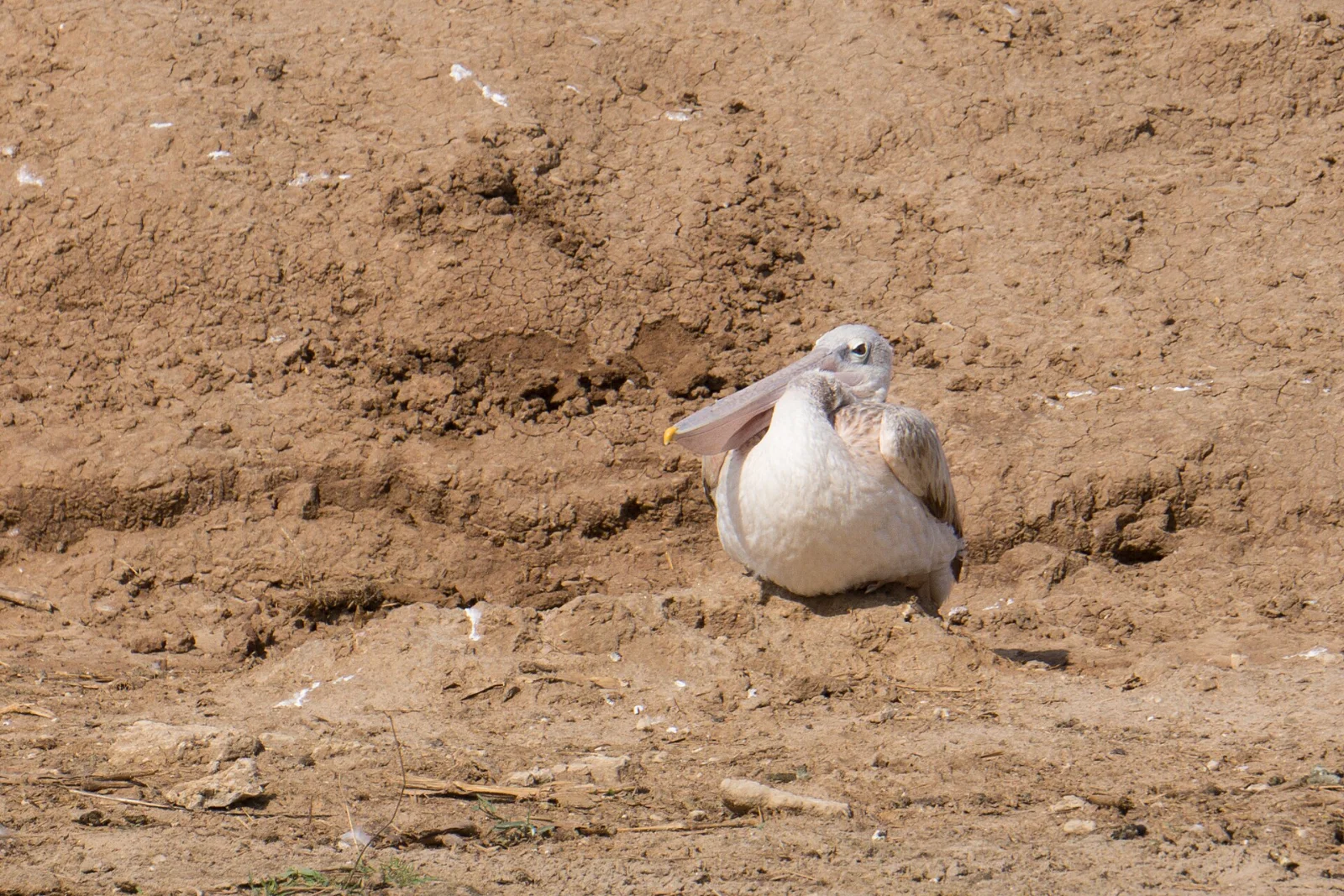
Size and colour are the first clues: the Pink-backed Pelican is the smaller bird, grey and white rather than white, with only an occasional pinkish tinge on the back, and its pouch is usually greyish. The Great White can flush pink in the breeding season, which is unhelpful of it, so a pink tone alone does not settle it. The Atlas admits that the 2 are confused, and that some old Western Cape records of Pink-backed Pelicans were probably young Great Whites. Behaviour helps: Great Whites fish in groups, driving fish towards the shore, while the Atlas says the Pink-backed usually forages alone.
Great White Pelican colonies
Southern Africa. The Atlas lists 3 places where Great White Pelicans breed every year: the guano platform built over Bird Rock at Walvis Bay, with 150 to 200 pairs; Dassen Island off the West Coast, with 500; and Lake St Lucia, with 2,000. About 150 pairs breed at Hardap Dam in Namibia when high water turns a rocky hill into an island. In flood years they also breed inland: in 1971, 1,500 pairs bred at Lake Oponono and then moved to join another 1,500 at Etosha Pan, and the largest colonies in the region have been in Botswana, with more than 1,000 pairs at Lake Ngami in 1970 and 1971 and breeding birds on the Nata River delta in Sua Pan. Those Botswana sites can stand empty for years in drought and fill within weeks of a flood, as if the pelicans had been waiting by the phone.
At Dassen Island the Great White preys on the chicks of other seabirds, including Cape Cormorants and Kelp Gulls, and at Etosha Pan it has displaced breeding flamingos. On the Namibian coast and at Dassen it sometimes traps fish in rock pools. A pelican is not a fussy eater.
The Western Cape colony has moved more than once. The Atlas records Great White Pelicans breeding on Robben Island in the 17th century, on Dyer and Quoin Islands in the 19th and early 20th centuries, on Seal Island from 1931 to 1954, and on Dassen Island since 1956. The moves followed persecution, because the pelicans eat and displace the guano-producing seabirds, along with naval target practice on Seal Island and a growing Cape Fur Seal population. The birds that once bred on sandy islets at Sandwich Harbour moved to the Bird Rock platform in the 1930s. Listed as rare in South Africa in 1984, the species has since benefited from dams stocked with fish, which to a pelican must look like a buffet laid on by people.
Outside the breeding colonies, the Atlas names Walvis Bay Lagoon, Sandwich Harbour and Langebaan Lagoon, and the big estuaries of the Kunene, Orange, Olifants and Berg rivers. Inland at Barberspan in the North West, Great White Pelicans are summer visitors, mostly from October to April. The Walvis Bay guide and the flamingo guide cover the same lagoons and pans.
East and West Africa. UNESCO describes the Kenya Lake System, the linked lakes Bogoria, Nakuru and Elementaita in the Rift Valley, as a major nesting and breeding ground for Great White Pelicans. In Senegal, UNESCO names the white pelican among the nesting species of the Djoudj National Bird Sanctuary on the Senegal River delta, which holds more than 1.5 million birds of 365 species.
Pink-backed Pelican colonies
The Atlas describes 2 breeding populations in southern Africa. In KwaZulu-Natal, more than 100 pairs bred for many years in trees at the mouth of the Hluhluwe River on Lake St Lucia before moving to the nearby Mkuzi Game Reserve; human disturbance at St Lucia, which once included rocket testing and low-flying aircraft near the colony, may be the reason. Some pairs from the same population bred at Richards Bay in 1975 and 1976 and in newly flooded trees at Jozini Dam on the Pongola River in 1975 and 1986. The second population breeds in the Okavango Delta and the Linyanti Swamps.
The 2 populations nest at opposite seasons. In South Africa, breeding starts in December and January, when summer rains flood around the base of the nest trees and keep predators out. In the Okavango and Linyanti it breeds in winter, from June to September, also at high water. It often shares its nest trees with storks and herons, but unlike the Great White it does not eat their young, which makes it the better neighbour. Wanderers turn up well away from the colonies: the Atlas records a flock of 90 at Barberspan. The Zululand birding guide covers uMkhuze and St Lucia.
The Atlas also lists the pressures on the northern birds: more settlements and cattle on the Chobe floodplains, more fires and tourism in the eastern Caprivi and Botswana, and large elephant populations that have destroyed riverine trees the pelicans use for nesting.
Further north, Loldia House on Lake Naivasha in Kenya names Pink-backed Pelican among the waterbirds its guides point out on the Lake Oloiden boat trip, and in Senegal, Kinkeliba Lodge in the Sine-Saloum delta names both pelicans.
When to go
Pelicans follow the water, and birders follow the pelicans. The Atlas says Great White breeding needs at least 4 months and usually follows the peak of the local rains, though it can happen whenever conditions suit, and the birds favour drying waterbodies where fish are trapped in the shallows. Inland, Barberspan’s Great Whites are summer visitors from about October to April. For Pink-backed Pelicans, the KwaZulu-Natal colonies are active from December, after the summer rains, and the Okavango and Linyanti colonies from June to September, when the flood is high.
Where to stay
Places in the directory that name pelicans or sit on their lakes and lagoons:
| Place to stay | Where | For birders | From |
|---|---|---|---|
| Rocherpan Nature Reserve | North of Velddrif, West Coast | 3 hides on the vlei; Great White Pelican | R1,430 per cabin for 2 (off peak) |
| De Hoop Collection | De Hoop Nature Reserve, Western Cape | Guided bird walks; Great White Pelican on the vlei | R2,150 per rondawel, room only |
| Benguela Cove Lagoon Wine Estate | Bot River Lagoon, near Hermanus | BirdLife Recommended; lagoon eco-cruise; Great White Pelican | Ask the lodge |
| Heritage View Birding Retreat | Barberspan, North West | BirdLife Recommended; private hide on the pan | Ask the lodge |
| Tandweni Villa | Lake Jozini, Pongola Game Reserve | BirdLife Recommended; boat birding; Pink-backed Pelican | Ask the lodge |
| Royal Jozini Private Game Reserve | Lake Jozini, Eswatini | BirdLife Recommended; own birding site guide; Great White Pelican | Ask the lodge |
| Makakatana Bay Lodge | Lake St Lucia, KwaZulu-Natal | Resident birder; eco-boat cruises | R10,880 pp sharing, fully inclusive |
| Zambezi Mubala Lodge | Zambezi Region, Namibia | 3-hour birding boat cruise; pelicans named | N$3,541 pp sharing B&B |
| Loldia House | Lake Naivasha, Kenya | Lake Oloiden boat trip; Pink-backed Pelican | US$437 pp sharing (April and May 2027) |
| Lake Elmenteita Serena Camp | Lake Elementaita, Kenya | Resident naturalist’s lakeshore walk; Great White Pelican | US$405 per deluxe tent |
| Fisheagle Cottage | Crescent Island, Lake Naivasha, Kenya | 135-species survey; Great White Pelican | US$125 per cottage (2027 low season) |
| Kinkeliba Lodge | Sine-Saloum delta, Senegal | Pirogue trips to bird roosts; both pelicans | Ask the lodge |
Colony sizes change with water levels and disturbance, and the Atlas figures come from counts made between the 1970s and the 1990s. Facts were checked on 14 November 2026 with the Atlas of Southern African Birds, BirdLife South Africa, UNESCO and the Birding Dispatch listings. Keep boats well away from nesting colonies.
More from the Journal
 Woodpeckers of Southern Africa, Including the One That Doesn’t Need TreesSouthern Africa's woodpeckers, from the Cardinal in every bushveld tree to the Ground Woodpecker that lives on treeless mountain slopes and eats almost nothing but ants.
 Where to See a Taita Falcon: the Strijdom Tunnel, the Blyde Cliffs and the Batoka GorgeA stocky falcon smaller than a pigeon, a handful of cliffs and surveys that keep coming back empty. Where it still nests, how to look, and the 2 roosts beside its cliffs.
 Where to See a Southern Bald Ibis: the Breeding Cliffs, Dullstroom, Wakkerstroom and LesothoA red-capped grassland ibis that nests on cliffs over waterfalls and feeds on burnt veld and maize stubble. The colonies you can watch, the fields to scan, and where to stay.
The Pigeon Post
Every Thursday: 1 bird, 1 place to go and 1 place to stay, by email. Sign up and get our printable checklist of the 163 endemics of southern Africa.