
Where to See a Blue Swallow: Impendle, the Ixopo Mistbelt, Eswatini and Nyanga
South Africa is down to about 39 pairs of a glossy blue swallow that nests down Aardvark holes. Where the last ones breed, when they are here, and how to look without harm.
Kaapschehoop, on the escarpment 32 km south-west of Mbombela, has a state reserve called the Blue Swallow Reserve. It opens at 06:00, closes at 18:00, takes walkers, runners and mountain bikers on permit, and holds Red-winged Francolin, Wing-snapping Cisticola and a pair of Blue Cranes that nest there in November. What it no longer holds is the bird on the gate. BirdLife South Africa’s GoBirding guide to the village says the last Blue Swallows were seen there in 2007, which leaves a reserve named after a former resident, like a street named after a shop that closed.
The same story has played out across the country. The 2025 Red Data Book of Birds of South Africa, Lesotho and Eswatini, published by BirdLife South Africa, puts the regional population at about 39 pairs, or 78 mature birds: 2 nests in Mpumalanga, about 12 in Eswatini and about 25 in KwaZulu-Natal. It lists the Blue Swallow as regionally Critically Endangered, and globally Endangered since 2024, with between 1,000 and 2,500 mature birds left across Africa.
So this is a guide to a bird that is still findable, with permission, patience and a good look at the map. It is not a guide to a bird that is easy.
What you are looking for
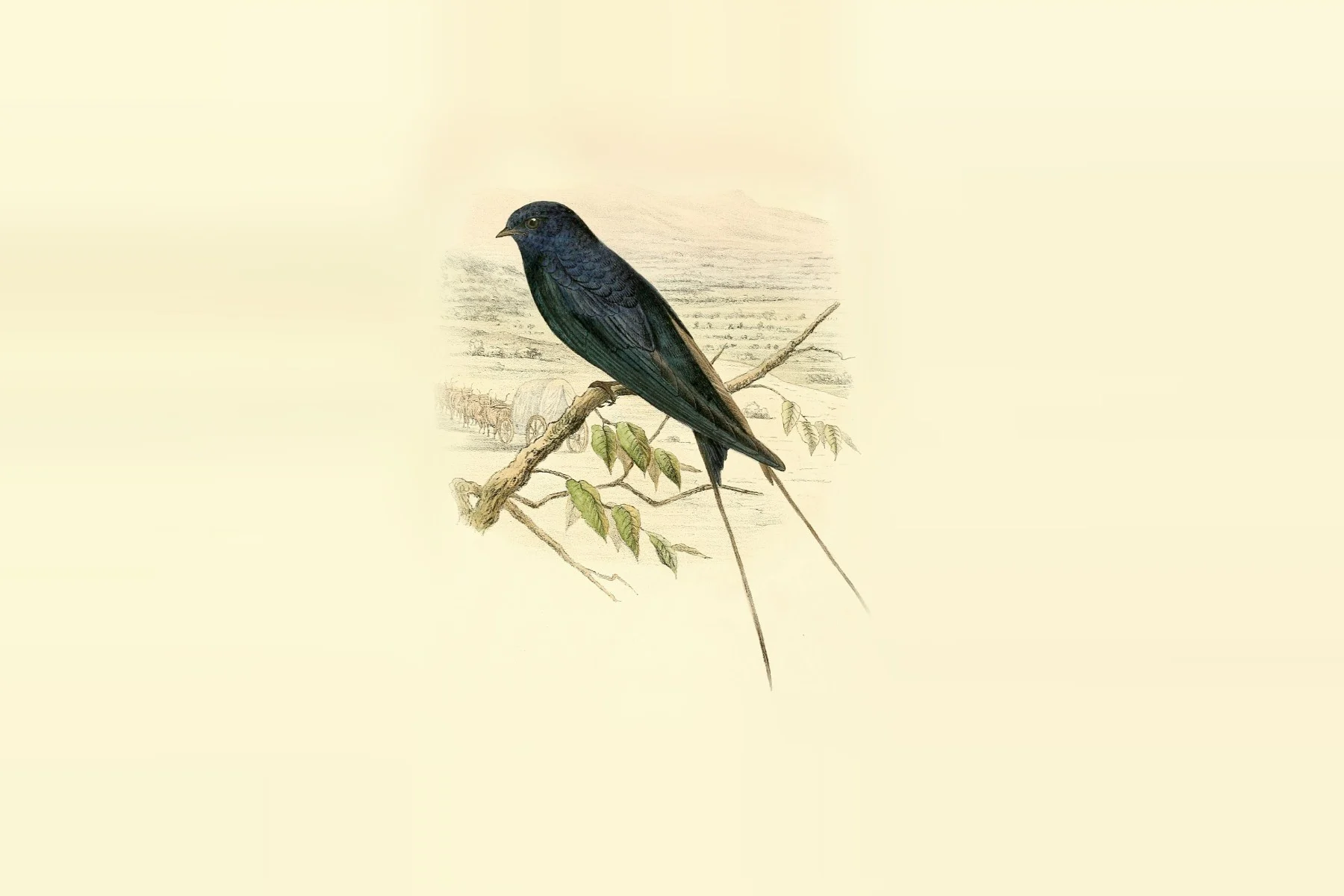
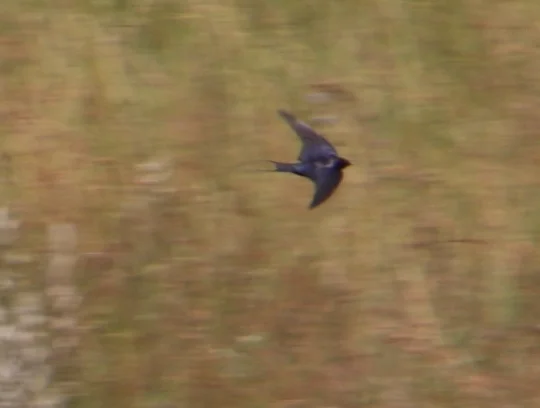
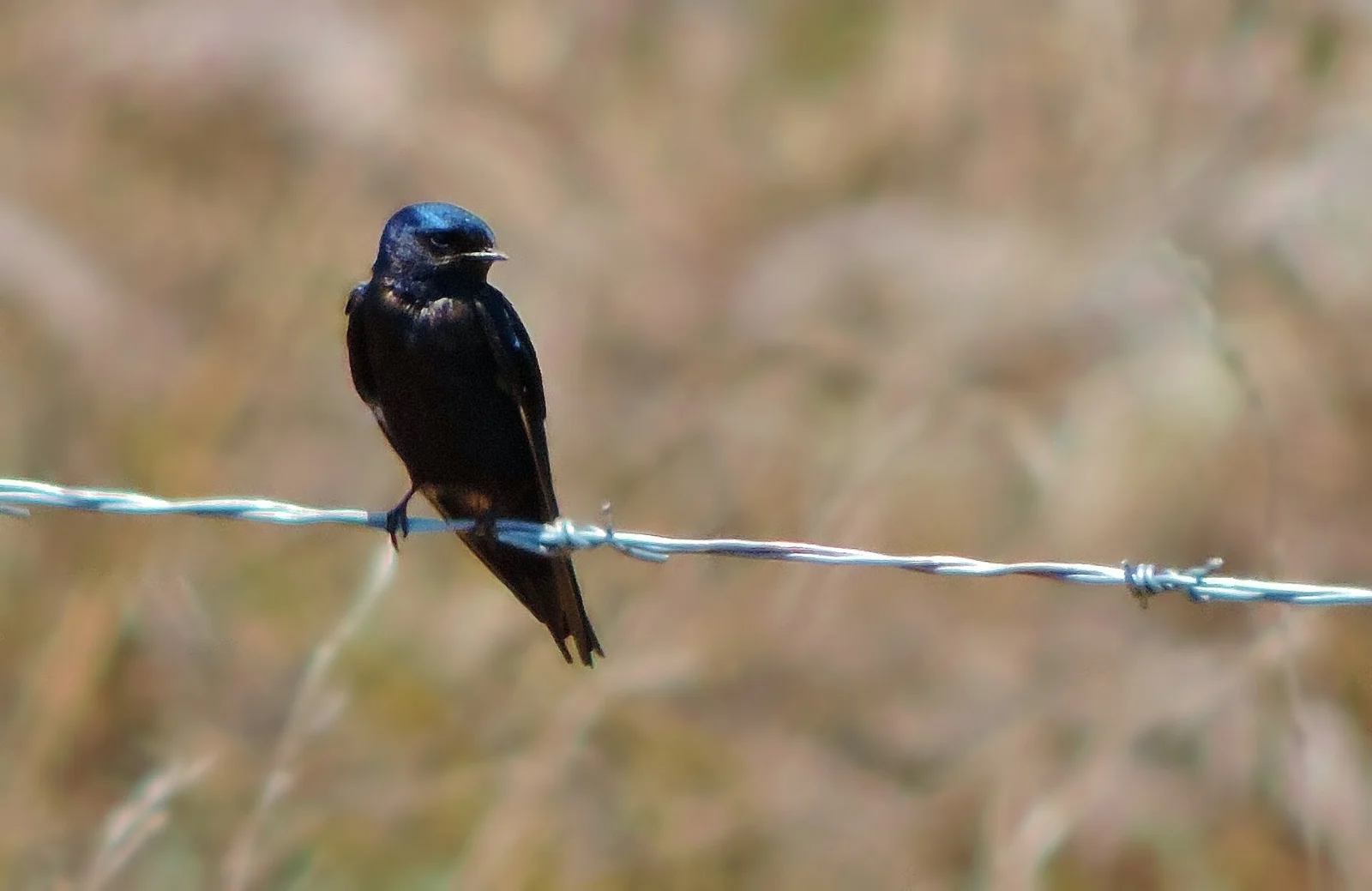
The Red Data Book describes a swallow of 20 to 25 cm and about 14 g, glossy dark blue all over with no white spots in the tail. The male has much longer outer tail streamers than the female. Young birds are sooty black with scattered blue patches. The bird to rule out is the Black Saw-wing, which is sooty black with a deeply forked, scissor-shaped tail and no streamers.
The Blue Swallow is an intra-African migrant. It breeds from September to April in eastern South Africa, western Eswatini, eastern Zimbabwe, western Mozambique, Malawi, north-eastern Zambia, southern Tanzania and the south-east of the Democratic Republic of the Congo. From May to August it goes north to western Kenya, southern Uganda, north-western Tanzania and the north-east of the DRC.
Its needs are oddly specific. In South Africa and Eswatini it nests in high-rainfall, open, primary mistbelt grassland with grass under half a metre tall, at altitudes from 760 m to 1,760 m. The nest goes into a sinkhole or an old Aardvark burrow, so the swallow relies on a mammal it never meets to dig its front door. It prefers to feed over wetlands and the edges where grassland meets wetland, and the Red Data Book gives a minimum home range of about 3.3 square km, roughly three quarters grassland and one quarter wetland and drainage lines. Grassland with no wetland in it is unlikely to hold a pair at all.
The sites at a glance
| Where | What the sources say | Access | When |
|---|---|---|---|
| Impendle and iNkonjane reserves, KwaZulu-Natal | 4 of South Africa’s estimated 30 pairs (Ezemvelo, 2025) | Impendle by prior arrangement with Ezemvelo KZN Wildlife | October to March |
| Ixopo district, KwaZulu-Natal | Most of the province’s breeding birds | Private farms; ask first | September to April |
| Roselands Farm, near Richmond, KwaZulu-Natal | Blue Swallow seen December to March | Ask Thula iNyoni | December to March |
| Western Eswatini | About 12 nests; breeding at Malolotja, Sibebe and Mahlangatsha | Malolotja is a reserve | September to April |
| Nyanga National Park, Zimbabwe | 150 to 250 breeding pairs (BirdLife Zimbabwe) | National park | September to April |
| Kaapschehoop, Mpumalanga | Last seen in 2007 | Day permit | Grassland birds only |
KwaZulu-Natal: Impendle, Ixopo and the Midlands
The Red Data Book sets the KwaZulu-Natal breeding range between Impendle in the north and Harding in the south, with most of the birds in the Ixopo district.
Impendle Nature Reserve, near Boston, is mostly mid-altitude grassland with rocky patches and mistbelt forest in its far reaches above the Umkomazi Valley. GoBirding’s page on it, last updated in 2022, says about 10 pairs nested there between October and March, flying low over the grass, especially near streams, and diving into the sinkholes they breed in. In May 2025 Ezemvelo KZN Wildlife declared iNkonjane Nature Reserve, 180 ha of grassland right beside Impendle’s 8,759 ha, and named it after the isiZulu word for the bird, inkonjanesibhakabhaka. A 21-letter name for a 14 g bird is at least generous. Daily Maverick’s report quotes Ezemvelo as saying the 2 reserves now hold 4 of the country’s estimated 30 remaining breeding pairs, about 13%. There are no fences between them, and the new reserve came out of a biodiversity offset agreed with the uMngeni-uThukela Water utility for a pipeline laid through Midmar Nature Reserve.
Impendle is not open to the public. GoBirding says visits are by prior arrangement with the officer in charge, there are no facilities, birding is on foot through open veld, and reserve staff often know where the nests are. There are no local guides for the reserve. The nearest Birder Friendly Establishment it names is Midlands Forest Lodge at Balgowan, about 51 km away, which is BirdLife Recommended and charges from R1,200 a room a night until 30 November 2026.
Around Ixopo, GoBirding records that the first artificial Blue Swallow nest holes in KwaZulu-Natal were dug on a farm outside the town in 1992, that a pair moved into one in 1994, and that at least 30 breeding attempts have followed. King’s Grant Country Retreat, on a farm off the R612 at Ixopo, reports more than 170 species and names Blue Swallow, with mistbelt grassland, wetlands and dams around it. Further north, Thula iNyoni, a single off-grid cabin in mistbelt forest near Richmond, says Blue Swallows can be seen at Roselands Farm from December to March. Our KZN Midlands birding guide covers the forests and crane hides in between.
Eswatini and Mpumalanga: the shrinking north
Mpumalanga’s story is mostly a list of losses. The Red Data Book records that 4 pairs in Blinkwater Nature Reserve were gone by the end of the 1980s, that pairs near Haenertsburg in Limpopo, in the Blyde River Canyon Nature Reserve and along the Mac-Mac escarpment disappeared in the 1990s, and that by the end of the 2000s 2 pairs had gone from Misty Mountain Natural Heritage Site, the last 2 near Nongoma had gone, and 9 pairs had gone from the Blue Swallow Natural Heritage Site. Across South Africa and Eswatini the range shrank by 74% between 1890 and 2005. The province is down to 2 nests.
That leaves Mpumalanga for the grassland company rather than the swallow. Walkersons Hotel & Spa, on an 800 ha estate near Dullstroom, still names Blue Swallow among the birds of the area, along with Wattled Crane and Yellow-breasted Pipit; with 2 provincial nests, treat that as a hope rather than a forecast. Kaapschehoop’s reserve is worth a morning for the francolins, flufftails and cisticolas, and GoBirding asks visitors to stay on the road and at least 300 m from the nesting Blue Cranes.
Eswatini holds about 12 nests. The Red Data Book says all its suitable habitat lies along the west of the country above 1,200 m, with recent confirmed breeding in Malolotja Nature Reserve, the Sibebe Mountains and Mahlangatsha.
Zimbabwe’s Nyanga, and beyond
For a bird that is easier to find, go north. BirdLife Zimbabwe’s Important Bird Area account for the Nyanga Mountains says the grasslands hold very important numbers of breeding Blue Swallows. An unpublished survey estimated at least 400 birds in Nyanga National Park and perhaps 600 including the grassland outside it, and the account gives 150 to 250 breeding pairs and rates the species fairly common there. The same account names alien wattle and pine as the greatest threat to the grassland, and the Blue Swallow as the bird most at risk from it. Our Eastern Highlands guide covers Nyanga, the Vumba and Chimanimani.
The directory has no listed stay at Nyanga itself. Heaven Lodge, in Chimanimani village further south, names Blue Swallow among the more than 300 species it gives for the area and runs an 8 km Early Bird Walk to Bridal Veil Falls.
The swallows that leave in autumn spend May to August in western Kenya, southern Uganda, north-western Tanzania and the north-east of the DRC. Wilderness Mara, a tented camp in the Masai Mara, names Blue Swallow among its birds and has a bird guide on staff.
How to look without doing harm
Go in summer. The Red Data Book gives September to April for breeding, GoBirding gives October to March at Impendle, and Thula iNyoni gives December to March near Richmond. Scan low over grassland near streams and wetlands, where the birds feed, rather than high overhead.
Keep your distance from any hole in the ground with a swallow going in and out of it. The Red Data Book names uncoordinated small-scale ecotourism developments as one cause of lost nest sites in South Africa, and BirdLife South Africa’s code asks birders to avoid playback altogether for threatened species, especially in the breeding season. The birding etiquette guide covers the rest. Most sites are on private land, so ask before you open a gate, and send your records to the atlas: with 39 pairs, every sighting counts in the literal sense.
Where to stay
The places named in this guide, from the Midlands to the Masai Mara:
| Place to stay | Where | For birders | From |
|---|---|---|---|
| Midlands Forest Lodge | Balgowan, KwaZulu-Natal | BirdLife Recommended, nearest named stay to Impendle | R1,200 a room (to 30 Nov 2026) |
| King’s Grant Country Retreat | Ixopo, KwaZulu-Natal | 170+ species, Blue Swallow named | Ask the lodge |
| Thula iNyoni | Near Richmond, KwaZulu-Natal | BirdLife Recommended, hide, Blue Swallow December to March | Ask the lodge |
| Walkersons Hotel & Spa | Near Dullstroom, Mpumalanga | BirdLife Recommended, mapped routes, Blue Swallow named | R3,710 pp sharing, dinner, bed and breakfast (2026) |
| Heaven Lodge | Chimanimani, Zimbabwe | Early Bird Walk, Blue Swallow named | US$12 pp camping |
| Wilderness Mara | Masai Mara, Kenya | Bird guide on staff, Blue Swallow named | US$1,324 pp, fully inclusive (2026 to 2027) |
Blue Swallow numbers change every season and most nest sites are on private land; ask before you go. Facts were checked on 15 November 2026 with BirdLife South Africa’s 2025 Red Data Book account, GoBirding site guides, Ezemvelo KZN Wildlife as reported by Daily Maverick, BirdLife Zimbabwe and each place’s listing on Birding Dispatch.
More from the Journal
 Woodpeckers of Southern Africa, Including the One That Doesn’t Need TreesSouthern Africa's woodpeckers, from the Cardinal in every bushveld tree to the Ground Woodpecker that lives on treeless mountain slopes and eats almost nothing but ants.
 Where to See a Taita Falcon: the Strijdom Tunnel, the Blyde Cliffs and the Batoka GorgeA stocky falcon smaller than a pigeon, a handful of cliffs and surveys that keep coming back empty. Where it still nests, how to look, and the 2 roosts beside its cliffs.
 Where to See a Southern Bald Ibis: the Breeding Cliffs, Dullstroom, Wakkerstroom and LesothoA red-capped grassland ibis that nests on cliffs over waterfalls and feeds on burnt veld and maize stubble. The colonies you can watch, the fields to scan, and where to stay.
The Pigeon Post
Every Thursday: 1 bird, 1 place to go and 1 place to stay, by email. Sign up and get our printable checklist of the 163 endemics of southern Africa.