
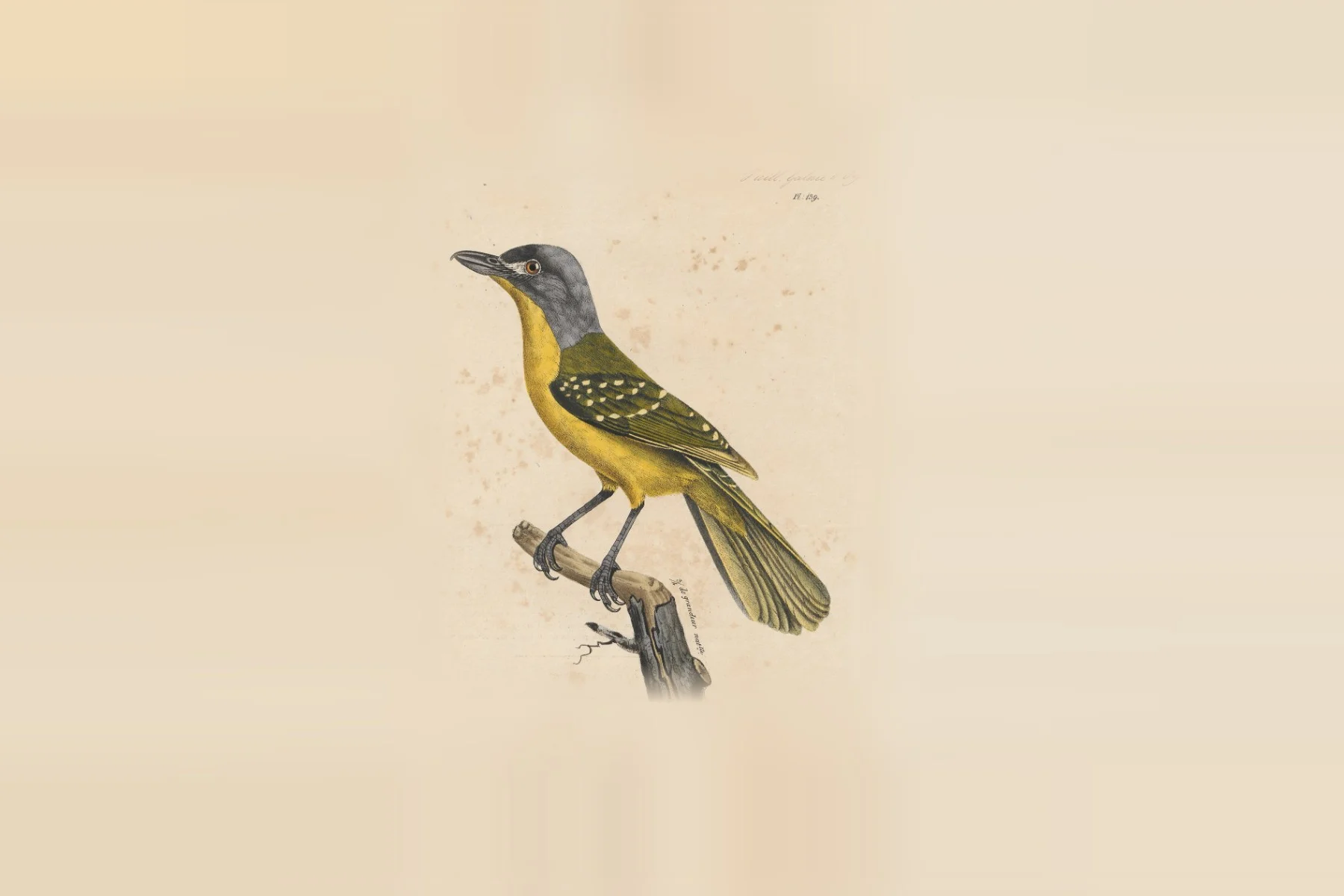
Shrikes and Bushshrikes of Southern Africa: Fiscals, Boubous and the Gorgeous Bushshrike
A songbird that keeps a larder of impaled lizards, a bushshrike that eats metre-long snakes, and the most colourful bird nobody can find. Southern Africa's shrikes, and where to see them.
A Southern Fiscal is a songbird with a butcher’s habits. When it catches something too big to swallow on the spot, Iziko Museums’ Biodiversity Explorer says, it impales the prey on a thorn or a barbed-wire fence and comes back for it later. Some birds use the same thorn tree or stretch of fence as a larder, with dozens of animals stored at one site. A barbed-wire fence, in other words, can double as a pantry.
The fiscal belongs to the true shrikes, and its relatives in southern Africa range from that black-and-white garden bird to the bushshrikes, which are some of the most colourful birds in the region and some of the hardest to see. This guide covers the ones a visiting birder is most likely to meet, how to find them, and the places to stay that name them.
The shrikes at a glance
| Bird | Where it lives | When | Look or listen for |
|---|---|---|---|
| Southern Fiscal | Almost all of South Africa, open country and gardens | All year | Perched in the open; the larder |
| Red-backed Shrike | Most of the region except the west coast and much of the Kalahari | About November to early April | Summer migrant from Europe and western Asia |
| Magpie Shrike | Zimbabwe, Botswana, Limpopo, Gauteng, North West | All year | Long tail, open savanna |
| Southern White-crowned Shrike | North West and Limpopo to Mozambique and Namibia | All year | Savanna with sparse ground cover |
| Southern Boubou | Botswana to the Western Cape coast | All year | Thickets and gardens |
| Crimson-breasted Shrike | Kalahari thornveld, Namibia, Botswana | All year | Scarlet below, in acacias |
| Bokmakierie | Most of South Africa, Namibia | All year | Open scrub, gardens |
| Gorgeous Bushshrike | Mozambique, Limpopo, Mpumalanga, KwaZulu-Natal | All year | Heard far more than seen |
| Grey-headed Bushshrike | Zimbabwe, Mozambique, Limpopo, KwaZulu-Natal | All year | Uncommon; big bill |
The true shrikes
Biodiversity Explorer describes the Southern Fiscal, which it lists under the older name Common Fiscal, as occurring almost everywhere in South Africa and into much of Namibia, Zimbabwe and southern Botswana. It likes open country with scattered trees: savanna, open woodland, shrubland and grassland. It is also extremely common in gardens, parks and farmland, so most South African birders meet it before they know its name.
The Red-backed Shrike is the summer visitor. Its breeding range covers most of Europe and western Asia, and Biodiversity Explorer says it leaves the breeding grounds mainly in August and September, males first, with most birds arriving in southern Africa together in and around November and leaving in the first half of April. It is common across most of the region, apart from the west coast of Namibia and South Africa and large parts of the Kalahari. The sexes even choose different addresses: males favour open country with fewer, smaller trees, females denser acacia woodland.
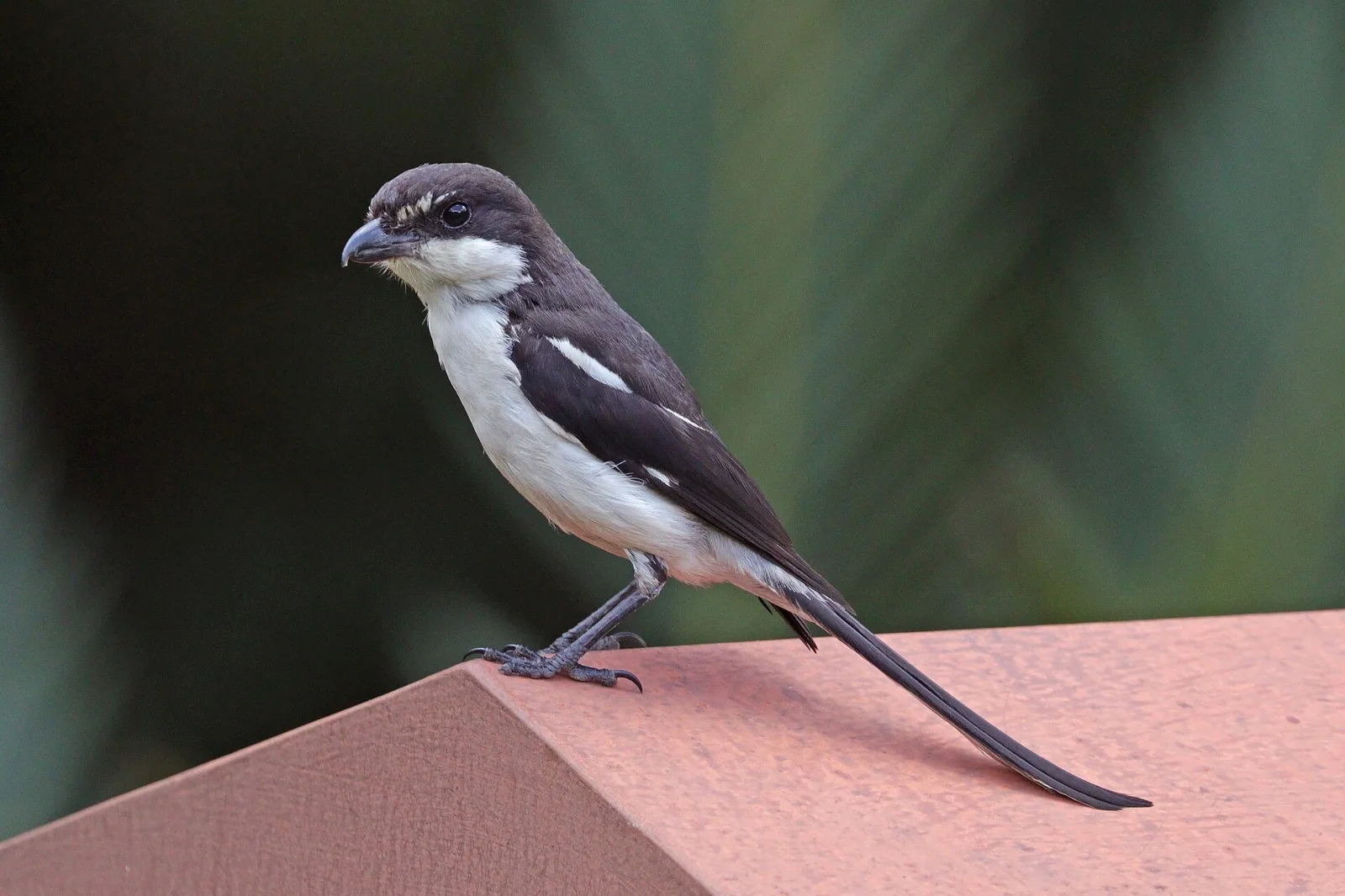
The Magpie Shrike, also called Long-tailed Shrike, has 3 separate populations in Africa; the largest runs from Angola and Zambia into southern Africa, where it is locally common in Zimbabwe, Botswana, north-eastern Namibia, Limpopo, Gauteng and North West. It favours open savanna with short grass and bare ground, and lays mainly from October to January. The Southern White-crowned Shrike is near-endemic to southern Africa, from North West and Limpopo to south-eastern Mozambique, Zimbabwe, Botswana and northern Namibia, in savanna woodland with sparse ground cover.
Boubous, the Crimson-breasted Shrike and the Bokmakierie
The Southern Boubou is endemic to southern Africa. Biodiversity Explorer gives its range from south-eastern Botswana through Limpopo and North West to southern Mozambique, and down the coast through KwaZulu-Natal to the Eastern and Western Cape. It lives in woodland, coastal thickets, riverine scrub, plantations and suburban gardens, and lays from about August to March. If its nest is disturbed repeatedly, the pair tear it apart and rebuild it nearby from the same materials, which is one way to deal with nosy neighbours. In the far north, the Tropical Boubou takes over along the Limpopo, and the Mapungubwe birding guide covers where to find it.
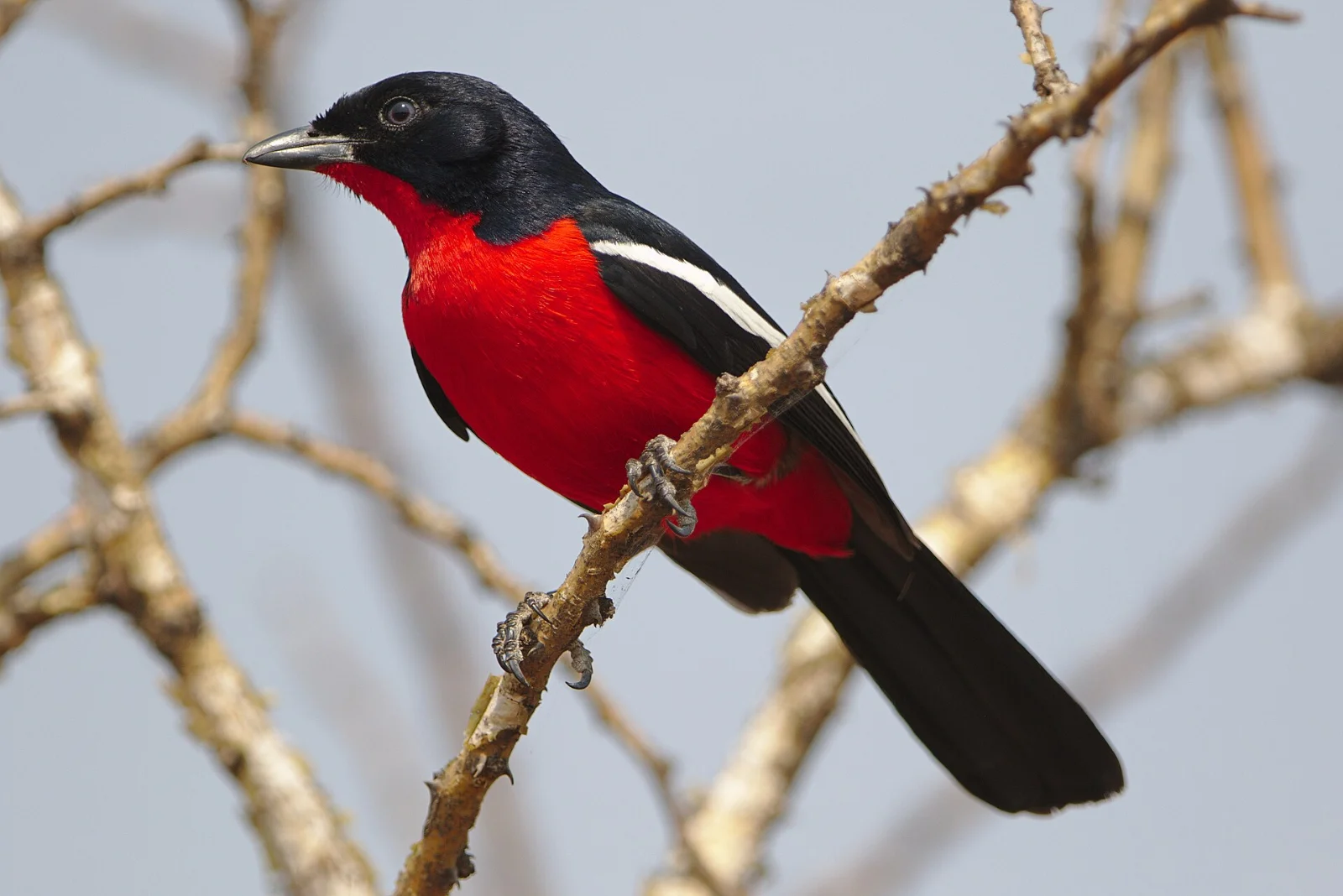
The Crimson-breasted Shrike is the one that stops traffic: jet black above and scarlet below. Biodiversity Explorer says it occurs in a band from Angola and Zambia to northern South Africa, with large populations in Namibia, Botswana and western Zimbabwe, and prefers arid country, especially Kalahari thornveld, acacia savanna and semi-arid scrub. Both sexes build a tidy cup nest made almost entirely of acacia bark, which they collect from trunks and branches 50 to 90 m from the nest site. Egg-laying runs from August to January, peaking in October and November.
The Bokmakierie, named for its call, is near-endemic to southern Africa: across South Africa except much of Limpopo, into southern and western Namibia and south-western Angola, with an isolated population around the Chimanimani Mountains. It likes open country with scattered shrubs, from dune scrub and succulent Karoo to gardens. It mainly eats insects, but its recorded diet also includes lizards, snakes, birds and fruit, and it breeds all year, peaking in August.
The bushshrikes
Bushshrikes are the reason some birders stand very still in thickets for a long time. The Gorgeous Bushshrike, Konkoit in Afrikaans after its call, is green above with a red throat and black collar, and occurs in 2 populations: one on the Kenya and Tanzania coast, and one in Mozambique, Zimbabwe’s Eastern Highlands, Limpopo, Mpumalanga and KwaZulu-Natal. Biodiversity Explorer calls it fairly common but hard to see: it skulks in dense undergrowth, especially in riparian woodland, and gives itself away with its distinctive call. Egg-laying peaks from October to December.
The Grey-headed Bushshrike is the heavyweight. It ranges from Senegal to Ethiopia and south through much of south-central and southern Africa, but in southern Africa it is uncommon, found across Zimbabwe, Mozambique, Limpopo, KwaZulu-Natal and small parts of Botswana, mostly in miombo and other woodland. Biodiversity Explorer calls it an adaptable hunter that eats almost anything it can catch and kill, from small insects to snakes 1 m long and other birds’ chicks, and like the fiscal it sometimes impales prey on a thorn to eat later.
The Olive Bushshrike forages mainly in the forest canopy, gleaning insects from leaves and twigs and coming lower at the forest edge. The Black-fronted Bushshrike is a special of the Limpopo escarpment forests, and the Magoebaskloof birding guide covers Woodbush, where it is one of the target birds.
How to find them
Shrikes and bushshrikes split neatly into 2 kinds of birding. The fiscals, Magpie Shrikes and White-crowned Shrikes sit in the open on wires, posts and bare branches, so a slow drive through savanna finds them. The boubous and bushshrikes stay in cover, so the trick is to learn the calls and then wait for a bird to cross a gap; our guide to learning bird calls is the place to start. The Red-backed Shrike is only around from about November to early April, while the others can be found all year.
Where to stay
Places in the directory that name a shrike, boubou or bushshrike:
| Place to stay | Where | For birders | From |
|---|---|---|---|
| Zaagkuilsdrift Bird Sanctuary & Lodge | Pienaarsrivier, Limpopo | BirdLife Recommended; Crimson-breasted Shrike named | Ask the lodge |
| Arebbusch Travel Lodge | Windhoek, Namibia | Crimson-breasted Shrike photographed on the grounds | N$550 per tent, 1 guest (opening special) |
| Zvakanaka Farm | Louis Trichardt, Limpopo | BirdLife Recommended; Gorgeous and Olive Bushshrike | R220 pp camping (from March 2026) |
| Magoebaskloof Birders’ Cottages | Magoebaskloof, Limpopo | BirdLife Recommended; Black-fronted and Olive Bushshrike | R580 pp sharing, self-catering (2026/27) |
| Pomeroy Lodges | Kleinemonde, Eastern Cape | BirdLife Recommended; Grey-headed Bushshrike; 130 species | Ask the lodge |
| Rhino Sands Safari Camp | Manyoni, KwaZulu-Natal | Grey-headed and Orange-breasted Bushshrike named | R11,340 pp sharing, full board |
| Crab Apple Cottages | Howick, KwaZulu-Natal | Indigenous forest; Olive Bushshrike named | R650 per cottage, Sunday to Thursday |
| Doornkop Fish & Wildlife Reserve | Carolina district, Mpumalanga | BirdLife Recommended; Southern Boubou and Bokmakierie | R1,068 per chalet, 4-night midweek stay |
| Fynbos Ridge Country House | Plettenberg Bay, Western Cape | Southern Boubou on its bird list | R3,300 per night |
| Vhembe Wilderness Camp | Mapungubwe National Park | Tropical Boubou along the Limpopo | R1,080 per cabin (November 2026) |
Bushshrikes are heard far more often than they are seen, so give them time. Facts were checked on 15 November 2026 with Iziko Museums’ Biodiversity Explorer and the Birding Dispatch listings. Rates change each season; check with the place before you book.
More from the Journal
 Woodpeckers of Southern Africa, Including the One That Doesn’t Need TreesSouthern Africa's woodpeckers, from the Cardinal in every bushveld tree to the Ground Woodpecker that lives on treeless mountain slopes and eats almost nothing but ants.
 Where to See a Taita Falcon: the Strijdom Tunnel, the Blyde Cliffs and the Batoka GorgeA stocky falcon smaller than a pigeon, a handful of cliffs and surveys that keep coming back empty. Where it still nests, how to look, and the 2 roosts beside its cliffs.
 Where to See a Southern Bald Ibis: the Breeding Cliffs, Dullstroom, Wakkerstroom and LesothoA red-capped grassland ibis that nests on cliffs over waterfalls and feeds on burnt veld and maize stubble. The colonies you can watch, the fields to scan, and where to stay.
The Pigeon Post
Every Thursday: 1 bird, 1 place to go and 1 place to stay, by email. Sign up and get our printable checklist of the 163 endemics of southern Africa.