
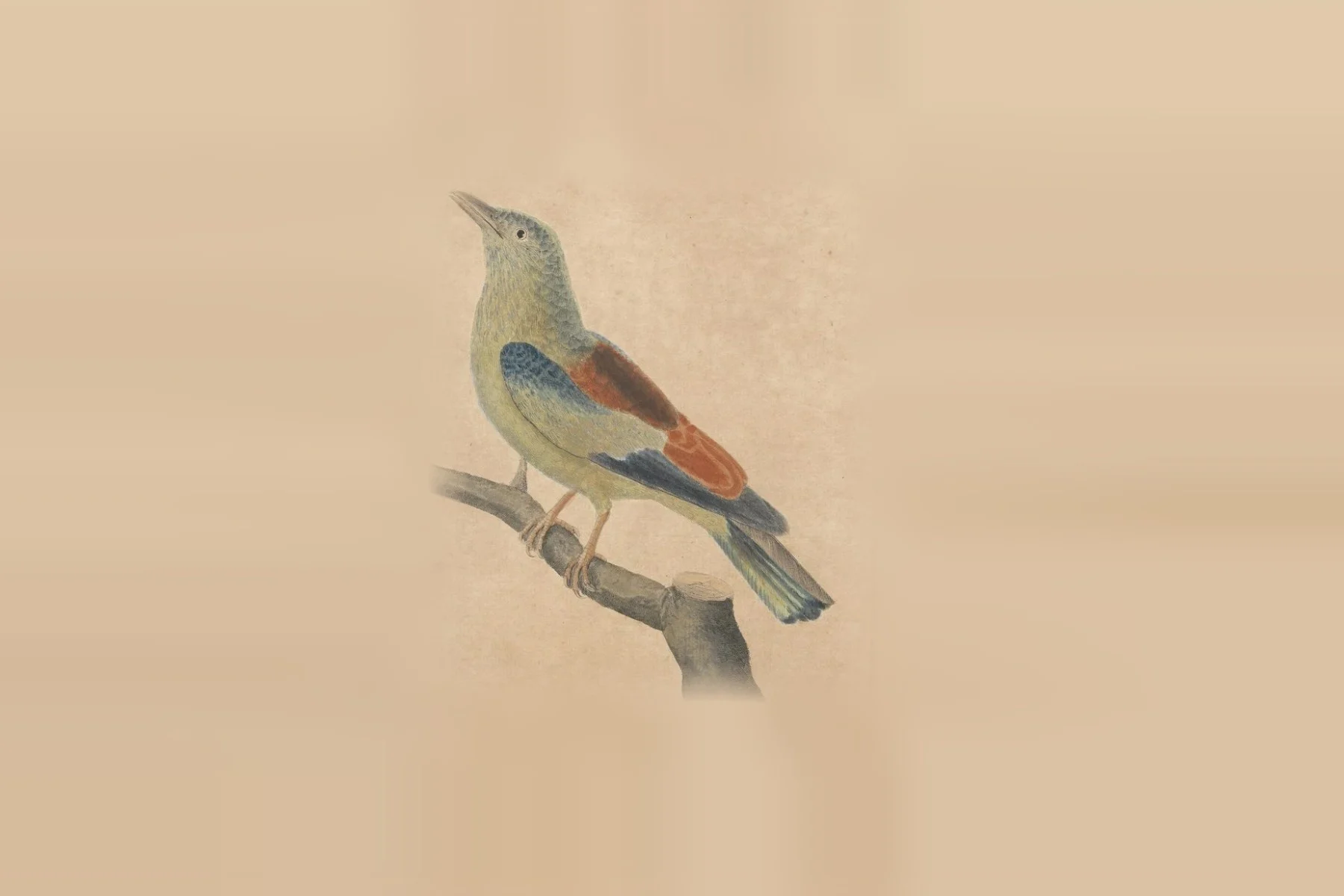
Rollers of Southern Africa: Lilac-breasted, European, Purple, Racket-tailed and Broad-billed
Southern Africa has 5 rollers, all dressed for a party. The Lilac-breasted is common, the European a declining summer visitor, and the Racket-tailed a miombo special. When and where to see each.
Somebody in the 1990s did the arithmetic so you do not have to. Roadside counts found 1 European Roller for every 55 km driven in central and northern Namibia, and 1 for every 114 km in northern and eastern Botswana. The Atlas of Southern African Birds, which reports them, points out that this is 50 to 100 times fewer than on the species’ main wintering grounds in East Africa. In southern Africa the commonest roller by far is the resident Lilac-breasted, 5 to 10 times more common than the European, while the Purple Roller is 2 to 3 times more common. The visitor, in other words, is the rarity here.
That leaves 5 rollers in all, and BirdLife South Africa’s 2026 checklist has every one of them on the South African list: Broad-billed, European, Lilac-breasted, Purple and Racket-tailed. Of the 5, the European and the Broad-billed are migrants, and the Racket-tailed depends on a single habitat that is shrinking. None of them is dull to look at.
The 5 at a glance
| Roller | When it is here | Where it is commonest | Notes |
|---|---|---|---|
| Lilac-breasted | All year | Namibia, Botswana, Zimbabwe, Mozambique, north-eastern South Africa | Dry woodland and the clearings next to it |
| European | October to April, peak in February | Limpopo valley, the Lowveld, coastal KwaZulu-Natal | Near Threatened in South Africa |
| Purple | All year, with local movements | The Namibian escarpment, where it is the main roller | Mainly resident |
| Racket-tailed | All year | Zambezi escarpment, south-east Zimbabwe, northern Kruger | Needs undisturbed miombo |
| Broad-billed | September to April | Caprivi, northern Botswana, Zimbabwe, north-eastern South Africa | Hunts flying ants and termites |
Lilac-breasted Roller
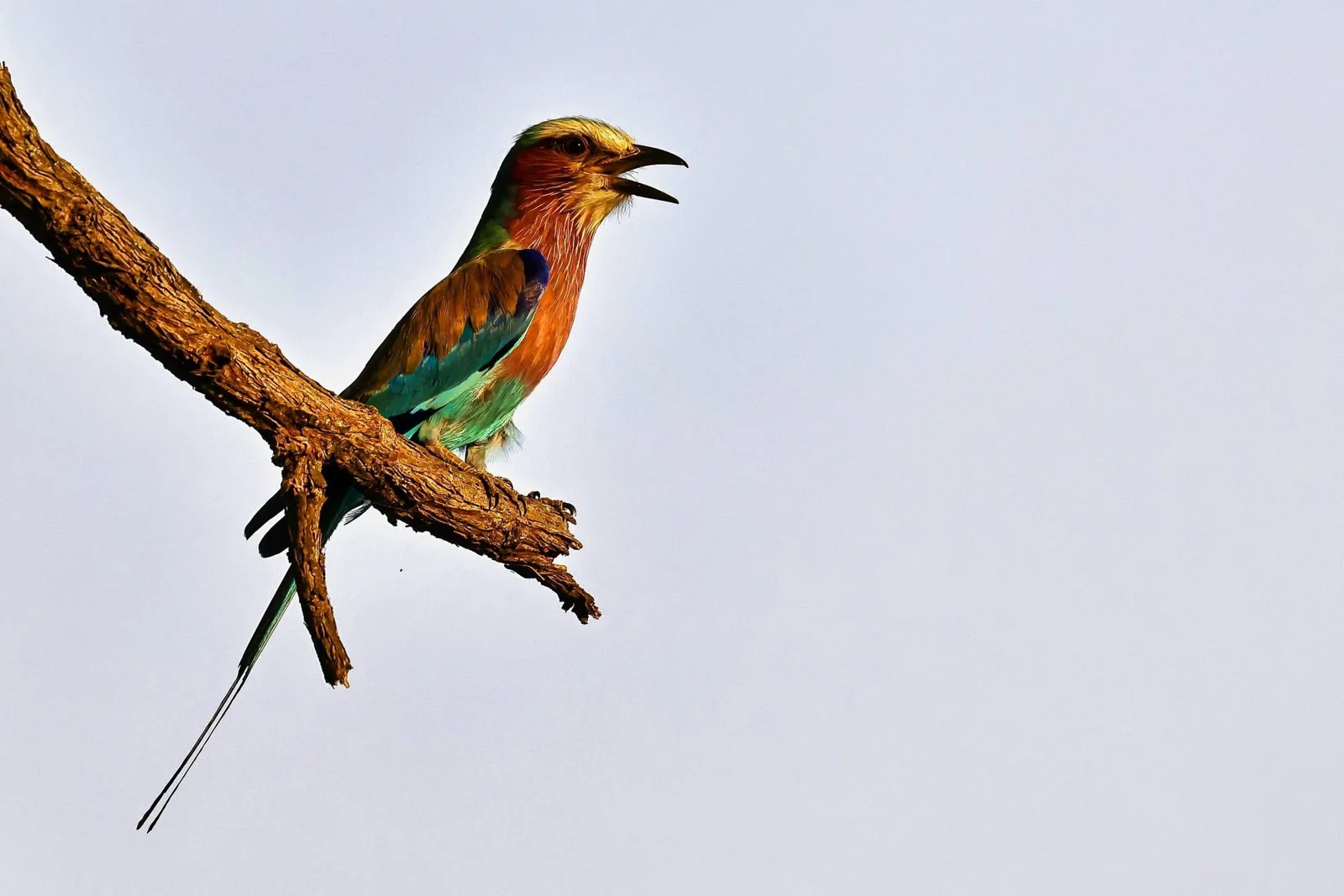
Iziko Museums’ Biodiversity Explorer, which follows the 2005 edition of Roberts, describes the Lilac-breasted Roller as common in dry woodland: acacia savanna, miombo, mopane and palm savanna. It often sits on the line between woodland and grassy clearings, breeding in the trees and feeding in the open. It hunts by sitting still on a perch and pouncing on prey nearby, mostly insects, but scorpions, centipedes, lizards, small snakes, rodents and birds have all been recorded. For something so pretty, it has a fearsome menu.
It nests in tree cavities 2 to 8 m above the ground, and will turn Green Wood-hoopoes or Cape Glossy Starlings out of theirs, with no notice period. It also takes to nest boxes and termite mounds. It lays from August to February, peaking from September to December, and defends the nest hard, even outside the breeding season: a bird with strong views on property.
Biodiversity Explorer’s photographs make the point about its nest sites: one shows a Lilac-breasted Roller nesting in a fence pole at Nylsvley. Any hole will do. In Namibia, Ongava Lodge and Anderssons at Ongava, both on the reserve along Etosha’s southern boundary, name it among their birds, and Ongava gives more than 350 species for the reserve.
European Roller
The European Roller is a Palearctic migrant. The Atlas says the first birds reach the far north of the region by October, most arrive in December and January, numbers peak in February, and they leave mainly in March. It favours open woodland and is only marginal in the central Kalahari, the Karoo and the grasslands. Its English name comes from its display flight, full of twists and turns, so the bird is named after its own showing off.
The South African National Biodiversity Institute (SANBI) lists it as regionally Near Threatened, the category BirdLife South Africa’s checklist also gives it, and notes that the area it occupies in the region shrank by 31% between the first and second bird atlases, from 350,820 to 242,120 square kilometres. In South Africa it is concentrated in the upper and middle Limpopo drainage, the Lowveld of Mpumalanga and Limpopo, and coastal KwaZulu-Natal. In Europe, SANBI’s assessment adds, it has died out as a breeding bird in Germany, Denmark, Sweden and Finland, and the breeding population stands at 53,000 to 110,000 pairs. The summer migrants guide covers the birds that arrive with it.
Several places to stay in those areas name it, usually in the same breath as the Lilac-breasted. In the Sabi Sand, on the Lowveld, Chitwa Chitwa highlights its summer migrants and lists both European and Lilac-breasted Rollers, with a count of more than 300 species. Near Hluhluwe, in the coastal KwaZulu-Natal belt, the Bushwillow Collection names European Roller and can arrange a specialist bird guide. On the highveld, Thaba Eco Hotel on Johannesburg’s Klipriviersberg reports both species, and Greystone Lodge between Dullstroom and Belfast has both on its published list of 94 species.
Purple Roller
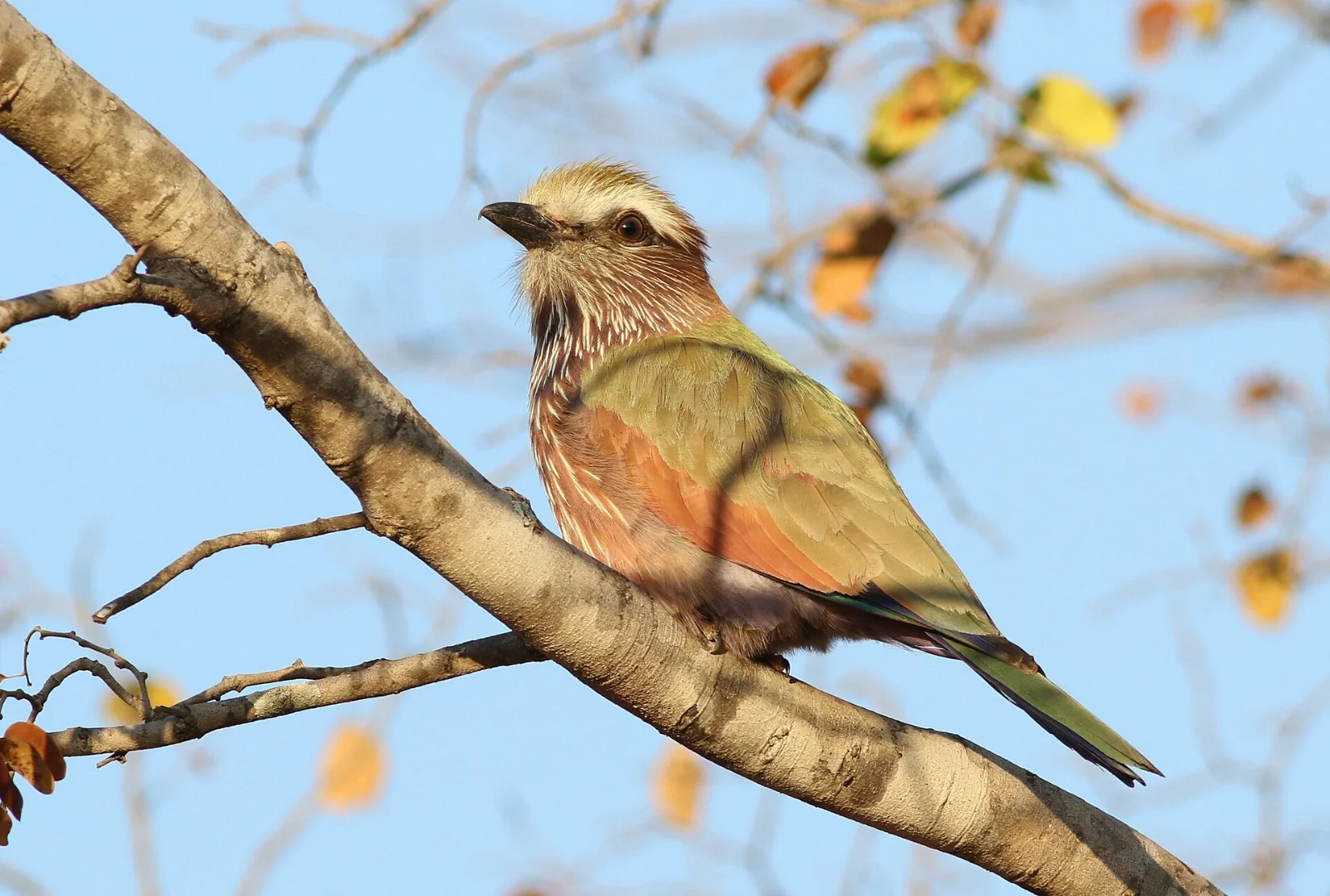
The Atlas describes the Purple Roller as generally resident, with some local movements. Across most of the region it is outnumbered by the Lilac-breasted, and the Namibian escarpment is the only area where it is clearly the dominant roller. Everywhere else it plays second fiddle. The photograph below is from the Punda Maria area, in the far north of Kruger.
Racket-tailed Roller
This is the special, the one that sends South African birders on the long drive north. The Atlas says the Racket-tailed Roller prefers dense, undisturbed primary miombo woodland, with the highest reporting rates on the Zambezi escarpment and in the south-east lowveld of Zimbabwe. In South Africa it is restricted to the northern Kruger National Park, where it is probably a breeding resident and occurs sparsely in mopane. In Zimbabwe the known laying period is September to December, with a sharp peak in October. Because miombo is being cleared, the Atlas calls it a species of conservation concern in southern Africa.
For South African birders, that means the far north of Kruger. Pafuri Camp, in the Makuleke concession, lists it among its specials, and the Pafuri birding guide covers the area; the wider Kruger birding guide has the rest of the park.
Broad-billed Roller
The Broad-billed is an intra-African breeding migrant that comes south to nest, and it times its arrival like a guest who knows exactly when dinner is served. The Atlas says it starts to arrive in Botswana and Zimbabwe in the last week of September, with the main influx over a short period in early October. Biodiversity Explorer says flocks leave between December and April. It is usually tied to water or dry watercourses, which shows clearly along the Limpopo on the Botswana border and in the Okavango.
It is a specialist predator. In one study cited by Biodiversity Explorer, ant alates, the winged ants that swarm after rain, made up 66% of its diet and termite alates another 15%, with beetles and bugs most of the rest. It hunts in the air, often in large flocks, and nests in unlined tree cavities 5 to 15 m up, timing its eggs to the insect emergence after rain. When the flying ants come up, so does lunch.
Biodiversity Explorer also shows a Broad-billed Roller at its nest hollow in Kruger, photographed by Warwick Tarboton. In the far north of the park, where the Racket-tailed Roller lives, RETURN Africa, which runs Baobab Hill House there, gives more than 450 species for Pafuri and keeps checklists at reception.
When to go
All 5 overlap from about December to March, when the European Roller is here in numbers and the Broad-billed has settled in to breed. That is the window for a full house. The Lilac-breasted and Purple are present all year, and the Racket-tailed can be found in northern Kruger and Zimbabwe’s miombo in any month; in Zimbabwe its egg-laying peaks in October.
Where to stay
Places in the directory that name rollers or sit in their best country:
| Place to stay | Where | For birders | From |
|---|---|---|---|
| Pafuri Camp | Makuleke, northern Kruger | BirdLife Recommended; Racket-tailed Roller among its specials | R8,450 pp sharing, fully inclusive |
| Baobab Hill House | Makuleke, northern Kruger | Guided birding outings; 450+ species for Pafuri | Ask the lodge |
| Thaba Eco Hotel | Klipriviersberg, Johannesburg | BirdLife Recommended; European and Lilac-breasted Rollers | Ask the lodge |
| Greystone Lodge | Between Dullstroom and Belfast | BirdLife Recommended; 94-species list with both rollers | R1,200 per chalet, weekdays (2026) |
| Chitwa Chitwa | Sabi Sand, Mpumalanga | Birding guides on staff; European and Lilac-breasted Rollers | R28,447 pp sharing, full board (2026) |
| Kapama River Lodge | Kapama, near Hoedspruit | Guides identify calls on drives; Lilac-breasted Roller | Ask the lodge |
| Jabulani Safari | Kapama, near Hoedspruit | 350-species list; Lilac-breasted Roller | Ask the lodge |
| Bushwillow Collection | Hluhluwe, KwaZulu-Natal | Bookable bird guide; European Roller | R6,000 for 2, 3-night package |
| Ongava Lodge | Ongava, south of Etosha | Photographic hide; guided birding; Lilac-breasted Roller | N$11,800 pp sharing, full board (2026) |
| Anderssons at Ongava | Ongava, south of Etosha | Water-level hide; Lilac-breasted Roller | N$23,400 pp sharing, fully inclusive |
Roller numbers and the timing of migration shift from year to year, and the Atlas figures date from fieldwork in the 1980s and 1990s. Facts were checked on 14 November 2026 with the Atlas of Southern African Birds, SANBI, Iziko Museums’ Biodiversity Explorer, BirdLife South Africa and the Birding Dispatch listings. Check access to the Makuleke concession with the camp before you go.
More from the Journal
 Woodpeckers of Southern Africa, Including the One That Doesn’t Need TreesSouthern Africa's woodpeckers, from the Cardinal in every bushveld tree to the Ground Woodpecker that lives on treeless mountain slopes and eats almost nothing but ants.
 Where to See a Taita Falcon: the Strijdom Tunnel, the Blyde Cliffs and the Batoka GorgeA stocky falcon smaller than a pigeon, a handful of cliffs and surveys that keep coming back empty. Where it still nests, how to look, and the 2 roosts beside its cliffs.
 Where to See a Southern Bald Ibis: the Breeding Cliffs, Dullstroom, Wakkerstroom and LesothoA red-capped grassland ibis that nests on cliffs over waterfalls and feeds on burnt veld and maize stubble. The colonies you can watch, the fields to scan, and where to stay.
The Pigeon Post
Every Thursday: 1 bird, 1 place to go and 1 place to stay, by email. Sign up and get our printable checklist of the 163 endemics of southern Africa.