
Makgadikgadi and Nxai Pan Birding: Flamingos, Pans and the Dry-Country Specials
Half a million flamingos on Sua Pan, pelicans on the Nata Delta, Caspian Plovers and sandgrouse on the grasslands, Nxai Pan in the rains, and the 2 places to stay at Nata.
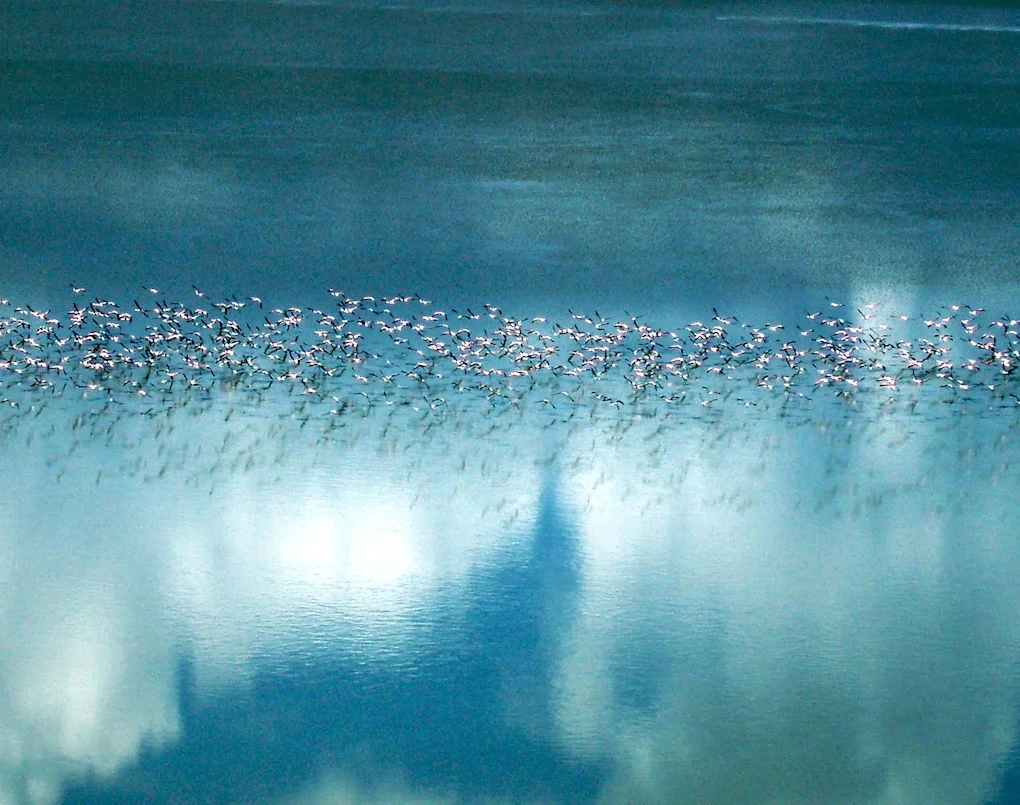
In June 2019 a small plane flew transects over the northern basin of Sua Pan, 500 to 600 m up, and took 3,715 photographs. Researchers at UNSW Sydney then taught a computer to recognise each pale pink dot as a flamingo, and it counted 532,197 of them, more than any count in the area since the 1970s. Somebody did check a sample by hand, which is a job description few birders would apply for.
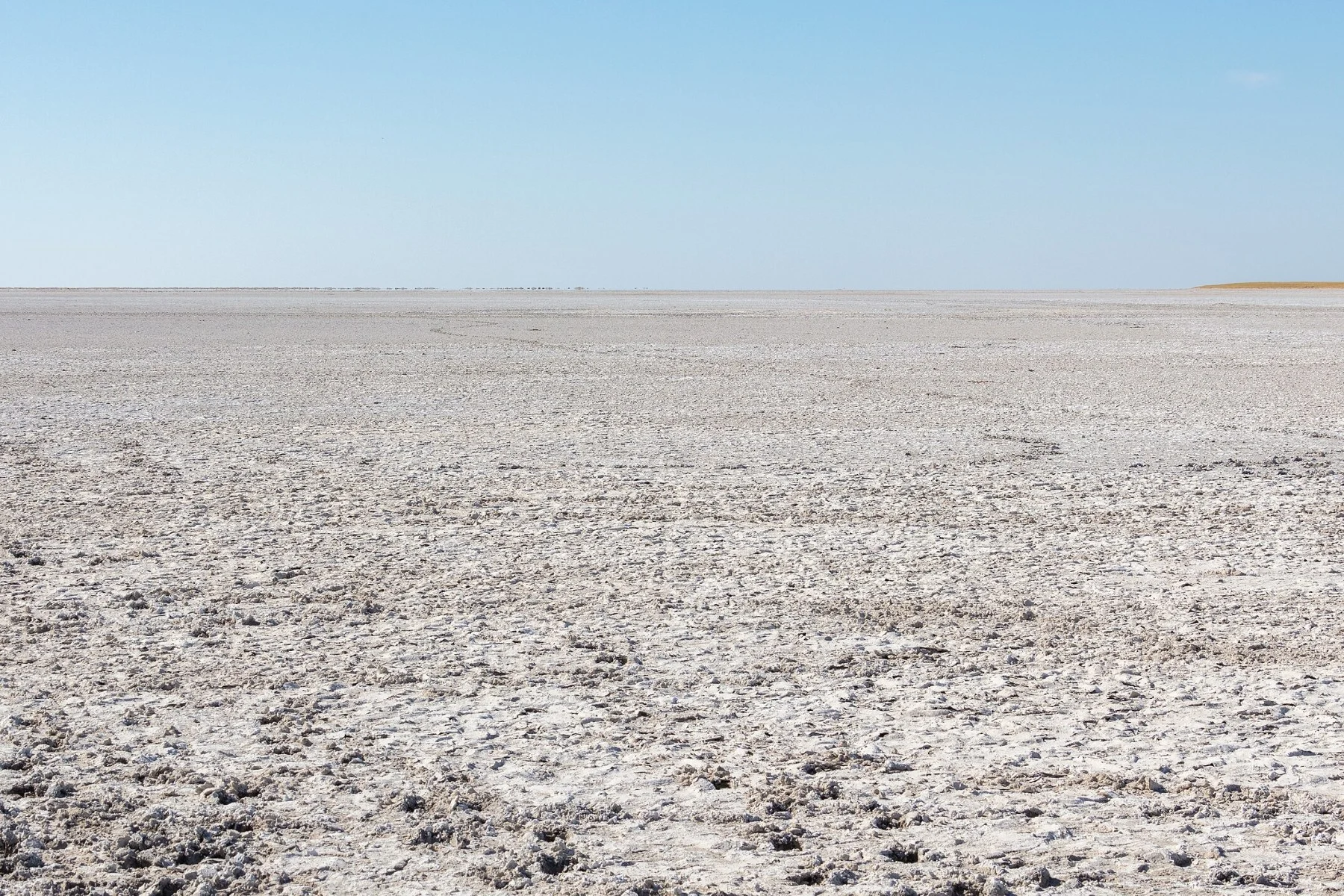
That is the Makgadikgadi on a good year: a salt pan in north-eastern Botswana that can hold more flamingos than most people will ever see in one place. On a dry year it can hold almost nothing. This guide covers the pans, the grasslands around them, Nxai Pan to the north-west, and how to time a trip so that the water and the birds are there when you are.
The pans in brief
The Key Biodiversity Area account describes a very large site, more than 24,000 km², on the flat bottom of the old Kalahari lake. Its 2 main pans are Sua Pan, fed by the Nata River in the east, and Ntwetwe Pan, both alkaline flats it compares with the soda lakes of Kenya’s Rift Valley. Around them are grassland, low acacia savanna and stunted mopane, with riverine woodland along the Boteti and Hyphaene palms along drainage lines as far north as Nxai Pan.
Water decides everything. The account says inflows vary greatly from year to year; 1987/88 brought double the inflow to Sua Pan of any year since records began in 1967. The Nata Delta section of Sua Pan rarely dries out completely, which makes it the most reliable corner for waterbirds. When the pans are dry, the account notes, few birds use them other than Chestnut-banded and Kittlitz’s Plovers, which leaves a great deal of salt for 2 small plovers.
The flamingos of Sua Pan
When Sua Pan floods, Greater and Lesser Flamingos breed there. The KBA account says the colonies were first described in detail in 1978, when the Greater Flamingo colony was the largest known in Africa, and lists breeding again in 1988, 1996, 1997, 1999/2000 and 2000/1. In April 1988, 25,000 to 26,000 Greater Flamingo chicks were counted, and one Lesser Flamingo colony in November 1988 held about 60,000 birds.
UNSW calls Sua Pan one of the most important flamingo breeding sites in Africa, and for the Near Threatened Lesser Flamingo one of only 6 major breeding sites. The 2019 birds were feeding, not breeding, which shows the pan can support huge numbers between breeding attempts. Breeding needs exactly the right flood, enough to make islands of salty mud where the chicks are safe from predators, so it happens only in some years. The flamingos need the weather to cooperate for months, and it often does not.
The researchers say the pans are not well protected from adventure tourism developments and upstream dams, and that the floods from the Nata and Boteti rivers must be kept flowing. The KBA account adds a soda-ash works on the north-east edge of Sua Pan, whose water abstraction may affect the breeding flamingos. For the other breeding pans and the coastal sites, see where to see flamingos in Africa.
Pelicans, ducks and waders in a wet year
Flamingos are not the only birds that arrive with the water. The KBA account says flooded pans attract breeding Great White and Pink-backed Pelicans, Black-necked Grebe and many ducks, among them Red-billed and Cape Teal, Fulvous Whistling Duck, Southern Pochard and White-backed Duck, along with Collared Pratincole and Caspian Tern. At times very large numbers of waders visit: Marsh and Wood Sandpipers, Black-winged Stilt and Ruff can each pass 0.5% of their populations here.
Wattled Crane used to come too. More than 1,000 non-breeding birds were recorded on the pans in the 1960s and 1970s, the account says, but only about 100 occur now.
Nata Bird Sanctuary
The easiest place to see the Nata Delta is Nata Bird Sanctuary, a community-run reserve overlooking that corner of Sua Pan. Its encyclopedia entry describes 230 km², about 45% of it on the pan, managed with 4 villages, Nata, Sepako, Maposa and Manxotae, whose people moved some 3,500 cattle so the sanctuary could be fenced. It opened in 1993 and won a Tourism for Tomorrow award that year. A raised wooden platform looks out over the pan, and the black cotton soils on some roads can be a problem in the rains, the exact months when the birds are worth the trip.
Both places to stay in the directory are at Nata. Nata Lodge, about 10 km south of the village on the main tarred road, runs a guided drive into the sanctuary and gives a count of 165 species for it. It has 22 chalets, 10 safari tents and campsites, and is about 180 km from Francistown and 310 km from Maun. Eselbe Camp Backpackers, on the Nata River about 2 km north of Nata on the Kasane road, runs canoe trips towards the pans to see flamingos and pelicans when the river is high enough. It gives more than 150 species for the pans, names Common Ostrich and Secretarybird, and recommends the rainy season.
The grasslands and the dry-country specials
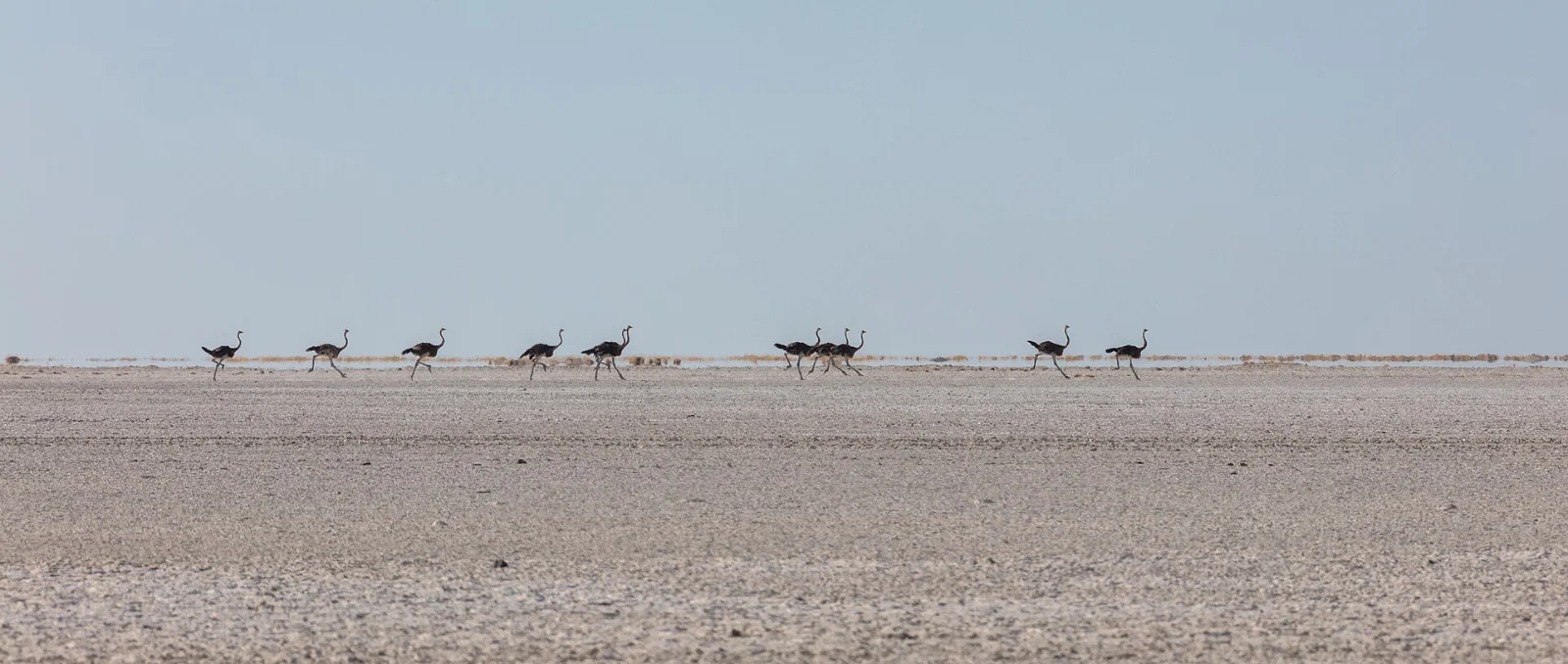
Away from the water, the grasslands have their own list, and it does not depend on rain in the same way. The KBA account names important populations of Kori Bustard, Common Ostrich and Secretarybird, with Red-necked Falcon, Double-banded Courser, Burchell’s and Yellow-throated Sandgrouse, and Fawn-coloured, Spike-heeled and Pink-billed Larks. Orange River Francolin lives on the periphery up to Nxai Pan.
Summer brings Palearctic visitors to the grassland: Montagu’s and Pallid Harriers, Caspian Plover and Black-winged Pratincole. Bateleur, White-headed Vulture, Martial Eagle and Tawny Eagle, all regionally threatened, forage over the area. The account also records hunting pressure on large birds, which led to a close season on sandgrouse during their main breeding season. For the sandgrouse drinking times, see sandgrouse and waterhole birding, and for the big ground birds, bustards and korhaans.
Nxai Pan
Nxai Pan National Park lies just north of the Maun to Nata road and borders Makgadikgadi Pans National Park. The pan itself is a fossil lake bed of about 40 km², and the park also holds Baines’ Baobabs, named after Thomas Baines, who first described them. The Atlas of Southern African Birds names Nxai Pan among the strongholds of the Kori Bustard, a bird that walks the grass as if it owns the deeds.
The park is at its best in the rainy season, from November to April, and the game is most abundant from December to April. Heavy rain can make the roads hard going, and the dry months, May to September, are the easier ones to drive. Botswana Tourism, as cited in the Birding Dispatch guide to Botswana, says the smaller pans fill with water in the rains and that December to April is the time to visit if the rains are good. The same guide gives Nxai Pan as a Category B park, at P190 per non-resident per day under the national parks tariff.
When to go
Go in the rains, from December to April, and go after a good one. Flamingo breeding depends on the flood and is never guaranteed, so check recent reports before planning a trip around it. The grassland specials and the Palearctic harriers and plovers make a summer visit worthwhile even in a year when the flamingos stay away, and Nata, on the main road between Francistown, Maun and Kasane, slots easily into a longer Botswana route.
Where to stay
The 2 places to stay at the Makgadikgadi in the directory, both at Nata:
| Place to stay | Where | For birders | From |
|---|---|---|---|
| Nata Lodge | About 10 km south of Nata | Guided drive into Nata Bird Sanctuary, 165 species | Ask the lodge |
| Eselbe Camp Backpackers | Nata River, 2 km north of Nata | Canoe trips towards the pans, Secretarybird, 150+ species | Ask the lodge |
Water levels on the Makgadikgadi change from year to year, and flamingo breeding is never certain. Facts were checked on 15 November 2026 with the KBA account, UNSW and each listing on Birding Dispatch. Confirm park fees with the Department of Wildlife and National Parks and road conditions with each place to stay before you travel.
More from the Journal
 Namib-Naukluft and Sossusvlei for Birders: Dune Lark, Desert Raptors and the Naukluft SpecialsA lark that lives on the dunes and nowhere else, Lappet-faced Vultures nesting in the desert, coursers on the gravel plains and the northern specials around the Naukluft cliffs, in one of Africa's largest parks.
 Lake Baringo and Lake Bogoria Birding: The Owl Walks, the Cliffs and the FlamingosA local guide who knows where every nightjar and eagle-owl slept last night, thorn scrub full of hornbills, a Goliath Heron colony on a rock, and the flamingo lake next door that keeps rising.
 Akagera Birding: Rwanda’s Savanna, Lakes and Papyrus, and the Shoebill ChancesRed-faced Barbet in the southern woodland, Papyrus Gonolek and Carruthers's Cisticola in the swamps, a lake of hippos and lapwings, and a Shoebill that hides in the wetlands more than it shows.
The Pigeon Post
Every Thursday: 1 bird, 1 place to go and 1 place to stay, by email. Sign up and get our printable checklist of the 163 endemics of southern Africa.