
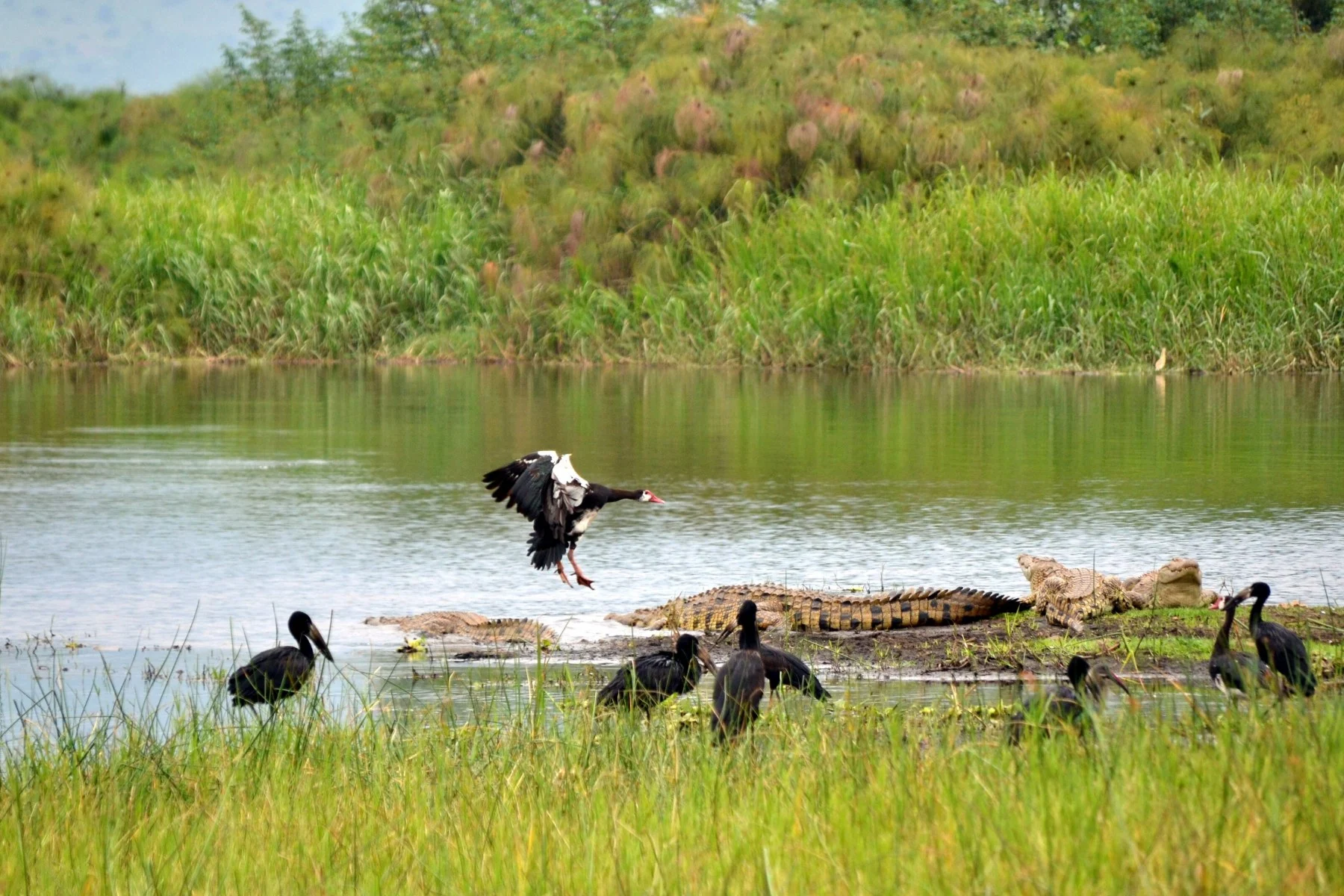
Akagera Birding: Rwanda’s Savanna, Lakes and Papyrus, and the Shoebill Chances
Red-faced Barbet in the southern woodland, Papyrus Gonolek and Carruthers's Cisticola in the swamps, a lake of hippos and lapwings, and a Shoebill that hides in the wetlands more than it shows.
On their last full day in Akagera in August 2025, 3 young Dutch birders took a wrong turn on the Nyampiki peninsula and found themselves in a patch of short grass full of lapwings: Senegal Lapwing, Spur-winged Lapwing, Kittlitz’s Plover and Brown-chested Lapwing, the bird that Bas Klep’s trip report names as his biggest target after Red-faced Barbet. It was their first trip outside Europe, they had birded the park from a rented tent and a hired Toyota, and they left with 296 species for the country. The Red-faced Barbet, on the other hand, does not appear on their list. That is Akagera: a park where a wrong turn can produce a lifer and the headline bird can still slip away.
Akagera is Rwanda’s savanna park, on the Tanzanian border in the east. Its park website gives it 1,200 km², a third of it water, and calls it the largest protected wetland in central-eastern Africa. The park was established in 1934, and African Parks, which has run it with the Rwanda Development Board since 2010, says almost 500 bird species have been documented.
Savanna, lakes and papyrus
The park takes its name from the Kagera River, which forms its eastern boundary and the border with Tanzania, and which feeds a chain of forest-fringed lakes, papyrus swamps and floodplains, according to the park site and Wikipedia. Lake Ihema is the largest of the lakes. To the west, the land rises into rolling hills, grassland and woodland, and the mix is what makes the bird list long: savanna birds, swamp specialists and waterbirds within a single day’s drive.
The park’s own pitch to birders is the papyrus. It names several Lake Victoria basin specials, including Red-faced Barbet and Papyrus Gonolek. Visit Rwanda, the national tourism board, adds Northern Brown-throated Weaver, White-winged Swamp Warbler, Carruthers’s Cisticola, White-collared Oliveback and Grey Crowned Crane, along with good raptor populations and large numbers of waterbirds.
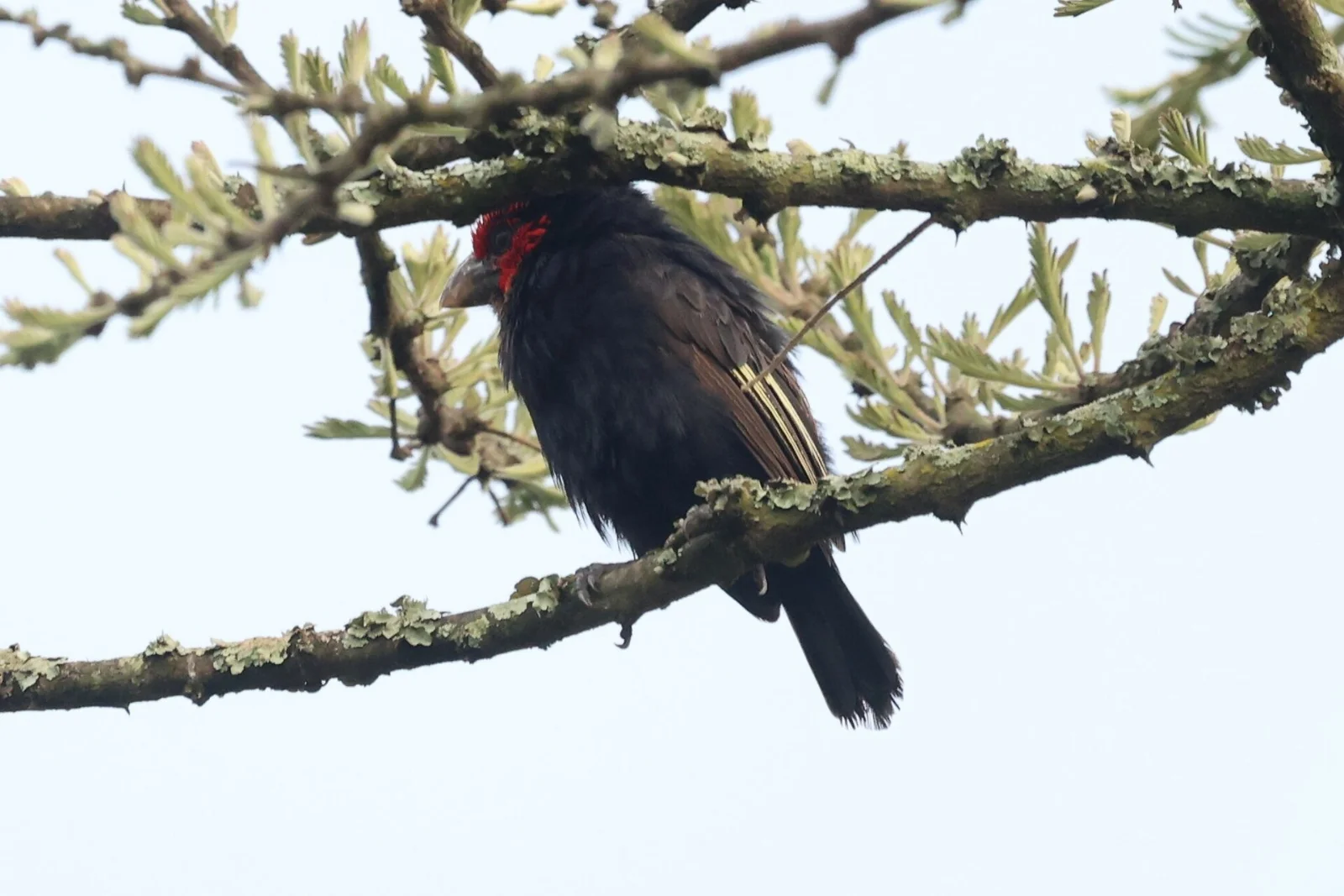
Red-faced Barbet
Red-faced Barbet is the bird most visiting birders want, Visit Rwanda says, and it should be easy around the lodges and campsites in the south of the park. Should is a word that birders learn to read carefully. Klep’s group, staying at one of those southern campsites for 4 days in August 2025, did not see it, and the report notes that the group missed quite a few barbets in general. A local guide who knows current territories is the obvious fix, and Akagera’s community guides can ride along in a self-drive vehicle.
The Shoebill odds
Visit Rwanda says the Shoebill is seen in the park fairly regularly. The park website is more careful: it describes Lake Rwanyakazinga, in the north-east, as home to the secretive sitatunga and Shoebill hidden within its wetlands. Wilderness, which runs camps on the lake’s shore in a private concession, calls a Shoebill sighting a very rare glimpse. Read together, the fair summary is that Akagera has Shoebills, and they are not reliable. Wilderness lists what else lives along that north-eastern lakeshore: Papyrus Gonolek, Swamp Flycatcher, Hildebrandt’s Spurfowl, Senegal Lapwing, Carruthers’s Cisticola and Ross’s Turaco, a decent consolation prize for a bird that did not turn up. For the places where the odds are better, mostly in Uganda and Zambia, see where to see a Shoebill.
Lake Ihema and the waterbirds
The scheduled boat trips on Lake Ihema run at 07:30, 09:00, 15:00 and 16:30, the park site says, with private trips at other times. Visit Rwanda says a trip should give great views of many of the waterbirds and a good chance of African Finfoot. Klep’s group did not take the boat but drove the eastern road along the lakes, where it found Broad-billed Roller, Blue-spotted Wood Dove, African Darters, Striated Heron, Water Thick-knee and many hippos and crocodiles. After dark, Visit Rwanda adds, a night drive is the way to look for Verreaux’s Eagle-Owl and nightjars. For more on getting the most from a birding boat trip, see birding by boat.
The northern hills and the plains
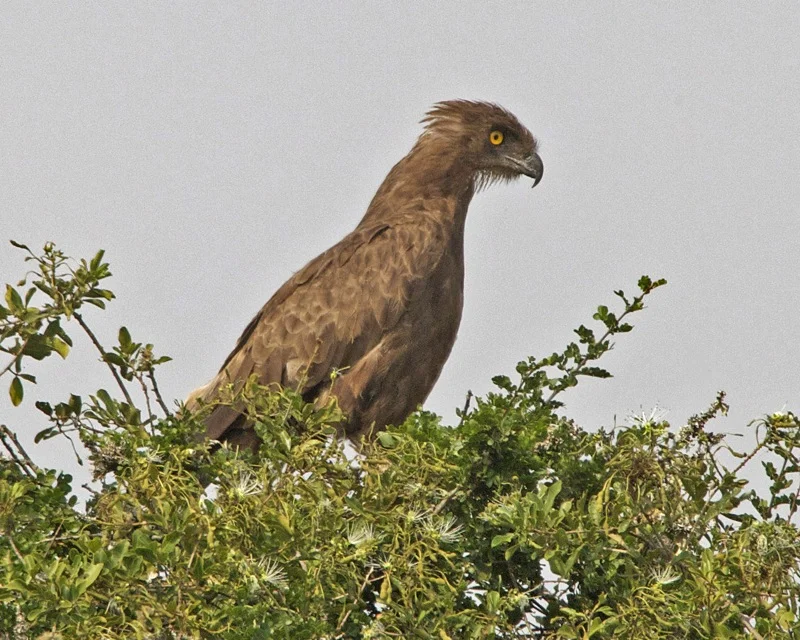
The higher ground in the north was the quietest and most surprising part of the park for the Dutch group. A zebra roadblock came with Common Dwarf Mongooses; then Coqui Francolin calling among a group of Red-necked Spurfowl, a group of Temminck’s Coursers, Tabora and Trilling Cisticolas, Brown-backed Honeybird, Rufous-naped and Flappet Larks, Cinnamon-breasted Bunting, Moustached Grass Warbler and Striped Kingfisher. The first afternoon in the south had given Brown Snake Eagle, African Penduline Tit, Bateleur, Siffling Cisticola and White-winged Widowbird, the second day Black-crowned Tchagra, Tropical Boubou and Meyer’s Parrot, and later days added Black-bellied Bustard, Hildebrandt’s Spurfowl, Grey Kestrel, Green-capped Eremomela, Red-faced Crombec, Crowned Hornbill and a cooperative Slate-coloured Boubou.
On the final morning, in heavy rain, the group drove out through the northern gate and added Crested Francolin, Red-billed Oxpecker, which it found surprisingly hard to see compared with the commoner Yellow-billed Oxpecker, and Crowned Lapwing, the last of the lapwings. Collared Pratincoles were just outside the gate.
Getting there and timing
Akagera is 110 km, about 2 hours’ drive, from Kigali, in Rwanda’s Eastern Province, the park site says. Self-drive visitors enter through the southern gate and can drive from 06:00 to 18:00. The park recommends November to April for a visit; Wilderness notes that the same months bring the migrants from Europe and Asia. Klep’s group went in August, one of the driest months, in a hired car; the park advises a 4×4 in the wet season.
The southern sector is easiest from Kigali, and the papyrus swamps near Gashora, in Bugesera District south-east of Kigali, make a useful stop on the way: Klep’s group saw Papyrus Gonolek, Papyrus Canary, Carruthers’s Cisticola and Northern Brown-throated Weaver there before driving to the park. For Nyungwe and the rest of the country, see the Rwanda birding guide.
Where to stay
The directory has no place to stay inside Akagera yet. These 2 are on the Kigali side of a day trip or a longer stay, and both are good for the papyrus birds that also live in the park.
| Place to stay | Where | For birders | From |
|---|---|---|---|
| Bugesera Lodge | Bugesera District, about 25 minutes from Kigali | Own checklist; Papyrus Gonolek, Papyrus Canary; Mwogo marshland | US$60 a 1-person bungalow, bed and breakfast |
| Nature Kigali | Nyarutarama, Kigali, Rwanda | Bird guide bookable; 50+ garden species incl. Bat Hawk | Ask the lodge |
Park fees, gates and roads in Akagera change. Facts were checked on 15 November 2026 with the Akagera National Park website, African Parks, Visit Rwanda, Wilderness, Bas Klep’s August 2025 Rwanda trip report, Wikipedia’s account of the park and each listing on Birding Dispatch. Confirm current park fees and a community guide with the park before you go.
More from the Journal
 Namib-Naukluft and Sossusvlei for Birders: Dune Lark, Desert Raptors and the Naukluft SpecialsA lark that lives on the dunes and nowhere else, Lappet-faced Vultures nesting in the desert, coursers on the gravel plains and the northern specials around the Naukluft cliffs, in one of Africa's largest parks.
 Lake Baringo and Lake Bogoria Birding: The Owl Walks, the Cliffs and the FlamingosA local guide who knows where every nightjar and eagle-owl slept last night, thorn scrub full of hornbills, a Goliath Heron colony on a rock, and the flamingo lake next door that keeps rising.
 Tankwa Karoo Birding: Cinnamon-breasted Warbler, the R355 and the Karoo LarksCinnamon-breasted Warbler at Skitterykloof, Karoo Eremomela on the P2250, Burchell's Courser in the national park, flamingos in a desert dam, and where to stay on the Ceres side of the Tankwa.
The Pigeon Post
Every Thursday: 1 bird, 1 place to go and 1 place to stay, by email. Sign up and get our printable checklist of the 163 endemics of southern Africa.