
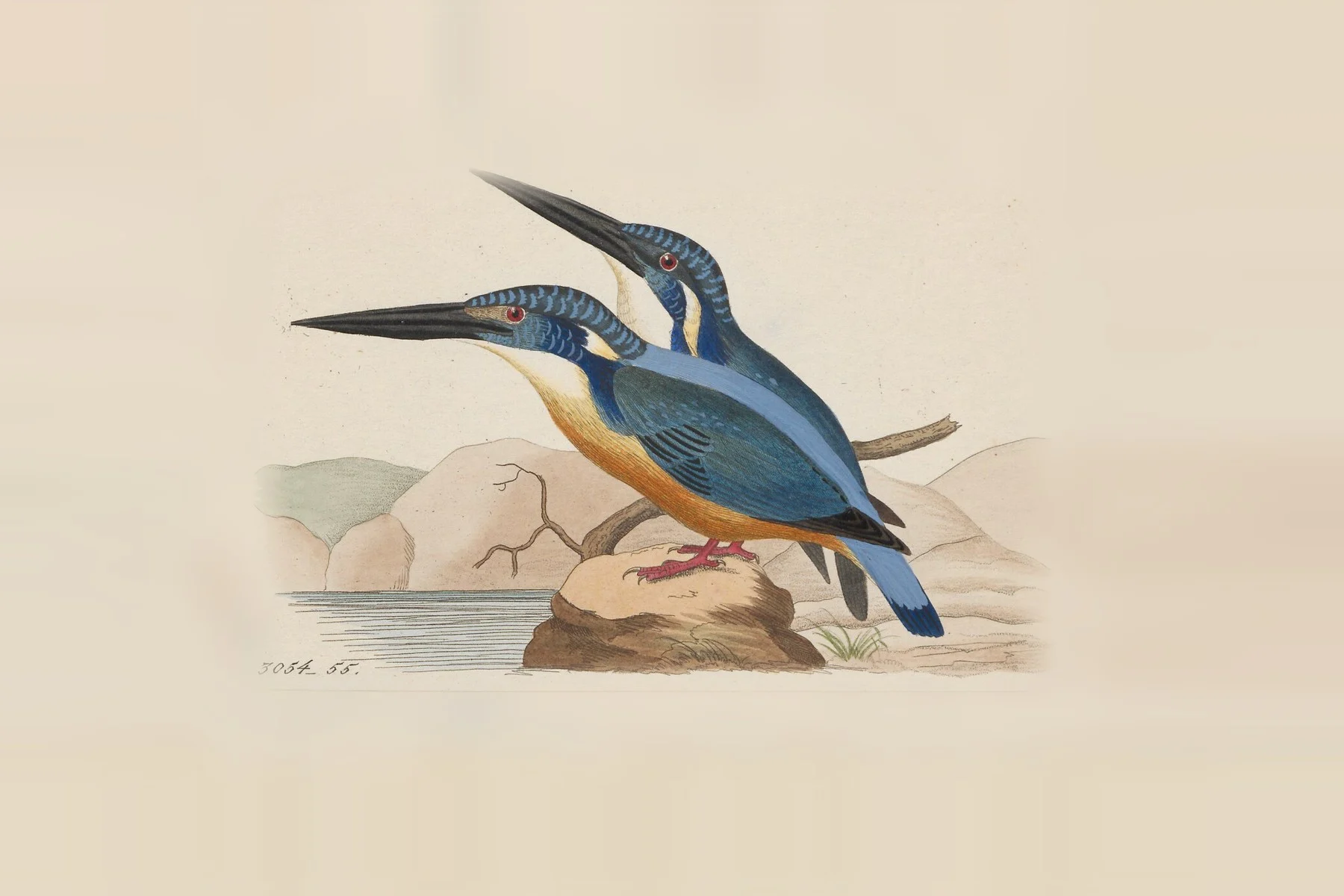
Kingfishers of Southern Africa and Where to See Them
All 10 regular kingfishers, African Pygmy to Giant, including the half that never bother fishing, the summer migrants and the winter visitor, the best site for each, and stays on the right rivers.
Southern Africa has 10 regular kingfishers, and only half of them fish. Giant, Pied, Half-collared, Malachite and, in winter, Mangrove Kingfisher work water. The other 5, the African Pygmy and the 4 Halcyon kingfishers, hunt insects and small lizards from a perch in woodland, and several live nowhere near a river. Knowing which is which is most of the work of finding them, and saves a lot of staring at empty rivers.
The Atlas of Southern African Birds is the base reference here, with species accounts written mainly by Phillip Clancey, Marc Herremans and Aldo Berruti, and BirdLife South Africa’s GoBirding guides give the sites.
At a glance
| Kingfisher | Habitat | When (Atlas) | A good site (source) |
|---|---|---|---|
| Giant | Rivers, dams, estuaries | All year | Groot River, Nature’s Valley (GoBirding) |
| Pied | Any water with fish | All year | Okavango and Chobe rivers (Atlas) |
| Half-collared | Fast, clear, wooded streams | All year | Ebb and Flow, Wilderness (GoBirding) |
| Malachite | Still water with reeds | All year | Lake Panic, Kruger (SANParks) |
| African Pygmy | Coastal and escarpment woodland | Late September to April | KwaZulu-Natal coast (Atlas) |
| Woodland | Bushveld with tall trees | November to April | Skukuza, Kruger (SANParks) |
| Mangrove | Coastal forest, mangroves | Winter in KwaZulu-Natal | Beachwood Mangroves, Durban (GoBirding) |
| Brown-hooded | Woodland, gardens, forest edge | All year | Eastern suburbs and parks (Atlas) |
| Grey-headed | Mesic woodland | September to April | Okavango and northern Botswana (Atlas) |
| Striped | Dry woodland | All year | Auob River, Kgalagadi (SANParks) |
The fishing kingfishers
Pied Kingfisher
The Pied is the second largest African kingfisher, after the Giant, and the easiest to see. It hovers over open water like a small black-and-white helicopter before diving, which means, in the Atlas’s words, that it is less reliant than other kingfishers on tall trees for hunting perches, and it will fish far out over a lake. It uses rivers, estuaries, canals, farm dams, sewage works and the intertidal zone. It is most abundant in the Okavango, where the Atlas found the highest reporting rate, and it breeds in small colonies along the Chobe River. In Maun, Thamo Telele gives a list of 300 species and names Pied Kingfisher with African Fish Eagle and Pearl-spotted Owlet.
Giant Kingfisher
The largest kingfisher in Africa shares the Pied’s range and often its rivers, and the 2 usually use separate perches, like neighbours who share a road but not a bench. GoBirding says Giant Kingfisher is regular at the bridge over the Groot River at Nature’s Valley, on the Garden Route. In the Eastern Cape, Kariega Game Reserve near Kenton-on-Sea publishes a list of more than 350 species and names Giant Kingfisher, African Finfoot and Narina Trogon. On the Zambezi, Mana Pools Safari Lodge names it with Narina Trogon and Spotted Creeper.
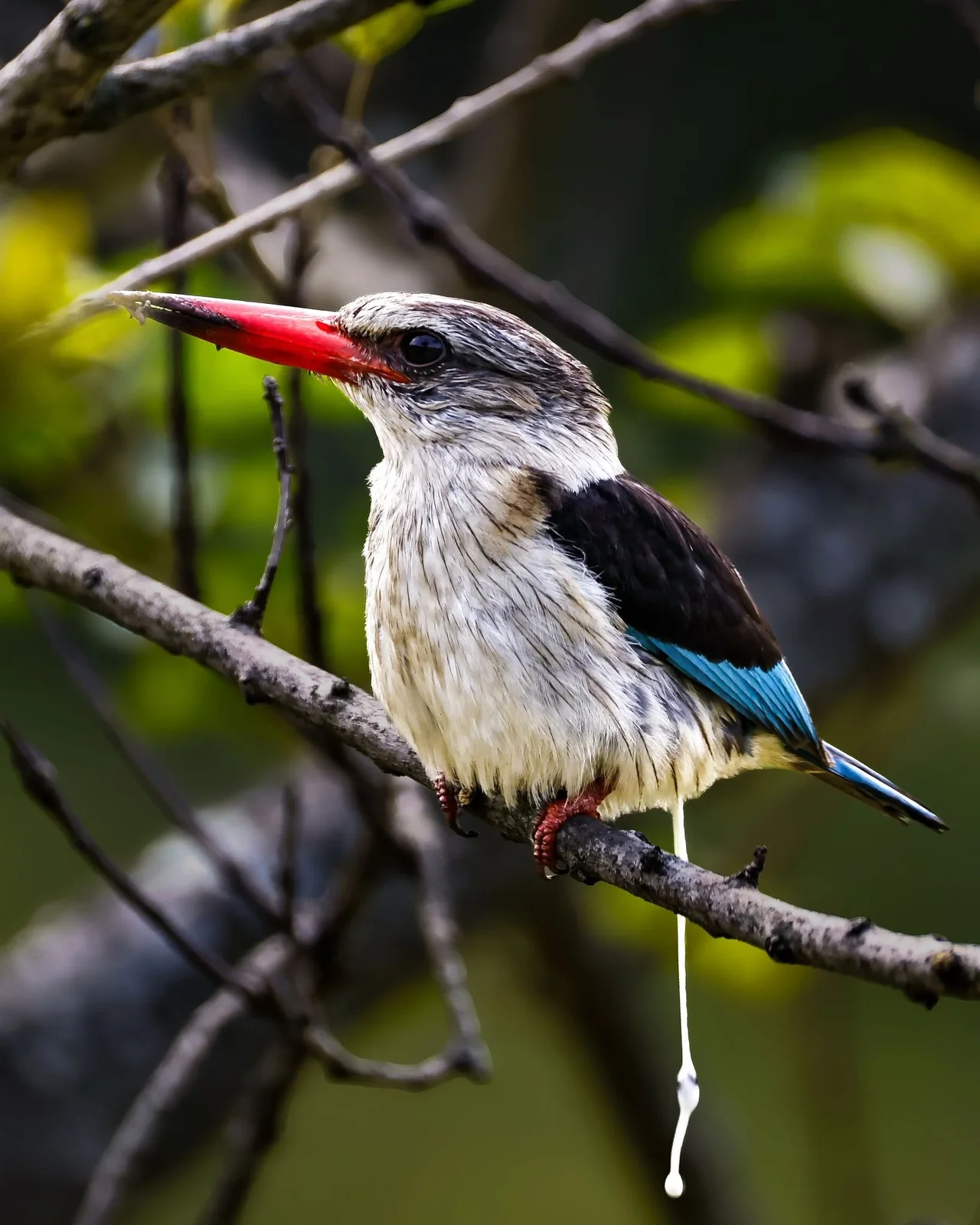
Half-collared Kingfisher
Most visiting birders have to search for this species, which seems to prefer it that way. The Atlas describes it as shy and inconspicuous, a bird of fast-flowing streams with clear water and well-wooded banks, often near rapids, perching low on exposed roots. It needs at least 1 km of river while breeding. It is most regular along the former Transkei and the southern coast, with another stronghold on the Mpumalanga escarpment, and the Atlas reports a decline along the developed KwaZulu-Natal coast through pollution and siltation.
The easiest site is the Wilderness section of Garden Route National Park. GoBirding says Half-collared Kingfisher perches on the small boardwalk in front of reception at Ebb and Flow, and rates the Half-collared Kingfisher Trail that starts there above the other Kingfisher trail for birders; heavy rain closed it for a time in 2026, so check with SANParks. GoBirding’s Tsitsikamma guide adds that it breeds at Nature’s Valley and on the Keurbooms River near Plettenberg Bay, where Bitou River Lodge names Malachite Kingfisher, African Finfoot and African Black Duck.
In KwaZulu-Natal, The Cavern Drakensberg Resort and Spa lists 204 species and names Half-collared Kingfisher with Gurney’s Sugarbird. In the Greater Kruger, Inyati Game Lodge on the Sand River names it with African Finfoot and White-backed Night Heron. In Kruger itself, SANParks suggests scanning the Sabie River from the Skukuza restaurant deck.
Malachite Kingfisher
The Atlas contrasts the Malachite with the Half-collared: it prefers more open areas of standing water with emergent vegetation, rather than wooded flowing streams, though the 2 often occur side by side. Any reed-fringed dam can hold one, usually on the reed you were not looking at. Lake Panic, on the S42 near Skukuza, is SANParks’ recommended hide for kingfishers at close range. On the West Coast, Quagga River Lodge at Velddrif profiles Malachite Kingfisher in its guide to the Berg River estuary, and in the Okavango, Gomoti River Lodge, with a bird guide on staff, names it with Saddle-billed Stork and African Jacana.
Mangrove Kingfisher
The rarest of the 10 in South Africa, and with the oddest calendar. Aldo Berruti’s Atlas account explains that it breeds in summer along forested rivers near the coast of the former Transkei, in the Eastern Cape, and moves north to KwaZulu-Natal for the winter, when it uses mangroves, wooded lagoons and even suburban gardens. It is rarely recorded in KwaZulu-Natal between November and March, and does not winter south of Durban, where mangroves are scarce. Berruti recommended treating it as vulnerable in South Africa because the breeding population is small and isolated. All inland records, including any from Kruger, are unproven.
So look for it in winter, April to September, the reverse of the other migrants on this page. GoBirding gives the Beachwood Mangroves beside the Umgeni estuary, 6 km north of Durban’s city centre, and iSimangaliso’s Eastern Shores as the sites. Near Hluhluwe, Emdoneni Lodge names Mangrove Kingfisher with Narina Trogon and African Broadbill, from R1,215 per person with breakfast. See birding near Durban for Beachwood.
The woodland kingfishers
African Pygmy Kingfisher
Smaller than the Malachite and easily confused with it, which is a lot of confusion for a bird this size, the Pygmy lacks a crest, has orange on the face above the eye and a stubbier red bill, according to Clancey’s Atlas account. It is a woodland bird, not necessarily near water, most frequent in coastal woodland and open evergreen forest below 1,000 m, and relatively abundant along the KwaZulu-Natal coast and the Mpumalanga escarpment. It is an intra-African migrant, present from late September or October to April, and it migrates at night, when numbers are killed flying into buildings.
Woodland Kingfisher
The Woodland Kingfisher is the bushveld’s summer kingfisher. It arrives in the first 2 weeks of November and breeds from November to March, with a peak in December and January, before heading north from mid-April. In Kruger, SANParks notes that Woodland Kingfishers hunt insects under the floodlit fig tree at Skukuza after dark, working the night shift at the camp’s lights. In northern KwaZulu-Natal, Lidiko Lodge names Woodland Kingfisher with Purple-crested Turaco and Trumpeter Hornbill, and in Limpopo, Shumbalala Game Lodge names it with European Bee-eater and Wahlberg’s Eagle.
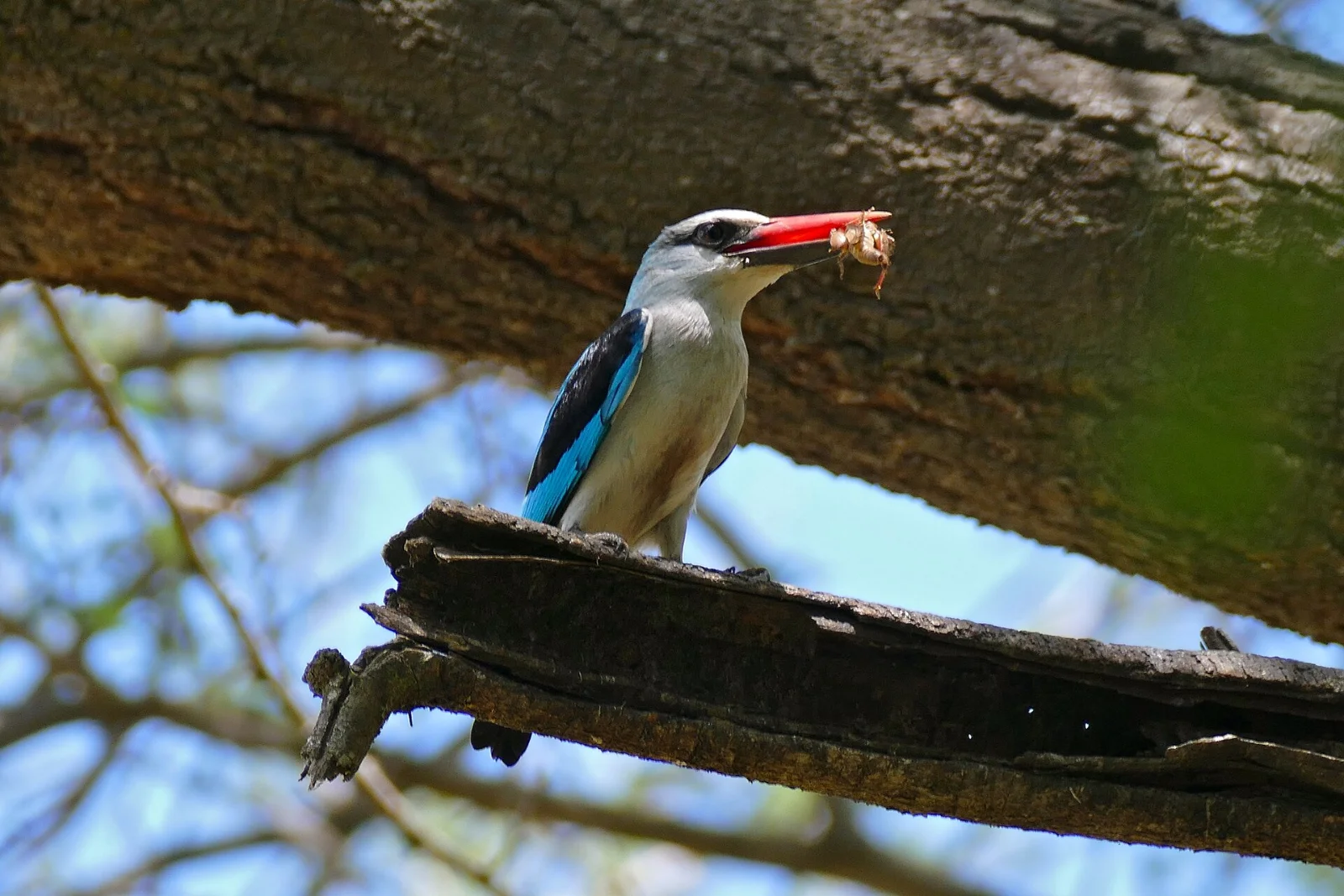
Brown-hooded Kingfisher
The commonest Halcyon in most of its range, Clancey writes, and the only Halcyon that extends south of 29°S. It lives on forest edges, in plantations, riverine woodland, and large gardens and parks, and the Atlas found it doing well in suburbs built on what was once treeless grassland. It feeds on dry land and nests in a burrow in a bank, or in a drainage hole in a retaining wall, which is about as suburban as a kingfisher gets. It has spread into the south-western Cape and the southern Karoo, probably helped by planted trees. Any wooded suburb in Gauteng, Durban or the Eastern Cape is a good place to start.
Grey-headed Kingfisher
A summer visitor, arriving in September and leaving in April. Clancey and Herremans describe it as uncommon in South Africa but locally common in Zimbabwe and northern Botswana, with the highest reporting rate in the Okavango. More birds arrive in wet years, and it nests in a tunnel in a sand or clay bank, sometimes in the wall of an aardvark burrow: a house inside someone else’s house. Northern Botswana in summer is the best bet; Xaro Lodge in the Okavango Panhandle says spring is the season for nesting kingfishers.
Striped Kingfisher
A bird of drier woodland. SANParks lists it on the Auob River in the Kgalagadi with Purple Roller and Capped Wheatear, so it reaches well into the Kalahari, a long way from any fishing. For the park, see Kgalagadi birding.
When to go for all 10
A trip for all 10 has to straddle the seasons, because the kingfishers will not all be in the country at once. The 3 summer migrants, Woodland, Grey-headed and African Pygmy, are present together from November to March. Mangrove Kingfisher is on the KwaZulu-Natal coast only from about April to September. The 6 residents are there all year.
The most efficient plan is a summer trip through Kruger and northern KwaZulu-Natal for the migrants, the residents and the Half-collared, then a winter weekend in Durban for the Mangrove. A September or October visit to the Okavango Panhandle adds breeding Pied Kingfishers, which the Atlas says nest there out of step with the rest of the region, mainly from May to October, and the first Grey-headed Kingfishers of the season.
Where to stay
The places in this guide, with what each offers a birder:
| Place to stay | Where | For birders | From |
|---|---|---|---|
| Thamo Telele | Near Maun, Botswana | 300-species list, Pied Kingfisher, African Fish Eagle | US$213 pp sharing DB&B (8+ nights, expired) |
| Kariega Game Reserve | Near Kenton-on-Sea, Eastern Cape | 350+ species, Giant Kingfisher, African Finfoot, Narina Trogon | R7,600 pp sharing, fully inclusive (2027 low season) |
| Mana Pools Safari Lodge | Mana Pools, Zimbabwe | Birdwatching tours, Giant Kingfisher, Narina Trogon | Ask the lodge |
| Bitou River Lodge | Bitou River, Plettenberg Bay | Malachite Kingfisher, African Finfoot, African Black Duck | Ask the lodge |
| The Cavern Drakensberg Resort & Spa | Northern Drakensberg, KwaZulu-Natal | 204 species, guided birding weekends, Half-collared Kingfisher | R2,140 pp sharing, full board |
| Inyati Game Lodge | Sand River, Sabi Sand | Own checklist, Half-collared Kingfisher, African Finfoot | R16,500 pp sharing, fully inclusive |
| Quagga River Lodge | Berg River, Velddrif | Free Berg estuary bird guide, Malachite Kingfisher | Ask the lodge |
| Gomoti River Lodge | Okavango Delta, Botswana | Bird guide on staff, Malachite Kingfisher, Saddle-billed Stork | Ask the lodge |
| Emdoneni Lodge | Near Hluhluwe, KwaZulu-Natal | Mangrove Kingfisher, Narina Trogon, African Broadbill | R1,215 pp B&B |
| Lidiko Lodge | St Lucia, KwaZulu-Natal | Woodland Kingfisher, Purple-crested Turaco, birds from the deck | Ask the lodge |
| Shumbalala Game Lodge | Thornybush, Limpopo | Woodland Kingfisher, rangers tailor drives to birding | Ask the lodge |
| Xaro Lodge | Okavango Panhandle, Botswana | Boat birding, nesting kingfishers in spring | US$450 per room DB&B |
Seasons shift a little from year to year, and trails close after floods. Facts were checked on 13 November 2026 with the Atlas of Southern African Birds, BirdLife South Africa’s GoBirding guides, SANParks and the Birding Dispatch listings. Check trail and road conditions with SANParks before you go.
More from the Journal
 Woodpeckers of Southern Africa, Including the One That Doesn’t Need TreesSouthern Africa's woodpeckers, from the Cardinal in every bushveld tree to the Ground Woodpecker that lives on treeless mountain slopes and eats almost nothing but ants.
 Where to See a Taita Falcon: the Strijdom Tunnel, the Blyde Cliffs and the Batoka GorgeA stocky falcon smaller than a pigeon, a handful of cliffs and surveys that keep coming back empty. Where it still nests, how to look, and the 2 roosts beside its cliffs.
 Where to See a Southern Bald Ibis: the Breeding Cliffs, Dullstroom, Wakkerstroom and LesothoA red-capped grassland ibis that nests on cliffs over waterfalls and feeds on burnt veld and maize stubble. The colonies you can watch, the fields to scan, and where to stay.
The Pigeon Post
Every Thursday: 1 bird, 1 place to go and 1 place to stay, by email. Sign up and get our printable checklist of the 163 endemics of southern Africa.