
Where to See a Southern Bald Ibis: the Breeding Cliffs, Dullstroom, Wakkerstroom and Lesotho
A red-capped grassland ibis that nests on cliffs over waterfalls and feeds on burnt veld and maize stubble. The colonies you can watch, the fields to scan, and where to stay.
At Semonkong Lodge, in Lesotho’s Maluti Mountains, a colony of Southern Bald Ibises nests on the cliff face across from the lodge tavern, and the lodge has built a thatched lookout to watch them from. That puts one of southern Africa’s grassland specials about a short stroll from the bar, which is not how most endemic birds arrange their affairs. Bearded and Cape Vultures ride the cliffs at the Maletsunyane Falls nearby, in case the ibises need upstaging.
The Southern Bald Ibis is found only in South Africa, Lesotho and Eswatini. Its 2025 account in BirdLife South Africa’s Red Data Book of Birds of South Africa, Lesotho and Eswatini gives a population of about 10,000 birds, 7,000 to 8,000 of them mature, and rates it Near Threatened, an improvement on Vulnerable in 2015. Better counting did much of the work. Earlier estimates came from colony counts and put the population below 4,000 breeding birds; a 2024 study led by Alan Lee used atlas, road-count and BirdLasser records and found that a large part of the population is not at the colonies to be counted. Atlas data show the population stable or slightly increasing.
That makes this one of the more cheerful species guides on the site. The bird is still worth the trip.
How to recognise one
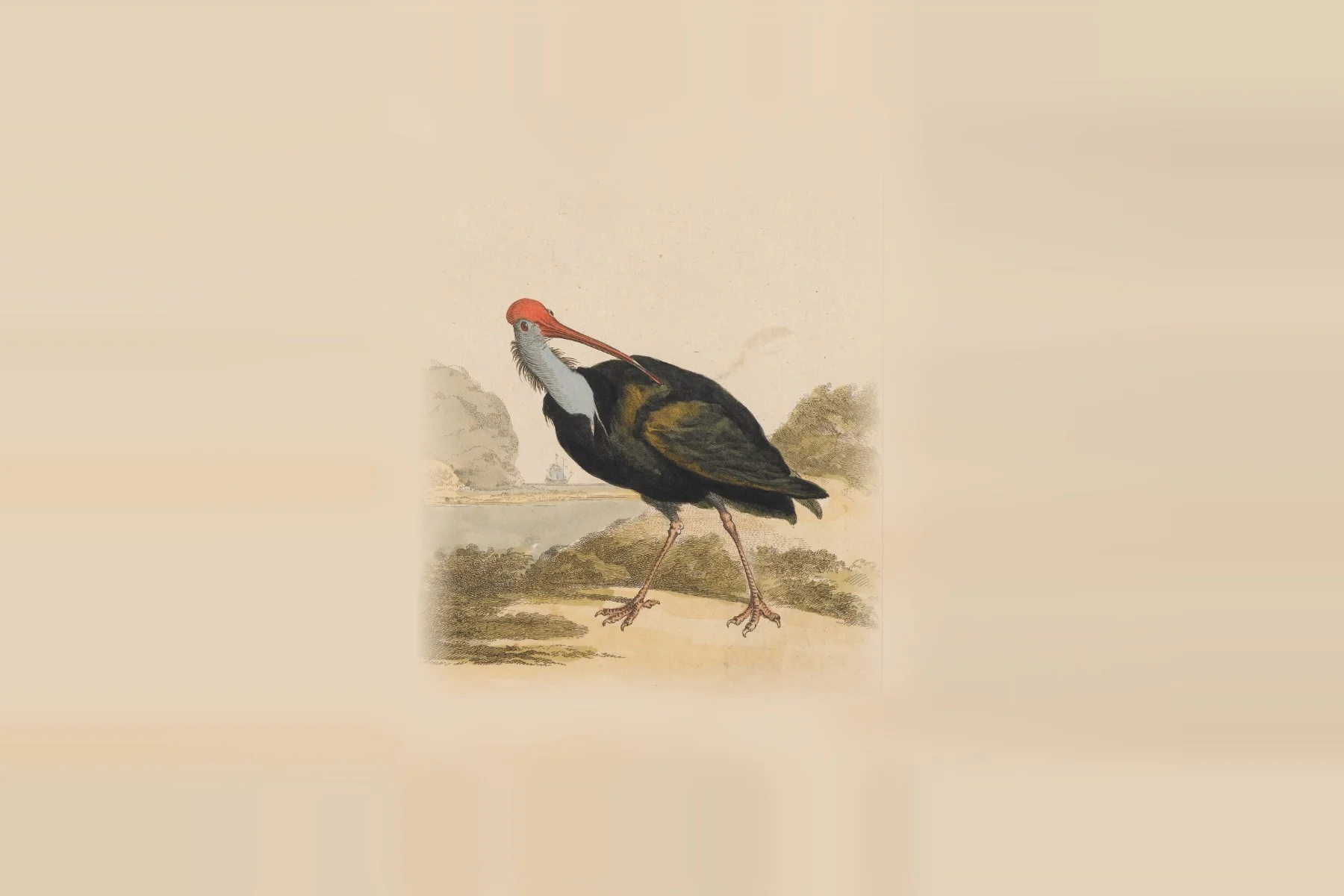
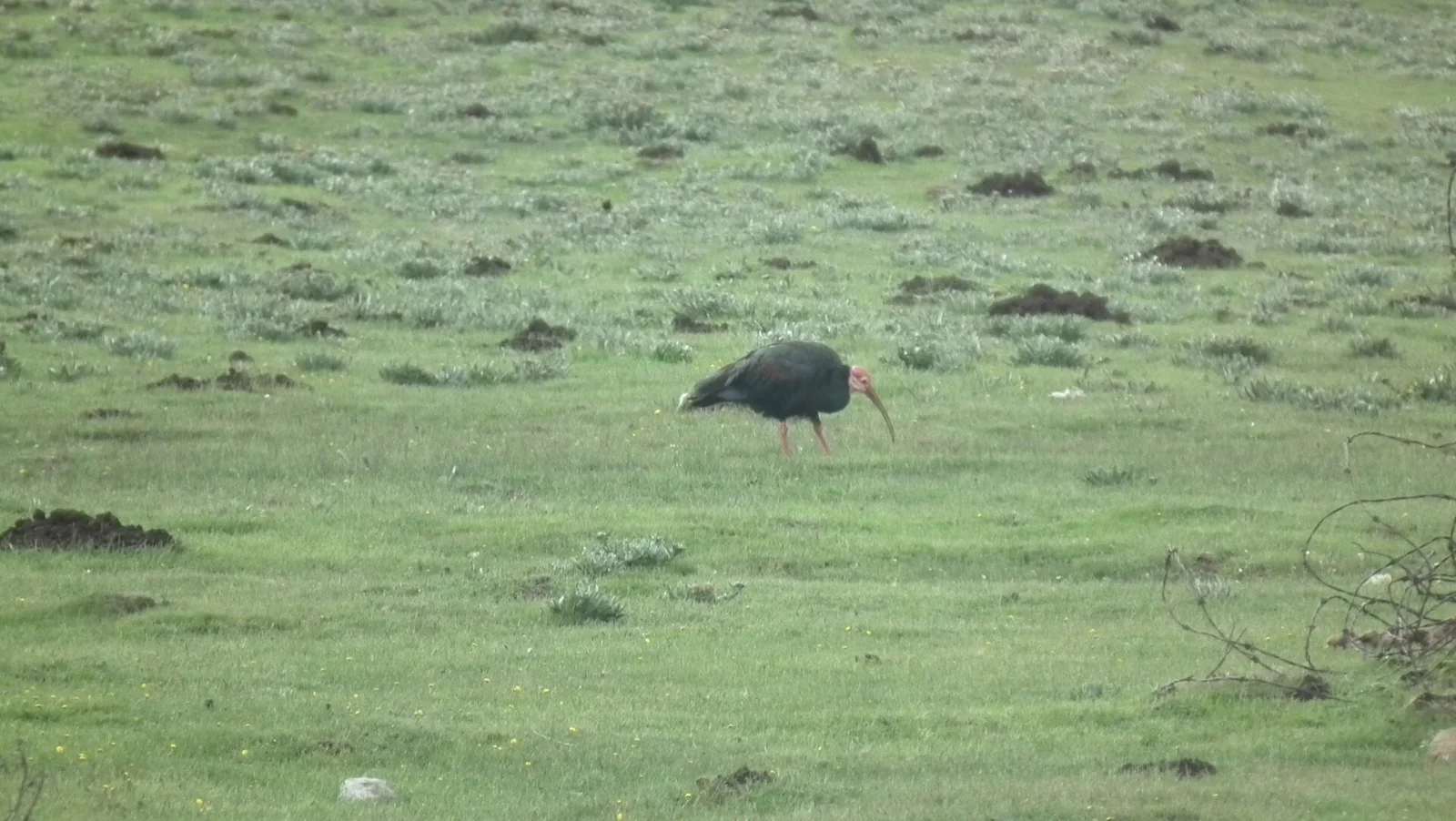
The Red Data Book describes an ibis of 70 to 81 cm with a bald, fleshy, bulging red crown and a red bill, eyes, legs and feet. The face and upper throat are bare and white, and the dark plumage has a green-blue sheen with maroon to copper on the shoulder. A ruff of feathers sits at the base of the neck. Males have longer bills and legs. Young birds have a feathered, duller grey to pinkish crown and an off-white face, so they look like an adult that has not yet gone bald.
There are only 2 species in the genus. The other, the Northern Bald Ibis or Waldrapp, is globally Endangered and breeds in Morocco, Syria and Turkey. The southern one is far easier to see.
The sites at a glance
| Where | What the sources say | Best time | Where to stay |
|---|---|---|---|
| Semonkong, Lesotho | Colony on the cliff opposite the lodge tavern, with a lookout | September to December for breeding | Semonkong Lodge |
| Katse and Mokhotlong, northern Lesotho | The main Lesotho breeding colonies | September to December | None listed |
| Golden Gate Highlands National Park, Free State | 2 breeding colonies in the Important Bird Area | All year; breeding September to December | Moolmanshoek, Qwantani |
| Sterkfontein Dam Nature Reserve, Free State | Named by the resort inside the reserve | All year | Qwantani |
| Wakkerstroom, Mpumalanga | Every colony monitored by volunteers (2018 account) | Breeding season | Forellenhof Guest Farm |
| Dullstroom and the R540, Mpumalanga | Named by a lodge on the Lydenburg road | All year | Stonecutters Lodge |
| Northern Drakensberg, KwaZulu-Natal | Named by a lodge near Bergville | All year | Montusi Mountain Lodge |
| Western Eswatini | Malolotja, Mantenga and Mahamba | All year | None listed |
Where they breed, and when
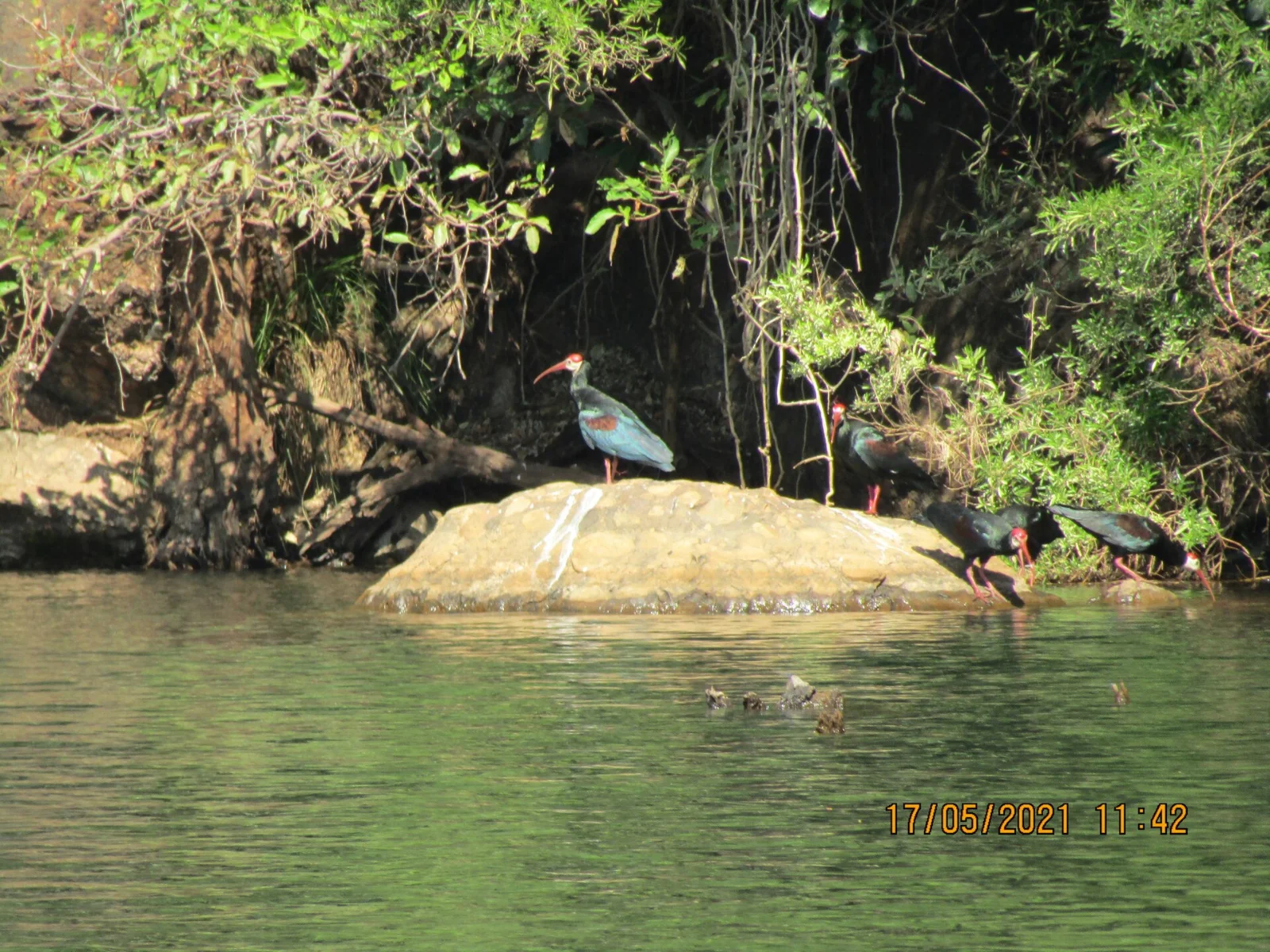
The bird needs 2 things: cliffs with ledges, generally above or near water, and short grassland around them. The Red Data Book gives the range as the high and mid-altitude mesic grasslands of the Free State, Mpumalanga, Limpopo, KwaZulu-Natal and the northern Eastern Cape, most of Lesotho and the west of Eswatini. In Lesotho the colonies are mainly in the north, around the Katse and Mokhotlong catchments, and at Semonkong. In Eswatini the ibis occurs in Malolotja National Park, Mantenga Nature Reserve and Mahamba Protected Landscape.
In South Africa the peak breeding season runs from September to December, and the start is linked to the rains. A clutch is 1 to 3 eggs, incubated for 27 to 31 days, and although several chicks can hatch, more than 1 fledging from a nest is rare. Choosing a ledge beside a waterfall has a downside: in very wet years whole colonies are flooded or washed out. The nestlings also have a long list of enemies, from Verreaux’s Eagle and Jackal Buzzard to White-necked Raven, Pied Crow and Cape Eagle-Owl.
BirdLife International’s account of the Golden Gate Highlands National Park Important Bird Area, in the Rooiberg range on the Lesotho border, records 2 Southern Bald Ibis breeding colonies inside it, along with Blue and Grey Crowned Cranes. Moolmanshoek Private Game Reserve, on the R70 between Ficksburg and Rosendal, names the ibis among more than 250 species recorded on its grassland, wetland and sandstone cliffs, and mentions hides and lookout points without saying how many. Qwantani, a resort of self-catering chalets inside the Sterkfontein Dam Nature Reserve near Harrismith, gives about 200 species for the reserve and names the ibis with Bearded Vulture and Gurney’s Sugarbird; our Bearded Vulture guide covers the same mountains for the bigger bird.
Wakkerstroom and Dullstroom
Around Wakkerstroom, a volunteer project has monitored every breeding colony for about 20 years, according to a 2018 account from Rockjumper Birding Tours, which pays the volunteers’ fuel. Each colony is visited 5 or 6 times over a nesting period of about 3 months. The project’s founder described the birds as late-winter breeders that, in some years, started later and later: in early September 2017 there was not a bird at any colony visited, and nesting only got going in the weeks after. The round trips run long, 220 km to the colony at Vryheid and 170 km to Kalkoenkrans, which is a lot of driving to check on a bird that will not keep a fixed diary.
Forellenhof Guest Farm, outside Wakkerstroom, is BirdLife Recommended, puts guests in touch with the community bird guides and points them to 4 community-run wetland hides nearby. It names Southern Bald Ibis alongside Rudd’s Lark, Botha’s Lark and Yellow-breasted Pipit, and our Wakkerstroom guide covers the loops to drive for all of them.
North of there, Stonecutters Lodge, on the R540 between Dullstroom and Mashishing (Lydenburg), has a hide over a wetland on the property, a 3 km river meander to walk and protea bushes on the mountainside, and names the ibis with Purple Heron and Gurney’s Sugarbird. The Dullstroom grasslands guide covers Verloren Vallei and the other stays around the town.
In the Northern Drakensberg, Montusi Mountain Lodge near Bergville is BirdLife Recommended, has planted indigenous gardens for birds, suggests walks past its dams and paddocks, and names Southern Bald Ibis and Southern Ground Hornbill.
Where to look away from the cliffs
Most sightings are not at the colonies at all. The Red Data Book says the bird feeds mostly above 1,000 m in grassland and croplands, especially harvested maize fields, where the rainfall is more than 700 mm a year. It likes a short, dense sward: heavily grazed, recently burnt or mowed. It will also use sports fields, golf courses and irrigated meadows, so a flock on a rugby field is not a misidentification.
Outside the breeding season the birds gather at roosts, usually in stands of large trees near water. Surveys from 2018 to 2023 found more than 30 such roosts across southern Mpumalanga and the eastern Free State, a few of them used all year by mixed flocks of about 60 adults and young birds. On a drive through the grassland, scan burnt blocks, stubble fields and the tall trees around farm dams in the late afternoon.
Watching without harm
The Red Data Book lists habitat loss to agriculture, mining, bush encroachment and climate change as the main threats, with eggs and chicks taken from ledges, pesticides, collisions with power lines near pylon roosts, new wind farms and hunting adding to the pressure. Colonies are still abandoned from time to time. BirdLife South Africa and Eskom run a partnership to monitor and protect the species, and BirdLife is working with the Lesotho Highlands Development Authority to build artificial breeding cliffs for colonies threatened by the new Polihali Dam.
At a colony, keep well back and do not linger at the cliff edge above a nest. Use a telescope from a lookout or the far side of a gorge, as at Semonkong, and leave the nestlings to deal with the eagles on their own terms. Many colonies are on farms, so ask before you walk in, and log what you see: the 2024 recount that improved the bird’s status was built on records sent in by birders.
Where to stay
The places in this guide whose listings name the Southern Bald Ibis:
| Place to stay | Where | For birders | From |
|---|---|---|---|
| Semonkong Lodge | Semonkong, Lesotho | Colony opposite the tavern, thatched lookout | LSL 1,150 pp sharing, bed and breakfast (to 30 Nov 2026) |
| Moolmanshoek Private Game Reserve | R70, Ficksburg to Rosendal, Free State | 250+ species, sandstone cliffs, hides | About R1,500 pp, bed and breakfast |
| Qwantani | Sterkfontein Dam Nature Reserve, Free State | Inside an Important Bird Area, about 200 species | Ask the lodge |
| Forellenhof Guest Farm | Wakkerstroom, Mpumalanga | BirdLife Recommended, community guides, hides nearby | Ask the lodge |
| Stonecutters Lodge | R540, Dullstroom to Mashishing, Mpumalanga | Wetland hide, 3 km river meander | R1,850 a studio, single, midweek (2026) |
| Montusi Mountain Lodge | Near Bergville, KwaZulu-Natal | BirdLife Recommended, indigenous bird gardens | R3,680 pp, dinner, bed and breakfast (Oct 2026 to Sep 2027) |
Colonies move and are sometimes abandoned, and rates change each season. Facts were checked on 15 November 2026 with BirdLife South Africa’s 2025 Red Data Book account, BirdLife International’s Golden Gate Important Bird Area factsheet, Rockjumper Birding Tours and each place’s listing on Birding Dispatch.
More from the Journal
 Woodpeckers of Southern Africa, Including the One That Doesn’t Need TreesSouthern Africa's woodpeckers, from the Cardinal in every bushveld tree to the Ground Woodpecker that lives on treeless mountain slopes and eats almost nothing but ants.
 Where to See a Taita Falcon: the Strijdom Tunnel, the Blyde Cliffs and the Batoka GorgeA stocky falcon smaller than a pigeon, a handful of cliffs and surveys that keep coming back empty. Where it still nests, how to look, and the 2 roosts beside its cliffs.
 Where to See a Crab-plover: Bazaruto, Mida Creek, Zanzibar, Mafia and the Odd One at Kosi BayA black-and-white shorebird with a bill like pliers, the only member of its family. Where it winters on the East African and Mozambique coasts, how to time the tide, and where to stay.
The Pigeon Post
Every Thursday: 1 bird, 1 place to go and 1 place to stay, by email. Sign up and get our printable checklist of the 163 endemics of southern Africa.