
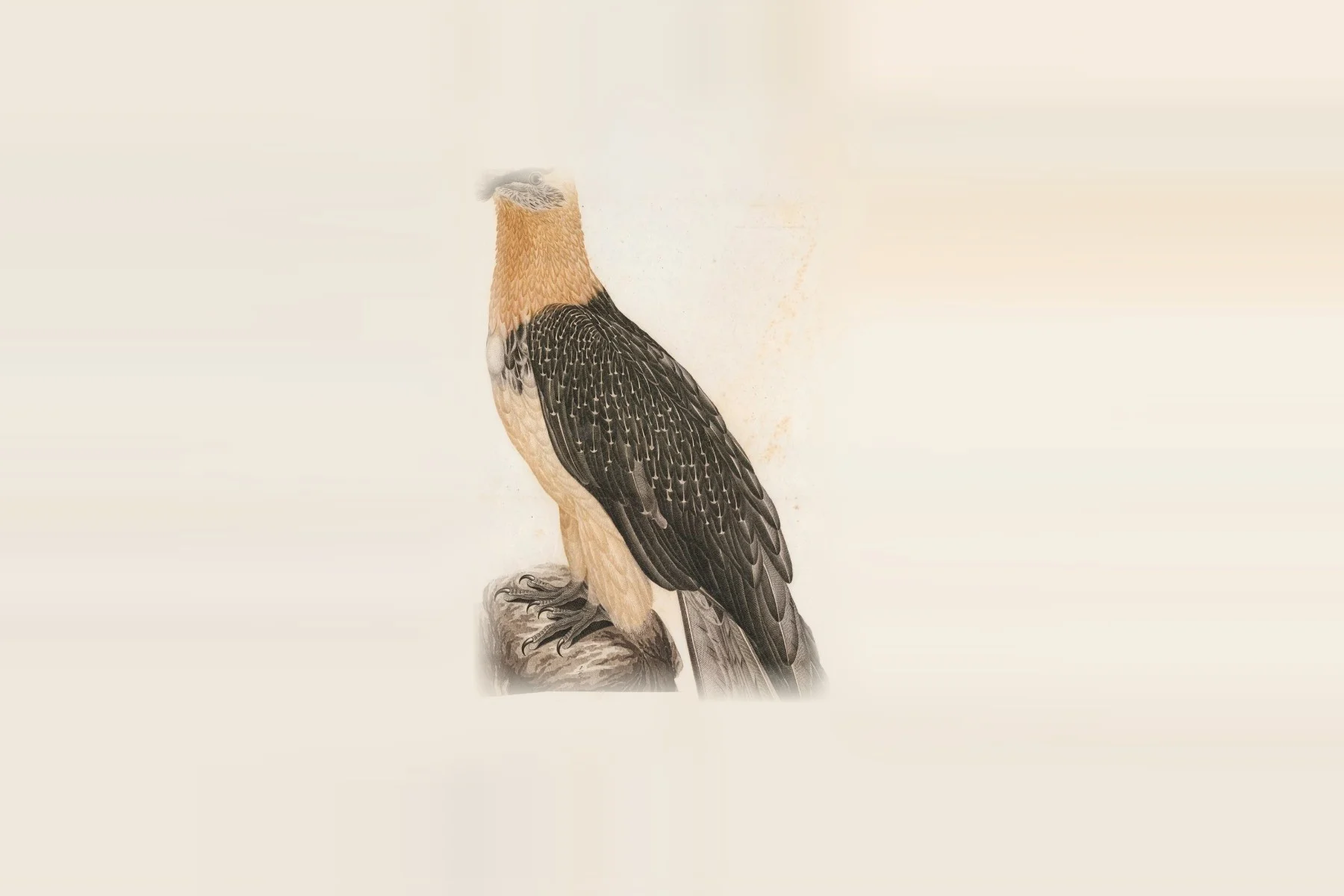
Where to See a Bearded Vulture: Hides, Sani Pass, Lesotho and the Odds at Each
A vulture that eats bones and drops the big ones on rocks. In South Africa and Lesotho only an estimated 50 to 100 breeding pairs remain, all in the Maloti-Drakensberg: the hides, passes, lodges and winter months that give the best chance.
When a Bearded Vulture finds a bone too big to swallow, it carries it to a favourite rock outcrop, glides down to between 16 and 70 metres above the stones, and lets it go. If the bone shatters, the bird lands and eats the pieces. If it does not, it tries again. It is a bird that has turned dinner into demolition. The Roberts field guide, as summarised on the Iziko Biodiversity Explorer, puts bone at about 70% of its diet, with meat at 25% and skin at 5%, and gives it a gape of 7 cm, wide enough to swallow many bones whole.
It is also one of the most threatened vultures in southern Africa. Wildlife ACT, which runs vulture work in the southern Drakensberg, says only an estimated 50 to 100 breeding pairs remain in South Africa and Lesotho, and calls the species regionally Critically Endangered. A 2020 University of Cape Town study put the figure at around 100 pairs and noted that the bird once also lived in the Eastern and Western Cape. Its range is now restricted to the Maloti-Drakensberg mountains of Lesotho and South Africa, with an isolated population that reaches into KwaZulu-Natal, the Eastern Cape highlands and the eastern Free State.
That makes the search simple to plan: you go to the high mountains and look up, or you sit in a hide where food is put out. Either way, a sore neck is part of the price.
The odds at a glance
| Where | How you look | Odds | Notes |
|---|---|---|---|
| Mzimkulu Vulture Hide, near Underberg | Photographic hide at a safe feeding site | Best, birds come to food | Reopened 1 August 2026; book 48 hours ahead |
| Giant’s Castle, uKhahlamba Drakensberg Park | Ezemvelo vulture hide | Good, birds come to food | Own 4×4; maximum 6 people; book ahead |
| Witsieshoek, below the Sentinel | From the lodge grounds | Fair, food put out when conditions allow | Clear, calm mornings are best |
| Sani Pass and Black Mountain, Lesotho | Scanning cliffs and sky | Fair, a known territory | GoBirding marks a Bearded Vulture viewpoint |
| Ts’ehlanyane, Lesotho | Guided birding hike | Possible | Maliba Lodge names the species |
| Rhodes, Eastern Cape highlands | Driving the high passes | Possible | Edge of the range |
Hides at feeding sites
Bearded Vultures spend most of the day in the air, which is why a feeding site changes the odds: even a bird that lives on the wing has to come down for lunch. Uncontaminated carcasses are put out at a fixed spot, the birds come back to it, and a hide lets you watch from close range without disturbing them.
The Mzimkulu Vulture Hide is 8 km outside Underberg, at the foot of the Maloti-Drakensberg World Heritage Site. Wildlife ACT runs it with Riverlea Farm as part of its Southern Drakensberg Conservation Project, and describes a purpose-built photographic hide with one-way glass and seats for up to 6 people. Both Cape and Bearded Vultures come in. The hide closed for a time as a precaution during the regional outbreak of foot and mouth disease, since it sits on a working livestock farm, and reopened on 1 August 2026. Bookings must be made at least 48 hours ahead, on 082 086 0924 or by email to [email protected], and the money pays to keep the feeding site running. The vultures eat free; the birders cover the bill.
Further north, Ezemvelo KZN Wildlife runs a vulture hide at Giant’s Castle in the uKhahlamba Drakensberg Park. Ezemvelo’s resort page says it takes a maximum of 6 people, needs your own 4×4 to reach it and must be booked in advance, on 033 845 1000. The Iziko Biodiversity Explorer illustrates the species with photographs taken at Giant’s Castle, one of them of a Bearded Vulture attacking a Cape Vulture. Our guide to Cape Vulture colonies and vulture restaurants covers the other hides in the Drakensberg and the Free State.
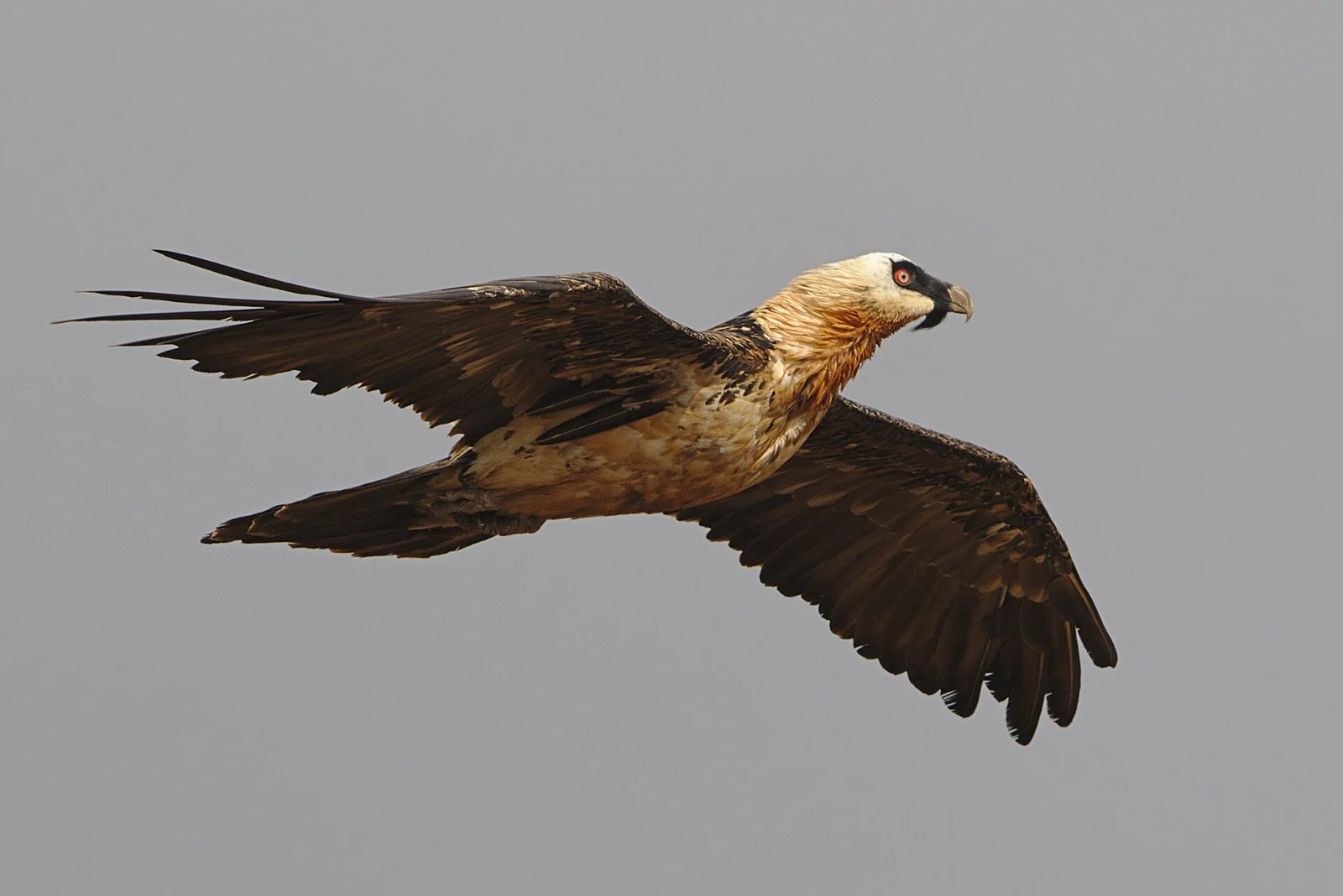
Sani Pass and Black Mountain
Sani Pass climbs the escarpment from KwaZulu-Natal to the Lesotho border post, and BirdLife South Africa’s GoBirding route lists Bearded Vulture among its key species, alongside Drakensberg Rockjumper, Drakensberg Siskin, Gurney’s Sugarbird and Mountain Pipit. GoBirding also marks a Black Mountain viewpoint for Bearded Vulture beyond the Lesotho border post. Sani Valley Nature Lodges points out that the excursion into Lesotho needs a 4×4 and a passport, and our Sani Pass and Drakensberg birding guide has the route, the border hours and the other specials.
At the foot of the pass, Sani Valley Nature Lodges describes a vulture feeding site supplied by local farmers and names both Bearded and Cape Vulture among more than 300 species, though it has no formal hides, so the car or a rock will have to do. Mkomazana Mountain Cottages, also at the foot of Sani Pass, is BirdLife Recommended and arranges birding tours with Stuart McLean of Birds and Beyond.
Witsieshoek and the northern Drakensberg
Witsieshoek Mountain Lodge is community-owned and sits at the foot of the Sentinel in the northern Drakensberg, on the Free State side. The lodge says guests can watch Bearded Vultures from the grounds, and that it puts out food for them when conditions allow. It recommends clear, calm mornings, a good reason to get up before breakfast. For the budget-minded, the Namahadi Hut starts at R625 per person a night with no meals, and backpacker rooms at the lodge from R925 per person sharing with breakfast, for March 2026 to February 2027.
If one ridge of vulture country is not enough, further west in the eastern Free State, Moolmanshoek Private Game Reserve near Ficksburg names Bearded Vulture among more than 250 species, and Qwantani, on Sterkfontein Dam near Harrismith, names it with Southern Bald Ibis and Gurney’s Sugarbird.
Lesotho and the Eastern Cape highlands
Inside Lesotho, Maliba Lodge in Ts’ehlanyane National Park runs a guided birdwatching hike in the Maluti Mountains and picks out Bearded Vulture, Mountain Pipit and Pin-tailed Whydah. Lesotho charges a tourism levy of R100 per person aged 13 or older at the border, a small fee for a whole kingdom of vulture habitat.
On the southern edge of the range, Walkerbouts Inn in the village of Rhodes gives about 230 species for the Barkly East district and sends birders up the high passes and plateaux around the village, naming Bearded Vulture and Drakensberg Rockjumper, 2 birds that make a high pass worth the climb.
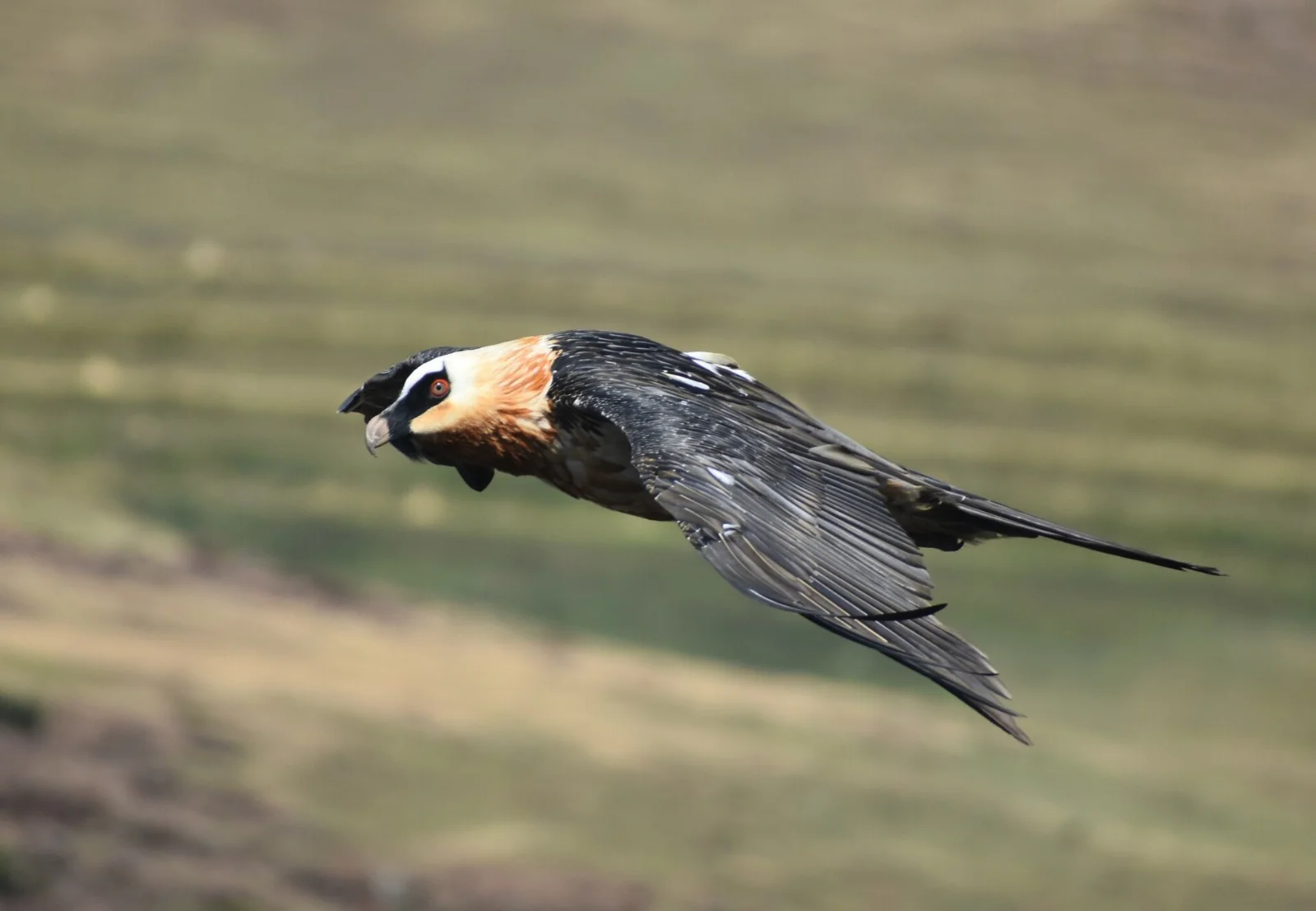
When to go
Bearded Vultures are resident, so they can be seen in any month, but winter is the breeding season. Roberts gives egg-laying from May to August, peaking in July. The nest is a large platform of sticks lined with wool, hair and skin, on a cliff ledge or in a cave. Roberts gives 1 to 3 eggs and Krüger says pairs lay 2, but only 1 chick survives: the older nestling outcompetes the younger. Sibling rivalry, vulture style, has a clear winner. Incubation takes 56 to 58 days. The young bird becomes independent at about 120 to 130 days, and young adults wander widely in search of areas with few adults, as young adults tend to.
Winter is therefore when pairs are busiest at their nest cliffs, which is a reason to watch from hides and viewpoints. Mountain weather decides the day in any season, so build in a spare morning. The Drakensberg does not take bookings.
Why there are so few
Poison is the main problem. Dr Sonja Krüger of Ezemvelo KZN Wildlife, who coordinates the Bearded Vulture Recovery Programme, called the use of poison to control predators and protect livestock the single most important cause of the decline in southern Africa. The UCT study added electrocution, collisions with power lines and, more recently, wind energy developments, and warned that without intervention the population could disappear within 50 years.
The recovery programme has started a captive breeding project, Bred 4 the Wild, using eggs taken from wild nests. Because pairs lay 2 eggs and only 1 chick fledges, Krüger explained, removing the second egg does not reduce the wild population. The long-term aim, set out in the UCT study, is a second population somewhere in the old range in the Eastern or Western Cape, putting the bone-breaker back where it once lived.
Watching without harm
Use the hides and viewpoints rather than walking towards cliffs, and keep well away from any nest during the winter breeding months. If you find a dead vulture or a poisoned carcass, report it to Ezemvelo KZN Wildlife, which coordinates the Bearded Vulture Recovery Programme.
Where to stay
These stays sit inside the Bearded Vulture’s range and name the species:
| Place to stay | Where | For birders | From |
|---|---|---|---|
| Witsieshoek Mountain Lodge | Below the Sentinel, Free State | Bearded Vultures from the grounds, food put out | R625 pp, Namahadi Hut, no meals |
| Sani Valley Nature Lodges | Sani Pass road, KwaZulu-Natal | Vulture feeding site, 300+ species | Ask the lodge |
| Mkomazana Mountain Cottages | Foot of Sani Pass, KwaZulu-Natal | BirdLife Recommended, guided tours, Bearded Vulture named | Ask the lodge |
| Maliba Lodge | Ts’ehlanyane National Park, Lesotho | Guided birding hike, Bearded Vulture named | R3,993 a chalet for 2 B&B (rate valid to October 2024) |
| Walkerbouts Inn | Rhodes, Eastern Cape | About 230 species, high passes nearby | Ask the lodge |
| Moolmanshoek Private Game Reserve | Near Ficksburg, Free State | 250+ species, hides and lookouts | About R1,500 pp B&B |
| Qwantani | Sterkfontein Dam, Free State | Important Bird Area, about 200 species | Ask the lodge |
Hide bookings, rates and road conditions change, and mountain weather closes passes. Facts were checked on 14 November 2026 with Wildlife ACT, the University of Cape Town, the Iziko Biodiversity Explorer, BirdLife South Africa’s GoBirding pages, Ezemvelo KZN Wildlife and each place’s listing on Birding Dispatch. Book the hides directly before you travel.
More from the Journal
 Woodpeckers of Southern Africa, Including the One That Doesn’t Need TreesSouthern Africa's woodpeckers, from the Cardinal in every bushveld tree to the Ground Woodpecker that lives on treeless mountain slopes and eats almost nothing but ants.
 Where to See a Taita Falcon: the Strijdom Tunnel, the Blyde Cliffs and the Batoka GorgeA stocky falcon smaller than a pigeon, a handful of cliffs and surveys that keep coming back empty. Where it still nests, how to look, and the 2 roosts beside its cliffs.
 Where to See a Southern Bald Ibis: the Breeding Cliffs, Dullstroom, Wakkerstroom and LesothoA red-capped grassland ibis that nests on cliffs over waterfalls and feeds on burnt veld and maize stubble. The colonies you can watch, the fields to scan, and where to stay.
The Pigeon Post
Every Thursday: 1 bird, 1 place to go and 1 place to stay, by email. Sign up and get our printable checklist of the 163 endemics of southern Africa.