
Robins and Robin-Chats of Southern Africa: the Forest Songsters, the Scrub Robins and the Mimics
A robin-chat that once nested in a dried flower arrangement in a golf club lounge, another that follows driver ants for a living, and the scrub robins of the dry country. Where to find them.
A pair of Cape Robin-Chats once built their nest in a dried flower arrangement in the lounge of the Grahamstown Golf Club. Iziko Museums’ Biodiversity Explorer records the address without comment, which is the right response. The Cape Robin-Chat is common across South Africa, Eswatini, Lesotho, southern Mozambique and southern Namibia, and it lives in gardens as happily as in the bush, so for many South Africans it is the first robin they ever see.
Its relatives are harder work. The forest robin-chats keep to deep shade and announce themselves with song, the White-starred and Swynnerton’s Robins live in the undergrowth of evergreen forest, and the scrub robins of the dry country flick their tails from the bushes. This guide covers who lives where and how to find them.
The robins at a glance
| Bird | Where it lives | Egg-laying |
|---|---|---|
| Cape Robin-Chat | South Africa, Eswatini, Lesotho, southern Mozambique and Namibia; gardens | June to January |
| White-throated Robin-Chat | Zimbabwe, southern Mozambique, SE Botswana, NE South Africa; thickets | September to January |
| White-browed Robin-Chat | NE South Africa to Zimbabwe, Mozambique, northern Botswana and Namibia; riverine forest | August to January |
| Red-capped Robin-Chat | Caprivi, Zimbabwe, Mozambique, eastern South Africa | September to January |
| Chorister Robin-Chat | Limpopo escarpment to KwaZulu-Natal and the Eastern Cape; Afromontane forest | October to November |
| White-starred Robin | Eastern half of the region; evergreen forest | Mainly October to November |
| Swynnerton’s Robin | Zimbabwe’s Eastern Highlands, Mount Gorongosa | October to January |
| White-browed Scrub Robin | Eastern half of South Africa to Zimbabwe, Botswana, northern Namibia | September to January |
| Karoo Scrub Robin | Southern Namibia, the Cape provinces, Free State | July to December |
| Kalahari Scrub Robin | South-west Angola to Botswana and Zimbabwe; arid scrub | Not given in the source |
The robin-chats
The Cape Robin-Chat lays from about June to January, peaking in October and November, and the male defends his territory aggressively against other males and against white-eyes, sunbirds and doves. Biodiversity Explorer’s list of its food even includes leftovers from dogs’ bowls. The Red-chested Cuckoo uses it as its main host, so a Cape Robin-Chat feeding a chick that is clearly not its own is a common summer sight; our cuckoos guide has the details.
The White-throated Robin-Chat is endemic to southern Africa, from Zimbabwe, southern Mozambique and south-eastern Botswana to north-eastern South Africa, in thickets in acacia and broad-leaved woodland, sand forest, thorny scrub and the edges of dune forest. It eats mainly insects, plus fruit and small vertebrates, and forages mostly on the ground, flicking through leaves. The White-browed Robin-Chat is common from north-eastern South Africa to Zimbabwe, Mozambique and northern Namibia and Botswana, mainly in riverine forest, and lays from August to January.
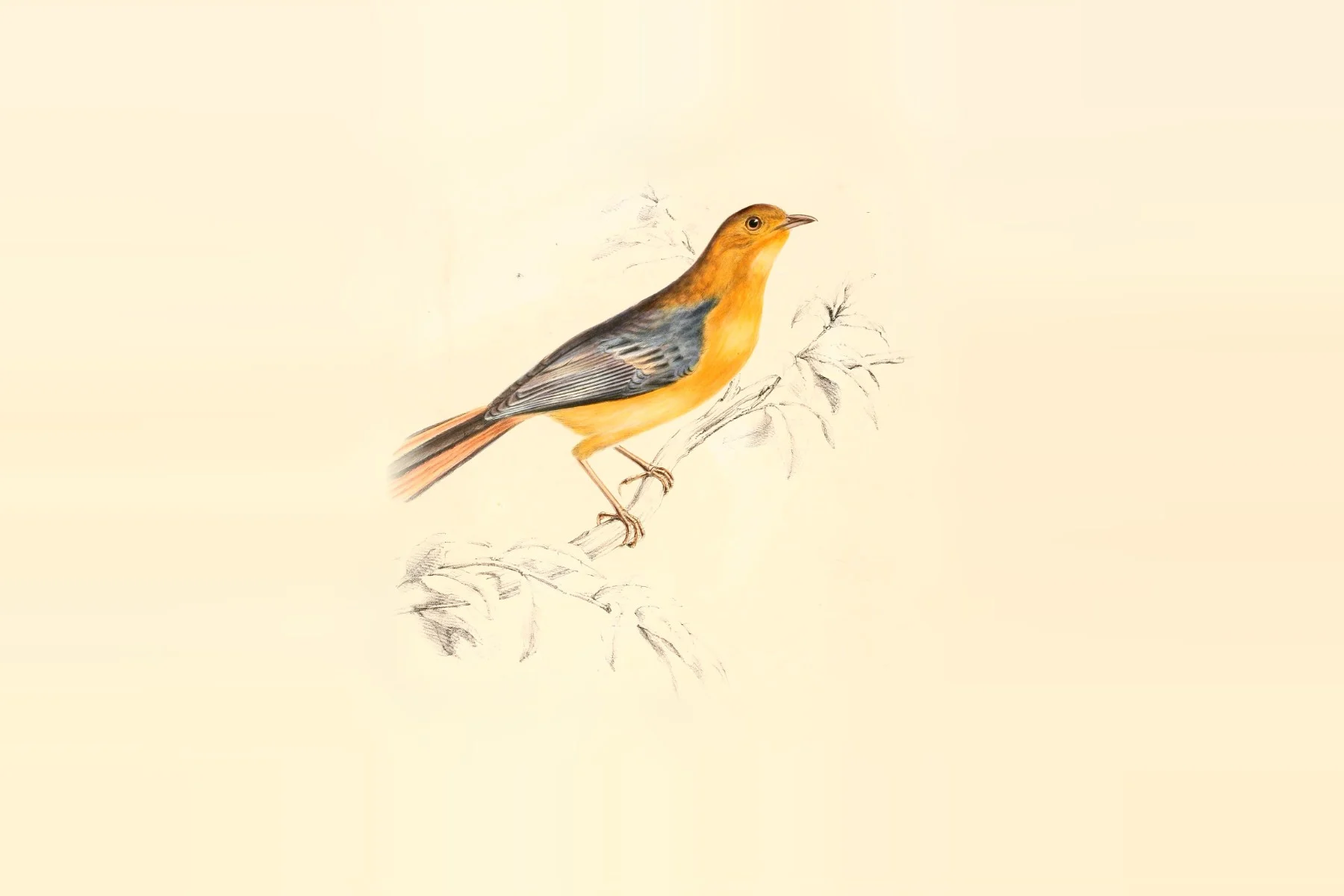
The Red-capped Robin-Chat, the bird on the plate at the top of this page, is fairly common in the Caprivi Strip, Zimbabwe, Mozambique and eastern South Africa. It forages mostly on the ground, whisking through leaf litter for insects, and takes fruit from the canopy. Wikipedia describes its song as a long series of melodious whistles with a lot of mimicry included, which is how it earns its place among the mimics: the robin-chat in the thicket may be borrowing someone else’s song.
The Chorister Robin-Chat is endemic to southern Africa, from Limpopo along the eastern escarpment to KwaZulu-Natal and the lowland forest of the Eastern Cape, in Afromontane evergreen forest. It eats invertebrates from the ground and from foliage, plus berries, and Biodiversity Explorer says it often follows antelope, cattle and swarms of red driver ants to catch the insects they flush. Egg-laying runs from about October to November.
The forest robins
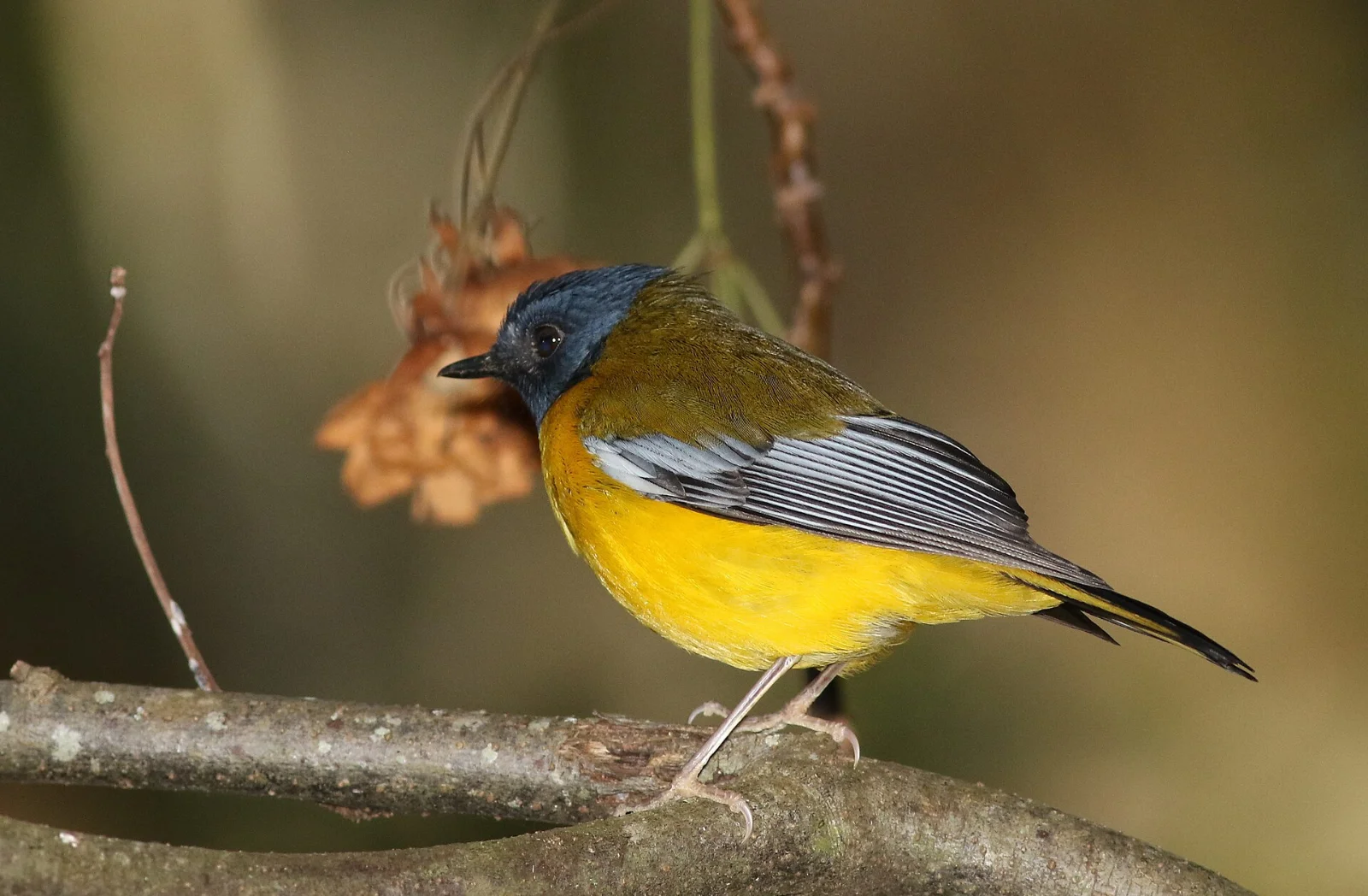
The White-starred Robin is locally fairly common in the eastern half of the region, mainly in Afromontane evergreen forest with tangled undergrowth. Biodiversity Explorer says it eats mainly insects, especially beetles, with small fruit mostly from April to September, and forages in both the undergrowth and the canopy. In the Magoebaskloof forests, Magoebaskloof Birders’ Cottages, Kuhestan Organic Farm and Magoebaskloof Getaway all name it, and the Magoebaskloof birding guide covers the area.
Swynnerton’s Robin is one of the region’s real specials. It is highly localised: Biodiversity Explorer places it around 2 mountains in Tanzania, in Zimbabwe’s Eastern Highlands and on Mount Gorongosa in Mozambique, in the undergrowth of evergreen forest, especially where there are dragon trees. It eats mainly beetles and ants, often catching insects fleeing from an advancing swarm of driver ants, and lays from October to January. Heaven Lodge at Chimanimani names it, and the Eastern Highlands birding guide covers the Vumba, where birders go to look for it.
The East Coast Akalat is the other forest special. It has scattered populations from Kenya and Tanzania to Malawi and south-central Mozambique, where it is locally fairly common in the undergrowth of evergreen forest with dense, moist thickets.
The scrub robins
The scrub robins are the dry-country members of the group. The White-browed Scrub Robin is common across the eastern half of South Africa to Zimbabwe, Mozambique, Botswana and northern Namibia, and defends its territory so hard that rival birds sometimes grapple in mid-air and fall to the ground together. It lays from September to January and has been recorded taking nectar from the Mountain Aloe.
The Karoo Scrub Robin is endemic to southern Africa, from southern Namibia through much of the Northern, Western and Eastern Cape into the Free State, Lesotho and North West, in dry scrub with patches of bare ground such as renosterveld. The Kalahari Scrub Robin is near-endemic, from south-western Angola through Namibia to Botswana, north-central South Africa and Zimbabwe, in arid and semi-arid country with scattered bushes and bare ground. The Bearded Scrub Robin keeps to sand forest in Zimbabwe, Mozambique, northern Botswana, the Caprivi and the far east of South Africa, and the Brown Scrub Robin to the understorey of moist coastal and mistbelt forest from southern Mozambique to the Eastern Cape.
Where to stay
Places in the directory that name a robin or robin-chat:
| Place to stay | Where | For birders | From |
|---|---|---|---|
| Magoebaskloof Birders’ Cottages | Magoebaskloof, Limpopo | BirdLife Recommended; White-starred Robin; 152 species | R580 pp sharing, self-catering (2026/27) |
| Kuhestan Organic Farm | Magoebaskloof, Limpopo | Afromontane forest; White-starred Robin named | Ask the lodge |
| Magoebaskloof Getaway | Magoebaskloof, Limpopo | Forest and dam; White-starred Robin named | R800 per self-catering log cabin |
| Thula iNyoni | Richmond, KwaZulu-Natal | BirdLife Recommended; White-starred Robin, Lemon Dove | Ask the lodge |
| DeKotzenhof | Wakkerstroom, Mpumalanga | Chorister Robin-Chat and White-starred Robin named | Ask the lodge |
| Heaven Lodge | Chimanimani, Zimbabwe | Swynnerton’s Robin and Chirinda Apalis named | USD 12 pp camping |
| Bushwillow Collection | Hluhluwe, KwaZulu-Natal | Red-capped Robin-Chat named | Ask the lodge |
| Malkoha Lake St. Lucia | Kwa-Nibela Peninsula, Hluhluwe | BirdLife Recommended; Bearded Scrub Robin; sand forest | Ask the lodge |
| Whale Huys | De Kelders, Western Cape | BirdLife Recommended; Cape Robin-Chat named | Ask the lodge |
| Doornkop Fish & Wildlife Reserve | Carolina district, Mpumalanga | BirdLife Recommended; Cape Robin-Chat named | R1,068 per chalet, 4-night midweek stay |
Forest robins are shy and best found by sound, early in the morning. Facts were checked on 15 November 2026 with Iziko Museums’ Biodiversity Explorer and the Birding Dispatch listings. Rates change each season; check with the place before you book.
More from the Journal
 Woodpeckers of Southern Africa, Including the One That Doesn’t Need TreesSouthern Africa's woodpeckers, from the Cardinal in every bushveld tree to the Ground Woodpecker that lives on treeless mountain slopes and eats almost nothing but ants.
 Where to See a Taita Falcon: the Strijdom Tunnel, the Blyde Cliffs and the Batoka GorgeA stocky falcon smaller than a pigeon, a handful of cliffs and surveys that keep coming back empty. Where it still nests, how to look, and the 2 roosts beside its cliffs.
 Where to See a Southern Bald Ibis: the Breeding Cliffs, Dullstroom, Wakkerstroom and LesothoA red-capped grassland ibis that nests on cliffs over waterfalls and feeds on burnt veld and maize stubble. The colonies you can watch, the fields to scan, and where to stay.
The Pigeon Post
Every Thursday: 1 bird, 1 place to go and 1 place to stay, by email. Sign up and get our printable checklist of the 163 endemics of southern Africa.