
January Birding in South Africa: Where to Go, What’s About, the Heat and the Rain
January is high summer: bishops in scarlet, Woodland Kingfishers at their breeding peak and European Rollers still arriving. Where to go, and how to work around the heat and the holidays.
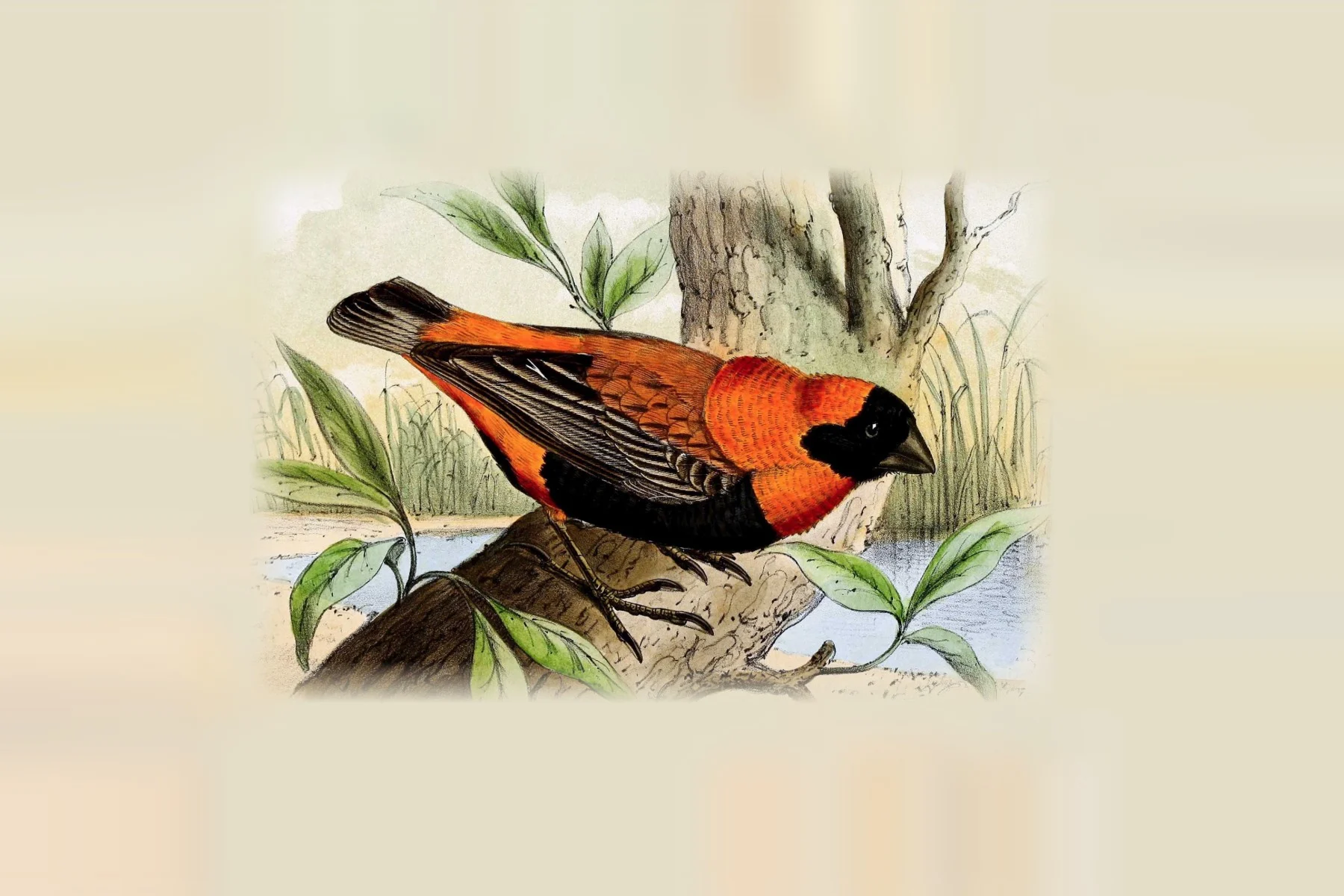
In January the male Southern Red Bishop is in his scarlet and black, a plumage the Atlas of Southern African Birds calls probably one of the most familiar sights in southern African birding. Across the summer-rainfall region of South Africa, bishops breed mainly from October to March, nesting chiefly in reedbeds, and in Namibia and Zimbabwe most breeding comes later still, from December to April. The females and the off-season males, the Atlas adds, are frequently overlooked or misidentified, even as museum specimens. In January, at least, the males make that difficult.
January is the height of the southern summer. The migrants that arrived from September onwards are settled and breeding or fattening up, the last of the late arrivals are still coming in, and the days are long. It is also hot, and in much of the country it is the rainy season. This guide covers where to bird in January, what to look for, and how to work around the weather and the end of the school holidays.
What’s about in January
Woodland Kingfisher. This intra-African migrant arrives in the first 2 weeks of November, and in the old Transvaal it breeds from November to March, peaking in December and January. It is easiest to find by its trilling call, and it favours well-developed woodland, especially tall riverine acacias and mopane, mostly below 1,000 m.
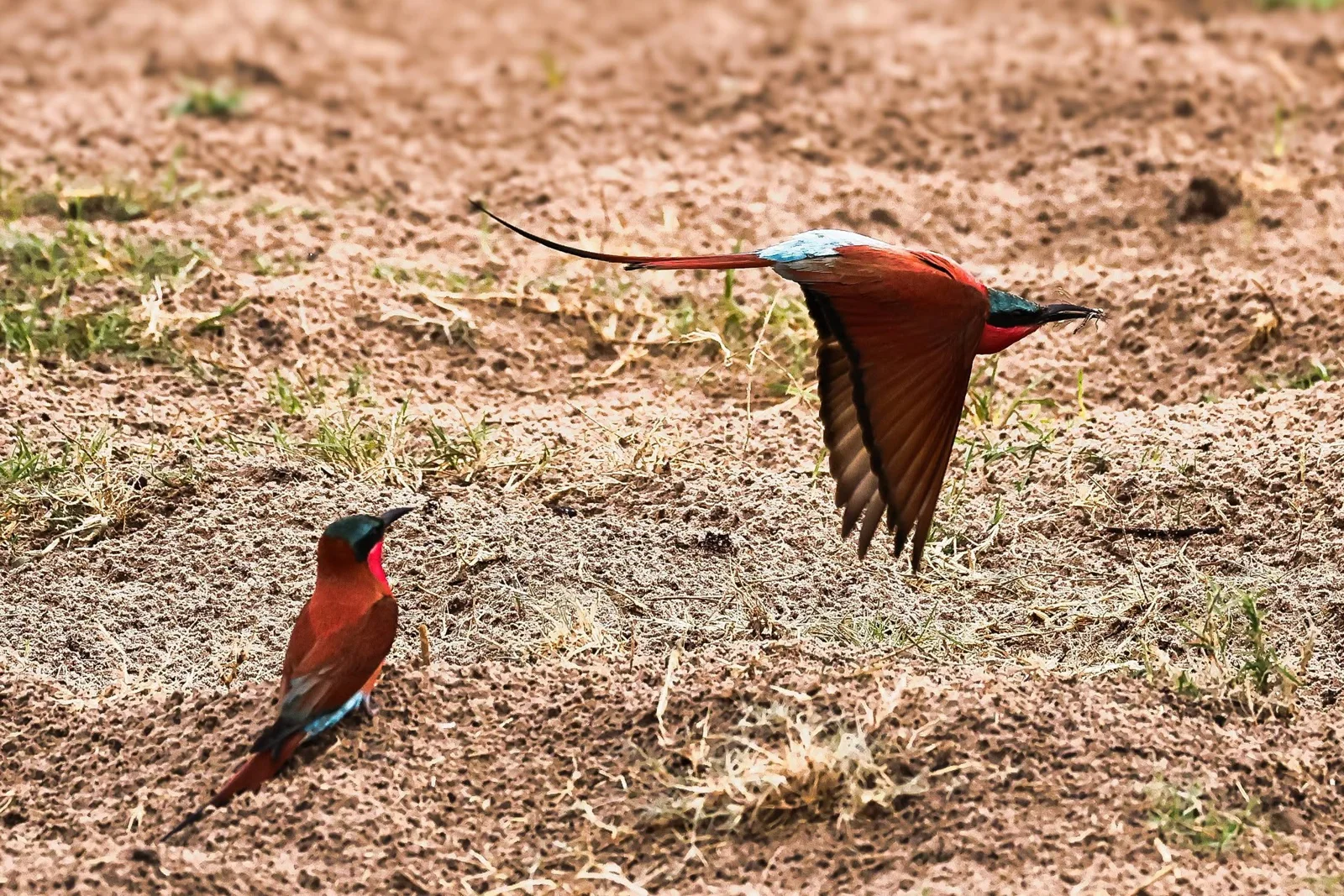
European Roller. One of the last Palearctic migrants to reach full strength. A few reach the far north of southern Africa by October, but the majority arrive in December and January, and numbers peak in February. Even then, the Atlas found Lilac-breasted Rollers 5 to 10 times more common than European Rollers in southern Africa, so every European Roller is worth a second look at the wires.
European Bee-eater. Most of the birds in southern Africa are Palearctic visitors, arriving mainly in October and leaving in late March and April, but a smaller population breeds here. In the east, breeding peaks in December. In the west, the birds that breed on the coastal plain north of Cape Town move to the mountains at the eastern edge of the fynbos for about 2 months, January and February, before heading north.
Barn Swallow. By January the swallows from Europe and Asia are everywhere, most commonly in the wetter eastern half of the country. Their fast late-afternoon flights to roost, usually in reedbeds, are a common summer sight, and the Atlas notes reedbed roosts of over a million birds, some in use for at least 50 years.
Red-chested Cuckoo. The bird that calls Piet-my-vrou all summer is a brood parasite, mostly of robins, and it breeds from November to December in most of the region. The Atlas notes that many of its breeding records come late in the season, because young cuckoos become conspicuous once they have fledged and are being fed by their hosts. A Cape Robin-Chat stuffing food into a young cuckoo that is not its own is a January sight worth stopping for.
Amur Falcon. On the highveld, Amur Falcons are in residence from early November, roosting at night in tall trees, often in towns, with Lesser Kestrels. Those roosts can hold tens of thousands of birds. The stronghold is the grassland of south-eastern Mpumalanga, western KwaZulu-Natal and the north-eastern Free State. Our guide to summer migrants has the arrival dates for the rest.
Where to go
Kruger and the far north. January is wet-season birding in the Lowveld, with the migrants in and the bush green. In the far north, Pafuri Camp on the Luvuvhu River lies within the Kruger National Park and adjacent areas Important Bird Area and is BirdLife South Africa Recommended. The specials on its GoBirding page include Pel’s Fishing Owl, Racket-tailed Roller, Böhm’s and Mottled Spinetails, Thick-billed Cuckoo, Three-banded Courser and Dickinson’s Kestrel. Rates include all meals and 2 activities a day. Our Kruger birding guide covers the rest camps and their hides.
The Sabi Sand. For summer migrants with a guide on hand, Chitwa Chitwa describes its guides as expert birders, counts more than 300 species and names Woodland Kingfisher, European Roller and Violet-backed Starling among its birds.
The Soutpansberg. West of Kruger, the mountain’s forests and bushveld have their own specials. Zvakanaka Farm near Louis Trichardt, BirdLife Recommended and self-catering, publishes a checklist of more than 133 species, including Narina Trogon, Gorgeous Bushshrike and Green Twinspot, and puts out birdbaths at its cabins and campsites, which in January is a public service.
The highveld grasslands. Near Dullstroom, Greystone Lodge describes breeding Blue Cranes and a Red-chested Flufftail in the wetland by its dam, along with Secretarybird and European Roller, in country close to the Amur Falcon’s stronghold. Chalets start at R1,200 a night on weekdays in 2026.
The heat, the rain and the long days
January days are long, and Kruger’s gate times show it. Entrance gates open at 05:30 and close at 18:30, and the rest camp gates open at 04:30, so a guest staying inside the park can be on the road an hour before day visitors arrive. SANParks says times may change without notice, so confirm them before you travel.
The practical rhythm follows from that. Bird from first light until the heat builds, rest through the middle of the day, and go out again late in the afternoon, when the swallows head for their roosts and the falcons come in to the town trees. January falls in the wet season across the summer-rainfall region, so keep the mornings for the long drives and the gravel roads, carry water, and check road conditions in the parks before you set off.
The end of the holidays
January starts in the school holidays. For public schools, the 2027 school year begins on 13 January for learners (11 January in the calendar’s bracketed alternative), according to the Department of Basic Education’s calendar. If you can choose your dates, planning around the school calendar is the simplest way to share the birds with fewer people: the migrants stay well after the schools go back. Our guide to December birding covers the holiday rush that comes before it.
Where to stay
The places in this guide, with what each offers a birder in January:
| Place to stay | Where | For birders | From |
|---|---|---|---|
| Pafuri Camp | Makuleke, northern Kruger | BirdLife Recommended, Important Bird Area, Racket-tailed Roller | R8,450 pp sharing, fully inclusive |
| Chitwa Chitwa | Sabi Sand, Greater Kruger | Guides described as expert birders, Woodland Kingfisher | R28,447 pp sharing, full board |
| Zvakanaka Farm | Near Louis Trichardt, Limpopo | BirdLife Recommended, 133-species checklist, birdbaths | R220 pp, camping |
| Greystone Lodge | Between Dullstroom and Belfast | BirdLife Recommended, breeding Blue Cranes, European Roller | R1,200 a chalet, weekdays |
Migration and breeding dates come from the Atlas of Southern African Birds and vary with rainfall and from year to year. Gate times and school dates were checked on 15 November 2026; confirm them before you travel.
More from the Journal
 Spring Birding in South Africa: September to November, the Arrivals, the Flowers and the BreedingThe first Red-chested Cuckoos call in September, bee-eaters land in October and Woodland Kingfishers arrive in early November. What arrives when, where the flowers are, and where to stay.
 Autumn Birding in South Africa: March to May, When the Migrants LeaveFrom March to May the summer visitors leave: rollers in March, swallows in early April, Woodland Kingfishers by night from mid-April. Who goes when, what replaces them, and where to bird.
 Winter Birding in South Africa: Where to Go from June to AugustThe summer migrants have left town, but June to August brings albatrosses off Cape Point, nesting sugarbirds, aloe bars full of nectar drinkers and forest thrushes in Durban. Where to go, and stay.
The Pigeon Post
Every Thursday: 1 bird, 1 place to go and 1 place to stay, by email. Sign up and get our printable checklist of the 163 endemics of southern Africa.