
Spring Birding in South Africa: September to November, the Arrivals, the Flowers and the Breeding
The first Red-chested Cuckoos call in September, bee-eaters land in October and Woodland Kingfishers arrive in early November. What arrives when, where the flowers are, and where to stay.
South Africa’s spring has an alarm clock, and it says Piet-my-vrou. The Red-chested Cuckoo, an intra-African migrant named in Afrikaans for its call, starts arriving in early September, and most birds are in by mid-October. An older account had calling starting in the south-western Cape in mid-September and spreading north and east; the Atlas of Southern African Birds found the arrival faster and more synchronised than that, across the whole region at once. Either way, by October it is very hard to miss and almost impossible to see, since adults are rarely spotted and the species is identified mostly by that persistent call.
September to November is when the summer birds come back. Some arrive in a trickle and some all at once, the breeding season gets going, and in the Western Cape the flowers are out. This guide covers what arrives when, what starts breeding, and where to bird and stay.
What arrives, and when
The arrival dates below come from the Atlas, built from the first bird atlas project’s records, and shift with rainfall and from year to year.
Barn Swallow. A few arrive as early as the start of September, but the majority reach southern Africa only in late October or early November, a little later in the far south than in the north. The swallows that reach the region come mostly from northern Europe and Asia, and one ringed at Mossel Bay was recovered in Russia, 11,358 km away.
European Bee-eater. The Palearctic visitors arrive mainly in October. A smaller population breeds in southern Africa, and in the western parts of the country most of it nests from October to December, in small colonies dug into sandbanks.
European Roller. The first reach the far north of southern Africa by October, but this is a slow starter: most arrive only in December and January.
Amur Falcon. Most of southern Africa sees its first Amur Falcons in early November, and the far south about a month later, in early December. Their stronghold is the grassland of south-eastern Mpumalanga, western KwaZulu-Natal and the north-eastern Free State.
Woodland Kingfisher. The trill that announces it arrives in the first 2 weeks of November, and the birds of northern Botswana come about 2 weeks before those of south-eastern Botswana and the old Transvaal. They migrate at night, so the first sign is usually the call. Our guide to summer migrants gives the full arrival calendar.
The flowers and the fynbos
In the Western Cape, spring is flower season. At West Coast National Park, SANParks gives the season in the Postberg section as August and September, when most of the viewing is done from a vehicle. The park’s Geelbek hide, at the end of a long boardwalk on the Langebaan Lagoon, is worth the same trip; depending on the tides, it gives good views of waders. Our West Coast National Park guide has the hides and the lagoon.
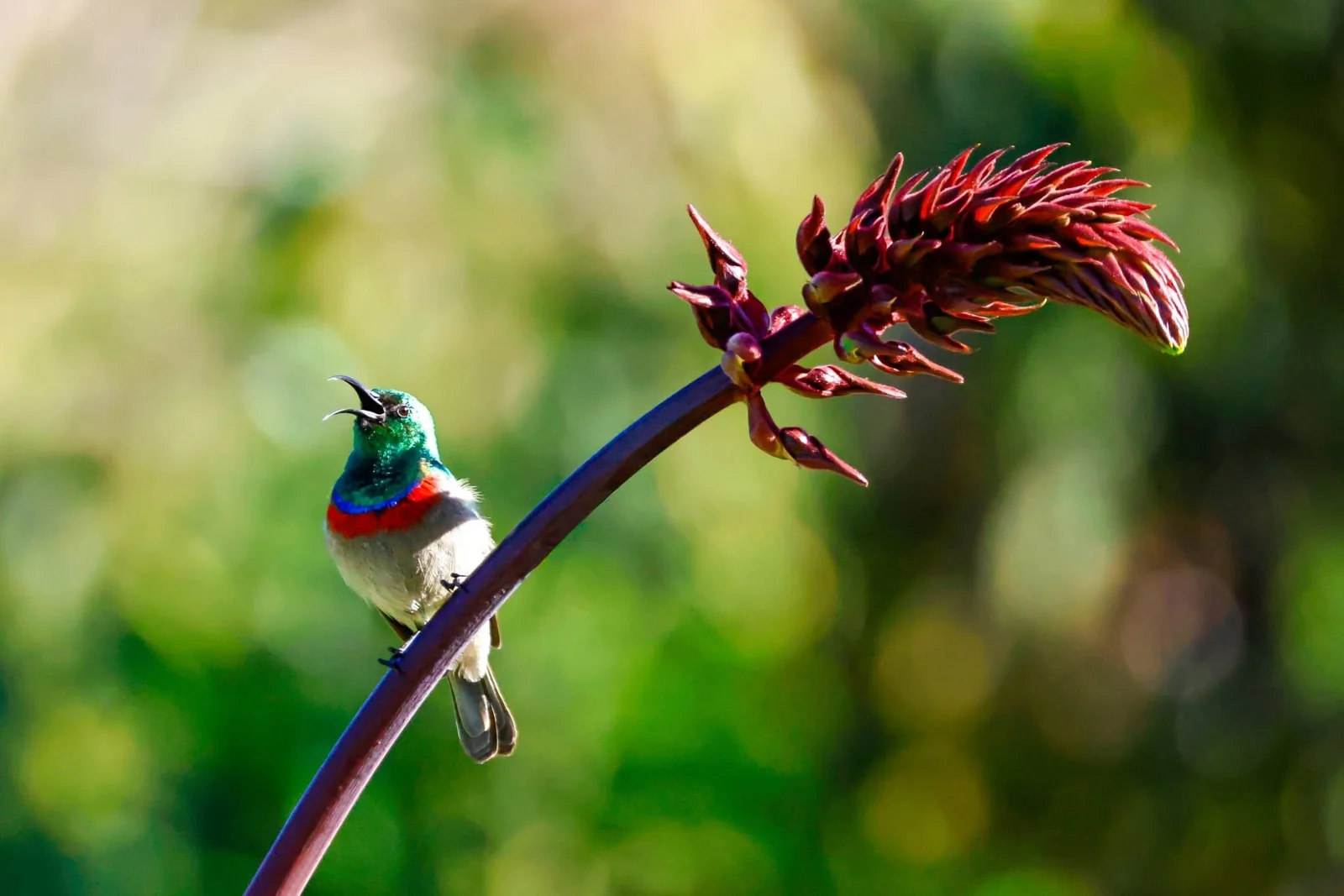
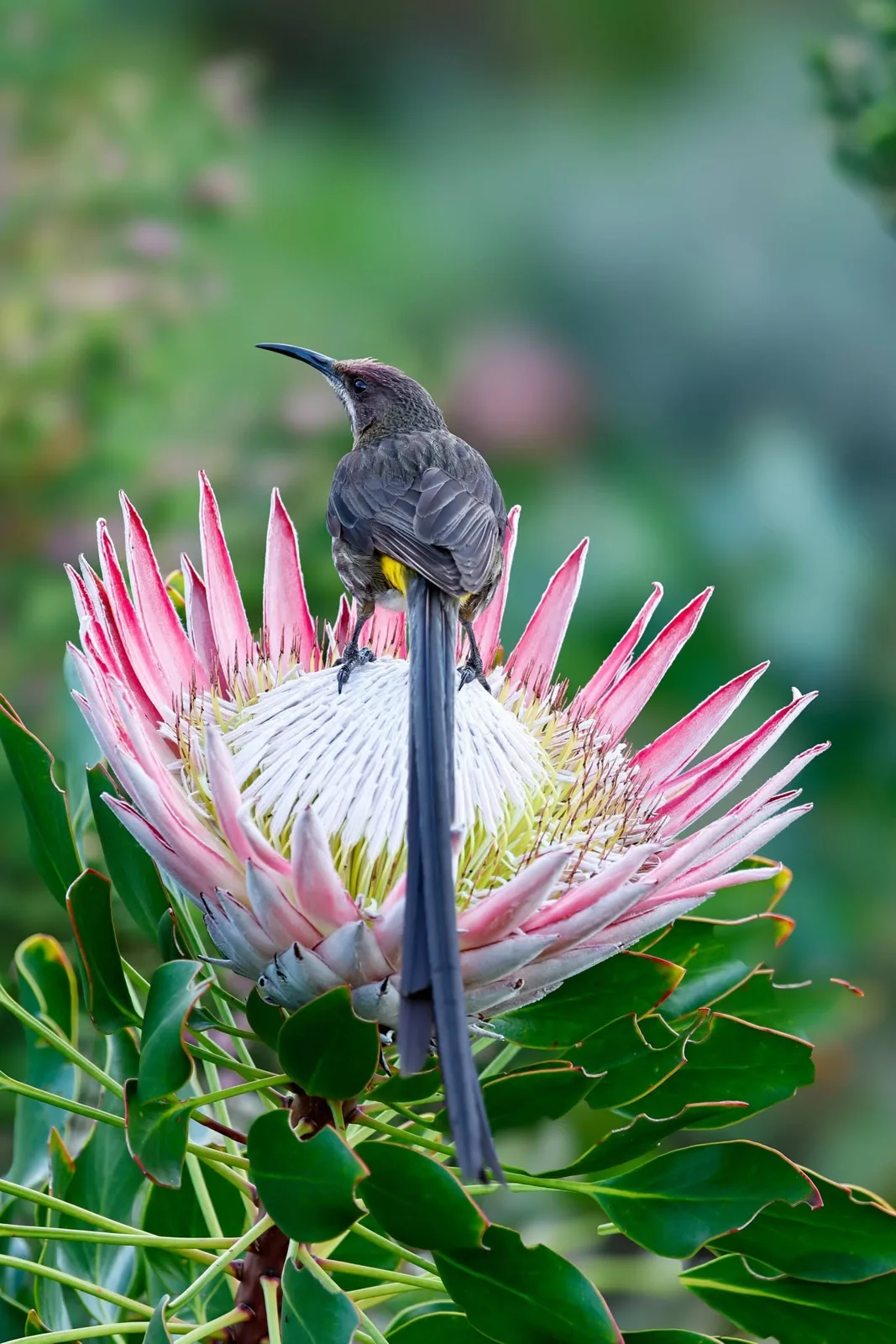
In the fynbos, the Cape Sugarbird is finishing its breeding season. The Atlas places most of its breeding records between May and September, matching the main flowering of the proteas, and has it following the pincushion Leucospermum conocarpodendron on the coastal plains in spring and summer. Males defend their flowering shrubs against Orange-breasted Sunbirds and other sugarbirds, which makes a pincushion in spring a small battlefield. Our guide to fynbos endemic birds covers the other specials.
Who’s breeding
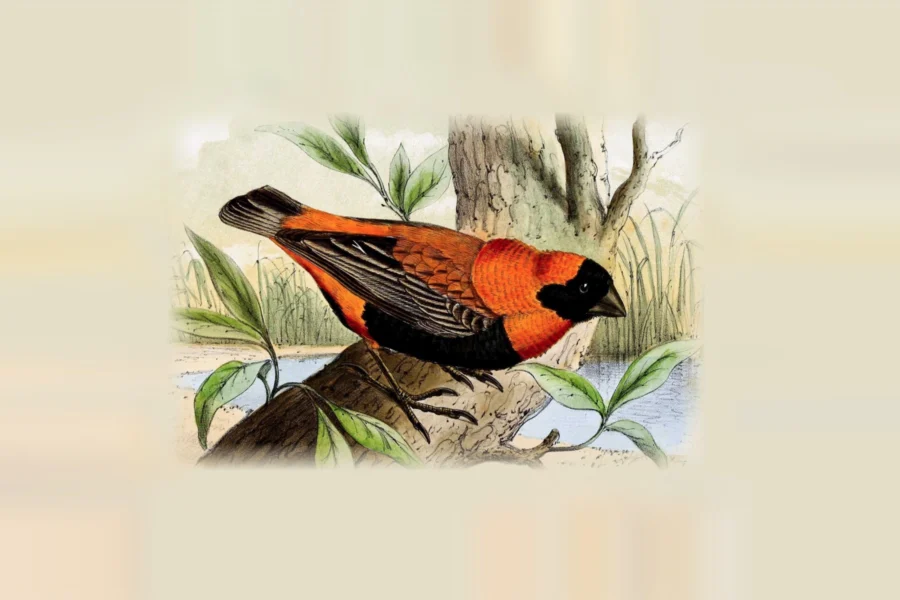
Spring is when the nesting starts across much of the country. In the south-western Cape the Southern Red Bishop breeds mainly from August to December, months ahead of the summer-rainfall region, where it breeds mostly from October to March. The Red-chested Cuckoo’s breeding season peaks earlier in the winter-rainfall region too, from October, and later, in November and December, elsewhere. Its main host in South Africa is the Cape Robin-Chat, so a robin in a garden in spring may be raising a family that is not entirely its own.
Where to go in spring
The West Coast. Darling Lodge Guest House, about an hour north of Cape Town, is listed by BirdLife South Africa as birder-friendly, serves an early breakfast on request, and points guests to the hides in West Coast National Park and the Swartland Birding Route. Guests can watch the weavers at work from the garden. BirdLife’s GoBirding page calls Darling a hub for 5 birding routes, including the park and the !Khwa ttu San education centre, which has a hide.
The Overberg coast. Grootbos Private Nature Reserve near Gansbaai names Cape Sugarbird and Black Harrier, runs guided birding outings and gives guests bird lists and books; its rates start at R8,450 per person sharing, full board, on a Fynbos Superbloom special. Benguela Cove Lagoon Wine Estate on the Bot River Lagoon is BirdLife Recommended, names Black Harrier and Blue Crane, and runs an eco-cruise on the lagoon.
Kruger and the north. For the arrivals, the Lowveld is the place to be in late October and November. Pafuri Camp in the far north of Kruger is BirdLife Recommended and lies within an Important Bird Area, and its specials include Thick-billed Cuckoo and Böhm’s Spinetail. Time a visit for the first half of November and the Woodland Kingfishers should be arriving as you do.
Gates and school holidays
Kruger’s entrance gates open at 06:00 in September and at 05:30 in October and November; they close at 18:00 in September and October and at 18:30 in November. In November the rest camp gates open at 04:30. SANParks says times may change without notice.
The spring school break is short. In 2026, the third term ends on 23 September and the fourth begins on 6 October; in 2027, the third term ends on 1 October and the fourth begins on 11 October, according to the Department of Basic Education’s calendar.
Where to stay
The places in this guide, with what each offers a birder in spring:
| Place to stay | Where | For birders | From |
|---|---|---|---|
| Darling Lodge Guest House | Darling, West Coast | BirdLife listed, early breakfast, near West Coast NP hides | Ask the lodge |
| Grootbos Private Nature Reserve | Near Gansbaai, Western Cape | Guided birding outings, Cape Sugarbird, Black Harrier | R8,450 pp sharing, full board (special) |
| Benguela Cove Lagoon Wine Estate | Bot River Lagoon, near Hermanus | BirdLife Recommended, lagoon eco-cruise, Black Harrier | Ask the lodge |
| Pafuri Camp | Makuleke, northern Kruger | BirdLife Recommended, Important Bird Area, Thick-billed Cuckoo | R8,450 pp sharing, fully inclusive |
Arrival and breeding dates come from the Atlas of Southern African Birds and vary from year to year. Gate times, flower seasons and school dates were checked on 15 November 2026; confirm them before you travel.
More from the Journal
 January Birding in South Africa: Where to Go, What’s About, the Heat and the RainJanuary is high summer: bishops in scarlet, Woodland Kingfishers at their breeding peak and European Rollers still arriving. Where to go, and how to work around the heat and the holidays.
 Autumn Birding in South Africa: March to May, When the Migrants LeaveFrom March to May the summer visitors leave: rollers in March, swallows in early April, Woodland Kingfishers by night from mid-April. Who goes when, what replaces them, and where to bird.
 Winter Birding in South Africa: Where to Go from June to AugustThe summer migrants have left town, but June to August brings albatrosses off Cape Point, nesting sugarbirds, aloe bars full of nectar drinkers and forest thrushes in Durban. Where to go, and stay.
The Pigeon Post
Every Thursday: 1 bird, 1 place to go and 1 place to stay, by email. Sign up and get our printable checklist of the 163 endemics of southern Africa.