
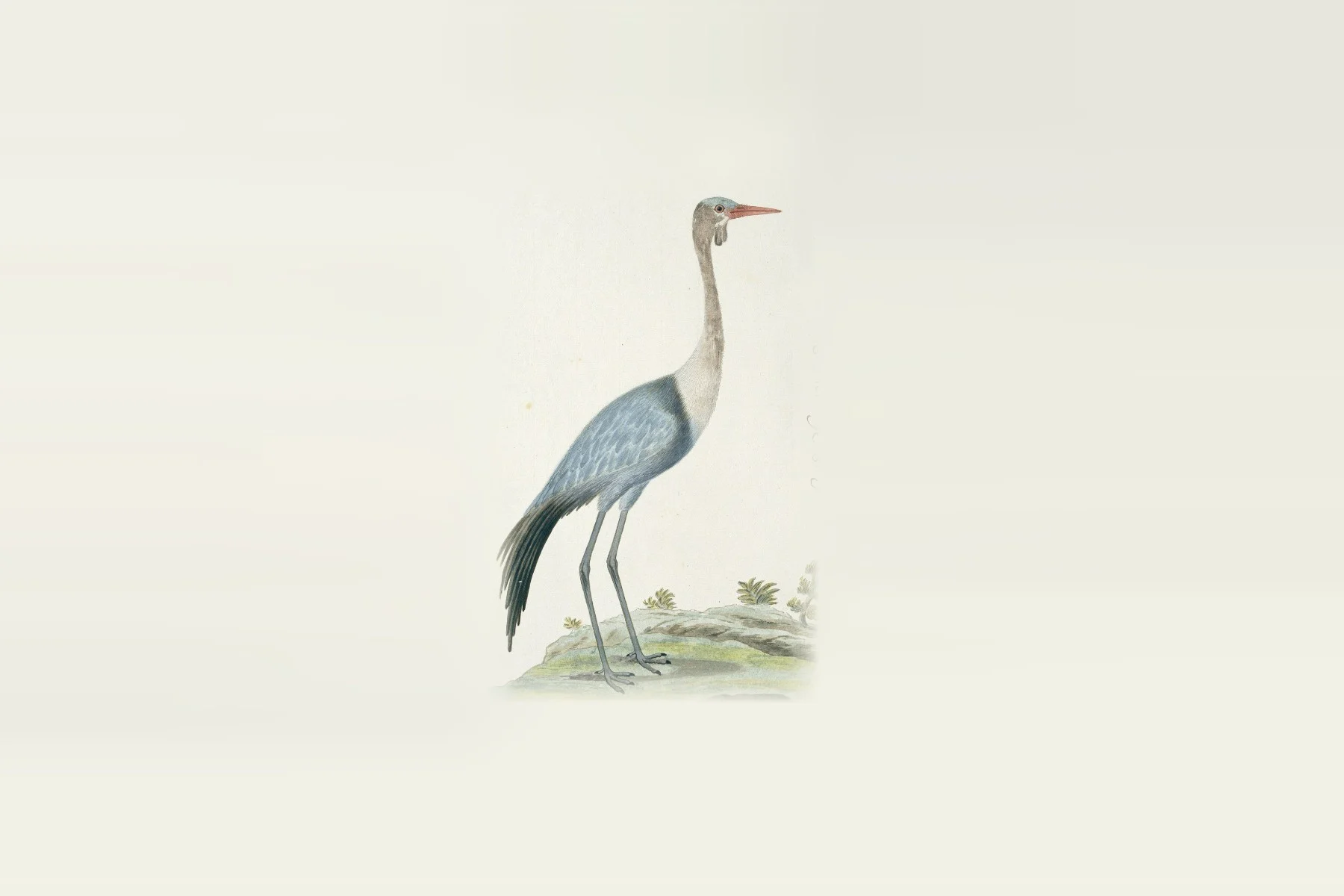
Where to See a Wattled Crane: the Midlands, the Okavango, Zambia and the Odds at Each
Africa's biggest crane, wattles and all, is scarce in South Africa and common only on a few great floodplains. Where the birds are, which months work, and where to stay beside their wetlands.
The Wattled Crane stands about 172 cm tall and weighs close to 8 kg, according to the International Crane Foundation, which makes it the largest of Africa’s 6 cranes. It is also the one most tied to water. It feeds mostly on the tubers and rhizomes of submerged sedges, a bird the height of a person living largely on underwater vegetables, so it lives where shallow wetlands stay wet, and where those wetlands are drained, dammed or burnt it disappears.
That decides where you look. The International Crane Foundation puts the world population at under 9,600 birds, with more than half of them in Zambia and the single largest concentration in the Okavango Delta. South Africa has a few hundred, almost all of them in KwaZulu-Natal, so a sighting counts for rather more here than in Zambia.
Odds at a glance
| Where | Odds | Best months | Where to stay |
|---|---|---|---|
| KZN Midlands (Karkloof, Dargle) | Good, best at the winter roost | April to September | Gartmore, Tillietudlem |
| Drakensberg foothills (Underberg, Himeville) | Fair | All year | Sani Valley Nature Lodges |
| Mpumalanga highlands (Dullstroom) | Low, about 4 pairs | All year | Elands Valley Stone Lodge |
| Okavango Delta, Botswana | Good | All year; mokoro months April to September | Mbamba, Mokolwane, Drotsky’s |
| Busanga Plains, Kafue, Zambia | Good in season | June to October | Ntemwa-Busanga Camp |
| Kafue Flats, Zambia | Good | Dry season | No listing yet |
How to know one
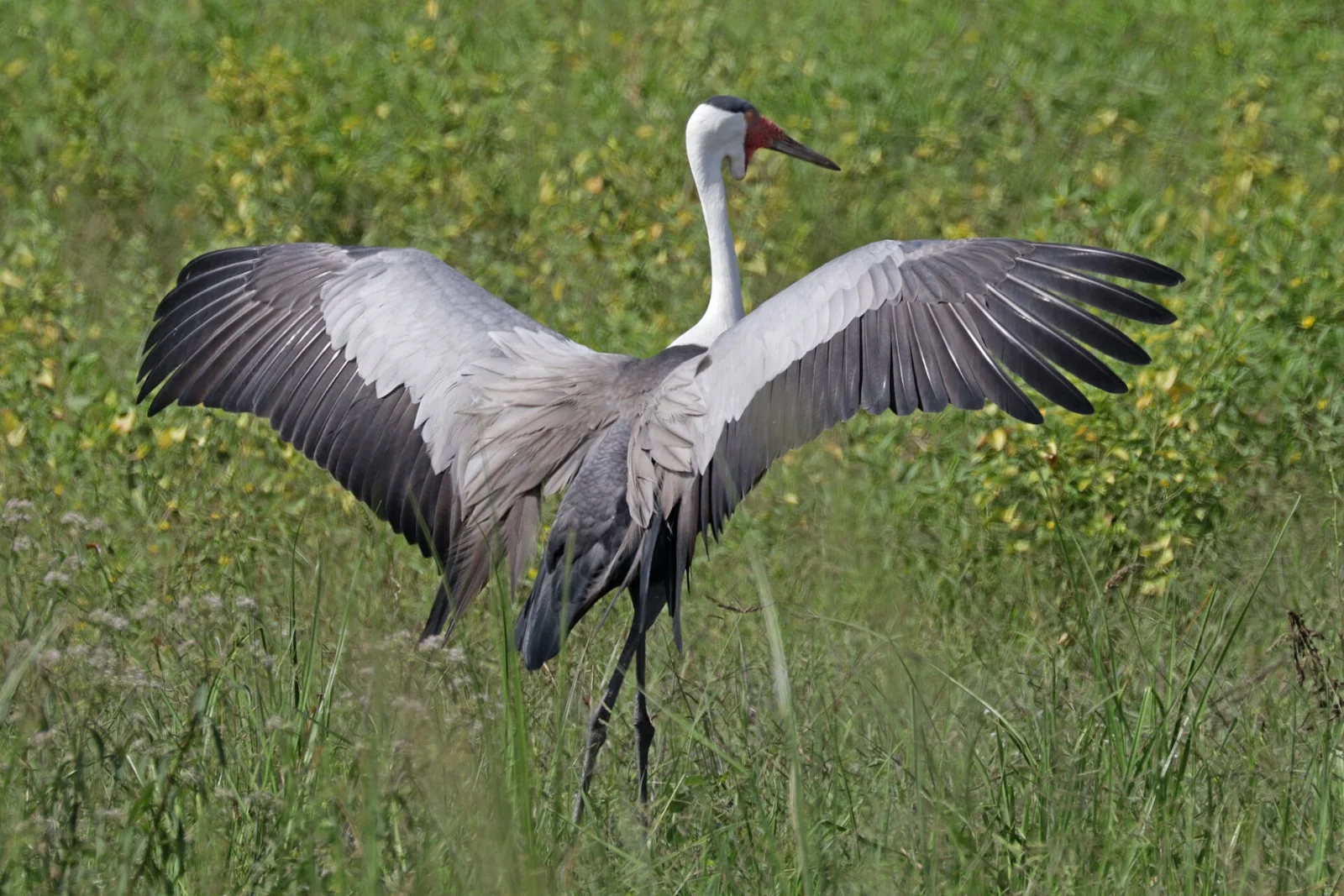
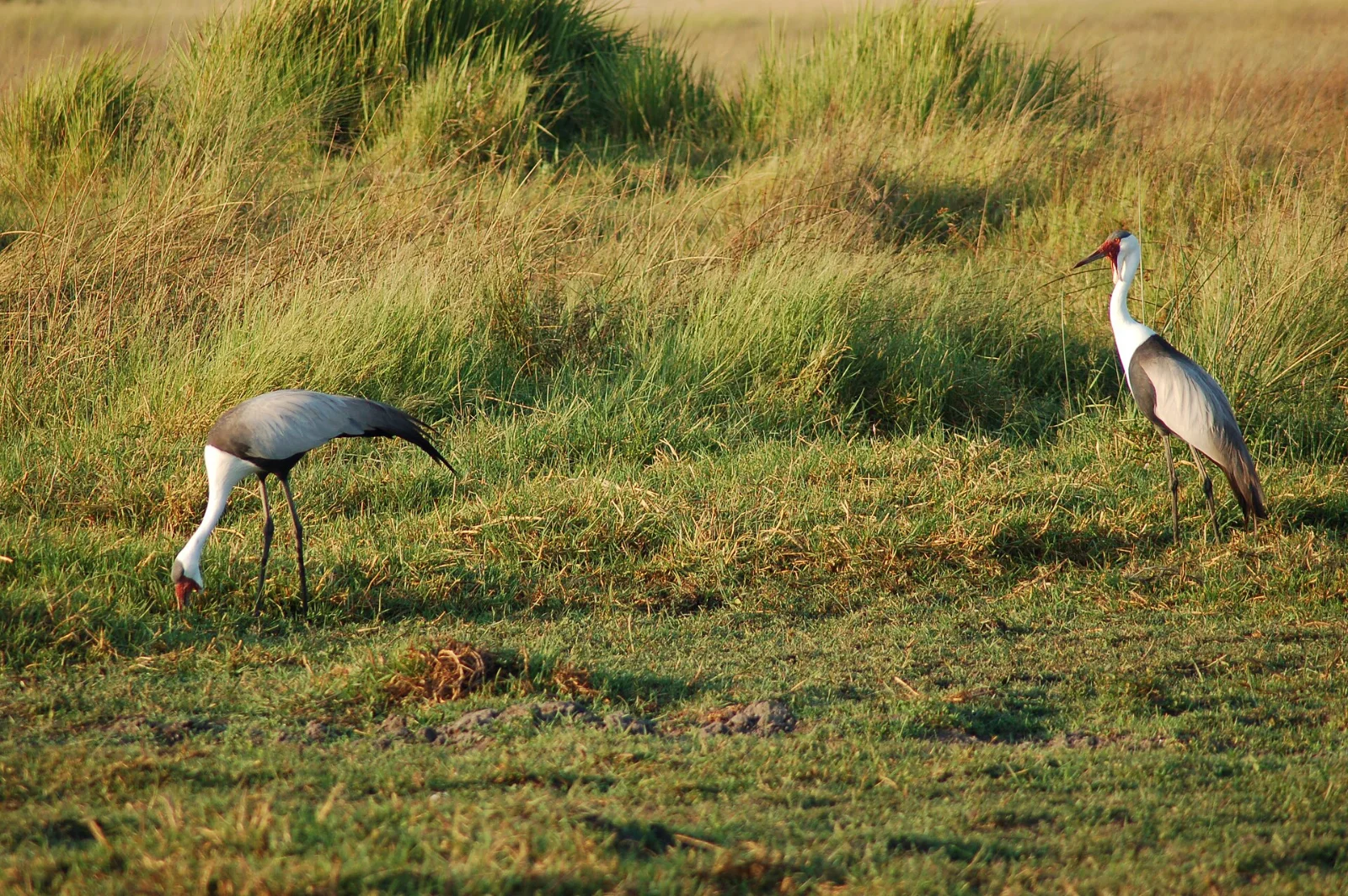
The Endangered Wildlife Trust and the crane foundation describe a tall, grey-backed bird with a white neck and head, a dark grey crown, bare red skin on the face and 2 feathered white flaps, the wattles, hanging below the chin. The underparts are black. Juveniles are tawny, with no bare red skin and shorter wattles. Grey Crowned and Blue Cranes often feed in the same fields in South Africa, so the white neck and the wattles are the things to check. The wattles, to be fair, are hard to miss once you know they are there.
Pairs call together in a duet, the unison call, to hold a territory, and give a sharp single alarm call when disturbed. The International Crane Foundation has recordings of both on its species page. Learn them before a trip to the Midlands, where a pair can be heard before it is seen: a married couple announcing the boundary of the property.
South Africa: a small population, mostly in KwaZulu-Natal
The South African population was listed as regionally Critically Endangered in 2015, after the KwaZulu-Natal aerial survey that year counted only 267 birds. In 2025 it was downlisted to Endangered. The Endangered Wildlife Trust, which runs the work with the International Crane Foundation, Ezemvelo KZN Wildlife and the landowners of the Drakensberg, says the population is no longer declining, with 304 birds counted in 2024. Its own estimate for 2025 is about 288 birds, mainly in KwaZulu-Natal.
The first National Crane Census in 20 years, run by the trust over 24 to 27 July 2026, recorded 384 Wattled Cranes and found the species in some new areas. It also turned up a hybrid Blue and Wattled Crane juvenile about 200 km from where it was raised. The trust calls the Drakensberg a global hotspot for all 3 South African cranes, and the hybrid suggests at least 2 of them are on very friendly terms.
The increase is almost entirely in KwaZulu-Natal. In Mpumalanga, the trust says, the breeding population fell from about 45 pairs in the 1990s to 4 pairs in 2025, few enough to know by name.
The Midlands and the Karkloof hides
The Karkloof Valley north of Howick is the easiest place in South Africa to see a Wattled Crane, and on a winter evening, a lot of them at once. BirdLife International lists the species as a trigger bird for the Karkloof Nature Reserve Important Bird Area, and its 2006 assessment counted 29 adults against a reference figure of 15.
The Karkloof Conservancy runs 2 hides on the wetlands of Gartmore farm. In 2020 the conservancy described them this way: the Crowned Crane Hide draws more waders, and the Wattled Crane Hide is where all 3 cranes roost. From April to September, it said, up to 34 Wattled Cranes and more than 50 Grey Crowned Cranes fly in to roost each evening, with Blue Cranes as well. The hides were open from 05:00 to 18:00 daily, day visits needed no booking, evening visits did, and a small fee was charged. Those details are 6 years old, so check with the conservancy before you go, and book the evening; the cranes keep a better timetable than most trains.
Gartmore Guest Farm is the stay on the same farm. Guests walk from the self-catering cottages to the conservancy hides, about the shortest crane commute in the country, the farm names Blue, Wattled and Grey Crowned Crane, and it is BirdLife South Africa Recommended. Cottages start at R1,250 a night, and Crane Cottage sleeps up to 6 adults.
South of the Karkloof in the Upper Dargle, Tillietudlem Nature Reserve covers mistbelt grassland, wetlands, rivers and forest, reports 250 species and names Blue, Crowned and Wattled Cranes. Guests at Ogram’s Country House have a hide and a viewing platform over the water, and Hleka Manzi is self-catering.
The Drakensberg foothills
Further west, the wet grassland below the Drakensberg around Underberg and Himeville is the other part of the KwaZulu-Natal range. Sani Valley Nature Lodges, on the Sani Pass road, names Wattled Crane among more than 300 species, along with Bearded and Cape Vultures and Drakensberg Pipit. Its habitats include lake wetlands and montane grassland. There are no formal hides, and it suggests watching from the lakeshore or the hilltops. The Sani Pass and Drakensberg birding guide covers the climb into Lesotho from the same base.
Mpumalanga: few birds, but a known wetland
With 4 breeding pairs left in the province, a Wattled Crane in Mpumalanga is a bonus, and a good story. BirdLife South Africa’s GoBirding guide to Verloren Valei Nature Reserve, north of Dullstroom, says the largest wetland on the De Berg road is where they are often seen. It is a closed reserve: book ahead and go in with an environmental monitor. GoBirding also says all 3 cranes are often seen together on farmland along the Greater Lakenvlei route south of town.
Elands Valley Stone Lodge, about 15 minutes from Dullstroom off the Machadodorp road, names Wattled, Blue and Grey Crowned Crane in a list of more than 200 species, and is self-catering. The Dullstroom grassland birding guide has the routes and the other stays.
The Okavango Delta
The International Crane Foundation calls the Okavango the single largest concentration of Wattled Cranes anywhere, and Wilderness, which runs camps in the Jao Reserve, says the same. Here the bird is a regular sight on the floodplains rather than a hope. A Field Guides tour in November 2023 found 8 near Macatoo Camp in the north-western Delta and 2 near Drotsky’s Cabins in the Panhandle, and Birding Ecotours bases the crane part of its Botswana tour at Camp Moremi at Xakanaxa, with afternoon drives for Wattled Crane and Slaty Egret.
The fly-in camps in the listings name the crane as a special. Mbamba Camp is on the NG12 concession in the north-west, where the river first spreads into floodplains and lagoons. It names Wattled Crane and Pel’s Fishing Owl, runs mokoro and boat outings alongside drives, and charges US$995 to US$1,995 a night, fully inclusive, with flights from Maun to Xaraxai Airstrip.
Mokolwane is the only camp in the Xudum concession (NG29) in the southern Delta, with 7 tents. It also names Wattled Crane and Pel’s, and its mokoro and boat trips depend on the flood, which usually arrives in April or May and stays until the end of September. The green-season rate, from 10 January to 31 March 2026, starts at US$660 per person sharing, plus a US$60 nightly conservation fee.
For a cheaper way in, Drotsky’s Cabins on the Panhandle near Shakawe is a self-drive base for boat birding, and is where the 2023 Field Guides group saw its pair. The Okavango Delta birding guide covers the seasons and the other camps.
Across the border in Namibia, Birding Ecotours recorded Wattled Crane at Mahango in Bwabwata National Park on its November 2025 tour; cranes do not carry passports.
Zambia: the Busanga Plains and the Kafue Flats
Zambia holds more than half the world’s Wattled Cranes, and 2 floodplains carry most of them. This is the bird’s home turf, or more accurately home marsh.
Busanga Plains
The Busanga Plains, in the far north of Kafue National Park, are a seasonally flooded grassland where, Yellow Zebra Safaris says, Wattled Cranes gather in one of the largest concentrations in Africa, alongside Rosy-throated and Fülleborn’s Longclaws and Denham’s Bustard. The plains are only fully accessible from June to October, and August to October is best as the water shrinks and the birds crowd onto what is left. Kafue’s park fee for international visitors was US$20 a day in Zambia Tourism’s 2025 schedule.
Ntemwa-Busanga Camp is on the plains and has a shaded hide in camp, so the birding starts before the coffee is finished. Wilderness Shumba and Wilderness Busanga Bush Camp are the other bases. In the south of the park, Birding Ecotours finds Wattled Cranes on the Nanzhila Plains on the same trip as Black-cheeked Lovebird. The Zambia birding guide covers the rest of the country.
Kafue Flats
The International Crane Foundation calls the Kafue Flats the most important floodplain in the world for the Wattled Crane. The Flats cover 6,500 km² east of Kafue National Park, hold more than 470 bird species and the Kafue Lechwe, and are a Ramsar site and a BirdLife Important Bird and Biodiversity Area. Lochinvar National Park is the protected part most visitors reach. A US$9 million, 5-year restoration project led on the ground by the crane foundation began in May 2026, aimed at fire, invasive Mimosa pigra and grazing on the floodplain. The foundation also works for the species at Bangweulu and Liuwa Plain, which suit birders combining cranes with Shoebill or the Liuwa migration, an ambitious but tempting double.
Watching without harm
The trust’s work in South Africa rests on landowners protecting breeding sites, and the crane foundation lists human disturbance among the threats. Wattled Cranes breed in winter in South Africa, so from about April onwards stay on roads and in hides, keep well back from any pair standing in a wetland, and never walk towards a nest. On farmland, ask before going through a gate. The cranes are the guests of the farmer, and so are you.
If you see a Wattled Crane outside the Midlands, report it. The trust revived its crane census in 2026 to find birds outside KwaZulu-Natal, and records with a location and a photo help it decide where to work next. A blurry crane with a pin on the map is worth more than a sharp one with none.
Where to stay
The places in this guide, with what each offers a birder:
| Place to stay | Where | For birders | From |
|---|---|---|---|
| Gartmore Guest Farm | Karkloof, KwaZulu-Natal | BirdLife Recommended, conservancy hides, all 3 cranes | R1,250 a cottage |
| Tillietudlem Nature Reserve | Upper Dargle, KwaZulu-Natal | Hide and viewing platform, 250 species, 3 cranes | Ask the lodge |
| Sani Valley Nature Lodges | Sani Pass road, KwaZulu-Natal | 300+ species, Wattled Crane, lakeshore watching | Ask the lodge |
| Elands Valley Stone Lodge | Near Dullstroom, Mpumalanga | All 3 cranes, 200+ species | Ask the lodge |
| Mbamba Camp | NG12, north-western Delta, Botswana | Mokoro and boat outings, Wattled Crane, Pel’s Fishing Owl | US$995 a night, fully inclusive |
| Mokolwane | Xudum, southern Delta, Botswana | Mokoro and boat trips, Wattled Crane, Pel’s Fishing Owl | US$660 pp sharing, fully inclusive (expired green-season rate) |
| Drotsky’s Cabins | Near Shakawe, Panhandle, Botswana | Self-drive base for boat birding | Ask the lodge |
| Ntemwa-Busanga Camp | Busanga Plains, Kafue, Zambia | Shaded bird hide in camp | Ask the lodge |
Numbers change with every survey and rates change each season. Facts were checked between 9 and 13 November 2026 with the Endangered Wildlife Trust, the International Crane Foundation, BirdLife International, BirdLife South Africa’s GoBirding pages and each place’s own website as summarised on its Birding Dispatch listing. Book the Karkloof evening hides and Verloren Valei before you go.
More from the Journal
 Woodpeckers of Southern Africa, Including the One That Doesn’t Need TreesSouthern Africa's woodpeckers, from the Cardinal in every bushveld tree to the Ground Woodpecker that lives on treeless mountain slopes and eats almost nothing but ants.
 Where to See a Taita Falcon: the Strijdom Tunnel, the Blyde Cliffs and the Batoka GorgeA stocky falcon smaller than a pigeon, a handful of cliffs and surveys that keep coming back empty. Where it still nests, how to look, and the 2 roosts beside its cliffs.
 Where to See a Southern Bald Ibis: the Breeding Cliffs, Dullstroom, Wakkerstroom and LesothoA red-capped grassland ibis that nests on cliffs over waterfalls and feeds on burnt veld and maize stubble. The colonies you can watch, the fields to scan, and where to stay.
The Pigeon Post
Every Thursday: 1 bird, 1 place to go and 1 place to stay, by email. Sign up and get our printable checklist of the 163 endemics of southern Africa.