
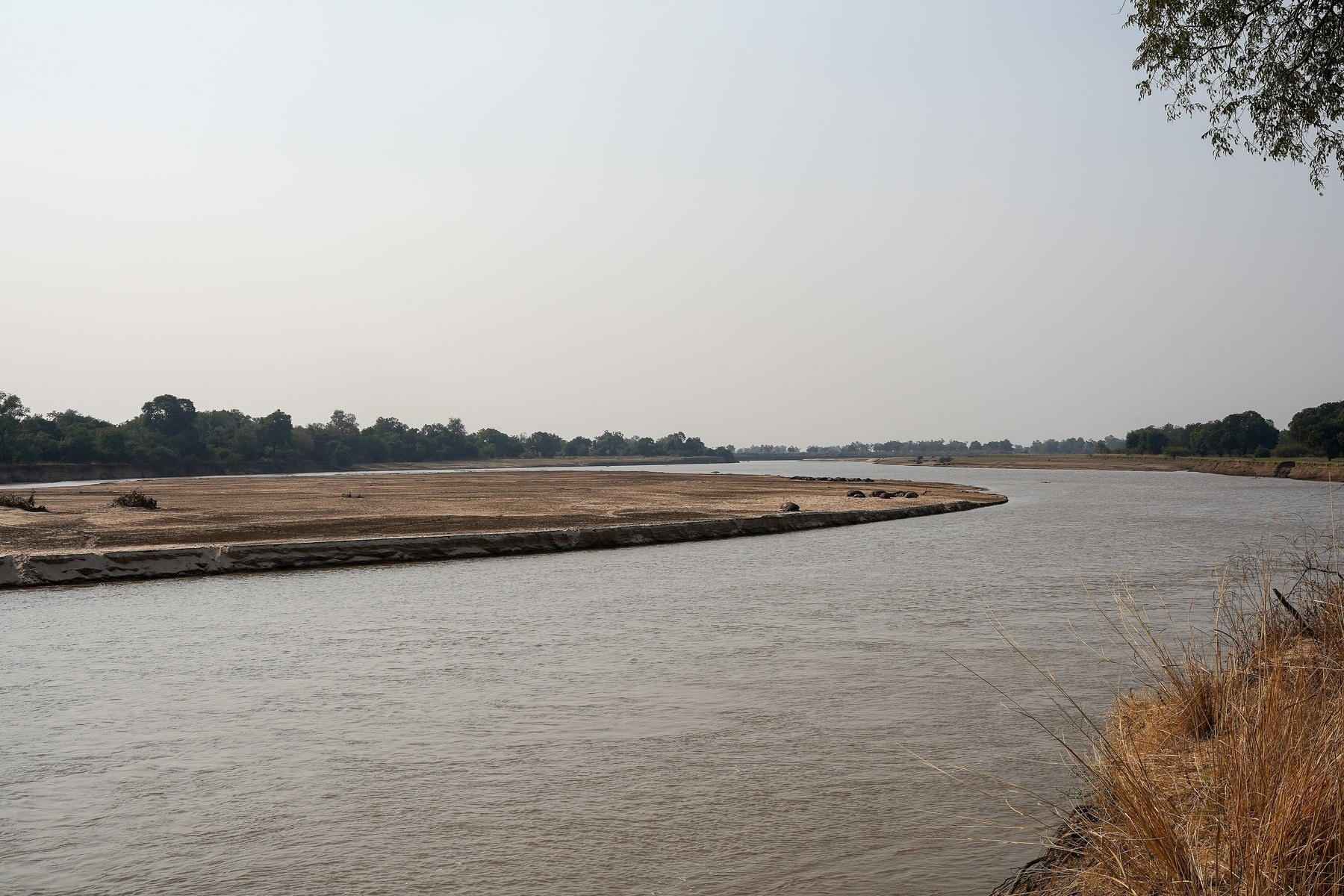
Birding Zambia: South Luangwa, Kafue and the Choma Endemic
Where to find Zambia's best birds, from Luangwa's carmine colonies and Busanga's cranes to a plump white barbet near Choma that lives nowhere else, and Mutinondo's miombo specials.
Zambia is the birding country most southern African birders have never got round to, usually for reasons that sound less convincing every year. Birding Ecotours calls it “Africa’s best-kept birding secret”, and the case is strong: 2 birds found almost nowhere else, Chaplin’s Barbet and Black-cheeked Lovebird, the best miombo woodland birding in Africa, and big parks where the birds come with lions and wild dogs attached, which makes the walk back to the vehicle a little brisker.
Distance is the obstacle. The good sites are hundreds of kilometres apart, the roads between them are slow, and the fast way in is a small plane. Most of the bush camps also shut for the rains, just when the birding is richest, a scheduling decision the birds were not consulted on.
The short answer
For a first trip, fly into South Luangwa between September and November for the Southern Carmine Bee-eater colonies, Lilian’s Lovebird and a shot at Pel’s Fishing Owl. Add Kafue for Wattled Cranes on the Busanga Plains (June to October only) and Black-cheeked Lovebird near Nanzhila in the south. For Chaplin’s Barbet, go to the Nkanga River area near Choma, on the road between Lusaka and Livingstone. Serious listers should add 3 nights at Mutinondo Wilderness in the north for Bar-winged Weaver and the miombo specials, and Kasanka in late October or November for the bats and the eagles that hunt them.
At a glance
| Area | Key birds | When | Entry, international visitor per day |
|---|---|---|---|
| South Luangwa | Southern Carmine Bee-eater, Lilian’s Lovebird, Pel’s Fishing Owl | Sep to Nov (carmines); Nov to Apr (migrants) | US$25 |
| Kafue, Busanga Plains | Wattled Crane, Rosy-throated and Fülleborn’s Longclaws | Jun to Oct (only fully accessible then) | US$20 |
| Kafue, Nanzhila (south) | Black-cheeked Lovebird, Wattled Crane | November on Birding Ecotours’ tour | US$20 |
| Lower Zambezi | Southern Carmine Bee-eater | Sep to Nov | US$25 |
| Nkanga River, near Choma | Chaplin’s Barbet | All year; breeds Aug to Nov | Private land |
| Mutinondo Wilderness | Bar-winged Weaver, Anchieta’s Sunbird, Böhm’s Flycatcher, Anchieta’s Barbet | Rates on request | Private reserve |
| Kasanka | Raptors at the bat roost | Late Oct to early Dec | US$10 |
Fees: 2025 national park schedule, the latest published.
South Luangwa: carmines, lovebirds and owls
South Luangwa is the park to build the trip around. It is about an hour’s flight from Lusaka, and Rockjumper’s top birds for its South Luangwa extension read like a wish list written by an optimist: Lilian’s Lovebird, Pel’s Fishing Owl, African Finfoot, African Skimmer, Allen’s Gallinule and a chance of African Pitta.
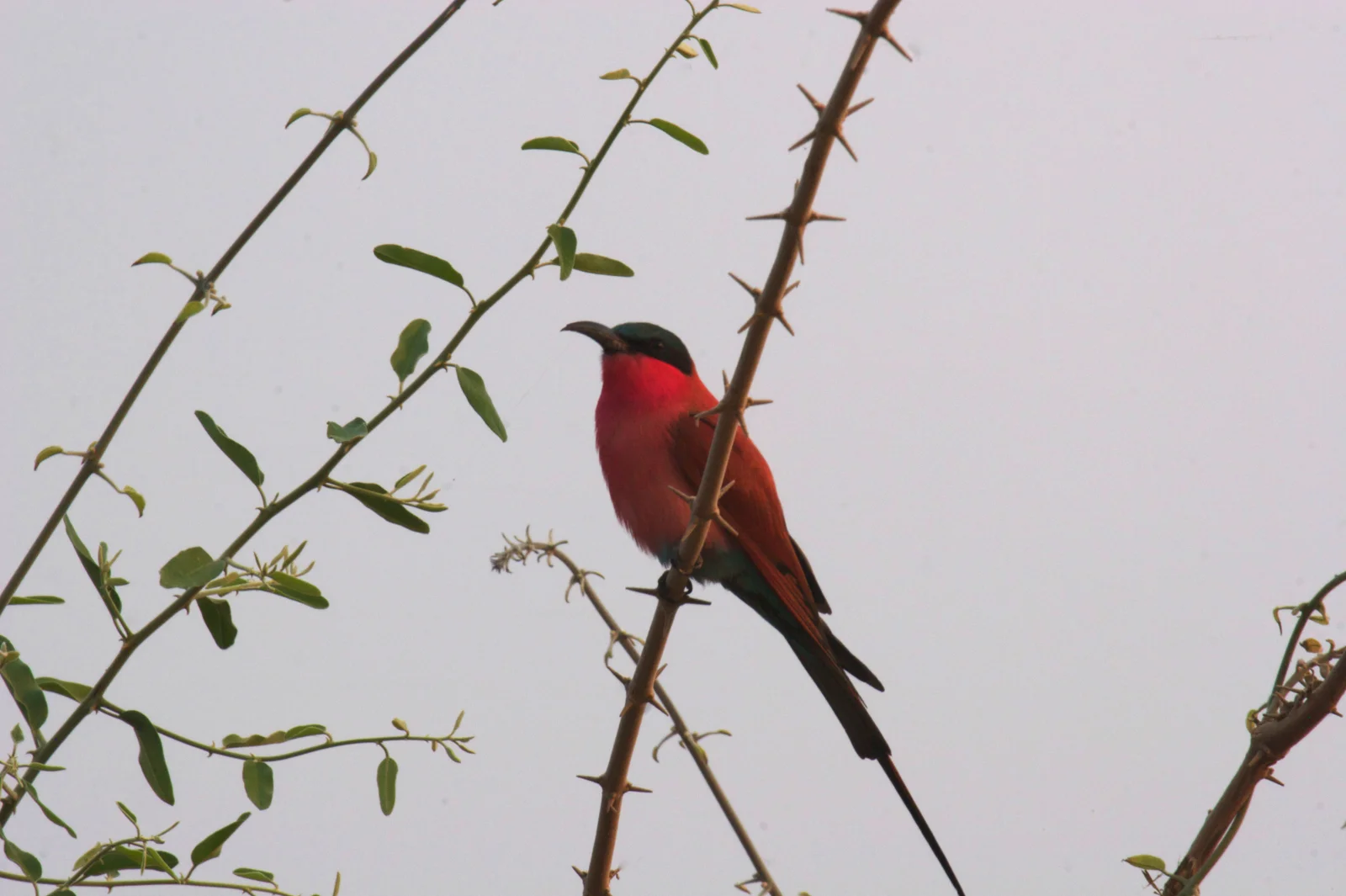
The headline event is the Southern Carmine Bee-eater. Time + Tide, which runs camps in both river parks, says the birds arrive from the end of August to dig nesting tunnels in the exposed river banks and that guests can watch the colonies from September to November. Wildlife Worldwide’s November photo tours still stop at a colony, so the late end of that window works. A riverbank full of carmine bee-eaters is not a subtle thing.
Pel’s Fishing Owl is possible but never promised. Track and Trail River Camp, just outside the park, has a published record: a Zambia Tourism feature describes guests watching an adult and a juvenile Pel’s on a single afternoon in July 2022 with owner and guide Peter Geraerdts. Guiding skill decides most owl sightings; the owl decides the rest. For technique, see our guide to finding Pel’s Fishing Owl.
Kafue: Busanga cranes and the second endemic
Kafue is Zambia’s largest and oldest park, and it holds 2 separate birding trips, which is generous of it. In the far north, the Busanga Plains are a seasonally flooded grassland where Yellow Zebra Safaris says Wattled Cranes gather in one of the largest concentrations in Africa, with Rosy-throated Longclaw, Fülleborn’s Longclaw, Denham’s Bustard and African Skimmer. The plains are only fully accessible from June to October, and August to October is best as the water shrinks. Wilderness Shumba and Wilderness Busanga Bush Camp are the main bases; Chisa Busanga Camp says Pel’s Fishing Owl is often seen in the riverine trees around the camp.
The south of the park is where the second endemic lives. On Birding Ecotours’ 2026 itinerary, groups stay at Musungwa Lodge above Itezhi-Tezhi Dam and search the woodland near Nanzhila Plains Camp for Black-cheeked Lovebird, which often comes down to drink in large numbers late in the afternoon, the sundowner hour for lovebirds. Wattled Cranes use the plains there too, and Dickinson’s Kestrel is a regular extra.
The bird also lives in mopane woodland in the far south-west, but a Birding Ecotours guide who tried there in 2024 took nearly 2 hours to cover 80 km and almost missed it, very nearly a dip, birders’ slang for a bird you went for and missed. Nanzhila is the easier bet.
Lower Zambezi
The Lower Zambezi is a 30-minute flight from Lusaka and runs on the same carmine calendar as Luangwa, with colonies from September to November according to Time + Tide. Many of its camps close from mid-November. If time is short, choose 1 of the 2 river parks, not both; the bee-eaters will be digging in either.
Chaplin’s Barbet: the Choma endemic
Chaplin’s Barbet, sometimes called Zambian Barbet, is the country’s only true endemic. It lives only in south-central Zambia, between the upper Kafue River and Kabanga in the Kalomo District, and BirdLife International uplisted it to Vulnerable in 2008 after research showed it was rarer than thought. It is a plump white barbet with red around the eye that lives in groups of 2 to 6 and depends on fig trees for food and nest holes. Find the right fig and you have found the family home.
The classic site is the Nkanga River Conservation Area, 3 private farms just north-east of Choma. BirdLife International’s site account says the barbet is common in suitable habitat there, and Zambia Tourism lists 439 species for the area. Masuku Lodge, run by birding guide Rory McDougall’s Bedrock Africa, has 6 thatched chalets on Masuku Dam inside the conservancy. Birding Ecotours also has reliable stakeouts near Chisamba, north of Lusaka, where groups search around sycamore figs before breakfast. Lochinvar National Park is often listed for the bird too, but none of the sources checked name a spot there, so treat Choma as the safer plan. A barbet on a list is not a barbet on a branch.
Mutinondo and the northern miombo
Mutinondo Wilderness is a private, owner-run reserve of granite domes and miombo in northern Zambia, and it is the trip for birders who already have the big parks and have started to collect warblers. Birding Ecotours gives it 3 nights on its 18-day tour and lists Anchieta’s Sunbird, Anchieta’s Barbet, Böhm’s Flycatcher, Laura’s Woodland Warbler, Ross’s and Schalow’s Turacos and Bar-winged Weaver among the targets. It is also one of very few places with any chance of Chestnut-headed Flufftail.
Expect to work for the weaver, and possibly to leave without it. A 10,000 Birds writer who spent 4 full days at Mutinondo in 2025 missed it, and the managers told him it is becoming increasingly rare in the area. Birding Ecotours keeps a back-up try at Mwinilunga in the north-west for the same reason. Miombo birding comes in bursts, with long quiet spells broken by mixed flocks of up to 30 species, all arriving at once and leaving before the notebook is open. The drive from Mkushi takes most of a day, so the lodge pairs best with Kasanka and the Bangweulu Wetlands.
Kasanka and Bangweulu
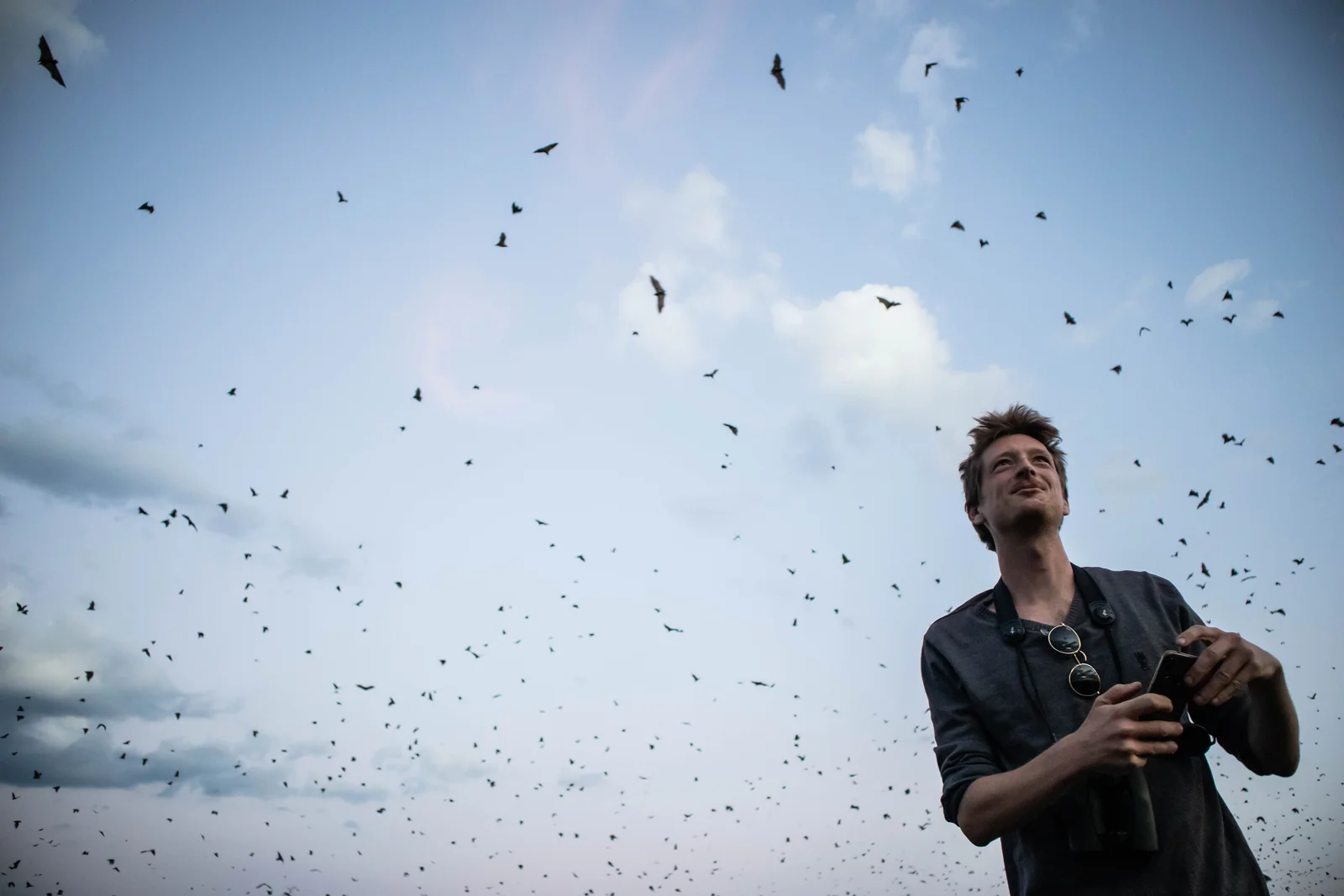
Kasanka’s spectacle is mammals; birders go for the predators, and so, it turns out, do the eagles. Between October and December up to 10 million straw-coloured fruit bats pack into a small patch of swamp forest, which the Kasanka Trust calls possibly the largest concentration of mammals known in the world. A field study from the 2000 to 2002 seasons recorded African Fish Eagles, Martial Eagles and Crowned Eagles hunting the bats at the roost, and White-backed Vultures feeding on them.
Wasa Lodge is closed for 2026. In its place, Everwild runs a 6-tent mobile camp from 25 October to 1 December 2026, reached by SkyTrails charter to Mulembo, self-drive, or a road transfer at US$750 per vehicle. Park entry is US$10 a day.
Bangweulu is next door and is the place for Shoebill. Our guide to where to see Shoebill covers it in full.
Fees, flights and the catch
Park fees are low (see the table), which is the good part. Self-drivers pay US$30 a day in South Luangwa, plus US$15 a day for a foreign-registered vehicle under 3 tons. A “day” runs from 6am to 6pm, children under 5 enter free and those aged 5 to 13 pay half.
The flights are what cost money. Proflight’s published return fare from Lusaka to Mfuwe for South Luangwa is US$584 per person, and Lower Zambezi to Mfuwe is US$824 return. Luggage is limited to 20 kg per person in a soft bag, camera gear included, which matters if you travel with a big lens and a scope, which is where the packing gets creative.
The second catch is the calendar. The Bushcamp Company says fewer lodges and bush camps stay open in the rains, especially those deep inside the park, and that flooding cuts off roads and loops. In the Lower Zambezi many camps close from mid-November, and Busanga is out of reach outside June to October. The best Zambian birding itinerary is therefore 2 trips, not 1, which is the kind of problem a birder is happy to have.
When to go
September to November is the best single window: carmine colonies in both river parks, dry roads, open camps and the start of the Kasanka bat season from late October. Chaplin’s Barbet breeds from August to November, when pairs are active around the figs.
The emerald season, which the Bushcamp Company dates from November to April, is the birder’s season. Migrants return, residents are in breeding plumage, and Zambia Tourism describes Woodland Kingfisher and Emerald Cuckoo calling over the valley, with Greater Painted-snipe and Dwarf Bittern in the puddles. Against that, fewer camps are open and the roads are wetter, so base yourself at a lodge near the main gate. Busanga and the Lower Zambezi belong in the dry season, from June to October.
The verdict
Do South Luangwa first, in October: carmines, lovebirds, owls and big game in 1 park, with scheduled flights from Lusaka. Add southern Kafue for Black-cheeked Lovebird and Choma for Chaplin’s Barbet if you want both endemics, and save Mutinondo and Kasanka for a second trip from late October. Zambia rewards birders prepared to fly, drive long days and accept that the rarest birds may not show, which is to say, birders. For more of the region, see our Zimbabwe birding guide and Botswana birding guide.
Where to stay
The places in this guide, with what each offers a birder:
| Place to stay | Where | For birders | From |
|---|---|---|---|
| Kaingo Camp | South Luangwa, Zambia | Photographic hides, Southern Carmine Bee-eater hide in September and October | Ask the lodge |
| Mwamba Bush Camp | South Luangwa, Zambia | Last Waterhole Hide in camp, seasonal Southern Carmine Bee-eater hide | Ask the lodge |
| Kulandila Camp | South Luangwa, Zambia | Photographic hides, raised riverbank spot for nesting Southern Carmine Bee-eaters | Ask the lodge |
| Sungani Lodge | South Luangwa, Zambia | Photographic hide at a Carmine Bee-eater colony in season | Ask the lodge |
| Kafunta River Lodge | South Luangwa, Zambia | Waterhole hide under the main deck, drives tailored to birding | US$470 pp, 5 nights or more |
| Lion Camp | South Luangwa, Zambia | Hide at water level off the main deck, Marabou Stork | US$950 pp sharing |
| Dewclaw Safari Baobab Lodge | South Luangwa, Zambia | Birding guide included, carmine colony visits, near main park gate | $100 Zebra chalet, B&B |
| Munyamadzi Camp | Luangwa Valley, Zambia | Specialist bird guide on request, Lilian’s Lovebird, Pel’s Fishing Owl | Ask the lodge |
| Ntemwa-Busanga Camp | Busanga Plains, Zambia | Bird hide in camp, open 1 June to 15 November | Ask the lodge |
| Lwenge River Camp | Kafue, Zambia | Kamasot Hide, Pel’s Fishing Owl, African Finfoot, exclusive-use river camp | Ask the lodge |
| KaingU Safari Lodge | Kafue, Zambia | Bird guide on staff, bee-eater and parrot hides, African Finfoot | Ask the lodge |
| Chula Island Camp | Lower Zambezi, Zambia | Bird guide on staff, canoe safaris, Lilian’s Lovebird, African Pitta | Ask the lodge |
Park fees, camp openings and bird reports change. Facts were checked on 9 November 2026 with the 2025 national park fee schedule published by Zambia Tourism, BirdLife International’s Nkanga River site account, Birding Ecotours’ 2026 Zambia itinerary, Rockjumper, Time + Tide, The Bushcamp Company, SouthLuangwa.com’s Proflight fares and ATTA’s report on Kasanka for 2026. Confirm fees with the Department of National Parks and Wildlife and opening dates with each camp before you book.
More from the Journal
 Namib-Naukluft and Sossusvlei for Birders: Dune Lark, Desert Raptors and the Naukluft SpecialsA lark that lives on the dunes and nowhere else, Lappet-faced Vultures nesting in the desert, coursers on the gravel plains and the northern specials around the Naukluft cliffs, in one of Africa's largest parks.
 Lake Baringo and Lake Bogoria Birding: The Owl Walks, the Cliffs and the FlamingosA local guide who knows where every nightjar and eagle-owl slept last night, thorn scrub full of hornbills, a Goliath Heron colony on a rock, and the flamingo lake next door that keeps rising.
 Akagera Birding: Rwanda’s Savanna, Lakes and Papyrus, and the Shoebill ChancesRed-faced Barbet in the southern woodland, Papyrus Gonolek and Carruthers's Cisticola in the swamps, a lake of hippos and lapwings, and a Shoebill that hides in the wetlands more than it shows.
The Pigeon Post
Every Thursday: 1 bird, 1 place to go and 1 place to stay, by email. Sign up and get our printable checklist of the 163 endemics of southern Africa.