
Birding Sani Pass and the Southern Drakensberg: The Lesotho Highland Specials
How to bird Sani Pass from Underberg or Himeville for Drakensberg Rockjumper, Gurney's Sugarbird, Mountain Pipit and Bearded Vulture, plus the border rules that decide when your day ends.
Sani Pass is the only road that climbs the Drakensberg escarpment from KwaZulu-Natal into Lesotho, and for birders it is the easiest way to reach a set of mountain specials found almost nowhere else. BirdLife South Africa’s GoBirding guide calls it one of the top birding sites in southern Africa, with some 200 species in the area and more than 40 endemic to South Africa and Lesotho.
The day runs from mistbelt gullies near Himeville to a treeless plateau at about 2,876 m, and the birds change with every bend, which is a good excuse to stop at most of them. The 2 headline species, Drakensberg Rockjumper and Gurney’s Sugarbird, belong to the 2 bird families found only in southern Africa.
The short answer
Stay in Himeville or Underberg and book a guided 4×4 day up the pass, starting at dawn. Bird the riverine thickets at the foot for Bush Blackcap, the protea slopes for Gurney’s Sugarbird and Ground Woodpecker, the switchbacks below the Lesotho border for Drakensberg Rockjumper and Drakensberg Siskin, then the plateau beyond the border for Mountain Pipit, Large-billed Lark and Fairy Flycatcher. Carry a passport, because this is the rare birding day with a customs check halfway up. Go between September and April, and plan the whole day around border closing times.
At a glance
| Special | Where on the pass | Notes |
|---|---|---|
| Bush Blackcap | Wooded gullies near the foot, towards Himeville | Near-endemic; also at Marutswa Forest |
| Gurney’s Sugarbird | Protea slopes on the middle section | Perches on top of protea flowers |
| Ground Woodpecker | Rocky sections and road cuttings; stone kraals in Lesotho | Nests in the road cuttings |
| Barratt’s Warbler | Thickets near the SA border post and higher | Learn the call first |
| Drakensberg Rockjumper | Switchbacks below the Lesotho post; around Sani Top | Resident at the top chalets |
| Drakensberg Siskin | Switchbacks and Sani Top | Resident |
| Mountain Pipit | Short grass on the plateau | Summer only |
| Bearded and Cape Vultures | Twelve Apostles view sites; Black Mountain | Several Bearded Vulture pairs nest nearby |
The road and the border
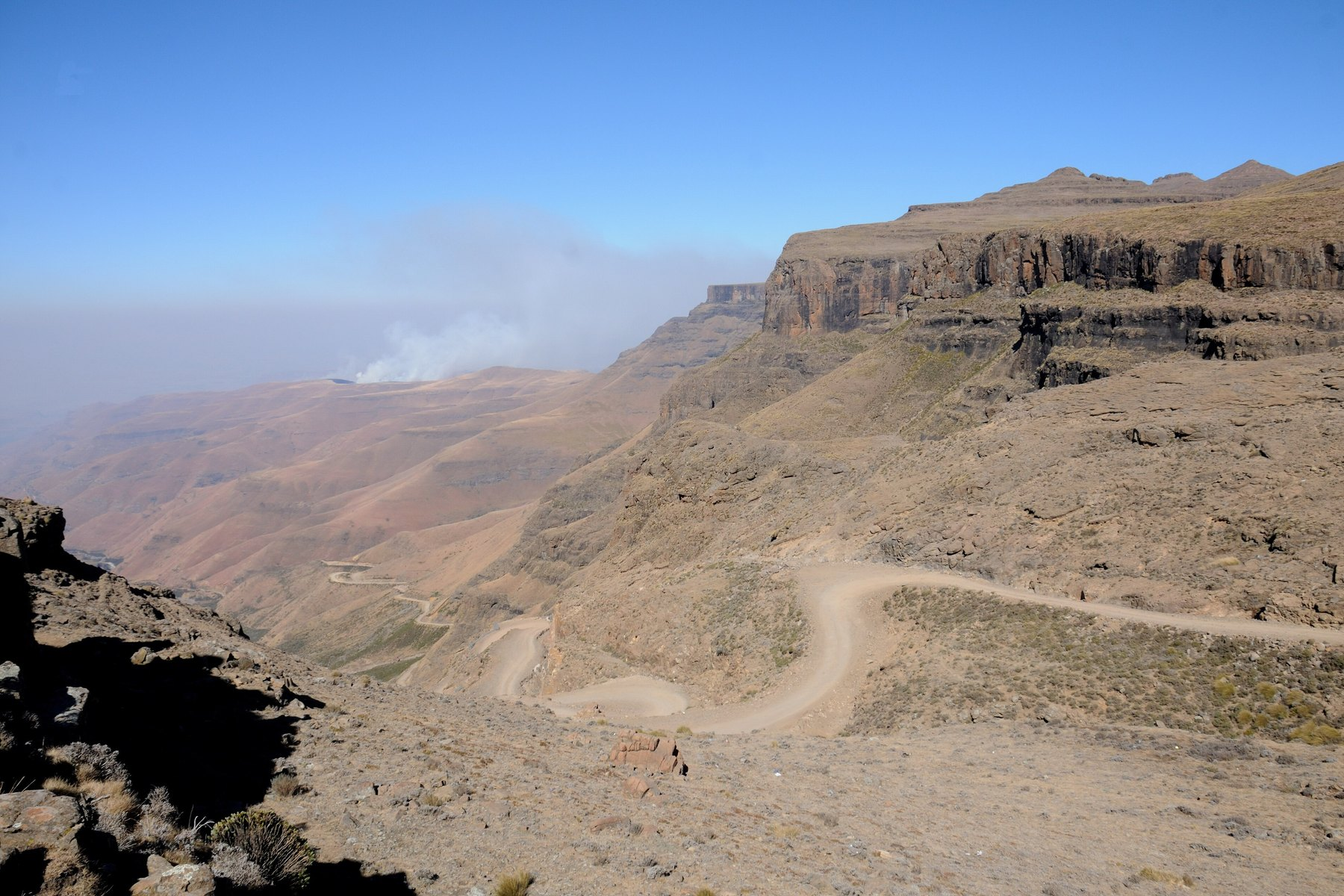
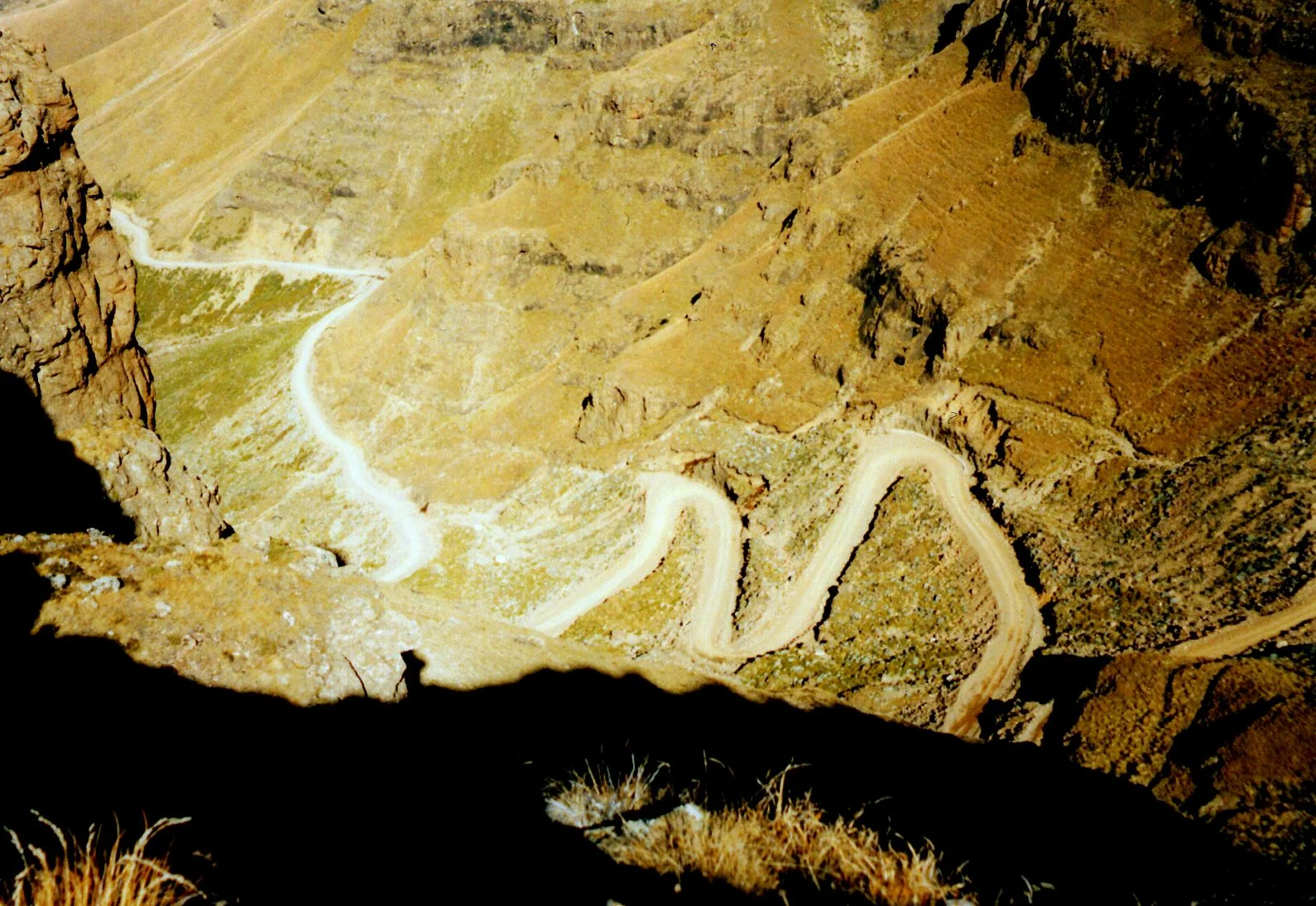
The South African side of the road is tarred as far as the SA border post, according to a September 2026 account. Above it, roughly 9 km of steep gravel with hairpin bends climbs to the Lesotho border post near the summit, and that section is open only to 4×4 vehicles. GoBirding adds that high clearance is required, and Sani Pass Tours describes gradients of up to 1:3 that can be covered with snow and ice in winter. The SA post sits at about 1,960 m. The Lesotho post is the official border, so you clear both, with about 9 km of hairpins between your 2 passport stamps.
The Border Management Authority gave the normal Sani Pass hours as 6am to 6pm in March 2026, with short extensions over holidays. Bring a passport. Some nationalities need a Lesotho visa, and Sani Pass Tours warns that anyone turned back at the Lesotho post waits at the SA post with no refund. Lesotho charges a road toll at the top, and from 2025 foreign passport holders also pay a M100 entrance fee and tourism levy, which tour operators collect for the Lesotho Tourism Development Corporation.
Self-driving is legal in a 4×4, but Sani Pass Tours says it has seen many accidents involving inexperienced drivers. For a birding day, a guide who knows where the rockjumpers sit is worth more than the wheel, and leaves both your hands free for binoculars.
The foot of the pass: thickets and rivers
GoBirding’s route starts in the riverine habitat near Himeville. Search the dense wooded gullies for Bush Blackcap and listen for the high trill of Cape Grassbird. African Yellow Warbler and Drakensberg Prinia prefer the flatter sections with lower vegetation. Karoo Prinia takes over nearer the top, and GoBirding separates Drakensberg Prinia by its yellow wash below and more diffuse chest streaking, with a warning that hybrids exist, because prinias like to keep birders humble. Small dams and river crossings can turn up Half-collared Kingfisher. A Birding Ecotours trip in February 2022 found Bush Blackcap and Half-collared Kingfisher on these lower stops before breakfast.
The protea slopes: sugarbirds and woodpeckers
As the valley steepens, proteas appear on the grassy hillsides. This is the stretch for Gurney’s Sugarbird, which often perches on top of the flowers as if posing for the field guide, and for Malachite Sunbird on the proteas and aloes. Rocky sections hold Ground Woodpecker and Buff-streaked Chat, and the woodpeckers use the road cuttings to nest. Barratt’s Warbler is common in the thickets near the SA border post but shy, and GoBirding says it is easier to see a little higher where the vegetation thins. Know its call before you go; it is the only part of the bird you can count on.
The switchbacks: rockjumper and siskin
About 2 km above the SA border post, GoBirding recommends 2 view sites on successive corners. Scan the buttresses of the Twelve Apostles for Jackal Buzzard, Lanner Falcon, Cape Vulture and Bearded Vulture. The mountain heath here also holds Wailing Cisticola and Fairy Flycatcher.
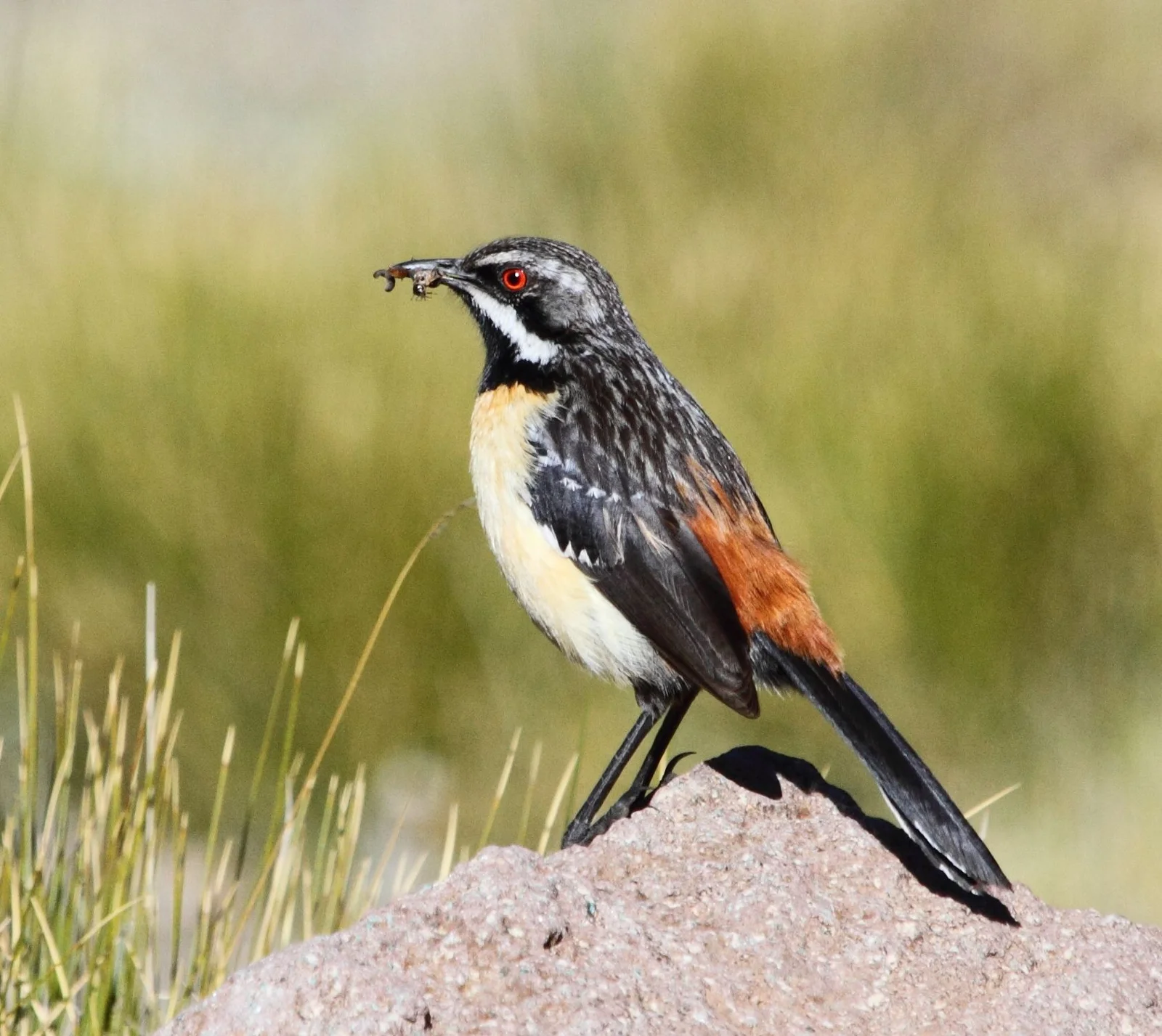
The switchbacks near the top are the place for Drakensberg Rockjumper, Drakensberg Siskin and Cape Canary. Pull over at a wide section and work the rock scree. The rockjumper is also called Orange-breasted Rockjumper, and it and the Cape Rockjumper of the fynbos are the only 2 living members of their family. A few authorities still treat them as a single species, which would make for a very small family indeed. Birding Ecotours found its first rockjumper of the day just below the Lesotho border post, along with Drakensberg Siskin, Sickle-winged Chat and passing Cape and Bearded Vultures.
If the switchbacks are quiet, both the rockjumper and the siskin are resident around Sani Top. For the sunbirds you will pass on the way up, see our guide to the sunbirds of southern Africa.
The Lesotho plateau: pipits, larks and vultures
Once through the Lesotho post, GoBirding suggests parking at the Sani Top chalets for a mid-morning break. Cape Bunting, Cape Sparrow and Speckled Pigeon are common there, and a short walk should add Sentinel Rock Thrush, Sickle-winged Chat and, in summer, Mountain Pipit on the short-cropped grass. GoBirding separates it from African Pipit by its larger size, darker look, buffy outer tail feathers and different flight call, and says most pipits on the plateau in summer can safely be taken as Mountain Pipits. In May 2026 a proposal to AviList recommended renaming it Anthus editus, because the original type specimen came from Namibia, not the Drakensberg. The pipit has not been told.
Drive on past Sani Top into the alpine heath. Check the stone kraals for Ground Woodpecker and African Rock Pipit, and the scrub for Grey-winged Francolin, Layard’s Warbler, Grey Tit, Yellow Canary and Black-headed Canary. Birding Ecotours lists Large-billed Lark and Southern Bald Ibis on the plateau too. On the 2022 trip the group found Mountain Pipit “surprisingly abundant” but had to work for Grey Tit and Large-billed Lark. Black Harrier often quarters overhead, mainly in late summer.
Watch the sky for Bearded Vulture all day. If none appear, GoBirding recommends driving about 20 km beyond the Lesotho border over Kotisephola Pass to a cleared quarry entrance on the left, where a resident pair lives on the cliffs of Black Mountain. A vulture with a fixed address is a fine thing.
Lower sites around Underberg and Himeville
Leave time for the lowlands; the specials do not all live at altitude. Marutswa Forest, on the edge of Bulwer about 38 km from Underberg, is a mistbelt forest where GoBirding says several hundred Cape Parrots still find refuge. Wait above the canopy early or late as they fly between feeding and roosting areas. Inside, the target is Orange Ground Thrush, with Bush Blackcap, Knysna Turaco, White-starred Robin and Barratt’s Warbler at the bracken edge. The boardwalk and education centre built in 2004 are now largely derelict and the entrance road eroded, but the trails remain open daily.
Himeville Nature Reserve is 2 dams and wet grassland on the edge of the village, with Red-chested Flufftail, African Rail, African Black Duck, Levaillant’s Cisticola and Long-tailed Widowbird. For coastal birds on the same trip, see birding near Durban.
Guides, tours and where to stay
GoBirding lists local guides for the pass, including Button Birding Tours (+27 39 833 1029) and Stuart McLean in Himeville (+27 33 702 0203). Neither publishes a day rate. Sani Pass Tours in Underberg runs general 4×4 day tours that include the Lesotho tourism and community levies and lunch; its tours are not birding trips, and prices are through its booking system. Birding Ecotours runs a 1-day Sani Pass and Lesotho birding tour from Underberg or Himeville, price on request. For a fully organised trip, Rockjumper’s 5-day Sani Pass extension in February 2028 costs ZAR25,995 per person, with a ZAR835 single supplement and a maximum of 5 guests.
For a dawn start, stay close. Sani Mountain Escape, formerly Sani Mountain Lodge, sits at about 2,874 m at the top of the pass and has rondavels, backpacker rooms and camping, plus the pub billed as the highest in Africa. Sleeping there puts the rockjumpers outside your door at first light, and the pub a short walk from your bed. At the foot, the Premier Resort Sani Pass (the old Sani Pass Hotel) and Sani Lodge & Cottages are close to the start, and GoBirding notes BirdLife-listed birder friendly accommodation in Himeville.
When to go
GoBirding says summer, September to April, is best: the full set of alpine species is present, Mountain Pipit is back on the plateau, and the proteas and aloes are flowering for the sugarbirds and sunbirds. Summer also brings afternoon thunderstorms, so start early. Winter, especially June to August, is bitterly cold, and heavy snow can close the pass. If you must go in winter, follow Snow Report SA, pack every layer you own and expect the resident specials only.
The verdict
Give the area 2 nights at least. Day 1: a full guided day up Sani Pass, out at dawn and back before the border closes. Day 2: Marutswa at first light for Cape Parrot and Orange Ground Thrush, then Himeville Nature Reserve. If you can, sleep at the top for a second chance at the rockjumper, in case it was off jumping somewhere else on day 1. For another highland grassland trip, pair it with Wakkerstroom and its larks.
Where to stay
The places in this guide, with what each offers a birder:
| Place to stay | Where | For birders | From |
|---|---|---|---|
| Mkomazana Mountain Cottages | Near Sani Pass, South Africa | BirdLife Recommended, Stuart McLean tours, feeders, Bearded Vulture | Ask the lodge |
| Sani Valley Nature Lodges | Sani Pass Road, South Africa | Over 300 species, vulture feeding site, feeders, Wattled Crane | Ask the lodge |
| Moorcroft Manor Boutique Hotel | Himeville, South Africa | Guided Sani Pass birdwatching booked through local operators | Ask the lodge |
| Cedar Garden B&B | Underberg, South Africa | Sani Pass birding trips with Stuart McLean, English garden | R600 pp sharing self-catering |
| Sani Window Bed & Breakfast | Underberg, South Africa | Sani Pass trips with Stuart McLean, packed breakfasts | Ask the lodge |
| Lake Naverone | Near Underberg, South Africa | Own bird hide, 108-species estate list, Red-chested Flufftail | R600 pp self-catering |
Border hours, fees and road conditions on Sani Pass change. Facts were checked on 9 November 2026 with BirdLife South Africa’s GoBirding guides to Sani Pass and Marutswa Forest, the Border Management Authority’s 2026 hours, Lesotho News Agency, Sani Pass Tours, Rockjumper and Birding Ecotours. Confirm border times and Lesotho visa rules before you travel.
More from the Journal
 Namib-Naukluft and Sossusvlei for Birders: Dune Lark, Desert Raptors and the Naukluft SpecialsA lark that lives on the dunes and nowhere else, Lappet-faced Vultures nesting in the desert, coursers on the gravel plains and the northern specials around the Naukluft cliffs, in one of Africa's largest parks.
 Lake Baringo and Lake Bogoria Birding: The Owl Walks, the Cliffs and the FlamingosA local guide who knows where every nightjar and eagle-owl slept last night, thorn scrub full of hornbills, a Goliath Heron colony on a rock, and the flamingo lake next door that keeps rising.
 Akagera Birding: Rwanda’s Savanna, Lakes and Papyrus, and the Shoebill ChancesRed-faced Barbet in the southern woodland, Papyrus Gonolek and Carruthers's Cisticola in the swamps, a lake of hippos and lapwings, and a Shoebill that hides in the wetlands more than it shows.
The Pigeon Post
Every Thursday: 1 bird, 1 place to go and 1 place to stay, by email. Sign up and get our printable checklist of the 163 endemics of southern Africa.