
Vultures of Southern Africa: the 7 Species, How to Tell Them Apart and Where to See Them
Southern Africa has 7 resident vultures, and BirdLife South Africa now lists 5 of them as Critically Endangered. How to tell them apart, where each is reliable, and the colonies and hides you can visit.
At Blouberg in Limpopo, the largest known Cape Vulture breeding colony, monitors counted 626 chicks in 2006 and 1,483 in 2020. The figures come from the 2021 IUCN Red List assessment that moved the Cape Vulture from Endangered back to Vulnerable, and they are the best news in a family that has had very little of it.
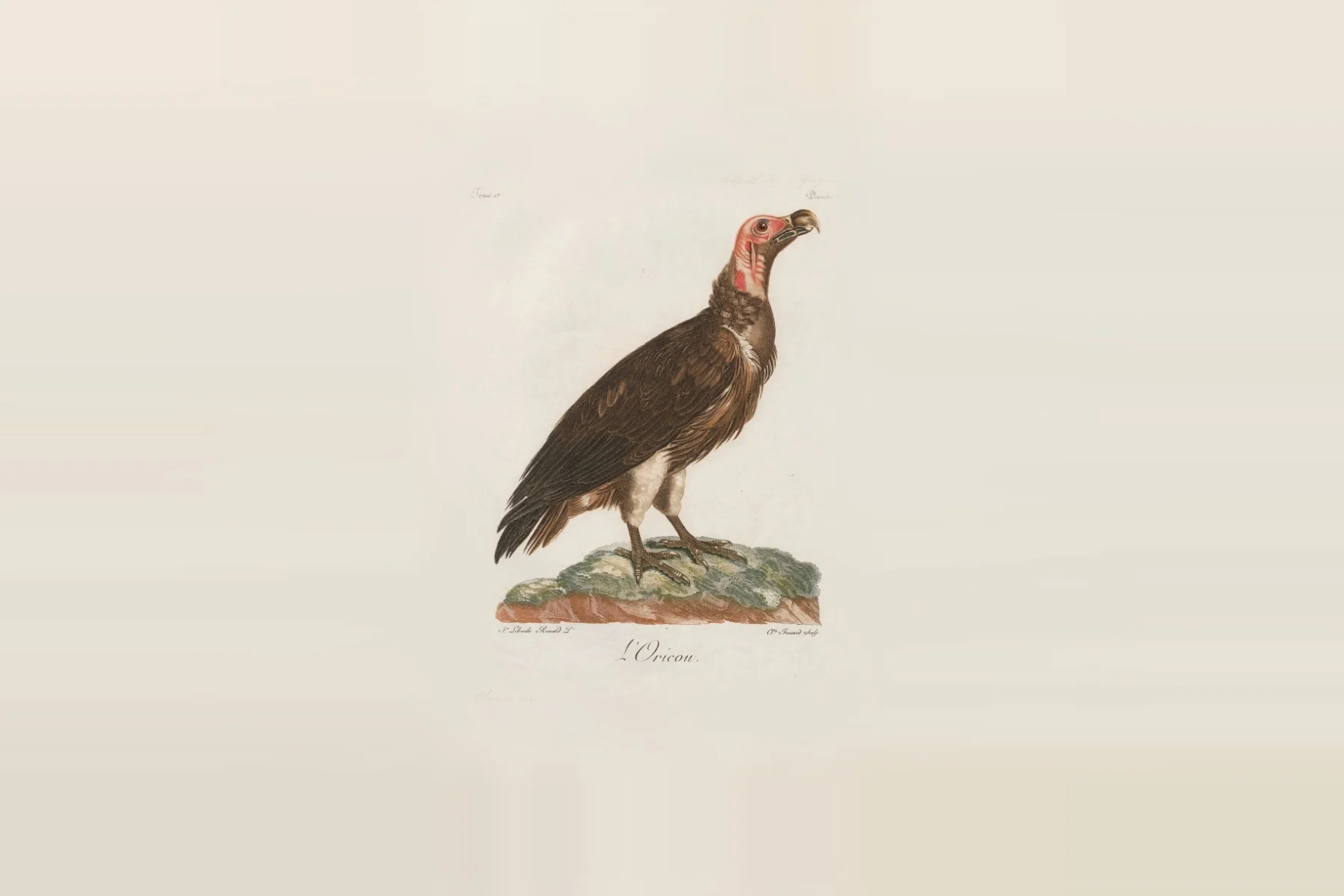
Southern Africa has 7 resident vultures. BirdLife South Africa’s 2026 checklist, which follows the 2025 Regional Red Data Book, lists 5 of them as Critically Endangered in South Africa: Bearded, Hooded, Lappet-faced, White-backed and White-headed. Only the Palm-nut Vulture, which lives mostly on palm fruit, carries no threat category. The vegetarian of the family is also the one doing fine. The checklist also has Egyptian and Rüppell’s Vultures, both as vagrants.
The 7 at a glance
Status is given as South Africa’s regional listing, then the global one (CR Critically Endangered, EN Endangered, VU Vulnerable, NT Near Threatened).
| Vulture | Status | Where to look | How to pick it out |
|---|---|---|---|
| Cape | VU, VU | Cliff colonies: Blouberg, Kransberg, Potberg, Msikaba | Larger and paler than White-backed; nests on cliffs |
| White-backed | CR, CR | Kruger, Kgalagadi, Etosha | Smaller, darker, more streaked; nests in tall trees |
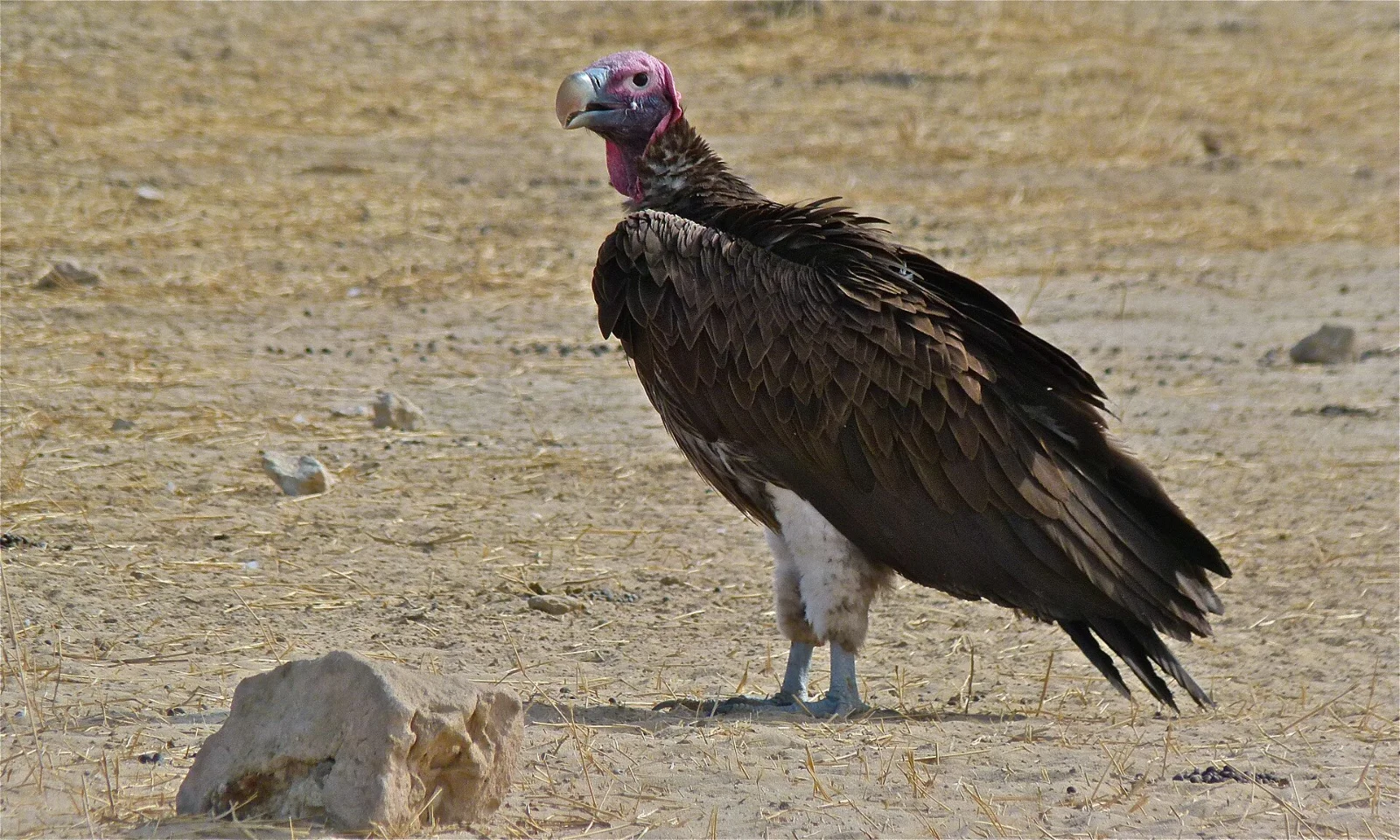
| Lappet-faced | CR, EN | Kgalagadi, Etosha, Botswana | Dominant over the others at a carcass |
| White-headed | CR, CR | Kruger and the reserves next to it | Female has white secondaries, male dark ones |
| Hooded | CR, CR | Kruger, the Okavango | Bottom of the pecking order at a carcass |
| Bearded | CR, NT | Maloti-Drakensberg | Bone specialist |
| Palm-nut | Not listed | Kosi Bay and Mtunzini | Eats mostly palm fruit |
Why 5 of them are in trouble
Poison is the main killer. BirdLife International says poisoning causes more than 60% of vulture deaths in Africa, and names belief-based use, the trade in vulture parts for traditional medicine, as another major threat. BirdLife South Africa adds lead, the veterinary drug diclofenac, power lines, food shortages and habitat loss, and its own research found unusually high lead exposure in South Africa’s Cape and White-backed Vultures.
Power lines hit the Cape Vulture hardest. The incident database kept by the Endangered Wildlife Trust and Eskom since 1996 had logged 1,022 Cape Vultures by 2016: 866 electrocuted and 156 killed flying into cables.
In October 2015 the IUCN moved 6 of Africa’s 11 vultures into higher threat categories. White-backed, Hooded and Rüppell’s Vultures went from Endangered to Critically Endangered, the White-headed went straight from Vulnerable to Critically Endangered, and Cape and Lappet-faced Vultures went from Vulnerable to Endangered. By 2021 the Cape Vulture was back at Vulnerable on the global list.
BirdLife South Africa’s main tools are a lead project and Vulture Safe Zones. Tswalu Kalahari Reserve in the Northern Cape became the country’s first Vulture Safe Zone on 7 September 2019. The Zululand zone, declared on 5 September 2020, covers 200,000 ha across 14 properties, among them Manyoni Private Game Reserve and Phinda.
Telling them apart
Most sightings are of birds circling, or crowded on a carcass, and the order at the carcass is a clue. A vulture feed has a strict seating plan. The Atlas of Southern African Birds says up to 5 species can be at one carcass, that the Lappet-faced Vulture dominates all the others, and that the Hooded Vulture sits at the bottom of the hierarchy, picking at what the bigger birds leave.
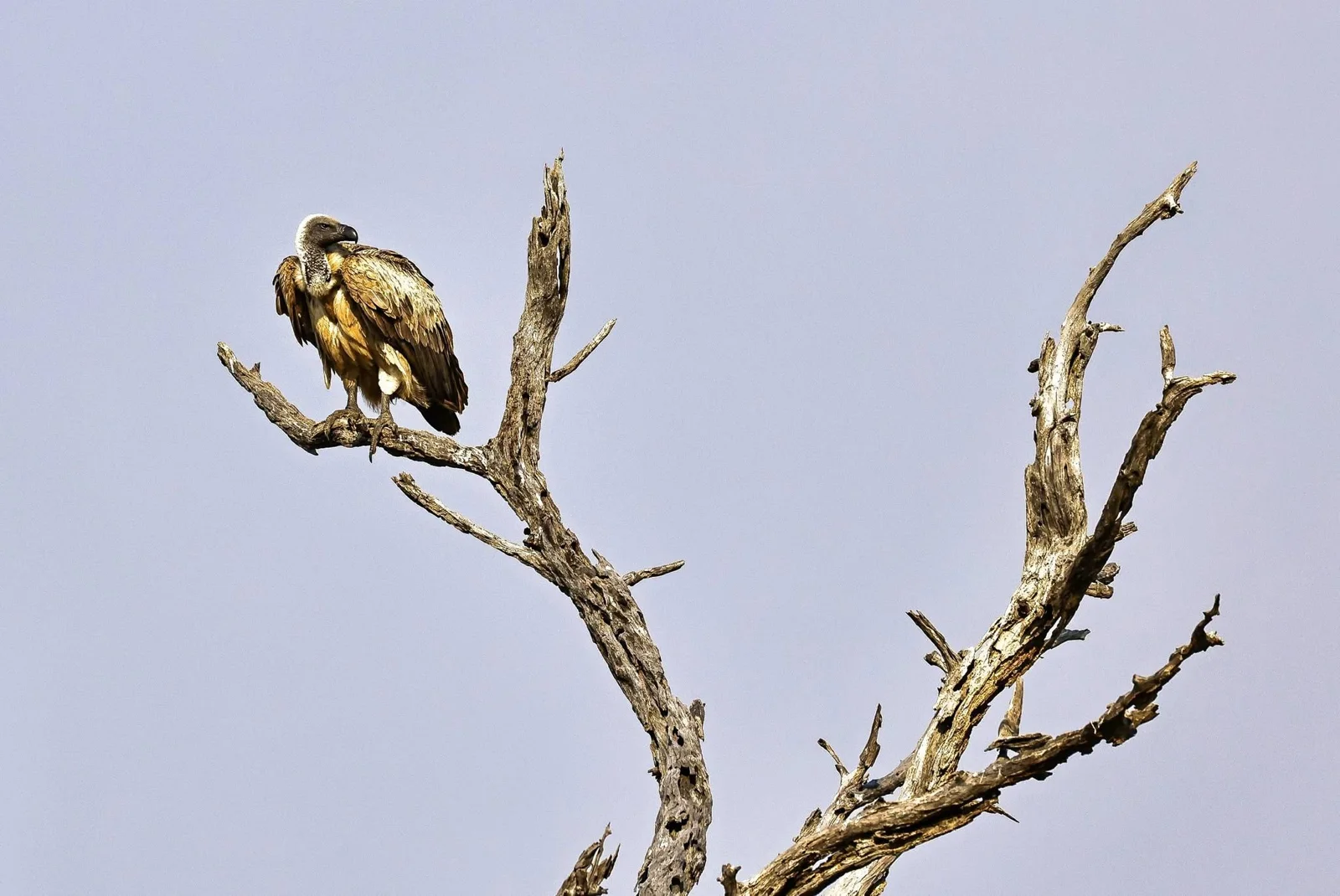
The Cape and White-backed Vultures are the pair that cause trouble, mostly by looking alike at a distance. The IUCN factsheet for the Cape Vulture says the White-backed is smaller and usually darker, with more streaking and a different wing pattern. Where they breed separates them as well. Cape Vultures nest in colonies on cliffs, while the Atlas says White-backed Vultures prefer tall trees for roosting and breeding.
The White-headed Vulture is the only African vulture whose sexes differ clearly in the field: the adult female has white secondaries and the adult male dark ones. The Bearded Vulture is a scavenger that specialises in bone and marrow, 70% of its diet according to the Atlas, which keeps it out of competition with the others: it eats what everyone else leaves behind, the skeleton. The Palm-nut Vulture is the odd one out: palm fruit forms a major part of its diet.
Where each one is reliable
Cape Vulture. Blouberg is the largest known colony. At Kransberg, numbers fell from 916 pairs in 1983 to 579 in 2003, then rose to 849 pairs by 2017, according to the IUCN assessment. SANParks’ birding page for Marakele National Park sends visitors up a mountain pass to the park’s Cape Vulture colony. Potberg, which guests at De Hoop can visit, is now the only breeding colony in the Western Cape, with 32 pairs in 1965 and 69 in 2012. On the Wild Coast, a colony uses the cliffs of the Msikaba River near Mkambati. The colonies have their own guide: Cape Vulture colonies and vulture restaurants.
White-backed and Lappet-faced. The Atlas found the White-backed Vulture most often in conserved areas, with the highest reporting rates in Etosha, the Kalahari Gemsbok Park (now the South African side of the Kgalagadi) and Kruger. The Lappet-faced is commonest in Botswana and Namibia; road counts produced 8.3 sightings per 1,000 km around Etosha. In Kruger it is one of the Big Six birds.
White-headed and Hooded. The Atlas put about 100 breeding pairs of White-headed Vulture in Kruger and the conservation areas next to it, and perhaps 500 pairs in southern Africa as a whole. In the Kalahari Gemsbok Park it made up only 4 of 607 vulture sightings. The Hooded Vulture is common only in a few places, the Okavango and Kruger among them. The Atlas figures date from the 1980s and 1990s, so treat them as a guide to where to look rather than how many birds are left.
Bearded Vulture. The bone-eater keeps to the high country. In southern Africa it survives only as an isolated population in the Maloti-Drakensberg. A 2013 paper in Bird Conservation International found 109 occupied territories and estimated 352 to 390 birds.
Palm-nut Vulture. In South Africa it breeds only at Kosi Bay and Mtunzini, with about 5 pairs at Kosi Bay and 4 at Mtunzini when the Atlas was written. In northern KwaZulu-Natal it lives in groves of Raphia palms, while elsewhere in Africa it follows the oil palm, which is a very unvulture-like thing to follow.
Hides and vulture restaurants
A vulture restaurant is a site where uncontaminated carcasses are put out on purpose as a safe extra food supply, and several have hides open to visitors. It is the one restaurant where nobody complains about the menu.
At Giant’s Castle in the Drakensberg, Ezemvelo KZN Wildlife runs a hide for Bearded and Cape Vultures. Visitors bring their own 4×4, the hide takes 6 people, and booking is essential (033 845 1000). Most visits are from May to September, while the vultures are breeding and food is put out. A 2017 trip report found winter slots booked years ahead, so this is one booking to make before the flights.
VulPro, near Hartbeespoort Dam, has a photographic hide about 12 m from its vulture restaurant, by booking only, and wild Cape Vultures breed on the Magaliesberg cliffs nearby. In Golden Gate Highlands National Park, SANParks’ Vulture’s Restaurant hide on the self-drive Oribi Loop overlooks carcasses put out for Cape and Bearded Vultures. The Mzimkulu Vulture Hide is 8 km from Underberg.
There is no restaurant in the Kgalagadi, so the vultures there cater for themselves, but Lappet-faced and White-backed Vultures are part of its raptor list; the Kgalagadi birding guide covers which waterholes to sit at.
Where to stay
Places in the directory that name vultures, or sit beside a colony or feeding site:
| Place to stay | Where | For birders | From |
|---|---|---|---|
| Cape Vulture Lodge | Blyde River Canyon area, near Hoedspruit | BirdLife Recommended; sunset outing to a Cape Vulture colony | R2,000 pp sharing B&B (2026) |
| Lekkerwater Beach Lodge | De Hoop Nature Reserve, Western Cape | Visits to the Potberg Cape Vulture colony | R7,700 pp sharing, all meals (2026) |
| GweGwe Beach Lodge | Mkambati, Wild Coast | Msikaba Cape Vulture colony nearby; 300+ species | R3,825 pp, SADC guests (2026) |
| Sani Valley Nature Lodges | Sani Pass road, near Himeville | Vulture feeding site; Bearded and Cape Vultures | Ask the lodge |
| Mkomazana Mountain Cottages | Sani Pass, KwaZulu-Natal | BirdLife Recommended; bookable bird guide; Bearded Vulture | Ask the lodge |
| Kosi Forest Lodge | Kosi Bay, KwaZulu-Natal | Guided Raphia forest walk for Palm-nut Vulture | R3,745 pp sharing, full board (2027) |
| Plains Camp @ Rhino Walking Safaris | Kruger National Park | BirdLife Recommended; names Lappet-faced Vulture | R9,830 pp sharing, full board |
| Imagine Africa Luxury Tented Camp | Balule, near Hoedspruit | Specialist birding safaris; Lappet-faced Vulture | Ask the lodge |
| Chinaka Game Lodge | Vivo, Limpopo | Own list with Cape, Hooded, Lappet-faced, White-backed | Ask the lodge |
| Chipinda Pools Campsite | Gonarezhou, Zimbabwe | Runde River; Lappet-faced Vulture named | US$55 per campsite (local rate) |
| Safari House | Etosha Heights, Namibia | Private hide; White-backed and Lappet-faced Vultures | NAD 31,131 per house, fully inclusive |
Vulture numbers and Red List categories change as new counts come in, and several figures here date from the Atlas fieldwork of the 1980s and 1990s. Facts were checked on 14 November 2026 with BirdLife South Africa, BirdLife International, the IUCN, SANParks, Ezemvelo KZN Wildlife, VulPro, the Atlas of Southern African Birds and the Birding Dispatch listings. Book hides well ahead and check access with the park or reserve before you go.
More from the Journal
 Woodpeckers of Southern Africa, Including the One That Doesn’t Need TreesSouthern Africa's woodpeckers, from the Cardinal in every bushveld tree to the Ground Woodpecker that lives on treeless mountain slopes and eats almost nothing but ants.
 Where to See a Taita Falcon: the Strijdom Tunnel, the Blyde Cliffs and the Batoka GorgeA stocky falcon smaller than a pigeon, a handful of cliffs and surveys that keep coming back empty. Where it still nests, how to look, and the 2 roosts beside its cliffs.
 Where to See a Southern Bald Ibis: the Breeding Cliffs, Dullstroom, Wakkerstroom and LesothoA red-capped grassland ibis that nests on cliffs over waterfalls and feeds on burnt veld and maize stubble. The colonies you can watch, the fields to scan, and where to stay.
The Pigeon Post
Every Thursday: 1 bird, 1 place to go and 1 place to stay, by email. Sign up and get our printable checklist of the 163 endemics of southern Africa.