
The 6 Fynbos Endemics: Where to Find Every One Near Cape Town
Cape Sugarbird, Orange-breasted Sunbird, Cape Rockjumper, Cape Siskin, Victorin's Warbler and Protea Canary, with the 4 sites that cover them and the one bird that takes extra effort.
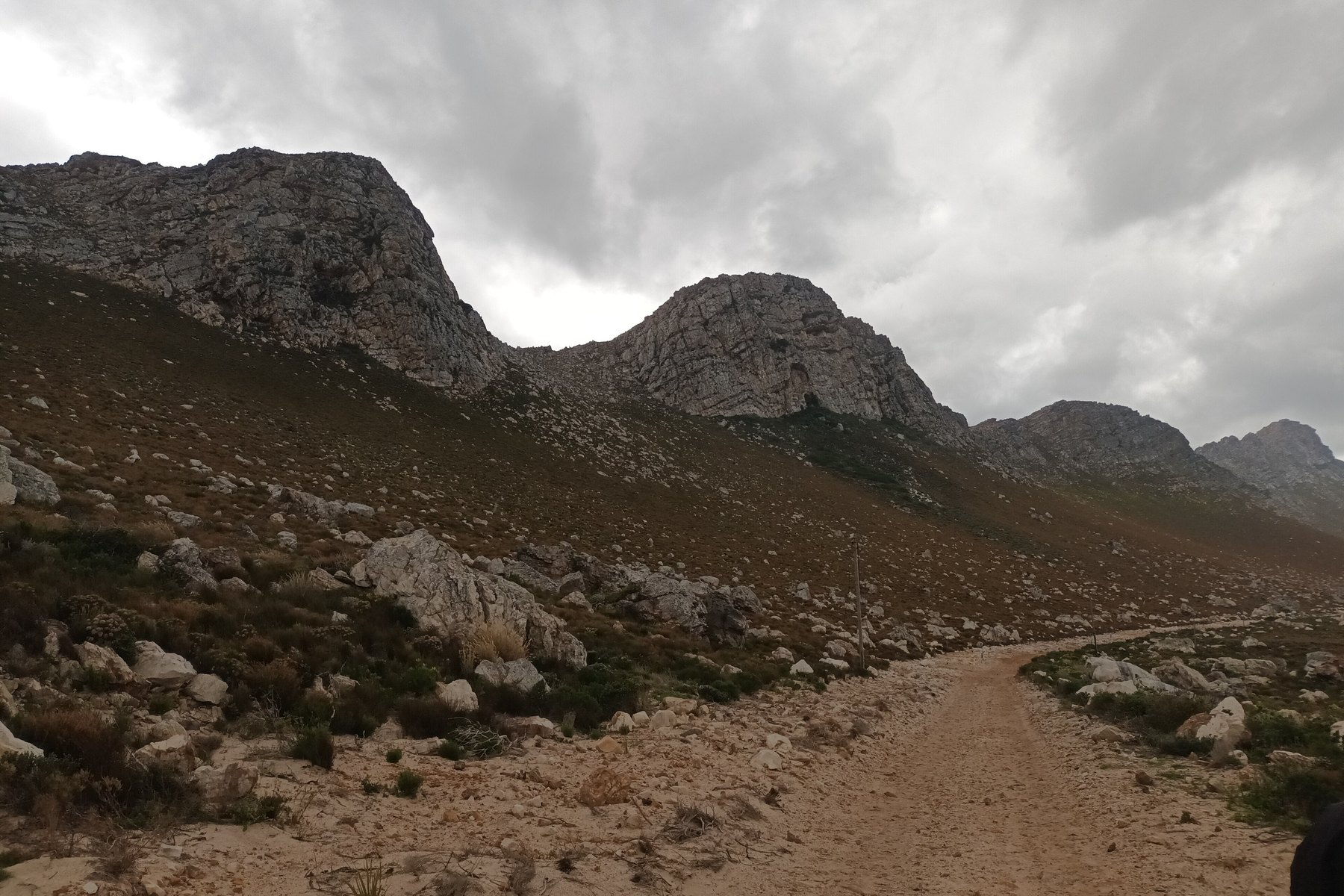
The fynbos of the south-western Cape is one of the richest plant kingdoms on earth, and 6 birds live nowhere else. A 2016 paper in Bird Conservation International lists them: Cape Sugarbird, Orange-breasted Sunbird, Cape Rockjumper, Cape Siskin, Victorin’s Warbler and Protea Canary. Most visiting birders want all 6, as birders do, and most of them can be found within about an hour and a half of central Cape Town.
But 3 of them do not live on the Cape Peninsula at all, which seems a little unsporting. Table Mountain and Kirstenbosch give you the sugarbird and the sunbird with almost no effort. For the rockjumper, the warbler and the canary you have to cross False Bay to the mountains on the other side.
The short answer
Do Kirstenbosch first for Cape Sugarbird and Orange-breasted Sunbird. Then drive Clarence Drive (the R44) from Gordon’s Bay to Rooi-Els for Cape Rockjumper and Cape Siskin, and carry on to Harold Porter National Botanical Garden in Betty’s Bay for Victorin’s Warbler. That is 5 of the 6 in a long day. Protea Canary is the hard one: it is scarce near Cape Town, so either give it a separate morning with a local guide or look for it further inland in the drier mountain fynbos.
At a glance
| Endemic | Best site near Cape Town | How hard |
|---|---|---|
| Cape Sugarbird | Kirstenbosch Fynbos and Erica Gardens | Easy, most of the year |
| Orange-breasted Sunbird | Kirstenbosch, Harold Porter, Rooi-Els | Easy, most of the year |
| Cape Rockjumper | Rooi-Els, the track south of the village | Moderate; listen for the alarm call |
| Cape Siskin | Rooi-Els hillside, Harold Porter, Cape Point | Moderate |
| Victorin’s Warbler | Harold Porter, the riverside bushes above the garden | Hard to see, easy to hear |
| Protea Canary | Helderberg, Paarl Mountain, the Cederberg | Hard; scarce near Cape Town |
Why these 6 matter
The 2016 assessment found that mature mountain fynbos is dominated by just 2 birds, Cape Sugarbird and Orange-breasted Sunbird, both nectar feeders that follow the flowering proteas and ericas the way regulars follow a happy hour. The other 4 each need a particular corner of the habitat. Cape Rockjumper wants open, rocky ridges and slopes. Victorin’s Warbler lives in tall, damp fynbos along streams. Cape Siskin favours areas dominated by restios, and Protea Canary needs open, often dry fynbos with scattered tall proteas.
The same study is the reason to go soon rather than later. Comparing the 2 bird atlas periods, it found that Cape Rockjumper and Protea Canary had both lost more than 30% of their range and reporting rate in about 20 years, and it linked the decline to warming in the fynbos since 1960.
Kirstenbosch: the sugarbird and the sunbird
BirdLife South Africa’s GoBirding guide recommends the Fynbos and Erica Gardens at Kirstenbosch, which are easiest to reach from the Rycroft Gate because that gate sits level with the fynbos section. Orange-breasted Sunbird and Cape Sugarbird can be seen there for most of the year. The birds are used to people, far more than the rockjumpers will be, so this is also the best place on the trip for close photographs.
Kirstenbosch charges R270 for international adults and R110 for South African and SADC residents with ID in 2026 and 2027, according to SANBI. Tickets are bought online, because the garden no longer takes cash. Go early, before the tour buses, and you will also find Cape Spurfowl on the lawns and the occasional Cape Siskin in the Fynbos Garden.
For more on the sunbird, see our guide to the sunbirds of southern Africa.
Rooi-Els: the rockjumper
GoBirding rates the mountain slopes just south of Rooi-Els village as possibly one of the best places to see Cape Rockjumper, a claim the rockjumpers do their best to test. The drive there along Clarence Drive is part of the appeal, with False Bay below you and klipspringer on the boulder slopes above.
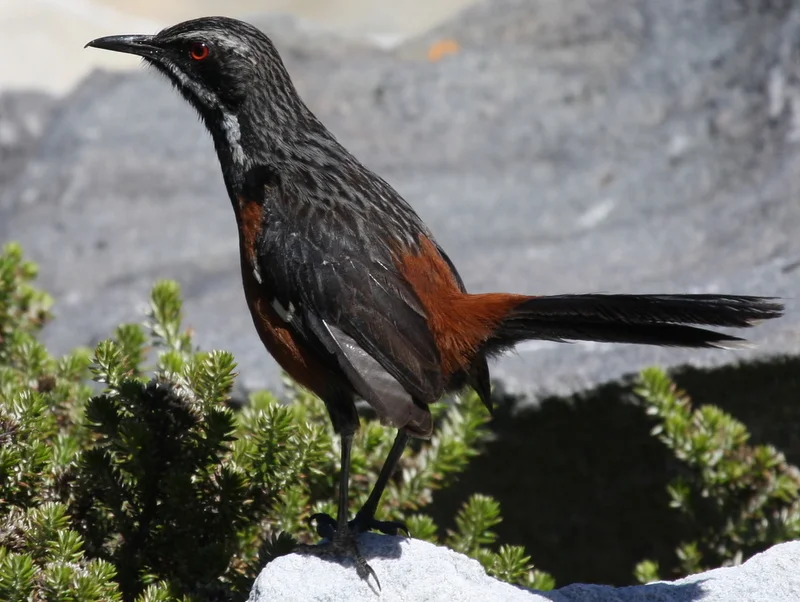
In Rooi-Els, take Porter Drive to the gate where the paving turns to gravel and walk the track south. Check the telephone lines for Cape Rock Thrush and the hillside for Orange-breasted Sunbird and Cape Siskin. From the lone telephone pole, start scanning the slopes for rockjumpers. They feed on the ground in family groups and hop up onto boulders, and the way to find them is their piercing alarm call. Red-winged Starlings are similar in size and colour, so check twice; the starlings are not trying to help. GoBirding says rockjumpers become uncommon beyond the second driveway down to the sea, so turn round there.
There is no entry fee. The land is private property even though it is unfenced, so stay on the track, and playback is strictly forbidden at this site.
Harold Porter: the warbler and the siskin
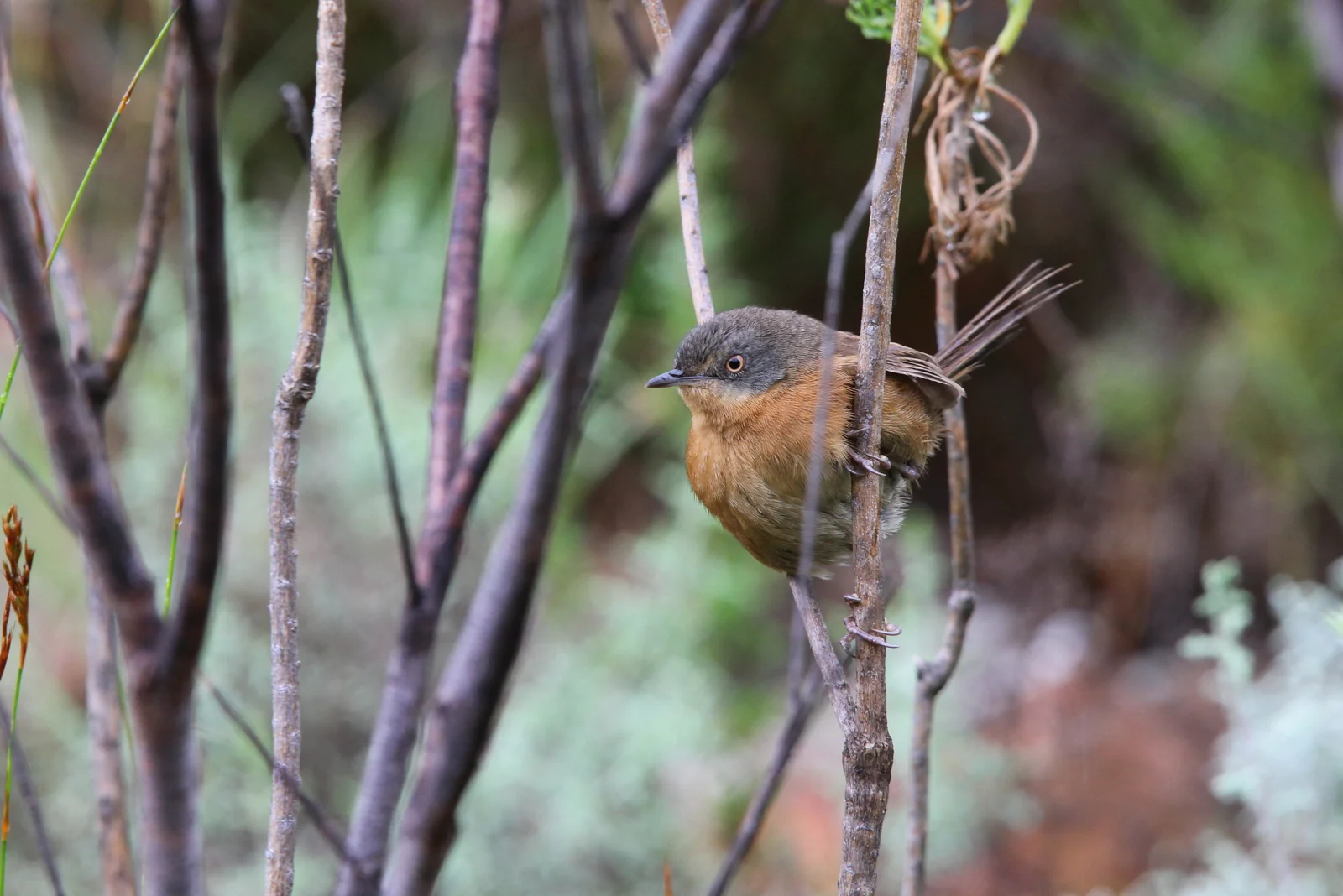
Harold Porter National Botanical Garden in Betty’s Bay is a short drive further along the R44, and GoBirding says it holds 4 of the 6 fynbos endemics. The planted beds of proteas and ericas bring in Cape Sugarbird and Orange-breasted Sunbird. The prize is Victorin’s Warbler, in the riverside bushes at the top of the garden, where Cape Siskin and Cape Grassbird also come down from the mountain.
Victorin’s Warbler is a skulker. You will hear its repetitive song long before you see it, and some tour groups leave with a heard-only record, which counts on some lists and in no photo album. Find the singer, stand still and give it time. The Disa Kloof Trail to the waterfall is a short extra walk for forest birds such as Cape Batis and Olive Woodpecker. Entry fees are small; check the current rate with SANBI.
Sir Lowry’s Pass and the Helderberg
If Rooi-Els does not produce a rockjumper, try the Hottentots Holland Mountains. A site guide by Peter Ryan of the FitzPatrick Institute at the University of Cape Town describes rockjumpers as common along the crest between the viewsite at the top of Sir Lowry’s Pass and the old pass cannons, with Victorin’s Warbler in taller, damp fynbos on the slopes. The same guide says the Helderberg Nature Reserve above Somerset West has the same birds plus Protea Canary, though the canary is scarce there and the rockjumpers make you earn them with a long climb up.
Protea Canary: the one that takes work
Protea Canary, sometimes called Protea Seedeater, is the endemic most visitors miss. Tour operators describe it as one of the hardest endemics in South Africa to see, and it is absent from the Cape Peninsula. Peter Ryan’s guide notes that it is most common along watercourses in the dry mountain fynbos of the Cederberg. GoBirding also lists it for Paarl Mountain, with a warning to separate it from Streaky-headed Seedeater by its double wing bar, black throat and pinkish bill.
If the canary matters to you, and by now it probably does, book a local bird guide for that morning. BirdLife South Africa’s GoBirding pages for these sites list guiding companies including Birding Africa, Birding Ecotours and Cape Eco-tours.
When to go
The 2 nectar feeders are around for most of the year, but the proteas and ericas in flower decide where they are on a given day, so ask at Kirstenbosch which beds are flowering. Winter brings Cape rain and wind, which make rockjumpers and warblers harder to hear. Any season works for a dedicated birder; calm, dry mornings work best whatever the month. Southern Right Whales are in False Bay from about July to December, which makes Clarence Drive a better drive in those months, even if whales do not go on the bird list.
The verdict
Give it 2 days. Day 1: Kirstenbosch at opening, then Rooi-Els and Harold Porter in the afternoon. Day 2: Sir Lowry’s Pass or Rooi-Els again for anything you missed, and a guided morning for Protea Canary. Do not leave the warbler until the last hour. It is the one bird that rewards patience more than distance.
Where to stay
Places to stay near the sites in this guide, with what each offers a birder:
| Place to stay | Where | For birders | From |
|---|---|---|---|
| Avian Leisure | Simon’s Town, near Cape Point | BirdLife Recommended, feeders, Cape Sugarbird, Orange-breasted Sunbird | Ask the lodge |
| Oudebosch Eco Cabins | Kogelberg Nature Reserve, near Kleinmond | Mountain fynbos and forest, hide on the Rooisand Ramble | R1,730 a studio for 2 (off-peak) |
| de Pakhuys | Near Clanwilliam, Cederberg | Names Protea Canary, Cape Rockjumper, Cape Siskin | Ask the lodge |
| Kromrivier Cederberg Park | Cederberg | In the Cederberg Important Bird Area, Cape Sugarbird | R1,250 a tent, 1 guest (winter 2027) |
Fees, access and bird reports change. Facts were checked on 9 November 2026 with BirdLife South Africa’s GoBirding guides to Kirstenbosch, Rooi-Els and Harold Porter, SANBI’s 2026 to 2027 fees, Peter Ryan’s south-western Cape site guide and the 2016 Bird Conservation International assessment of fynbos endemics. Confirm fees and garden hours with SANBI before you go.
More from the Journal
 Woodpeckers of Southern Africa, Including the One That Doesn’t Need TreesSouthern Africa's woodpeckers, from the Cardinal in every bushveld tree to the Ground Woodpecker that lives on treeless mountain slopes and eats almost nothing but ants.
 Where to See a Taita Falcon: the Strijdom Tunnel, the Blyde Cliffs and the Batoka GorgeA stocky falcon smaller than a pigeon, a handful of cliffs and surveys that keep coming back empty. Where it still nests, how to look, and the 2 roosts beside its cliffs.
 Where to See a Southern Bald Ibis: the Breeding Cliffs, Dullstroom, Wakkerstroom and LesothoA red-capped grassland ibis that nests on cliffs over waterfalls and feeds on burnt veld and maize stubble. The colonies you can watch, the fields to scan, and where to stay.
The Pigeon Post
Every Thursday: 1 bird, 1 place to go and 1 place to stay, by email. Sign up and get our printable checklist of the 163 endemics of southern Africa.