
South Luangwa Birding: Carmine Banks, Night Drives and the Camps with Hides
Southern Carmine Bee-eater colonies on the Luangwa's sand banks, Pel's Fishing Owl on night drives, Lilian's Lovebird and Arnot's Chat in the mopane, and the 9 camps in the directory with hides and guides.
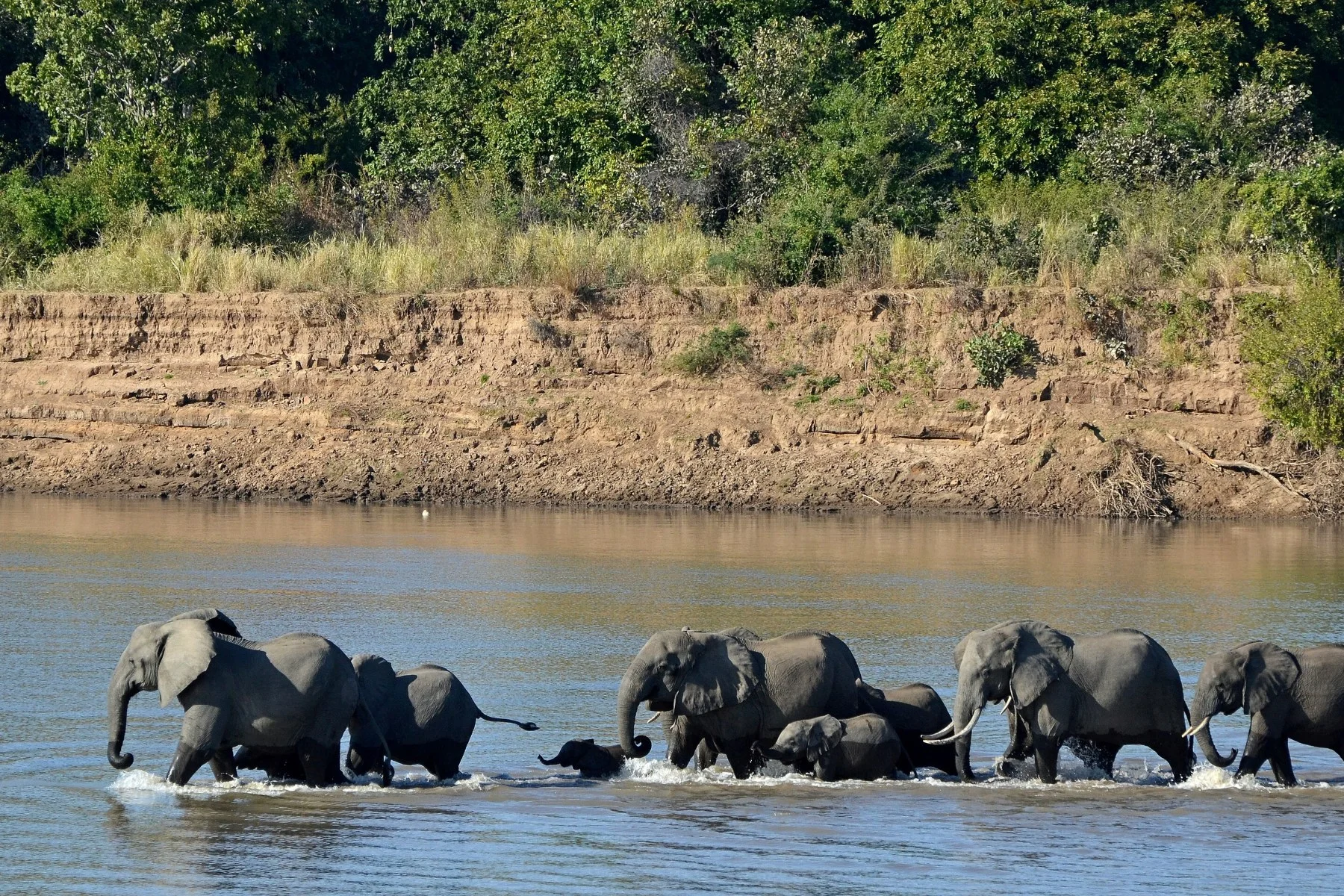
On 19 November 2025, a Naturetrek group drove across the damp floodplain in front of Kafunta River Lodge to the Luangwa and found the bank opposite pocked with hundreds of nest holes. Hundreds of Southern Carmine Bee-eaters flew past, perched by their burrows and fed overhead, until a Yellow-billed Kite took one of them, a reminder that a bee-eater colony is also a buffet. That colony is the picture most birders carry of South Luangwa, and the river that carves those banks is the reason the valley is worth a week.
South Luangwa National Park lies in eastern Zambia, reached from the airport at Mfuwe. The camps in the Birding Dispatch directory give more than 400 bird species for the area, and the Naturetrek group, birding twice a day for a week in November, recorded 182, which leaves plenty for the next visit. The park works on a simple pattern: the river and its lagoons, the floodplain grassland, and the mopane and mixed woodland behind.
The river and the carmine banks
The carmine colonies are a dry-season event, a short run with a very pink cast. Kaingo Camp and Mwamba Bush Camp, both run by Shenton Safaris, share a hide at a colony that is open in September and October, and Luambe Horizons, further north in Luambe National Park, gives the same 2 months for its nesting bee-eaters. Kulandila Camp has a raised spot on the riverbank for photographing nesting carmines, Sungani Lodge sets up a hide at a colony in season, and Dewclaw Safari Baobab Lodge can add a colony visit to its birding trips. The Naturetrek sighting shows birds still at a colony in late November. For how to watch a colony without flushing the birds, and the other rivers where they breed, see Southern Carmine Bee-eater colonies.
The river has more than bee-eaters, though they do hog the attention. The same report lists African Skimmers on a sandbank, White-crowned Lapwing, African Spoonbill, Saddle-billed Stork, Goliath Heron and African Fish Eagles on the banks. Where the falling river leaves sand and mud, it found Kittlitz’s Plover, Little Stint, Curlew and Marsh Sandpipers, Ruff, Black-winged Stilt and Collared Pratincole: the mudbank crowd, for anyone patient enough to scope it.
Night drives and Pel’s Fishing Owl
Most camps run drives after dark, and those are the drives for owls. On its third evening attempt at a lagoon, the Naturetrek group found a Pel’s Fishing Owl with its chick, a fair reward for 3 nights of staring at dark branches; the same week produced Verreaux’s Eagle-Owl in a tree by the lodge entrance, African Wood Owl, Pearl-spotted Owlet and Square-tailed Nightjar. Dewclaw Safari Baobab Lodge names Pel’s Fishing Owl among its birds, and so does Munyamadzi Camp, on a private reserve on the Luangwa. For the habits that give a roost away, see how to find Pel’s Fishing Owl.
The mopane and the woodland specials
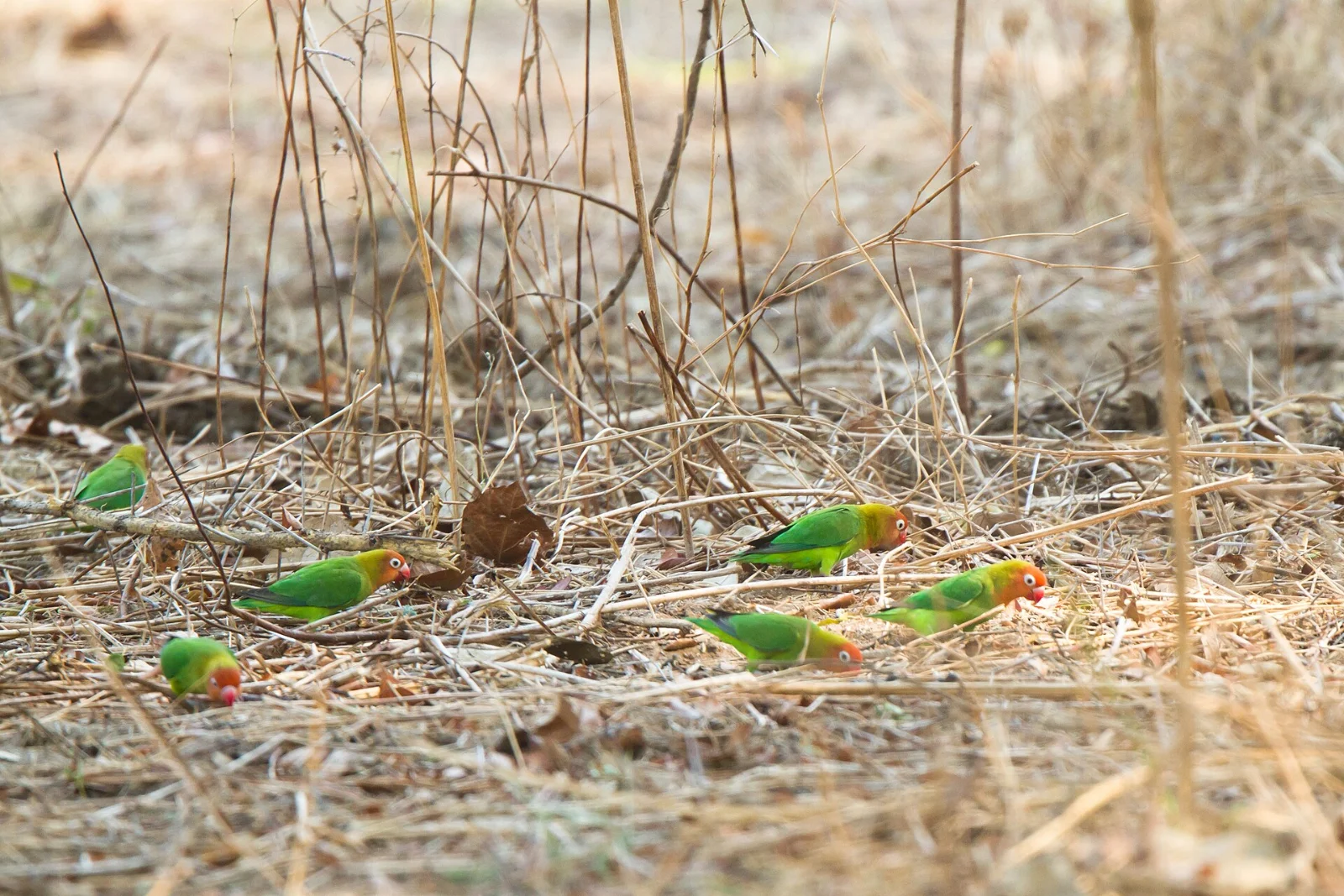
Away from the river, the woodland holds the Zambezian specials. Lilian’s Lovebird is the headline bird, and the Naturetrek group found them on the road into the park along with Broad-billed Roller, Swallow-tailed Bee-eater and White-crested Helmetshrike. It drove deeper into the mopane for Arnot’s Chat and Racket-tailed Roller, and found both: 2 targets, 2 ticks, no dips (the birder’s word for a bird you went for and missed).
The rest of the report reads like a wish list for a birder from further south: Meves’s Starling, Collared Palm Thrush, Eastern Nicator, Red-throated Twinspot at breakfast (a fine reason to let the coffee go cold), Orange-breasted Bushshrike, Bearded Scrub Robin, Green-winged Pytilia and Meyer’s Parrot. Raptors included Bateleur, Martial Eagle, Western Banded Snake Eagle, African Hawk-Eagle and a rare Ayres’s Hawk-Eagle, with Southern Ground Hornbill on the ground and in the trees.
November, the rains and the migrants
The calendar is the main planning decision. September and October are the colony months, but Naturetrek’s report notes that the temperature in October had risen to the mid-40s, so the colony comes with an oven. By mid-November the rains can arrive. In 2025 they came a few weeks early: the group landed in a torrential storm, the drive from Mfuwe to Kafunta was a slow one through potholes and mud, and the pontoon across the river was not in place, so the drive to the park took the longer route over the bridge.
The rains bring the summer birds. The November group logged 9 cuckoo species, among them African Emerald, Levaillant’s, Great Spotted, Jacobin and Klaas’s, along with Abdim’s Storks and a flock of Eurasian Hobbies. On 20 November its guide heard an African Pitta and the group saw it in thick scrub, which the report says was about a month earlier than expected, brought forward by the early rains. The pitta, evidently, does not keep a diary.
Check opening dates before you choose, because the birds and the camps keep different calendars. Kaingo Camp, inside the park, is open from 17 May to 5 November, so a late November trip needs a camp that is still open. Naturetrek’s late-November group stayed at Kafunta, outside the park near Mfuwe.
Choosing a camp
The directory’s camps fall into 3 groups. Near Mfuwe and the main gate, Kafunta River Lodge has 8 chalets and 2 suites above the floodplain, 45 minutes from Mfuwe Airport and 20 minutes from the park gate, with a photographic hide under the main deck facing a waterhole, guides who can shape a drive around birds, and breakfast before sunrise, which is when birders want it anyway. Dewclaw Safari Baobab Lodge is 3 km from the main gate and runs morning, afternoon and full-day birdwatching trips into the park with a professional birding guide included.
Inside the park to the north, Kaingo Camp has 6 chalets on the Luangwa, about 30 minutes from the airport to the gate and then 2 to 2.5 hours by game-drive transfer, with the camp’s own photographic hides as well as the shared carmine hide. Mwamba Bush Camp, near Kaingo, has 4 chalets beside the seasonal Mwamba River and a hide at the Last Waterhole in camp. Lion Camp has 10 suites above an oxbow lagoon in the north of the park and a hide at water level just off the main deck.
In the far south, Sungani Lodge is the park’s most southerly lodge, above a lagoon off the Luangwa, with its own airstrip; the listing notes that few other vehicles work this part of the park, so the bird at the next bend is likely to be yours alone. Kulandila Camp, its smaller sister, lies just upstream, about 20 minutes by light aircraft from Mfuwe or 3 hours by road. Outside the park, Munyamadzi Camp can arrange a specialist bird guide and a birding safari, and Luambe Horizons’ guides lead birdwatching outings in Luambe National Park, with road transfers from Mfuwe. For the rest of the country, including Kafue and the Choma endemic, see the Zambia birding guide.
Where to stay
The places to stay in and around South Luangwa, in the order they appear above:
| Place to stay | Where | For birders | From |
|---|---|---|---|
| Kafunta River Lodge | Near Mfuwe, Zambia | Waterhole hide, birding drives, breakfast before sunrise | US$470 pp, 5+ nights, low season (2026) |
| Kaingo Camp | Luangwa River, northern park, Zambia | Own hides, carmine hide in September and October | Ask the lodge |
| Mwamba Bush Camp | Mwamba River, northern park, Zambia | Last Waterhole Hide, seasonal carmine hide | Ask the lodge |
| Luambe Horizons | Luambe National Park, Zambia | Guided birding, carmine colonies, several hides | US$750 pp, fully inclusive (2027) |
| Kulandila Camp | Southern park, Zambia | Hides, riverbank spot for nesting carmines | Ask the lodge |
| Sungani Lodge | Far south of the park, Zambia | Seasonal carmine colony hide, own airstrip | Ask the lodge |
| Dewclaw Safari Baobab Lodge | 3 km from the main gate, Zambia | Birding trips with professional guide, Pel’s Fishing Owl | $100 a night, Zebra chalet, B&B |
| Munyamadzi Camp | Private reserve, Luangwa Valley, Zambia | Specialist bird guide on request, Lilian’s Lovebird | Ask the lodge |
| Lion Camp | Oxbow lagoon, northern park, Zambia | Water-level hide off the main deck | US$950 pp sharing, shoulder season (2026) |
Camp seasons, rates and river crossings change with the rains. Facts were checked on 14 November 2026 with Naturetrek’s November 2025 South Luangwa tour report and each listing on Birding Dispatch. Confirm opening dates, transfers and park fees with the camp before you book.
More from the Journal
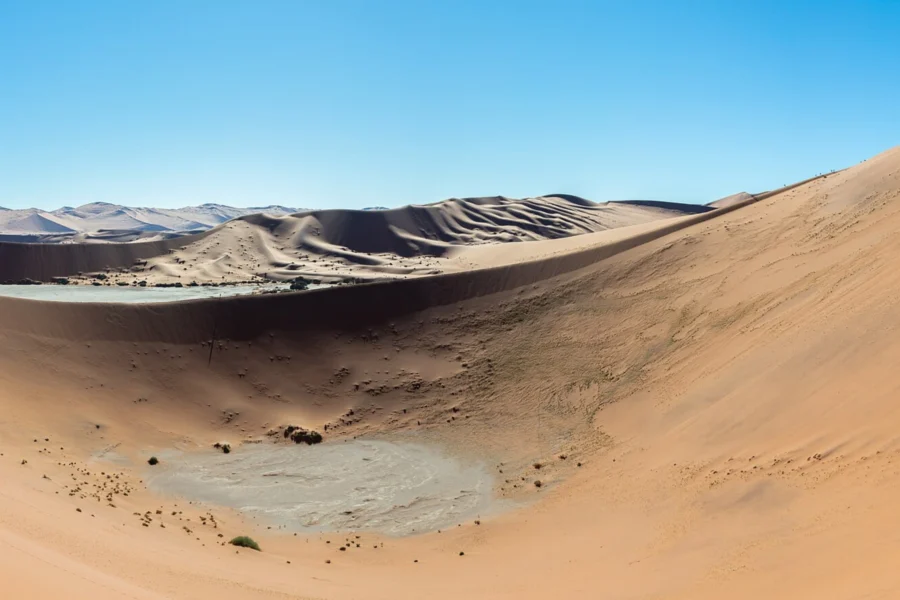 Namib-Naukluft and Sossusvlei for Birders: Dune Lark, Desert Raptors and the Naukluft SpecialsA lark that lives on the dunes and nowhere else, Lappet-faced Vultures nesting in the desert, coursers on the gravel plains and the northern specials around the Naukluft cliffs, in one of Africa's largest parks.
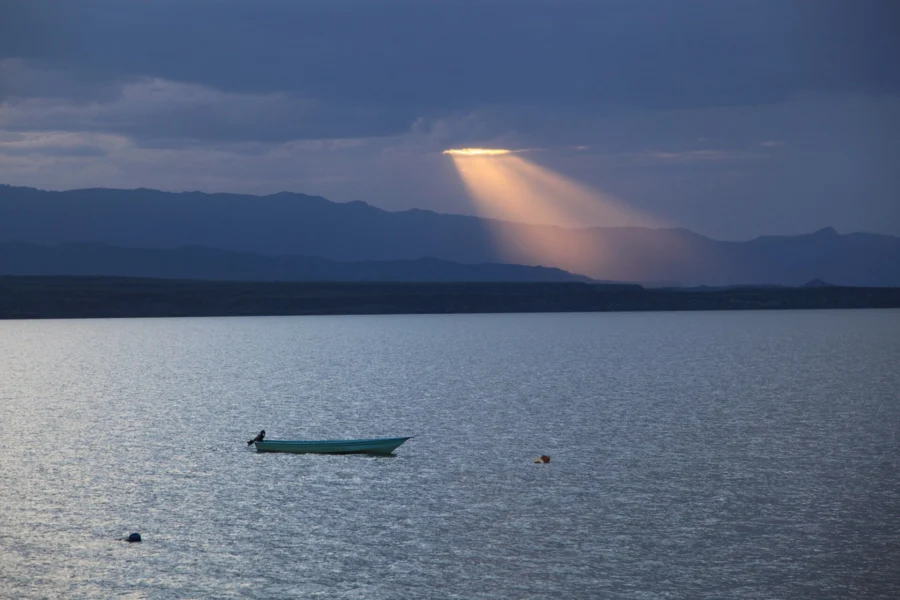 Lake Baringo and Lake Bogoria Birding: The Owl Walks, the Cliffs and the FlamingosA local guide who knows where every nightjar and eagle-owl slept last night, thorn scrub full of hornbills, a Goliath Heron colony on a rock, and the flamingo lake next door that keeps rising.
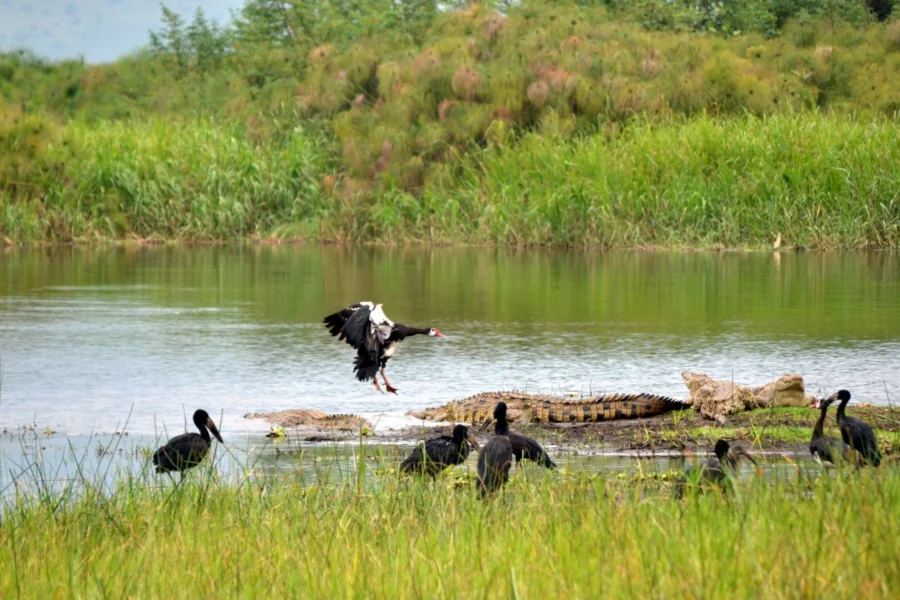 Akagera Birding: Rwanda’s Savanna, Lakes and Papyrus, and the Shoebill ChancesRed-faced Barbet in the southern woodland, Papyrus Gonolek and Carruthers's Cisticola in the swamps, a lake of hippos and lapwings, and a Shoebill that hides in the wetlands more than it shows.
The Pigeon Post
Every Thursday: 1 bird, 1 place to go and 1 place to stay, by email. Sign up and get our printable checklist of the 163 endemics of southern Africa.