
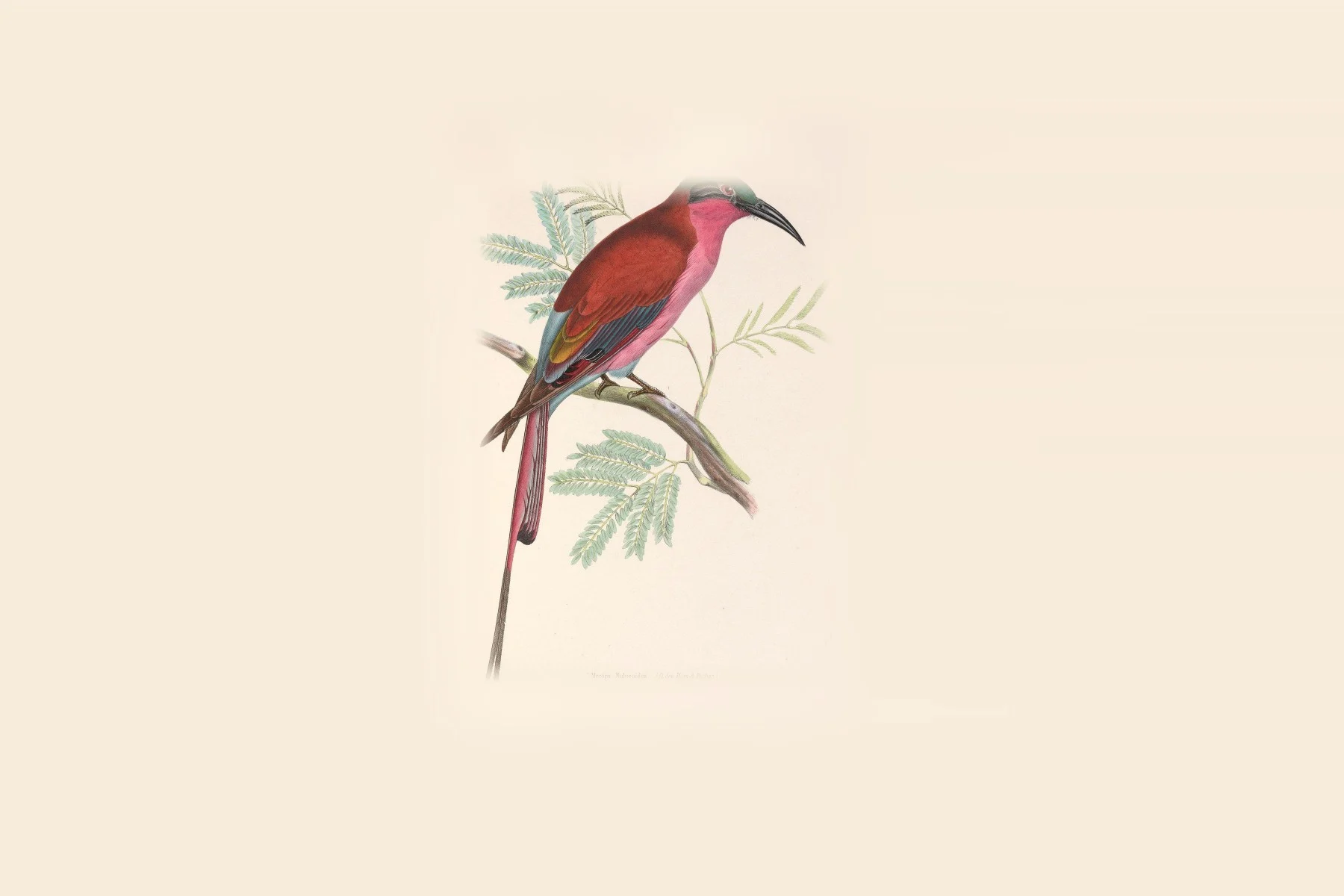
Southern Carmine Bee-eater Colonies: Where and When to See Them
The sand-cliff colonies on the Luangwa, the Zambezi, the Chobe and the Okavango Panhandle, the September to November window, how to watch without flushing the birds, and the camps with hides at the banks.
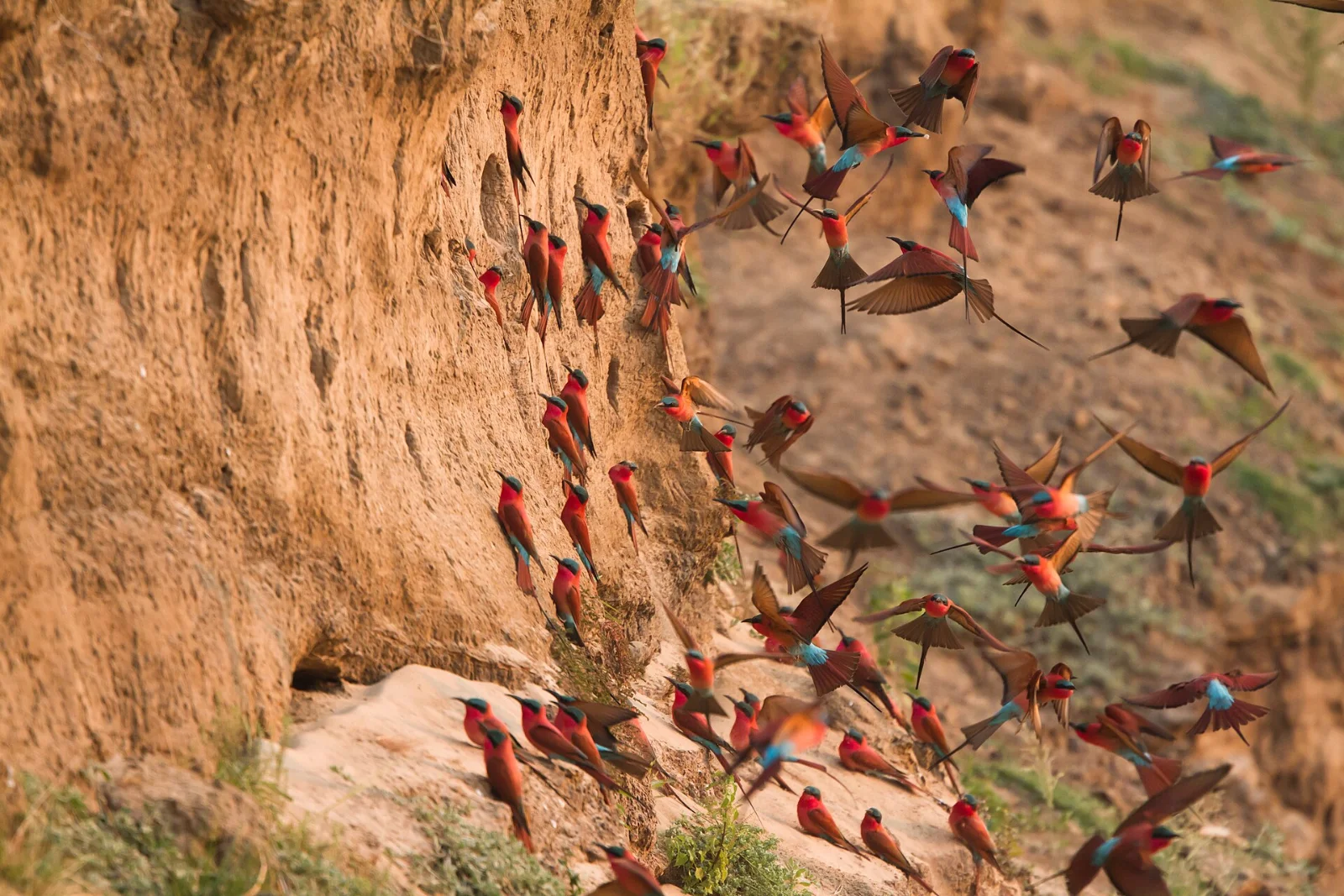
A Southern Carmine Bee-eater colony is a river bank turned into a block of flats. The birds dig their tunnels into a vertical face of fresh sand, hundreds of holes side by side, and the air in front of the cliff fills with pink-red birds coming and going. Most of the time the species is spread thinly across the savanna. For about 3 months a year it is packed into a few hundred metres of bank, and that is when a birder wants to be there.
The Atlas of Southern African Birds, the species account written by Keith Barnes and Marc Herremans, sets out the pattern. Birds arrive at the northern breeding grounds in August and September. Egg-laying is finished by November, and most young fledge by early December, before the heaviest rains. The birds favour high, freshly cut sand cliffs free of vegetation, the kind of bank a big meandering river leaves behind as it shifts course, which keeps the property market lively. In southern Africa they breed only in the tropical north: Zimbabwe, northern Botswana and the Caprivi, now Namibia’s Zambezi Region. North of the Zambezi, Zambia’s Luangwa Valley holds the best-known colonies of all.
At a glance
| Place | River | Colony months (source) | Stay with colony access |
|---|---|---|---|
| South Luangwa, Zambia | Luangwa | September and October hide season (Shenton Safaris) | Kaingo, Mwamba, Kulandila, Sungani |
| North Luangwa and Luambe, Zambia | Mwaleshi, Luangwa | September and October (Luambe Horizons) | Kutandala, Luambe Horizons |
| Middle Zambezi, Zimbabwe and Zambia | Zambezi | September to November (Time + Tide) | Mana Pools Safari Lodge, Mhara River Camp, Chula Island Camp |
| Zambezi Region, Namibia | Zambezi, Chobe | In season (Gondwana) | Zambezi Mubala Lodge and Camp, Chobe River Camp |
| Okavango Panhandle, Botswana | Okavango | Spring (Xaro Lodge) | Xaro Lodge, Drotsky’s Cabins |
How a colony works
Each pair digs a burrow into the bank and nests in a chamber at the far end. The burrow runs 1 to 2 m into the earth, which is a great deal of digging for a bird named after its lunch, and the clutch is 2 to 5 eggs. The colony is dense and loud, and it is easily disturbed: the Atlas warns that colonies are readily abandoned, and that some outside Zimbabwe’s national parks were exploited for food by rural people until they disappeared. The larger colonies in Zimbabwe and Botswana, its authors wrote, merit conservation measures.
Not every colony is on a cliff. In the Okavango, the Atlas notes, some of the largest colonies are on flat sand rather than vertical banks, the birds digging straight down instead.
The species makes what the Atlas calls a 3-stage migration. After breeding, from December, the birds become less gregarious and spread south over northern and eastern Botswana and into Limpopo and Mpumalanga, where numbers peak in January and no breeding takes place. Ringed birds from Zimbabwean colonies have been recovered there. Most leave the region in March for equatorial Africa. So a carmine in Kruger in January is a bird on its summer break, one that bred on the Zambezi or further north in October.
South Luangwa
The Luangwa is a big, meandering sand river, the kind the Atlas describes as typical of the birds’ nesting sites: prime real estate, in other words. Several camps in the directory have hides at colonies, and they work slightly different stretches of the park.
Shenton Safaris runs 2 camps in the north of the park and gives more than 400 species for the area. Kaingo Camp has 6 chalets on the Luangwa River and its own photographic hides, and guests share a hide at a carmine colony that the operator opens in September and October. Kaingo is open from 17 May to 5 November. Nearby, Mwamba Bush Camp has 4 chalets on the seasonal Mwamba River, the Last Waterhole Hide in camp and the same seasonal access to the bee-eater hide; it closes on 31 October. From Mfuwe Airport, allow about 30 minutes to the park gate and a further 2 to 2.5 hours on a game-drive transfer.
In the far south of the park, Sungani Lodge is the most southerly lodge in South Luangwa, above a lagoon off the river. In season it sets up a photographic hide at a carmine colony, and it has its own airstrip, with the light-aircraft transfer from Mfuwe included. Its smaller sister camp, Kulandila Camp, lies just upstream with 4 raised tented suites. Kulandila guests can use the operator’s network of photographic hides, among them a raised spot on the riverbank for photographing nesting bee-eaters, and the camp serves an early breakfast before the morning outing. The flight from Mfuwe to the Sungani airstrip takes about 20 minutes, then a 15-minute drive; by road from Mfuwe it is about 3 hours.
North Luangwa and Luambe
North Luangwa is the wilder end of the valley. Kutandala Camp, run by Classic Zambia, has 5 tents in riverine woodland on the Mwaleshi River, below the Muchinga Escarpment. The operator lists hide visits for camp guests, with hides at bee-eater nesting banks and at animal crossings on the river, and describes birding along 3 river systems.
Between the 2 big parks, Luambe National Park is small and rarely visited. Luambe Horizons has 4 tented rooms on the Luangwa, and its guides lead outings to watch the nesting carmine colonies, which it says are active in September and October. It also has several photographic hides, including a hide facing a hippo pod, for a change of subject. The 2027 published rate is from US$750 per person per night, fully inclusive, with road transfers from Mfuwe.
The Middle Zambezi
The Zambezi was once lined with colonies. The Atlas records that large numbers were lost when Lakes Kariba and Cahora Bassa flooded the river valley. What survives is concentrated on the free-flowing stretch below Kariba, where BirdLife Zimbabwe’s account of the Middle Zambezi Important Bird Area puts the Southern Carmine Bee-eater population at about 10,500 birds. Time + Tide gives September to November for the colonies on this stretch.
On the Zimbabwe bank, Mana Pools Safari Lodge names Narina Trogon, Giant Kingfisher and Spotted Creeper among its birds, and Mhara River Camp names African Pitta and Narina Trogon. Across the river in Zambia, Chula Island Camp in the Lower Zambezi National Park has a bird guide on staff and names Lilian’s Lovebird, African Fish Eagle and African Pitta. None of the 3 advertises a colony hide, so ask before booking which banks are active that year and how close the boats go. For the walking rules and the camps in more detail, see Mana Pools birding.
Namibia’s Zambezi Region and the Chobe
The eastern Zambezi Region is the only part of Namibia where the bee-eaters breed, which gives this narrow strip of the country a monopoly. On the Kalimbeza road, 40 km east of Katima Mulilo, Zambezi Mubala Lodge runs a guided walk of about 3 hours to a carmine colony in season, for at least 2 people and booked at the lodge. Rooms are from N$3,541 per person sharing, bed and breakfast. Its neighbour, Zambezi Mubala Camp, has 8 self-catering safari tents from N$1,150 per person sharing, and its guests can join the same walk, booked at reception. Both run a boat cruise of about 3 hours that names herons, pelicans, egrets, Lesser Flamingo and African Fish Eagle.
Further south, Chobe River Camp, 4 km from the Ngoma border post, runs a 3-hour birding drive that depends on the river level, and boat trips of about 3 and 6 hours. On the Botswana side, Birding Ecotours lists colonies of Southern Carmine and White-fronted Bee-eaters among the regular sights on its afternoon Chobe cruises, with African Skimmers and African Fish Eagles. The Chobe River birding guide covers the river in full.
The Okavango Panhandle
The Atlas gives the Okavango its highest reporting rate for the species, 42.7%, nearly 3 times that of any other vegetation type. In spring the floodwater drops, sandbanks appear, and the Panhandle’s colonies come into use at the same time as the African Skimmers nest on the bars, so the river seems to start nesting all at once.
Xaro Lodge, reached by boat from Samochima near Shakawe, says spring is the best season for Carmine Bee-eaters and nesting kingfishers. Downstream at Hauxa, about 10 km south of Shakawe, Drotsky’s Cabins has 10 timber chalets and 15 camping pitches beside the river, runs boat trips and names Carmine Bee-eater with African Skimmer and African Fish Eagle. For the rest of the Delta, see Okavango Delta birding.
Timing a visit
Plan on September and October. The birds are back by late August, the hides at the Luangwa camps open for these 2 months, and the river is low, so the banks are exposed and the camps are easy to reach. November still has active colonies, since laying runs to the end of that month, but the heat builds, some camps start to close (Mwamba on 31 October, Kaingo on 5 November) and the first rains can arrive. By early December most chicks have flown, and the block of flats stands empty.
Because the birds want freshly cut banks on rivers that shift their course, the colony a camp uses can change from year to year. That is why the camps talk about a colony “in season” rather than a fixed site. Ask the camp in July or August where the birds are digging, and whether its hide is on the active bank.
Watching without disturbing them
The Atlas is blunt about how sensitive these colonies are, and a bank full of birds is easy to empty. Use the hides where they exist, and where there is no hide, stay in the vehicle or the boat at the distance the guide sets. Do not walk along the top of the bank: the tunnels run back into the sand under your feet, and the edge collapses. Keep voices low and movement to a minimum while birds are going in and out. If the birds start circling high without landing, the group is too close.
The same rivers hold a second colonial bee-eater. BirdLife Zimbabwe lists White-fronted Bee-eater colonies at Mana Pools all year, and Birding Ecotours sees them on the Chobe with the carmines. After the colonies break up, the carmines spread out over the floodplains, and in Botswana’s Savuti, the Atlas notes, they regularly ride on the backs of Kori Bustards to catch the insects the big birds flush, which is about as close as a bird gets to a taxi.
Where to stay
The places in this guide, with what each offers a birder:
| Place to stay | Where | For birders | From |
|---|---|---|---|
| Kaingo Camp | Northern South Luangwa, Zambia | Own hides; shared carmine colony hide, September to October | Ask the lodge |
| Mwamba Bush Camp | Northern South Luangwa, Zambia | Last Waterhole Hide; seasonal bee-eater hide access | Ask the lodge |
| Sungani Lodge | Southern South Luangwa, Zambia | Seasonal photographic hide at a carmine colony | Ask the lodge |
| Kulandila Camp | Southern South Luangwa, Zambia | Riverbank hide for nesting bee-eaters, early breakfast | Ask the lodge |
| Kutandala Camp | Mwaleshi River, North Luangwa, Zambia | Hides at bee-eater nesting banks and river crossings | Ask the lodge |
| Luambe Horizons | Luambe National Park, Zambia | Guided outings to carmine colonies, photographic hides | US$750 pp, fully inclusive (2027) |
| Mana Pools Safari Lodge | Mana Pools, Zimbabwe | Narina Trogon, Giant Kingfisher, Spotted Creeper | Ask the lodge |
| Mhara River Camp | Chitake River, Mana Pools, Zimbabwe | African Pitta, Narina Trogon; guided birding walks | Ask the lodge |
| Chula Island Camp | Lower Zambezi, Zambia | Bird guide on staff, Lilian’s Lovebird, African Pitta | Ask the lodge |
| Zambezi Mubala Lodge | Kalimbeza, Zambezi Region, Namibia | Guided walk to a carmine colony in season | N$3,541 pp sharing B&B |
| Zambezi Mubala Camp | Kalimbeza, Zambezi Region, Namibia | Guests join the carmine colony walk; boat cruise | N$1,150 pp sharing, self-catering |
| Chobe River Camp | Near Ngoma, Zambezi Region, Namibia | 3-hour birding drive, river boat trips | N$2,600 pp sharing B&B |
| Xaro Lodge | Near Shakawe, Okavango Panhandle, Botswana | Carmine Bee-eaters in spring, Pel’s Fishing Owl, boat birding | US$450 a room DB&B |
| Drotsky’s Cabins | Hauxa, near Shakawe, Botswana | Boat trips; Carmine Bee-eater, African Skimmer | Ask the lodge |
Colony sites move from year to year, and camp seasons and rates change. Facts were checked on 13 November 2026 with the Atlas of Southern African Birds species account for the Carmine Bee-eater, BirdLife Zimbabwe’s Middle Zambezi IBA account, Time + Tide, Birding Ecotours and the Birding Dispatch listings. Confirm the active colony with the camp before you book.
More from the Journal
 Woodpeckers of Southern Africa, Including the One That Doesn’t Need TreesSouthern Africa's woodpeckers, from the Cardinal in every bushveld tree to the Ground Woodpecker that lives on treeless mountain slopes and eats almost nothing but ants.
 Where to See a Taita Falcon: the Strijdom Tunnel, the Blyde Cliffs and the Batoka GorgeA stocky falcon smaller than a pigeon, a handful of cliffs and surveys that keep coming back empty. Where it still nests, how to look, and the 2 roosts beside its cliffs.
 Where to See a Southern Bald Ibis: the Breeding Cliffs, Dullstroom, Wakkerstroom and LesothoA red-capped grassland ibis that nests on cliffs over waterfalls and feeds on burnt veld and maize stubble. The colonies you can watch, the fields to scan, and where to stay.
The Pigeon Post
Every Thursday: 1 bird, 1 place to go and 1 place to stay, by email. Sign up and get our printable checklist of the 163 endemics of southern Africa.