
Madikwe for Birders: The Kalahari Specials, the Plains and Where to Stay
Kalahari endemics on the Botswana border, sandgrouse that keep strict drinking hours on the plains, African Finfoot on the Marico River, and the 12 Madikwe lodges, villas and houses in the directory, with 2026 rates.
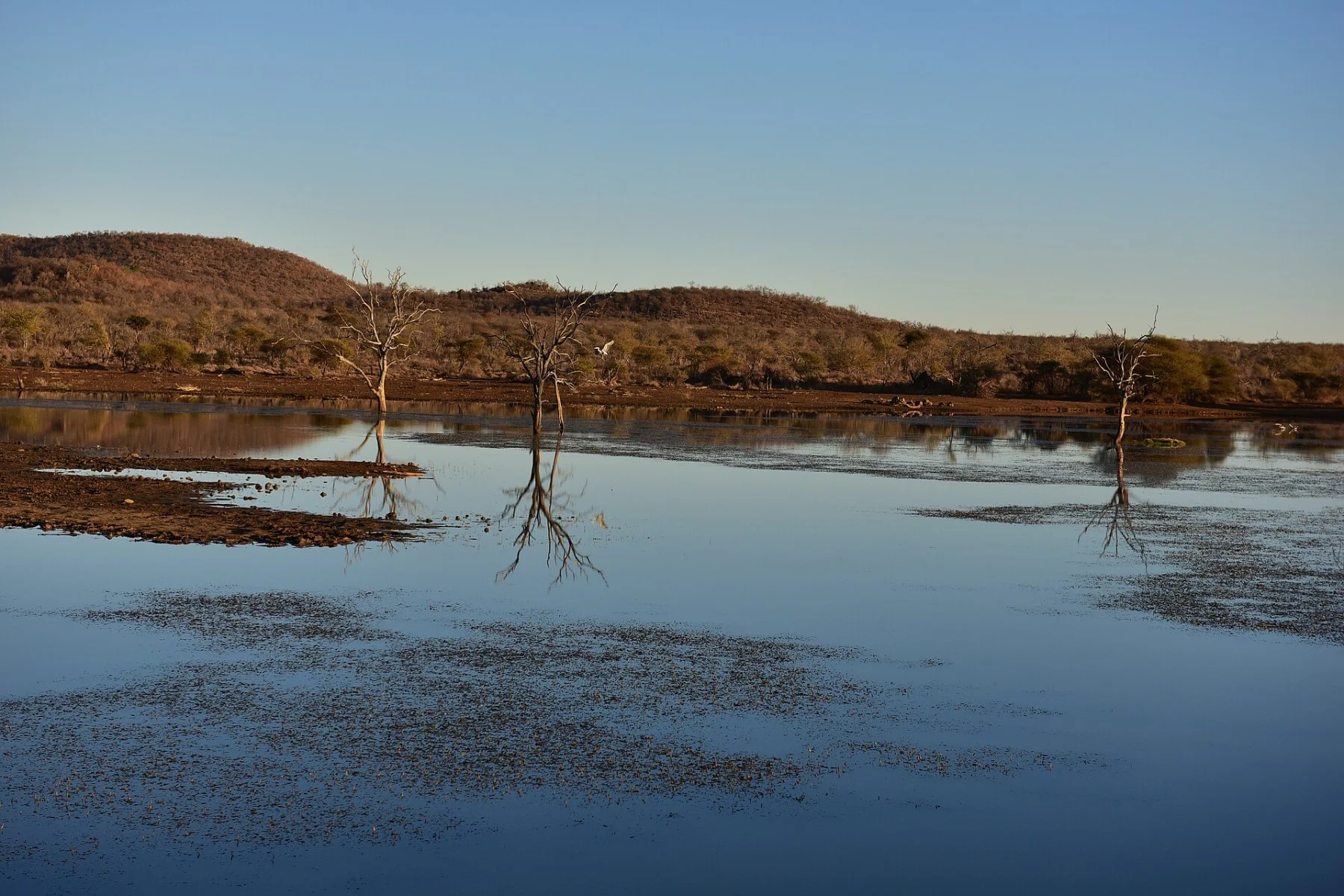
There are 3 seasonal pans on the Madikwe Plains, in the black clay country of South Africa’s North West, and in the early morning and evening the sandgrouse come in to them, as punctual as commuters. BirdLife South Africa’s GoBirding guide to the reserve, written by specialist bird guide Martin Benadie, says this is where to look for Yellow-throated Sandgrouse, a sought-after species, with Kori Bustard, Temminck’s Courser and Chestnut-backed Sparrow-Lark on the same open ground.
Madikwe covers about 75,000 ha against the Botswana border, with the Dwarsberg along its southern edge. GoBirding gives it about 350 bird species, and its draw for birders is the mix: Kalahari species of the western half of southern Africa, bushveld birds and a river. It is malaria-free, but there are no day visitors and no self-drive game viewing, so the lodge you choose decides how you bird, and the guide becomes the most important kit after the binoculars. These are the 12 Madikwe places to stay in the Birding Dispatch directory.
The places at a glance
| Place to stay | Where | For birders | From |
|---|---|---|---|
| Madikwe Dithaba Camp | Madikwe Safari Lodge | Bird checklist, drives can be shaped around birders | R20,000 pp sharing, mid-season (10 Jan to 19 Dec 2026) |
| Madikwe Kopano Camp | Madikwe Safari Lodge | Bird checklist, about 350 species for the reserve | R18,000 pp sharing, mid-season (10 Jan to 19 Dec 2026) |
| Madikwe Lelapa Camp | Madikwe Safari Lodge | Bird checklist, family suites, all ages | R16,000 pp sharing, fully inclusive (10 Jan to 19 Dec 2026) |
| Madikwe Elela Villa | Madikwe Safari Lodge | Birdwatching on private drives, sleeps 6 | R88,000 per villa for up to 6, mid-season (10 Jan to 19 Dec 2026) |
| Jaci’s Private Lodge | Marico River | Terrapin Hide at the waterline, river walks | R15,750 pp sharing (2026 high season) |
| Jaci’s Madikwe House | Jaci’s Private Lodge | Own vehicle and guide, Terrapin Hide, Thutlwa Lookout | R102,000 for 1 to 6 guests (2026 high season) |
| Kubu Villa at Jaci’s | Jaci’s, above the Marico River | Own vehicle and guide, Terrapin Hide | R72,000 for 1 to 4 guests (2026 high season) |
| Nare Villa at Jaci’s | Jaci’s, above its own waterhole | Own vehicle and guide, Terrapin Hide | R72,000 for 1 to 4 guests (2026 high season) |
| Morukuru River House | Morukuru concession, Marico River | Private guide and tracker, sleep-outs in the hide | R71,000 per house for 4 guests (low season 2026) |
| Morukuru Owner’s House | Morukuru concession, Marico River | Private guide and tracker, sleep-outs in the hide | R53,000 per house for 2 guests (low season 2026) |
| Morukuru Farm House | Morukuru concession | Private guide and tracker, sleeps 10 | R92,000 per house for 6 guests (low season 2026) |
| Impodimo Game Lodge | Madikwe | Underground hide beside the lodge waterhole | Ask the lodge |
The Kalahari mix
What sets Madikwe apart, GoBirding says, is the number of range-restricted species of the western half of southern Africa that are common residents here. Its list of these includes Double-banded Sandgrouse, Southern Pied Babbler, Ashy Tit, Barred Wren-Warbler, Burnt-necked Eremomela, Marico Flycatcher, Kalahari Scrub Robin, Great Sparrow, Monotonous Lark, African Red-eyed Bulbul and Shaft-tailed Whydah, the males of the last in full breeding plumage in summer and making sure everyone notices. Its key species add Black-faced Waxbill, Swallow-tailed Bee-eater and Crimson-breasted Shrike, sometimes in its rare yellow form, which rather defeats the name.
The habitats explain the variety: acacia thornveld, broad-leaved woodland on rocky outcrops, open grassy plains, the Marico River and its thickets, and dams, pans and small wetlands. Among the birds GoBirding calls ever present on game drives are Southern Yellow-billed and Red-billed Hornbill, Acacia Pied Barbet, Chestnut-vented Warbler, Violet-eared Waxbill, Red-crested Korhaan and Purple Roller.
Raptors are a strong suit, so keep looking up. Martial, Tawny, Verreaux’s and African Hawk-Eagle, Pale Chanting Goshawk and Brown Snake Eagle are recorded regularly, Wahlberg’s Eagle comes in summer, and White-backed, Lappet-faced and Cape Vultures are usually seen. Madikwe Safari Lodge adds Secretarybird to its list; the reserve is covered in where to see a Secretarybird.
The plains: sandgrouse, coursers and larks
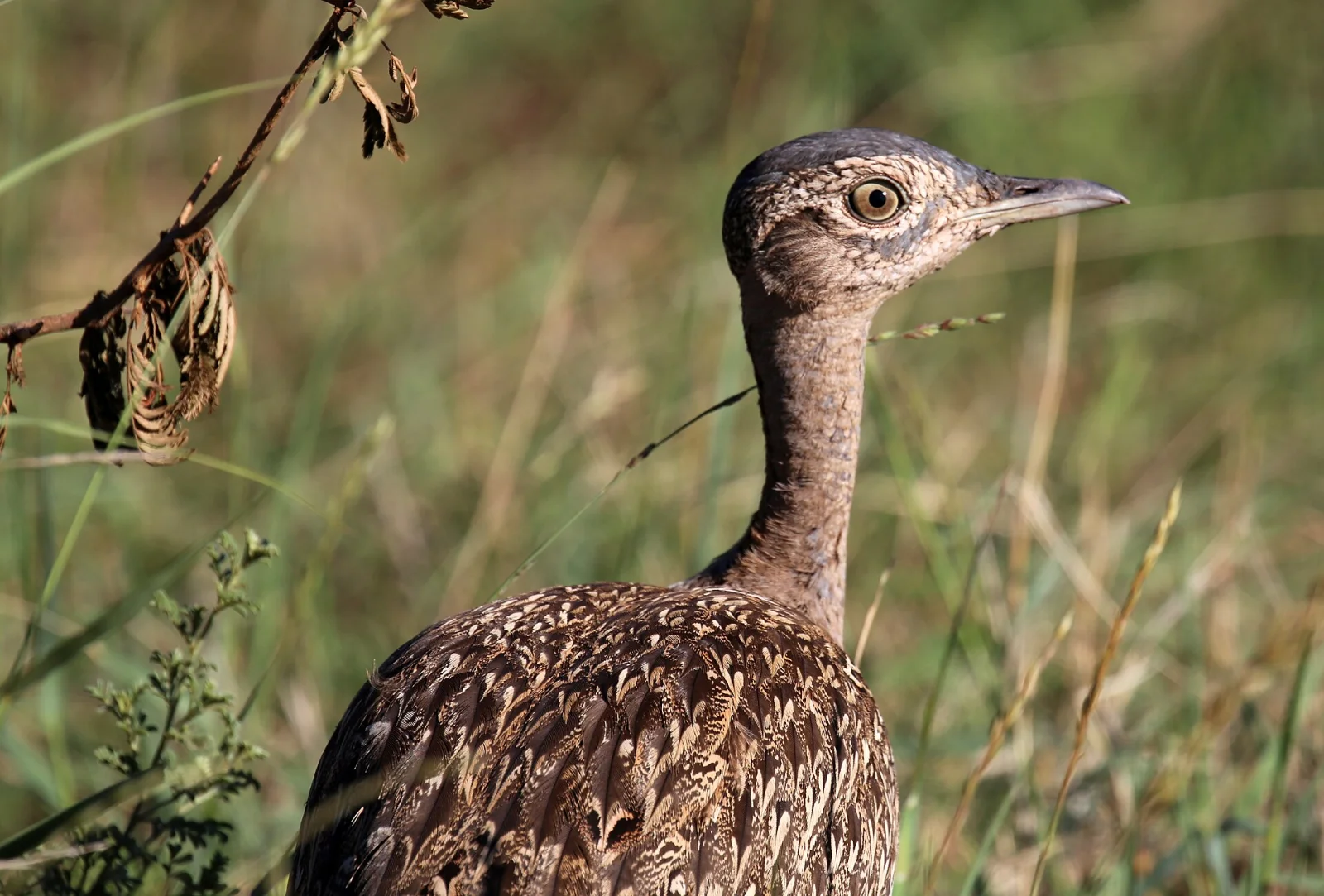
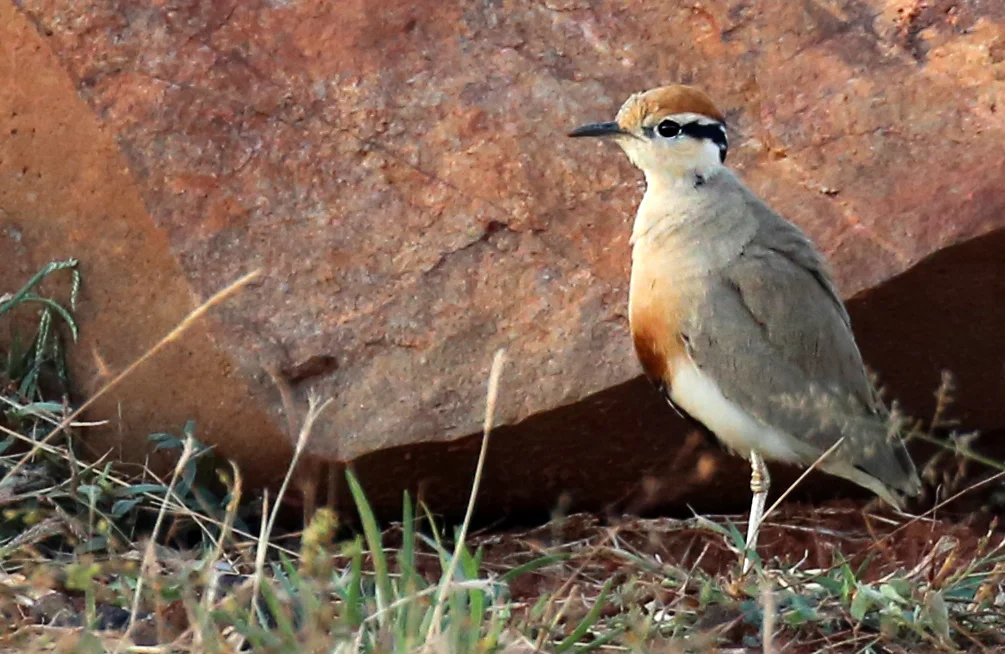
The Madikwe Plains are a different bird community from the bushveld. GoBirding lists Kori Bustard, Chestnut-backed and the occasional Grey-backed Sparrow-Lark, Plain-backed and Buffy Pipit, Red-capped Lark and Temminck’s Courser, and it is here that Yellow-throated Sandgrouse is best searched for. Summer brings a problem with access: heavy black clay makes the plains hard to reach, and the guide says the drier months are often the better bet for the sandgrouse. The 3 pans are good at any hour, best early and late. South African Tourism adds Madikwe Dam at sundown, when sandgrouse come to drink.
After good rains, GoBirding says, Common Quail and Harlequin Quail arrive in numbers, and Corn Crake has been recorded in wet years. Night drives in summer often find Rufous-cheeked Nightjar, Bronze-winged Courser and Spotted Thick-knee. For the same dry-country birds further west, see the Kgalagadi birding guide.
The Marico River and the wetlands
The Marico River gives Madikwe its water birds. GoBirding points to the river north of Madikwe River Lodge, with its dense thickets, for Icterine, Olive-tree and Garden Warbler and Common Whitethroat, and as a place to look for African Finfoot. It singles out the area around the Jaci’s camps for birding between drives, with a wetland that holds South African Shelduck, Dwarf Bittern in summer, Greater Painted-snipe, Black Crake and Wood Sandpiper. After dark, a pair of Verreaux’s Eagle-Owls is often around that wetland, with Freckled Nightjar and African Scops Owl calling. Blue-cheeked Bee-eaters are regularly seen at Tshukudu and other dams in summer.
South African Tourism’s tip suits a birder, and anyone who has had enough of early starts: stay in camp while others go out on a drive, because birdlife is plentiful in the older camps, especially beside a waterhole.
The lodges, villas and houses
Madikwe Safari Lodge. Its 4 listed options share the lodge’s safari checklist, which has a section on birds and gives about 350 species for the reserve, and the lodge says game drives can be shaped around birders. It names Kori Bustard, Secretarybird, Cape Vulture, Pearl-spotted Owlet and Crimson-breasted Shrike, and gives November to April as the best time. Lelapa Camp has 12 suites, including family suites, and takes all ages, though children under 6 do not join shared drives. Dithaba and Kopano each have 4 suites and normally take guests aged 16 and over. Elela Villa is a private villa for up to 6 with its own drives. The lodge is reached via Molatedi Gate, about 4.5 to 5 hours from Johannesburg by road, or by a 1-hour flight to the Madikwe Eastern Airstrip.
Jaci’s. Jaci’s Private Lodge stands on the Marico River and opened on 1 July 2026, with 10 safari suites and 3 villas. Its Terrapin Hide is entered by an underground tunnel and puts you at the waterline, and the lodge offers birding, river walks and bush walks, naming October to March as the time for good birding. Children in its Pups Club get bird-call challenges, an early start on a lifelong habit. The 3 villas each come with their own vehicle and guide: Kubu Villa is the unit that looks over the river, Nare Villa sits above its own waterhole, and Jaci’s Madikwe House sleeps up to 10.
Morukuru. The Morukuru Family’s 3 houses are on a private concession in Madikwe, each let whole with a team of 8 that includes a private guide and tracker. The River House and the Owner’s House are on the Marico River, which flows all year, and are joined by a walkway; the Farm House is over the mountain. Birding, bush walks and sleep-outs in the hide are on the activity list, nothing runs to a fixed schedule, which suits birders, who rarely do either, and park fees are included.
Impodimo Game Lodge has 8 suites and a 2-bedroom villa, with an underground hide beside the lodge waterhole that its fact sheet calls an animal and bird hide. Several of these hides appear in places to stay with a bird hide.
When to go
Summer, from about October or November to April, is the season both Madikwe Safari Lodge and Jaci’s recommend, and GoBirding agrees: migrants such as European Roller, Red-backed Shrike and Violet-backed Starling arrive, and 5 bee-eaters are present, from Southern Carmine to Swallow-tailed, a good season for anyone who likes their birds brightly painted. For Yellow-throated Sandgrouse and easy access to the plains, the dry months are better. South African Tourism suggests at least 3 nights. The reserve gates open from 06:00 to 18:00, and self-drivers should reach their gate before it closes.
Rates change and are set by each lodge. Facts were checked on 14 November 2026 against each place’s Birding Dispatch listing, which cites the place’s own website or facts supplied to Safari Dispatch, and against BirdLife South Africa’s GoBirding guide and South African Tourism. Confirm rates, children’s policies and access with the lodge before you book.
More from the Journal
 Namib-Naukluft and Sossusvlei for Birders: Dune Lark, Desert Raptors and the Naukluft SpecialsA lark that lives on the dunes and nowhere else, Lappet-faced Vultures nesting in the desert, coursers on the gravel plains and the northern specials around the Naukluft cliffs, in one of Africa's largest parks.
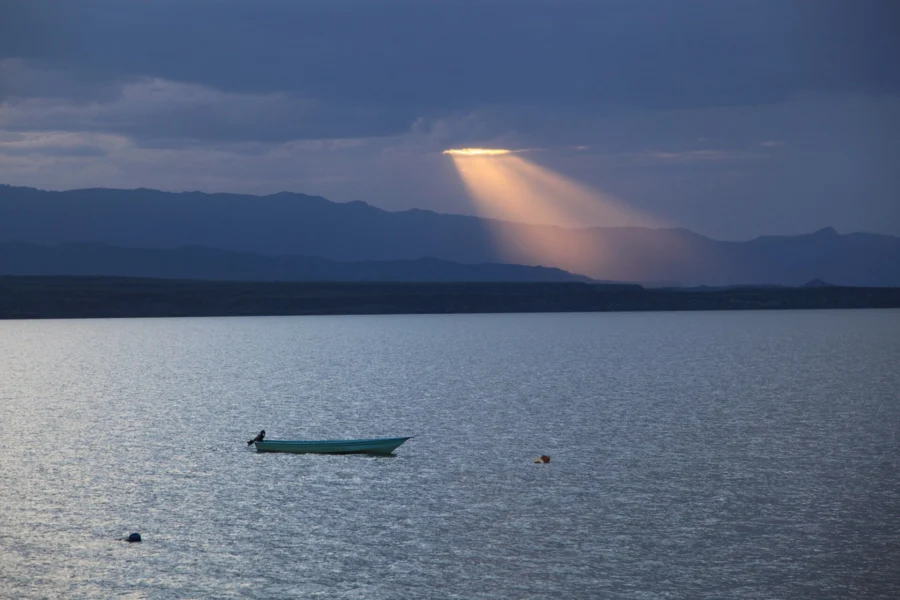 Lake Baringo and Lake Bogoria Birding: The Owl Walks, the Cliffs and the FlamingosA local guide who knows where every nightjar and eagle-owl slept last night, thorn scrub full of hornbills, a Goliath Heron colony on a rock, and the flamingo lake next door that keeps rising.
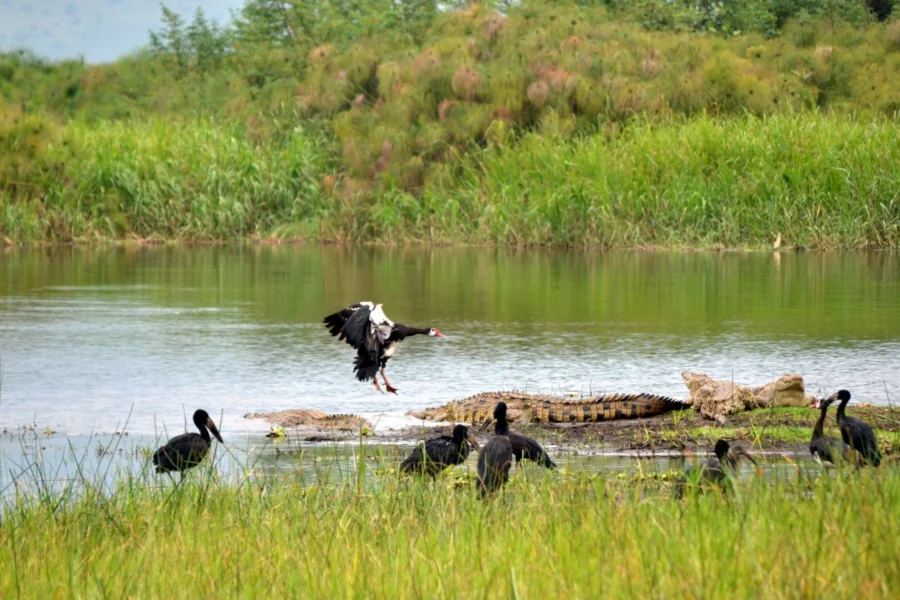 Akagera Birding: Rwanda’s Savanna, Lakes and Papyrus, and the Shoebill ChancesRed-faced Barbet in the southern woodland, Papyrus Gonolek and Carruthers's Cisticola in the swamps, a lake of hippos and lapwings, and a Shoebill that hides in the wetlands more than it shows.
The Pigeon Post
Every Thursday: 1 bird, 1 place to go and 1 place to stay, by email. Sign up and get our printable checklist of the 163 endemics of southern Africa.