
Lesotho Birding Guide: Sani Top, Ts’ehlanyane, Semonkong and the Highland Specials
Drakensberg Rockjumper, Mountain Pipit and Drakensberg Siskin in the kingdom that holds their heartland, plus Bearded Vultures, a Southern Bald Ibis colony at Semonkong and the stays that put you there.
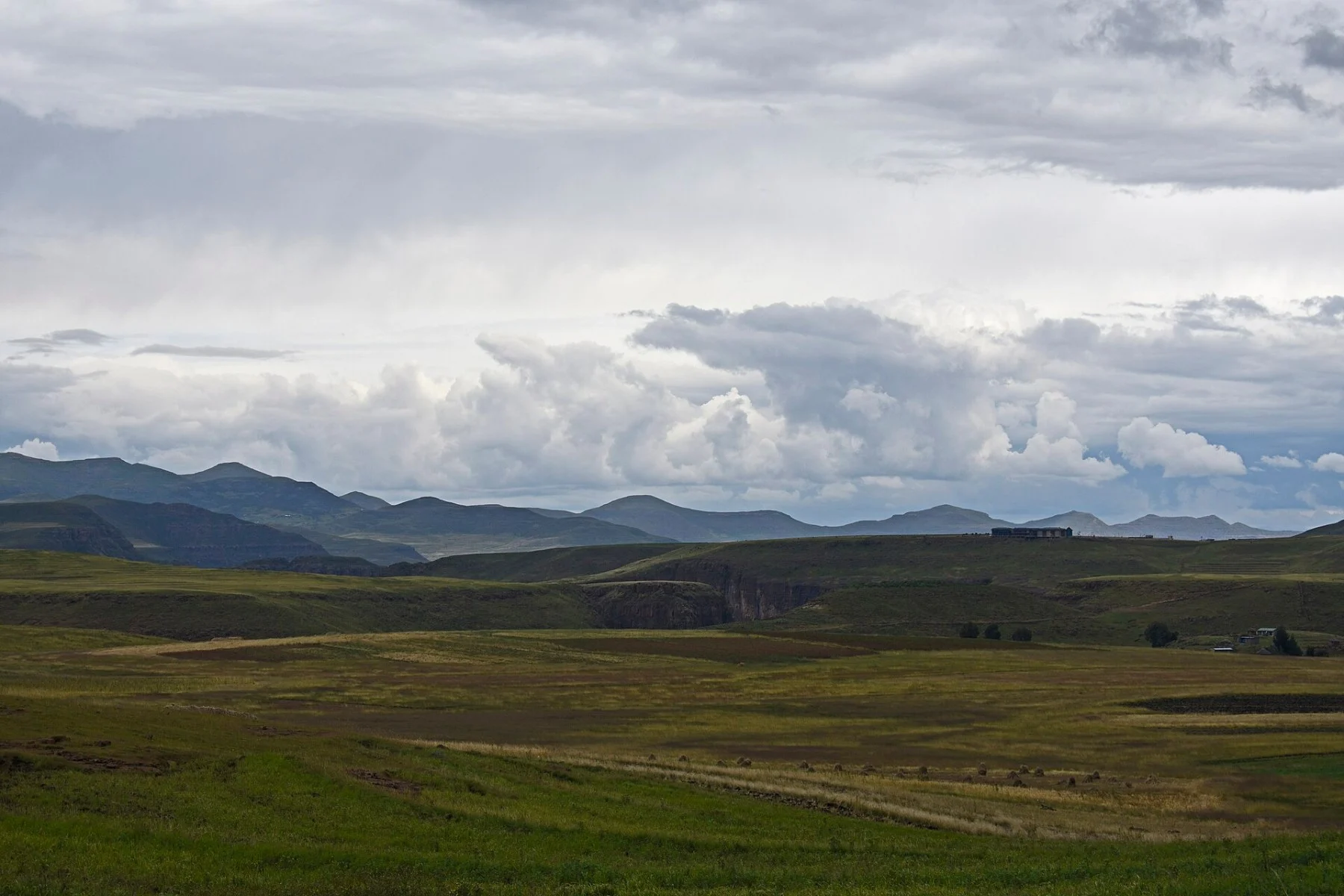
Lesotho’s lowest point is about 1,400 m above sea level, which, as Semonkong Lodge points out, is the highest low point of any country. Everything else is uphill from there. For birders that is the whole appeal: a small kingdom made almost entirely of the high grassland, basalt cliff and alpine heath where southern Africa’s mountain specials live, and where the commonest pipit on the summit in summer is the one most visitors came for.
The African Bird Club puts the national list at about 290 species, a temperate highland avifauna, with 3 near-endemics: Drakensberg Rockjumper, Mountain Pipit and Drakensberg Siskin. It is not a long list. It is a short list of the right birds.
The short answer
Go between November and March, when the birds are breeding and Mountain Pipit is back on the summits, and avoid May to August, as the African Bird Club advises. For a first visit, cross at Sani Pass for a day on the plateau at Sani Top, or at Caledonspoort for Ts’ehlanyane National Park. Add Semonkong for its Southern Bald Ibis colony and vultures at the falls. Carry a passport, budget for the R100 tourism levy, and leave room in the day for weather.
What makes Lesotho different
The African Bird Club places Lesotho inside 2 Endemic Bird Areas, the Lesotho highlands and the southern African grasslands, with 6 Important Bird Areas. Its main habitats are alpine moorland and rocky mountainside, and its suggested birding sites are Sani Pass, Katse Dam, Mafika-Lisiu Pass, Ts’ehlanyane National Park and Sehlabathebe National Park.
Beyond the 3 near-endemics, the club lists birds that occur in only 2 countries of its region, among them Grey-winged Francolin, Blue Korhaan, African Rock Pipit and Yellow-breasted Pipit. Its longer list of birds of interest runs through Southern Bald Ibis, Bearded Vulture, Cape Vulture, Verreaux’s Eagle, Black Harrier, Ground Woodpecker, Sentinel Rock Thrush, Sickle-winged Chat, Gurney’s Sugarbird, Layard’s Warbler and Grey Tit. Several of these come in local subspecies, so a Lesotho Cape Bunting is, in a small way, a bird with its own passport.
Sani Top and the eastern plateau
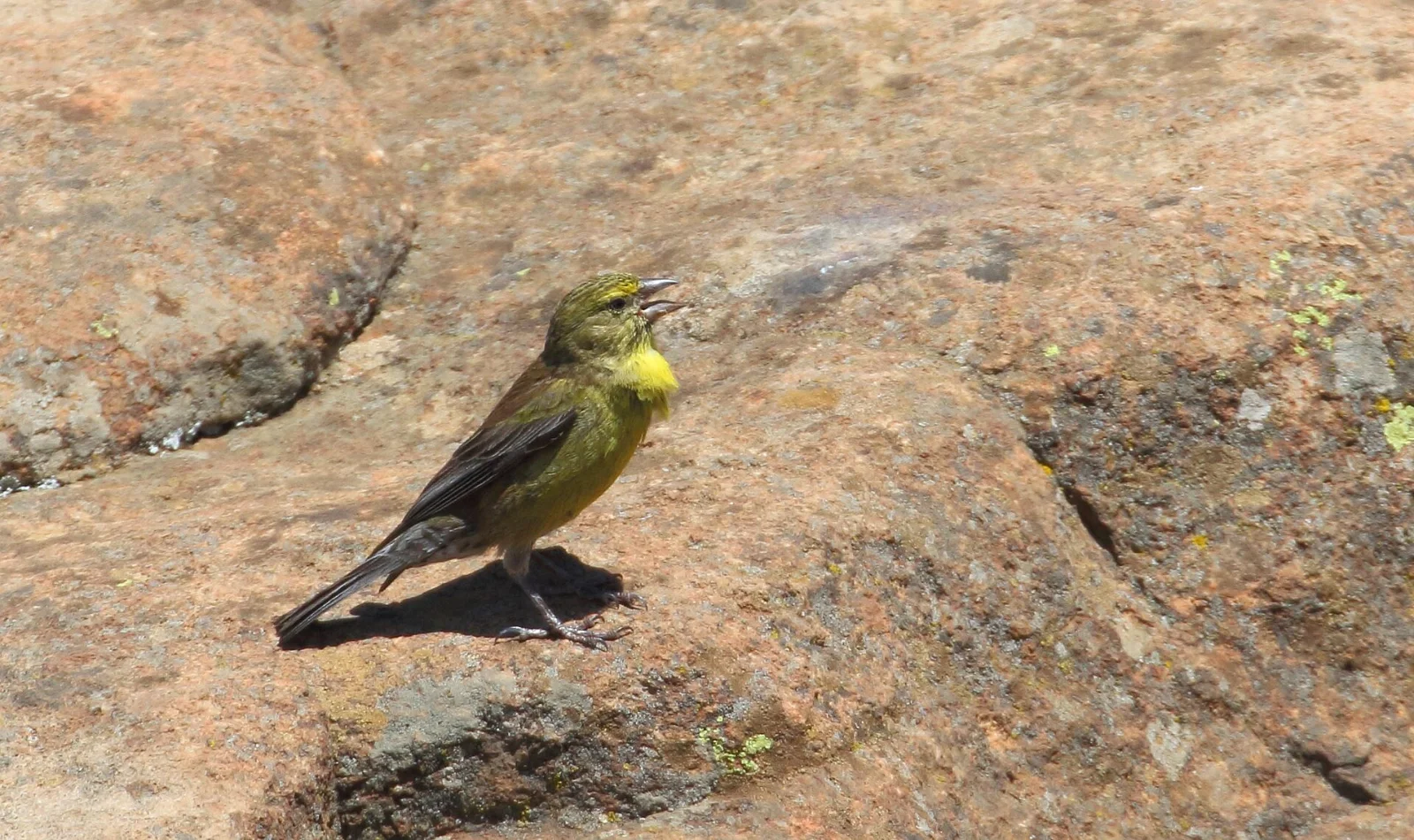
The road up Sani Pass from KwaZulu-Natal is the quickest way onto the plateau, and our guide to birding Sani Pass and the southern Drakensberg covers the climb in detail. On the Lesotho side, BirdLife South Africa’s GoBirding guide suggests parking at the Sani Top chalets after the border. Drakensberg Siskin and Drakensberg Rockjumper are both resident around the chalets, alongside Cape Bunting, Cape Sparrow and Speckled Pigeon, and a short walk should add Sentinel Rock Thrush, Sickle-winged Chat and, in summer, Mountain Pipit on the short-cropped grass. GoBirding says most pipits in that habitat can safely be taken as Mountain Pipits, which is a rare moment of mercy in pipit identification.
Further on, through the village and into the alpine heath, check the stone kraals for Ground Woodpecker and African Rock Pipit, and the heath for Grey-winged Francolin, Grey Tit, Layard’s Warbler, Fairy Flycatcher, Yellow Canary and Black-headed Canary. Black Harrier often quarters overhead, mainly in late summer. For Bearded Vulture, GoBirding sends birders about 20 km beyond the Lesotho border over Kotisephola Pass to a cleared quarry entrance on the left, below the cliffs of Black Mountain, where a resident pair lives. The road beyond the South African post is 4×4 only, and a road tax is paid at the Lesotho post.
Ts’ehlanyane National Park
Ts’ehlanyane, in the Maluti Mountains of Leribe district, is the easy entry from the Free State. Maliba Lodge, inside the park, says it is about 45 minutes from the Caledonspoort border post on tar, and Caledonspoort is open from 06:00 to 22:00. The lodge runs a guided birdwatching hike in the mountains, links a bird checklist for the park from its birdwatching page, and picks out Bearded Vulture, Mountain Pipit and Pin-tailed Whydah. The waterfall and rock-pool walks give the non-birders in the party something to photograph while the birders argue about pipits.
Semonkong and the Maletsunyane Falls
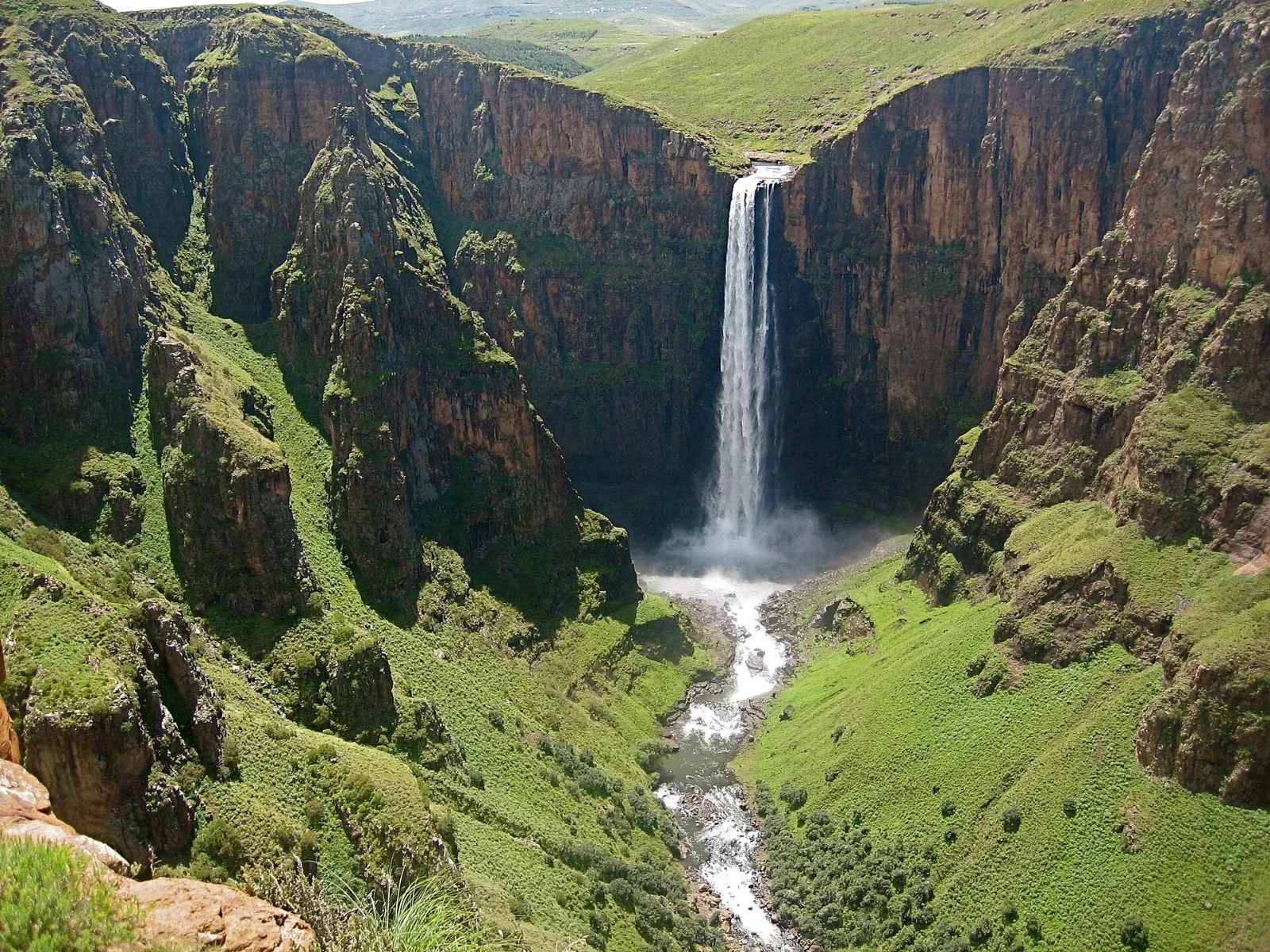
Semonkong, the “place of smoke”, is named for the spray of the Maletsunyane Falls downstream of the lodge, which Semonkong Lodge describes as the second-highest single-drop waterfall in Africa. The lodge sits in a valley on the Maletsunyane River, with peaks of about 3,000 m around it. For birders the draw is the cliff opposite the lodge tavern: a colony of Southern Bald Ibis nests on it, and the lodge has a thatched lookout facing the colony. Bearded and Cape Vultures ride the cliffs at the falls.
The lodge runs a 204 m abseil down the basalt beside the falls, which Guinness World Records lists as the longest commercially operated single-drop abseil, and the lodge notes that it is done amid Bearded and Cape Vultures. Birders who prefer their vultures at eye level from the top can watch from the rim instead. The lodge also puts the Maluti Mountains ecosystem at around 250 bird species.
Sehlabathebe National Park
In the far south-east, Sehlabathebe is the remote option. A 2002 study in Koedoe by G. Kopij of the National University of Lesotho recorded 117 species in the park: 70 breeding and probable breeding residents, 18 visitors and 29 vagrants. The characteristic high-altitude species were Drakensberg Siskin, Mountain Pipit, Drakensberg Rockjumper, Banded Martin and Sentinel Rock Thrush, and the most numerous breeding birds on the study transects were African Stonechat, Wing-snapping Cisticola, Yellow Bishop and Wailing Cisticola. The study also found that some birds common in the surrounding grassland, Sickle-winged Chat and Red-winged Starling among them, were absent or scarce inside the park, partly for lack of trees, shrubs and cultivated fields. Even a protected area can be too tidy for some customers.
Vultures
Lesotho is vulture country in a way few places are. The IUCN Red List assessment for Cape Vulture gives about 552 pairs at about 47 colonies in Lesotho, a figure from a 1990 survey, and Wildlife ACT puts the Bearded Vulture population at an estimated 50 to 100 breeding pairs across South Africa and Lesotho. Every sighting of the second one is a sighting of a bird with very few relatives. Our guide to where to see a Bearded Vulture covers the hides and passes on both sides of the border.
Practical notes
- Passports and levies. Every crossing is an international border. Maliba Lodge gives the Lesotho tourism levy as R100 per person aged 13 or older, paid at the border.
- Money. Semonkong Lodge quotes its rates in maloti and notes that the loti equals the rand.
- Roads. Sani Pass above the South African post is 4×4 only. Maliba is on tar from Caledonspoort.
- Season. November to March for breeding birds and Mountain Pipit; the African Bird Club suggests avoiding May to August.
- Guides. There is no BirdLife Partner in Lesotho, according to the African Bird Club, so book guiding through the lodges or a South African operator for Sani.
Where to stay
Places to stay for birders in Lesotho, with a base at the foot of Sani Pass for the eastern plateau:
| Place to stay | Where | For birders | From |
|---|---|---|---|
| Maliba Lodge | Ts’ehlanyane National Park, Lesotho | Guided birdwatching hike, Bearded Vulture, Mountain Pipit | R3,993 a chalet for 2, B&B (rate valid to October 2024) |
| Semonkong Lodge | Semonkong, Maseru District, Lesotho | Lookout over a Southern Bald Ibis colony, vultures at the falls | LSL 1,150 pp sharing, B&B (to 30 Nov 2026) |
| Sani Valley Nature Lodges | Sani Pass Road, KwaZulu-Natal | 300+ species, vulture feeding site, Sani Pass excursions | Ask the lodge |
Border hours, levies, road conditions and rates change, and the weather in the highlands can close a pass in any month. Facts were checked on 15 November 2026 with the African Bird Club, BirdLife South Africa’s GoBirding guide, Koedoe and each listing on Birding Dispatch. Confirm with each place to stay and the border authorities before you travel.
More from the Journal
 Namib-Naukluft and Sossusvlei for Birders: Dune Lark, Desert Raptors and the Naukluft SpecialsA lark that lives on the dunes and nowhere else, Lappet-faced Vultures nesting in the desert, coursers on the gravel plains and the northern specials around the Naukluft cliffs, in one of Africa's largest parks.
 Lake Baringo and Lake Bogoria Birding: The Owl Walks, the Cliffs and the FlamingosA local guide who knows where every nightjar and eagle-owl slept last night, thorn scrub full of hornbills, a Goliath Heron colony on a rock, and the flamingo lake next door that keeps rising.
 Akagera Birding: Rwanda’s Savanna, Lakes and Papyrus, and the Shoebill ChancesRed-faced Barbet in the southern woodland, Papyrus Gonolek and Carruthers's Cisticola in the swamps, a lake of hippos and lapwings, and a Shoebill that hides in the wetlands more than it shows.
The Pigeon Post
Every Thursday: 1 bird, 1 place to go and 1 place to stay, by email. Sign up and get our printable checklist of the 163 endemics of southern Africa.