
Amboseli Birding: The Swamps, the Dry-Country Birds and Kilimanjaro
A dusty basin with 300 mm of rain a year and swamps fed by water from Kilimanjaro: Taveta Weavers, crakes and herons in the water, coursers and sandgrouse on the dust, and where to stay.
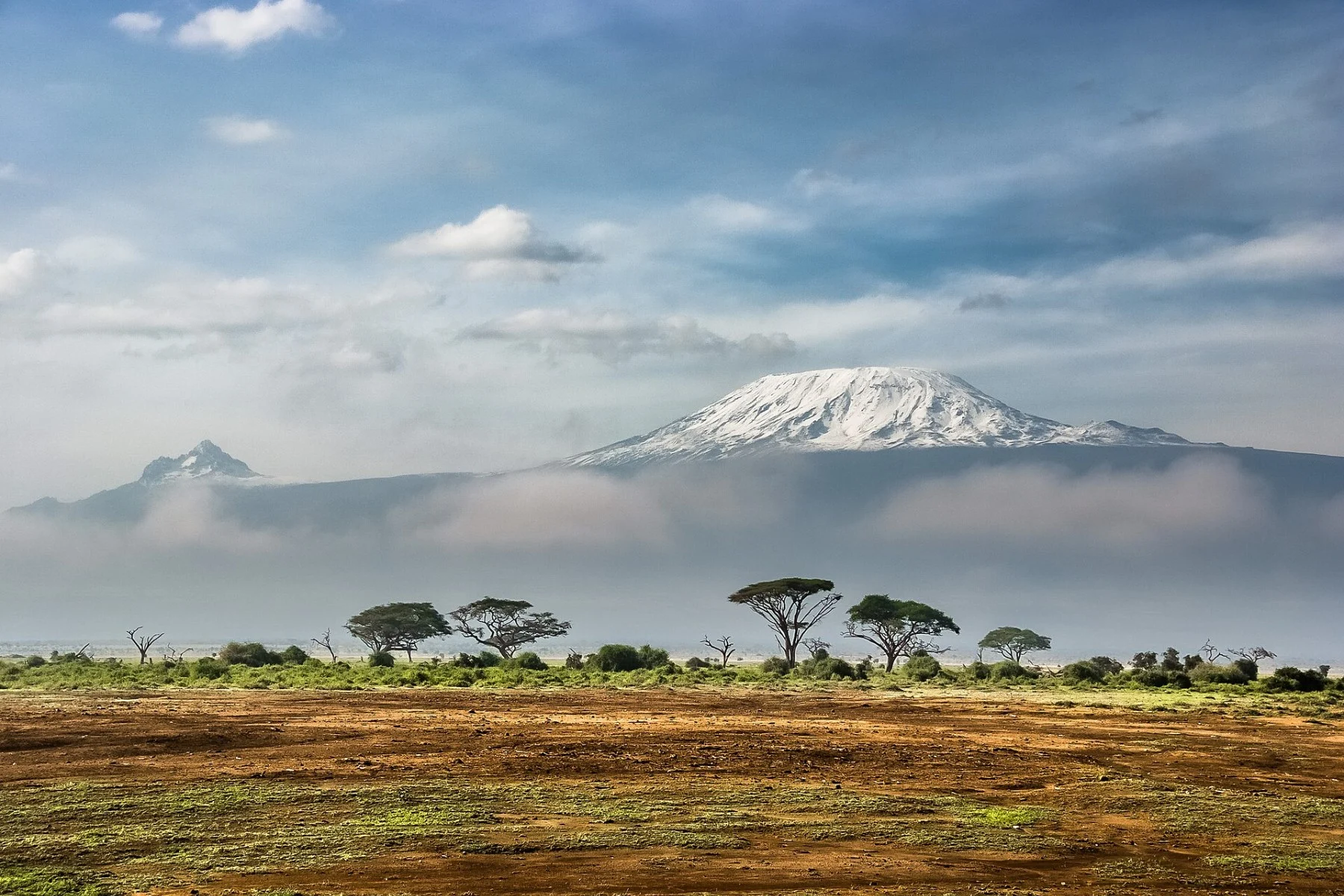
Amboseli gets about 300 mm of rain a year, which by rights should leave it a bowl of dust. It sits in the rain shadow of Kilimanjaro, and much of it is a dust bowl. But water that soaks into the mountain flows underground and wells up on the park floor as a chain of papyrus swamps, so a bird list of more than 400 species lives in a place that hardly gets rained on. BirdLife International’s site account, which sets out that geology, also notes that the swamp area has expanded greatly, and that waterbird numbers have risen with it. The mountain does the watering; the birds just turn up.
Amboseli National Park covers 392 km² on the Tanzanian border, at the core of a much larger ecosystem that runs across into Tanzania, and it protects 2 of the 5 main swamps. It is famous for elephants, studied here by Cynthia Moss since 1972, and Faraaz Abdool, writing for 10,000 Birds in July 2025, notes that the park “isn’t always advertised as a birding site”. That is the opportunity: the elephants bring in the vehicles, and the birds are there for whoever looks.
The swamps
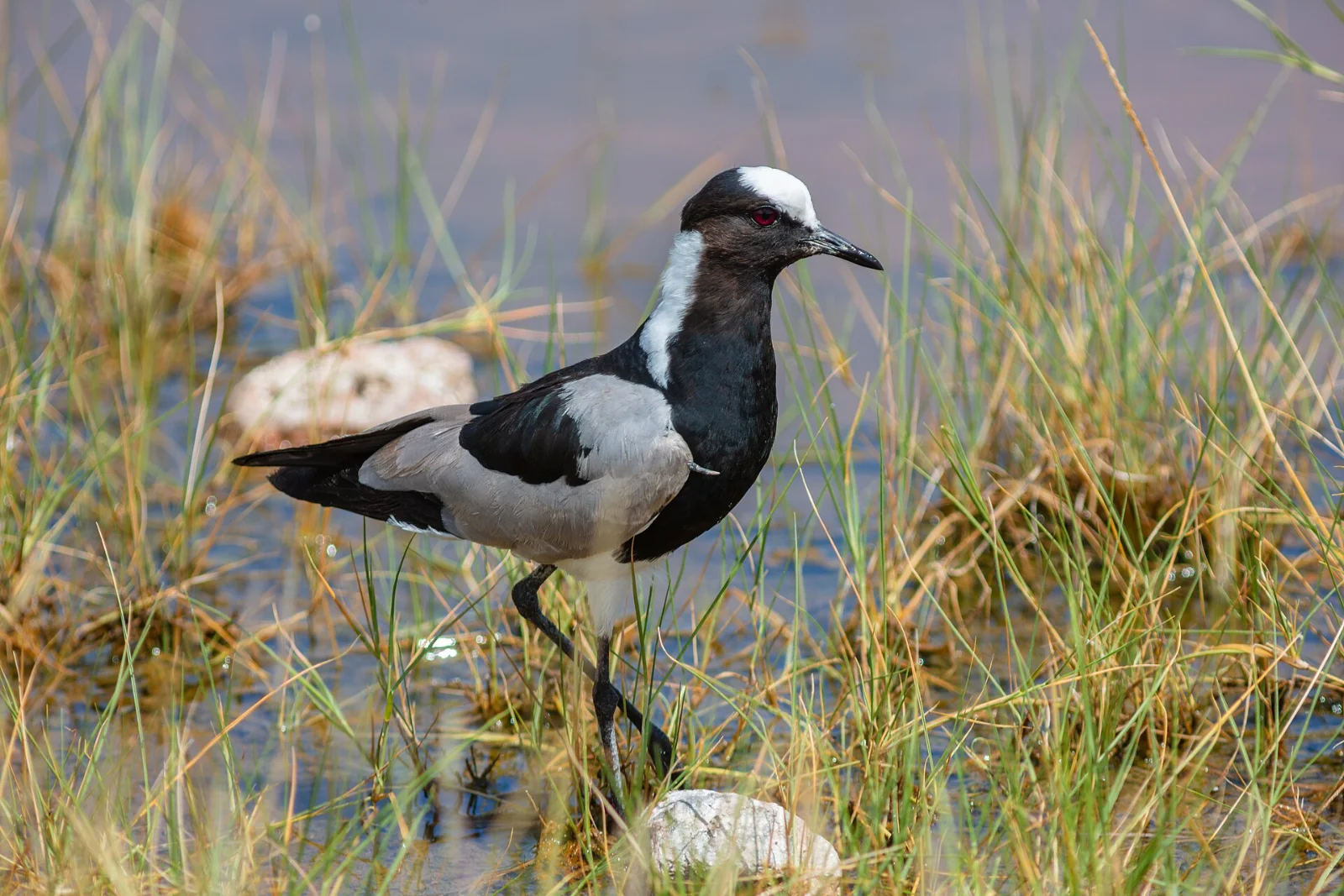
The swamps are where Amboseli’s list gets long. Abdool’s account of one afternoon and one full day in 2025 reads like a wetland field guide: Greater and Lesser Flamingos feeding near the road on a good day, Red-billed, Cape and Blue-billed Teals, Knob-billed Duck, Spur-winged Goose, Black-winged Stilts, Blacksmith, Spur-winged and Crowned Lapwings, Whiskered Terns, African Spoonbill, Yellow-billed Stork, Great White Pelicans and Red-capped Larks working the shoreline.
In the vegetated channels he found Squacco, Grey and Goliath Herons, African Jacanas, Little Egrets and Black Crake, which he calls surprisingly easy to see “given the fact that it is a crake”. His gallery from the same trip adds Baillon’s Crake, African Swamphen, Little Bittern, Glossy Ibis, Collared Pratincole and Saddle-billed Stork. Hidden in the papyrus was a colony of Taveta Weavers, the East African special that Birding Ecotours says is common in the park.
Birding Ecotours’ 2026 itinerary for the park adds Pink-backed Pelican and Greater Painted-snipe to the marsh list, and Hamerkop, which anyone who has seen its nest will agree is a bird with a building habit. BirdLife’s account lists small numbers of the globally threatened Malagasy Pond Heron, mainly non-breeding birds between May and October, and records Shoebill once. Treat the pond heron as a bonus and the Shoebill as a one-off.
The lake that comes and goes
The flat floor of the park is an old Pleistocene lake bed, and within it lies Lake Amboseli, a temporary lake that floods only in years of heavy rain. When it holds water, the flamingos come. BirdLife gives Lesser Flamingo as present in variable numbers, up to a few thousand, and Birding Ecotours writes that if the lake has water, thousands of Greater and Lesser Flamingos can feed there. If it is dry, the flamingos will be wherever the water is that year; where to see flamingos follows them across the region.
The dry country
Away from the water, Amboseli turns into a dry-country birding site, and the birds start to look like the ground. Abdool describes the rocky stretches as “the place where birds are designed to look like dirt”, with Fischer’s Sparrow-Lark and Kittlitz’s Plover pottering about. Chestnut-bellied Sandgrouse flush from the track, Hartlaub’s Bustards and Grey Crowned Cranes walk the short grass, and Kori Bustards cross the plains. He says Double-banded Coursers usually stay off the road and that you often have to stop completely to pick them out, after which one becomes 2, then more.
At the gate, a colony of White-browed Sparrow-Weavers chatters from its nests, Fork-tailed Drongos and Speckled Pigeons watch from the trees, and, with luck, a Pygmy Falcon sits nearby. Birding Ecotours lists the wooded edges for White-bellied Go-away-bird, Blue-naped and White-headed Mousebirds, Fischer’s and Hildebrandt’s Starlings, Taita Fiscal, Rosy-patched Bushshrike, Von der Decken’s Hornbill, Black-throated and D’Arnaud’s Barbets, Spotted Palm Thrush and both Parrot-billed and Kenya Sparrows, and the open grassland for Pangani Longclaw.
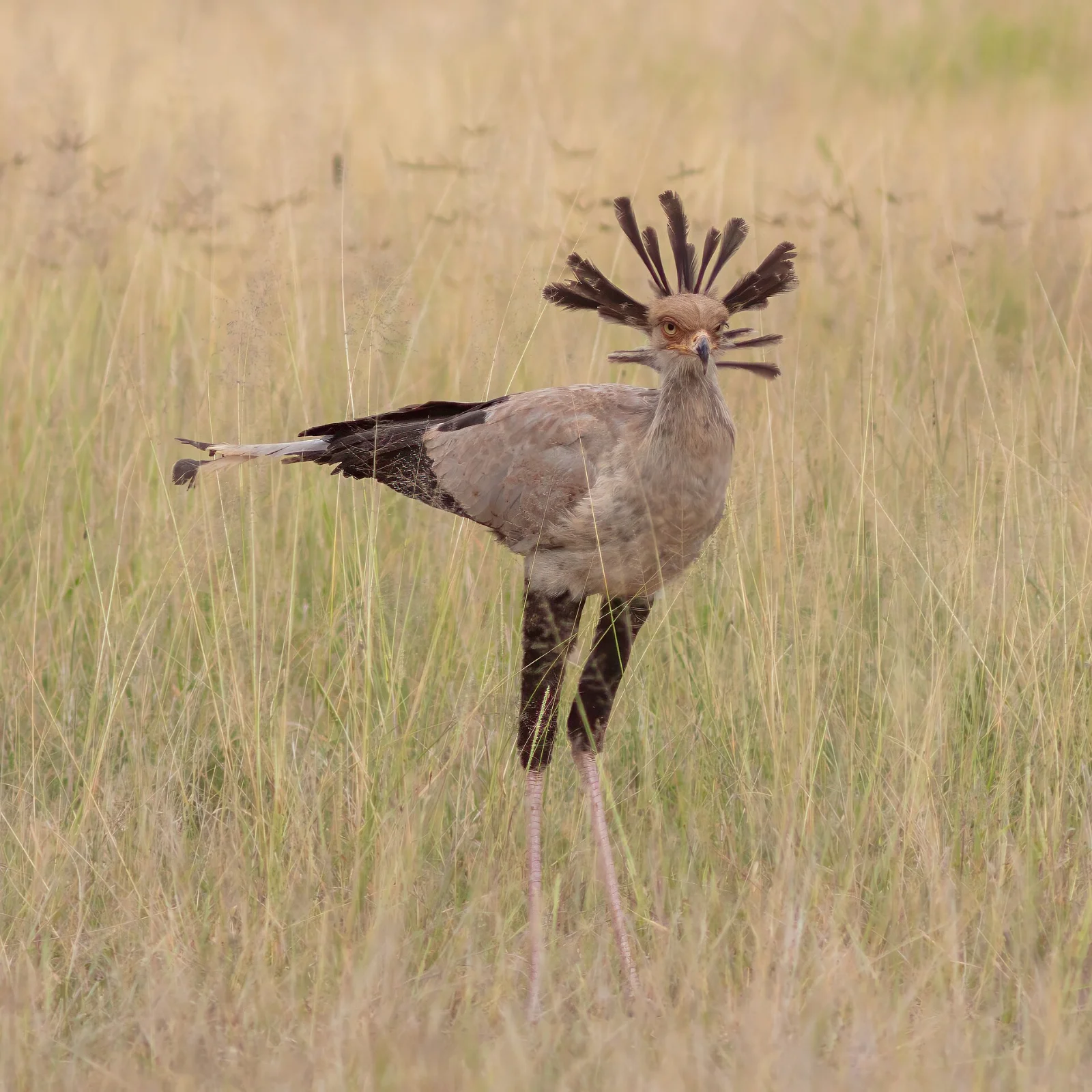
BirdLife counts more than 40 birds of prey in the park. Abdool saw White-backed Vultures roosting in the crowns of acacias early in the morning, and Black-winged Kites hovering over the plains. Birding Ecotours adds Martial and Tawny Eagles, African Hawk-Eagle, Eastern Chanting Goshawk, Gabar Goshawk and 5 vultures, including Hooded, Lappet-faced, White-headed and Rüppell’s. For the walking raptor in the photograph and the open country it prefers, see where to see a Secretarybird.
Timing the day
Abdool notes that he has tried to reach the water for sunrise, and that doing it would mean driving past everything else on the way with eyes and ears closed. The consolation is that most of the waterbirds stay put through the heat of the day, so a birder can take the dry country in the cool of the morning and the swamps later. BirdLife says the park’s large wildlife concentrations come in the dry season, when the animals gather around the swamps, and that much of the wildlife spreads onto the surrounding group ranches in the wet season. The same account puts visitors at more than 200,000 a year, mostly in the dry season, and says off-road driving damages the fragile soils, so stay on the tracks even when a courser is just out of reach.
Fees
Amboseli is a Kenya Wildlife Service park. The 2025 fee schedule, reported by The Star on 29 September 2025, charges non-resident adults US$90 to enter Amboseli. The same schedule has a combined Tsavo West and Amboseli ticket at US$150, and Tsavo East, Tsavo West and Amboseli together at US$215. The new fees were challenged in court soon after they began, so check the current rate on KWSPay before you go; the Kenya birding guide has the background.
Onward to Tsavo West
Birding Ecotours’ 2026 Eastern Kenya tour spends 2 nights in Amboseli and then drives on to Tsavo West, where it targets Vulturine Guineafowl, Golden Pipit and the birds of Mzima Springs, and watches for Fire-fronted Bishop and Friedmann’s Lark, nomads that can appear after good rains. On the 2025 schedule, the combined US$150 ticket costs less than separate Amboseli and Tsavo West tickets, at US$90 and US$80.
Where to stay
The places to stay in Amboseli and on the road on to Tsavo West, in the order they appear above:
| Place to stay | Where | For birders | From |
|---|---|---|---|
| Amboseli Serena Safari Lodge | Inside Amboseli National Park, Kenya | Birding safaris with a checklist, extra charge | Ask the lodge |
| Finch Hattons Luxury Camp | Tsavo West National Park, Kenya | Birding guides on staff, Lake Jipe trips | Ask the lodge |
Fees, lake levels and lodge details at Amboseli change. Facts were checked on 15 November 2026 with BirdLife International’s Amboseli site account, a 10,000 Birds report from July 2025, Birding Ecotours’ 2026 itinerary, The Star’s report on the 2025 KWS fees and each listing on Birding Dispatch. Confirm KWS fees on KWSPay before you travel.
More from the Journal
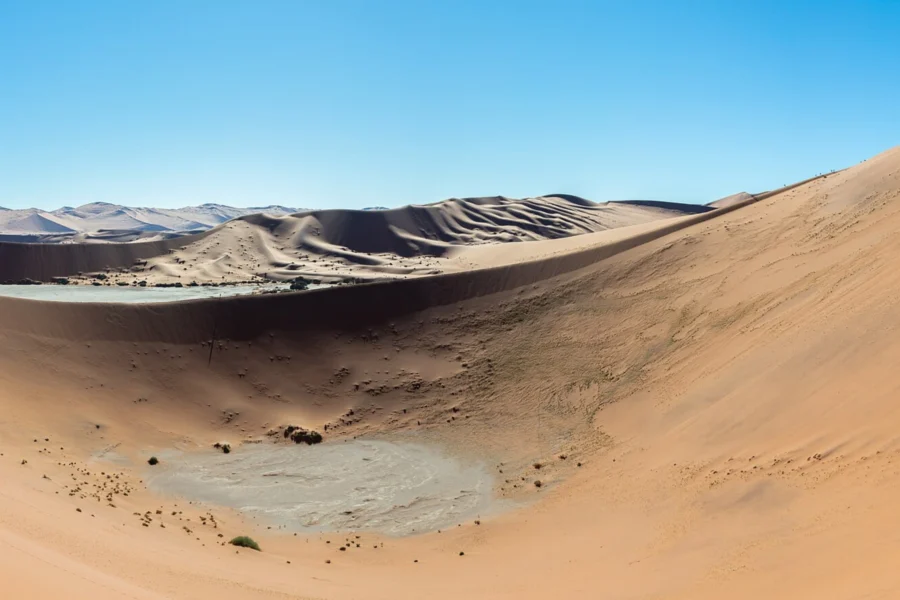 Namib-Naukluft and Sossusvlei for Birders: Dune Lark, Desert Raptors and the Naukluft SpecialsA lark that lives on the dunes and nowhere else, Lappet-faced Vultures nesting in the desert, coursers on the gravel plains and the northern specials around the Naukluft cliffs, in one of Africa's largest parks.
 Lake Baringo and Lake Bogoria Birding: The Owl Walks, the Cliffs and the FlamingosA local guide who knows where every nightjar and eagle-owl slept last night, thorn scrub full of hornbills, a Goliath Heron colony on a rock, and the flamingo lake next door that keeps rising.
 Akagera Birding: Rwanda’s Savanna, Lakes and Papyrus, and the Shoebill ChancesRed-faced Barbet in the southern woodland, Papyrus Gonolek and Carruthers's Cisticola in the swamps, a lake of hippos and lapwings, and a Shoebill that hides in the wetlands more than it shows.
The Pigeon Post
Every Thursday: 1 bird, 1 place to go and 1 place to stay, by email. Sign up and get our printable checklist of the 163 endemics of southern Africa.