
Parrots and Lovebirds of Southern Africa: Meyer’s, Brown-headed, Rüppell’s and the Lovebirds
A parrot that cracks pods nothing else can open, lovebirds that move into weaver nests, and flocks of 600 feeding on the ground. The region's parrots and where to find each.
Meyer’s Parrot has a food supply almost to itself. According to Iziko Museums’ Biodiversity Explorer, it is the only bird able to crack the pods and seeds of leguminous trees, so it faces little competition for them. Where other birds see a locked pod, it sees lunch.
Southern Africa has only a handful of native parrots and lovebirds, but each one lives somewhere different: the Cape Parrot in mistbelt yellowwood forest, Rüppell’s in Namibia’s dry riverbeds, the Rosy-faced Lovebird among granite boulders and weaver nests, and Lilian’s Lovebird in the mopane of the Zambezi valley. Finding all of them is a tour of the region in itself.
The parrots at a glance
| Bird | Where it lives | Breeding | Notes |
|---|---|---|---|
| Meyer’s Parrot | NE Namibia, Botswana, Zimbabwe, north-east South Africa | March to August | Woodland near water |
| Brown-headed Parrot | East Africa to Mozambique and eastern South Africa | April to May | Knob thorn and mopane woodland |
| Grey-headed Parrot | Caprivi, northern Botswana, Zimbabwe, Limpopo | March to June | Uncommon; eats almost only fruit |
| Rüppell’s Parrot | Central and northern Namibia | January to June | Near-endemic to Namibia |
| Cape Parrot | Eastern Cape to KwaZulu-Natal, Wolkberg | All year, peak August to February | Endemic; yellowwood forest |
| Rosy-faced Lovebird | Namibia, marginally into Northern Cape | Colonial | Nests in Sociable Weaver nests |
| Lilian’s Lovebird | South-eastern Zambia, northern Zimbabwe, Mozambique | January to April | Flocks of up to 600 |
The bushveld parrots
Biodiversity Explorer says Meyer’s Parrot is locally common in north-eastern Namibia, including the Caprivi Strip, in northern and eastern Botswana, Zimbabwe, northern Mozambique and north-eastern South Africa, in woodland usually close to water. It eats seeds and nuts, plus fruit and flowers. It nests in tree cavities, sometimes ones made by woodpeckers and barbets, and sometimes reuses the same hole over several seasons; the female incubates 2 to 4 eggs for 29 to 31 days. Egg-laying runs from March to August, peaking in April and May.
The Brown-headed Parrot is the eastern one, from southern Kenya and Tanzania to Malawi, Mozambique, south-eastern Zimbabwe and eastern South Africa. It prefers open woodland with fruiting and seeding trees, especially knob thorn and mopane, and avoids sparsely wooded savanna. It lays 2 to 4 eggs in old woodpecker holes, in South Africa from April to May.
The Grey-headed Parrot is uncommon in the region, found in the Caprivi Strip, northern Botswana, Zimbabwe, Mozambique, Limpopo and south-eastern South Africa, in mopane, miombo and riparian woodland. It feeds almost exclusively on fruit and nests in natural tree cavities, in the trunk or the underside of a branch, laying from March to June. In Kruger’s far north, Pafuri Camp lists it among its specials, and the Pafuri birding guide covers the area.
Rüppell’s Parrot and the Cape Parrot
Rüppell’s Parrot is near-endemic to central and northern Namibia, reaching southern Angola. In the north it prefers riparian woodland and stands of northern lala palms; in central Namibia it also uses mixed acacia woodland and cluster-leaf stands. It nests in tree cavities, natural or dug by woodpeckers, and lays from January to June, peaking from January to March.
The Cape Parrot is the endangered one, and endemic to South Africa. Biodiversity Explorer places it in small patches of Afromontane forest from Fort Beaufort in the Eastern Cape to Karkloof in KwaZulu-Natal, with a population of 25 to 50 birds in the Wolkberg in Limpopo. It feeds only on fruit, mainly in the early morning and late afternoon, sometimes in mixed flocks with Knysna Turacos and African Green Pigeons, and nests in old holes in yellowwood trees. The felling of yellowwoods is the main reason it is endangered. It has its own guide: where to see a Cape Parrot.
The lovebirds
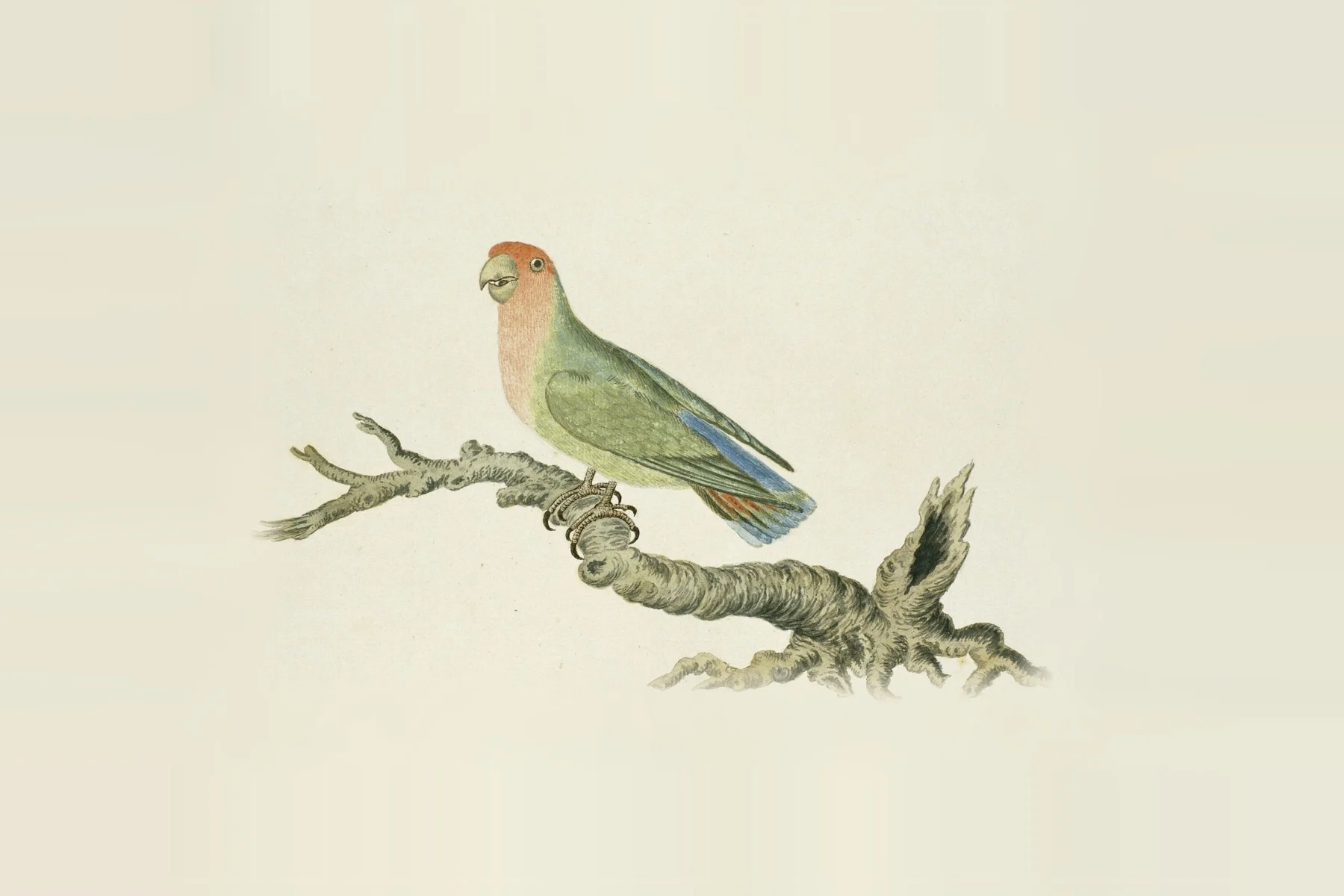
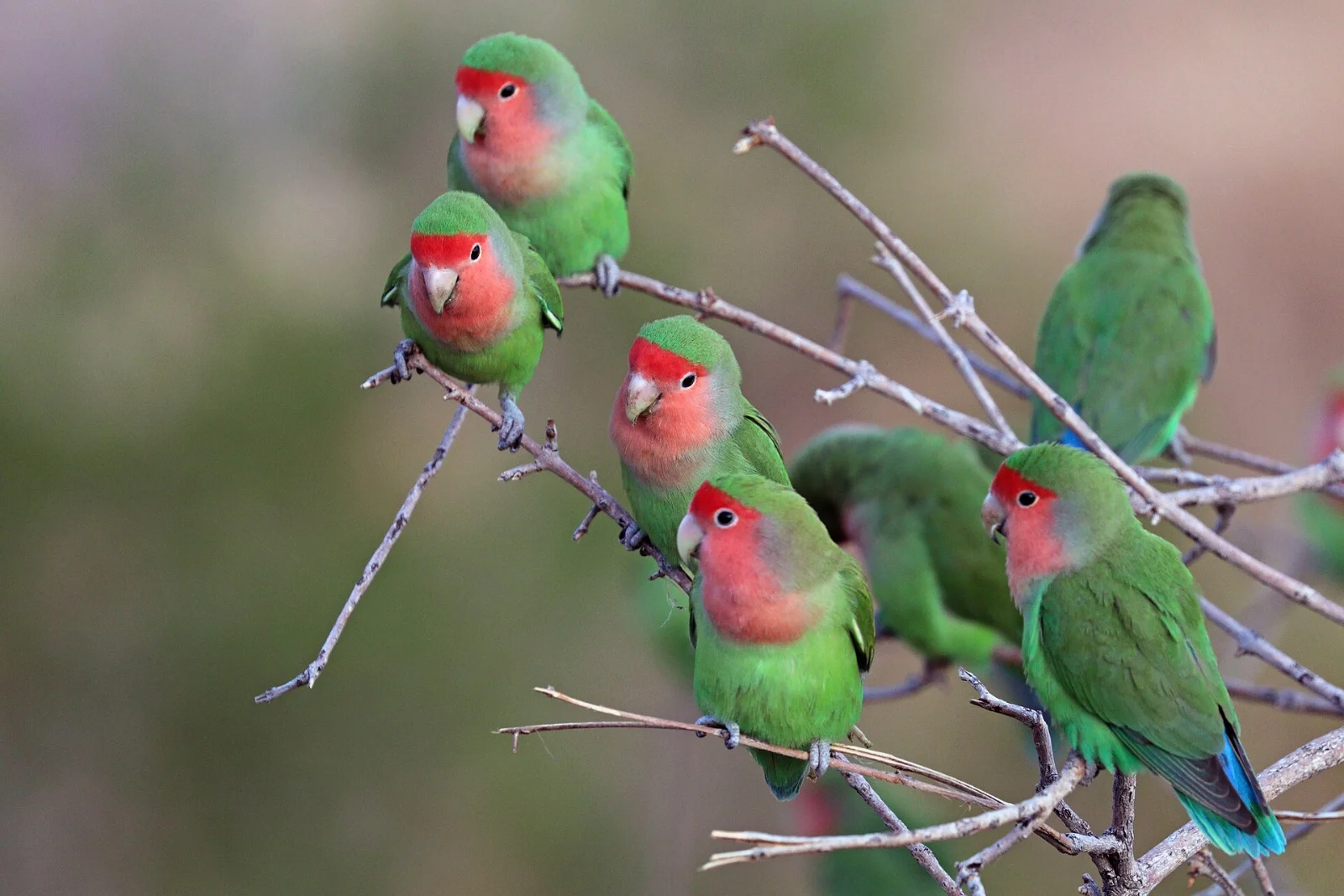
The Rosy-faced Lovebird is near-endemic to Namibia, reaching marginally into the Northern Cape, south-western Botswana and southern Angola. In the wild it prefers mature woodland along ephemeral rivers, especially stands of northern lala palms. Biodiversity Explorer describes it as a gregarious and noisy colonial nester, using rock crevices, holes in buildings and the communal nests of Sociable Weavers: a lovebird renting a room in a weaver’s apartment block. It is also a common cage bird, so escapees can turn up anywhere, which makes a sighting in a Johannesburg garden a different thing from one in the Erongo.
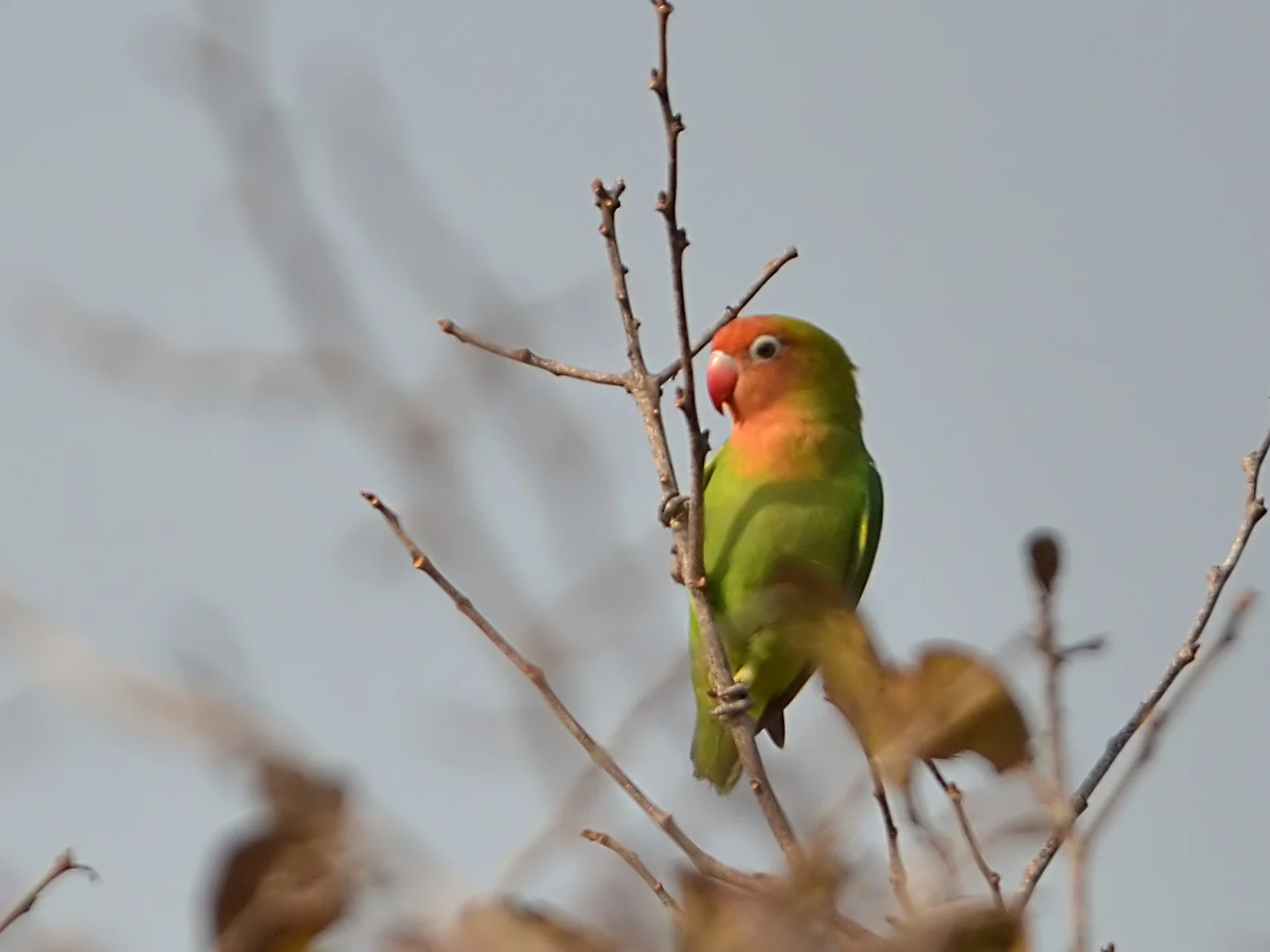
Lilian’s Lovebird has a small range, from south-eastern Zambia to northern Zimbabwe and north-western Mozambique, where it is locally common to abundant in mature mopane woodland and riparian forest, especially where there are fig trees. It eats mainly grass seeds and forages on the ground in flocks of up to 600 birds. It nests in natural tree cavities, and egg-laying runs from about January to April. The Mana Pools birding guide covers one of the best places to see it in Zimbabwe.
The Black-cheeked Lovebird is a rarity: Biodiversity Explorer says it has been reliably recorded in southern Africa only once, at Victoria Falls on 9 January 1997, and its population is restricted to south-western Zambia, where it is classed as Vulnerable.
The one that came in a cage
The Rose-ringed Parakeet is not indigenous to southern Africa. Biodiversity Explorer describes feral populations centred on Durban and Johannesburg, most common in parks, gardens and farmland. It nests in tree cavities made by barbets, rock crevices, buildings and nest boxes. It counts on a garden list, but it is no special.
How to find them
Parrots are noisy in flight and silent in a fruiting tree, so the trick is to listen for the screech and then watch where the flock lands. Early morning is best for the Cape Parrot, which feeds early and late. For the lovebirds, water and figs are the clue in the Zambezi valley, and granite boulders and weaver colonies in Namibia.
Where to stay
Places in the directory that name a parrot or lovebird:
| Place to stay | Where | For birders | From |
|---|---|---|---|
| Erongo Rocks Farmhouse & Camping | Erongo, Namibia | Hide on the farm; Rosy-faced Lovebirds on the granite | Ask the lodge |
| Epupa Camp | Epupa Falls, Namibia | Rosy-faced Lovebird and Monteiro’s Hornbill named | N$260 pp camping, self-catering |
| Kieliekrankie Wilderness Camp | Kgalagadi Transfrontier Park | Rosy-faced Lovebird named for the park | Ask the lodge |
| Mana Pools Safari Lodge | Mana Pools, Zimbabwe | Lilian’s Lovebird, Meyer’s and Grey-headed Parrot | Ask the lodge |
| Chula Island Camp | Lower Zambezi, Zambia | Lilian’s Lovebird named by the operator | Ask the lodge |
| Munyamadzi Camp | Near Nyimba, Zambia | Lilian’s Lovebird and Pel’s Fishing Owl named | Ask the lodge |
| Limpokwena Nature Reserve | Near Alldays, Limpopo | BirdLife Recommended; Meyer’s Parrot named | R650 per adult, self-catering |
| Tandweni Villa | Pongola Game Reserve, KwaZulu-Natal | BirdLife Recommended; Brown-headed Parrot named | Ask the lodge |
| Stanford Lake Lodge | Haenertsburg, Limpopo | BirdLife Recommended; Cape Parrot named | R1,088 for 2, self-catering (2026) |
| Rockwood Forest Lodge | Karkloof, KwaZulu-Natal | BirdLife Recommended; Cape Parrot and all 3 cranes | Ask the lodge |
| ANEW Resort Ingeli Forest | Weza, KwaZulu-Natal | Cape Parrot and Orange Ground Thrush named | Ask the lodge |
Escaped cage birds of several parrot species turn up far outside their natural ranges, so check where you are before you tick one. Facts were checked on 15 November 2026 with Iziko Museums’ Biodiversity Explorer and the Birding Dispatch listings. Rates change each season; check with the place before you book.
More from the Journal
 Woodpeckers of Southern Africa, Including the One That Doesn’t Need TreesSouthern Africa's woodpeckers, from the Cardinal in every bushveld tree to the Ground Woodpecker that lives on treeless mountain slopes and eats almost nothing but ants.
 Where to See a Taita Falcon: the Strijdom Tunnel, the Blyde Cliffs and the Batoka GorgeA stocky falcon smaller than a pigeon, a handful of cliffs and surveys that keep coming back empty. Where it still nests, how to look, and the 2 roosts beside its cliffs.
 Where to See a Southern Bald Ibis: the Breeding Cliffs, Dullstroom, Wakkerstroom and LesothoA red-capped grassland ibis that nests on cliffs over waterfalls and feeds on burnt veld and maize stubble. The colonies you can watch, the fields to scan, and where to stay.
The Pigeon Post
Every Thursday: 1 bird, 1 place to go and 1 place to stay, by email. Sign up and get our printable checklist of the 163 endemics of southern Africa.