
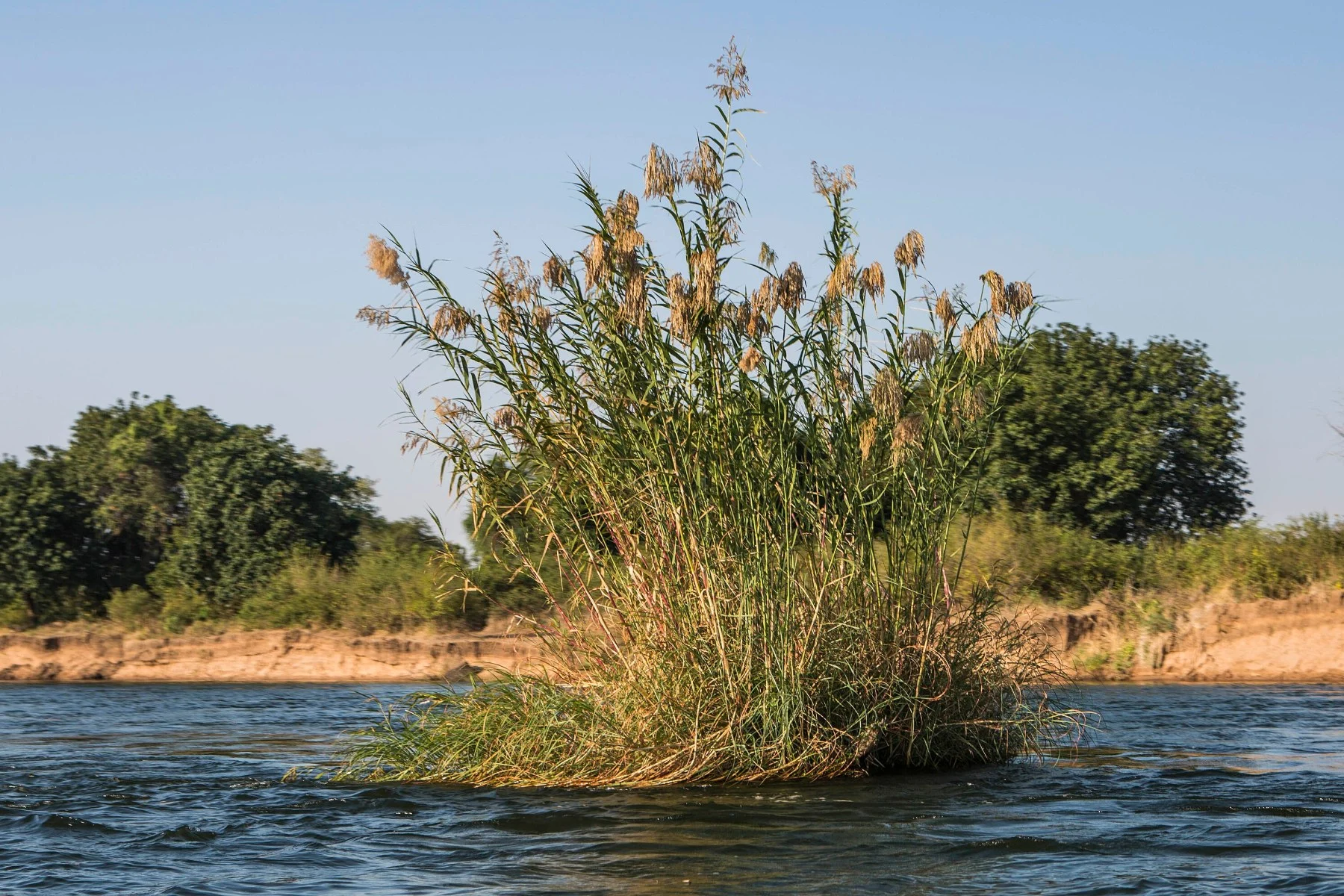
Lower Zambezi Birding: the River, the Specials and the Camps
Skimmers on the dry-season sandbanks, carmine bee-eaters in the cliffs, Lilian's Lovebird in the winterthorns and canoes through the channels, in the park across the river from Mana Pools.
Until 1983 the Lower Zambezi was the private game reserve of Zambia’s president, which is one way to keep the crowds down. It became a national park that year, and it still has no paved roads. The park covers 4,092 km² of the north bank of the Zambezi in south-eastern Zambia, with Zimbabwe’s Mana Pools National Park on the opposite bank, so the river runs down the middle of one large wildlife area split between 2 countries.
For birders it is a river park first. Time + Tide, which runs camps here, puts the park’s list at more than 370 species, and Zambia Tourism calls the birdlife along the riverbanks exceptional. Much of it is watched from a boat or a canoe, the only kind of birding where the hide drifts.
How the park is laid out
The park slopes from the Zambezi Escarpment in the north down to the river. Zambia Tourism describes the escarpment as a physical barrier to most of the park’s animals, which is why the game, and most of the birding, is concentrated on the valley floor. The higher ground in the north is Southern Miombo woodland, and the lower slopes are mopane, according to Wikipedia’s summary of the park’s ecoregions.
The habitats come in bands from the water’s edge:
- The riverine fringe: a thick strip of ebony and fig trees overhanging the river.
- The floodplain: open ground fringed with mopane and scattered with winterthorn trees and big acacias. Zambia Tourism lists the winterthorn as Acacia albida, a tree 10 m to 30 m tall, and notes that elephants eat the pods and pass about 40 percent of the seeds intact, which makes them the park’s most dedicated gardeners.
- The hills: rolling country behind the floodplain, covered in broadleaf woodland.
- The channels and islands: side channels of the Zambezi, where the canoe trips go.
The Chongwe River marks the park’s western boundary. Zambia Tourism also notes there are famously no giraffes, because the hilly terrain does not suit them. Birders lose nothing by it.
The birds of the river
Zambia Tourism’s list of what to look for along the banks starts, as every Zambezi list does, with the African Fish Eagle, which it says can be seen and heard for miles around. It goes on to White-fronted and Southern Carmine Bee-eaters nesting in the cliffs, Red-winged Pratincole, the black eagle now called Verreaux’s Eagle, and vast swarms of quelea. Its named specialities are Trumpeter Hornbill, Meyer’s Parrot and Lilian’s Lovebird, with Narina Trogon moving in for the summer.
Lilian’s Lovebird is the one most visiting birders will want to tick. Chula Island Camp, on an island in the park, names it among its birds, along with African Fish Eagle and African Pitta.
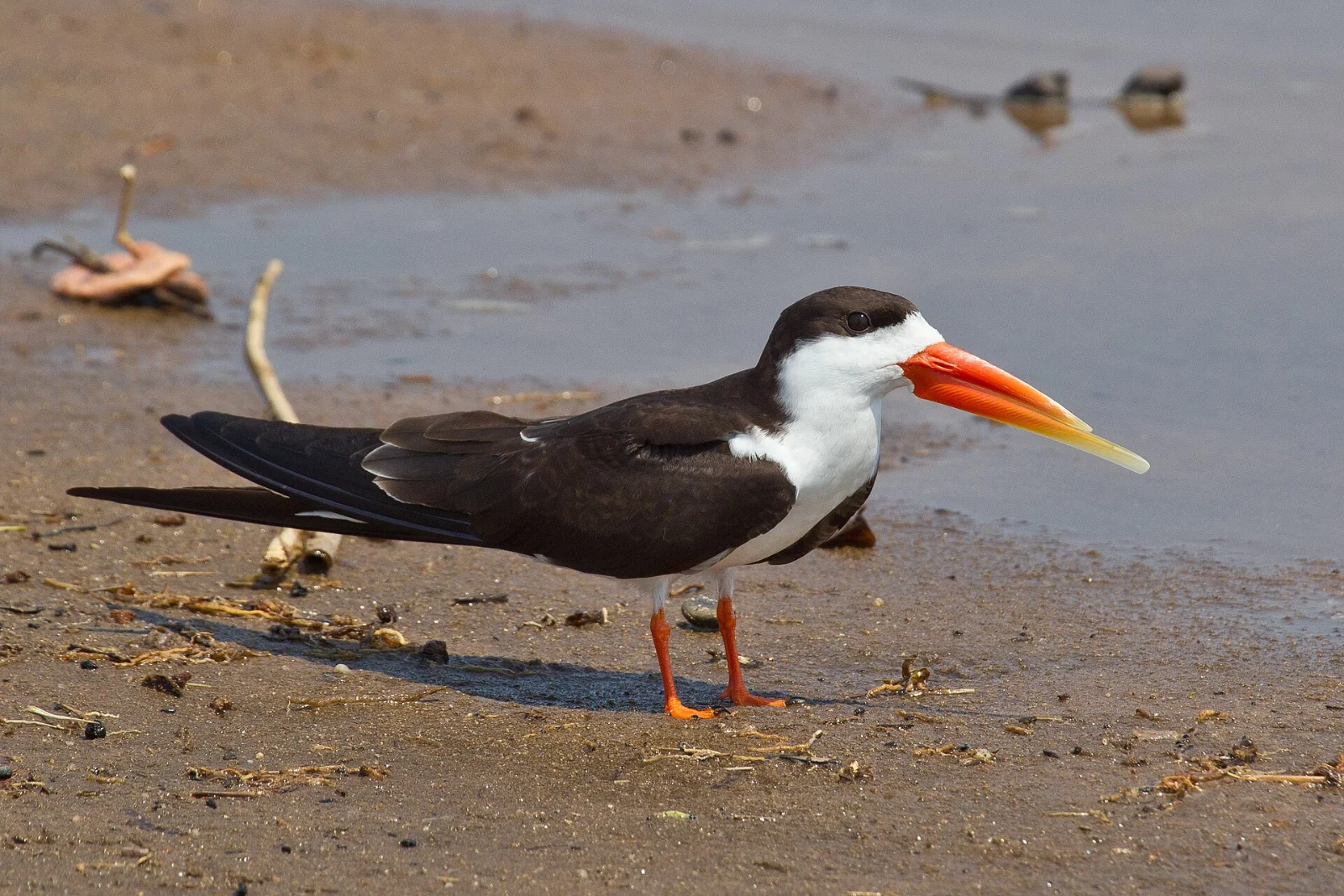
Time + Tide’s birding page names African Skimmer and Pel’s Fishing Owl among the birds of its 2 Zambian parks, the Lower Zambezi and South Luangwa. For the owl, technique matters as much as the park: see how to find Pel’s Fishing Owl.
The birding year, month by month
Time + Tide sets out the Lower Zambezi’s birding calendar more clearly than most, and the season changes the river as much as the list:
| Months | What changes | Birds Time + Tide names |
|---|---|---|
| April and May | Waters settle; floodplains stay lively | African Jacana, White-fronted Bee-eater |
| June and July | Cool and dry; sandbanks are exposed | African Skimmer, Goliath Heron, White-crowned Lapwing |
| August and September | The river draws in nesting specialists | Southern Carmine Bee-eater |
| October to mid-November | Heat builds; first summer migrants return | Woodland Kingfisher, European Roller |
The sandbanks are the reason for a June or July trip. Time + Tide says that is when African Skimmers, Goliath Herons and White-crowned Lapwings gather on the exposed sand, and the dry months are when the river leaves them the room.
The bee-eater colonies are the reason for a September trip. Time + Tide’s carmine pages say the birds arrive at the end of August to dig their tunnels and that the colonies can be watched from September to November. Zambia Tourism describes the birds at work on their nests in the riverbanks as flourishes of scarlet, which, for once, is not overstating a bird. The carmine bee-eater colonies guide covers how to watch one without flushing it.
When to go
Zambia Tourism gives July to October as the best time to visit, and says virtually all lodges and canoeing operators are open from about April to November. From April to June the bush is still dense and the grass long, so animals are harder to spot and may be skittish after a rainy season with few vehicles about. Many camps close from mid-November, when the rains begin. Chula Island Camp, for example, opens from 1 April to 31 October.
The African Pitta is the bird that tests this calendar. Chula Island Camp’s operator gives February and March as the pitta months in the Lower Zambezi region, when the camp itself is closed, while the birding tours that target the bird across the river go from late November into December. Treat the Lower Zambezi as a dry-season birding park, and see where to see an African Pitta for the sites and months that work.
Birding by boat and canoe
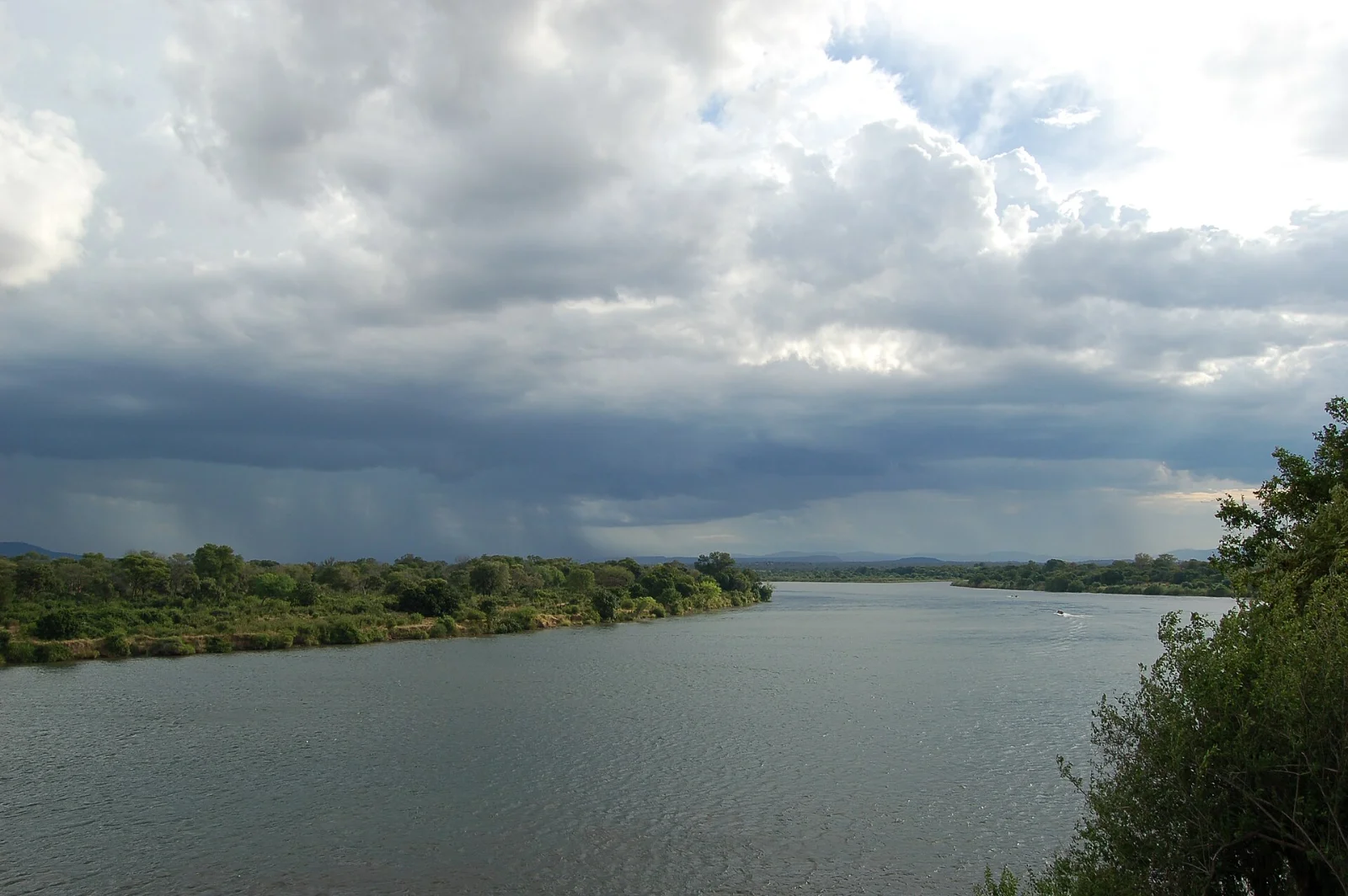
Zambia Tourism describes this stretch of the Zambezi as fairly calm and predictable, unlike the Luangwa River, which is why boating, fishing and canoeing are popular, especially guided kayaking through the channels. Fishing is at its best in September and October, so expect to share the river with anglers then.
Chula Island Camp runs canoe safaris from the camp along the river channels and riverine vegetation, and says its camp-based guides learn the local bird calls, behaviour and habitats. Dulini Anabezi, in the eastern part of the park, gives over 350 species for its area. It can pair birders with an expert birding guide on request, and birders watch from its Zambezi Deck or go out by boat on the river and the Kulefu Channel.
Getting there and park fees
Zambia Tourism says the quickest way in is to fly from Lusaka to the Royal or Jeki airstrips, a short flight that shows off the sheer size of the Zambezi; Time + Tide gives about 30 minutes. The lodge then collects guests and runs the activities. By road, lodges and canoe operators offer pick-ups from Lusaka and Chirundu in Zambia or from Kariba in Zimbabwe. Self-drivers reach the western boundary at the Chongwe River from Chirundu on a rough road, with a 4×4 recommended and a pontoon over the Kafue River on the way.
Zambia Tourism’s 2025 schedule, the latest published, puts the Lower Zambezi’s park fee at US$25 a day for international visitors, US$20 for SADC residents and US$30 a day for self-drivers.
The other bank and the bigger picture
Mana Pools on the Zimbabwe bank shares the same river, floodplain and many of the same birds, with walking allowed on its floodplain. The Mana Pools birding guide covers that side.
The park has had reminders that wilderness needs defending. A copper mine, Kangaluwi, was approved inside the Lower Zambezi in 2014, and in May 2023 Zambia’s Environmental Management Agency and the Ministry of Green Economy and Environment ordered work on it paused for breaching its conditions, according to the Reuters and Lusaka Times reports cited by Wikipedia.
Where to stay
The 2 places to stay in the directory inside the Lower Zambezi National Park:
| Place to stay | Where | For birders | From |
|---|---|---|---|
| Chula Island Camp | Island in the Zambezi, Lower Zambezi National Park, Zambia | Bird guides on staff, canoe safaris, Lilian’s Lovebird | Ask the lodge |
| Dulini Anabezi | Eastern Lower Zambezi National Park, Zambia | Birding guide on request, boats on the Kulefu Channel | Ask the lodge |
Camp opening dates, park fees and river levels change from year to year. Facts were checked on 15 November 2026 with Zambia Tourism’s Lower Zambezi page, Time + Tide’s birding page and each listing on Birding Dispatch. Confirm fees with the Department of National Parks and Wildlife and opening dates with each camp before you book.
More from the Journal
 Namib-Naukluft and Sossusvlei for Birders: Dune Lark, Desert Raptors and the Naukluft SpecialsA lark that lives on the dunes and nowhere else, Lappet-faced Vultures nesting in the desert, coursers on the gravel plains and the northern specials around the Naukluft cliffs, in one of Africa's largest parks.
 Lake Baringo and Lake Bogoria Birding: The Owl Walks, the Cliffs and the FlamingosA local guide who knows where every nightjar and eagle-owl slept last night, thorn scrub full of hornbills, a Goliath Heron colony on a rock, and the flamingo lake next door that keeps rising.
 Akagera Birding: Rwanda’s Savanna, Lakes and Papyrus, and the Shoebill ChancesRed-faced Barbet in the southern woodland, Papyrus Gonolek and Carruthers's Cisticola in the swamps, a lake of hippos and lapwings, and a Shoebill that hides in the wetlands more than it shows.
The Pigeon Post
Every Thursday: 1 bird, 1 place to go and 1 place to stay, by email. Sign up and get our printable checklist of the 163 endemics of southern Africa.