
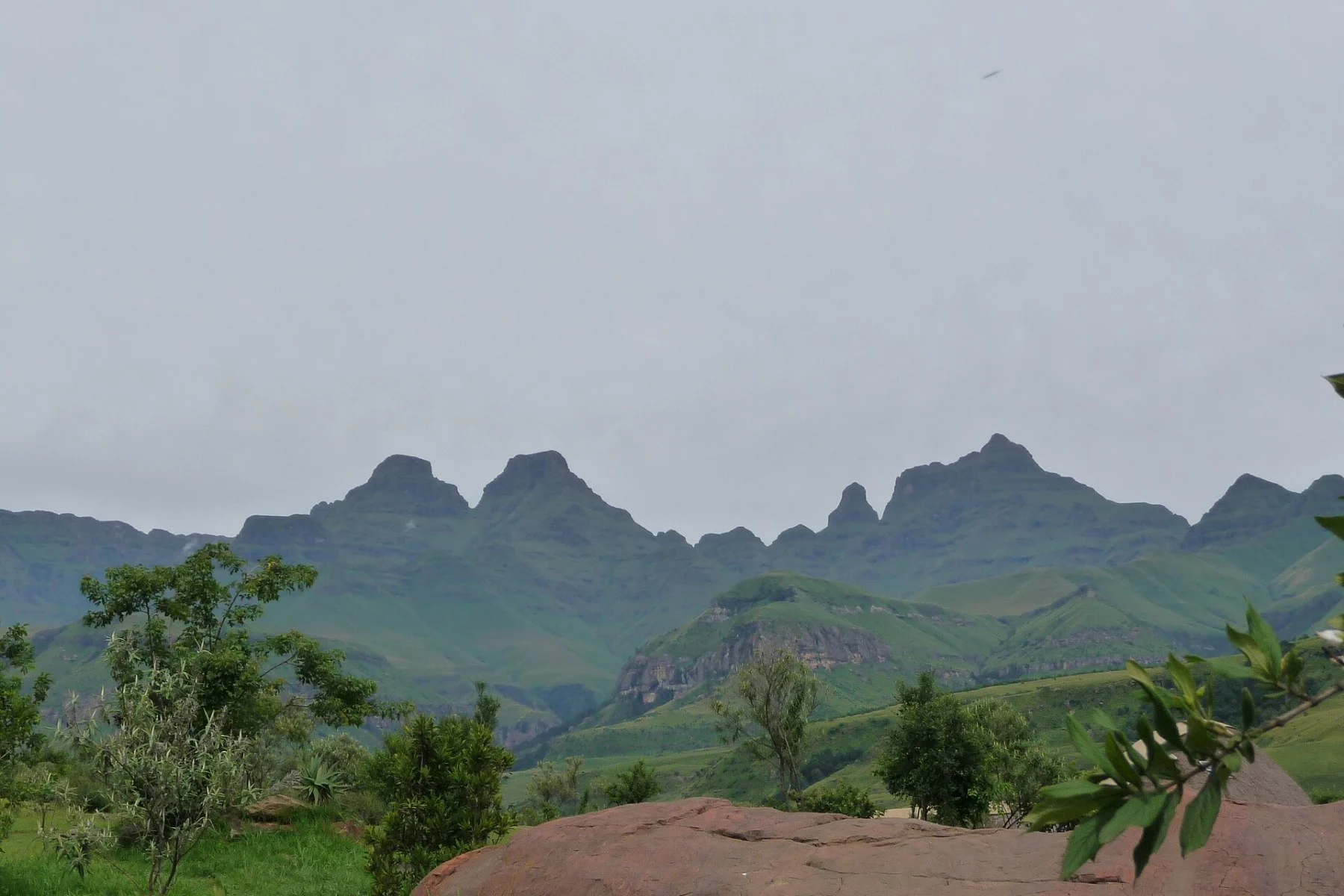
Central and Northern Drakensberg Birding: Royal Natal, Cathedral Peak and Giant’s Castle
Drakensberg Rockjumper and Drakensberg Siskin on the high slopes, Bearded Vultures at the Giant's Castle hide, Gurney's Sugarbird in the protea belt, and the birder-friendly stays from the Sentinel to Cathedral Peak.
The Drakensberg is a wall about 200 km long, and it has a population problem in the best sense. BirdLife International’s Important Bird Area account for the Maloti-Drakensberg Park says the park holds more than 1,325 Cape Vultures, with at least 215 breeding pairs, and that some of them fly up to 54 km to a carcass. That is a lot of very large birds commuting along one mountain range, and it is only the start of the list.
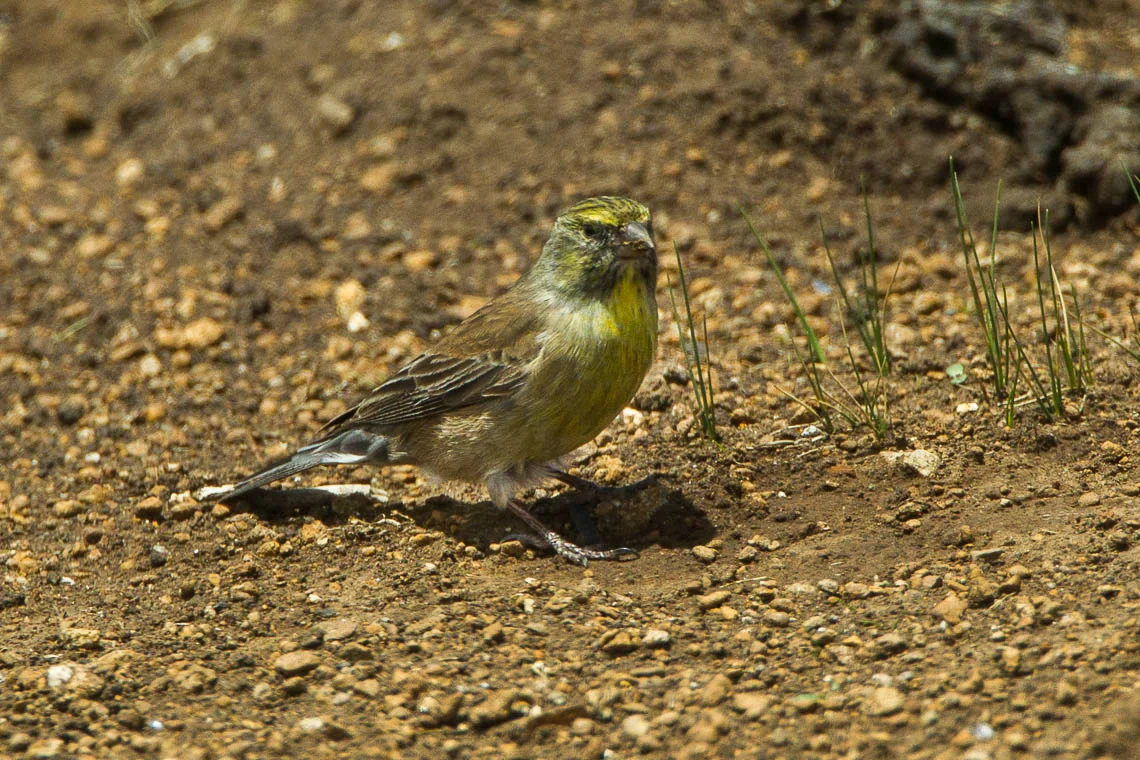
The same account calls the park a critical part of the Lesotho highlands Endemic Bird Area, because it holds good numbers of all 3 of the area’s restricted-range species: Drakensberg Rockjumper, Drakensberg Siskin and Mountain Pipit. The southern end of the range, Sani Pass and Underberg, has its own guide in birding Sani Pass and the southern Drakensberg. This one covers the middle and the north: Royal Natal and the Sentinel, the Cathedral Peak valley and Giant’s Castle.
The short answer
Base yourself near Bergville for the north or near Winterton for Cathedral Peak, and plan at least 1 high day. The easiest high-altitude birding in the north is the road and trail from Witsieshoek Mountain Lodge to the Sentinel, above Royal Natal, for Drakensberg Rockjumper, Drakensberg Siskin and Sentinel Rock Thrush. Book the Giant’s Castle vulture hide well ahead for Bearded Vulture. Spend the rest of the time in the protea belt and the forested kloofs lower down. Go in summer for Mountain Pipit, and in winter for the hide.
How the mountain is stacked
The BirdLife account describes 3 bands, and the birds sort themselves by them. The montane zone runs from about 1,280 to 1,830 m: grassland on the valley floors, Protea parkland on the spurs, and patches of tall evergreen forest in the kloofs and on the stream banks where fire does not reach. The subalpine zone climbs to about 2,865 m, and above that is the alpine zone, a heath of Erica and Helichrysum up to about 3,500 m.
Each band has its own list. The Protea woodland holds Gurney’s Sugarbird. The forest patches hold Chorister Robin-Chat, Bush Blackcap, Barratt’s Warbler and Forest Canary. The rocky outcrops are the haunts of Cape Eagle-Owl, Ground Woodpecker, Buff-streaked Chat, African Rock Pipit and Sentinel Rock Thrush, and the alpine heath supports Grey Tit, Sickle-winged Chat and Layard’s Warbler. A birding day here is a slow climb through the field guide.
Royal Natal and the Sentinel
Witsieshoek, on the Free State side of the escarpment, looks down over Royal Natal National Park, and BirdLife South Africa’s GoBirding guide says it gives convenient access from Gauteng to a range of Drakensberg specials. The road is tarred from Phuthaditjhaba to Witsieshoek Mountain Lodge, past a checkpoint into the Witsieshoek Conservation Area. Jackal Buzzard, Rock Kestrel, White-necked Raven, Drakensberg Prinia, Cape Grassbird and Wing-snapping Cisticola are the usual welcome party.
The lodge grounds are good for Malachite Sunbird, Red-winged Starling, African Olive Pigeon and, in summer, Mountain Pipit. The lodge also runs a vulture restaurant that regularly draws Bearded Vulture, mostly in the mornings, with Cape Vulture and Lanner Falcon among the other regulars. Its listing says the food goes out when conditions allow and that clear, calm mornings are best.
The high birding is on the gravel road of about 7 km from the lodge to the Sentinel car park, and on the trail beyond it. GoBirding says Drakensberg Rockjumper favours the rock-strewn slopes beyond the car park, and Drakensberg Siskin the higher reaches, especially towards the chain ladder. Look up, too, for Bearded Vulture and Verreaux’s Eagle, and for African Black Swift and Alpine Swift. The last stretch to the car park is 4×4 only, and the lodge offers shuttles in its own vehicles, which leaves the driver free to look at swifts instead of ruts.
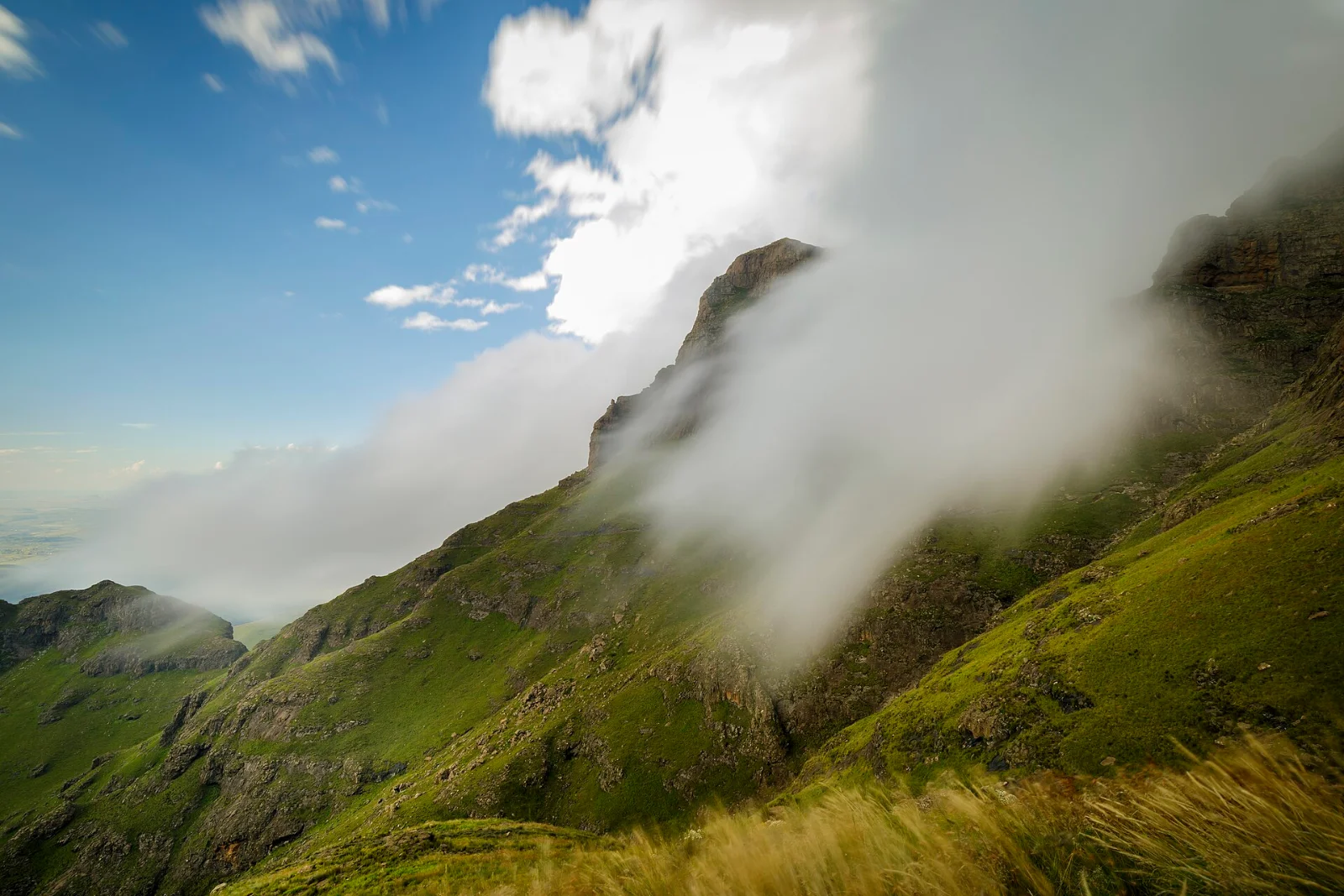
The northern valleys below the Amphitheatre
Down on the KwaZulu-Natal side, the resorts off the Bergville road put birders within reach of Royal Natal. The Cavern Drakensberg Resort & Spa publishes a checklist of 204 species for its reserve, runs early-morning bird walks from the terrace and holds birding weekends guided by David Weaver. It names Gurney’s Sugarbird, Half-collared Kingfisher, African Black Duck and Mocking Cliff Chat, and says April to June is the time for sunbirds and sugarbirds in the flowering aloes.
Close by, aha Alpine Heath Resort recommends its 1.3 km River Meander for birding, and its 10.5-hour Alpine Signature Hike visits a Cape Vulture nesting colony; book it 48 hours ahead and pack lunch, and probably dinner. Montusi Mountain Lodge, near Bergville, is BirdLife Recommended, planted indigenous gardens to draw birds, has feeders and names Southern Bald Ibis and Southern Ground Hornbill. Little Switzerland Resort, on the R74 at Oliviershoek Pass, reports more than 300 species in its grassland, forest and cliffs and includes a guided bird walk.
Cathedral Peak
The Cathedral Peak valley, reached by road via Winterton, is about 250 km from Durban by the hotel’s own reckoning. Cathedral Peak Hotel runs a guided birdwatching walk every Tuesday and reports more than 200 species on its grounds, across rivers, wooded areas and gardens below the peaks. Its website mentions Verreaux’s Eagle-Owl and Red-chested Cuckoo, the second of which is much easier to hear than to see, as anyone who has spent a summer morning failing to find one will know.
Further down the valley, Tugela River Lodge, about 22 km from Winterton on the Tugela River, is BirdLife Recommended and lists birdwatching along the river among its activities.
Giant’s Castle and the vulture hide
Giant’s Castle, in the central Drakensberg, is the place for the bird that eats bones. Ezemvelo KZN Wildlife runs a vulture hide there that is open all year, takes a maximum of 6 people, needs your own 4×4 to reach and must be booked in advance on 033 845 1000. Ezemvelo lists Bearded Vulture, Cape Vulture, Verreaux’s Eagle, Jackal Buzzard and Lanner Falcon, and visitor guides recommend May to September, when the vultures are breeding and food is put out. A 2017 trip report found winter slots booked years ahead, so this is one reservation to make before the flights.
Our guide to where to see a Bearded Vulture compares the hide with the other sites along the range.
The specials, and where they hide
Beyond the 3 restricted-range birds, the BirdLife account is a roll call of South Africa’s grassland and mountain birds. The moist grassland with vleis and marshes holds Blue, Wattled and Grey Crowned Cranes, Southern Bald Ibis, Denham’s Bustard, African Marsh Harrier, Short-tailed Pipit and Yellow-breasted Pipit, the last of these particularly common between 2,000 and 2,300 m. South Africa’s main population of Striped Flufftail lives in the Drakensberg, where it may be locally numerous, which is not the same as visible. Black Harrier hunts over the open grassland, and Jackal Buzzard, Lanner Falcon and Black Stork nest on the cliffs.
Altitude matters for the headline birds. Drakensberg Rockjumper and Drakensberg Siskin are common and widespread in the park, especially above 2,000 m. Mountain Pipit is found mostly above 3,000 m, where it is a locally common breeding migrant, so it is a summer bird and a high one. For how these fit into the country’s full endemic list, see South Africa’s endemic birds.
When to go
Summer, from about November to March, brings Mountain Pipit back to the summits and fills the grassland with calling birds, and GoBirding lists the pipit as a summer bird at Witsieshoek. Winter is the season for the Giant’s Castle hide. The Cavern points to April to June for sugarbirds and sunbirds in the aloes. The high roads are gravel or 4×4 track, so check conditions with the lodges, and expect the weather on the escarpment to change its mind several times a day.
Where to stay
Places to stay for birders in the central and northern Drakensberg, from the Sentinel south to the Tugela:
| Place to stay | Where | For birders | From |
|---|---|---|---|
| Witsieshoek Mountain Lodge | Foot of the Sentinel, above Royal Natal | Bearded Vulture feeding site, road to rockjumper slopes | R625 pp, Namahadi Hut, no meals |
| The Cavern Drakensberg Resort & Spa | Near Royal Natal, off the Bergville road | 204-species checklist, guided birding weekends | R2,140 pp sharing, full board (to 10 Dec 2026) |
| aha Alpine Heath Resort | Northern Drakensberg, near Bergville | River Meander walk, hike to a Cape Vulture colony | Ask the lodge |
| Montusi Mountain Lodge | Near Bergville | BirdLife Recommended, feeders, Southern Bald Ibis | R3,680 pp, DB&B (Oct 2026 to Sep 2027) |
| Little Switzerland Resort | Oliviershoek Pass, R74 | 300+ species, guided bird walk | Ask the lodge |
| Cathedral Peak Hotel | Cathedral Peak valley, via Winterton | Guided Tuesday bird walk, 200+ species | R1,760 per adult, full board (seniors’ offer) |
| Tugela River Lodge | Tugela River, 22 km from Winterton | BirdLife Recommended, birding along the river | R675 per adult, self-catering (2024 tariff) |
Hide bookings, road conditions and rates in the Drakensberg change with the seasons and the weather. Facts were checked on 15 November 2026 with BirdLife International, BirdLife South Africa’s GoBirding guide and each listing on Birding Dispatch. Confirm with Ezemvelo KZN Wildlife and each place to stay before you travel.
More from the Journal
 Namib-Naukluft and Sossusvlei for Birders: Dune Lark, Desert Raptors and the Naukluft SpecialsA lark that lives on the dunes and nowhere else, Lappet-faced Vultures nesting in the desert, coursers on the gravel plains and the northern specials around the Naukluft cliffs, in one of Africa's largest parks.
 Lake Baringo and Lake Bogoria Birding: The Owl Walks, the Cliffs and the FlamingosA local guide who knows where every nightjar and eagle-owl slept last night, thorn scrub full of hornbills, a Goliath Heron colony on a rock, and the flamingo lake next door that keeps rising.
 Akagera Birding: Rwanda’s Savanna, Lakes and Papyrus, and the Shoebill ChancesRed-faced Barbet in the southern woodland, Papyrus Gonolek and Carruthers's Cisticola in the swamps, a lake of hippos and lapwings, and a Shoebill that hides in the wetlands more than it shows.
The Pigeon Post
Every Thursday: 1 bird, 1 place to go and 1 place to stay, by email. Sign up and get our printable checklist of the 163 endemics of southern Africa.