
Accessible Birding in South Africa: Wheelchair-Friendly Hides and Boardwalks
The hides, boardwalks and trails that South African National Parks itself calls suitable for wheelchair users, from Geelbek on the Langebaan Lagoon to Addo and the Kalahari.
The hide at Geelbek in West Coast National Park sits at the end of a long wooden boardwalk over the salt marsh of the Langebaan Lagoon. SANParks says a person in a wheelchair can easily enter it, and adds, with the candour of a park that knows its own planks, that weathering has made the boardwalk a bit creaky in parts. Time it with the tide and the waders come to the hide, which saves everyone a walk.
This guide covers the birding places that South African National Parks itself describes as suitable for wheelchair users, park by park. It names only hides, boardwalks and trails whose access the park states on its own pages. Where SANParks says assistance may be needed, or that a place is not accessible, that is said too. Access changes with repairs and rebuilds, so treat this as a starting list and phone the park before you go.
What SANParks says across its parks
In a 2015 media release SANParks said every national park has accommodation adapted for guests with mobility impairment, with ramps and adapted ablutions, and that its main facilities have access ramps and accessible public toilets. It described “a sprinkling” of accessible boardwalks, bird hides, picnic sites and lookout points, which is a fair word for it. Each park’s People with Disabilities page now links to a detailed accessibility profile, compiled for the parks and featured in Rolling Inspiration magazine. Those profiles are the place to check door widths, ramps and toilets before booking.
One practical point from the Garden Route page applies widely. Adapted units are held back for guests who need them, so book them directly with SANParks central reservations and ask for a unit for the mobility challenged. The park warns against booking another unit and hoping to swap on arrival.
Kruger: the hides, with 3 exceptions
Kruger has 11 bird and game-viewing hides outside the camps, all on waterholes or rivers, which means hippos, crocodiles, herons, storks, kingfishers and crakes are the usual cast. SANParks’ birding page says most of the hides are designed to be accessible to people in wheelchairs, but the older ones were not built with everyone in mind. It names them. Kanniedood, in the north of the park, is up a ladder, which rules it out. At Lake Panic, and to a lesser extent Matambeni, assistance may be required.
The page also gives the best advice for any hide, wheels or not. Sit patiently for a few minutes and a steady stream of activity appears, and people who sit in a hide all day often see more than those who drive around looking. There are no toilets at the hides, but most lie close to a rest camp or picnic site where there are. Across the park, SANParks counts 10 accessible unisex communal ablutions among its campsite ablutions, and it publishes separate access profiles for each rest camp and for the hides, picnic sites and lookouts. Our Kruger birding guide covers the hides and the roads between them.
Addo: a bird hide, an underground hide and a floodlit waterhole
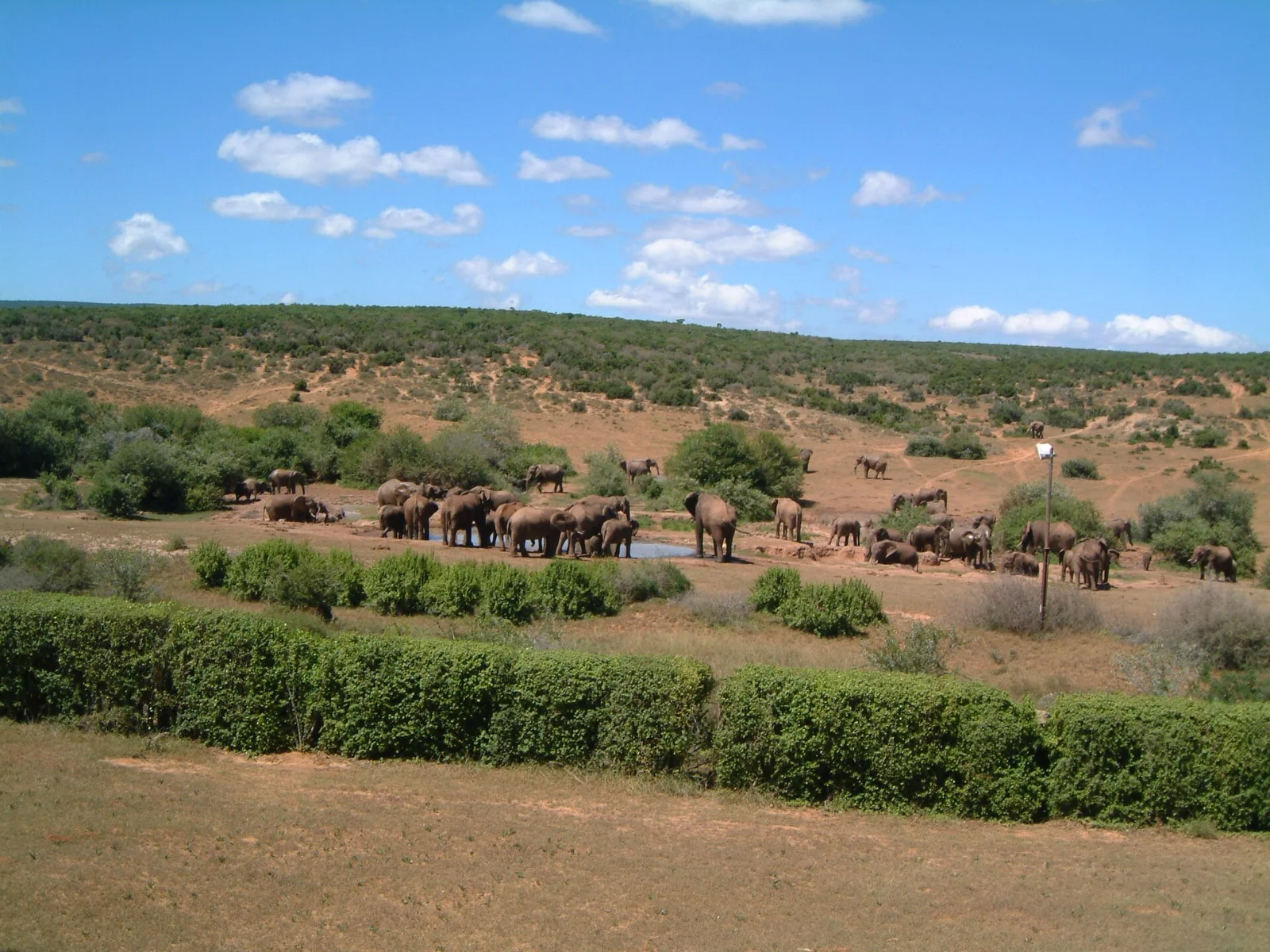
Addo Elephant National Park lists the most accessible birding of any park on its page, all inside the main camp. The Sasol Red Bishop bird hide is listed as suitable for wheelchair users. So are the floodlit waterhole viewpoint and the underground viewing hide, which puts the viewer at the eye level of whatever comes to drink, birds and elephants included. The Discovery Trail is a short walk in the main camp with one loop suitable for wheelchair users and visually impaired visitors.
For a night or more, SANParks describes a cottage and a chalet in the main rest camp as accessible to the mobility challenged, and lists an accessible cottage at a second camp in the park.
West Coast: Geelbek and the lagoon
Back at Geelbek, the West Coast page is detailed about what works and what does not. The hide is in; the views depend on the tides. In the Postberg section, open for the flowers in August and September, most of the viewing is done from a vehicle, and the toilets are spacious and easy to reach, though without rails. The path to the lagoon viewpoint there becomes too narrow for a wheelchair, and the lagoon jetties have steps, so a wheelchair user will need help. Two chalets in the park are described as disabled-friendly. Our West Coast National Park guide has the Geelbek birds and the best tides.
The Garden Route: forest boardwalks
In the Garden Route National Park, SANParks names 3 trails suitable for wheelchair users and others with mobility challenges. The one for birders is at Nature’s Valley: a short circular boardwalk beside the Groot River, made of recycled polywood so that roots, leaf litter and mud do not get in the way. It has a kick-plate on one side and a banister on the other, passes through virgin forest, and with a bit of stealth, the park says, gives good sightings of forest birds and mammals. Stealth on a boardwalk is easier than it sounds, since the boardwalk does not crunch.
The other 2 are the marked 800 m circular route at the Garden of Eden, beside the N2 between Plettenberg Bay and Knysna, and the boardwalk through forest from the car park to the Big Tree, an old Outeniqua Yellowwood near Storms River. The same page notes that the pathway through Birds of Eden, a privately run free-flight aviary near the park, is accessible throughout, though it descends into a steep ravine where some visitors may need assistance.
The Kalahari and Mokala
The Kgalagadi Transfrontier Park keeps its claims modest: limited facilities exist for all guests, it says, which is the Kalahari’s way. A hide and the predator centre at one of the main rest camps, and the information centre at the park’s southern entrance camp, are listed as accessible. SANParks lists accessible units with ramps and roll-in showers at several of the park’s camps, and notes that all of them have certain access flaws. Of the 3 wilderness camps opened in 2004, only Kieliekrankie has an adapted cabin; of the other 2, one stands on stilts and the other on top of a dune. Our Kgalagadi birding guide covers the riverbeds and waterholes, most of which are birded from the car anyway.
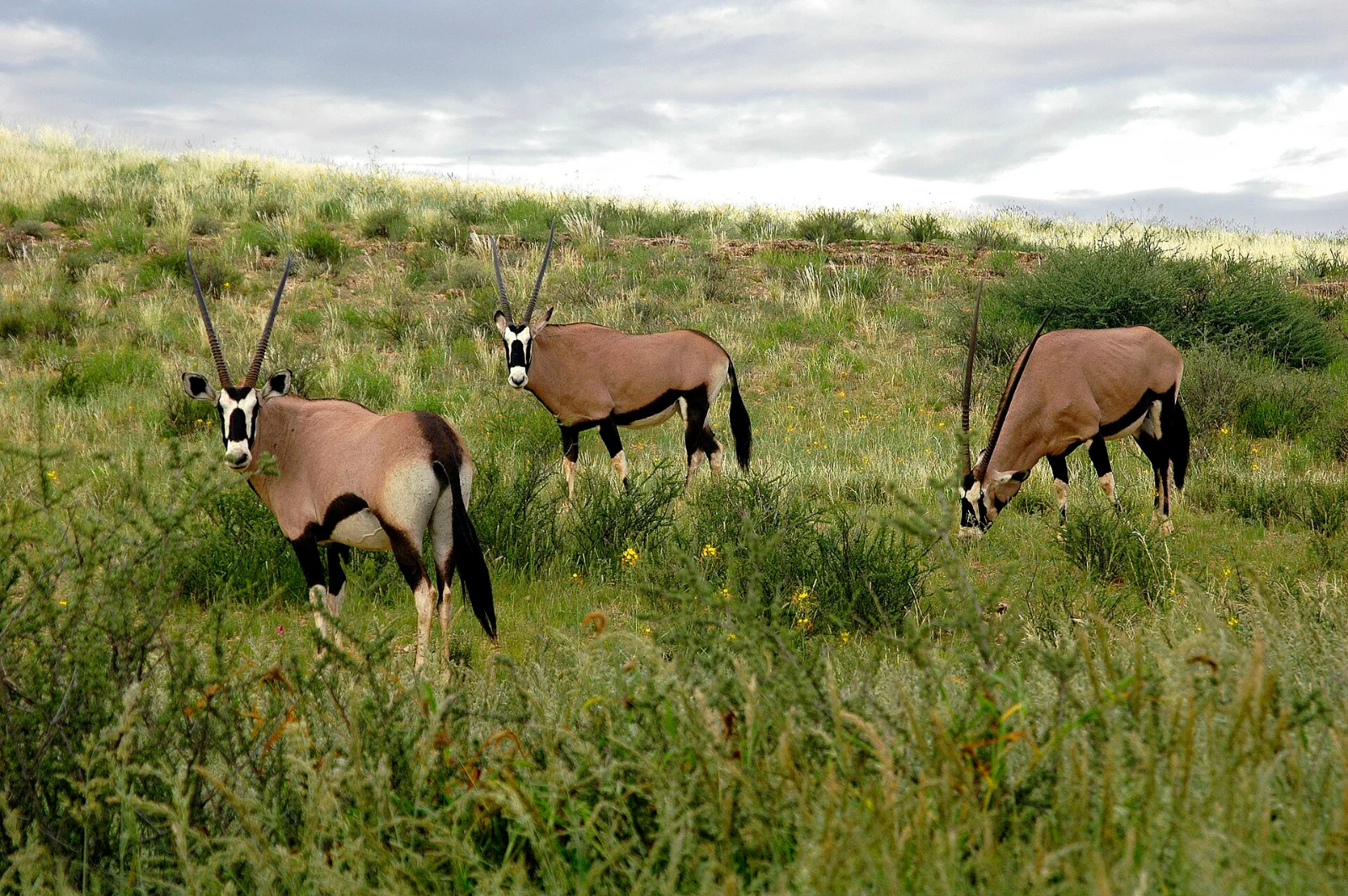
Mokala National Park, south of Kimberley, has adapted part of the game and bird-viewing hide at Stofdam for wheelchair users. The park’s main lodge has a network of pathways for wheelchair users, a universal access cottage with a permanent ramp and a view of the waterhole, and a restaurant ramp put down on request. One of the park’s game drive vehicles has a removable seat that makes room for a wheelchair.
Planning a trip
A few habits help, whatever the park. Check the park’s accessibility profile for the specific hide, as the older Kruger hides show that “a hide” does not mean the same thing everywhere. Ask about recent repairs: the West Coast boardwalk’s creak is in the park’s own description. Book adapted units directly and early. And pack for car birding, because in Kruger, the Kgalagadi and Addo most of the birds are seen from the road, where the window is the same height for everyone.
Where to stay
These listings are in parks where SANParks lists adapted accommodation:
| Place to stay | Where | For birders | From |
|---|---|---|---|
| Kieliekrankie Wilderness Camp | Kgalagadi Transfrontier Park | Adapted dune cabin; Kori Bustard, Secretarybird, Fairy Flycatcher | R2,146 a cabin for 2, self-catering |
| Mopani Rest Camp | Kruger National Park | Listed by SANParks with accessible accommodation; overlooks Pioneer Dam | R1,888 a bungalow for 2, self-catering |
Access details are SANParks’ own, from its park pages, checked on 15 November 2026. Facilities change with repairs and upgrades, so confirm the hide, trail or unit you need with the park before you travel.
More from the Journal
 Do You Need a Spotting Scope? When a Scope Helps, What to Look For and Where It MattersA scope turns grey dots on a mudflat into Curlew Sandpipers and Red Knots. When it earns its place in the car, the features that matter, and why 60x fails at noon.
 Your First Birding Safari: What to Expect, From the 05:30 Gate to the Evening ListHow a birding safari day runs, what the guide does, why the vehicle stops for a brown bird when there is an elephant over there, and the other things first-timers find odd.
 How to Log Your Bird Sightings: eBird, BirdLasser or SABAP2?eBird wants short checklists with counts, BirdLasser wants the same bird logged again and again, and SABAP2 wants 2 hours in one square. What each is for, and how to feed all 3.
The Pigeon Post
Every Thursday: 1 bird, 1 place to go and 1 place to stay, by email. Sign up and get our printable checklist of the 163 endemics of southern Africa.