
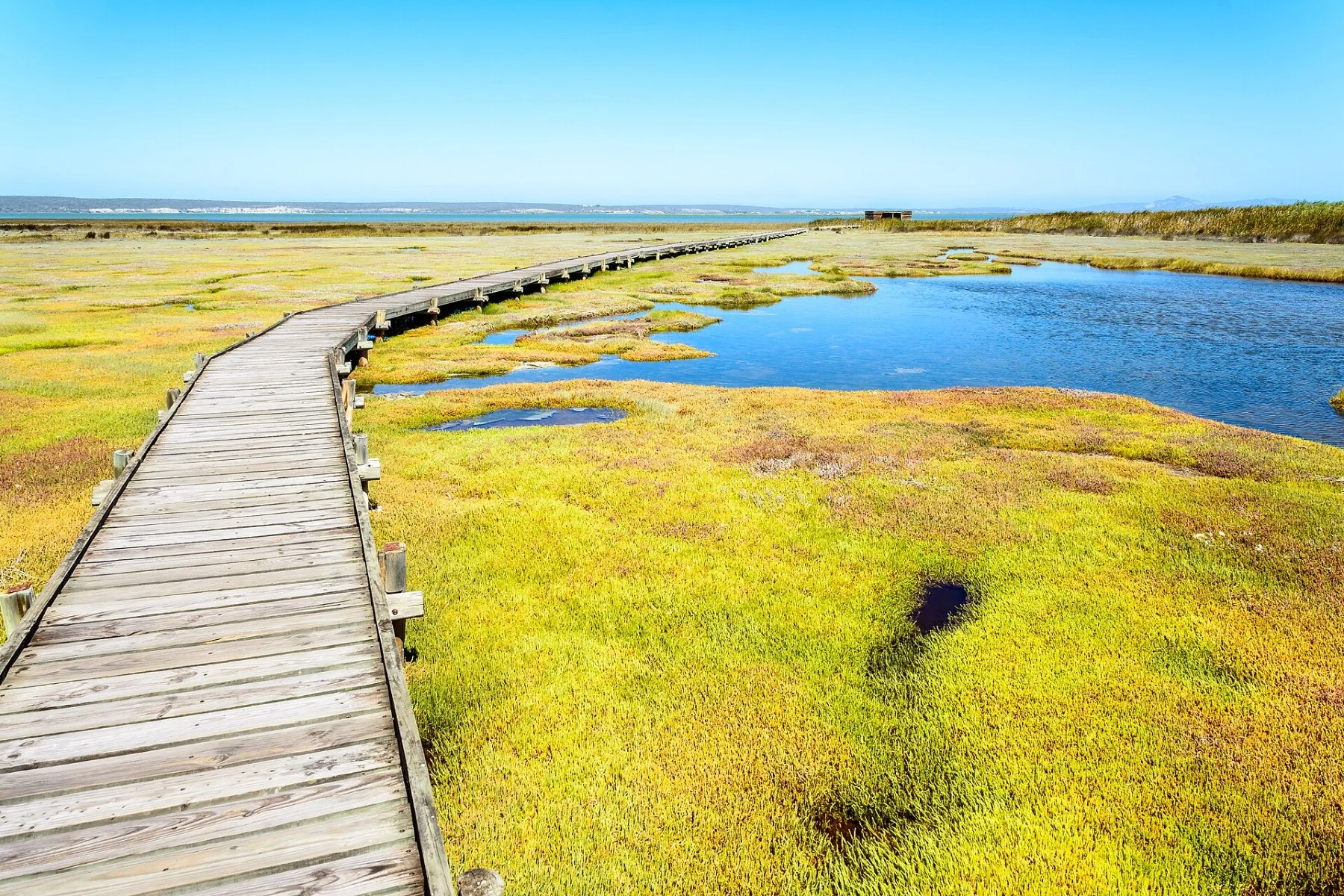
West Coast and Karoo Birding Route: 10 Days by Car from Cape Town
A 10-day self-drive from Cape Town: Langebaan's waders, the Berg River pans, Rocherpan's hides, 40,000 gannets at Lambert's Bay, Cape Rockjumper in the Cederberg and larks in the Tankwa, with a birder-friendly roost every night.
This loop starts with a lagoon full of sandpipers from Russia and ends with larks that only sing when it has rained, which in the Tankwa is not often. In between it takes in the Berg River estuary, a pan with 3 hides, a gannet colony you can walk to, and the sandstone of the Cederberg. It runs to 10 days and about 1,300 km including the day trips, all of it on roads an ordinary hire car can manage, apart from some gravel in the Karoo that asks for patience and a spare wheel.
Every night is spent at a roost, a place to stay that does something for birders, and each is listed in the Birding Dispatch directory. The drives below are Google Maps’ fastest routes, checked on 15 November 2026, and they are driving times only. Birders stop. Add the stops.
The overnight stops
- !Khwa ttu Yzerfontein, South Africa
- Quagga River Lodge Berg River, Velddrif, South Africa
- Rocherpan Nature Reserve Velddrif, South Africa
- de Pakhuys Clanwilliam, South Africa
- Inverdoorn Private Game Reserve Ceres, South Africa
Before you go
The best window is October and November. The Palearctic waders on Langebaan Lagoon build from August and peak by October, the Cape Gannets at Lambert’s Bay breed from September to January, and spring is the singing season for larks in the Tankwa. Bring a telescope for the lagoon, a tide table for Langebaan and a sense of humour about wind.
Some links on this page earn us a small commission at no cost to you.
A self-drive trip across 2 provinces is a good reason to sort out travel insurance before you leave home, particularly if a telescope is coming with you.
Day 1: Cape Town to !Khwa ttu
Drive: Cape Town International Airport to !Khwa ttu, 84 km, about 1 hour on the R27.
Collect the car at the airport; you can compare car hire at Cape Town International before you book. The first day is short on purpose. !Khwa ttu sits on Grootwater Farm off the R27 near Yzerfontein, with fynbos, renosterveld, coastal sandveld and waterholes. Its guest guide includes a bird checklist, reception keeps copies, and a hide sits about 450 m along the Eland’s Trail. Cape Spurfowl, Blue Crane, Common Ostrich and Bokmakierie are the birds it names, which is a decent welcome for an afternoon.
Roost: !Khwa ttu, 2 nights.
Day 2: West Coast National Park
Drive: !Khwa ttu to the Geelbek visitor centre, 25 km, about 30 minutes each way.
This is the day to plan around the tide. BirdLife South Africa’s GoBirding guide says the incoming tide after low water is often best at Geelbek, because the rising water pushes the waders towards the 2 hides. Peter Ryan’s site guide puts the main Geelbek hide at its best around mid tide and the Seeberg hide, on the eastern shore, around high tide. In practice: reach Geelbek about 2 hours after low water, then drive round to Seeberg as the water peaks.
Most of the flock will be Curlew Sandpipers and Little Stints, with Sanderling, Ruff, Bar-tailed Godwit and Grey Plover mixed in, and Red Knot and Terek Sandpiper turning up most years for anyone patient enough to sort through several thousand small grey birds. Between hides, drive the strandveld slowly for Black Harrier, which GoBirding says can appear anywhere in the park; the Abrahamskraal waterhole hide, the Atlantic viewpoint and the Seeberg lookout are the places to scan. Southern Black Korhaan calls from the granite hill below the Seeberg lookout early and late, and Cape Penduline Tit works the bushes by the Seeberg boardwalk.
Gates open at 07:00. SANParks’ conservation fee from 1 November 2026 is R85 for South African adults and R166 for international visitors, rising in the August and September flower season, when the Postberg section opens. The West Coast National Park guide has the full tide plan.
Day 3: The Berg River at Velddrif
Drive: !Khwa ttu to Quagga River Lodge in Velddrif, 82 km, about 55 minutes direct. Going north through the park instead adds lagoon time and is the better birding.
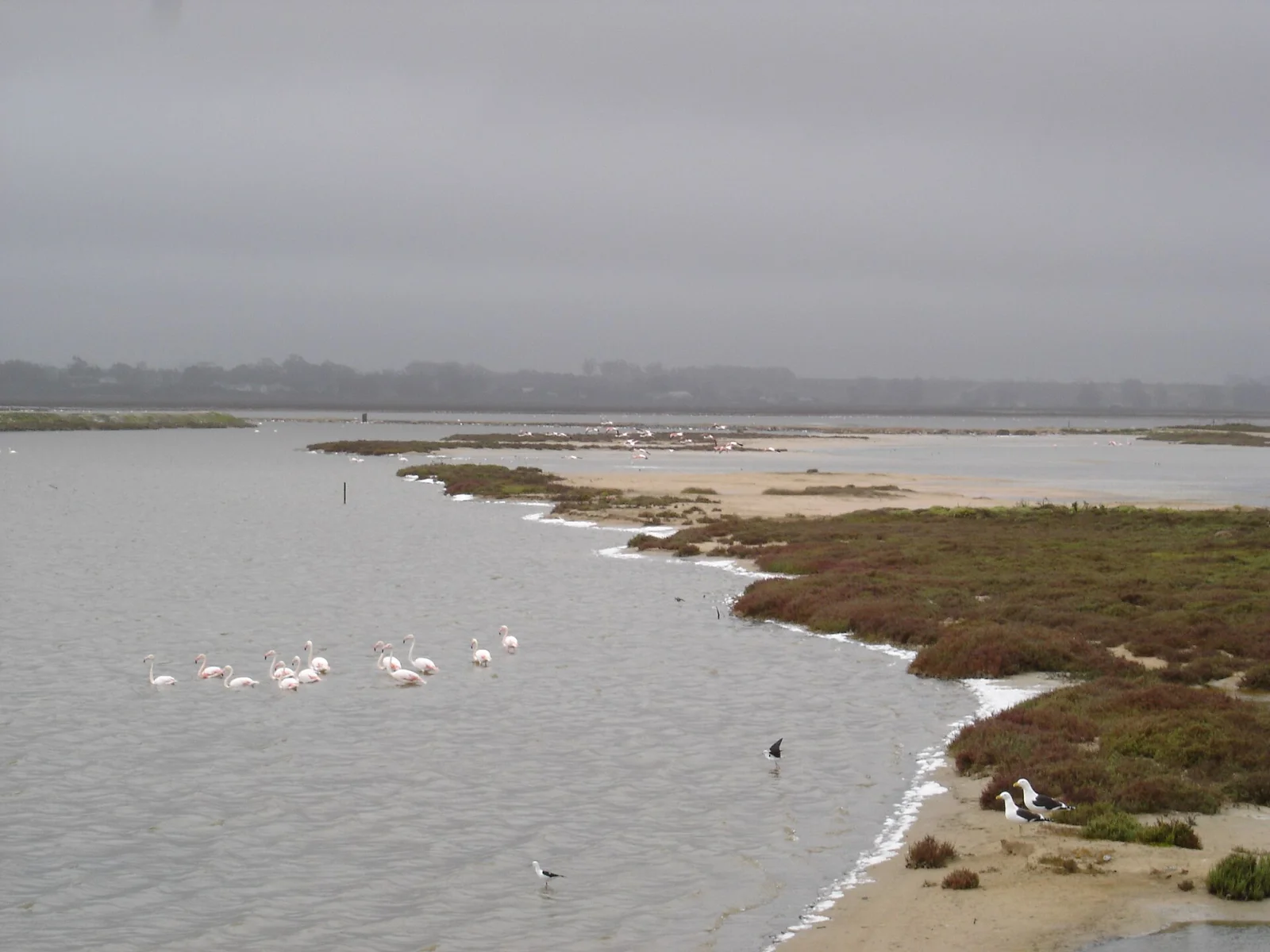
The Berg River estuary reverses the Langebaan rule: here high tide is best, because the waders come off the river mud to roost on the salt pans. GoBirding sends birders to the Kuifkopvisvanger pans and the neighbouring Kliphoek Salt Pans, both entered through Kuifkopvisvanger reception from 07:00 at R50 per person. Kliphoek is one of the best places anywhere for close Chestnut-banded Plover, Red-necked Phalarope has become regular in recent summers, and Greater Sand Plover has turned up among the high tide roosts.
Quagga River Lodge, on the river at Velddrif, publishes its own guide to the lower Berg estuary, profiling 44 species with a free bird guide to download, and says more than 200 species have been recorded between Velddrif and the mouth at Laaiplek. African Oystercatcher, Greater Flamingo, Pied Avocet and Malachite Kingfisher are among them. It is a rare lodge that hands out homework, and useful homework at that.
Roost: Quagga River Lodge, 1 night.
Day 4: Rocherpan
Drive: Velddrif to Rocherpan Nature Reserve, 36 km, about 30 minutes.
Rocherpan is a CapeNature reserve about 25 km north of Velddrif, with self-catering cabins beside a seasonal vlei, 3 hides on the water and a reserve list of 183 species. Great White Pelican, both flamingos, Cape Shoveler and African Oystercatcher are the birds it names. The pan fills after winter rain and can be dry in some summers, so phone ahead; a hide over dry sand is restful but unproductive. GoBirding’s strandveld trail adds White-backed Mousebird, Grey Tit, Cape Penduline Tit and Karoo Lark, with Black Harrier at the northern end.
Roost: Rocherpan Nature Reserve, 2 nights.
Day 5: Lambert’s Bay and Bird Island
Drive: Rocherpan to Bird Island Nature Reserve, 87 km, about 1 hour each way up the coast road past Elands Bay.
Bird Island has been joined to the mainland by a breakwater since 1959, and CapeNature calls it the only Cape Gannet colony that the public can reach easily. Park at the harbour, buy a permit and walk about 100 m, and more than 40,000 gannets are in front of you, all of them busy and none of them silent. CapeNature counted over 43,000 birds in the 2025/26 season. The hide puts you close enough for the greeting display, in which pairs point their bills to the sky and tap them together. Cape, Crowned and White-breasted Cormorants and Hartlaub’s Gull share the island, and White-chinned Petrels and Sooty Shearwaters can show offshore after strong winds.
The 2026 fee is R60 for adults and R35 for children, the reserve is cashless, and the gate is open 08:00 to 18:00, with the last permits sold at 17:30. CapeNature closes the breakwater in rough seas. On the way back, Jakkalsvlei on the northern edge of town often holds Greater Flamingos and costs nothing, which is the best price a flamingo has ever been offered at. The Lambert’s Bay seabird guide covers the colony’s comeback.
Day 6: Into the Cederberg
Drive: Rocherpan to de Pakhuys, near Clanwilliam, 137 km, about 1 hour 40 minutes.
The drive heads inland to Clanwilliam and up the R364 towards the Pakhuis Pass. West Coast Way, the regional tourism site, calls the crest of the Pakhuis Pass, at 922 m, a good birding spot for Cape Rockjumper, a fynbos endemic that BirdLife South Africa’s 2025 Red Data Book gives a range starting in the Piketberg and Cederberg. The bird runs, hops and stands on rocks looking cross; listen for the call first.
de Pakhuys is a farm in the Cederberg near Clanwilliam with self-catering cottages, glamping cabins and a campsite. Its own birding page covers the garden, the Brandewyn River, the farm dams and the fynbos trails.
Roost: de Pakhuys, 2 nights.
Day 7: A Cederberg day
Drive: None needed.
Spend it on foot. de Pakhuys names Cape Rockjumper, Protea Canary, Verreaux’s Eagle, Orange-breasted Sunbird and Cape Siskin, and the habitats move from mountain fynbos to the river and the dams within a morning’s walk. Verreaux’s Eagles hunt rock hyraxes along the cliffs, so a dassie that suddenly vanishes into a crack is worth a look upwards. The Cape Rockjumper guide has the other sites for the bird if the Cederberg pair is being difficult.
Day 8: Cederberg to the Tankwa edge
Drive: de Pakhuys to Inverdoorn Private Game Reserve, 269 km, about 3 hours 15 minutes on Google Maps’ fastest route.
This is the long day, so leave after breakfast and save the birding for the afternoon. Inverdoorn is on the R356 near Ceres, on the edge of the Tankwa Karoo, and gives at least 180 species for the Tankwa. Guests can book a birdwatching drive with a ranger at reception, best early or late in the day, and the reserve names Kori Bustard, Karoo Korhaan, Sclater’s Lark, Stark’s Lark, Namaqua Sandgrouse, Tractrac Chat and Rufous-eared Warbler. Rates are full board with game drives included, so supper is somebody else’s problem for once.
Roost: Inverdoorn Private Game Reserve, 2 nights.
Day 9: Tankwa Karoo National Park
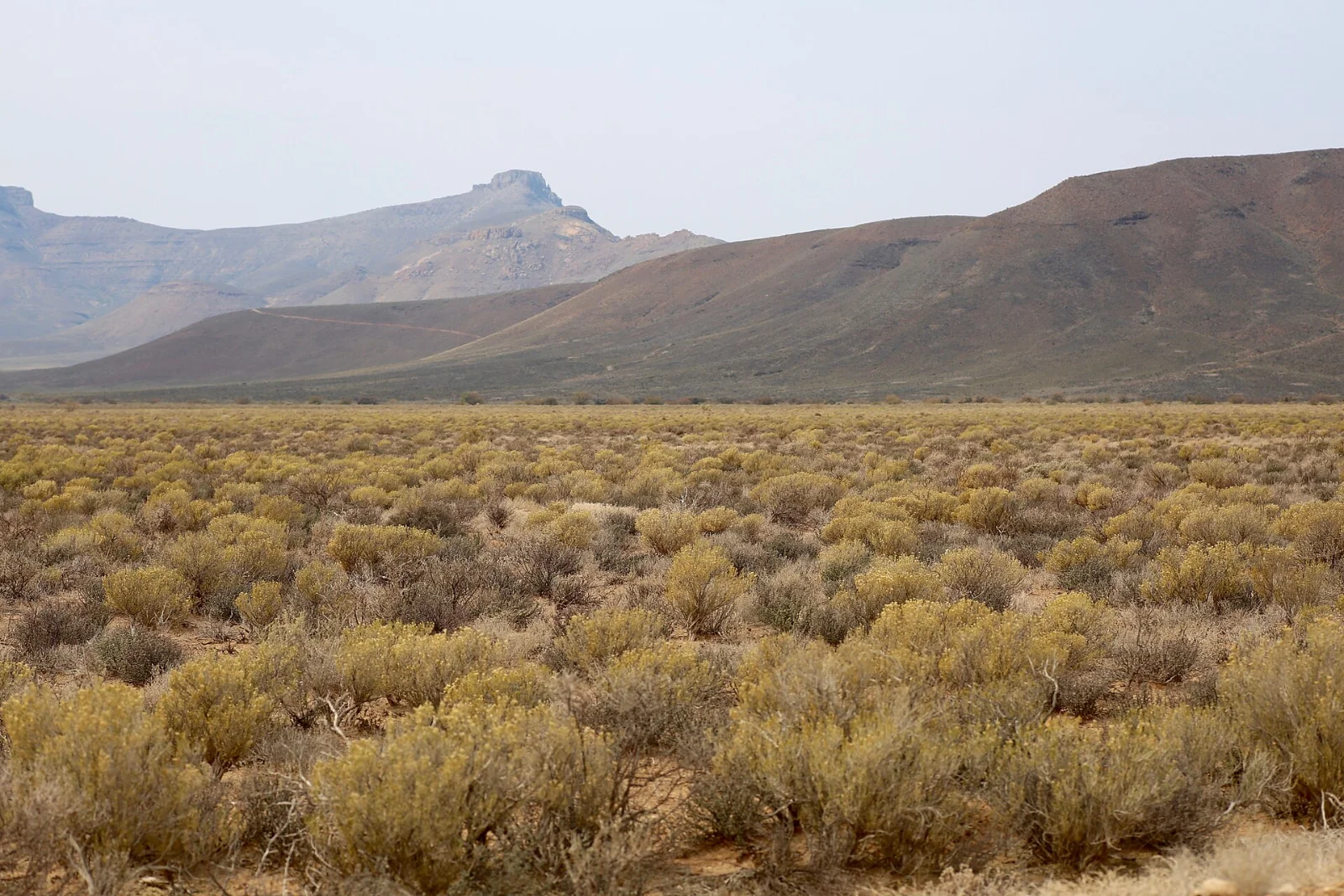
Drive: Inverdoorn to Tankwa Karoo National Park on the R355, 123 km, about 1 hour 40 minutes each way by Google Maps, much of it gravel, so allow longer.
GoBirding’s route, written by Vince Ward of Birding Africa, starts at the turn-off to the Tankwa Padstal. About 2 km north, an acacia-lined river course is good for Pririt Batis, Cape Penduline Tit and Fairy Flycatcher, and the drainage lines are worth checking for flocks of Karoo Eremomela. The P2250, reached after 20 km, is what GoBirding calls “a hidden gem”: in spring expect Spike-heeled, Karoo, Large-billed and Red-capped Larks, Karoo Korhaan all year and Ludwig’s Bustard in winter and spring. Burchell’s Courser occurs in small numbers along the road and more reliably in the park, and Black-eared Sparrowlark arrives after exceptional rain and keeps no appointments.
The 2026/27 conservation fee is R63 for South Africans and R295 for international visitors. GoBirding advises a high-clearance vehicle and a spare wheel; a 4×4 is not needed for most of the park. Fill up in Ceres before you set out; the larks will not mind waiting. The Karoo birding guide has more on the park.
Day 10: Back to Cape Town
Drive: Inverdoorn to Cape Town International Airport, 207 km, about 2 hours 30 minutes.
Take a last early birding drive if the flight allows, or stop at Ceres for coffee and the list.
Where to stay
The roosts on this route, in the order you reach them:
| Place to stay | Where | For birders | From |
|---|---|---|---|
| !Khwa ttu | Yzerfontein, on the R27 | Hide on the Eland’s Trail, bird checklist at reception | Ask the lodge |
| Quagga River Lodge | Velddrif, on the Berg River | Own Berg estuary bird guide, 200+ species | R1,300 a chalet a night, self-catering |
| Rocherpan Nature Reserve | 25 km north of Velddrif | 3 hides on the vlei, 183 species | R1,430 a 2-person cabin, self-catering (off peak) |
| de Pakhuys | Near Clanwilliam, Cederberg | Own birding page; Cape Rockjumper, Protea Canary | Ask the lodge |
| Inverdoorn Private Game Reserve | R356 near Ceres, Tankwa edge | Ranger-led birding drives, Sclater’s and Stark’s Larks | R4,425 pp sharing, full board (1 May to 31 October 2026) |
For a shorter trip, the birding stays near Cape Town guide covers the roosts within an easy drive of the city.
Drive times are Google Maps’ estimates and were checked on 15 November 2026; they do not include stops. Park fees, gate times, hide access and lodge rates change, and the Rocherpan pan can be dry. Confirm with SANParks, CapeNature and each place to stay before you travel.
More from the Journal
 Zululand Birding Route: a 10-Day Loop by Car from DurbanA 10-day self-drive from King Shaka airport: Dlinza's canopy, Green Barbet at Ongoye, the Cape Vidal road, Hluhluwe-iMfolozi's vultures, the uMkhuze hides and Ndumo's pans, with a birder-friendly roost every night.
 Where to Stay for Birding Big Day: The Best Bases for a Big CountOn Saturday 5 December, teams all over South Africa count from wherever they draw their circle. 9 places to stay whose 50 km circle takes in river, forest, grassland, wetland and dry bush, from Pafuri Camp in the far north of Kruger to De Hoop on the south coast.
 A 2-Week Birding Itinerary for South Africa: Dullstroom, Kruger, Wakkerstroom and ZululandA self-drive route of 14 days from Johannesburg to Durban: the Dullstroom grasslands, 4 nights in southern Kruger, Wakkerstroom, Mkhuze, St Lucia and Dlinza Forest, with drive times, 2026 park fees and where to stay.
The Pigeon Post
Every Thursday: 1 bird, 1 place to go and 1 place to stay, by email. Sign up and get our printable checklist of the 163 endemics of southern Africa.