
Birding the Karoo: Korhaans, Larks and Where to Stay
Karoo National Park, the Tankwa and the Camdeboo, the dry-country specials at each, how a good rain fills quiet farm roads with larks, and the farm stays that work best for birders.
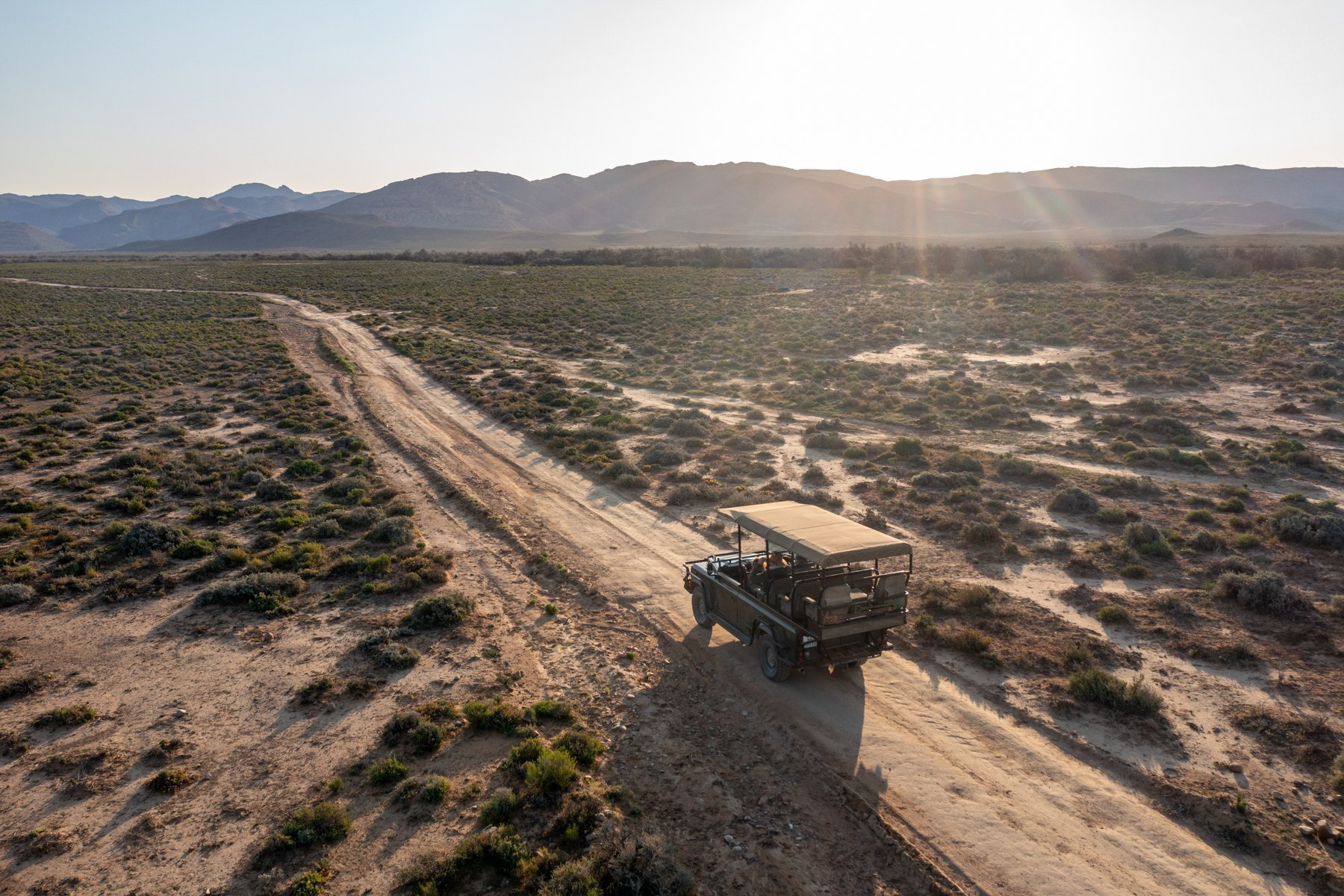
From the N1 the Karoo looks empty, and the larks would like you to keep thinking so. BirdLife South Africa’s GoBirding guide to the central Karoo says otherwise: more than 400 species, many of South Africa’s endemics and near-endemics, and 10 species found only in the Karoo. Most of them are nomads that move in after good rain, so the same farm road can be quiet one year and full of larks the next. A few, such as Karoo Korhaan, Rufous-eared Warbler and Sickle-winged Chat, stay through the dry years, the dependable regulars in a country of nomads.
At a glance
| Site | Habitat | Specials (GoBirding) | Daily fee, international adult |
|---|---|---|---|
| Karoo National Park | Plains, Nuweveld escarpment | Ludwig’s Bustard, Karoo Korhaan, Cinnamon-breasted Warbler | R358 |
| Tankwa Karoo National Park | Gravel plains, escarpment | Burchell’s Courser, Karoo Eremomela, Black-eared Sparrowlark | R295 |
| Camdeboo National Park | Plains, cliffs, Nqweba Dam | Kori, Ludwig’s and Denham’s Bustard, Lesser Kestrel | R227 |
| Nieu-Bethesda district | Karoo veld, recovering grassland | Blue and Northern Black Korhaan, Secretarybird | No park fee |
Fees are SANParks’ 2026/27 daily conservation fees, valid 1 November 2026 to 31 October 2027. South Africans pay R76 at Karoo National Park and R63 at Tankwa and Camdeboo.
Karoo National Park
The park lies just west of Beaufort West, under the Nuweveld escarpment, which rises 900 m above the plains. GoBirding’s route starts at the gate and heads for the Lammertjiesleegte circular drive. Its open plains are the place for Ludwig’s Bustard, Karoo Korhaan, Double-banded Courser, Namaqua Sandgrouse, Large-billed and Spike-heeled Larks, Karoo, Sickle-winged, Ant-eating and Tractrac Chats, Karoo Eremomela and Rufous-eared Warbler. After very good rains, Black-eared Sparrowlark and Lark-like Bunting move in and breed in large numbers, as if someone had sent out invitations.
The Klipspringer Pass drive is the rocky-ground route. GoBirding lists Verreaux’s Eagle, Ground Woodpecker, Grey-winged Francolin, Pale-winged Starling, Mountain Wheatear, Cinnamon-breasted Warbler, Layard’s Warbler and African Rock Pipit along it. Karoo Long-billed Lark is common throughout the park. Around the rest camp and the riverine thicket, look for Karoo Scrub Robin, Namaqua Warbler and Acacia Pied Barbet, and at Doornhoek picnic site on the Potlekkertjie route, for Southern Tchagra, Fairy Flycatcher and Pririt Batis. The back of the park needs a 4×4 or high-clearance vehicle; it holds Kori Bustard in the dry riverbeds and Blue Crane at the earth dams when they have water.
The park also has lions, so stay in the car away from the marked trails. The rest camp has a restaurant and a small shop.
Tankwa Karoo
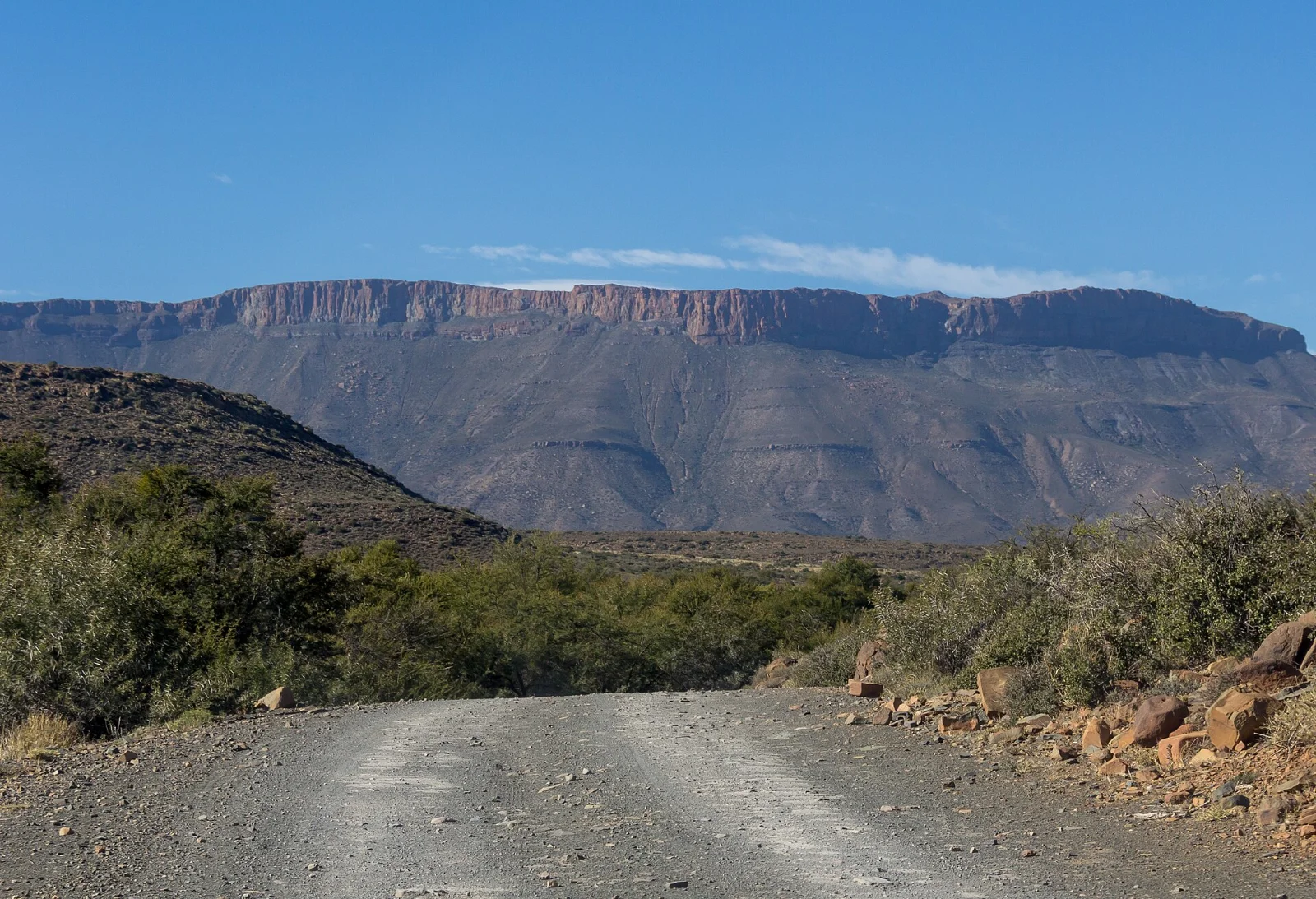
The Tankwa is the dry-country trip from Cape Town. GoBirding’s route, written by Vince Ward of Birding Africa, starts at the turn-off to the Tankwa Padstal. About 2 km north, an acacia-lined river course is good for Pririt Batis, Cape Penduline Tit and Fairy Flycatcher. Keep checking the drainage lines for flocks of Karoo Eremomela, which give themselves away by calling, a courtesy few small grey birds extend.
After 20 km you reach the P2250, which GoBirding calls “a hidden gem”. A spring trip is likely to produce Spike-heeled, Karoo, Large-billed and Red-capped Larks; Karoo Korhaan is present all year and Ludwig’s Bustard in winter and spring. Raptors along this road include Greater Kestrel, Pale Chanting Goshawk and Black-chested Snake Eagle. Scan patches of open gravel for Burchell’s Courser, which occurs along the P2250 in small numbers but more reliably inside the park. The prize is Black-eared Sparrowlark, which can suddenly arrive after exceptional rain; it keeps no appointments.
The park gate is 34 km along the P2250, and the park office a further 35 km in. Inside, the Gannagas Pass climbs the Great Escarpment for African Rock Pipit, Pale-winged Starling and a rare chance of Cape Eagle-Owl. GoBirding advises a high-clearance car, though a 4×4 is not needed for most of the park, and a usable spare wheel, which on this gravel counts as birding equipment.
Camdeboo National Park and Nieu-Bethesda
Camdeboo National Park covers 14,500 ha and almost surrounds Graaff-Reinet. GoBirding says it was ranked an Important Bird Area for the large Lesser Kestrel roost near the town’s railway station, the Ground Woodpeckers in its kloofs and the flocks of Blue Crane on the plains. It is one of the few places in South Africa where Kori, Ludwig’s and Denham’s Bustards all occur, and Karoo Korhaan is usually seen in 2s and 3s on the stony plains. Blue Korhaan, oddly, is absent. Verreaux’s Eagle breeds around the Valley of Desolation, and the Nqweba Dam, about 1,000 ha when full, draws flamingos and summer waders.
North of Graaff-Reinet, the Nieu-Bethesda district has about 280 species, according to GoBirding. Northern Black and Blue Korhaans are common in the grassland and karroid scrub, Kori and Ludwig’s Bustards are recorded regularly, and several pairs of Secretarybird nest in the area. After heavy rain, large numbers of Lark-like Bunting and Grey-backed Sparrowlark move in. Most of the land is private, so bird from the network of public gravel roads and do not cross fences.
Where to stay
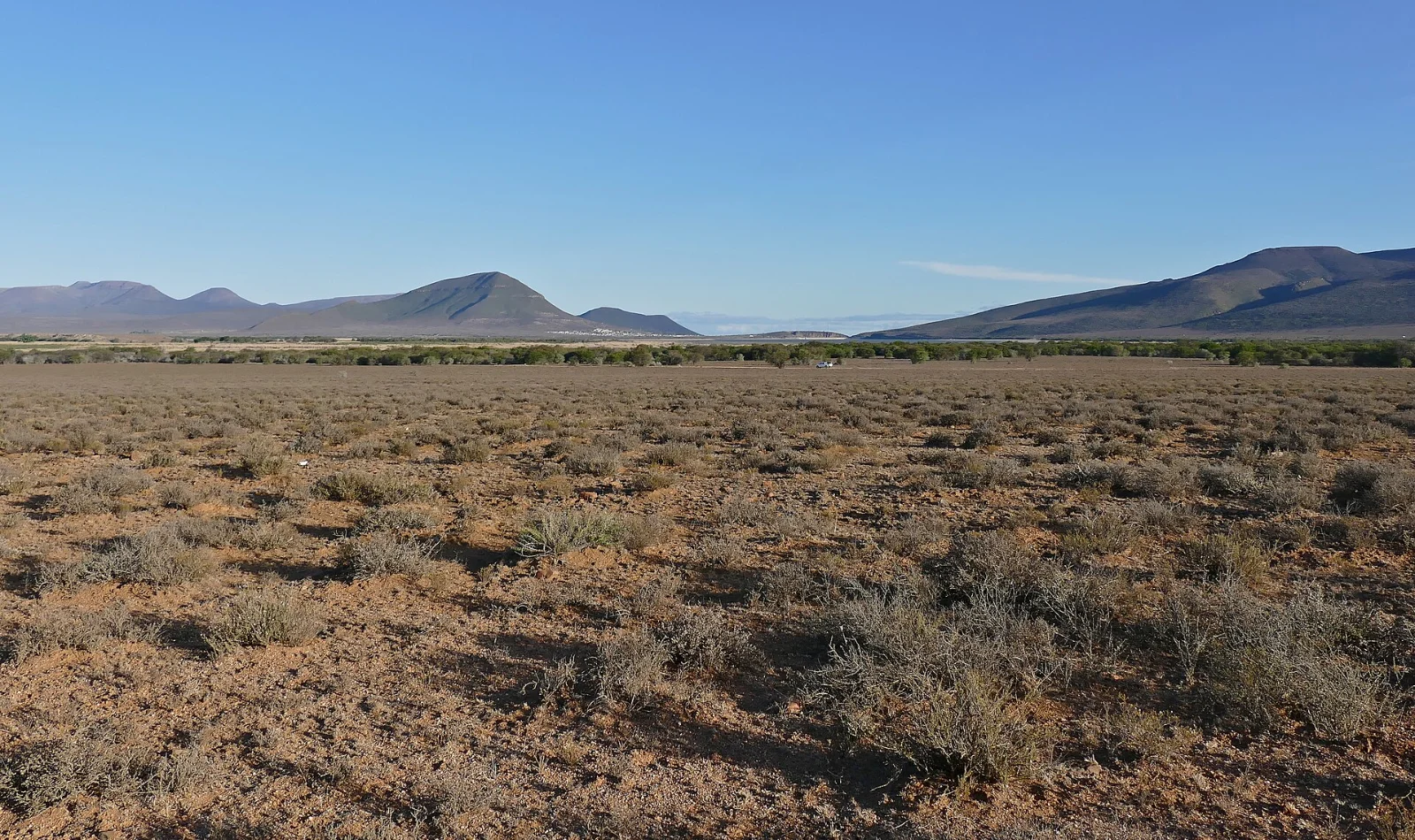
The farm stays below sit on Karoo veld, so the birding starts at the door, sometimes before the coffee.
Karoo Secret Farm Stay, on a working farm between Aberdeen and Beaufort West, is BirdLife South Africa Recommended. It has a signposted Lark Route jeep track, about as clear a statement of intent as a farm can make, with water points along it, and names Sclater’s Lark, Karoo Long-billed Lark, Grey-backed Sparrow-Lark, Lark-like Bunting, Double-banded Courser, Kori Bustard and Karoo Korhaan. The Secret House sleeps 9 and Lark Cottage has 2 units for 2, all self-catering.
At Nieu-Bethesda, Aasvogelkrans Farm Cottages & Camping, 6 km from the village, has 2 restored stone cottages and a 116-species farm list with Verreaux’s Eagle, Blue Korhaan, Northern Black Korhaan and Ludwig’s Bustard. Hoopoe Cottage is R1,760 a night for 2, self-catering, and the farm recommends a high-clearance vehicle for the river crossing. It is the stay GoBirding recommends for the district. About 7 km out of the village, Ganora Guest Farm has rooms, a self-catering cottage and camping, 5 marked trails and a 182-species list; Blue Crane and Verreaux’s Eagle nest on the farm.
On the N1 further north, New Holme Nature Lodge, 8 km off the road at Hanover, runs 2 birding drives a day; co-owner PC Ferreira leads the early morning drives, and the conservancy publishes a 230-species checklist.
For the Tankwa, Inverdoorn Private Game Reserve on the R356 near Ceres books birdwatching drives with a ranger at reception and names Karoo Korhaan, Sclater’s Lark, Stark’s Lark and Namaqua Sandgrouse. It is full board from R4,425 per person sharing (1 May to 31 October 2026), about 2.5 hours from Cape Town. On the southern edge of the Karoo, Ouberg Private Nature Reserve, 20 km from Montagu off the Ouberg Pass, is BirdLife Recommended, has a list of more than 100 species including Karoo Lark, Karoo Long-billed Lark, Karoo Chat and Southern Black Korhaan, and has safari tents from R900 a night.
| Place to stay | Where | For birders | From |
|---|---|---|---|
| Karoo Secret Farm Stay | Between Aberdeen and Beaufort West | Signposted Lark Route with water points, Sclater’s Lark | Ask the lodge |
| Aasvogelkrans Farm Cottages & Camping | Near Nieu-Bethesda, Eastern Cape | 116-species farm list, Verreaux’s Eagle, Ludwig’s Bustard | R1,760 for 2, self-catering |
| Ganora Guest Farm | Near Nieu-Bethesda, Eastern Cape | 182-species list, 5 marked trails, nesting Blue Crane | Ask the lodge |
| New Holme Nature Lodge | Hanover, Northern Cape | 2 birding drives a day, 230-species checklist | R2,275 pp for 7 nights, room only |
| Inverdoorn Private Game Reserve | Near Ceres, Tankwa edge | Ranger-led birding drives, Sclater’s and Stark’s Larks | R4,425 pp sharing, full board |
| Ouberg Private Nature Reserve | Near Montagu, Western Cape | BirdLife Recommended, 100+ species, Karoo larks | R900 a tent |
When to go
Rain decides the Karoo list more than the calendar. GoBirding’s accounts tie the big lark and bunting irruptions to good rains, so watch the weather and go after a wet spell. Spring is the season for singing larks in the Tankwa, and Ludwig’s Bustard is there in winter and spring. Summer brings waders to the Camdeboo dams and Lesser Kestrels to Graaff-Reinet, but midday heat shuts the plains down; drive early and late, and make lunch a long one. For the fynbos and Klein Karoo country to the south, see fynbos endemic birds, and for larks elsewhere in the country, Wakkerstroom’s larks.
Karoo birding depends on rain, and park fees and farm rates change. Facts were checked on 13 November 2026 with BirdLife South Africa’s GoBirding guides to Karoo National Park, Tankwa Karoo, Camdeboo and Nieu-Bethesda, the SANParks 2026/27 conservation fee schedule and the Birding Dispatch listings. Confirm road conditions and rates before you travel.
More from the Journal
 Namib-Naukluft and Sossusvlei for Birders: Dune Lark, Desert Raptors and the Naukluft SpecialsA lark that lives on the dunes and nowhere else, Lappet-faced Vultures nesting in the desert, coursers on the gravel plains and the northern specials around the Naukluft cliffs, in one of Africa's largest parks.
 Lake Baringo and Lake Bogoria Birding: The Owl Walks, the Cliffs and the FlamingosA local guide who knows where every nightjar and eagle-owl slept last night, thorn scrub full of hornbills, a Goliath Heron colony on a rock, and the flamingo lake next door that keeps rising.
 Akagera Birding: Rwanda’s Savanna, Lakes and Papyrus, and the Shoebill ChancesRed-faced Barbet in the southern woodland, Papyrus Gonolek and Carruthers's Cisticola in the swamps, a lake of hippos and lapwings, and a Shoebill that hides in the wetlands more than it shows.
The Pigeon Post
Every Thursday: 1 bird, 1 place to go and 1 place to stay, by email. Sign up and get our printable checklist of the 163 endemics of southern Africa.