
Where to Stay for Birding Big Day: The Best Bases for a Big Count
On Saturday 5 December, teams all over South Africa count from wherever they draw their circle. 9 places to stay whose 50 km circle takes in river, forest, grassland, wetland and dry bush, from Pafuri Camp in the far north of Kruger to De Hoop on the south coast.
Birding Big Day has no headquarters. On Saturday 5 December 2026, every registered team in South Africa picks its own central point and records as many species as it can in 24 hours, seen or heard, on BirdLasser. Entry is free, teams have up to 6 people, and the circle has a radius of 50 km (100 km across) or 6 km. The rules and a plan for the day are in the Birding Big Day 2026 guide. This piece covers the other decision: where to put the pin, and where to sleep beside it.
What makes a good base
A 50 km circle earns its species from habitat. Most birds stay at home: a Cape Grassbird will not wander into a riverine forest to help a team out. The circles that post big totals take in river, forest, grassland, wetland and dry bush. In 2025 a record 503 teams logged more than 670 species between them, Team Hamerkop won in Mpumalanga with 322, and provincial winners ranged from 322 in Mpumalanga to 163 in the Northern Cape. The roost matters too: a base inside its own good birding, with an early breakfast, a hide or a guide, saves the hour spent driving to the start.
1. Pafuri Camp, northern Kruger (Limpopo)
The headline sponsor has the headline base. RETURN Africa is sponsoring Birding Big Day for a second year, and its Pafuri Camp stands on the Luvuvhu River in the Makuleke Concession, at the far northern tip of Kruger between the Limpopo and Luvuvhu rivers. BirdLife South Africa says 9 birders based at RETURN Africa logged 340 species in the Pafuri area in 2026, in a region with more than 450, the richest tally in Kruger. Recent sightings include Bat Hawk, Pel’s Fishing Owl, Three-banded Courser, Racket-tailed Roller and Böhm’s Spinetail.
On the day, RETURN Africa is opening dedicated routes across the concession and sending its vehicles out to help guests find birds. BirdLife’s Dr David Ehlers Smith will be at the camp from Thursday 3 to Sunday 6 December, broadcasting live and joining birders in the field, so guests get the commentator at breakfast. Every registered team member who opts in also goes into the lucky draw for 4 nights for 4 at Pafuri Camp, worth R66,000. The Pafuri birding guide covers the area.
2. Magoebaskloof Birders’ Cottages, Magoebaskloof (Limpopo)
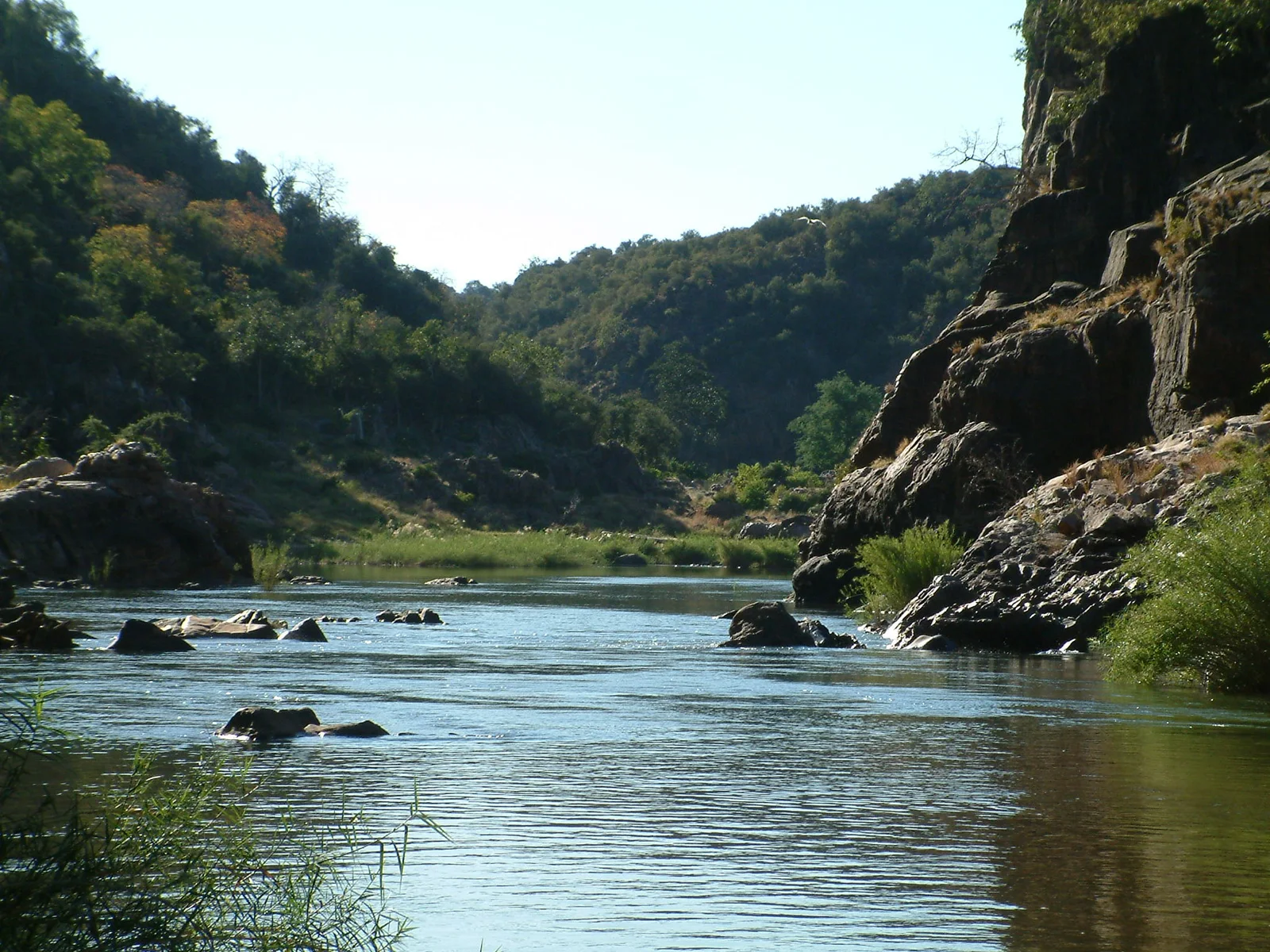
BirdLife’s GoBirding notes for the Capricorn-Letaba route put the Polokwane plateau at about 1,300 m, the escarpment at up to 2,300 m and the Letaba River at about 480 m, with more than 500 species along the way. A circle around Magoebaskloof takes in afromontane forest, the grassland patches near Haenertsburg and the warmer country towards Tzaneen. GoBirding ranks Woodbush Forest among the best forest birding in Limpopo, for Black-fronted Bushshrike, Eastern Bronze-naped Pigeon, Cape Parrot and Orange Ground Thrush.
Magoebaskloof Birders’ Cottages are 3 self-catering cottages on Dragonwyck Farm, with a forest hide, trails and a feeding table. The farm’s list stands at 152 species, Narina Trogon and Green Twinspot among them. It is BirdLife Recommended.
3. Sandfields and Forests, Nylsvley (Limpopo)
GoBirding calls the Nylsvley floodplain the largest and most intact seasonal floodplain in the country, with over 360 species, more than 104 of them waterbirds. It floods every 2 to 4 years, and in a wet year all 3 bitterns breed. In a dry year the bushveld still carries Tinkling Cisticola, Bushveld Pipit and up to 7 owl species, a useful number for a team that starts in the dark.
Sandfields and Forests has serviced self-catering lodges in a private reserve bordering Nylsvley, with woodland, acacia bushveld, springs and the Nyl floodplain. Its area list runs to 361 species. The 2 lodges sleep 16 together, room for a team of 6 plus the relatives who came for the pool. It is malaria-free and BirdLife Recommended.
4. Kambaku River Lodge, Malelane (Mpumalanga)
On Kruger’s southern edge, Kambaku River Lodge fronts the Crocodile River, 15 minutes from Malelane Gate. Its photographic hide sits at the water’s edge looking into the park, and has to be reserved in advance. The lodge reports 240 species on the property. A 50 km circle from here covers the river, the farmland outside the fence and a long stretch of southern Kruger’s bushveld and hills. Kruger’s gates set the hours inside, so night birding belongs on the lodge side of the river. Kambaku is BirdLife Recommended.
5. Walkersons Hotel & Spa, Dullstroom (Mpumalanga)
Dullstroom sits on the Steenkampsberg, where the Grassland and Savanna Biomes meet, and BirdLife’s Steenkampsberg Birding Routes give nearly 400 species. Verloren Valei’s top 10 includes Wattled Crane, Blue Crane, Denham’s Bustard and Yellow-breasted Pipit, and Greater Lakenvlei adds Grey Crowned Crane, Secretarybird and Southern Bald Ibis. All 3 cranes in one circle is a strong start to a morning.
Walkersons stands on an 800 ha estate near Dullstroom, with grassland, wetlands, lakes, mapped routes and its own sightings. It gives more than 250 species for the area, including Blue Swallow and African Finfoot, and is BirdLife Recommended.
6. DeKotzenhof, Wakkerstroom (Mpumalanga)
Wakkerstroom lies at 1,760 m beside a wetland of about 700 ha, one of the larger reed-marshes in South Africa, according to GoBirding. A morning there can produce up to 70 species, and a day in the district with a local guide about 110. Nearly 1,000 km of gravel roads lead to grassland with Rudd’s Lark, Botha’s Lark and Blue Korhaan. Martin’s Dam is a roost for Southern Bald Ibis and Grey Crowned Crane, handy for a last tick at dusk.
DeKotzenhof is a guesthouse in the village, within walking distance of 4 public wetland hides. It publishes its own birding guide and points guests to local guides. With larks, a guide is the difference between a tick and a long look at some grass.
7. Ghost Mountain Inn, Mkuze (KwaZulu-Natal)
GoBirding gives the Mkhuze area well over 450 species, from cliffs and scarp forest on the Lebombo Mountains to sand forest, savanna, grassland and large pans. Mkhuze Game Reserve alone has more than 400. Its sand forest around the Kubube and Kumasinga hides is one of the best places in the country for Pink-throated Twinspot, African Broadbill and Neergaard’s Sunbird, found mostly by call. GoBirding calls more than 200 species a reasonable target for a stay of 2 to 5 days; a Big Day team has 24 hours.
Ghost Mountain Inn, in Mkuze, is BirdLife Recommended and runs guided birding safaris in Manyoni. Its festive package, from 1 December, covers 3 nights with breakfast, dinner and 2 outings.
8. !Khwa ttu, Yzerfontein (Western Cape)
The West Coast circle revolves around Langebaan Lagoon. GoBirding describes 2 hides in West Coast National Park that reach onto the mudflats, where waders peak by October, mostly Curlew Sandpiper and Little Stint, with Terek Sandpiper among the yearly rarities; the incoming tide after low tide pushes them towards the hides. The strandveld holds Black Harrier, Southern Black Korhaan and Cape Penduline Tit. GoBirding gives the gates as 7am to 7pm, so the dawn chorus belongs to wherever the team slept.
!Khwa ttu is on Grootwater Farm on the R27 near Yzerfontein, the same road as the park’s southern gate. It has fynbos, renosterveld and waterholes, a hide on the Eland’s Trail and a bird checklist at reception.
9. De Hoop Collection, De Hoop Nature Reserve (Western Cape)
De Hoop fits most of the south coast into one reserve. GoBirding lists the vlei, with Great White Pelican and both flamingos; limestone fynbos with Black Harrier and Agulhas Long-billed Lark; milkwoods with Knysna Woodpecker; a rocky shore with African Oystercatcher; and Potberg, home to the only remaining Cape Vulture colony in the Western Cape. GoBirding calls the Fynbos Buttonquail nearly impossible to see, which makes it a bird to hope for rather than plan around.
De Hoop Collection runs the reserve’s accommodation, from rondawels to cottages sleeping 8, and a qualified guide leads bird walks of 1 to 3 hours. Its fact sheet gives about 260 species for the reserve.
Before you book
The base does not have to sit in the middle of the circle: teams choose the central point when they register, so a lodge near the edge of a good area can still fall inside a circle drawn to take in more habitats. Ask about early breakfasts, nearby gate times and whether a guide can come along. Heard birds count, and the guide to learning bird calls helps with those.
Where to stay
The 9 bases, with what each offers a birder:
| Place to stay | Where | For birders | From |
|---|---|---|---|
| Pafuri Camp | Makuleke, northern Kruger | BirdLife Recommended, Big Day broadcast, dedicated birding routes | R8,450 pp sharing, fully inclusive |
| Magoebaskloof Birders’ Cottages | Dragonwyck Farm, Magoebaskloof | Forest hide, feeding table, 152 species | R580 pp sharing, self-catering |
| Sandfields and Forests | Borders Nylsvley, near Mookgophong | BirdLife Recommended, 361-species area list | Ask the lodge |
| Kambaku River Lodge | Crocodile River, Malelane | Hide facing Kruger, 240 species, BirdLife Recommended | R7,590 for 2, accommodation only |
| Walkersons Hotel & Spa | Near Dullstroom | 800 ha estate, mapped routes, Wattled Crane | R3,710 pp sharing DB&B (2026) |
| DeKotzenhof | Wakkerstroom village | Walk to 4 wetland hides, local guides | Ask the lodge |
| Ghost Mountain Inn | Mkuze, KwaZulu-Natal | BirdLife Recommended, guided birding safaris in Manyoni | R7,250 pp sharing for 3 nights (festive package) |
| !Khwa ttu | Yzerfontein, on the R27 | Hide on the Eland’s Trail, bird checklist | Ask the lodge |
| De Hoop Collection | De Hoop Nature Reserve | Guided bird walks, Cape Vulture colony, 260 species | R2,150 per rondawel, room only |
Event details are BirdLife South Africa’s, checked on 15 November 2026; place facts and rates are from each listing, opened the same day. Register, and check the final rules, on BirdLife South Africa’s Birding Big Day page.
More from the Journal
 Zululand Birding Route: a 10-Day Loop by Car from DurbanA 10-day self-drive from King Shaka airport: Dlinza's canopy, Green Barbet at Ongoye, the Cape Vidal road, Hluhluwe-iMfolozi's vultures, the uMkhuze hides and Ndumo's pans, with a birder-friendly roost every night.
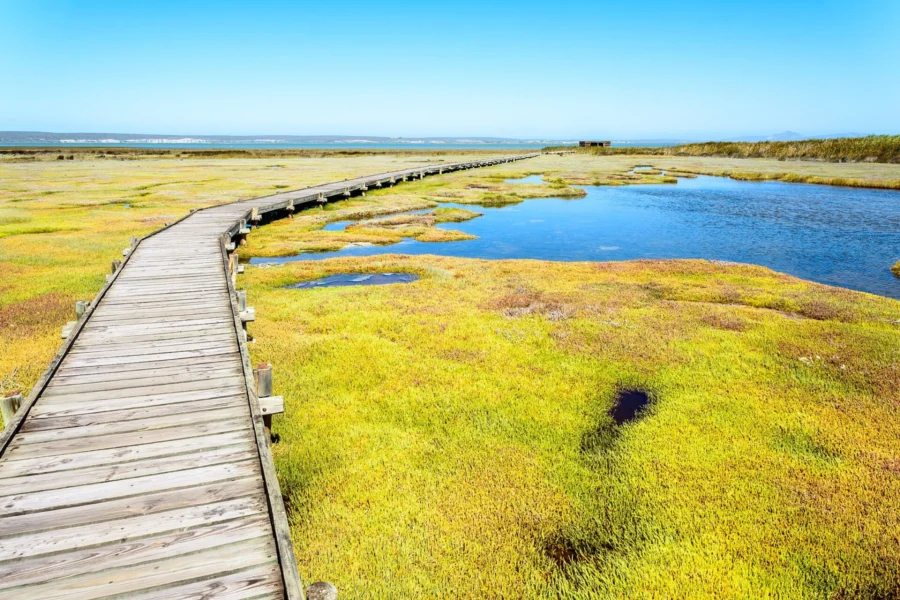 West Coast and Karoo Birding Route: 10 Days by Car from Cape TownA 10-day self-drive from Cape Town: Langebaan's waders, the Berg River pans, Rocherpan's hides, 40,000 gannets at Lambert's Bay, Cape Rockjumper in the Cederberg and larks in the Tankwa, with a birder-friendly roost every night.
 A 2-Week Birding Itinerary for South Africa: Dullstroom, Kruger, Wakkerstroom and ZululandA self-drive route of 14 days from Johannesburg to Durban: the Dullstroom grasslands, 4 nights in southern Kruger, Wakkerstroom, Mkhuze, St Lucia and Dlinza Forest, with drive times, 2026 park fees and where to stay.
The Pigeon Post
Every Thursday: 1 bird, 1 place to go and 1 place to stay, by email. Sign up and get our printable checklist of the 163 endemics of southern Africa.