
LBJs: How to Tackle Cisticolas, Larks and Pipits in Southern Africa
Little brown jobs are almost a quarter of southern Africa's birds and half its endemics, and many look alike in July. Why the ear and the season beat the field guide, and where to practise.
Almost a quarter of southern Africa’s bird species, and half of its endemics, are what birders call LBJs, little brown jobs. That is Faansie Peacock’s count, and he wrote the book on them: Chamberlain’s LBJs, a field guide of about 235 species published by Mirafra, a company named after the genus of the Monotonous Lark on its cover. Naming a business after an LBJ is commitment.
The numbers explain why so many birders give up on them. BirdLife South Africa’s 2026 checklist has 15 cisticolas (counting the Neddicky), 28 larks and 13 pipits on the South African list, and many of them look alike for most of the year. They are not impossible, though. The trick is to stop trying to name them by plumage alone, and to go out when they are singing, which is the one time they introduce themselves.
Start with the ear, and with summer
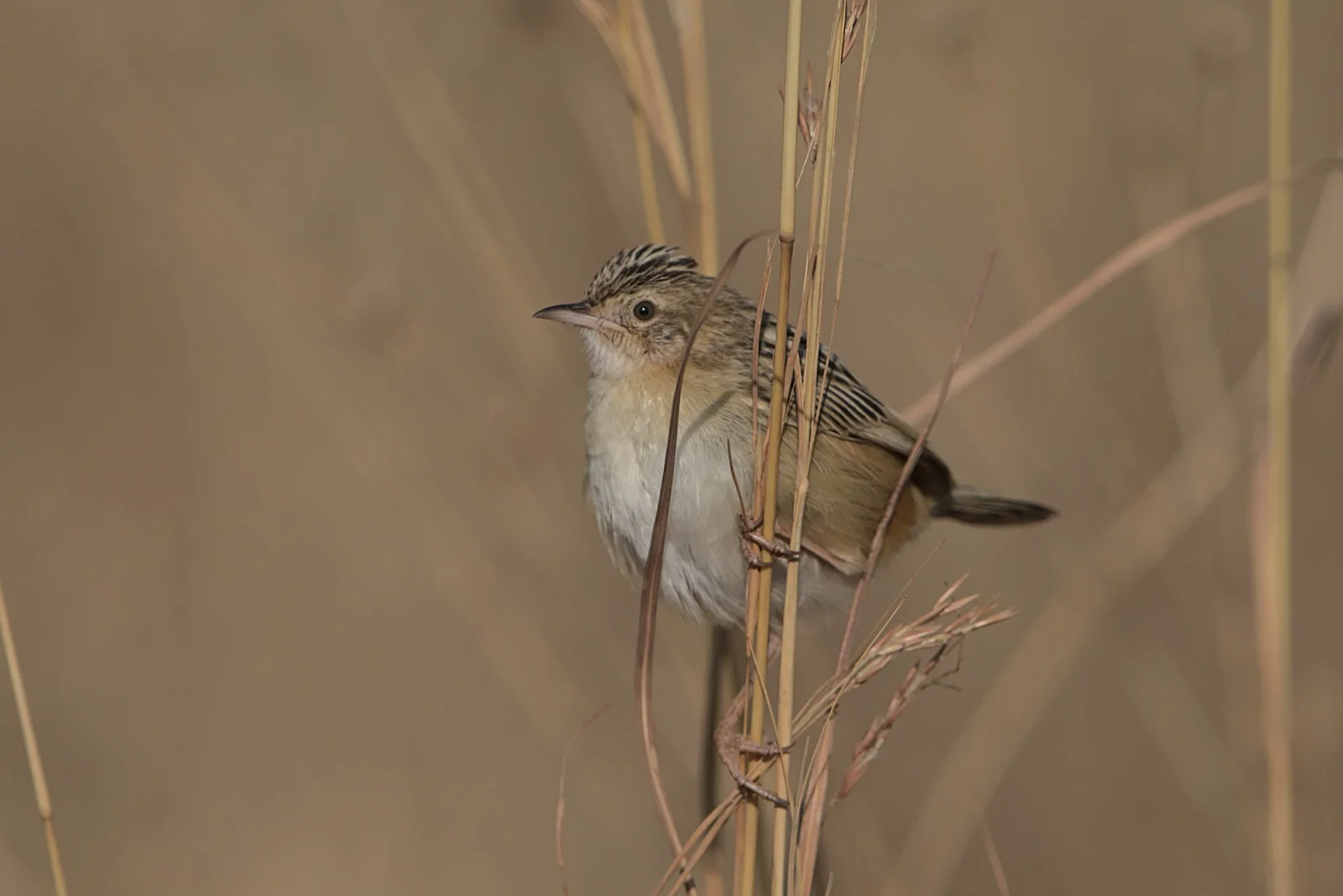
The Atlas of Southern African Birds makes the point for one species after another. The Wing-snapping Cisticola, one of 5 small grass cisticolas in the region, is usually told by its call, which is heard mostly in summer. The Cloud Cisticola is easily confused with the other 4 and is identified mainly by its call; in winter, without its calls and displays, it is difficult to name at all. Records of the Desert Cisticola drop in winter for the same reason, because identification usually depends on its display calls, and it breeds after good rains, mostly from December to April.
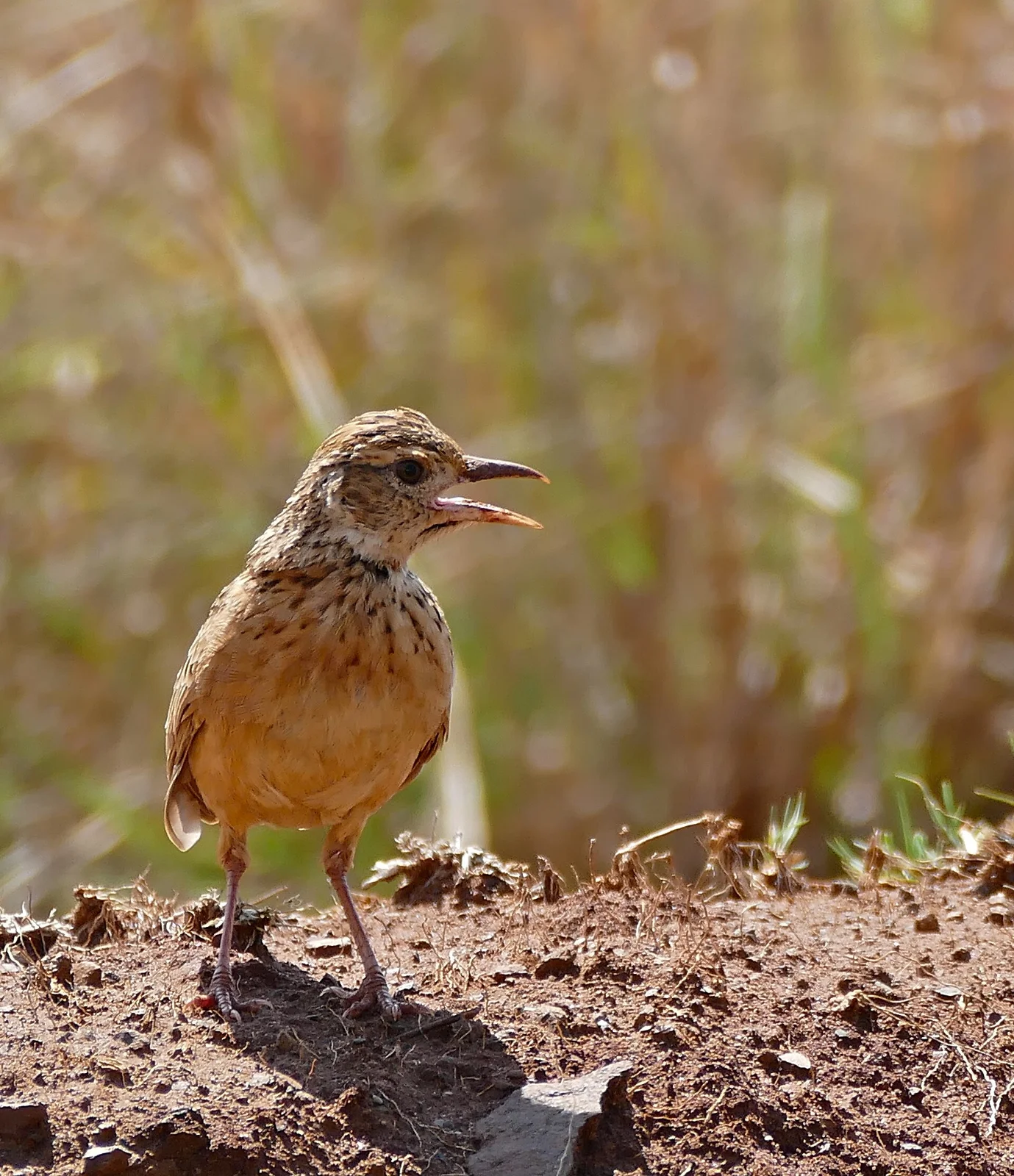
Larks follow the same rule. The Atlas notes that Rufous-naped Larks are reported less in winter because they sing less and are harder to see, and that the Rudd’s Lark is easily overlooked unless it is in its display flight, calling. Clapper larks have a wing-clapping display that sets them apart, and are easily missed unless they are calling and displaying. Faansie Peacock describes Monotonous Larks, the morning after rain, launching parachuting display flights from every second bush, which for once is anything but monotonous.
So the season is the first decision. From about October to March, and especially after rain, the birds are singing and displaying, and a bird that was a brown blur in July can be named with a straight face.
Cisticolas
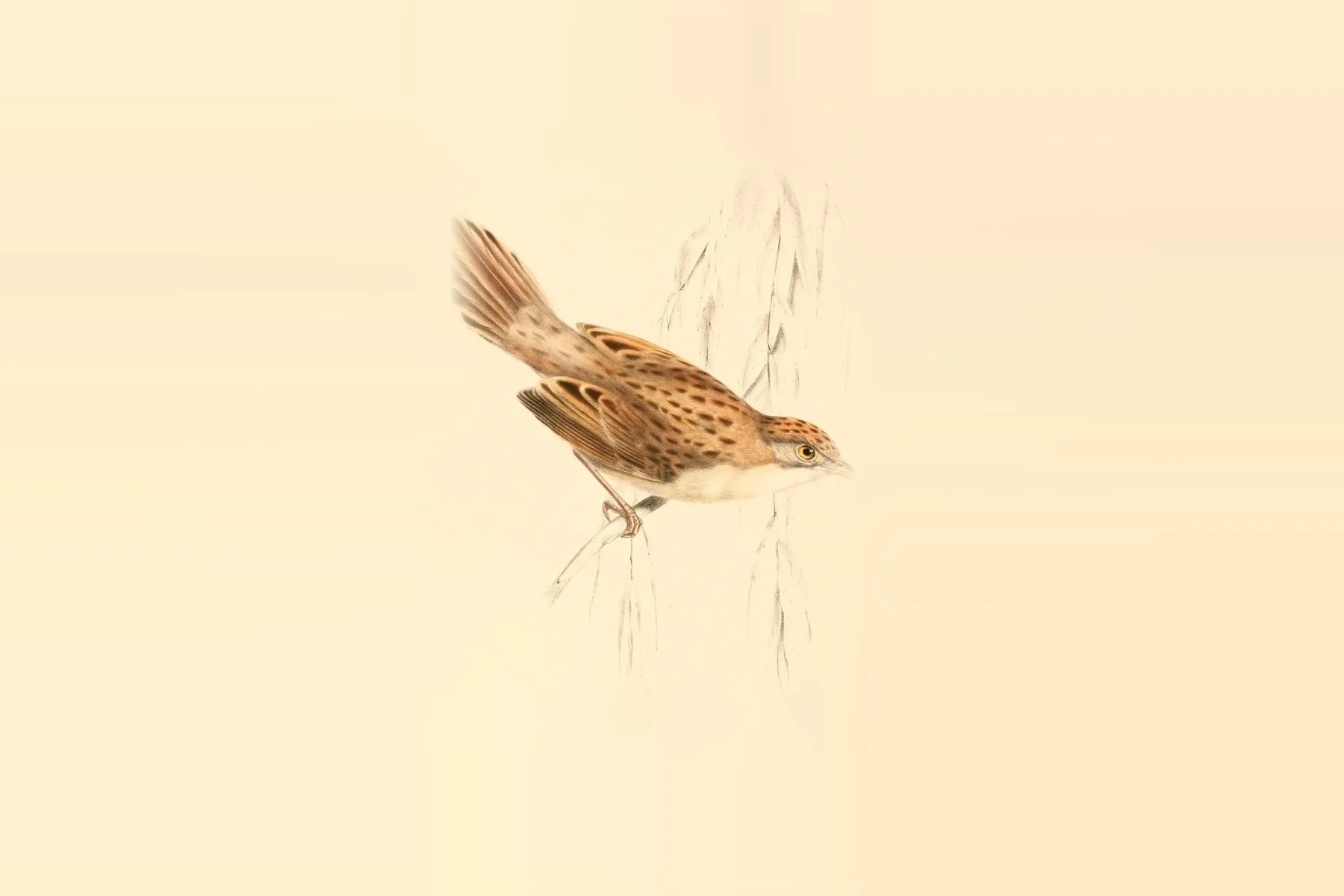
Learn the common ones first, by habitat. Iziko Museums’ Biodiversity Explorer says the Wing-snapping Cisticola prefers short grassland with patches of bare ground, airfields for example. For the Zitting Cisticola, Biodiversity Explorer notes a detail that shows how much these birds invest in their nests: if the female does not like the look of the male’s nest frame, he often pulls it apart and builds another from the same material, a level of renovation pressure most species are spared. After those, the Neddicky, the Rattling Cisticola and the Croaking Cisticola, the bird on the header plate, are good next steps, learned by call.
Then use the calls. A good recording app, and the companion apps covered in the birding apps and field guides guide, will do more for cisticolas than any number of plates, because the plates cannot sing.
Larks
Larks give more to the eye than cisticolas do, which is not saying a great deal. The Atlas picks out the Rufous-naped Lark’s large rufous wing patch, obvious in flight, and the Spike-heeled Lark’s short, blackish, white-tipped tail and white throat contrasting with rufous underparts.
The 2 most wanted are grassland endemics of the Wakkerstroom area. Rudd’s Lark is listed by BirdLife South Africa as Endangered both in South Africa and globally. Botha’s Lark is listed as Critically Endangered in South Africa: Faansie Peacock’s December 2025 post estimates a total of about 340 birds, somewhere between 200 and 650, in closely grazed highveld grassland at 1,500 to 1,900 m in the Vaal River catchment, and notes that only 3 sightings were logged on the bird atlas in 2023. The Wakkerstroom larks guide covers both.
In the Karoo, larks are much of the birding, from Sclater’s and Karoo Long-billed Larks to Stark’s and the Karoo Lark; the Karoo birding guide has the farms.
Pipits
The Atlas is blunt about pipits: their identification “is fraught with difficulty”. It also, mercifully, gives the easy one, the African Pipit, picked out by its size, white outer tail feathers and distinctive song. The Mountain Pipit lacks white in the tail, is more heavily streaked, darker below and larger, with a different song. Tail pattern, then, is the first thing to look for when a pipit flies, and the song the second. The Yellow-breasted Pipit, Vulnerable in South Africa and globally, is a grassland special of the Wakkerstroom and Dullstroom areas, where several places to stay name it.
A way to start
Pick one place and one group, and resist the urge to tackle the lot at once. In a patch of grassland, spend a morning with the cisticolas: find a bird that is singing, note whether it sings from a perch or high in the air, note the grass it is in, and record the call on a phone. Check the recording against an app that evening. A few mornings like that at the same site teach more than a week of driving, and the same method works for larks in the Karoo and pipits on the highveld. Keep a short list of the LBJs that each site should hold, so you know what you are listening for.
Where to practise
Wakkerstroom. Faansie Peacock calls a visit a rite of passage, and the prize has always been the 2 larks. Guest houses in the village put birders in touch with community bird guides and the 4 wetland hides, and name Rudd’s and Botha’s Larks and Yellow-breasted Pipit.
Dullstroom. Millstream Farm has a list of more than 200 species, including Wing-snapping and Cloud Cisticolas, and a hide on its dam; Walkersons Hotel & Spa names Yellow-breasted Pipit.
The Karoo and the Tankwa. Karoo Secret Farm Stay, near Aberdeen, has a signposted Lark Route, about as close as an LBJ gets to a red carpet, with water points and names Sclater’s and Karoo Long-billed Larks. Inverdoorn, on the edge of the Tankwa, names Sclater’s, Karoo and Stark’s Larks.
The Kalahari and Namaqualand. In the Kgalagadi, the Atlas records the Clapper Lark as resident, and the Desert Cisticola is on the park’s list. Naries, near Springbok, names Cape Clapper Lark on its 170-species list, and Tswalu names Fawn-coloured Lark and African Rock Pipit.
Where to stay
Places in the directory that name LBJs or sit in their best country:
| Place to stay | Where | For birders | From |
|---|---|---|---|
| Forellenhof Guest Farm | Wakkerstroom, Mpumalanga | BirdLife Recommended; community guides; Rudd’s and Botha’s Larks | Ask the lodge |
| DeKotzenhof | Wakkerstroom, Mpumalanga | Walk to 4 wetland hides; local guides | Ask the lodge |
| The Wetlands Country House & Sheds | Wakkerstroom, Mpumalanga | BirdLife Recommended; Rudd’s and Botha’s Larks | Ask the lodge |
| Millstream Farm | Dullstroom, Mpumalanga | 200+ species; Wing-snapping and Cloud Cisticolas; hide | R2,550 per cottage, self-catering |
| Walkersons Hotel & Spa | Dullstroom, Mpumalanga | BirdLife Recommended; Yellow-breasted Pipit | R3,710 pp sharing DB&B (2026) |
| Karoo Secret Farm Stay | Near Aberdeen, Eastern Cape | BirdLife Recommended; signposted Lark Route; Sclater’s Lark | Ask the lodge |
| Inverdoorn Private Game Reserve | Near Ceres, Tankwa edge | Ranger birding drives; Sclater’s, Karoo and Stark’s Larks | R4,425 pp sharing (2026) |
| Naries | Near Springbok, Northern Cape | 170-species list; Cape Clapper Lark | Ask the lodge |
| Kieliekrankie Wilderness Camp | Dune Road, Kgalagadi | Own waterhole; Desert Cisticola on the park list | R2,146 per cabin for 2, self-catering |
| Tswalu Kalahari Reserve | Near Van Zylsrus, Northern Cape | Guided walks; Fawn-coloured Lark, African Rock Pipit | R46,400 pp sharing, Motse (2026) |
LBJ identification depends on season and call, and most of the field notes here come from the Atlas fieldwork of the 1980s and 1990s. Facts were checked on 14 November 2026 with the Atlas of Southern African Birds, BirdLife South Africa, Iziko’s Biodiversity Explorer, Faansie Peacock’s pages and the Birding Dispatch listings. In the Wakkerstroom grasslands, keep to roads and tracks: Rudd’s and Botha’s Larks nest on the ground.
More from the Journal
 Woodpeckers of Southern Africa, Including the One That Doesn’t Need TreesSouthern Africa's woodpeckers, from the Cardinal in every bushveld tree to the Ground Woodpecker that lives on treeless mountain slopes and eats almost nothing but ants.
 Where to See a Taita Falcon: the Strijdom Tunnel, the Blyde Cliffs and the Batoka GorgeA stocky falcon smaller than a pigeon, a handful of cliffs and surveys that keep coming back empty. Where it still nests, how to look, and the 2 roosts beside its cliffs.
 Where to See a Southern Bald Ibis: the Breeding Cliffs, Dullstroom, Wakkerstroom and LesothoA red-capped grassland ibis that nests on cliffs over waterfalls and feeds on burnt veld and maize stubble. The colonies you can watch, the fields to scan, and where to stay.
The Pigeon Post
Every Thursday: 1 bird, 1 place to go and 1 place to stay, by email. Sign up and get our printable checklist of the 163 endemics of southern Africa.