
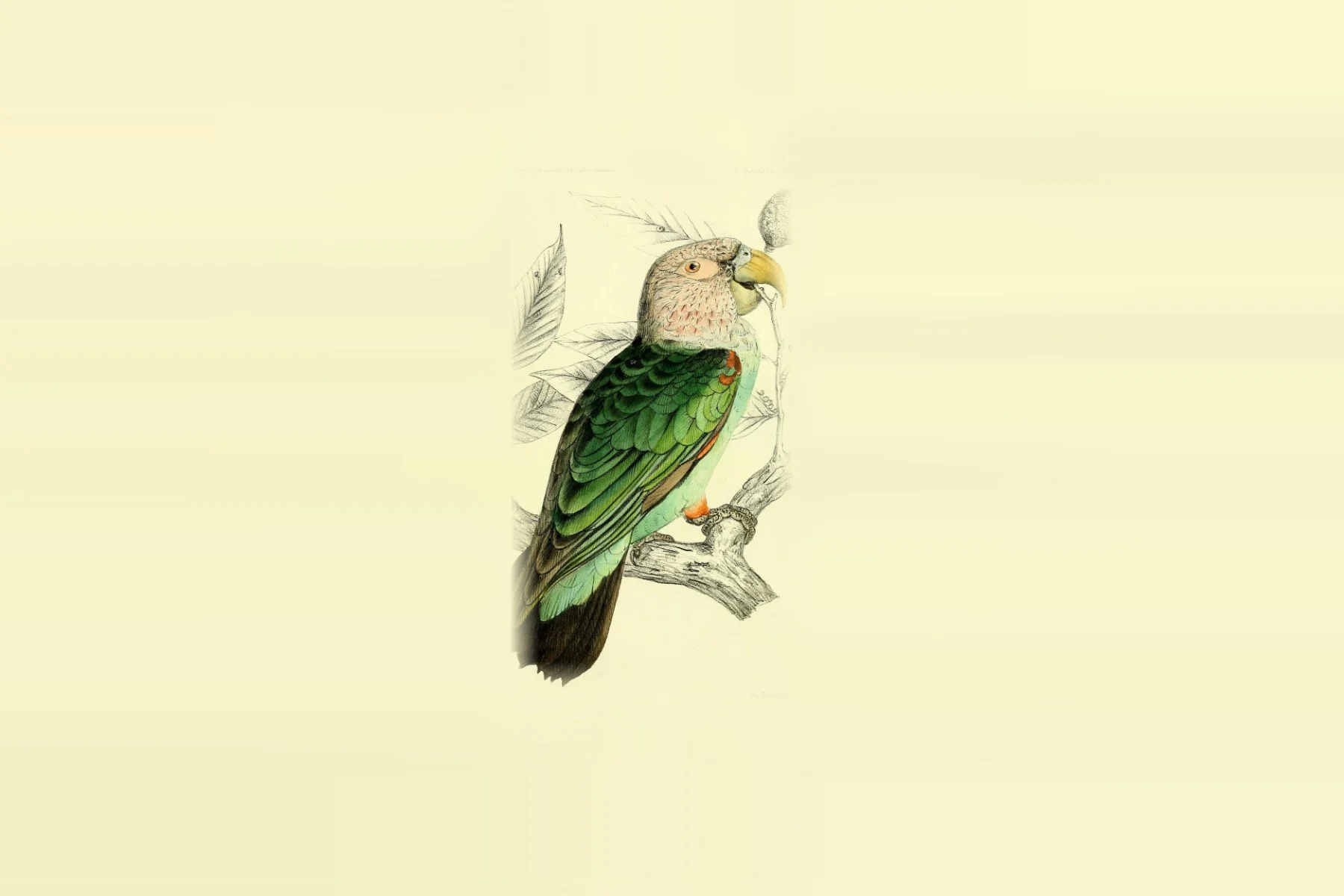
Where to See a Cape Parrot: Hogsback, the KwaZulu-Natal Mistbelt, Magoebaskloof and the Hours That Matter
South Africa's only endemic parrot lives in a few patches of mistbelt forest and announces itself flying over them at dawn. The best sites, the 2026 count and where to stay.
Over the weekend of 11 and 12 April 2026, volunteers posted around the forests of the Amathole Mountains, near Hogsback, Stutterheim and Fort Beaufort, counted 1,108 Cape Parrots. The same weekend, counters in Limpopo found 203. Three weeks later, on 2 and 3 May, teams in southern KwaZulu-Natal and the former Transkei added 854. The total, 2,165, was the highest in the 29 years of the Cape Parrot Big Birding Day, according to the University of KwaZulu-Natal team that runs it. Counting parrots that are flying, calling and refusing to sit still is a skill in itself.
That is still a small number for a bird spread across 3 provinces. The Cape Parrot is South Africa’s only endemic parrot, and BirdLife South Africa’s GoBirding guides call it endangered. It lives in the inland mistbelt forests of the Eastern Cape, KwaZulu-Natal and Limpopo, with some birds in coastal forests in the Eastern Cape and KwaZulu-Natal. The count report divides it into 3 genetic groups: a southern group in the Amatholes, a central group from around Mthatha in the former Transkei to the KwaZulu-Natal Midlands, and a separate northern group centred on Magoebaskloof.
Seeing one is mostly a matter of being above the right forest at the right hour, and listening for a noisy commute.
The sites at a glance
| Where | What the sources say | Best time | Where to stay |
|---|---|---|---|
| Hogsback, Stutterheim and the Amatholes, Eastern Cape | The largest group: 1,108 counted in April 2026 | Sunrise and late afternoon | Trengwainton |
| Ingeli and the Weza-Ngele forest, KwaZulu-Natal | Trails reach all the forest specials | Early morning and late afternoon | ANEW Resort Ingeli Forest |
| Marutswa (Bulwer) and Gqumeni (Donnybrook), KwaZulu-Natal | Flocks of several hundred | Early morning and late afternoon | King’s Grant Country Retreat |
| Karkloof and the Dargle, KwaZulu-Natal | Fewer counted in 2026 than in the past | Early morning | Rockwood Forest Lodge, Tillietudlem |
| Woodbush and Magoebaskloof, Limpopo | The smallest group: 203 counted in 2026 | Early morning | Stanford Lake Lodge, Kuhestan Organic Farm |
When to look, and where to stand
The count report is clear on timing. The best times to see Cape Parrots are around sunrise, when they leave their roosts to look for food, and late afternoon, when they fly back. They call in flight, loudly and without embarrassment, so they are easiest to find overhead, and the count is held on a Saturday afternoon and the following Sunday morning for that reason. In 2026, most sites recorded more parrots on the Sunday morning.
GoBirding gives the same advice site after site: find a spot with a view over the forest canopy, arrive before the light, and wait for the birds to cross between their feeding and roosting areas. Coffee in a flask is not compulsory but is widely practised.
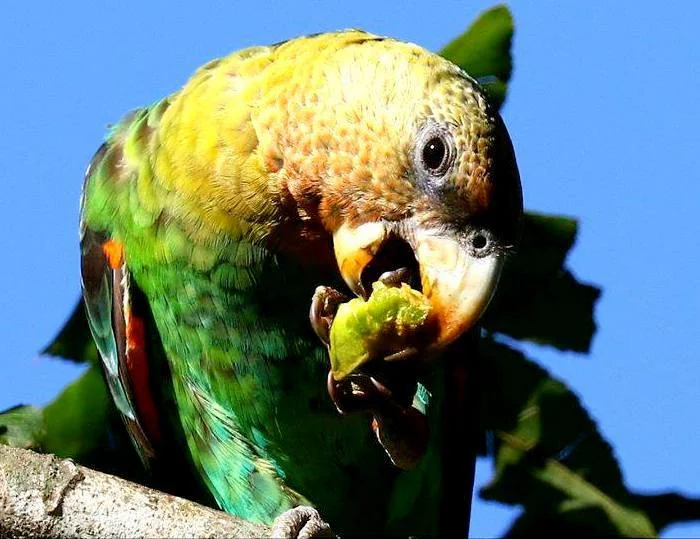
The birds do not stay in one forest to feed. Biodiversity Explorer, which draws on the Roberts handbook, says the Cape Parrot eats only fruit, forages mainly early and late, and nests in existing tree holes, especially in yellowwoods. Its food list includes yellowwood, white stinkwood, Cape chestnut and wild plum, along with alien black wattle. The count report adds that parrots move between forests and visit pecan nut orchards outside them, which is one reason early May was chosen for the count: less mist in the mornings, and parrots flying out to the pecans. In 2026 people reported parrots eating green pecans as early as December 2025, which the report reads as a shortage of forest fruit rather than impatience.
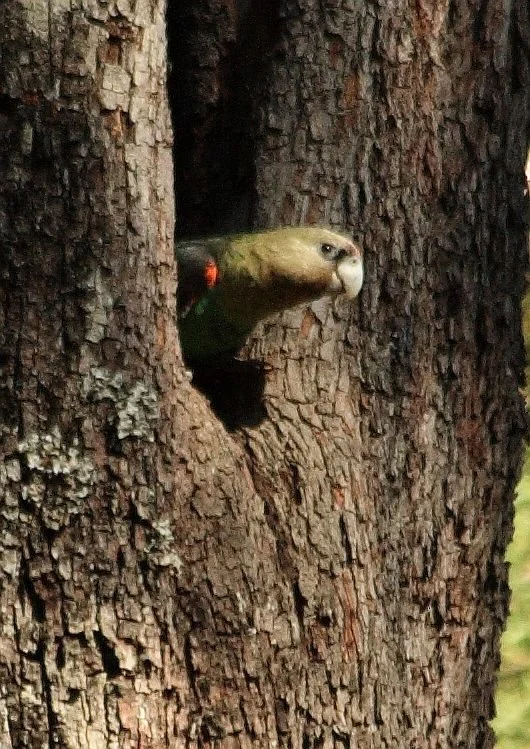
Biodiversity Explorer gives the felling of yellowwoods as the main reason for the bird’s endangered status, because it removes the old trees with nest holes.
The Amatholes: Hogsback and Stutterheim
GoBirding’s Amathole Forest Complex guide describes the forests as an Important Bird Area and lists Cape Parrot first among its key species, with Orange Ground Thrush, Knysna Woodpecker, Chorister Robin-Chat, Barratt’s Warbler and Bush Blackcap. It advises several days in the Hogsback and Stutterheim forests to give yourself a fair chance of the full set, which is a fine excuse for a long weekend. Hogsback is reached on the R345 from Alice, and the walk from the village to the Big Tree by way of Swallow Tail Falls takes 1 to 2 hours.
Two more GoBirding pages help in the west of the range. On the Katberg Pass, the parrots are in the forest further along, and an early morning or late afternoon drive up the pass is the best chance. At Fort Fordyce Nature Reserve the parrot is rarely reported in the forest, but significant numbers sometimes visit the Baddaford Farm Stall nearer Fort Beaufort. Even an endangered parrot knows where the good produce is.
Hogsback is also the base of the Cape Parrot Project, which studies the birds’ movements, breeding sites and disease, works with local residents and schools, and grows indigenous trees to restore the forest. Visit Hogsback notes that its nursery and work areas are not visitor attractions; the attraction is in the sky.
Trengwainton, on Woodside Drive in Hogsback, is BirdLife South Africa Recommended, with a garden of indigenous mountain plants and a pond, and the owners describe walks into the forests nearby.
KwaZulu-Natal: Ingeli, Marutswa and the Midlands
The central group counted 854 birds in 2026, 696 of them in southern KwaZulu-Natal and 158 in the former Transkei. Three forests stand out in the GoBirding guides.
At Ingeli, on the R56 between Harding and Kokstad, the Weza-Ngele forest has a network of trails that reach all its main specials, Cape Parrot, Orange Ground Thrush and Bush Blackcap among them. GoBirding suggests the early morning and late afternoon for the parrot. On the 2026 count, a University of KwaZulu-Natal group watching pecan trees beside the forest saw 8 parrots land at dawn and spend the next few hours cracking nuts, a long breakfast by any standard. ANEW Resort Ingeli Forest is the stay on the spot, with guest rooms, log cabins and its own birding trails.
Near Bulwer, GoBirding calls the Marutswa Forest complex a last refuge for several hundred Cape Parrots, and Gqumeni Forest, 2 km west of Donnybrook, is visited regularly by flocks of several hundred that come to feed. The advice is the same at both: wait above the trees early and late. In Creighton, between the two, the bus stop walls are painted with Cape Parrots, so you can at least see a painted one while waiting for the real thing.
The Midlands forests further north are part of the same range, but the 2026 report says fewer parrots were counted from the Dargle to the Karkloof than in the past. Rockwood Karkloof Lodges, near Howick, publishes the Karkloof Nature Reserve list of more than 185 species, and GoBirding’s page on Rockwood names Cape Parrot among the more elusive species. Tillietudlem Nature Reserve in the Dargle reports 250 species and names the parrot. King’s Grant Country Retreat near Ixopo, closer to the southern forests, reports over 170 species on the farm and names Cape Parrot too. The KwaZulu-Natal places to stay guide covers the province’s other stays.
Limpopo: Woodbush and Magoebaskloof
The northern group is small and far from the others, the outliers of the family. GoBirding rates the Woodbush Forest among the best forest birding sites in Limpopo and lists the endangered Cape Parrot with Black-fronted Bushshrike, Yellow-streaked Greenbul and Orange Ground Thrush. The route follows the R71 between Polokwane, Haenertsburg and Tzaneen. Our Magoebaskloof birding guide has the forest drive and the other stops.
Four stays here name the parrot. Kuhestan Organic Farm is beside Woodbush Forest Reserve, about 45 minutes from Tzaneen, publishes a checklist and can book a local bird guide. Stanford Lake Lodge, about 5 km from Haenertsburg, is BirdLife Recommended, has a bird hide and charges from R1,088 a night for 2 in a self-catering timber cabin in 2026. Magoebaskloof Getaway gives guests a birding logbook on arrival, homework of the pleasant kind, and has log cabins from R800 a night. Tzaneen Country Lodge, on the R71 outside Tzaneen, has its own bird hide and points guests to Tzaneen Dam and the Magoebaskloof forests.
Join the count
The count runs on volunteers. At least 205 people took part in 2026, and parrots were seen at 70% of observer sites on the Saturday afternoon and at 76% on the Sunday morning. The report counts the empty sites as useful data too, so even a parrot-free morning is a contribution. The Cape Parrot Working Group at the University of KwaZulu-Natal organises it, so check its site early in the year for the dates. The parrot is one of the birds in our South African endemics guide.
Pecan orchards are private farms, so ask before you walk in, and keep well back from any tree with a nest hole. The parrots need those old trees more than you need the photo.
Where to stay
The places in this guide, from the Amatholes to Magoebaskloof:
| Place to stay | Where | For birders | From |
|---|---|---|---|
| Trengwainton | Hogsback, Eastern Cape | BirdLife Recommended, indigenous garden, Amathole forests nearby | Ask the lodge |
| ANEW Resort Ingeli Forest | Ingeli, R56, KwaZulu-Natal | Weza-Ngele forest trails, Cape Parrot named | Ask the lodge |
| King’s Grant Country Retreat | Near Ixopo, KwaZulu-Natal | 170+ species on the farm, Cape Parrot named | Ask the lodge |
| Rockwood Forest Lodge | Karkloof, near Howick, KwaZulu-Natal | BirdLife Recommended, 185+ species list, Cape Parrot | Ask the lodge |
| Tillietudlem Nature Reserve | Dargle, KwaZulu-Natal | Hide and viewing platform, 250 species | Ask the lodge |
| Stanford Lake Lodge | Near Haenertsburg, Limpopo | BirdLife Recommended, bird hide, Cape Parrot named | R1,088 a night for 2, self-catering (2026) |
| Kuhestan Organic Farm | Beside Woodbush Forest, Limpopo | Bird checklist, bookable local bird guide | Ask the lodge |
| Magoebaskloof Getaway | Near Haenertsburg, Limpopo | Birding logbook, forest trail, Cape Parrot named | R800 a night, self-catering log cabin |
| Tzaneen Country Lodge | R71, Tzaneen, Limpopo | Bird hide, Cape Parrot named | Ask the lodge |
Counts change every year and rates change each season. Facts were checked on 14 November 2026 with the Cape Parrot Working Group’s report on the 2026 Cape Parrot Big Birding Day, BirdLife South Africa’s GoBirding site guides, Biodiversity Explorer, Visit Hogsback and each place’s listing on Birding Dispatch.
More from the Journal
 Woodpeckers of Southern Africa, Including the One That Doesn’t Need TreesSouthern Africa's woodpeckers, from the Cardinal in every bushveld tree to the Ground Woodpecker that lives on treeless mountain slopes and eats almost nothing but ants.
 Where to See a Taita Falcon: the Strijdom Tunnel, the Blyde Cliffs and the Batoka GorgeA stocky falcon smaller than a pigeon, a handful of cliffs and surveys that keep coming back empty. Where it still nests, how to look, and the 2 roosts beside its cliffs.
 Where to See a Southern Bald Ibis: the Breeding Cliffs, Dullstroom, Wakkerstroom and LesothoA red-capped grassland ibis that nests on cliffs over waterfalls and feeds on burnt veld and maize stubble. The colonies you can watch, the fields to scan, and where to stay.
The Pigeon Post
Every Thursday: 1 bird, 1 place to go and 1 place to stay, by email. Sign up and get our printable checklist of the 163 endemics of southern Africa.