
Mapungubwe Birding: The Limpopo Valley’s Specials and Where to Stay
Pel's Fishing Owl hiding in the riverine forest, Meves's Starling and Tropical Boubou on the Limpopo, Three-banded Courser in the mopane at night, and the camps on both sides.
The bird most birders come to Mapungubwe for spends the day out of sight, which is a bold strategy for a park’s star attraction. Pel’s Fishing Owl roosts in the tall, dark trees of the riverine forest along the Limpopo, and BirdLife South Africa’s site guide to the park says to check exactly those trees, calling the park one of the best places in the country to see one. The other bird that draws listers here also keeps night hours: Three-banded Courser, in the mopane of the park’s western side. Bring a torch and low expectations of sleep.
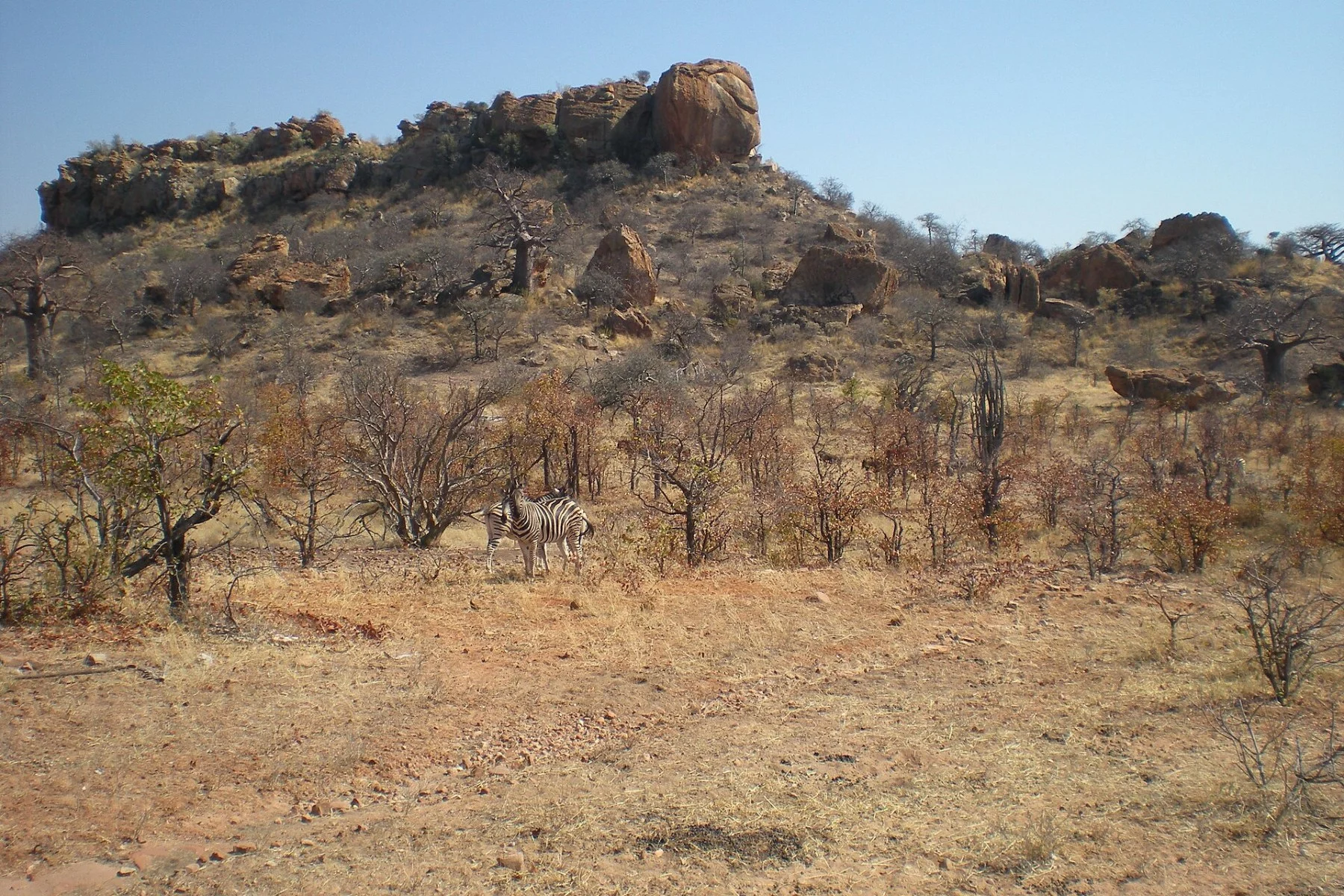
Mapungubwe National Park sits in the far north of Limpopo province, in the Limpopo valley, bordering both Botswana and Zimbabwe. It covers about 28,000 ha and protects Mapungubwe Hill, the site of an ancient civilisation that BirdLife’s guide dates to between 1200 and 1270 AD. BirdLife puts the bird list at well over 400 species, many of them hard to find anywhere else in South Africa, and SANParks notes that the park is still relatively unexplored for birds, so with 2 borders so close, almost anything could turn up.
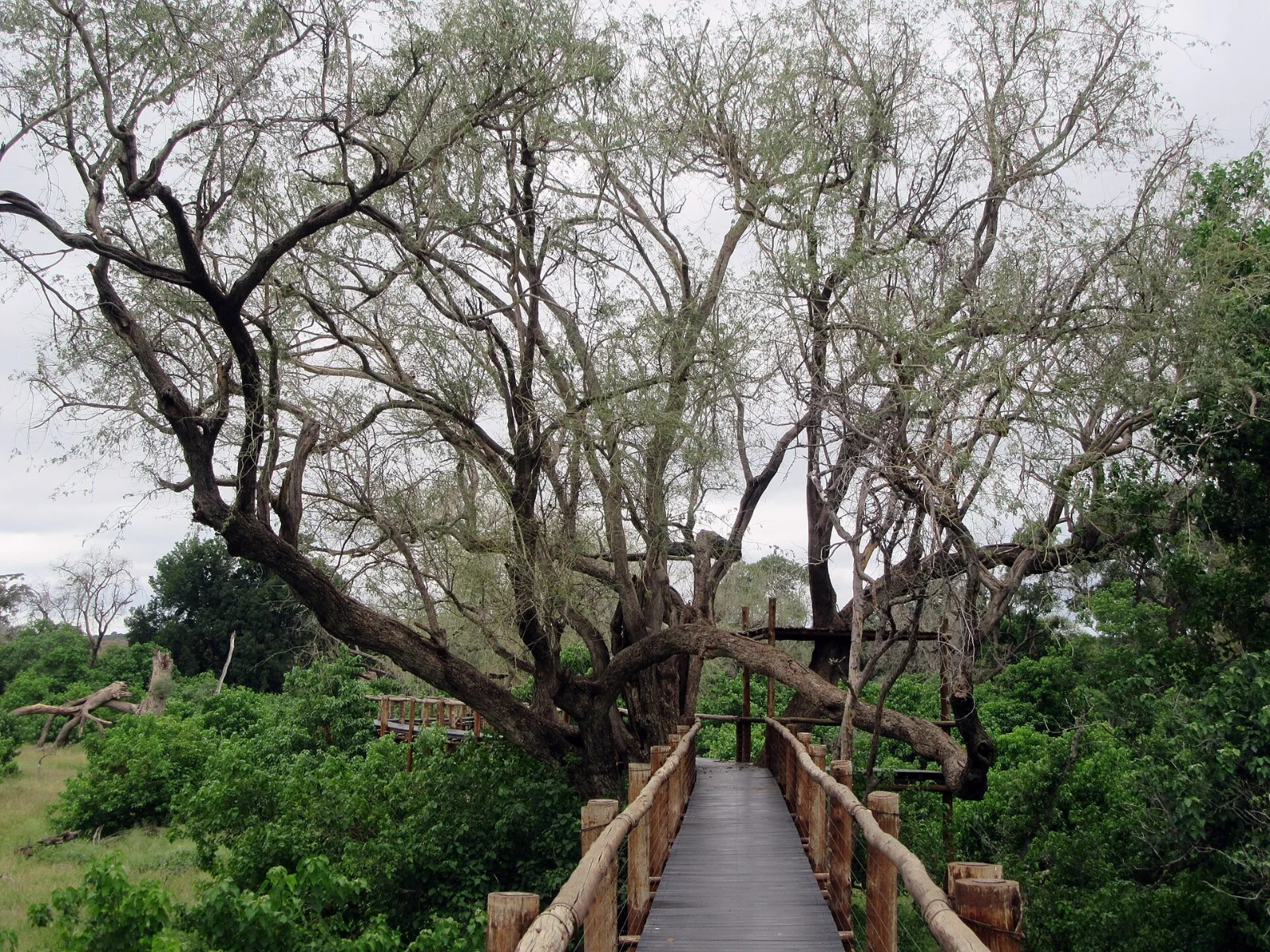
The riverine forest and the canopy walk
The riparian woodland along the Limpopo is where the valley’s specials live. Besides the owl, BirdLife’s guide lists Meyer’s Parrot, Meves’s Starling, Tropical Boubou, Golden-tailed Woodpecker, African Mourning Dove and White-browed Robin-Chat in this habitat, with Eurasian Golden Oriole in summer and the rare Thick-billed Cuckoo, also a summer bird. SANParks picks out the same 3 river birds, Meves’s Starling, Tropical Boubou and Pel’s Fishing Owl, as the species to search for along the Limpopo.
The easiest way into the canopy is the elevated boardwalk. It runs through the forest at treetop height and down to a hide overlooking the Limpopo, beside a large pool, and BirdLife notes that many of the forest species can be seen from it. Walk it early, before the heat of the day, when the birds are busy and the boardwalk is not yet a griddle.
The river and the bee-eater banks
From the hide and the viewpoints, the river itself holds Saddle-billed Stork, Water Thick-knee, Little Egret, White-fronted Plover and African Fish Eagle, all on BirdLife’s list for the Limpopo frontage. White-fronted Bee-eaters are common along the banks, and in summer Southern Carmine and European Bee-eaters often join them, turning the riverbank into a paint chart. Away from the water, SANParks records a high density of Verreaux’s Eagle in the park’s craggy landscape, with other raptors prominent too.
For more on finding the owl, the habits that give a roost away and the best rivers further north, see how to find Pel’s Fishing Owl.
Mopane, thornveld and the coursers
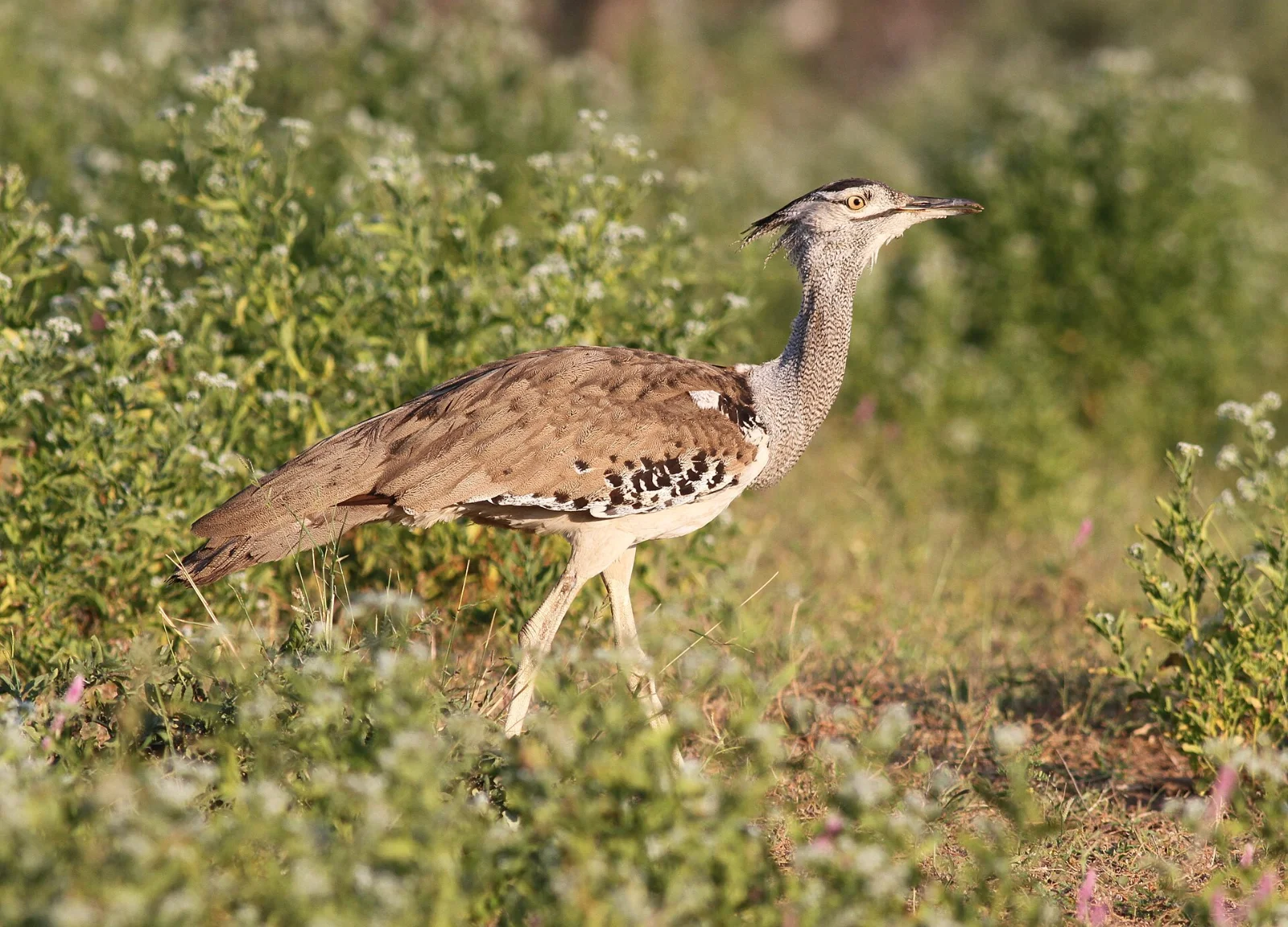
Away from the river, the park is dry scrub, thornveld and mopane woodland, and BirdLife’s list here reads like the contents page of a bushveld field guide: Brubru, Black-backed Puffback, Burchell’s Sandgrouse, Golden-breasted Bunting and Sabota Lark. After good rains, Monotonous Larks call across these areas, while Kori Bustard and Red-crested Korhaan stroll the open savanna as if they own it. Southern Ground Hornbill and Secretarybird are on the list too, with Harlequin Quail in summer, and both Bronze-winged and Temminck’s Coursers. The Southern Ground Hornbill guide covers where else to find a group.
Three-banded Courser is the hardest of the set, a bird that combines rarity with a preference for working nights. BirdLife’s guide rates Mapungubwe as the best site in South Africa to search for this rare, nocturnal bird, and says it is best found in the western parts of the park, in areas dominated by mopane woodland. That makes the western section, and a night drive there, the place to put the effort.
Maloutswa hide and the Den Staat wetlands
The western section has the park’s bird hide. Maloutswa Bird Hide is a short drive from Limpopo Forest Tented Camp and the Mazhou campsite, and SANParks recommends it for both birds and mammals. It looks over Maloutswa Pan, so the birds come to you and the shade is included.
For wetland birds, BirdLife’s guide points to the small dams of the Den Staat area, which at times are some of the best wetland birding sites in the region. They are on private farms and need prior arrangement; BirdLife gives George Hodgson’s number, +27 15 575 1435, for access. The guide’s route is the Den Staat dirt road, about 6 km west of the main gate, through mopane woodland and back through a gate with an animal grid, then 7.5 km on and a right turn down to the farms. The effort pays off: the dam walls give a vantage point over lily-covered ponds with African Pygmy Goose, White-backed Duck and African Jacana, and the reeds hold herons and warblers. In summer the grassland nearby attracts Montagu’s and Pallid Harriers, flocks of Black-winged Pratincole and Western Yellow Wagtail.
Which side of the park to stay on
The single most useful fact for planning is that the park’s western and eastern sections are not connected inside the park. To move between them you leave and come back in on the public road, and the Mazhou listing puts Mazhou about 40 km from the main gate. So choose your base by the birds you want, unless you enjoy a 40 km commute between halves of the same park.
The western section holds Maloutswa hide and the mopane where the coursers are. Mazhou Camp Site is the SANParks campsite there, with 10 powered sites in riverine bush near Limpopo Forest Tented Camp; it is self-catering and open all year, and the listing gives May to September as the most comfortable months. Tshugulu Lodge, a SANParks guest house and guest cottage in the same section, offers an eco-trail drive, guided morning, sunset and night drives, walking trails and confluence viewpoints, and its listing recommends high clearance or a 4×4 to reach it.
The eastern section has the hill, the confluence and the river forest. Vhembe Wilderness Camp has 4 cabins on a ridge within walking distance of the Limpopo and Mapungubwe Hill, with a shared kitchen, and again SANParks recommends a 4×4 or high-clearance vehicle.
Outside the park, Mopane Bush Lodge is on the Mapesu Private Game Reserve beside it, on the R572 about 63 km west of Musina, and holds BirdLife South Africa Recommended Accommodation status. Further south, near Alldays on the way up from Polokwane, Limpokwena Nature Reserve is also BirdLife Recommended, counts more than 300 species and runs guided birding drives; it names Pel’s Fishing Owl, African Openbill, Saddle-billed Stork and White-backed Night Heron. Across the Limpopo in Botswana, Wild At Tuli is a conservation project in the Central Tuli Block where volunteers keep bird lists, help build hides and then, fittingly, spend nights at them.
Getting there and what it costs
BirdLife’s guide puts the park 520 km north of Johannesburg: the N1 to Polokwane, the R521 through Alldays, then the road towards Pontdrift to the R572, where the main gate is 23 km towards Musina. The park is a Big 5 area and visitors must stay in their vehicles except at the few places where getting out is allowed. SANParks’ conservation fees from 1 November 2026 to 31 October 2027 are R76 a day for South African adults, R158 for SADC nationals and R358 for other visitors, with lower rates for children. The camps’ listings add a 1% community levy on SANParks bookings, and the park is in a malaria area.
The months split the same way as most of the bushveld: comfortable for people, or busy for birds. The dry winter, May to September, is the most comfortable time, as the Mazhou listing notes. Summer brings the cuckoos, orioles, harriers and bee-eaters, and the larks call after rain, along with the heat that made winter so comfortable by comparison. For the same Limpopo forest birds further east, where Kruger meets the river, see the Pafuri birding guide.
Where to stay
The places to stay in and around Mapungubwe, in the order they appear above:
| Place to stay | Where | For birders | From |
|---|---|---|---|
| Mazhou Camp Site | Western Mapungubwe, South Africa | Near Maloutswa Pan hide, self-catering camping | R404 a night, site for 2 (2026) |
| Tshugulu Lodge | Western Mapungubwe, South Africa | Guided drives, night drives, Meves’s Starling, Tropical Boubou | R1,798 a night, cottage for 2 (2026) |
| Vhembe Wilderness Camp | Eastern Mapungubwe, South Africa | Walk to the Limpopo, Pel’s Fishing Owl area | R1,080 a cabin a night (2026) |
| Mopane Bush Lodge | Mapesu reserve, next to the park | BirdLife Recommended, game drives | Ask the lodge |
| Limpokwena Nature Reserve | Near Alldays, Limpopo | BirdLife Recommended, guided birding drives, 300+ species | R650 pp, self-catering (2026) |
| Wild At Tuli Safaris | Central Tuli Block, Botswana | Volunteer bird lists, hides, nights at the hides | Ask the lodge |
Fees, access and camp details change. Facts were checked on 14 November 2026 with BirdLife South Africa’s GoBirding guide to Mapungubwe, SANParks’ birding page and 2026/27 conservation fees, and each listing on Birding Dispatch. Confirm roads and bookings with SANParks before you travel.
More from the Journal
 Namib-Naukluft and Sossusvlei for Birders: Dune Lark, Desert Raptors and the Naukluft SpecialsA lark that lives on the dunes and nowhere else, Lappet-faced Vultures nesting in the desert, coursers on the gravel plains and the northern specials around the Naukluft cliffs, in one of Africa's largest parks.
 Lake Baringo and Lake Bogoria Birding: The Owl Walks, the Cliffs and the FlamingosA local guide who knows where every nightjar and eagle-owl slept last night, thorn scrub full of hornbills, a Goliath Heron colony on a rock, and the flamingo lake next door that keeps rising.
 Akagera Birding: Rwanda’s Savanna, Lakes and Papyrus, and the Shoebill ChancesRed-faced Barbet in the southern woodland, Papyrus Gonolek and Carruthers's Cisticola in the swamps, a lake of hippos and lapwings, and a Shoebill that hides in the wetlands more than it shows.
The Pigeon Post
Every Thursday: 1 bird, 1 place to go and 1 place to stay, by email. Sign up and get our printable checklist of the 163 endemics of southern Africa.