
Birding Apps and Field Guides for Southern Africa: What Each One Is For
Field-guide apps, sound tools and recording apps do different jobs: which to use in the field, at home and for atlasing, the specialist books for LBJs, seabirds and Kruger, and why taxonomy splits keep changing your list.
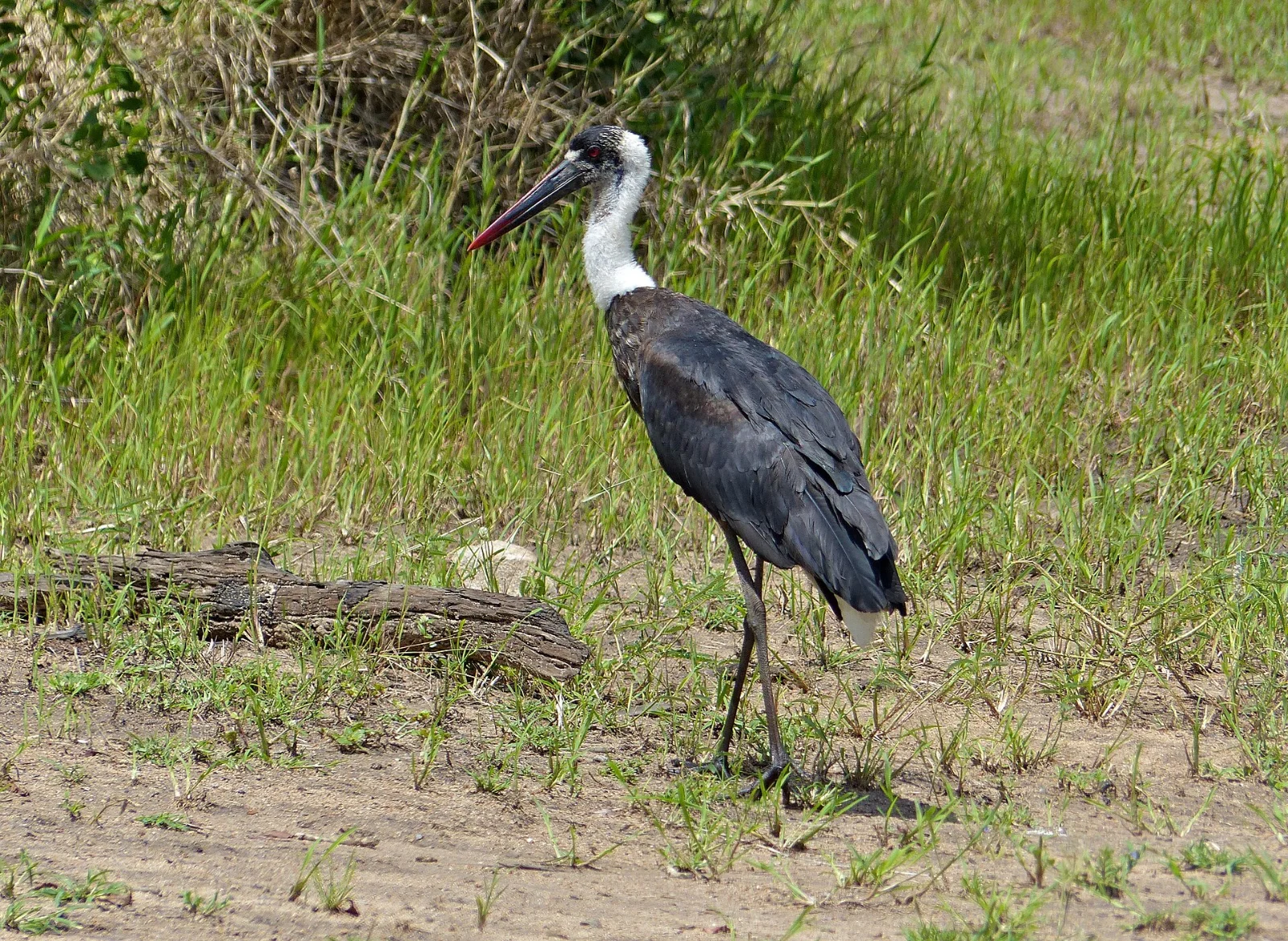
In March 2025 the Woolly-necked Stork became 2 species without changing a feather, and BirdLasser users found an “[x]” in front of the old name in their trip cards, telling them to change it to African or Asian Woolly-necked Stork. Intermediate Egret had already been split 3 ways, into Plumed, Medium and Yellow-billed, which is a lot of new names for what used to be one egret. A printed field guide cannot follow changes like these until its next edition. The apps can, which is one reason most birders in southern Africa now carry a book and a phone, and use each for a different job.
One job per tool
It helps to stop thinking of “a birding app”, which is a bit like asking for “a kitchen utensil”, and think of the job in hand.
- Identifying a bird in front of you. A field guide, in print or as an app, with plates, maps and calls.
- Identifying a sound. A sound-recognition app, used as a lead rather than an answer.
- Recording what you saw. A logging app that can feed a citizen-science project.
- Going deeper on a hard group or one place. A specialist book.
Our beginners’ guide gives the prices of the 6 apps most people start with and of the Sasol, Roberts and Newman’s books. This piece is about what each kind of tool is good for, and the ones beyond that first set.
Field-guide apps: Sasol, Roberts and Firefinch
Sasol eBirds and Roberts Birds are the 2 big field-guide apps: Sasol for a single payment, Roberts on subscription. Roberts says its app works offline, which matters in Kruger and the Karoo; check that any app you rely on has downloaded its sounds and images before you leave signal.
Firefinch is the newer one, from the artist and author Faansie Peacock and the developer Plofskaap. Peacock painted plates for almost 1,000 species over nearly 4 years, and the app adds photos, sounds, maps, seasonal statistics and weekly articles by expert birders. It is free to download, with a full plan at R89.99 a month or R899 a year on the South African App Store, and it rated 4.7 from 112 ratings on 13 November 2026. Peacock says he chose deliberately not to have the app identify birds for you; instead, a location filter built on SABAP2 data narrows the list to the species you are likely to see where you stand. Its Whistlr game teaches calls by habitat, with the forest habitat free.
Before you rely on it in the field, note that the download is 3.4 GB, which is a lot of birds, so install it at home on Wi-Fi. And Firefinch can export a list as a CSV file in BirdLasser format, which bridges the gap between identifying a bird and recording it. The same team makes a separate Kruger Birding app.
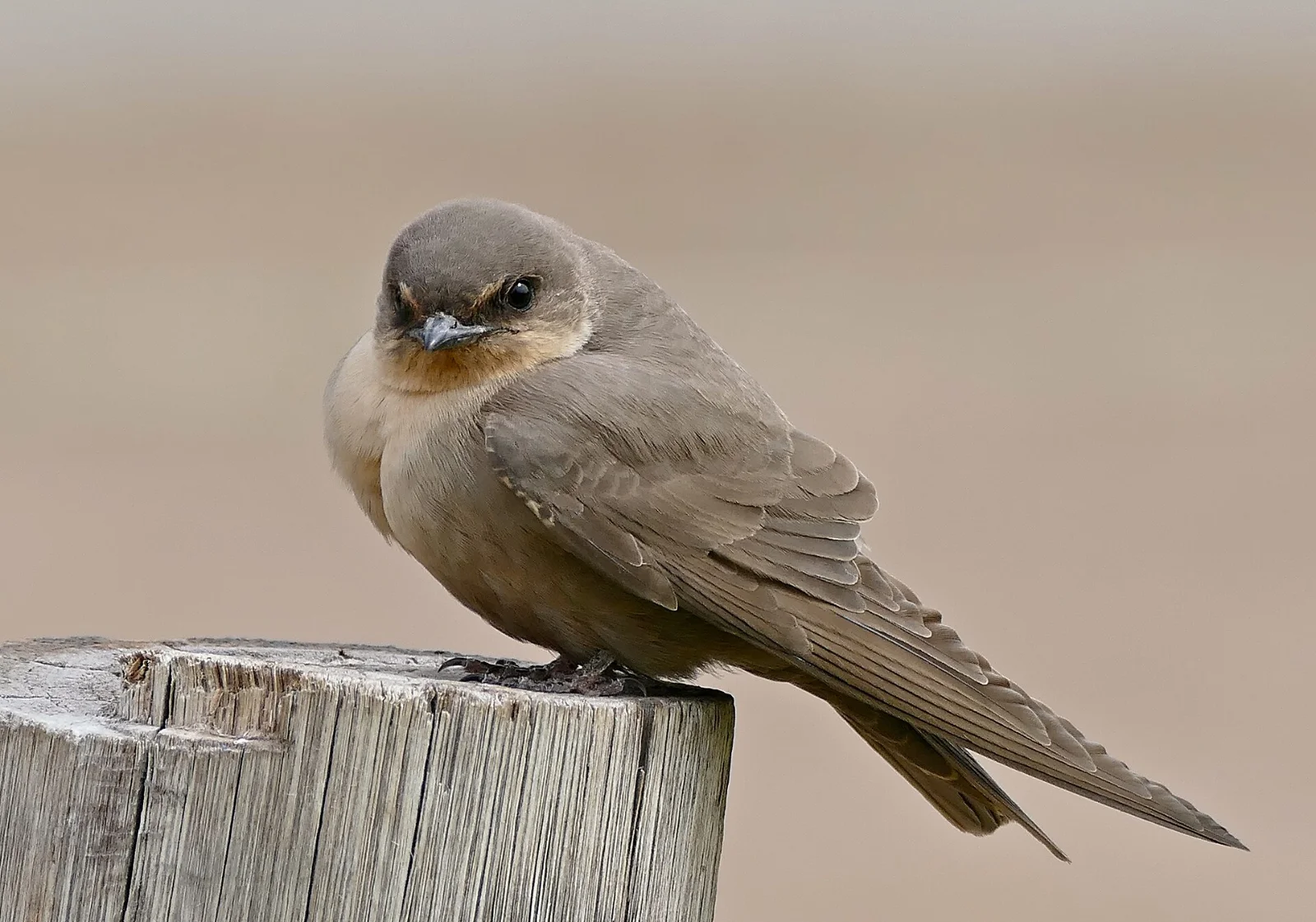
Updates are the point of an app. Firefinch’s release notes for 2025 and 2026 list the Rock Martin and Red-rumped Swallow splits, new species such as Sabine’s Spinetail and Grey Pratincole, and egg images from Warwick Tarboton for every local breeding species. They also admit a gap: the team still needed recordings of about 150 species, so some birds are, for now, seen and not heard.
Anton Crone, editor of African Birdlife, argues for owning both a book and an app: cross-referencing helps with hard species, the app’s calls help most of all, and the main differences between guides are in the illustrations and photographs, so a second guide shows you the bird a second way. He recalls a half hour at Hwange spent flipping between several guides and apps over a small raptor, settled as a Shikra only when it turned and showed its tail, the raptor having the final word as usual.
Sound apps: useful, not final
Merlin and BirdNET identify birds by sound, and both are free. In Africa they are weaker than in North America, for the reason the beginners’ guide explains: the recordings behind them are thinner. Use them to suggest a name, treated as a confident hunch, then check it against the calls in a field-guide app. Firefinch’s Whistlr and the call libraries in Sasol and Roberts are better for learning calls than for identifying them on the spot.
Recording apps: BirdLasser, eBird and the atlas
BirdLasser is the South African logging app. It records each sighting with a time, date and GPS position, keeps your life list and supports the SABAP2 protocol, so a garden list or a morning in Kruger can become an atlas card. Its challenges and private events let groups compete, which birders need very little encouragement to do, and its events have included BirdLife South Africa’s Birding Big Day.
SABAP2, the Southern African Bird Atlas Project 2, is the reason to bother, since it turns a morning’s list into data. Since it started on 1 July 2007, volunteers have collected more than 17 million records, with about 2 million added each year. Birders choose a pentad, a grid square of 5 minutes of latitude by 5 of longitude, and list every species seen in a set time, in the order seen. SABAP2 asks for at least 4 full cards per pentad over several years and seasons before a square counts as well covered. The data underpin red-list assessments, Important Bird and Biodiversity Areas and environmental impact assessments, and the atlas covers 9 countries from South Africa to Malawi.
eBird is the better choice if you also bird outside southern Africa, since your lists from every country sit in one place.
| Tool | Best for | Price (13 Nov 2026) |
|---|---|---|
| Firefinch | Learning birds and calls; location-filtered lists | Free download; R89.99 a month or R899 a year |
| BirdLasser | Logging sightings and SABAP2 atlas cards | Free |
| eBird | Lists from more than one country in one place | Free |
| Merlin, BirdNET | A first suggestion for an unknown call | Free |
Specialist books worth adding
A general field guide gives a hard species a few lines. These give it pages, and some hard species need every one.
Chamberlain’s LBJs by Faansie Peacock covers more than 230 species of “little brown jobs”, with over 1,500 of his paintings, at least a full page per species and maps from atlas data. Peacock points out that almost a quarter of southern Africa’s bird species, and half of its endemics, fall into that group, so the little brown jobs are not a little problem. It costs R400 in print or R240 as an eBook from his shop, and R400 at BirdLife South Africa’s Shop for the Birds.
Guide to Seabirds of Southern Africa, by Peter Ryan, is the book for a pelagic trip; the revised edition is R310.01 at Shop for the Birds. See our guide to Cape Town pelagic trips for when to use it.
Roberts Bird Guide: Greater Kruger National Park covers the park and the adjacent Lowveld and gives accounts of more than 550 species recorded there, at R349.99 from the same shop. It pairs with our Kruger birding guide.
Field Guide to Birds of Greater Southern Africa by Keith Barnes, Terry Stevenson and John Fanshawe covers 9 countries, from South Africa to Zambia, Malawi and Mozambique, at R460. Stevenson and Fanshawe wrote Birds of East Africa. It suits a trip that crosses borders.
Quick Guides by Warwick and Philip Tarboton fold out to about 1 m wide, on heavy 180g paper in a plastic sleeve. Birds of Cape Town and Birds of Jo’burg each cost R80.01 at Shop for the Birds, and there is a Waterberg series too.
Lists from the places you stay
Before a trip, load the property’s own bird list into your head, or, more realistically, into a Firefinch or BirdLasser list. Several places in the directory publish one. Random Harvest Country Cottages at Muldersdrift has a 178-species checklist and runs guided bird walks. Magoebaskloof Birders’ Cottages puts its farm count at 152 species and posts recordings of the farm’s calls. Zaagkuilsdrift Bird Sanctuary and Lodge gives more than 430 species for the Kgomo Kgomo floodplain and a seasonal guide to it. Melozhori Private Game Reserve Lodge in the Overberg publishes its own list of more than 129 species, with Blue Crane and Black Harrier.
Compare the list with what the location filter in your app expects, and ask the host about anything on the list that the app thinks is unlikely. After the trip, submit your cards: in BirdLife South Africa’s Birding Code of Ethics, contributing to atlas and citizen-science projects is one of the things birders are asked to do.
Where to stay
The places in this guide, with what each offers a birder:
| Place to stay | Where | For birders | From |
|---|---|---|---|
| Random Harvest Country Cottages | Muldersdrift, South Africa | 178-species checklist, guided bird walks | Ask the lodge |
| Magoebaskloof Birders’ Cottages | Magoebaskloof, South Africa | 152-species farm count, recordings of the farm’s calls | R580 pp sharing, self-catering |
| Zaagkuilsdrift Bird Sanctuary and Lodge | Pienaarsrivier, South Africa | More than 430 species for the floodplain, seasonal guide | Ask the lodge |
| Melozhori Private Game Reserve Lodge | Overberg, South Africa | Own list of more than 129 species, Blue Crane | R55,000 exclusive use, 4 guests |
Apps and prices change, and taxonomy changes faster. Prices were checked on the South African App Store, Faansie Peacock’s shop and BirdLife South Africa’s Shop for the Birds on 13 November 2026; project facts are from SABAP2 and BirdLasser. Check the current version before you buy.
More from the Journal
 Do You Need a Spotting Scope? When a Scope Helps, What to Look For and Where It MattersA scope turns grey dots on a mudflat into Curlew Sandpipers and Red Knots. When it earns its place in the car, the features that matter, and why 60x fails at noon.
 Your First Birding Safari: What to Expect, From the 05:30 Gate to the Evening ListHow a birding safari day runs, what the guide does, why the vehicle stops for a brown bird when there is an elephant over there, and the other things first-timers find odd.
 How to Log Your Bird Sightings: eBird, BirdLasser or SABAP2?eBird wants short checklists with counts, BirdLasser wants the same bird logged again and again, and SABAP2 wants 2 hours in one square. What each is for, and how to feed all 3.
The Pigeon Post
Every Thursday: 1 bird, 1 place to go and 1 place to stay, by email. Sign up and get our printable checklist of the 163 endemics of southern Africa.