
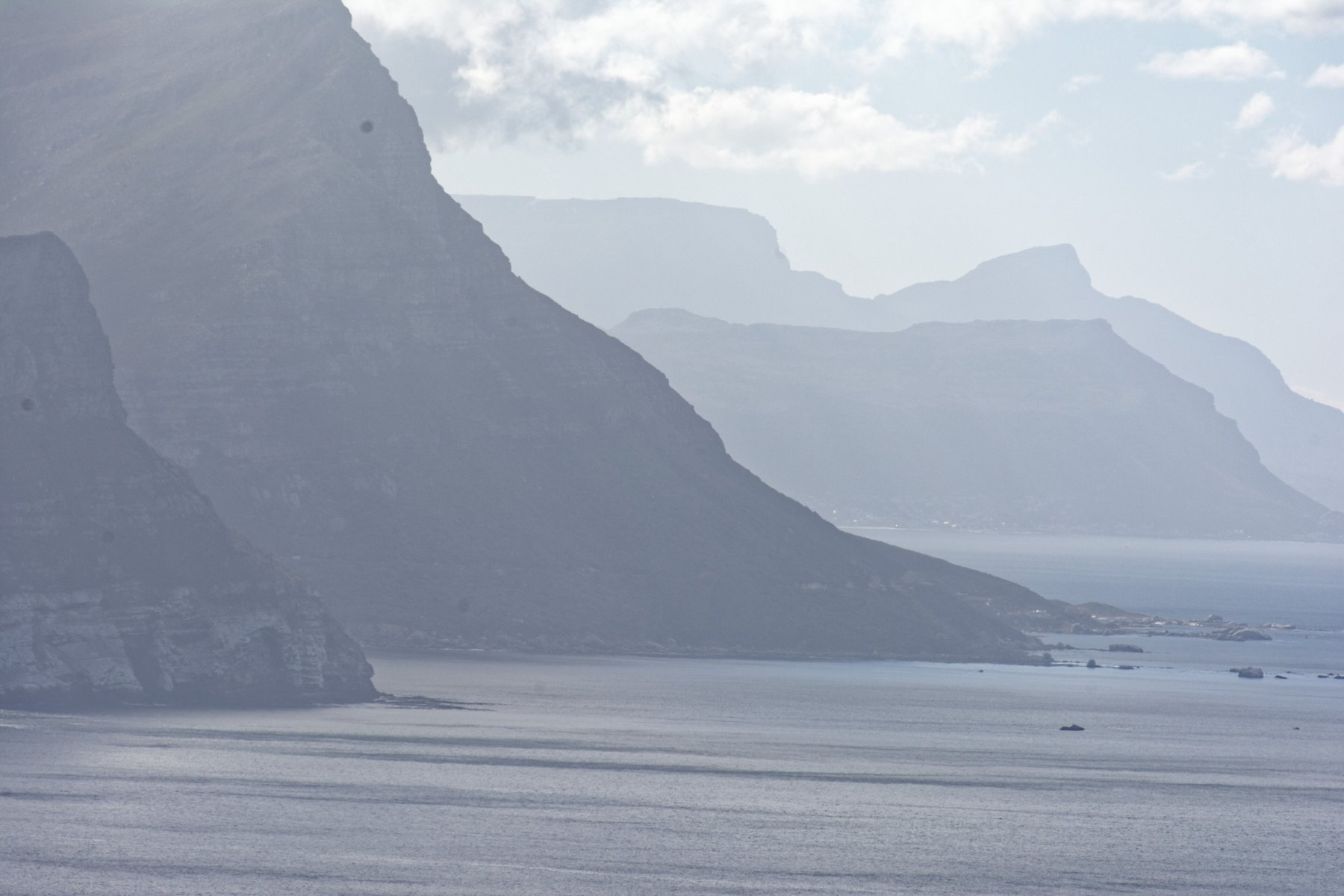
Cape Town Pelagic Trips: Albatrosses off Cape Point and How to Book One
How Cape Town pelagic trips work, who runs them from Simon's Town, what they cost, which albatrosses to expect by season and what happens when the weather says no.
Off Cape Point the cold Atlantic meets the edge of the continental shelf, and the hake trawlers working that edge pull in seabirds by the thousand, all of them there for the fish and none of them for the birders. A day trip out of Simon’s Town puts you among them anyway. Cape Town Pelagics, which has run these trips for 25 years, says guests are likely to see at least 3 and possibly as many as 7 albatross species on a typical day.
The sea is the problem. It is also, unhelpfully, the whole point. Trips are booked with a backup day because the weather cancels a good share of them, the ride out can be rough, and many people get seasick. Book early, keep the backup day free, and take the tablets.
The short answer
Book a scheduled trip with Cape Town Pelagics, the Simon’s Town operator backed by Birding Africa that publishes its dates a year ahead, or a trip through Birding Ecotours, which lists R4,000 per person sharing. Expect a 7:00 departure and a return between 2:00 and 4:00 p.m., with most of the day spent around trawlers 25 to 40 nautical miles out. Winter (June to August) brings the biggest albatross numbers and the best chance of a great albatross; summer brings Spectacled Petrel, shearwaters and Sabine’s Gull. If the sea stays too rough on both days, bird Cape Point and Stony Point from land instead, where the albatrosses are further off but the floor stays still.
At a glance
| Trip detail | Cape Town Pelagics | Birding Ecotours |
|---|---|---|
| Departs | Simon’s Town (some dates Hout Bay) | Simon’s Town or Hout Bay |
| Price | On enquiry by email | R4,000 per person sharing |
| Dates | Scheduled, most weekends, published to Nov 2027 | By request |
| Backup day | Yes, the following day | Yes, 2 consecutive days |
| Group size | Not stated | Usually 6 to 12 |
| Where the money goes | All profits to seabird research and conservation | Commercial operator |
Who runs the trips
Cape Town Pelagics is the main scheduled operator. It is a sister company of Birding Africa and donates all its profits to seabird research and conservation, including BirdLife International’s Save the Albatross Fund; it says it has raised over R130,000. Trips leave Simon’s Town harbour on high-speed recreational speedboats fitted with AIS tracking to find fishing vessels, pass the cliffs of Cape Point and head south-west off the continental shelf, usually 25 to 40 nautical miles out. Birding Africa’s description adds that the boat passes the African Penguin colony at Boulders, the Bank Cormorant breeding colony at Partridge Point and a Cape Fur Seal haul-out, so the sightseeing is done before the birding starts.
Cape Town Pelagics does not publish a price. You email for the cost and availability ([email protected], or WhatsApp messages only on +27 64 092 8463), the office holds a provisional place, and the booking is confirmed only once you have paid in full. Book early. On 9 November 2026, the 3 remaining November 2026 trips were full except for 2 spaces on a second boat on 28 November, and 3 of the January and February 2027 dates were already provisionally full.
Birding Ecotours runs a 1-day Cape Town pelagic at R4,000 per person sharing (dates by request), from Simon’s Town or Hout Bay. Participants meet at Simon’s Town harbour at 6:45 a.m. for a 7:00 departure, a light lunch is provided on board, and the boat is usually back between 2:00 and 4:00 p.m. It describes the trawling grounds as about 30 km beyond Cape Point, with the boat going usually no more than 30 nautical miles from land.
Forum reports from 2011 and 2016 name Zest for Birds as a 3rd Simon’s Town operator with a bigger boat. Its current schedule and price could not be confirmed, so ask directly.
What you will see
The trawlers are the show, in much the way the buffet is the show at a wedding. Birding Ecotours says White-chinned Petrels are normally the most numerous birds behind them, with Shy, Black-browed, Indian Yellow-nosed and Atlantic Yellow-nosed Albatrosses usually present in large numbers, plus Southern and Northern Giant Petrels and the odd Great-winged Petrel. The great albatrosses (Wandering, Southern Royal and Northern Royal) are the rarer prizes. Before the boat even clears False Bay you should pick up Sooty Shearwater, Subantarctic Skua and Cape Gannet.
The numbers can be enormous. The Cape Town Pelagics report for 13 June 2026 logged more than 2,000 Black-browed Albatrosses, more than 1,600 Shy Albatrosses, more than 1,000 White-chinned Petrels and 2 young Wandering Albatrosses, plus a Southern Royal Albatross and 3 Southern Fulmars. On the way back, the inshore list from the same trip had all 4 marine cormorants, 35 African Penguins and 30 Cape Gannets, which by then feels like a quiet afternoon.
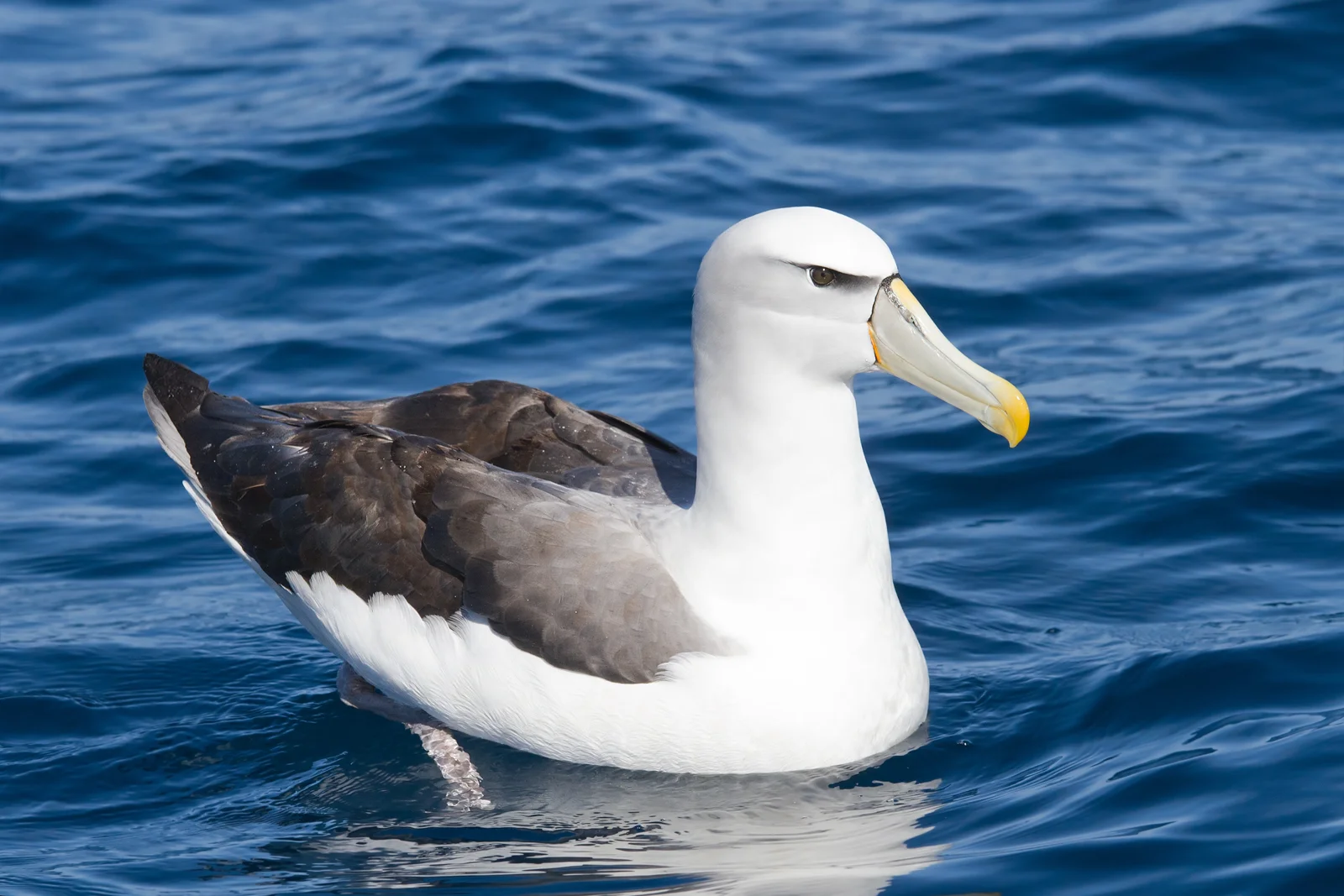
Spectacled Petrel is the bird many visiting listers come for. Birding Ecotours calls the Cape one of the best places in the world to find it and says January and February are the best months, though sightings are far from guaranteed. Cape Town Pelagics reports also list it in July, August and September 2026, so it is not only a summer bird, whatever the timetable says.
A trawler is not guaranteed. A writer on a 2021 Cape Town Pelagics trip noted that the skipper monitors the radio to find one, with no guarantee of success. Even so, the operator’s 2025 and 2026 reports show at least 2 albatross species on almost every trip, and 4 on most of them.
Weather, cancellations and seasickness
Every trip is booked over 2 consecutive days. If the forecast for the first day is worse than for the second, the trip moves, and the skipper confirms either way a couple of days before. Both days can be lost. In a briefing for its spring Cape tour, Birding Ecotours puts the chance of the pelagic going ahead at around 50:50 at that time of year, even with the backup day.
Cape Town Pelagics’ terms are clear on money. If weather cancels the trip and you cannot move to another date, you are refunded less a R200 per person admin fee; a mechanical cancellation is refunded in full. Cancel 61 days or more ahead and you get everything back less R200; inside 60 days you are refunded only if someone takes your place. Exchange rate losses are not covered.
Seasickness is the other cost, and it is not refundable. A Conservation Mag writer who went out after a spell of bad weather reported that many on board were sick and that tablets gave only slight relief. A 2016 forum report from Simon’s Town described a sea that was not really rough but had enough chop that it “would not be for the easily sea sick”. Birding Ecotours suggests tablets such as Stugeron and warns that some make you drowsy, so ask a doctor before you choose.
What to bring
Birding Ecotours’ packing list is the one to follow. A waterproof outer layer matters most, because spray soaks the deck, and whoever is standing on it, on the way out and back. Add warm layers whatever the forecast, sunscreen even on cloudy days, a hat that fastens, sunglasses you can afford to lose, and waterproof boots or sandals that strap on, since your feet will get wet. Binoculars and a camera with a rain cover finish the kit. Bring your own snacks if you want something specific.
If you stay on land
Cape Point. BirdLife South Africa’s GoBirding guide says the Atlantic side of the Cape of Good Hope section is an excellent place for land-based seawatching, best in winter when strong cold fronts push pelagic birds inshore. Shy and Black-browed Albatrosses, both giant petrels, Subantarctic Skua, White-chinned Petrel and Sooty Shearwater are all regular; in summer, look for Cape Gannet, Cory’s Shearwater, Parasitic Jaeger and Sabine’s Gull. Use the Cape Point viewpoints, Gifkommetjie, Platboom and the road down to the Cape of Good Hope, and bring a scope. The cliffs at Cape Point hold a large Cape Cormorant colony. From 1 November 2026 to 31 October 2027, SANParks charges international adults R592 a day for the Cape of Good Hope section, and South African adults R115.
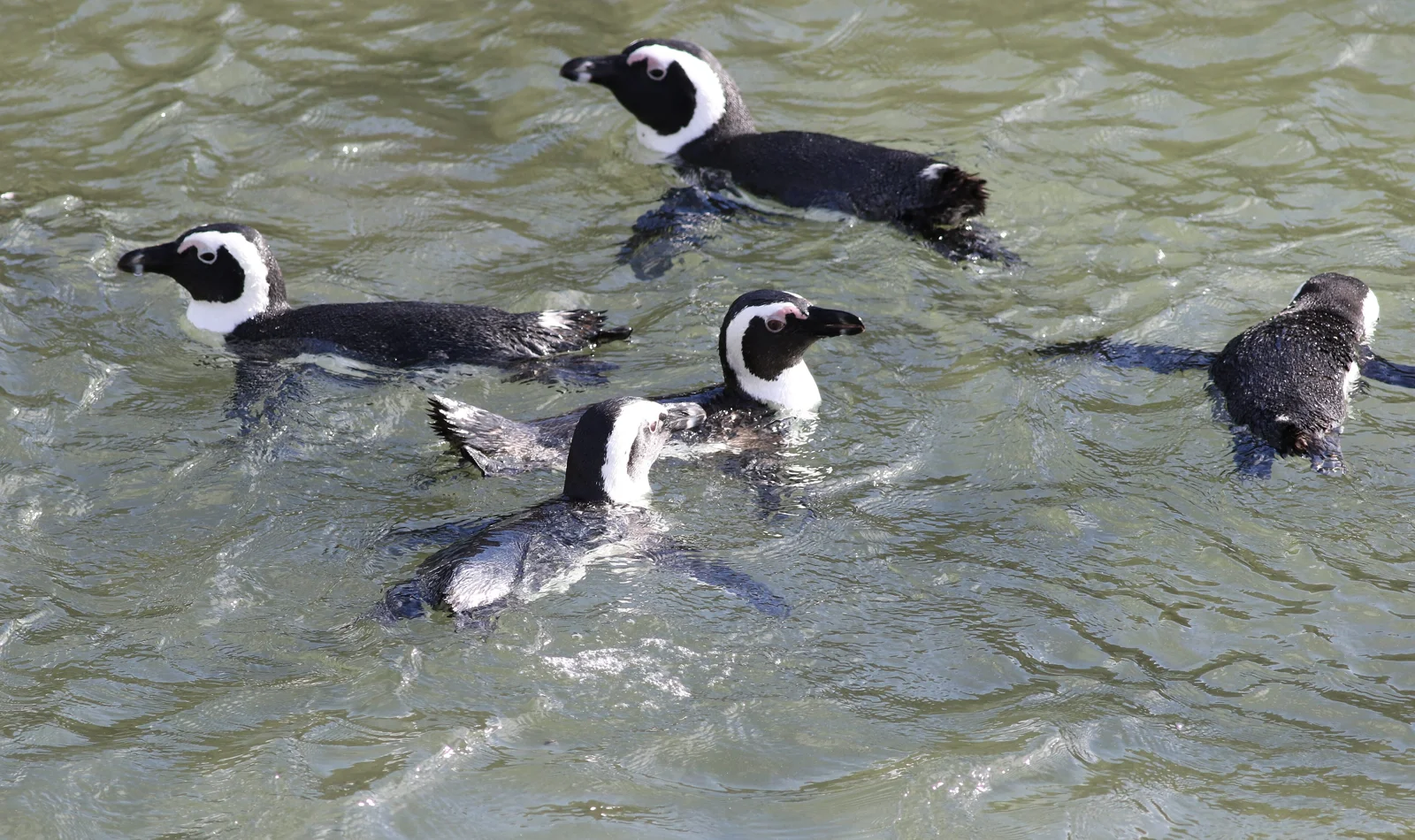
Boulders. The penguin colony at Boulders in Simon’s Town is one of only 2 mainland breeding sites for African Penguin. SANParks charges international adults R282 and South African adults R57 in 2026 and 2027.
Stony Point. GoBirding rates Stony Point in Betty’s Bay as better than Boulders for seeing African Penguins, and one of the best places in the world for good views of the Endangered Bank Cormorant. At times all 4 marine cormorants can be seen from the viewpoint on the boardwalk, a full set without leaving dry land. From the far end, scan the sea for White-chinned Petrel, Shy Albatross and Subantarctic Skua, especially on windy days. GoBirding lists the fee as R25 for adults. Stony Point is on the R44 along Clarence Drive, the same road you would take for the rockjumpers in our guide to the fynbos endemics.
For somewhere to stay, GoBirding lists Avian Leisure and Woodlands Sea Ranch as recommended accommodation near Cape Point and Stony Point.
When to go
Trips run all year. Winter, from June to August, is the strongest season for albatrosses: the 2025 and 2026 Cape Town Pelagics reports for those months include Wandering, Southern Royal and Northern Royal Albatrosses, Southern Fulmars, and the winter flocks of Cape Petrels and Antarctic Prions that Birding Ecotours describes pushing up from subantarctic waters. Winter is also when cold fronts are most likely to cancel a trip, so the best season and the worst weather arrive together. Summer swaps in Cory’s, Manx and Great Shearwaters, European Storm Petrels, Sabine’s Gull and the best odds for Spectacled Petrel in January and February. Black-bellied Storm Petrel passes through for only a couple of weeks in April or May and again in September or October.
The verdict
Go in winter if great albatrosses are the target and you can live with a higher chance of losing the day; go in January or February if Spectacled Petrel matters more. Book Cape Town Pelagics as early as you can, keep the backup day empty and build a land plan for Cape Point and Stony Point in case the sea wins. The seasick tablets are not optional.
Where to stay
Places to stay near the Simon’s Town harbour, with what each offers a birder:
| Place to stay | Where | For birders | From |
|---|---|---|---|
| Avian Leisure | Simon’s Town, Cape Peninsula | BirdLife Recommended; garden feeders; explains Simon’s Town pelagics | Ask the lodge |
| Moonglow Guest House | Glencairn, near Simon’s Town | False Bay views, short drive to the Boulders penguins | Ask the lodge |
Prices, schedules and fees change. Facts were checked on 9 November 2026 with the Cape Town Pelagics website (schedule, booking terms and trip reports), Birding Africa, Birding Ecotours’ pelagic page and Cape tour briefing, BirdLife South Africa’s GoBirding guides to the Cape of Good Hope and Stony Point, SANParks’ 2026 to 2027 conservation fees, Conservation Mag and BirdForum trip reports. Confirm prices and dates directly with the operators before you travel.
More from the Journal
 Namib-Naukluft and Sossusvlei for Birders: Dune Lark, Desert Raptors and the Naukluft SpecialsA lark that lives on the dunes and nowhere else, Lappet-faced Vultures nesting in the desert, coursers on the gravel plains and the northern specials around the Naukluft cliffs, in one of Africa's largest parks.
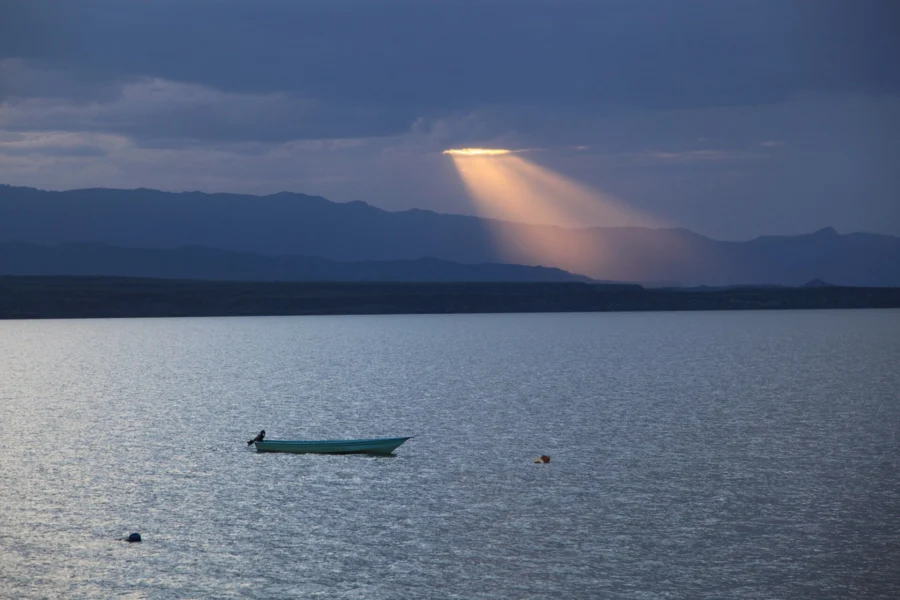 Lake Baringo and Lake Bogoria Birding: The Owl Walks, the Cliffs and the FlamingosA local guide who knows where every nightjar and eagle-owl slept last night, thorn scrub full of hornbills, a Goliath Heron colony on a rock, and the flamingo lake next door that keeps rising.
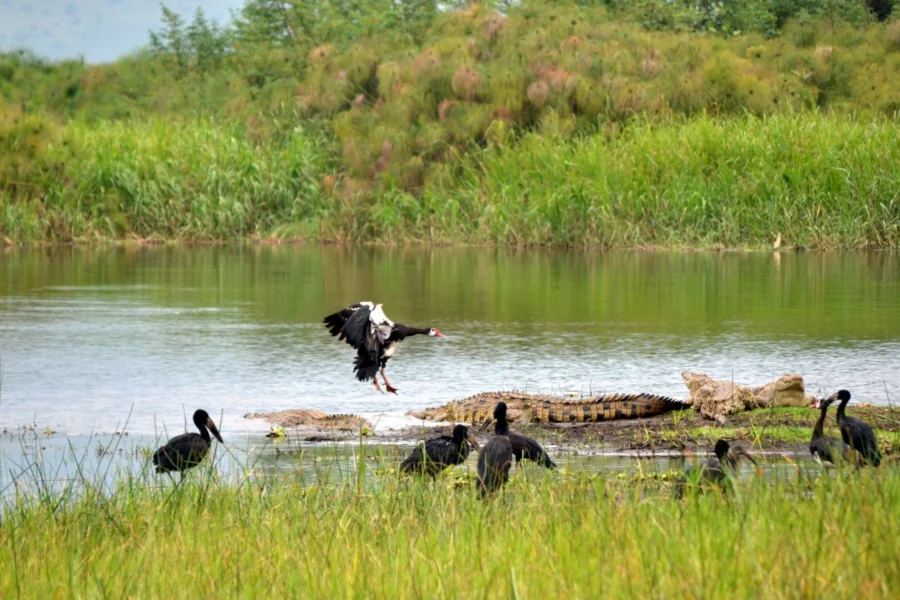 Akagera Birding: Rwanda’s Savanna, Lakes and Papyrus, and the Shoebill ChancesRed-faced Barbet in the southern woodland, Papyrus Gonolek and Carruthers's Cisticola in the swamps, a lake of hippos and lapwings, and a Shoebill that hides in the wetlands more than it shows.
The Pigeon Post
Every Thursday: 1 bird, 1 place to go and 1 place to stay, by email. Sign up and get our printable checklist of the 163 endemics of southern Africa.