
Herons and Egrets of Southern Africa: How to Tell Them Apart and Where to See the Hard Ones
Big grey herons, white egrets, the dark ones that fish under their own wing umbrellas, night herons and 3 bitterns, with ID clues and the wetlands and stays where the hard ones hide.
Most of southern Africa’s herons are easy. A Black-headed Heron stalking a dry field, a Cattle Egret at the feet of a buffalo and a Great Egret on a dam can all be ticked from the car, sometimes without putting down the coffee. The hard ones are a short list: Slaty Egret, Rufous-bellied Heron, White-backed Night Heron and the 3 bitterns. Each needs a particular wetland, often in a particular kind of year, and several are far easier from a boat than from the shore. Herons, it turns out, reward the birder who gets their feet wet, or at least their boat.
Herons fly with the neck pulled back into the shoulders. That single habit separates them in the air from storks, cranes and spoonbills, which fly with the neck stretched out. A heron in flight looks as if it has packed its neck away for the journey.
At a glance
| Species | What to look for | A good place | Source |
|---|---|---|---|
| Goliath Heron | Largest heron in Africa; open water | Marievale, Gauteng | GoBirding |
| Black-headed Heron | Hunts away from water; white underwing in flight | Widespread | Wikipedia species account |
| Purple Heron | Slim, dark, keeps to reedbeds | Marievale; Stonecutters Lodge, Mpumalanga | GoBirding; listing |
| Great Egret | Large, all white, breeds in colonies | Nylsvley, in flood years | GoBirding |
| Western Cattle Egret | Dry ground, with cattle and game | Farmland and bushveld | Wikipedia; listing |
| Black Heron | Fishes under a canopy of its wings; yellow feet | Nylsvley; Marievale | GoBirding |
| Slaty Egret | Yellow legs, vinous brown throat | Okavango Delta; Chobe | Atlas; BirdLife |
| Squacco Heron | Small, buff, in flooded grass | Nylsvley; Marievale | GoBirding |
| Rufous-bellied Heron | Dark, in floodplain weed | Okavango; Chobe; Mana Pools | BirdLife |
| Black-crowned Night Heron | Roosts by day, feeds at dusk | Nylsvley; Kwendalo, Plettenberg Bay | GoBirding; listing |
| White-backed Night Heron | Overhanging growth on rivers | Okavango Panhandle; Pafuri | GoBirding; trip reports |
| Little Bittern | Reeds | Marievale’s Otter and Flamingo hides | GoBirding |
| Dwarf Bittern | Summer, flooded grass and pans | Kanniedood hide, Kruger; Ndumo | SANParks; GoBirding |
| Eurasian Bittern | Flooded reed and sedge, wet years | Nylsvley | GoBirding |
Sorting the big ones
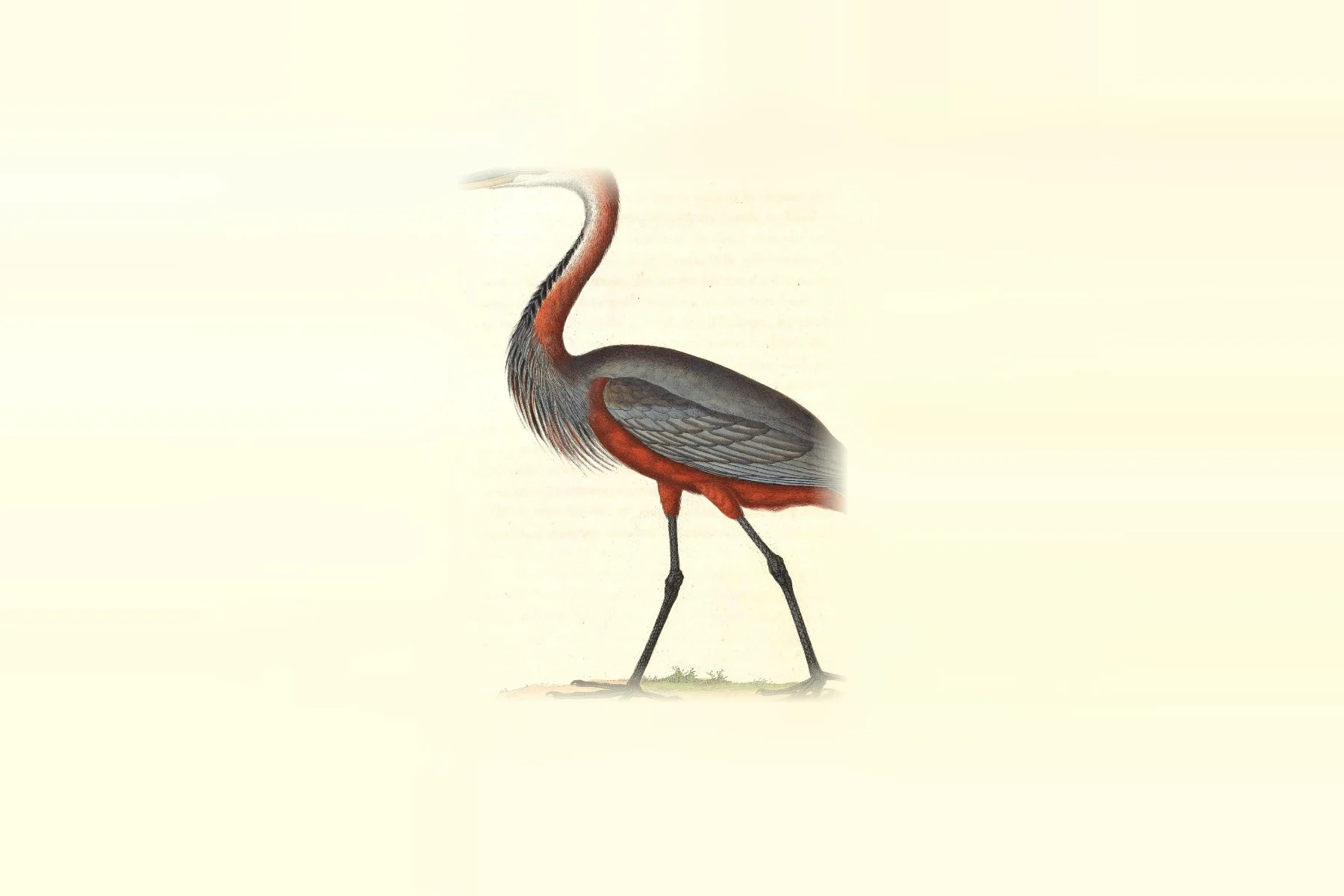
The large grey and brown herons fall into the genus Ardea, and size and habitat do most of the work. The Goliath Heron is the giant of the family, and it looks it, standing on a shoreline like a grey heron that kept growing. Its Wikipedia species account gives it a range that is mainly sub-Saharan, with only a dwindling population in Asia, and it hunts from open shores and shallows where its size is obvious at a distance. GoBirding’s guide to Marievale Bird Sanctuary, on the East Rand, says it is the best place in Gauteng to see Goliath, Black, Squacco and Purple Herons together.
The Black-headed Heron is the one most often seen away from water. Its species account says it takes large insects, small mammals and birds in dry grassland as well as fish in shallow water, that it is nearly as large as the Grey Heron but darker, and that the white underwing coverts are striking in flight. A large grey heron in a field of mown grass is very likely this species, apparently unaware that herons are supposed to fish.
The Purple Heron is slimmer and darker than either, and keeps to dense vegetation by water, particularly reedbeds. It is a bird of a vlei edge, not a dam wall, and it would rather be glimpsed than seen. In the Western Cape, GoBirding places it in the reeds of pans P3 and P4 at Strandfontein. In the Mpumalanga highlands, Stonecutters Lodge on the R540 between Dullstroom and Lydenburg has a hide over a wetland on the property and names Purple Heron with Southern Bald Ibis and Hamerkop, from R1,850 a night for a studio, single occupancy midweek (2026). On the Garden Route, Kwendalo at Plettenberg Bay, BirdLife Recommended, also lists Purple Heron among the birds at its wetland.
At Knysna, Pumula Lodge keeps its own checklist of more than 120 species and names Goliath Heron with Knysna Turaco and Narina Trogon, with the lagoon close by.
The white egrets
Size and bill colour separate the white egrets, and the names have shifted under birders’ feet, which is unhelpful when the birds already look alike. The old Intermediate Egret has been split 3 ways, into Plumed, Medium and Yellow-billed Egrets, so check which name your app uses before logging one. None of the new birds changed colour for the occasion. The birding apps guide covers how the apps have handled the change.
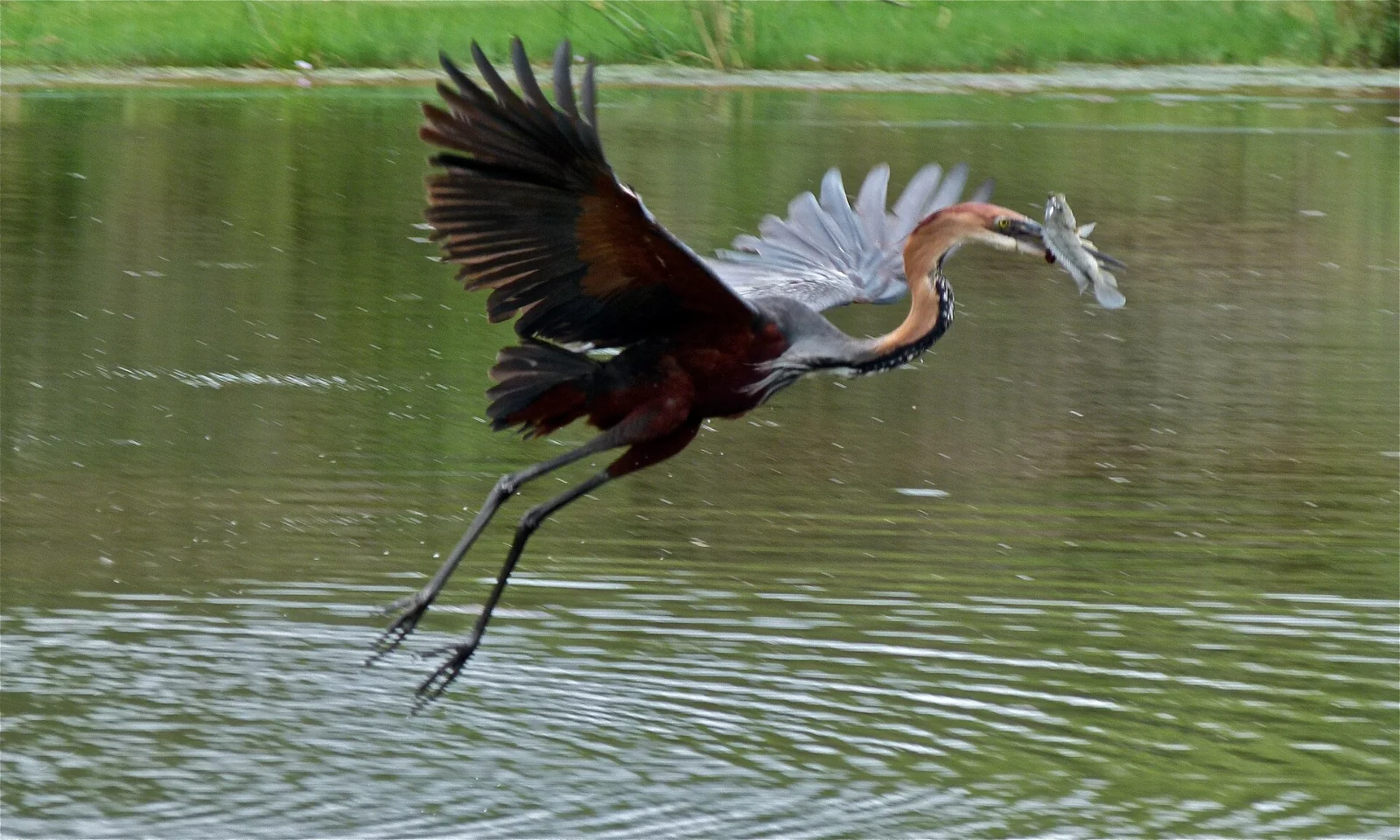
The Great Egret is the biggest and nests in colonies in trees near water. In a flood year, GoBirding says Nylsvley holds the largest breeding concentrations in South Africa of Great Egret, Black Heron, Squacco Heron and Black-crowned Night Heron.
The Western Cattle Egret, now treated as separate from the eastern birds of Asia, is the egret of dry ground. Its species account says it uses drier, more open habitats than other herons and follows cattle and other large grazers for the insects they disturb. At Vivo in Limpopo, Chinaka Game Lodge lists Cattle Egret among 42 species seen from its deck over the waterhole.
The dark herons: Black Heron and Slaty Egret
These 2 are the classic confusion pair, and the Atlas of Southern African Birds says Slaty Egret was recognised as a separate species only in 1971 and is still widely confused with Black Heron and overlooked as a result.
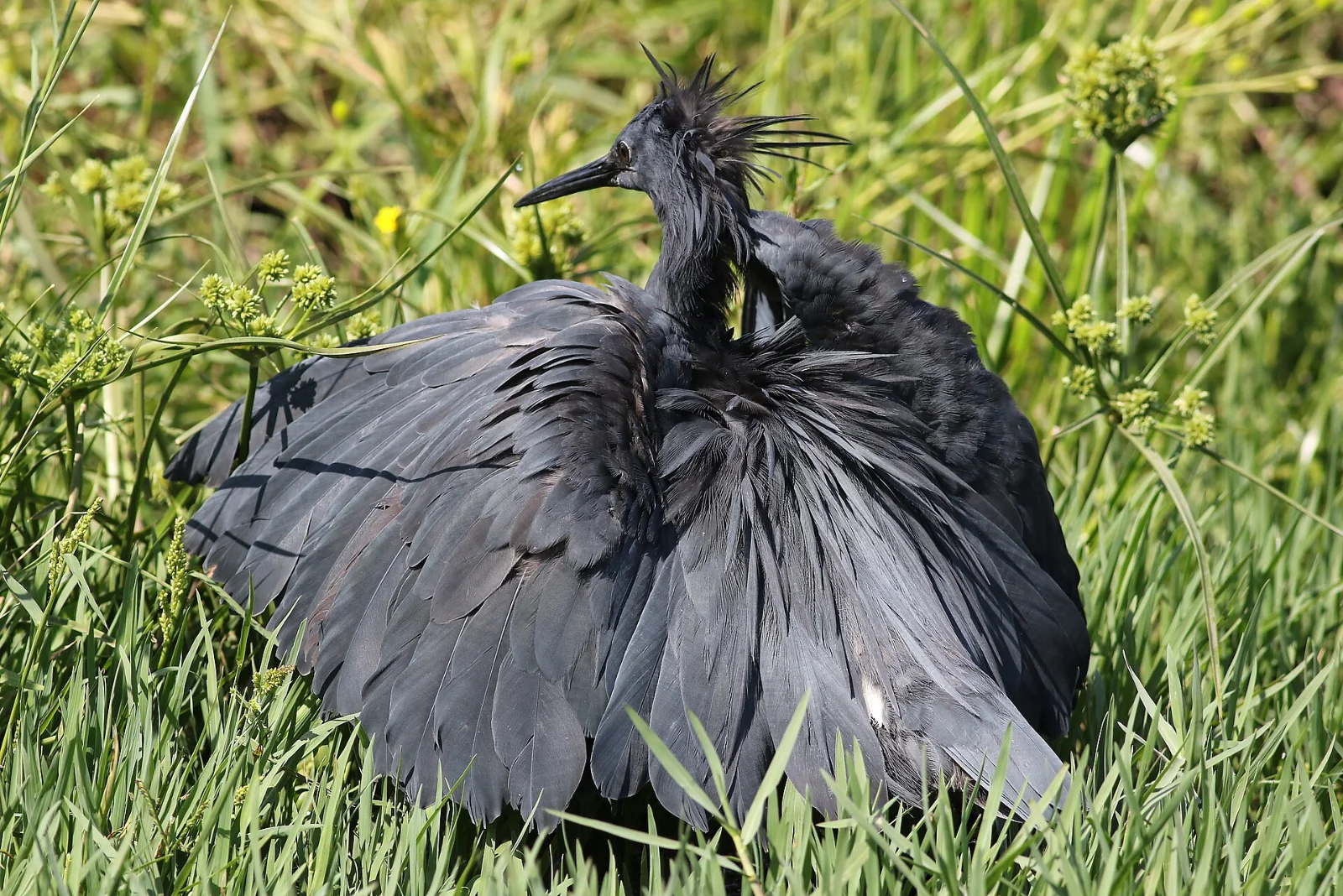
The Black Heron gives itself away by behaviour. It fishes by spreading its wings into an umbrella over its head, which shades the water and draws fish in. It looks like a bird hiding from the rain on a sunny day. It has a black bill and black legs with yellow feet.
The Slaty Egret has yellow legs and a vinous brown throat, and it does not canopy feed. The Atlas account, by Marc Herremans, says the main stronghold is the Okavango Delta, where it is common to abundant towards the centre, and that it also occurs regularly along the Chobe River, in the Caprivi Strip and in extreme western Zimbabwe. It forages singly or in loose groups in shallow, receding floodplains, mostly in grassy vegetation, and breeds in tall, dense reeds, often in mixed heronries with Rufous-bellied Herons. Breeding is irregular and depends on high floods. BirdLife’s Okavango IBA factsheet puts the breeding population at 100 to 1,000 pairs, and Wilderness says about 85% of the world’s Slaty Egrets live in the Okavango region.
In South Africa it is a vagrant. The Atlas lists records at Nylsvley in the very wet years of 1989 and 1996, when it bred there, and at Vaalkop Dam in January 1994.
Where to see the hard ones
Slaty Egret and Rufous-bellied Heron
Go north, and take a boat. BirdLife’s factsheet for the Okavango lists 200 breeding pairs of Rufous-bellied Heron, and its factsheet for the Linyanti swamp and Chobe river counts 250 Rufous-bellied Herons outside the breeding season. Birding Ecotours finds Slaty Egret, Rufous-bellied Heron, Lesser Jacana and Allen’s Gallinule on the Kasai Channel, which links the Chobe to the Zambezi. On the Namibian side, Zambezi Mubala Lodge, 40 km east of Katima Mulilo, runs a guided boat cruise of about 3 hours and names herons and egrets among the birds seen, from N$3,541 per person sharing with breakfast. Its sister Zambezi Mubala Camp runs the same cruise. See Chobe River birding and Okavango Delta birding.
In Zimbabwe, BirdLife Zimbabwe says Rufous-bellied Heron hunts in the fringing weed along the Zambezi at Mana Pools, and recommends the Victoria Falls sewage ponds for it.
In South Africa, the best chance is a flooded Nylsvley. Sandfields and Forests, a private reserve bordering Nylsvley near Mookgophong, is BirdLife Recommended and names Rufous-bellied Heron, Eurasian Bittern and Dwarf Bittern among the wetland birds that turn up when the floodwaters come. It has serviced self-catering lodges for 10 and 4. See Nylsvley birding for the reserve and its hides.
White-backed Night Heron
This is a bird of thick growth overhanging slow rivers, active after dark, which is a polite way of saying it does not want to be found. In Botswana, a Field Guides tour in November 2023 recorded 2 at Drotsky’s Cabins near Shakawe. On an island nearby, Xaro Lodge birds by boat and names White-backed Night Heron with Pel’s Fishing Owl and African Skimmer. On the eastern bank, Kashete Plains Expedition & Campsite at Kauxwi books guided bird walks and boat and mokoro outings and names it too. Upstream in Namibia, Ndhovu Safari Lodge at Divundu runs guided boat trips on the Okavango and names the night heron with Pel’s. BirdLife’s Okavango factsheet counts 85 breeding pairs.
In South Africa, GoBirding says it is found along the Luvuvhu at Pafuri, best searched for at night from the lodges on the northern bank, and that one sometimes sits in the overhanging branches near the parking area at Sunset Dam, outside Lower Sabie. In the Sabi Sand, Inyati Game Lodge on the Sand River publishes its own checklist and names White-backed Night Heron with African Finfoot. For Pafuri, see Pafuri birding.
The bitterns
All 3 bitterns, Eurasian, Little and Dwarf, occur and breed at Nylsvley, but GoBirding warns that sightings are far from guaranteed, and they are more often heard than seen. Bitterns are the reedbed’s best-kept secret, and they keep it well. Little Bittern is the easiest: GoBirding says it is regular from the Otter and Flamingo hides at Marievale, and it is possible from the hides at Rondevlei on the Cape Flats. Kwendalo names it too, with Black-crowned Night Heron, and its smaller blind looks over a pond with a heronry.
Dwarf Bittern is a summer bird of flooded grass and pans. SANParks lists it at Kanniedood hide near Shingwedzi in Kruger, GoBirding names it at Nyamithi Pan in Ndumo in summer, and in wet years at the Kgomo-Kgomo floodplain north of Pretoria. There, Zaagkuilsdrift Bird Sanctuary & Lodge is BirdLife Recommended, has 3 hides, and names Dwarf Bittern and Squacco Heron. It is open from October to April, needs a high-clearance vehicle, and floods can close Crake Road.
When to go
For South Africa, go in a wet summer. The Nyl and Kgomo-Kgomo floodplains only fill after good rains, and the Friends of Nylsvley advise phoning the reserve before driving up to ask whether there is water on the floodplain. A dry year and a flood year at the same site produce 2 different lists, and the herons decide which one you get.
For the Okavango specials, the calendar runs the other way, because the Delta floods on its own schedule. The Atlas says Slaty Egret lays from March to June, at peak flood levels, and Wilderness gives the same months. From September to November the water drops and the heronries, such as Gcodikwe in Moremi, are full of chicks, according to the camps that run boats there.
Where to stay
The places in this guide, with what each offers a birder:
| Place to stay | Where | For birders | From |
|---|---|---|---|
| Stonecutters Lodge | R540 near Dullstroom, Mpumalanga | Hide over a wetland, Purple Heron, Southern Bald Ibis | R1,850 a studio (single, midweek) |
| Kwendalo | Plettenberg Bay, Western Cape | BirdLife Recommended, wetland hide, heronry blind, Purple Heron | Ask the lodge |
| Pumula Lodge | Knysna, Western Cape | 120+ species checklist, Goliath Heron, Knysna Turaco | Ask the lodge |
| Chinaka Game Lodge | Vivo, Limpopo | Deck over the waterhole, 42-species list, Cattle Egret | Ask the lodge |
| Zambezi Mubala Lodge | East of Katima Mulilo, Namibia | Guided 3-hour boat cruise, herons and egrets | N$3,541 pp B&B |
| Zambezi Mubala Camp | East of Katima Mulilo, Namibia | The same guided boat cruise | N$1,150 pp self-catering |
| Sandfields and Forests | Bordering Nylsvley, Limpopo | BirdLife Recommended, Rufous-bellied Heron, Eurasian and Dwarf Bitterns | Ask the lodge |
| Drotsky’s Cabins | Near Shakawe, Okavango Panhandle, Botswana | White-backed Night Heron recorded, African Skimmer | Ask the lodge |
| Xaro Lodge | Island near Shakawe, Okavango Panhandle, Botswana | Boat birding, White-backed Night Heron, Pel’s Fishing Owl | US$450 per room DB&B |
| Kashete Plains Expedition & Campsite | Kauxwi, Okavango Panhandle, Botswana | Guided bird walks, boat and mokoro, White-backed Night Heron | Ask the lodge |
| Ndhovu Safari Lodge | Divundu, Namibia | Guided boat trips, White-backed Night Heron, Pel’s Fishing Owl | Ask the lodge |
| Inyati Game Lodge | Sand River, Sabi Sand | Own checklist, White-backed Night Heron, African Finfoot | R16,500 pp fully inclusive |
| Zaagkuilsdrift Bird Sanctuary & Lodge | Kgomo-Kgomo floodplain, north of Pretoria | BirdLife Recommended, 3 hides, Dwarf Bittern, Squacco Heron | Ask the lodge |
Flood levels decide most of what you will find, and access roads close after heavy rain. Facts were checked on 13 November 2026 with the Atlas of Southern African Birds, BirdLife South Africa’s GoBirding guides, BirdLife International and BirdLife Zimbabwe, SANParks, Wikipedia species accounts and the Birding Dispatch listings. Phone the reserve before you go.
More from the Journal
 Woodpeckers of Southern Africa, Including the One That Doesn’t Need TreesSouthern Africa's woodpeckers, from the Cardinal in every bushveld tree to the Ground Woodpecker that lives on treeless mountain slopes and eats almost nothing but ants.
 Where to See a Taita Falcon: the Strijdom Tunnel, the Blyde Cliffs and the Batoka GorgeA stocky falcon smaller than a pigeon, a handful of cliffs and surveys that keep coming back empty. Where it still nests, how to look, and the 2 roosts beside its cliffs.
 Where to See a Southern Bald Ibis: the Breeding Cliffs, Dullstroom, Wakkerstroom and LesothoA red-capped grassland ibis that nests on cliffs over waterfalls and feeds on burnt veld and maize stubble. The colonies you can watch, the fields to scan, and where to stay.
The Pigeon Post
Every Thursday: 1 bird, 1 place to go and 1 place to stay, by email. Sign up and get our printable checklist of the 163 endemics of southern Africa.