
Africa’s Storks and Where to See Them
All 8 African storks, from the Marabou at the rubbish dump to the Saddle-billed on the river pool, which ones migrate and which stay, how to tell them apart, the easiest sites and the places to stay beside them.
Africa has 8 storks, and all 8 occur in southern Africa. White and Abdim’s Storks, and most of the African Woolly-necked Storks seen in Botswana and Namibia, are visitors that fly in for the rains and leave by autumn. The Yellow-billed Stork and African Openbill wander so widely after water that a pan can hold hundreds one month and none the next, which makes them the hardest guests to plan a dinner around. The other 3 are residents, and in South Africa the Atlas of Southern African Birds put the breeding populations of 2 of them, the Saddle-billed and the Black Stork, at about 200 pairs or fewer.
The Atlas species accounts, written mainly by Mark Anderson, David Allan, Aldo Berruti, Graeme Benn and Rene Navarro, are the base reference here, with BirdLife sources and SANParks for the sites. Storks fly with the neck stretched out, which separates them in the air from herons, who tuck theirs in like a commuter in a cold wind; for those, see herons and egrets of southern Africa.
At a glance
| Stork | When (Atlas) | Habitat | A good site (source) |
|---|---|---|---|
| Saddle-billed | All year | Rivers, pans, floodplains | Okavango; Sunset Dam, Kruger (BirdLife, GoBirding) |
| Marabou | All year, more in the rains | Open country, carcasses, dumps | Moremi, Okavango (Atlas) |
| Yellow-billed | Mostly October to April | Shallow open water | Sunset Dam, Kruger (GoBirding) |
| African Openbill | All year, nomadic | Floodplains, pans | Chobe River, July (Atlas) |
| Black | All year | Pools in big rivers, cliffs | Batoka Gorge, Victoria Falls (BirdLife Zimbabwe) |
| White | November to March | Croplands, grassland | Eastern Cape to Mpumalanga highveld (Atlas) |
| Abdim’s | October to April | Grassland, fields | Nossob riverbed, Kgalagadi (SANParks) |
| African Woolly-necked | All year, plus summer visitors | Short grass near water | KwaZulu-Natal coast (Atlas) |
The big residents
Saddle-billed Stork
The tallest and the easiest to name: black and white, with a red and black bill and a yellow saddle on top, as if it had been assembled from a flag collection. Graeme Benn’s Atlas account puts it largely in the north-east of the region, in Zimbabwe, northern Botswana and the Caprivi Strip, with the South African population in the lowveld and north-eastern KwaZulu-Natal. Published estimates were about 500 pairs in Zimbabwe and 50 to 100 pairs in South Africa. It is resident, but harder to see from December to February, when birds disperse to temporary wetlands and go briefly off the grid.
The Okavango is the stronghold. BirdLife International’s factsheet for the Delta lists about 100 breeding pairs, and the Atlas found the highest reporting rates there. In the Delta, Gomoti River Lodge has a bird guide on staff who leads bush walks and names Saddle-billed Stork among its birds. Near Hwange in Zimbabwe, Nantwich Lodge watches its private dam from an underground hide and names both Saddle-billed Stork and African Openbill. On the Luangwa in Zambia, Kafunta River Lodge has a photographic hide under the main deck facing the floodplain waterhole and serves breakfast before sunrise.
In Kruger, SANParks names Sunset Dam and Kanniedood Dam; see the Big Six birds of Kruger. Along the Sand River in the Sabi Sand, Inyati Game Lodge puts it among 5 big birds to look for, and Sabi Sabi Little Bush Camp, with specialised birding guides, sets it as one of 6 targets. Inside Kruger’s own boundary, Plains Camp @ Rhino Walking Safaris plans birding walks around the guest, from R9,830 per person sharing for 2026/27. West of the park, Imagine Africa Luxury Tented Camp in Balule and Abelana Game Reserve near Phalaborwa both name it; Abelana reopens its river lodge on 1 December 2026 after floods. Further west on the Limpopo, Limpokwena Nature Reserve near Alldays runs guided birding drives and names Saddle-billed Stork and African Openbill, from R650 per adult self-catering.
Marabou Stork
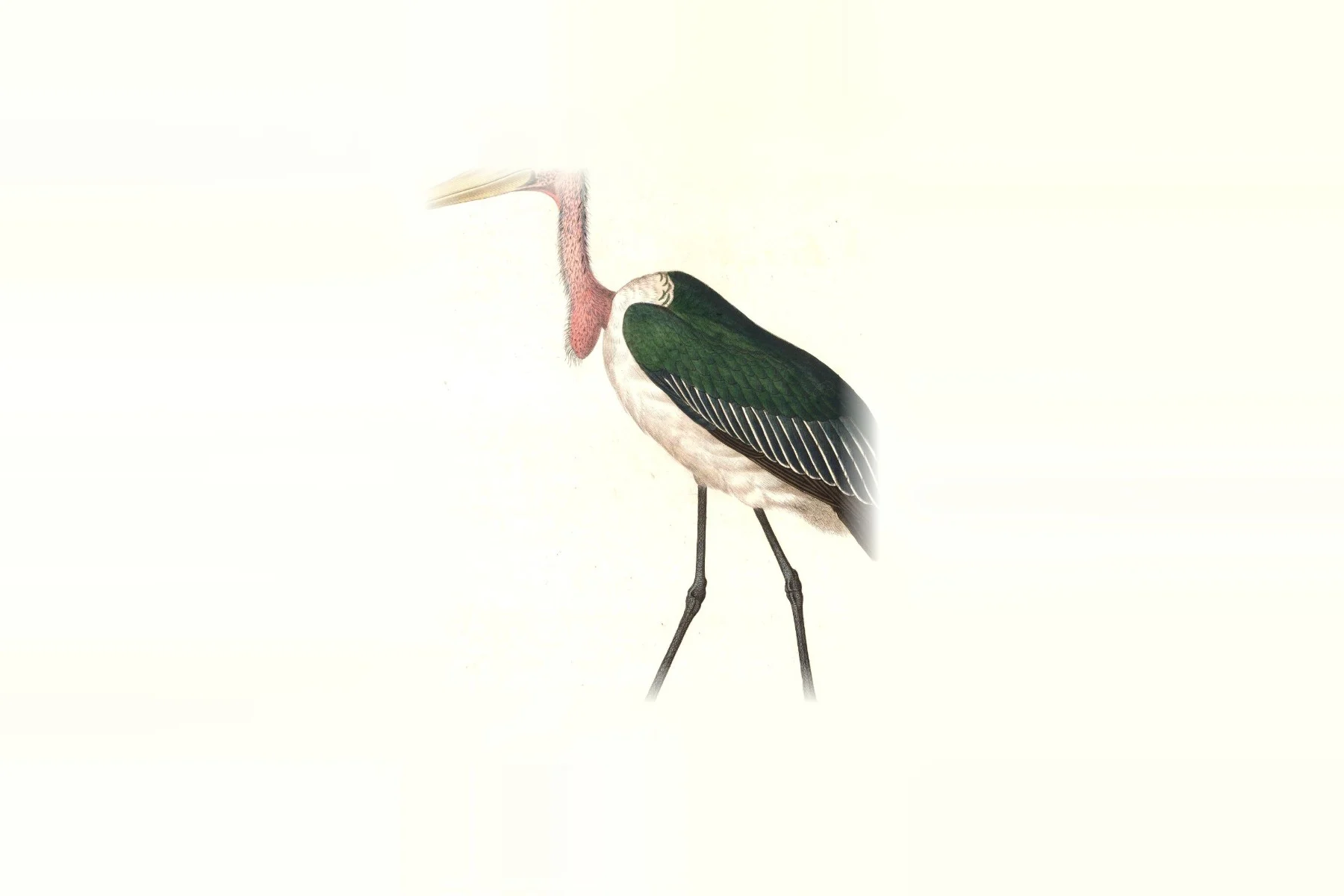
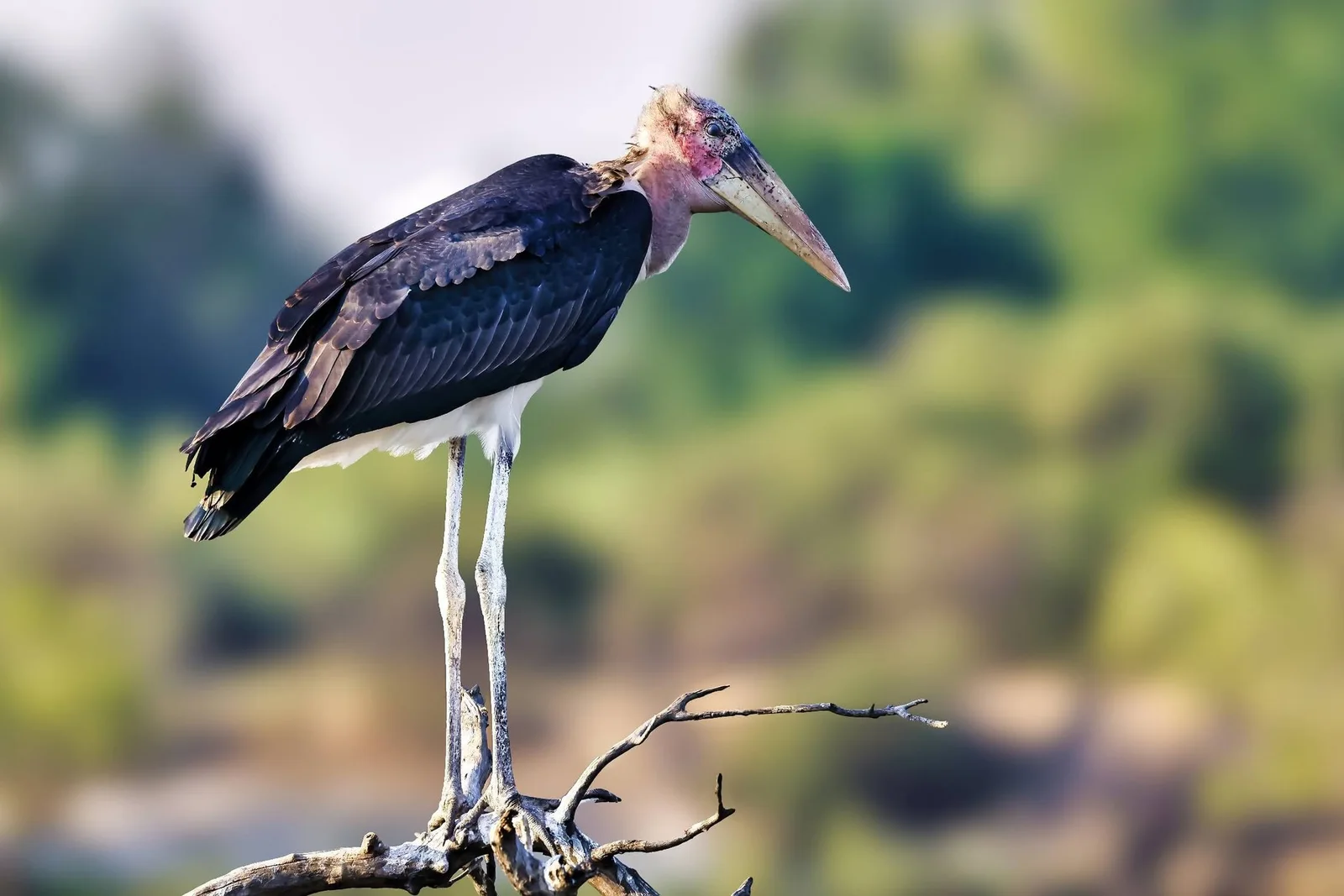
Common to abundant across much of Africa, but classed as rare in South Africa, where Mark Anderson and Marc Herremans found it mostly confined to big conservation areas in the lowveld and northern KwaZulu-Natal. It is a scavenger as much as a fisher, drawn in numbers to termite emergences, locust irruptions, grassfires and carcasses, and in the 1990s Kruger’s Marabous gathered at rubbish dumps near the rest camps. It is not a glamorous bird, and it does not seem to mind. Large numbers breed in the Okavango, mainly in fig thickets in the Moremi Game Reserve, laying in the dry season, June to September. A resident population there is joined by wet-season visitors from October to February.
BirdLife Zimbabwe lists nesting Marabous in the Ume basin of Matusadona National Park on Lake Kariba. In South Luangwa, Lion Camp has a hide at water level off the main deck above an oxbow lagoon and names Marabou Stork, from US$950 per person sharing in the 2026 shoulder season.
Black Stork
The Black Stork breeds across the Palearctic, but David Allan’s Atlas account is clear that none of those birds are known to reach southern Africa: same species, separate lives, no visits home. The population here is resident and isolated, about 200 pairs in South Africa and at least 120 pairs in Zimbabwe. It is largely a fish eater, typically seen at pools in big rivers, and it nests on cliffs, so the breeding range follows hilly country. Unusually for a stork, it breeds in winter, laying mainly from May to August, when shrinking pools concentrate fish. It times the family to the fish, not the weather.
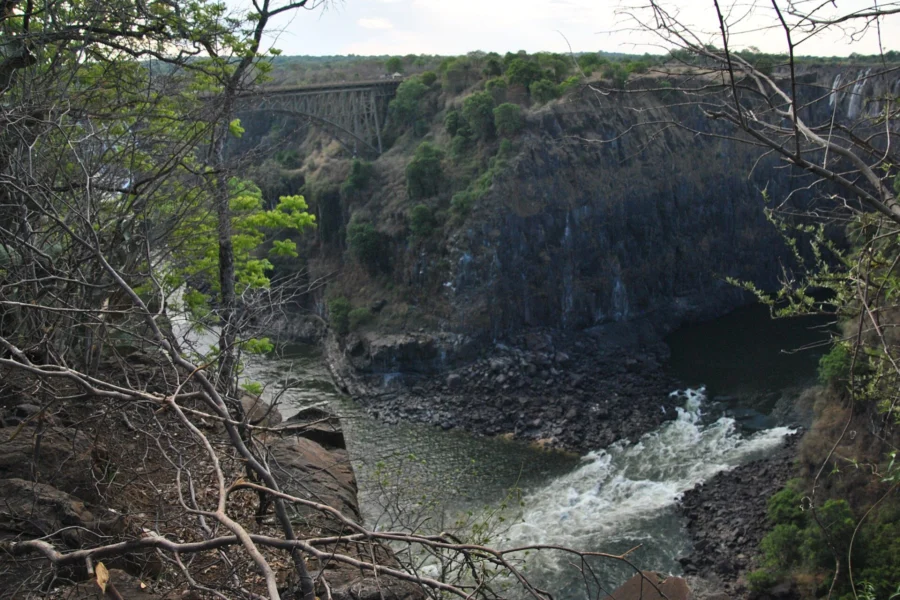
BirdLife Zimbabwe’s Important Bird Area account for the Batoka Gorge, below Victoria Falls, gives at least 4 nesting pairs; see Victoria Falls birding. In the Klein Karoo, GoBirding says Black Stork is resident in Gamkaskloof and nests in the cliffs. Sunset Dam in Kruger is the easy site, no cliff required. Several listings name it: Ganora Guest Farm, a sheep farm near Nieu-Bethesda with a 182-species list and 5 marked trails; Shashani Lodge in the Matobo Hills of Zimbabwe, which runs early-morning birding walks and names Saddle-billed Stork as well; and Chinaka Game Lodge at Vivo in Limpopo, where birds come to drink at the waterhole below the deck.
The wetland nomads
Yellow-billed Stork
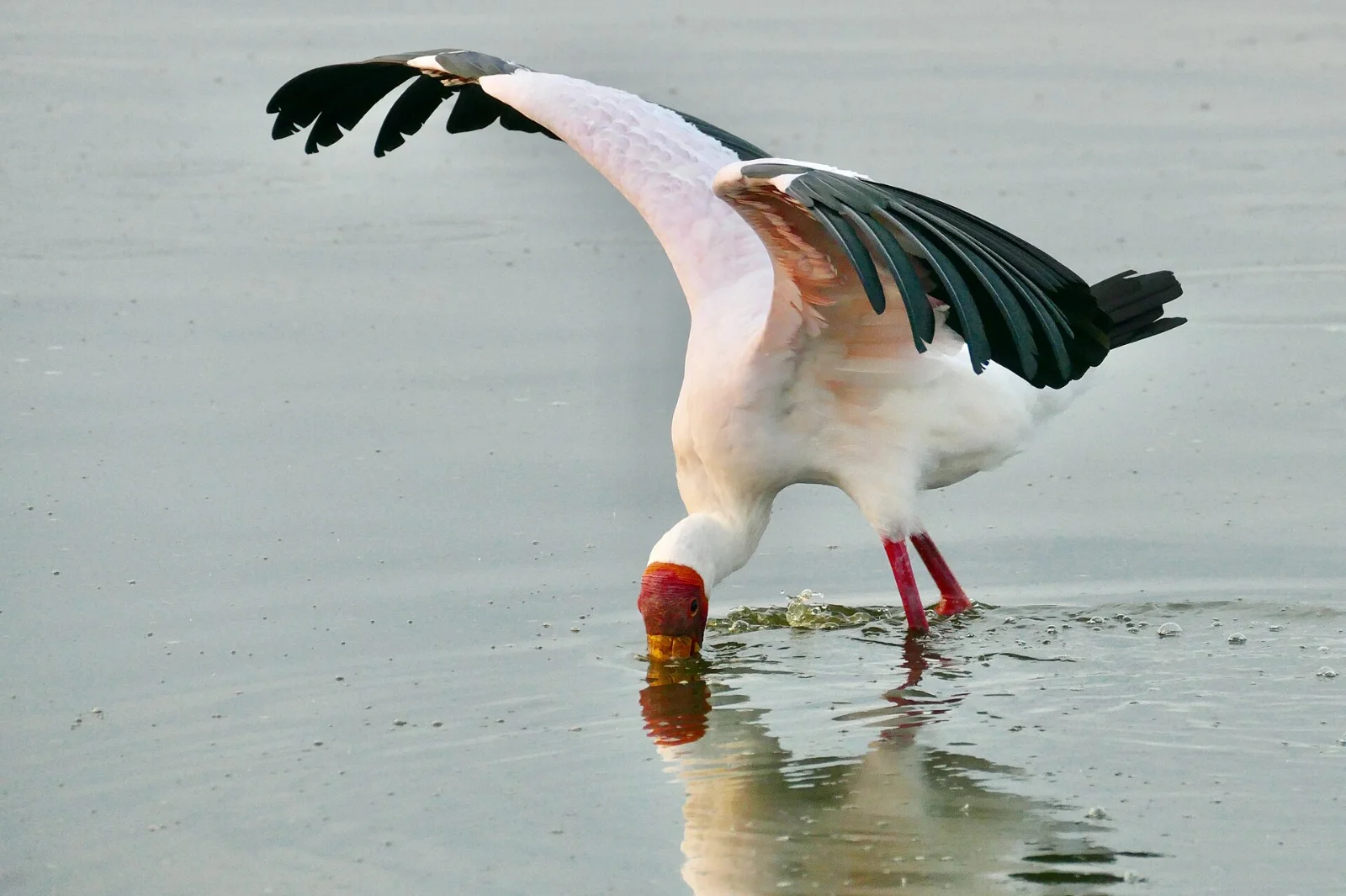
Mark Anderson describes it as mainly a non-breeding visitor in the wet season, October to April, though the Atlas data suggested it is more resident than once thought. It feeds in shallow, vegetation-free water, being fussy about its paddling pools, and is scarce but regular at a few places. South Africa has fewer than 25 breeding pairs, at sites including Kruger, Ndumo, Lake St Lucia and Nylsvley, while small colonies breed in the Okavango. It is the bird on the header of our Nylsvley guide, where GoBirding says large flocks of storks gather on the floodplain during or just after flooding.
On the Agulhas Plain, Black Oystercatcher Wines near Elim has 4 self-catering cottages and names Yellow-billed Stork with Red-chested Flufftail in its 301-species area list. In Tanzania, Selous River Camp on the Rufiji times its dawn cruise for bird activity and names the stork with African Skimmer.
African Openbill
A medium-sized, all-black stork with a gap in the middle of the bill, which it uses on freshwater mussels and snails: a bird that comes with its own nutcracker. Rene Navarro’s Atlas account places it in northern Namibia and Botswana, the Okavango and the Zambezi valley, patchily through Zimbabwe, and in the Kruger lowveld and far north-eastern KwaZulu-Natal. It follows water levels. When the northern rivers peak in May and June, big dry-season gatherings form in the Okavango and on the Chobe, where a flock of more than 3,000 was counted in July 1989. See Chobe River birding.
The Botswana heronries are the sight: whole islands given over to nests. At Gcodikwe, in the Xakanaxa area of Moremi, herons, egrets, storks, ibises and cormorants breed in their thousands on fig-tree islands, and Birding Ecotours’ heronry boat trip lists African Openbill and Yellow-billed Stork. Nest-building starts around August. The Okavango Delta guide has the camps.
The summer visitors
White Stork
The only Palearctic stork that reaches the region, and the one from the stories about where babies come from, which here mostly arrives without any. David Allan’s account calls it a non-breeding migrant, apart from a few pairs in the southern Cape, a population that has never exceeded 10 pairs and was still breeding near Bredasdorp in 1995. Most birds are present from December to February in the south and November to March in Zimbabwe. A January 1985 survey in South Africa counted 25,500 birds, 86% of them in croplands and pastures, especially lucerne. A long way to fly to stand in a farmer’s field, but there it is. Look along the escarpment from the Eastern Cape through Lesotho and the KwaZulu-Natal Midlands to the Mpumalanga highveld, and in the Karoo when locusts swarm. The summer migrants guide covers the other birds from the north.
Abdim’s Stork
An intra-African migrant that breeds north of the equator and spends the southern summer here. The Atlas says it starts arriving in October with the first rains, peaks from November to February in Zimbabwe and from January to March further south and west, and leaves gradually from February to May. It feeds on land, in grassland and fields, often in groups of tens and sometimes in flocks of up to 10,000 that follow rain fronts, termites and locusts. Wherever the weather goes, the storks go after it.
SANParks says White and Abdim’s Storks feed on insects along the Kgalagadi riverbeds from November to March; see Kgalagadi birding. !Xaus Lodge, on a dune in the park, has a 260-species list. In Tanzania, Gibb’s Farm near Karatu names Abdim’s Stork, has naturalists on staff and gives November to April as the best time for birds.
African Woolly-necked Stork
Split from its Asian relative in March 2025. Aldo Berruti’s Atlas account describes 2 populations: a small resident one in KwaZulu-Natal, eSwatini, the Kruger lowveld and south-eastern Zimbabwe, put at fewer than 30 pairs in South Africa, and a larger one from further north that arrives in November and December and stays until March or April in northern Botswana, Namibia and western Zimbabwe, with flocks of 200 recorded in Hwange. It likes short grass near water, and has spread south along the KwaZulu-Natal coast on golf courses, where it walks the fairways without ever paying a green fee. GoBirding lists it at Nyamithi Pan in Ndumo; see Zululand birding.
Where to see several at once
Sunset Dam, just outside Lower Sabie, is the single best stork stop in South Africa. GoBirding’s Lower Sabie guide says it regularly holds 6 species, Saddle-billed and Black among them. Nyamithi Pan in Ndumo adds Saddle-billed and Woolly-necked with the pelicans.
For all 8, plan for summer, and bring patience. White, Abdim’s and the visiting Woolly-necked Storks are present together from about December to March, the Yellow-billed peaks then, and the residents are there all year. Summer rain scatters the Saddle-billed and Openbills to temporary pans, so the late dry season, September and October, is better for the residents at permanent water, and winter is when the Black Stork nests.
Where to stay
The places in this guide, with what each offers a birder:
| Place to stay | Where | For birders | From |
|---|---|---|---|
| Gomoti River Lodge | Okavango Delta, Botswana | Bird guide on staff, bush walks, Saddle-billed Stork | Ask the lodge |
| Nantwich Lodge | Hwange, Zimbabwe | Underground hide on the dam, Saddle-billed Stork, African Openbill | US$463 pp fully inclusive (green season) |
| Kafunta River Lodge | Mfuwe, South Luangwa, Zambia | Hide under the deck, breakfast before sunrise | US$470 pp (5+ nights, low season) |
| Inyati Game Lodge | Sand River, Sabi Sand | Saddle-billed Stork among its 5 big birds | R16,500 pp fully inclusive |
| Sabi Sabi Little Bush Camp | Sabi Sand, Greater Kruger | Specialised birding guides, Saddle-billed Stork | R32,900 pp fully inclusive |
| Plains Camp @ Rhino Walking Safaris | Near Skukuza, southern Kruger | BirdLife Recommended, birding walks planned around the guest | R9,830 pp sharing |
| Imagine Africa Luxury Tented Camp | Olifants West, Balule | Specialist birding safaris, Saddle-billed Stork | Ask the lodge |
| Abelana Game Reserve | Near Phalaborwa, Limpopo | BirdLife Recommended, Saddle-billed Stork, Pel’s Fishing Owl | R3,800 pp full board (Safari Camp) |
| Limpokwena Nature Reserve | Near Alldays, Limpopo | Guided birding drives, Saddle-billed Stork, African Openbill | R650 per adult self-catering |
| Lion Camp | Northern South Luangwa, Zambia | Water-level hide off the deck, Marabou Stork | US$950 pp sharing (shoulder season) |
| Ganora Guest Farm | Near Nieu-Bethesda | 182-species list, 5 marked trails, Black Stork | Ask the lodge |
| Shashani Lodge | Matobo Hills, Zimbabwe | Early-morning birding walks, Black and Saddle-billed Storks | Ask the lodge |
| Chinaka Game Lodge | Vivo, Limpopo | Deck over the waterhole, Black Stork | Ask the lodge |
| Black Oystercatcher Wines | Near Elim, Agulhas Plain | 301-species area list, Yellow-billed Stork | Ask the lodge |
| Selous River Camp | Rufiji River, Nyerere National Park, Tanzania | Dawn cruise, Yellow-billed Stork, African Skimmer | Ask the lodge |
| !Xaus Lodge | Dunes off the Auob, Kgalagadi | 260-species list for the park | R7,820 pp full board |
| Gibb’s Farm | Near Karatu, Tanzania | Naturalists on staff, Abdim’s Stork | US$518 pp full board (green season) |
Stork numbers rise and fall with rain and floods, and some Atlas figures date from the 1980s and 1990s. Facts were checked on 13 November 2026 with the Atlas of Southern African Birds, BirdLife South Africa’s GoBirding guides, BirdLife International, BirdLife Zimbabwe, SANParks and the Birding Dispatch listings. Check road and camp status with the park before you go.
More from the Journal
 Woodpeckers of Southern Africa, Including the One That Doesn’t Need TreesSouthern Africa's woodpeckers, from the Cardinal in every bushveld tree to the Ground Woodpecker that lives on treeless mountain slopes and eats almost nothing but ants.
 Where to See a Taita Falcon: the Strijdom Tunnel, the Blyde Cliffs and the Batoka GorgeA stocky falcon smaller than a pigeon, a handful of cliffs and surveys that keep coming back empty. Where it still nests, how to look, and the 2 roosts beside its cliffs.
 Where to See a Southern Bald Ibis: the Breeding Cliffs, Dullstroom, Wakkerstroom and LesothoA red-capped grassland ibis that nests on cliffs over waterfalls and feeds on burnt veld and maize stubble. The colonies you can watch, the fields to scan, and where to stay.
The Pigeon Post
Every Thursday: 1 bird, 1 place to go and 1 place to stay, by email. Sign up and get our printable checklist of the 163 endemics of southern Africa.