
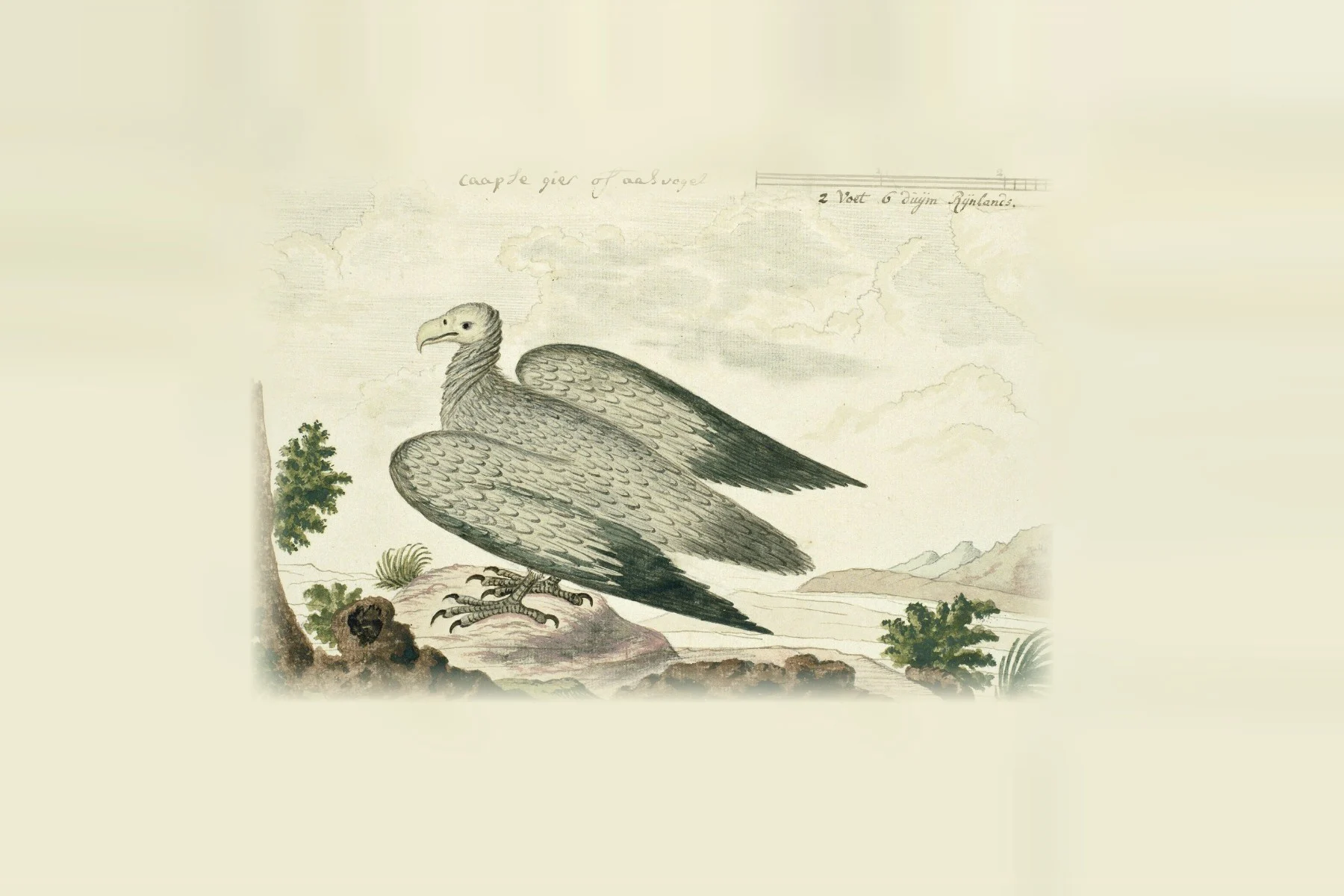
Cape Vulture Colonies and Vulture Restaurants You Can Visit in South Africa
Southern Africa's only endemic vulture breeds on a handful of cliffs. Which colonies and feeding hides are open to visitors, when the birds are on their nests, and the places to stay beside them.
The Cape Vulture breeds in only 4 countries, and almost all of it in South Africa. BirdLife International’s 2021 Red List assessment puts the world population at 9,600 to 12,800 mature birds, lists it as Vulnerable, and notes that 18 core colonies hold about 80% of them. The species nests on tall cliffs, in colonies that SANBI’s Red List account says can reach 1,000 pairs, and forages over open country for large carcasses.
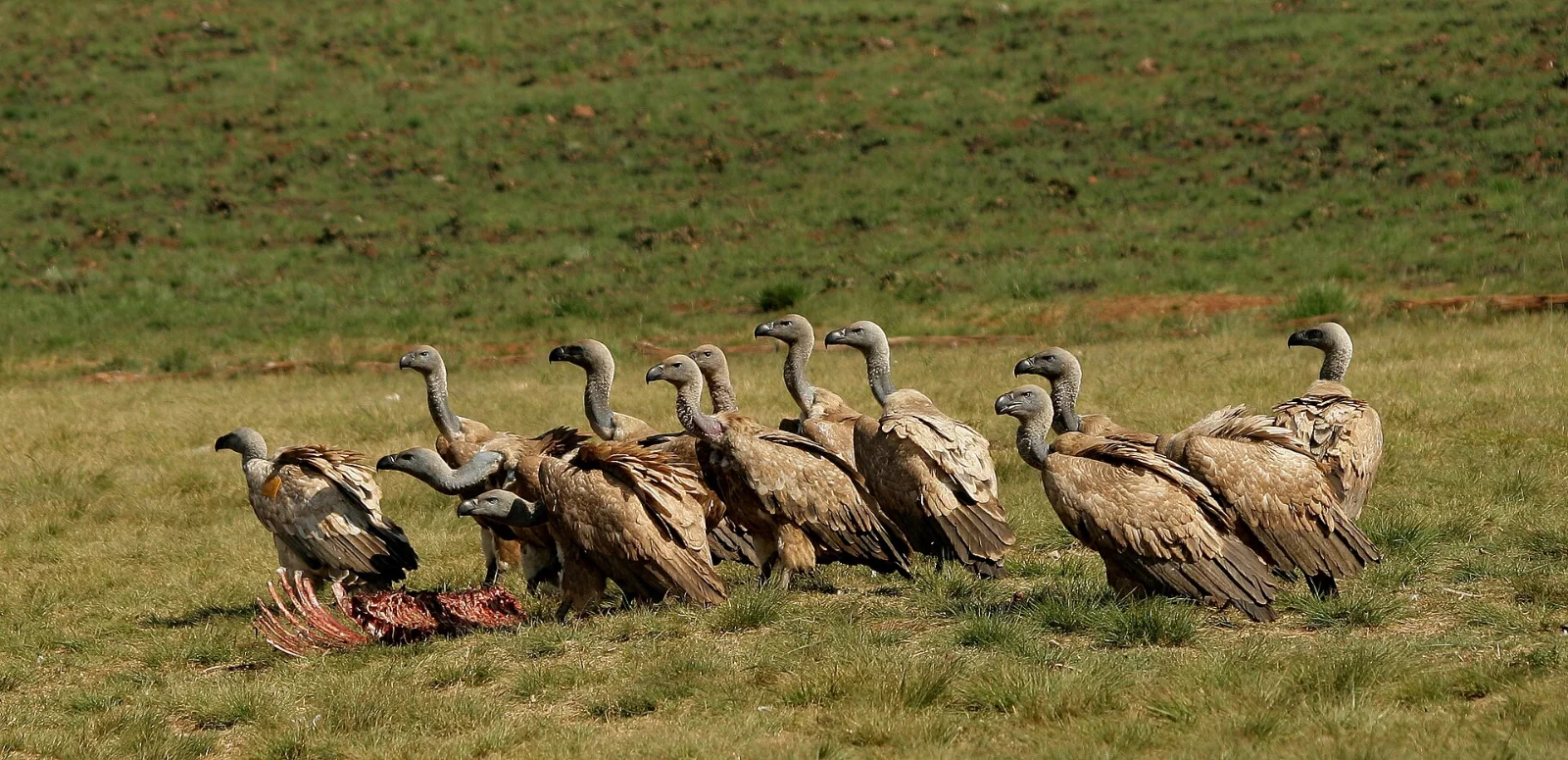
So, unusually for a bird that spends its days in the sky, it can be seen at a fixed address. A colony cliff holds birds all year, and a vulture restaurant, a feeding site stocked with safe carcasses (the menu is short), brings them down to a hide.
Colonies and hides at a glance
| Site | What it is | How to see it | Places to stay |
|---|---|---|---|
| Kransberg, Marakele National Park | About 800 pairs (GoBirding); 798 pairs in VulPro’s 2024 survey | Lenong viewpoint, by concrete road | No listing yet |
| Blouberg Nature Reserve | 900 to 1,000 pairs (BirdLife South Africa) | Nature reserve with a feeding station | Mogalakwena River Lodge (nearest) |
| Manutsa, near Hoedspruit | Up to 660 pairs (GoBirding) | From the farm, by arrangement, or a lodge outing | Cape Vulture Lodge, Moholoholo |
| Magaliesberg | 305 pairs at Skeerpoort, 178 at Nooitgedacht (2024) | VulPro’s restaurant hide | No listing yet |
| Potberg, De Hoop | The only colony in the Western Cape | Potberg section and Klipspringer trail | De Hoop Collection, Lekkerwater |
| Drakensberg hides | Restaurants for Bearded and Cape Vultures | Giant’s Castle and Golden Gate hides | Sani Valley, Moolmanshoek |
| Msikaba and Oribi Gorge | Eastern Cape and KZN south coast colonies | Mkambati cliffs; Oribi Gorge hide | GweGwe Beach Lodge, Oribi Gorge Guest Farm |
How to know one
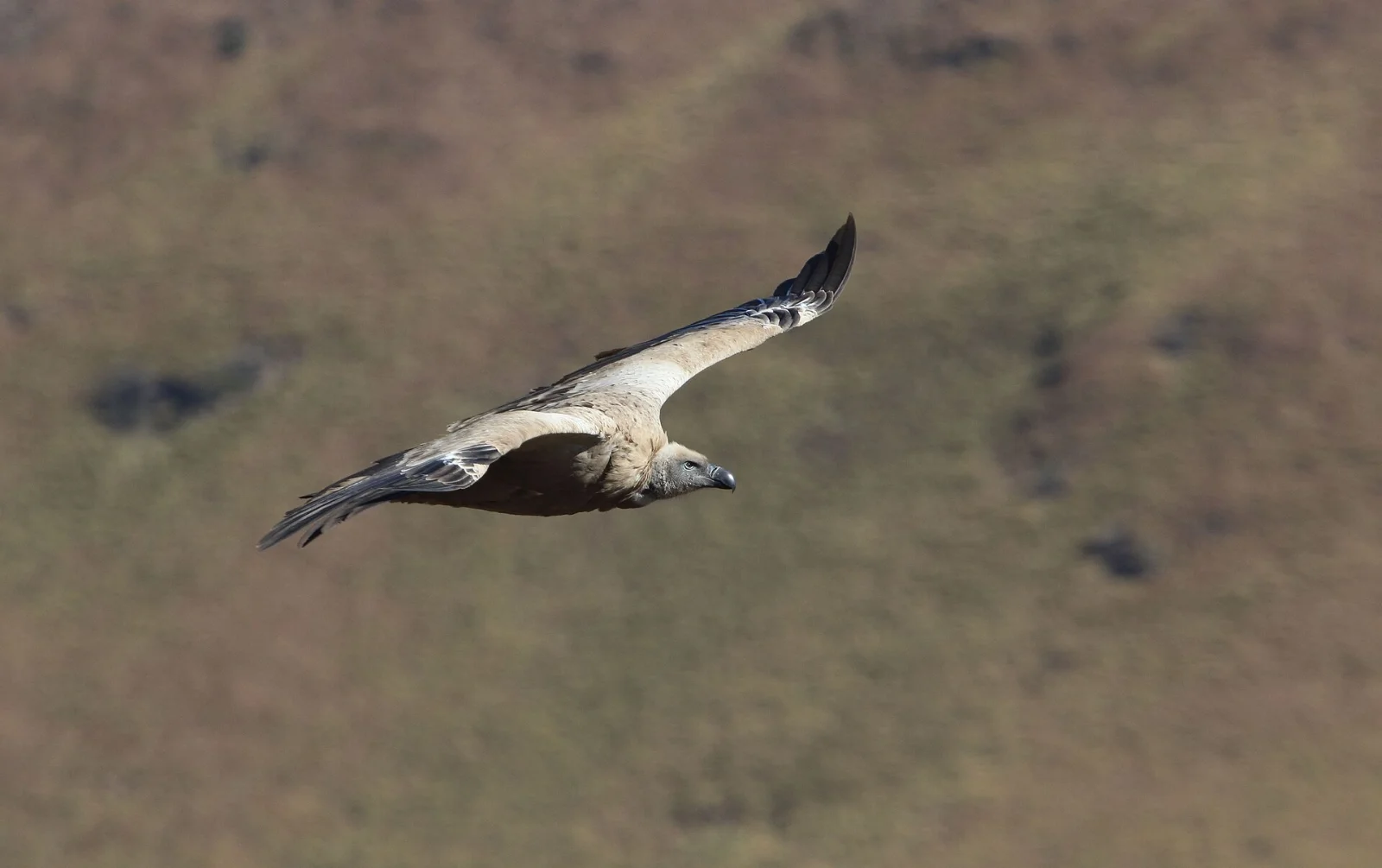
SANBI describes a big, pale vulture, 1 to 1.2 m long and 7 to 11 kg, with a bluish head and neck, 2 bare blue patches on the breast and straw-yellow eyes, which is a smarter outfit than the job requires. White-backed Vulture is smaller and darker, and from below the Cape Vulture’s silvery secondaries barely contrast with the pale underwing. Young birds are browner and streaked, with reddish bare skin.
Marakele and the Kransberg colony
The Waterberg cliffs of Marakele National Park, about 30 km north-east of Thabazimbi, hold what BirdLife South Africa’s GoBirding guide calls the largest Cape Vulture colony in the country, at roughly 800 pairs. VulPro, which monitors it, estimated 798 breeding pairs in 2024 and calls Kransberg its largest site. A concrete road climbs to the top of the range, and from the summit you look down on vultures soaring along the cliff, which is the right way round for once. Lonely Planet warns that the road up to the Lenong viewpoint is steep.
GoBirding adds Gurney’s Sugarbird and Buff-streaked Chat in the high grassland. The park has dangerous game, so walking is only allowed with an armed ranger, and the gates open from 07:00 to 18:00. Marakele’s SANParks camps are not yet in the directory.
Blouberg
Blouberg is an inselberg about 80 km west of Louis Trichardt (Makhado). BirdLife South Africa’s Important Bird Area page says its cliffs regularly hold 900 to 1,000 pairs, which makes it the world’s largest colony, and the 2021 Red List assessment reports the chick count there rising from 626 in 2006 to 1,483 in 2020, a rare vulture statistic heading the right way. The colony is inside Blouberg Nature Reserve, which has a vulture feeding station, and the Friends of Blouberg help the reserve monitor the birds.
The nearest stay in the directory is Mogalakwena River Lodge near Alldays, with a bird checklist of more than 350 species and guided walks. It does not name the vultures, so treat Blouberg as a day trip and check the drive with the lodge.
Manutsa, below the Strijdom Tunnel
The Manutsa (Manoutsa) cliffs on the Drakensberg escarpment near Hoedspruit hold one of the country’s largest colonies. GoBirding gives up to 660 pairs, and a Kruger Park Times report by the Blyde River Conservancy counted about 450 active nest sites and noted that the colony was declared a Natural Heritage Site in 1989. Kruger has no suitable cliffs, so the report suggests Manutsa supplies many of the Cape Vultures seen in the park, which makes those birds, in part, commuters. VulPro now leaves its monitoring to other groups.
GoBirding says the colony is on private farmland off the R527, about 1 km west of the R36 turn-off, and can be seen from behind the farmhouse or after a climb of about an hour. Access is by prior arrangement with the owner only.
The easier way in is to stay next door, at a lodge with the bird in its name. Cape Vulture Lodge, BirdLife Recommended, is on the escarpment about 40 minutes from Hoedspruit Airport, and its gate is 10 km after the Strijdom Tunnel coming from Ohrigstad. It runs a sunset vulture-viewing outing to Lookout Ridge and guided mountain trails, with tented suites from R2,000 per person sharing, bed and breakfast, in 2026. On the slopes of Mariepskop nearby, Moholoholo Forest Camp and Mountain View offers guided bird walks and visits to its wildlife rehabilitation centre, from R1,350 per person sharing, bed and breakfast.
The Magaliesberg and the VulPro hide
West of Pretoria, the Magaliesberg holds 2 colonies that VulPro surveys each year. Its 2024 report estimated 305 breeding pairs at Skeerpoort and 178 at Nooitgedacht, where numbers have grown from 66 pairs in 2010. The Red List assessment credits a vulture restaurant at Nooitgedacht with helping birds recolonise the old colony.
VulPro’s centre below the mountains, just outside Hartbeespoort, is open by appointment only. Its hide is about 12 m from the centre’s vulture restaurant, a front-row seat, and takes up to 5 people, and VulPro says wild Cape Vultures from the Magaliesberg cliffs come in often, with Black-chested Snake Eagle and Yellow-billed Kite. Booking the hide does not include a tour of the birds in the centre, so ask for both. Pensioners pay R70 for standard tours, and the other 2026 rates are on its booking page. There is no listing on this stretch of the Magaliesberg yet.
Potberg, De Hoop
GoBirding calls Potberg, in the eastern part of De Hoop Nature Reserve, the only remaining Cape Vulture colony in the Western Cape, and the Red List assessment says it grew steadily between about 2010 and 2019. CapeNature staff hike up to the colony each year for the count, which is the hard way to do a census.
From the Bredasdorp to Malgas road, take the Potberg entrance, sign in, and park at the Potberg Educational Centre or the Whale Trail office. GoBirding says vultures fly overhead to the colony in a valley on the east side of the mountain from anywhere around there, and the Klipspringer trail takes you closer, with Cape Siskins along the way.
De Hoop Collection, the reserve’s accommodation from camping to suites, names Cape Vulture with Black Harrier. Lekkerwater Beach Lodge, on the De Hoop coast, names it too. Inland near Stormsvlei, Melozhori Private Game Reserve Lodge lists Cape Vulture with Blue Crane and Black Harrier on its list of more than 129 species.
The Drakensberg hides
The Maloti-Drakensberg Vulture Project says 3 hides at feeding sites were built or improved with N3 Toll Concession funding, 2 in the uKhahlamba Drakensberg Park and 1 at Golden Gate Highlands National Park. These are best known for Bearded Vulture, but Cape Vultures turn up at the same carcasses uninvited.
At Giant’s Castle, Ezemvelo KZN Wildlife says the hide is open all year, takes a maximum of 6 people and must be booked in advance on 033 845 1000. You need your own 4×4 to reach it, and Ezemvelo lists Bearded Vulture, Cape Vulture, Verreaux’s Eagle, Jackal Buzzard and Lanner Falcon. At Golden Gate, the project gives Glen Reenen Camp, 058 255 0909, as the booking contact.
Near Himeville, Sani Valley Nature Lodges describes a vulture feeding site supplied by local farmers and names both Bearded and Cape Vultures among more than 300 species, though it has no formal hides. In the eastern Free State, Moolmanshoek Private Game Reserve on the R70 names Bearded Vulture with Southern Bald Ibis and is the nearest listing to Golden Gate. See the Sani Pass and Drakensberg birding guide for the rest of the range.
The Eastern Cape and the KwaZulu-Natal south coast
The south-eastern colonies are smaller, but several are easy to visit. The Msikaba colony, on the river gorge at the edge of Mkambati Nature Reserve on the Wild Coast, was the subject of a tracking study cited in the Red List assessment. GweGwe Beach Lodge in Mkambati says a Cape Vulture colony uses the Msikaba cliffs nearby, includes birding outings in its all-inclusive rate and names Southern Ground Hornbill and Gurney’s Sugarbird as well. Selected 2026 dates start at R3,825 per person a night for SADC guests booking within 60 days.
At Oribi Gorge, the Red List assessment reports the colony more than doubling, from 39 pairs in 2011 to 94 in about 2019, and the vulture project lists a hide there, booked on 072 893 3794. Oribi Gorge Guest Farm, off the N2 30 km from Port Shepstone, keeps a list of more than 255 species with Cape Vulture on it, and self-catering starts at R400 per adult.
Seeing them away from the cliffs
Cape Vultures range widely and will travel for a meal, so they turn up at carcasses well away from the colonies. In Madikwe Game Reserve, Madikwe Dithaba Camp names Cape Vulture with Kori Bustard and Secretarybird and says drives can be shaped around birders, from R20,000 per person sharing in mid-season 2026.
Outside South Africa, the Red List assessment gives about 600 pairs in Botswana and about 552 in Lesotho, the latter from a 1990 survey.
When to go
SANBI says egg-laying runs mainly from April to July, peaking in May and June, and the single egg and chick take 6 to 7 months from laying to fledging, a long commitment for 1 egg. Visitor guides recommend May to September at the Giant’s Castle hide. The colonies hold birds all year, though, and a summer visit to Marakele or Manutsa should still show birds on the cliff and in the air.
Watching without harm
The Red List assessment lists disturbance at colonies among the threats and blames insensitive tourism for the collapse of a key colony in eastern Botswana. Its proposed actions include keeping tourists away from nesting sites. So watch from the viewpoints, decks and hides, keep to the trails at Potberg, and visit Manutsa only by arrangement. The Manutsa owner told the Kruger Park Times that he had discouraged Air Force flights near the cliff and stopped the ringing of nestlings for more than 20 years to keep the colony quiet.
If you photograph a tagged or ringed vulture, report it to VulPro’s tag sightings page with the place and date, which helps track where these birds go.
Where to stay
The places in this guide, with what each offers a birder:
| Place to stay | Where | For birders | From |
|---|---|---|---|
| Mogalakwena River Lodge | Near Alldays, South Africa | Checklist of 350+ species, guided walks | Ask the lodge |
| Cape Vulture Lodge | Escarpment near Hoedspruit, South Africa | BirdLife Recommended, sunset vulture outing, guided mountain trails | R2,000 pp sharing B&B |
| Moholoholo Forest Camp and Mountain View | Mariepskop, South Africa | Guided bird walks, rehabilitation centre visits | R1,350 pp sharing B&B |
| De Hoop Collection | De Hoop, South Africa | Cape Vulture, Black Harrier, guided bird walks | R2,150 per rondawel, room only |
| Lekkerwater Beach Lodge | De Hoop coast, South Africa | Cape Vulture, Potberg colony visit, birding trails | R7,700 pp sharing, all-inclusive |
| Melozhori Private Game Reserve Lodge | Near Stormsvlei, South Africa | Cape Vulture, Blue Crane, Black Harrier, 129+ species list | R55,000 exclusive use, 4 guests |
| Sani Valley Nature Lodges | Near Himeville, South Africa | Vulture feeding site, Bearded and Cape Vultures, 300+ species | Ask the lodge |
| Moolmanshoek Private Game Reserve | Eastern Free State, South Africa | Bearded Vulture, Southern Bald Ibis, nearest listing to Golden Gate | About R1,500 pp B&B |
| GweGwe Beach Lodge | Mkambati, Wild Coast, South Africa | Msikaba Cape Vulture colony nearby, birding outings included | R3,825 pp all-inclusive (SADC) |
| Oribi Gorge Guest Farm | Oribi Gorge, South Africa | 255+ species list including Cape Vulture | R400 per adult, self-catering |
| Madikwe Dithaba Camp | Madikwe Game Reserve, South Africa | Cape Vulture, Kori Bustard, Secretarybird, drives shaped for birders | R20,000 pp sharing |
Colony counts vary by year and method, and hide bookings change. Facts were checked on 13 November 2026 with BirdLife International’s 2021 Red List assessment, SANBI’s Red List account, BirdLife South Africa’s GoBirding and Important Bird Area pages, VulPro’s 2024 monitoring report and booking page, Ezemvelo KZN Wildlife, the Maloti-Drakensberg Vulture Project and each place’s own website as summarised on its Birding Dispatch listing. Book hides and Manutsa access before you go.
More from the Journal
 Woodpeckers of Southern Africa, Including the One That Doesn’t Need TreesSouthern Africa's woodpeckers, from the Cardinal in every bushveld tree to the Ground Woodpecker that lives on treeless mountain slopes and eats almost nothing but ants.
 Where to See a Taita Falcon: the Strijdom Tunnel, the Blyde Cliffs and the Batoka GorgeA stocky falcon smaller than a pigeon, a handful of cliffs and surveys that keep coming back empty. Where it still nests, how to look, and the 2 roosts beside its cliffs.
 Where to See a Southern Bald Ibis: the Breeding Cliffs, Dullstroom, Wakkerstroom and LesothoA red-capped grassland ibis that nests on cliffs over waterfalls and feeds on burnt veld and maize stubble. The colonies you can watch, the fields to scan, and where to stay.
The Pigeon Post
Every Thursday: 1 bird, 1 place to go and 1 place to stay, by email. Sign up and get our printable checklist of the 163 endemics of southern Africa.