
Where to See a Cape Rockjumper: Rooi-Els, Sir Lowry’s Pass, the Swartberg and the Cederberg
It jumps on rocks, and only in the mountain fynbos of the Western and Eastern Cape. Reliable sites, finding a family group, the best hours and where to stay.
The Cape Rockjumper is found nowhere but the mountain fynbos of the Western and Eastern Cape. BirdLife South Africa’s 2025 Red Data Book gives its range as the Piketberg and Cederberg in the west to Uitenhage in the east, on rocky slopes and ridges from sea level to 2,300 m. It is absent from the Cape Peninsula, even though the habitat looks right, so a visitor based in Cape Town has to cross False Bay or drive inland for it. The bird has never taken the Peninsula seriously.
The Red Data Book places it in its own family, Chaetopidae, shared only with the Drakensberg Rockjumper since the 2 were split in 1990. The family groups hold the same territory all year and do not migrate, so a known site stays good. A rockjumper, once settled, stays on its rock.
The sites at a glance
| Site | Area | Where to look | Nearest listed stay |
|---|---|---|---|
| Rooi-Els | Kogelberg, across False Bay | Slopes south of the village | Oudebosch Eco Cabins, Benguela Cove |
| Sir Lowry’s Pass | Hottentots Holland, above Somerset West | Crest from the viewsite to the old cannons | Oudebosch Eco Cabins |
| Swartberg Pass | Between Prince Albert and Oudtshoorn | Below Teeberg parking, the summit, Die Grootklip | The Retreat at Groenfontein, De Zeekoe |
| Seweweekspoort | West of Calitzdorp | Cliffs along the poort | Bosch Luys Kloof |
| Cederberg | Near Clanwilliam | Pakhuis Pass crest | de Pakhuys, Kromrivier |
How to know one
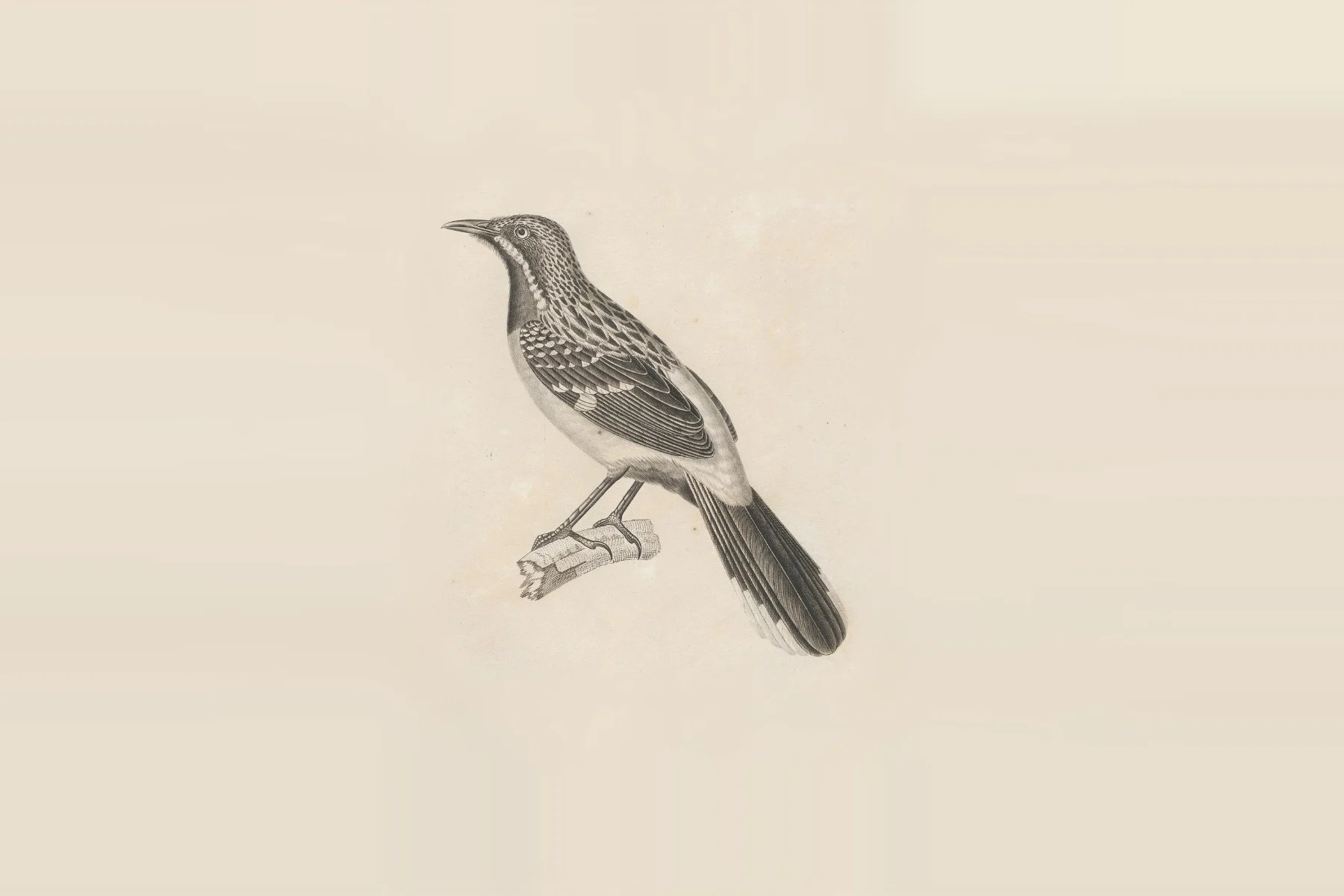
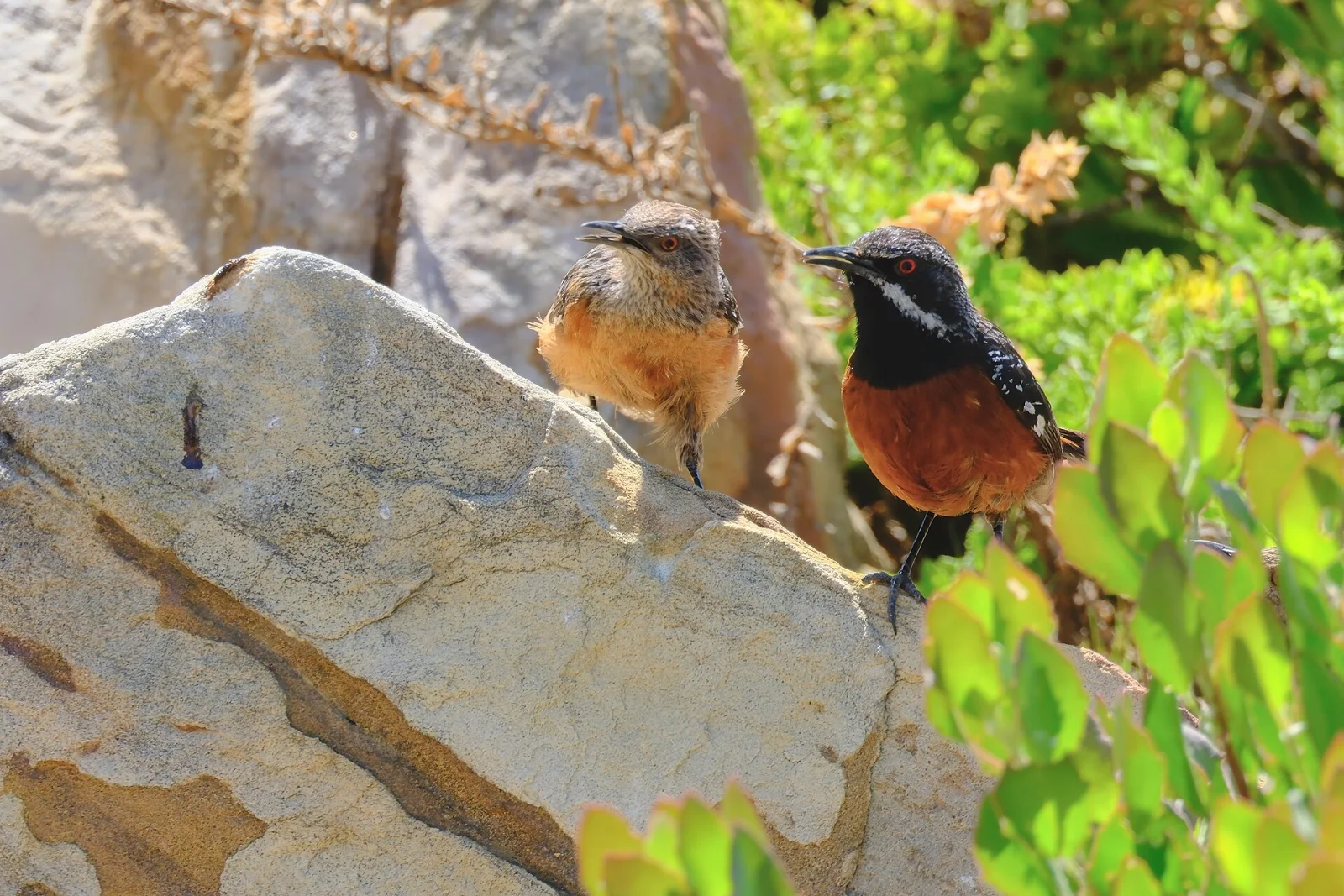
The Red Data Book describes a bird of 23 to 25 cm and 50 to 60 g. The male has a silver-grey crown streaked with black, a black throat and face, a white moustachial stripe, and a deep rufous belly and rump; the eye is orange-red. The female is duller, with grey replacing the black on the head. Both hop and run over rocks with the tail cocked and fanned, which is the name explained in a single sentence.
BirdLife South Africa’s GoBirding guide to Rooi-Els gives the most useful tip: the way to find a family group is to listen for its piercing “pee-pee-pee-pee-pee” alarm call. It also warns that Red-winged Starlings, far more common on the same slopes, are similar in size and colour, so check twice. The starlings are not trying to fool anyone, but they manage it. The Drakensberg Rockjumper, the only other member of the family, lives in the Drakensberg and Lesotho highlands and does not overlap with this one.
Rooi-Els: the classic site
GoBirding’s Rooi-Els guide, by Vincent Ward of Birding Africa, rates the mountain slopes just south of the village among the best places to see Cape Rockjumper. Drive Clarence Drive, the R44, from Gordon’s Bay. In Rooi-Els, take the second right after the bridge onto Porter Drive and follow it to the gate where the paving turns to gravel. Park there and walk south along the track, ears open.
Watch the telephone lines for Cape Rock Thrush and Familiar Chat, and the hillside for Orange-breasted Sunbird, Cape Siskin and Cape Bunting. From the lone telephone pole on the mountain side of the track, start scanning the slopes. The rockjumpers feed on the ground, hop up onto a sandstone boulder and drop down again, a bird that pops up like toast. GoBirding says they become uncommon beyond the second driveway down to the sea, so turn round there. Ground Woodpeckers sun themselves in family groups on the same slopes in the morning.
The rules are strict. The whole area is private property despite the lack of fences, so stay on the track, and playback is strictly forbidden. There is no entry fee. Southern Right Whales are in False Bay below the road from July to December, which is a fine consolation prize on a rockjumper-free morning.
Staying near Rooi-Els
GoBirding’s recommended stay for Rooi-Els is Avian Leisure, the 2 self-catering apartments above Boulders in Simon’s Town run by birding guides Patrick and Marie-Louise Cardwell, which also suits a morning on the Peninsula. Closer to the site, Oudebosch Eco Cabins are CapeNature’s self-catering cabins inside Kogelberg Nature Reserve near Kleinmond, in mountain fynbos, forest and river habitat, from R1,730 a night for up to 2 in a Palmiet studio off-peak. Benguela Cove Lagoon Wine Estate on the Bot River Lagoon, a little further east, is BirdLife Recommended and reports 86 species for the estuary. The fynbos endemics guide adds Harold Porter in Betty’s Bay for Victorin’s Warbler on the same day.
Sir Lowry’s Pass and the Hottentots Holland
If Rooi-Els fails, and rockjumpers do sometimes keep their heads down, try the Hottentots Holland Mountains above Somerset West. A site guide by Peter Ryan of the FitzPatrick Institute at the University of Cape Town, published in Africa Birds & Birding, describes rockjumpers as common along the crest between the viewsite at the top of Sir Lowry’s Pass and the old pass cannons. The same guide says the Helderberg Nature Reserve has the same birds, but the rockjumpers there are a long climb up, which suits a bird that likes the view.
The Swartberg Pass
Inland, the Swartberg Pass on the R328 between Prince Albert and Oudtshoorn is the best rockjumper site away from Cape Town. GoBirding’s guide, by Japie Claassen, puts them in the last 200 m before the Teeberg parking area on the climb from Prince Albert, with Cape Bunting and Grey-backed Cisticola alongside. At the summit, at 1,585 m, walk among the rocks for rockjumpers, Ground Woodpecker and both Cape and Sentinel Rock Thrushes. On the Oudtshoorn side, Die Grootklip, just over 1 km below the top, is another site. The pass is gravel, with the turn-off 5 km south of Prince Albert on the R407. The views are good enough that the rockjumper is almost a bonus.
The stays near the pass are on its southern side. The Retreat at Groenfontein, in the Groenfontein Valley north-east of Calitzdorp, is BirdLife Recommended. De Zeekoe Guest Farm, off the R328 near Oudtshoorn, is BirdLife Recommended with 168 recorded species and self-guided walks. Zwartberg View Mountain Lodge, at the foot of the mountains, is BirdLife Recommended and publishes a list of more than 200 species for the area. None of the 3 names the rockjumper itself, so the mountain does the talking. The Klein Karoo birding guide covers the rest of the pass.
Seweweekspoort
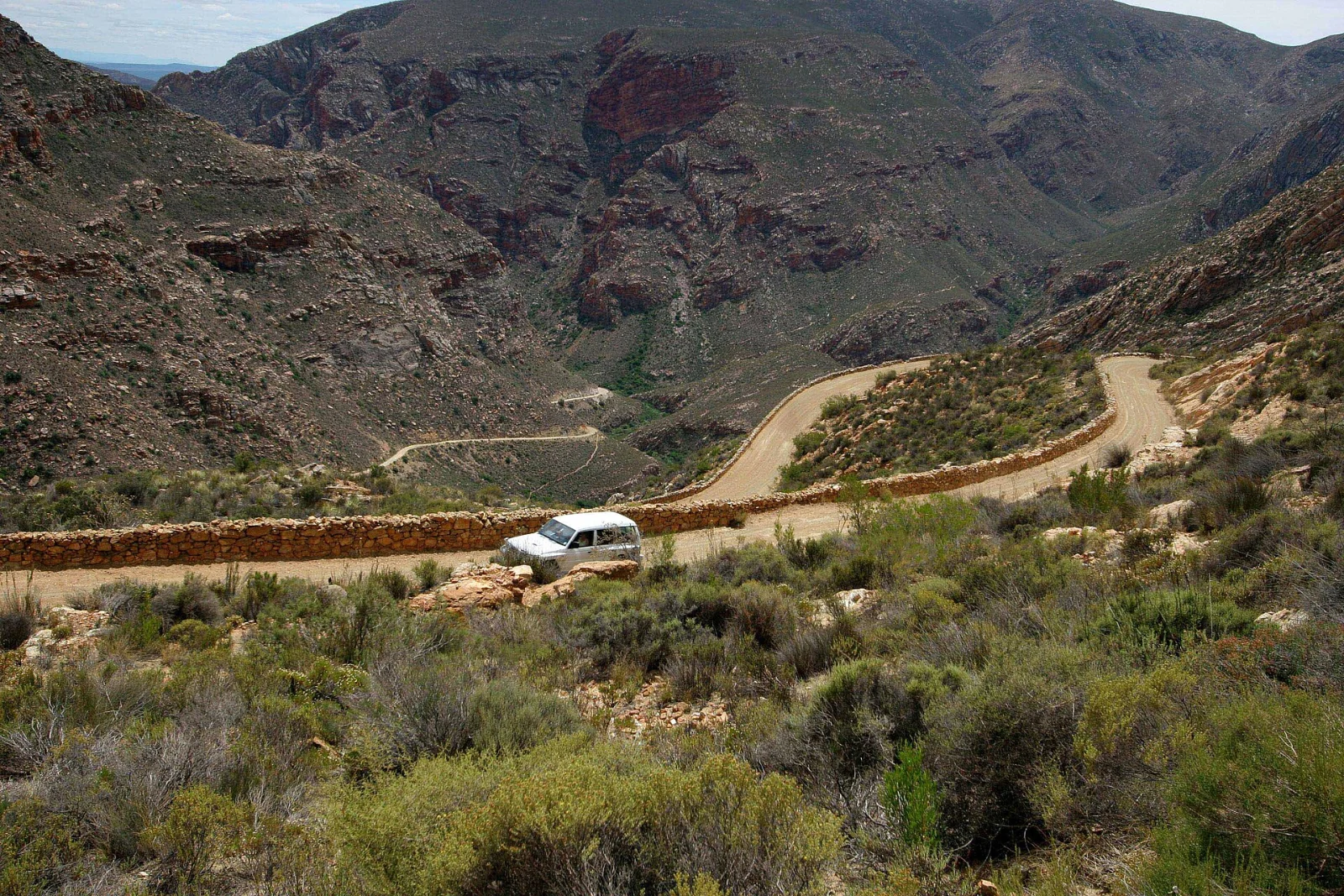
West of Calitzdorp, the R327 runs 22 km on gravel through Seweweekspoort between the R62 and the Karoo. GoBirding’s guide, by Francois Furstenburg, includes Cape Rockjumper in the cliff list for the poort, with Verreaux’s Eagle, Cape Eagle-Owl, Victorin’s Warbler and Protea Seedeater, and recommends at least 2 days for the area, a cliff list that long being hard to rush. Bosch Luys Kloof Private Nature Reserve, on the Boschluyskloof road off the poort, is BirdLife Recommended, has 2 hides and a 2025 checklist of 147 species, and runs guided nature drives. Self-catering costs from R1,750 per person sharing from October 2026 to April 2027.
The Cederberg
The Red Data Book counts the Cederberg among the protected mountains where the species is well represented. West Coast Way, the regional tourism site, calls the crest of the Pakhuis Pass on the R364 above Clanwilliam, at 922 m, a good birding spot for Cape Rockjumper.
de Pakhuys, a farm near Clanwilliam with cottages, cabins and a campsite, is the only stay in the directory that names the bird. Its own birding page covers the garden, the Brandewyn River, the dams and the fynbos trails, and names Cape Rockjumper, Protea Canary, Cape Siskin and Verreaux’s Eagle. Further south in the range, Kromrivier Cederberg Park gives 235 species and sits in the Cederberg Important Bird Area, with self-catering tents from R1,250 a night for 1 guest in winter 2027. Mount Ceder, deeper in the mountains, publishes its own list of 8 top birds. Enjo Nature Farm in the Biedouw Valley, with 123 recorded species and camping from R140 per adult, is the drier, Karoo-side option.
When and how to look
Any month works, because the birds stay on their territories. The Red Data Book says they lay in spring and can keep breeding into summer after failed attempts, and that they do not forage at high temperatures. Go early in the morning, and in summer be on the slopes soon after sunrise, before the rocks heat up. Pick a calm day if you can: you are listening for a call carried on the wind, and a Cape gale does not help.
Walk slowly, stop often and listen. Rockjumpers reward birders who act like rocks. A family group spreads out over a slope, so once you hear the alarm call, wait and let the birds show themselves on the boulders. Do not use playback anywhere, and at Rooi-Els it is banned outright.
A bird in decline
The Red Data Book lists the Cape Rockjumper as Near Threatened and decreasing, with 11,125 to 30,663 mature birds estimated from point counts across the fynbos in 2023, down from 21,700 to 39,600 in the 2015 assessment. Its assessor, Alan Lee, links the decline mainly to warming: higher temperatures reduce nestling condition and raise the rate of nest predation, especially by Boomslang. Because it needs cool mountain tops, its range is the most fragmented of any fynbos endemic bird, a string of “sky islands”. It is a bird that has nowhere higher to go. A Population Viability Analysis cited in the assessment gave a 49.1% chance of extinction within about 82 years under current conditions with high juvenile mortality. There are no conservation measures aimed at the species yet, so records on the bird atlas, with a location, are useful.
Where to stay
The places in this guide, with what each offers a birder:
| Place to stay | Where | For birders | From |
|---|---|---|---|
| Avian Leisure | Simon’s Town | Run by birding guides, GoBirding’s pick for Rooi-Els | Ask the lodge |
| Oudebosch Eco Cabins | Kogelberg Nature Reserve, near Kleinmond | Mountain fynbos, forest and river, close to Rooi-Els | R1,730 a studio for 2 (off-peak) |
| Benguela Cove Lagoon Wine Estate | Bot River Lagoon | BirdLife Recommended, 86 species for the estuary | Ask the lodge |
| The Retreat at Groenfontein | Groenfontein Valley, Calitzdorp | BirdLife Recommended, reed wetland, benches by the dams | Ask the lodge |
| De Zeekoe Guest Farm | Off the R328 near Oudtshoorn | BirdLife Recommended, 168 species, self-guided walks | Ask the lodge |
| Zwartberg View Mountain Lodge | Foot of the Swartberg, near Oudtshoorn | BirdLife Recommended, list of 200+ species | Ask the lodge |
| Bosch Luys Kloof Private Nature Reserve | Seweweekspoort, near Ladismith | BirdLife Recommended, 2 hides, 147 species, guided drives | R1,750 pp sharing self-catering |
| de Pakhuys | Near Clanwilliam, Cederberg | Names Cape Rockjumper, Protea Canary, Cape Siskin | Ask the lodge |
| Kromrivier Cederberg Park | Cederberg | 235 species, in the Cederberg Important Bird Area | R1,250 a tent, 1 guest (winter 2027) |
| Mount Ceder | Deep in the Cederberg | Own list of 8 top birds | Ask the lodge |
| Enjo Nature Farm | Biedouw Valley, Cederberg | 123 recorded species, the drier Karoo side | R140 per adult camping |
Bird sites change after fires and storms. Facts were checked on 13 November 2026 with BirdLife South Africa’s 2025 Red Data Book and its GoBirding guides to Rooi-Els, the Swartberg Pass and Seweweekspoort, Peter Ryan’s site guide, West Coast Way and each stay’s Birding Dispatch listing. Check road conditions on the gravel passes before you go.
More from the Journal
 Woodpeckers of Southern Africa, Including the One That Doesn’t Need TreesSouthern Africa's woodpeckers, from the Cardinal in every bushveld tree to the Ground Woodpecker that lives on treeless mountain slopes and eats almost nothing but ants.
 Where to See a Taita Falcon: the Strijdom Tunnel, the Blyde Cliffs and the Batoka GorgeA stocky falcon smaller than a pigeon, a handful of cliffs and surveys that keep coming back empty. Where it still nests, how to look, and the 2 roosts beside its cliffs.
 Where to See a Southern Bald Ibis: the Breeding Cliffs, Dullstroom, Wakkerstroom and LesothoA red-capped grassland ibis that nests on cliffs over waterfalls and feeds on burnt veld and maize stubble. The colonies you can watch, the fields to scan, and where to stay.
The Pigeon Post
Every Thursday: 1 bird, 1 place to go and 1 place to stay, by email. Sign up and get our printable checklist of the 163 endemics of southern Africa.