
Birding Tanzania: The Northern Circuit Endemics and the Eastern Arc Mountains
The endemics that turn up on a standard Tarangire, Manyara, Ngorongoro and Serengeti safari, what the park fees cost, and what it takes to add the Usambaras and Udzungwas, tent included.
Tanzania has one of the longest bird lists in Africa. Philip Briggs, author of the Bradt guide to the country, puts it at over 1,100 species, with more than 800 residents, nearly 200 regular migrants and about 40 endemics, some of them disputed splits. Birdquest counts 36, so even the experts are still arguing about the total. Either way, the endemics fall into 2 groups: a handful that live, conveniently, along the standard safari route, and the rest in the forests of the Eastern Arc Mountains, less conveniently.
That split decides the trip. A normal northern circuit safari will give a birder 5 endemics for no extra effort beyond looking out of the vehicle, along with a huge list of savanna birds. The Eastern Arc specials take forest walking, early starts, local guides and, for the rarest, camping on a mountain.
The short answer
Book the northern circuit as a private safari, tell the operator in writing that birds matter, and give Tarangire 2 nights: it is where Ashy Starling and Yellow-collared Lovebird are easiest. Add a morning at the Engikaret Plains north of Arusha if Beesley’s Lark is on your list. If the endemics are the point of the trip, add the East Usambaras (Amani Nature Reserve) and the Udzungwa Mountains, and accept that the 2 hardest birds there, Udzungwa Forest Partridge and Rufous-winged Sunbird, mean hiking with porters and sleeping in a tent. Neither of them comes to the lodge.
At a glance
| Bird | Where (trip reports) | Notes |
|---|---|---|
| Ashy Starling | Tarangire, from the entrance gate | Endemic; easy |
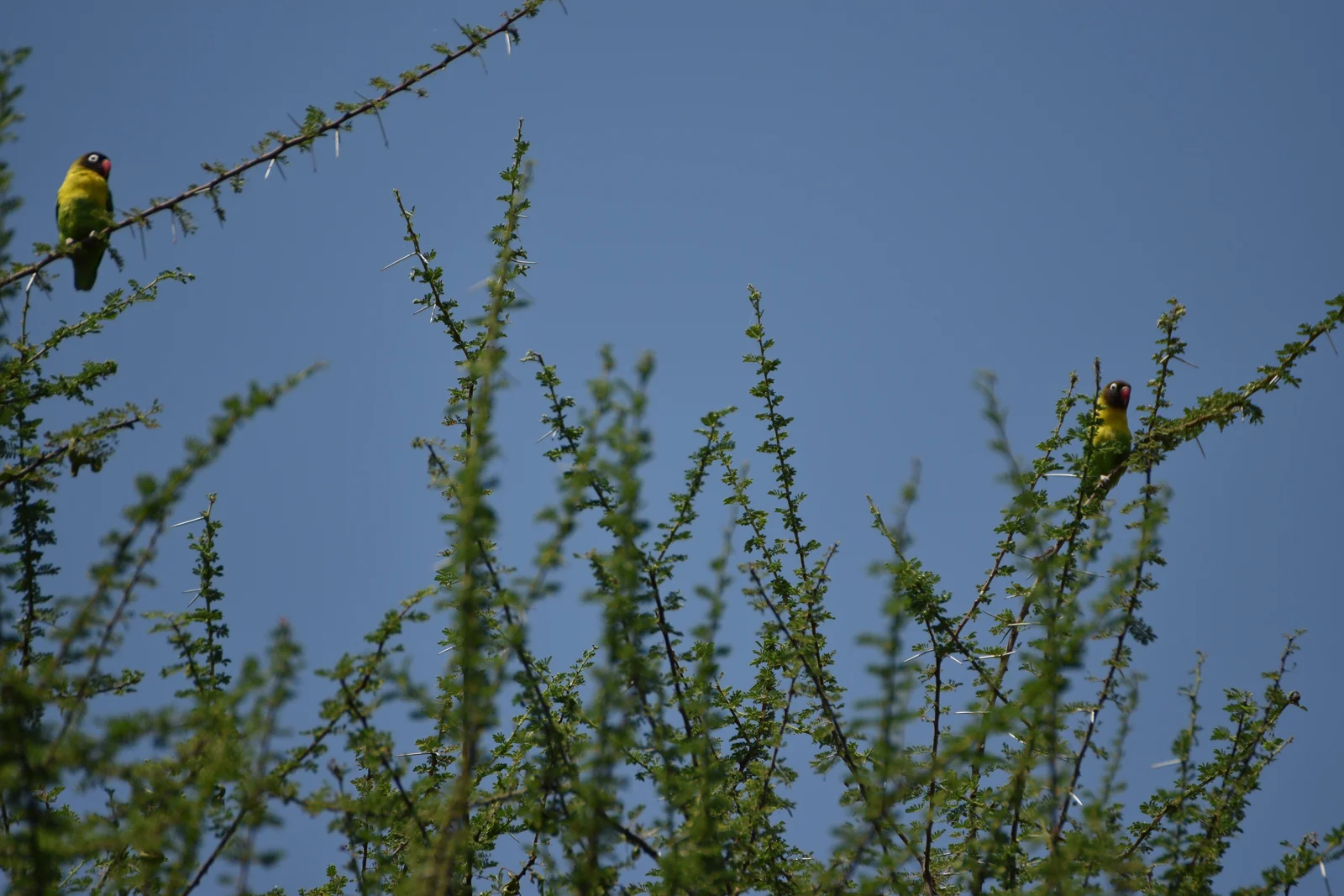
| Yellow-collared Lovebird | Tarangire | Endemic; abundant in the park |
| Fischer’s Lovebird | Serengeti; lodge gardens at Karatu | Endemic; easy |
| Grey-breasted Spurfowl | Serengeti | Endemic; seen from the vehicle |
| Rufous-tailed Weaver | Ngorongoro Crater slopes; Lake Manyara | Endemic; easy |
| Beesley’s Lark | Engikaret Plains, north of Arusha | Critically Endangered; local Maasai guide |
| Long-billed Forest Warbler | Amani Nature Reserve, East Usambaras | Critically Endangered |
| Udzungwa Forest Partridge | Luala Valley, Udzungwa Mountains NP | Endangered; camping trek |
| Rufous-winged Sunbird | Udzungwa Scarp Forest Reserve | Camping trek |
| Uluguru Bushshrike | North Uluguru Mountains | Endangered; all-day hike |
The northern circuit endemics
A Birding Ecotours tour in April and May 2024 shows what the standard route can do. In 8 days it recorded 365 bird species and 38 mammals, with the wildebeest migration in the Serengeti thrown in as a side dish.
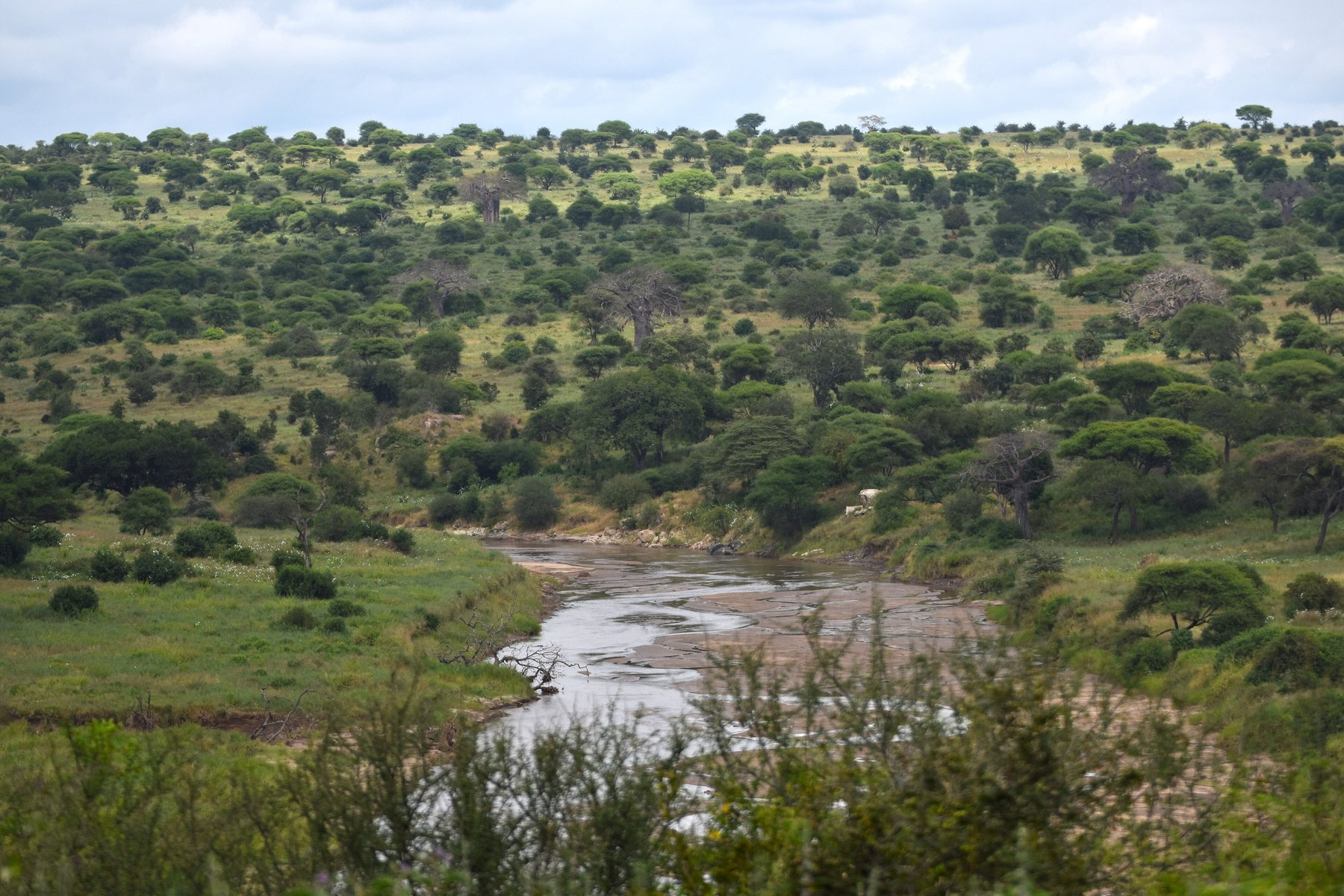
Tarangire is the best park on the circuit for endemics. The group had Ashy Starling and Yellow-collared Lovebird on arrival at the entrance gate, which is about as low-effort as endemics get, and the report calls the lovebirds abundant in the park. The baobab woodland added Bronze-winged and Three-banded Coursers, Black-faced Sandgrouse and Yellow-necked Spurfowl. Philip Briggs also singles out Tarangire for its dry-country specials.
The Serengeti gave Grey-breasted Spurfowl, the third endemic, along the road to camp and again the next morning, with Fischer’s Lovebird and Tanzanian Red-billed Hornbill in the same area. Fischer’s Lovebird turned up again in the lodge grounds at Karatu, apparently keen to be counted twice.
Ngorongoro and Lake Manyara add Rufous-tailed Weaver, which the group watched feeding in fig trees on the slopes of the crater and found again in the Manyara woodland. The crater floor held Rosy-throated Longclaw, Kori Bustard and flocks of Greater and Lesser Flamingos. The best forest birding on the circuit is the Elephant Caves Trail at Endoro on the Ngorongoro highlands, with a local guide, for Narina Trogon, Schalow’s Turaco, African Broadbill and the localised Mbulu White-eye.
Beesley’s Lark at Engikaret
Beesley’s Lark lives on the Engikaret Plains, which birders call the Lark Plains, north of Arusha towards the Kenya border. Birding Ecotours calls it the only reliable site and puts the population at fewer than 100 birds, listed as Critically Endangered. The group met a local Maasai guide on the plains and found 1 lark after a game of hide-and-seek. There is a catch beyond the numbers: the same report says the species may be lumped back into Spike-heeled Lark, so today’s lifer (a bird seen for the first time) could be tomorrow’s footnote. It is a half day from Arusha, so do it on arrival day before heading west.
The plains and scrub around them also give dry-country birds such as White-headed Mousebird, Red-throated Tit and Pygmy Batis. Birdquest notes that many of these will be familiar to anyone who has birded in Kenya; see our Kenya birding guide.
What the parks cost
The fees are the reason a Tanzania birding trip costs what it does. TANAPA’s last published tariff, valid from 1 July 2023, charges non-East African adults $70 a day in the Serengeti and $50 a day in Tarangire and Lake Manyara in peak season (16 May to 14 March), before 18% VAT. That makes $82.60 and $59. In the low season, 15 March to 15 May, the base rates drop to $60 and $45. In March 2025 TANAPA told The Citizen the rates would stay unchanged until at least March 2026, and operator fee pages updated in July 2026 still quote $83 for the Serengeti.
Ngorongoro is run separately. The NCAA charges $70.80 per adult per 24 hours, plus a crater service fee of $295 per vehicle per trip, and $17.70 a head for the Endoro Nature Trail and Elephant Caves. A night in a lodge inside the Serengeti adds a TANAPA concession fee of $60 in July to September and $50 the rest of the year, before VAT, and $40 in Tarangire and Manyara.
Add it up for 2 days in Tarangire, 1 in Manyara, 1 in Ngorongoro and 2 in the Serengeti, and the conservation fees alone come to $413 per adult in peak season, before the crater fee, vehicle fees, concession fees and the safari itself. The birds, at least, are free.
The catch on a vehicle safari
Most northern circuit safaris are built around mammals, and the birds fit in between. Even on a dedicated birding tour, Birding Ecotours spent most of the Arusha to Serengeti day in the vehicle. A general driver-guide on a shared vehicle will stop for a lion, not a cisticola. On Fodor’s forum, the advice from a birder who has done it is to tell whichever guide you get that you are interested in birds; once that birder did, the guide started pointing them out. Book a private vehicle so the stops are yours, and ask the operator for a guide who knows birds before you pay.
The Eastern Arc: Usambaras
The Eastern Arc is where most of Tanzania’s endemics live. Birdquest’s 2022 tour visited the South Pare, West and East Usambara, Uluguru, Udzungwa, Rubeho and Ukaguru Mountains and saw 21 endemics on the main route and 8 more on a camping extension.
Amani Nature Reserve in the East Usambaras is the easiest of these forests to reach. The main target is Long-billed Forest Warbler, also called Long-billed Tailorbird, listed as Critically Endangered. Birdquest found a pair on the first attempt. Kretschmer’s Longbill and Tanzanian Illadopsis took far more work, and the group also had Usambara Hyliota, Green-headed Oriole and Banded Green Sunbird. Amani’s entrance fee could not be confirmed from an official source; ask the reserve or your operator.
The owl is the hard part, as owls so often are. Usambara Eagle-Owl is now treated as a race of Fraser’s Eagle-Owl, and Birdquest heard it twice before dawn but never saw it, despite an evening wait as well. Unlike the birds in our guide to owls you can find without a guide, this one needs local knowledge and luck. The West Usambaras, around the Magamba Forest Reserve, add Spot-throat, Usambara Weaver, Usambara Thrush and Fülleborn’s Boubou.
The Eastern Arc: Ulugurus and Udzungwas
Uluguru Bushshrike was the hardest bird on Birdquest’s main tour: an all-day operation with a bumpy drive to a remote village and a climb to a forested ridge, for 1 bird in a mixed flock, which by Eastern Arc standards counts as a result. The report puts the population at about 2,000 birds. Winifred’s Warbler is the easier Uluguru endemic, at Bunduki in the Uluguru Nature Reserve.
Udzungwa Forest Partridge was discovered in 1991 and is listed as Endangered. Birdquest reached it by driving to Udekwa, meeting porters at Chui Camp and hiking to Luala Camp at over 2,000 m inside Udzungwa Mountains National Park. At dawn, after all that, a pair walked in through the leaf litter. TANAPA’s tariff puts Udzungwa in a cheaper band, $30 a day plus VAT. Rufous-winged Sunbird needed a separate climb with porters into the Udzungwa Scarp Forest Reserve near Uluti and a night in camp, where the group finally found a pair feeding on low flowers. It is a sunbird of a different order from the ones in our sunbirds of southern Africa guide.
For the lower forest, Hondo Hondo Tented Camp sits on the edge of the Udzungwas. A 10,000 Birds writer camped there in 2025, found it run-down in low season but the staff helpful, and birded the forest with a local guide; the steep trails into the higher forest are where the partridge lives.
When to go
Philip Briggs says Tanzania’s birding is best from November to April, when Palearctic and intra-African migrants are present and many residents are in breeding plumage, dressed for the occasion. That overlaps the wet season, November to May, and March to May is the wettest stretch. The dry season from June to October is better for mammals. TANAPA’s low season, 15 March to 15 May, has the cheaper conservation fees, and the 2024 Birding Ecotours tour still logged 365 species in early May, muddy roads and all. For the Eastern Arc forests, expect rain whenever you go: Birdquest had misty, dark mornings in the Udzungwas and lost its last morning in the Ukagurus to a downpour.
The verdict
Do the northern circuit as a private safari with 2 nights in Tarangire and a morning at Engikaret, and the 5 easy endemics plus Beesley’s Lark are realistic. That is the right trip for a birder who also wants the mammals. If the endemics are the point, add at least 2 nights at Amani and give the Udzungwas a fit, guided camping trek, because the partridge and the sunbird do not come any other way. Budget for the fees first: in Tanzania they are a large share of the bill, and the lovebirds will not be chipping in.
Where to stay
Places to stay in the directory near the sites in this guide, with what each offers a birder:
| Place to stay | Where | For birders | From |
|---|---|---|---|
| Serian Tarangire Camp | Tarangire National Park, Tanzania | Birding safaris with a specialist ornithologist guide | US$367 pp sharing, full board |
| Mbuzi Mawe Serena Camp | Central Serengeti, Tanzania | Ornithologist-led outings, Grey-breasted Spurfowl, Fischer’s Lovebird | US$601 a tent |
| Gibb’s Farm | Karatu, Ngorongoro Highlands | Bird guide on staff, 200 species in the farm gardens | US$518 pp sharing, full board (green season) |
| Nsya Lodge & Camp | Mto wa Mbu, Lake Manyara | Can arrange a specialist birding guide | Ask the lodge |
| Ngare Sero Mountain Lodge | Usa River, near Arusha | 200 species, guided birdwatching, spring-fed lake | Ask the lodge |
| Amani Forest Lodge | Amani, East Usambaras | Bird checklist, Usambara Eagle-Owl, Amani Sunbird | Ask the lodge |
| Mullers Mountain Lodge | Near Lushoto, West Usambaras | Guided dawn birding tour, Usambara Thrush, Usambara Akalat | US$60 a single room B&B |
| Simbamwenni Lodge and Camping | Morogoro, below the Ulugurus | Guides for Uluguru walks, 112-species garden list | TSh 30,000 pp camping |
| Udzungwa Forest Lodge (Hondo Hondo) | Mang’ula, Udzungwa Mountains | Bird checklist, Kilombero River canoe trips, Kilombero Weaver | Ask the lodge |
Park fees and bird sites change. Facts were checked on 9 November 2026 with the TANAPA 2023/2024 tariff, the NCAA tariff page, The Citizen’s report on the fee freeze, Philip Briggs’s Tanzania birding page on SafariBookings, the Birding Ecotours northern Tanzania trip report of May 2024, the Birdquest Eastern Arc and Pemba trip report of 2022, and 10,000 Birds on the Udzungwas. Confirm current fees with TANAPA, the NCAA and the Tanzania Forest Service before you go.
More from the Journal
 Namib-Naukluft and Sossusvlei for Birders: Dune Lark, Desert Raptors and the Naukluft SpecialsA lark that lives on the dunes and nowhere else, Lappet-faced Vultures nesting in the desert, coursers on the gravel plains and the northern specials around the Naukluft cliffs, in one of Africa's largest parks.
 Lake Baringo and Lake Bogoria Birding: The Owl Walks, the Cliffs and the FlamingosA local guide who knows where every nightjar and eagle-owl slept last night, thorn scrub full of hornbills, a Goliath Heron colony on a rock, and the flamingo lake next door that keeps rising.
 Akagera Birding: Rwanda’s Savanna, Lakes and Papyrus, and the Shoebill ChancesRed-faced Barbet in the southern woodland, Papyrus Gonolek and Carruthers's Cisticola in the swamps, a lake of hippos and lapwings, and a Shoebill that hides in the wetlands more than it shows.
The Pigeon Post
Every Thursday: 1 bird, 1 place to go and 1 place to stay, by email. Sign up and get our printable checklist of the 163 endemics of southern Africa.