
Namibia’s Zambezi Region (Caprivi) for Birders: Mahango, the Kwando and the Chobe Floodplain
Slaty Egrets, Wattled Cranes and African Skimmers on Namibia's wettest ground, which in Namibia takes some doing: where to bird Mahango, the Kwando, Nkasa Rupara, Katima Mulilo and the Chobe, and where to stay.
Somewhere in the reedbeds of the Linyanti Swamp, between 30 and 200 pairs of Slaty Egret breed each year. Anyone who has tried to count grey birds in a reedbed will forgive the width of that range. BirdLife International gives that range in its factsheet for the Eastern Caprivi wetlands, and adds that 100 to 500 more birds spend the non-breeding season there. The Slaty Egret is listed as Vulnerable, and it is one of the reasons birders make the long drive along the old Caprivi Strip, now Namibia’s Zambezi Region.
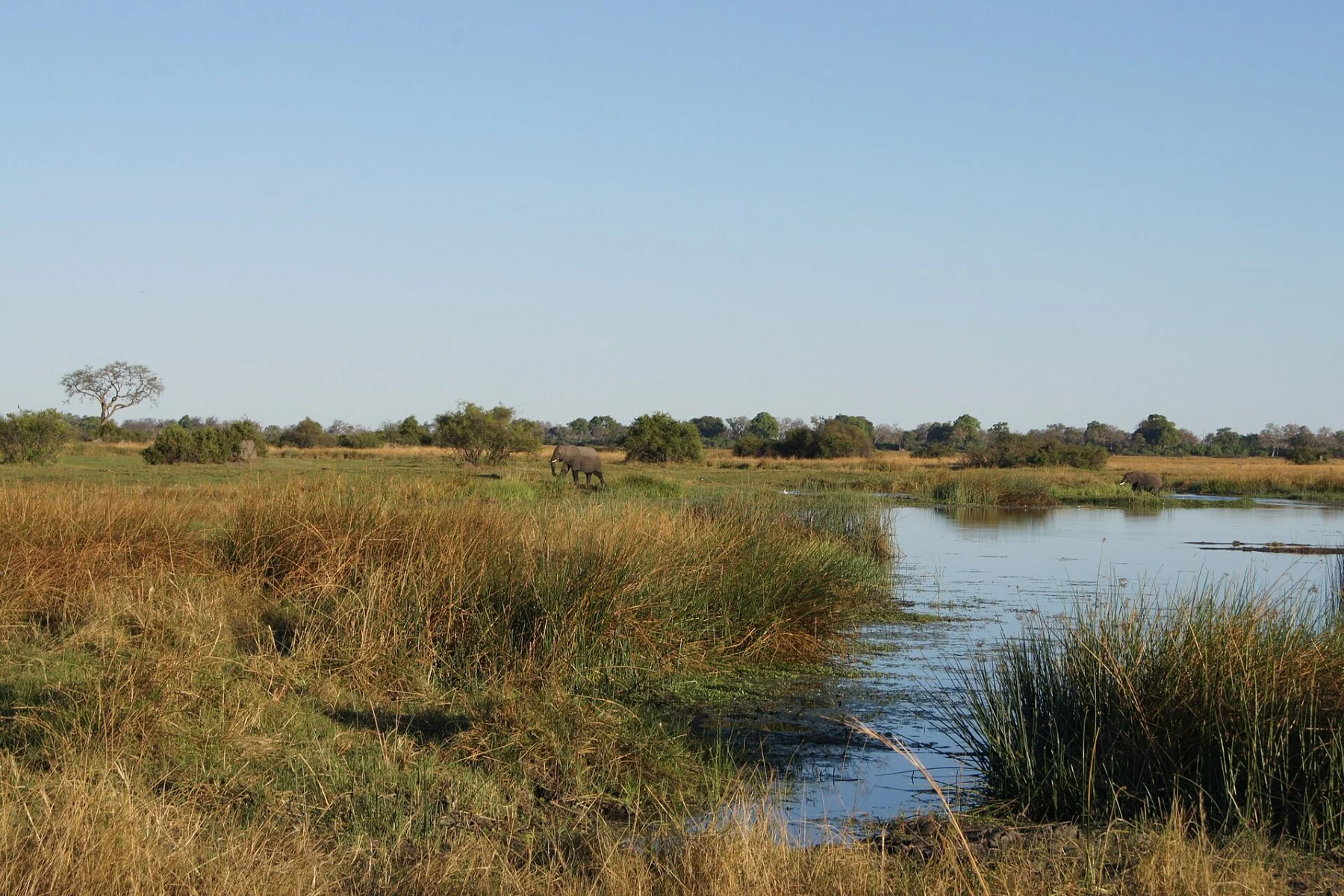
The other reason is water. BirdLife calls the Eastern Caprivi wetlands Namibia’s largest single permanent wetland, 4,680 km² fed by 2 of the country’s 5 perennial rivers, running from the Kwando in the west to the border post at Kazungula in the east. Rainfall averages 740 mm a year, the highest in Namibia, a country better known for dunes than for wet socks. Pompie Burger, writing in Travel News Namibia’s Autumn 2025 issue, counts more than 450 of Namibia’s 700 or so species in the region.
The region at a glance
| Site | What it is | Specials named by BirdLife and Travel News Namibia | Base |
|---|---|---|---|
| Mahango (Bwabwata) | Okavango River floodplain at the western end | Slaty Egret, Wattled Crane, Sharp-tailed Starling | Ndhovu Safari Lodge |
| Kwando River | Riverine forest, floodplain, woodland | Racket-tailed Roller, Bat Hawk, Rufous-bellied Heron | Camp Kwando |
| Nkasa Rupara and Mudumu | Reedbeds, lagoons, islands, woodland | Wattled Crane, Coppery-tailed Coucal, Copper Sunbird | Camp Kwando (Mudumu drives) |
| Katima Mulilo and the Zambezi | River, floodplain, seasonal pans | African Finfoot, Schalow’s Turaco, African Skimmer | Zambezi Mubala Lodge and Camp |
| Chobe floodplain | Marsh and floodplain at the eastern end | Rosy-throated Longclaw, Purple-banded Sunbird | Chobe River Camp |
Mahango: the western gate
Mahango sits at the western end of the old strip, where the Okavango River crosses into Botswana and becomes the Panhandle. It is administratively part of Kavango East, inside Bwabwata National Park, but it is where most birders start; birders rarely let a boundary spoil a floodplain. BirdLife treats Mahango and the river from Andara Mission to the border as its own Important Bird Area of 245 km², mostly a wide floodplain with riverine forest and dry woodland behind it. The river is highest in April, after rain in the Angolan highlands, and stands 3 to 4 m above its November low.
The qualifying list is long for so small an area, the birding equivalent of a short menu with no bad dishes: Slaty Egret, Wattled Crane, 200 to 300 Black-winged Pratincoles in the non-breeding season, and range-restricted birds such as Sharp-tailed Starling, Rufous-bellied Tit, Racket-tailed Roller, Coppery-tailed Coucal, Chirping Cisticola, Brown Firefinch and both Hartlaub’s and Black-faced Babblers. Birding Ecotours found Slaty Egret and Wattled Crane at Mahango on its November 2025 Namibia tour, 2 ticks worth the drive on their own.
Ndhovu Safari Lodge, near Divundu on the river, runs guided boat trips, game drives in Mahango and the Buffalo core area, and a birding day trip into Botswana. It gives more than 400 species for the area and names Pel’s Fishing Owl and White-backed Night Heron.
The Kwando and Bwabwata
East of Divundu the B8 crosses Bwabwata to the Kwando at Kongola. Burger rates Bwabwata along the Kwando among the richest birding in the region, because riverine forest, floodplain and woodland lie side by side. In the broadleaf forest he lists Racket-tailed Roller, Black-headed Oriole, White-crested Helmetshrike, African Green Pigeon and Meyer’s Parrot, with Narina Trogon possible. On the river and floodplain he names African Marsh Harrier, Lesser Jacana, Half-collared Kingfisher, Wattled Crane, Bat Hawk, Slaty Egret and Rufous-bellied Heron. Seasonal pans can hold Little Bittern, and Western Banded Snake Eagle, Ayres’s Hawk-Eagle and European Honey Buzzard are frequently seen, he says. Keep 1 eye on the river and the other on the sky.
Camp Kwando, near Kongola, has 13 thatched riverside tents and 4 raised chalets, offers a birding cruise of 2 and a half hours on request, and runs game drives into Mudumu National Park. It gives more than 450 species for the area, so the cruise is unlikely to be quiet.
Nkasa Rupara and Mudumu
South of Kongola the Kwando bends east and becomes the Linyanti, and the 2 parks on its northern bank protect part of the swamp. BirdLife’s figures show Mudumu covering 17.3% of the Important Bird Area and Nkasa Rupara 8.2%. Nkasa Rupara, called Mamili until it was renamed in 2012, is a maze of channels, reedbeds, lagoons and islands, and is Namibia’s largest formally protected wetland. Floodwater runs down the Kwando from June to August and can take up to 6 months to seep through the reed-swamp, BirdLife says, so the level here lags behind the rains, and the swamp runs on its own slow clock.
Burger looks in Mudumu and Nkasa Rupara for Copper Sunbird, Bradfield’s Hornbill, Arnot’s Chat, Denham’s Bustard, Dickinson’s Kestrel, Lizard Buzzard and Dark Chanting Goshawk, with African Emerald and Klaas’s Cuckoos in summer. Nkasa Rupara is reached on the D3511 from the B8 after the Kongola bridge, through Sangwali village. There are no shops or fuel inside, and the tracks can be waterlogged, so go in a 4×4 and carry what you need, down to the last tea bag. Bwabwata, Mudumu and Nkasa Rupara charged foreign adults N$200 a day under the fees that took effect on 1 April 2026.
Katima Mulilo and the Zambezi floodplain
At Katima Mulilo the region meets the Zambezi, and BirdLife’s floodplain zone covers 1,800 km² of reedbeds, papyrus and channels east of town. The Zambezi floods for 4 to 6 weeks in March and April, and the lower ground stays wet much longer, rather like a guest who was only staying the weekend.
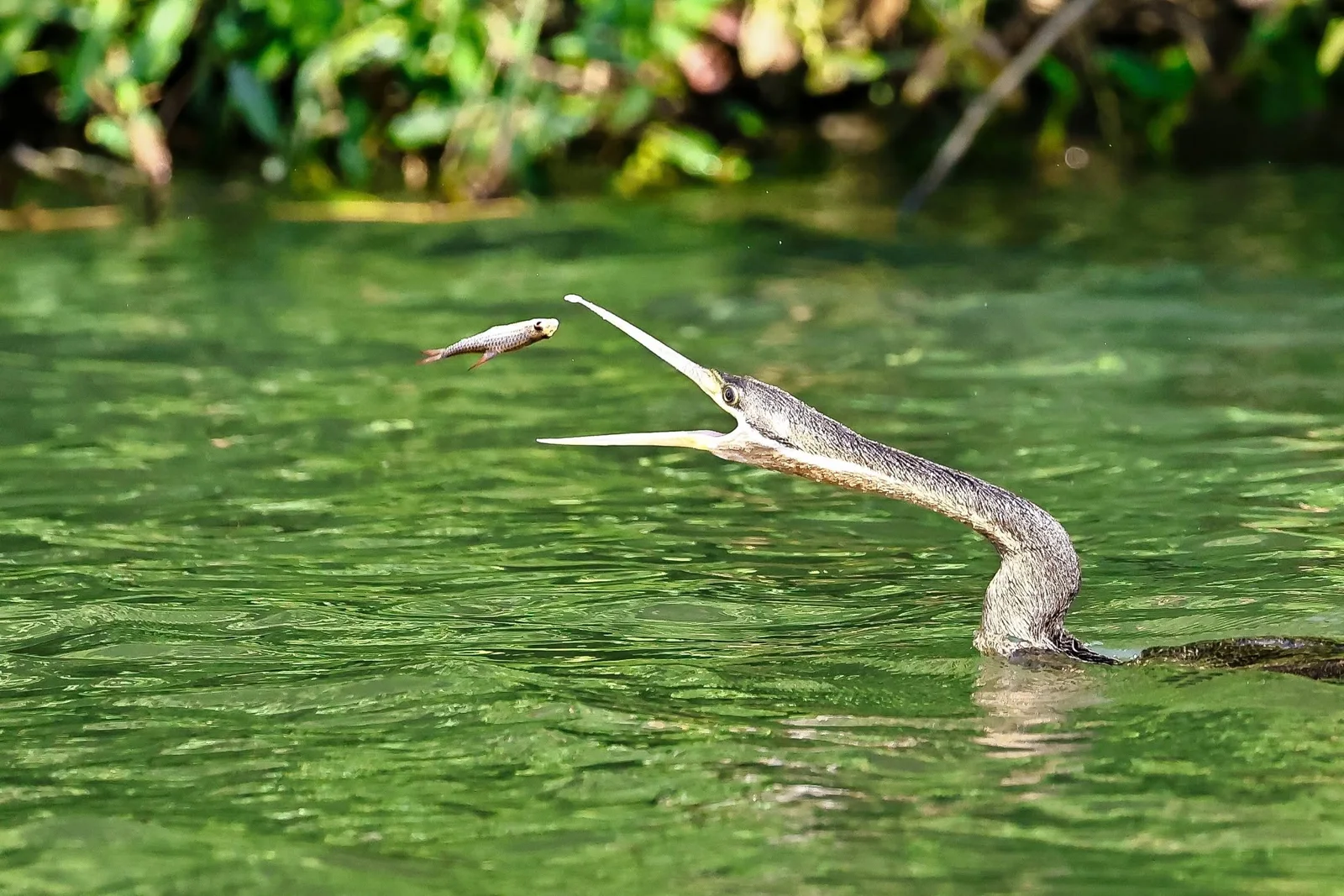
Burger names the birds the river lodges’ guides find east of Katima: African Finfoot, Yellow-fronted Tinkerbird, Schalow’s Turaco, Trumpeter Hornbill, Yellow-throated Leaflove and Eastern Nicator. Along the D3509 he lists African Rail, Luapula Cisticola, Black-crowned Tchagra, Black Coucal, White-crowned Lapwing and Black-bellied Bustard, with Rock, Collared and Black-winged Pratincoles on the seasonal pans. A boat trip can turn up Pel’s Fishing Owl or White-backed Night Heron, and the African Skimmer colonies on the sandbanks deserve a full day. Birding Ecotours groups took the Katima boat trip in November 2023 and November 2025, and both found African Finfoot, African Skimmer and White-backed Night Heron.
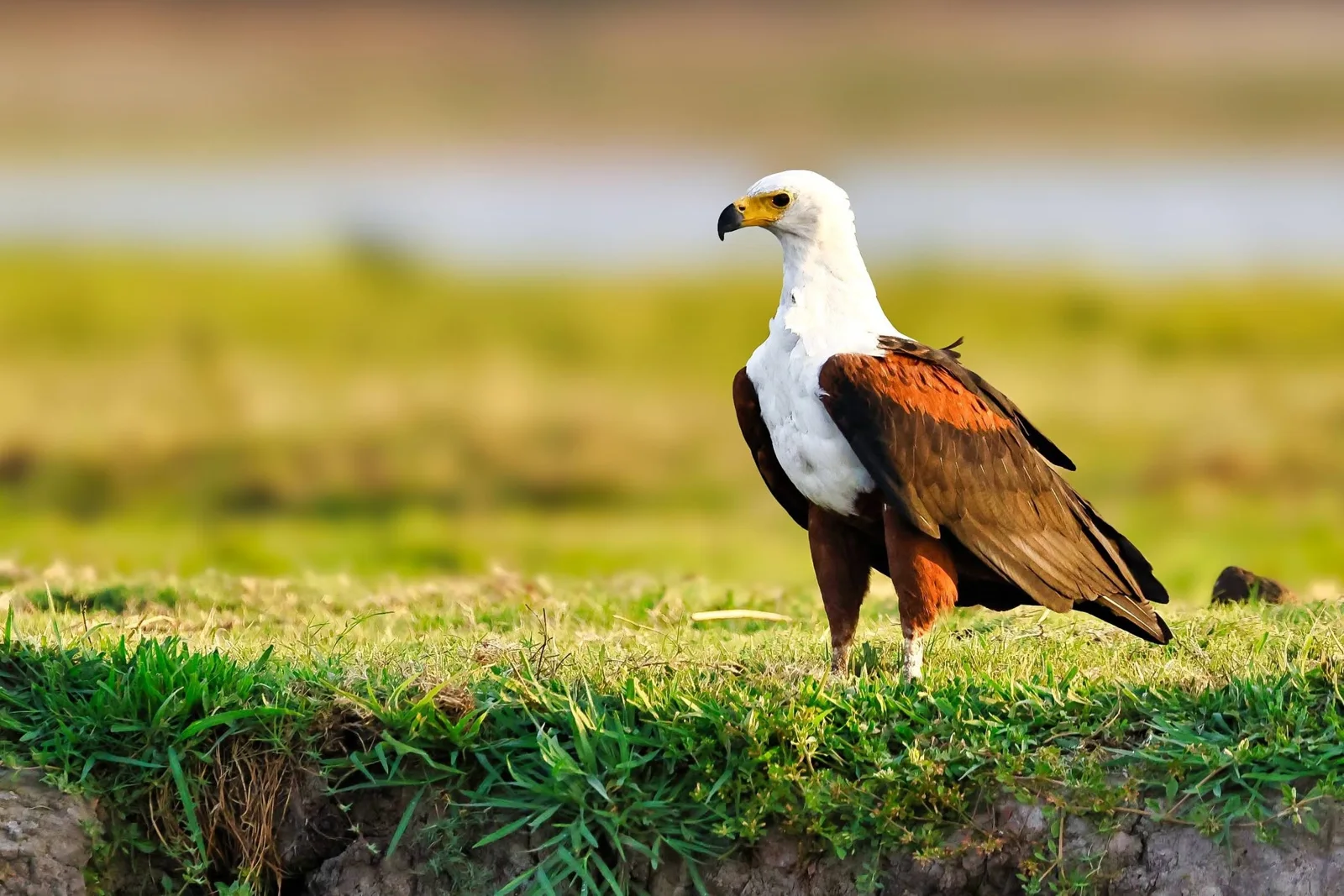
Zambezi Mubala Lodge and Zambezi Mubala Camp sit 40 km east of Katima Mulilo on the D3508 Kalimbeza road. Both run a guided walk of about 3 hours to a Southern Carmine Bee-eater colony in season and a boat cruise that names herons, pelicans, Lesser Flamingo and African Fish Eagle. The lodge has 21 bungalows on bed and breakfast; the camp has 8 self-catering tents. Our guide to Southern Carmine Bee-eater colonies has the breeding months.
The Chobe floodplain
The eastern tip of the region is the Chobe floodplain, where BirdLife maps 311 km² of river and marsh. When the Zambezi is in flood, the water pushes back up the Chobe towards Lake Liambezi, which was a dry, farmed lakebed by 1997 and fills and empties in long cycles, a lake that comes and goes as it pleases.
Burger found Rosy-throated Longclaw, Purple-banded Sunbird and Collared Palm Thrush on the Chobe floodplains near Chobe River Camp and Serondela. The camp, 4 km from the Ngoma border post, runs a guided birding drive of about 3 hours that depends on the river level and is booked at the camp, and boat cruises of about 3 and 6 hours into the channels. In wet weather the access road needs a 4×4, and the camp collects guests from Ngoma Police Station. The Botswana bank, the Kasane Rapids and the park fees are in our Chobe River birding guide.
When to go
BirdLife describes a dry season from April to November and a shorter wet season from late November to late March or early April. Burger’s advice is October to early January, the hottest months, when the Palearctic and intra-African migrants are in and the grass is still short enough to see birds. Southern Carmine Bee-eaters and African Skimmers start breeding by late August, so come earlier if the colonies are the point of the trip. He also suggests staying several days in one area rather than driving the whole strip, and birding the mornings and late afternoons. The middle of the day, in those months, is for shade.
The region is a long way from anywhere else in Namibia, which is part of its charm. If you are also doing the arid west, our Namibia birding guide covers the route from Walvis Bay to Etosha.
Where to stay
These are the listings along the strip, from Mahango in the west to the Chobe in the east:
| Place to stay | Where | For birders | From |
|---|---|---|---|
| Ndhovu Safari Lodge | Near Divundu, by Mahango | Boat trips, Mahango drives, Pel’s Fishing Owl | Ask the lodge |
| Camp Kwando | Kwando River near Kongola | Birding cruise on request, Mudumu game drives | Ask the lodge |
| Zambezi Mubala Lodge | 40 km east of Katima Mulilo | Carmine colony walk in season, boat cruise | N$3,541 pp sharing B&B |
| Zambezi Mubala Camp | 40 km east of Katima Mulilo | Self-catering, carmine colony walk, river cruises | N$1,150 pp sharing, self-catering |
| Chobe River Camp | 4 km from Ngoma border post | Guided birding drive, 3 and 6 hour boat cruises | N$2,600 pp sharing B&B |
Park fees, river levels and rates change from year to year. Facts were checked on 14 November 2026 with BirdLife International’s factsheets for the Eastern Caprivi wetlands and Mahango Important Bird Areas, Travel News Namibia’s Autumn 2025 birding feature, Birding Ecotours trip reports and each place’s listing on Birding Dispatch. Confirm park fees with the Ministry of Environment, Forestry and Tourism before you travel.
More from the Journal
 Namib-Naukluft and Sossusvlei for Birders: Dune Lark, Desert Raptors and the Naukluft SpecialsA lark that lives on the dunes and nowhere else, Lappet-faced Vultures nesting in the desert, coursers on the gravel plains and the northern specials around the Naukluft cliffs, in one of Africa's largest parks.
 Lake Baringo and Lake Bogoria Birding: The Owl Walks, the Cliffs and the FlamingosA local guide who knows where every nightjar and eagle-owl slept last night, thorn scrub full of hornbills, a Goliath Heron colony on a rock, and the flamingo lake next door that keeps rising.
 Akagera Birding: Rwanda’s Savanna, Lakes and Papyrus, and the Shoebill ChancesRed-faced Barbet in the southern woodland, Papyrus Gonolek and Carruthers's Cisticola in the swamps, a lake of hippos and lapwings, and a Shoebill that hides in the wetlands more than it shows.
The Pigeon Post
Every Thursday: 1 bird, 1 place to go and 1 place to stay, by email. Sign up and get our printable checklist of the 163 endemics of southern Africa.