
Where to See an African Broadbill: Sand Forest, Scarp Forest and a Song Played on the Wings
A small, streaky forest bird that sits still for ages, then flies a tight loop around its perch and sounds like an old car horn. Where it lives in South Africa, and where to stay.
In 2016 a team led by Christopher Clark of Yale’s Peabody Museum published high-speed video of African Broadbills in display, synchronised with sound recordings. The loud “brreeeeet” that birders had heard for generations turned out to come from the wings. Each pulse of sound is made on the downstroke, by the sixth and seventh primary feathers fluttering in the airflow, while the wingtip moves at 16 metres a second. The paper, in the Journal of Experimental Biology, concludes that the wing song appears to have replaced vocal song altogether. The broadbill, in other words, plays its own feathers.
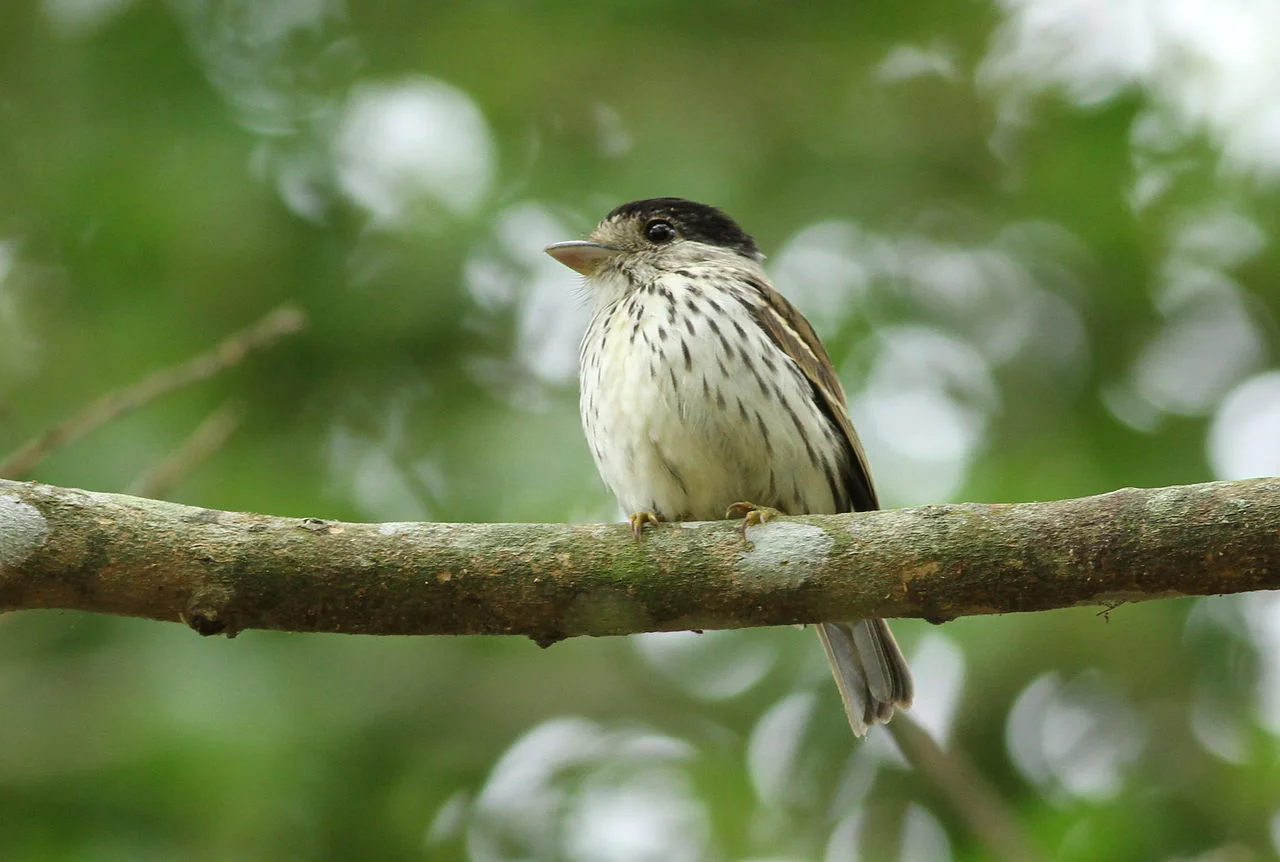
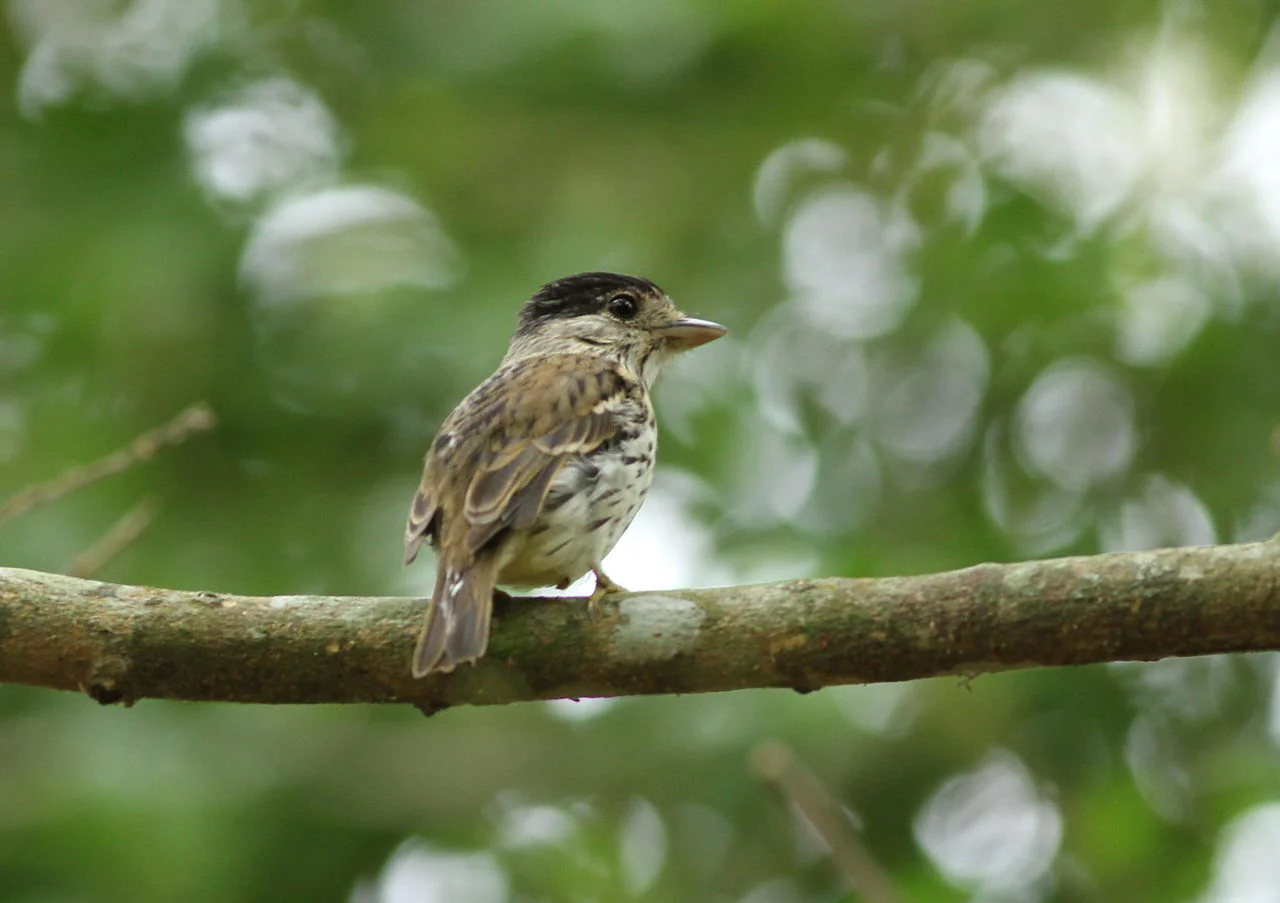
That is the key to finding one. The African Broadbill is a stocky, streaky, flycatcher-like bird of 12 to 14 cm, and the Atlas of Southern African Birds calls it inconspicuous and easily overlooked unless calling. It often sits upright and motionless on a low horizontal branch for long periods. Then it takes off, circles its perch at a radius of about a metre on rapidly fluttering wings, puffs out its back and rump feathers to show their white bases, and makes a sound often compared to an old-fashioned car horn. Both sexes do it. For a bird that spends most of the day doing an impression of a twig, it has a loud way of saying where it is.
In South Africa it is scarce and patchy. BirdLife South Africa’s 2026 checklist rates it Vulnerable in the region, though Least Concern worldwide, and the South African National Biodiversity Institute (SANBI) describes its South African range as highly fragmented: scattered populations in north-eastern Limpopo, Eswatini and north-eastern KwaZulu-Natal, and south to the Port Shepstone area.
The sites at a glance
| Where | What the sources say | Best time | Where to stay |
|---|---|---|---|
| uMkhuze Game Reserve, KwaZulu-Natal | A key species on GoBirding’s site guide; pristine sand forest | Early morning, spring and early summer | Sodwana Bay Lodge |
| False Bay Park, Lake St Lucia | A key species; 2,247 ha of sand forest and woodland | Early morning on the 2 trails | Malkoha Lake St. Lucia |
| Hluhluwe-iMfolozi Park | SANBI: still common in the Hluhluwe and Mfolozi areas | Early morning | Rhino Ridge Safari Lodge, Emdoneni Lodge, Bushwillow Collection |
| Entumeni Forest, near Eshowe | A key species on the Prince Dadulamanzi Trail | Early morning | Birds of Paradise Bed and Breakfast |
| Oribi Gorge and Vernon Crookes, south coast | 2 of only 4 SABAP2 sites for the southern race | Spring and early summer | None listed yet |
| Luvhuvu River catchment, Limpopo | Rediscovered in 1999; Roodewal, Entabeni, Golwe | Spring and early summer | None listed yet |
When to listen, and where to look
Timing does most of the work. The atlas notes that broadbills are reported more often in spring and early summer, and puts that down to more calling in the breeding season. In KwaZulu-Natal eggs are laid from September to December; in Zimbabwe the season runs from August to February, peaking from October to December. Niall Perrins, a member of BirdLife South Africa’s list committee, notes on his own species pages that the birds are up at the crack of dawn, whirring around a chosen branch. So the plan writes itself: be in the forest at first light between September and December, stand still, and listen for the horn.
Look in the right layer. The atlas places the bird in dense deciduous thickets, the understorey of riverside forest and other dense woodland, and the middle stratum of lowland evergreen forest. That means below the canopy and above the leaf litter, usually on a low, bare horizontal branch with space around it for the display circuit. Once the sound has given away the general area, scan the low perches nearby; the bird usually returns to the same branch after each loop.
The nest is a giveaway too, though best admired from a distance. It is an oval bag with a side entrance, built by both sexes from bark, dry leaves, twigs, grass and rootlets, often bound with spider web, and hung conspicuously from a low branch about 1.5 to 3 m above the ground. The female incubates for 16 to 17 days while the male stands guard. The atlas adds a twist: the Barred Long-tailed Cuckoo is a suspected brood parasite. Leave the nest alone and move on; a pair under watch is a pair not feeding chicks.
Zululand’s sand forest: uMkhuze and False Bay
GoBirding, BirdLife South Africa’s site guide, describes uMkhuze Game Reserve, now part of the greater iSimangaliso Wetland Park, as more than 40,000 ha of open woodland, riverine forest, pristine sand forest, acacia thornveld and pans, with a checklist of more than 400 species. Its key species list reads like a sand forest wish list: Pink-throated Twinspot, Rudd’s Apalis, Neergaard’s Sunbird, Lemon-breasted Canary, Senegal Lapwing, Pel’s Fishing Owl and African Broadbill. The reserve is about 50 km north of Hluhluwe town off the N2, through Mkuze village, with the last 10 km or so on gravel suitable for a sedan. The Zululand birding guide covers the hides and the rest of the specials.
On the western shore of Lake St Lucia, False Bay Park protects 2,247 ha of sand forest, woodland and open grassland, and GoBirding names African Broadbill among its key species with Neergaard’s Sunbird, Southern Banded Snake Eagle, Rudd’s Apalis and Pink-throated Twinspot. The park has 2 trails along the lake edge and through the forest, and is about 15 km east of Hluhluwe railway station. Malkoha Lake St. Lucia, on the Kwa-Nibela Peninsula and reached by ferry from the False Bay jetty, is BirdLife South Africa Recommended; its guides lead birding walks, take requests, and its own list of named birds includes African Broadbill, Green Malkoha and Neergaard’s Sunbird.
Closer to the coast, Sodwana Bay Lodge books a guided bird walk on the Ngoboseleni Trail, including a 3-hour forest walk, and names African Broadbill with Rudd’s Apalis and Pink-throated Twinspot.
Hluhluwe-iMfolozi and the Hluhluwe lodges
SANBI’s assessment notes a range reduction in the far north of KwaZulu-Natal but says the broadbill still appears to be common in the St Lucia, Hluhluwe and Mfolozi areas. That makes the Hluhluwe district the most dependable base, with sand forest, riverine forest and park all within reach. Our Hluhluwe-iMfolozi birding guide has the park’s roads and hides.
Rhino Ridge Safari Lodge is the only private lodge inside Hluhluwe-iMfolozi Park, set on a ridge in the Nkwakwa hills within the park’s Important Bird Area, and it is BirdLife South Africa Recommended. Outside the park, Emdoneni Lodge, in Bushlands near Hluhluwe, suggests birding from its verandas and on walks through the farm’s bush, points to the sand forest nearby, and names African Broadbill among its birds. Bushwillow Collection, 3 self-catering chalets in Kuleni Game Park 16 km from Hluhluwe, can arrange a specialist bird guide for the sand forest and lakes, which is the sort of help a bird this good at hiding calls for.
Eshowe and the southern race
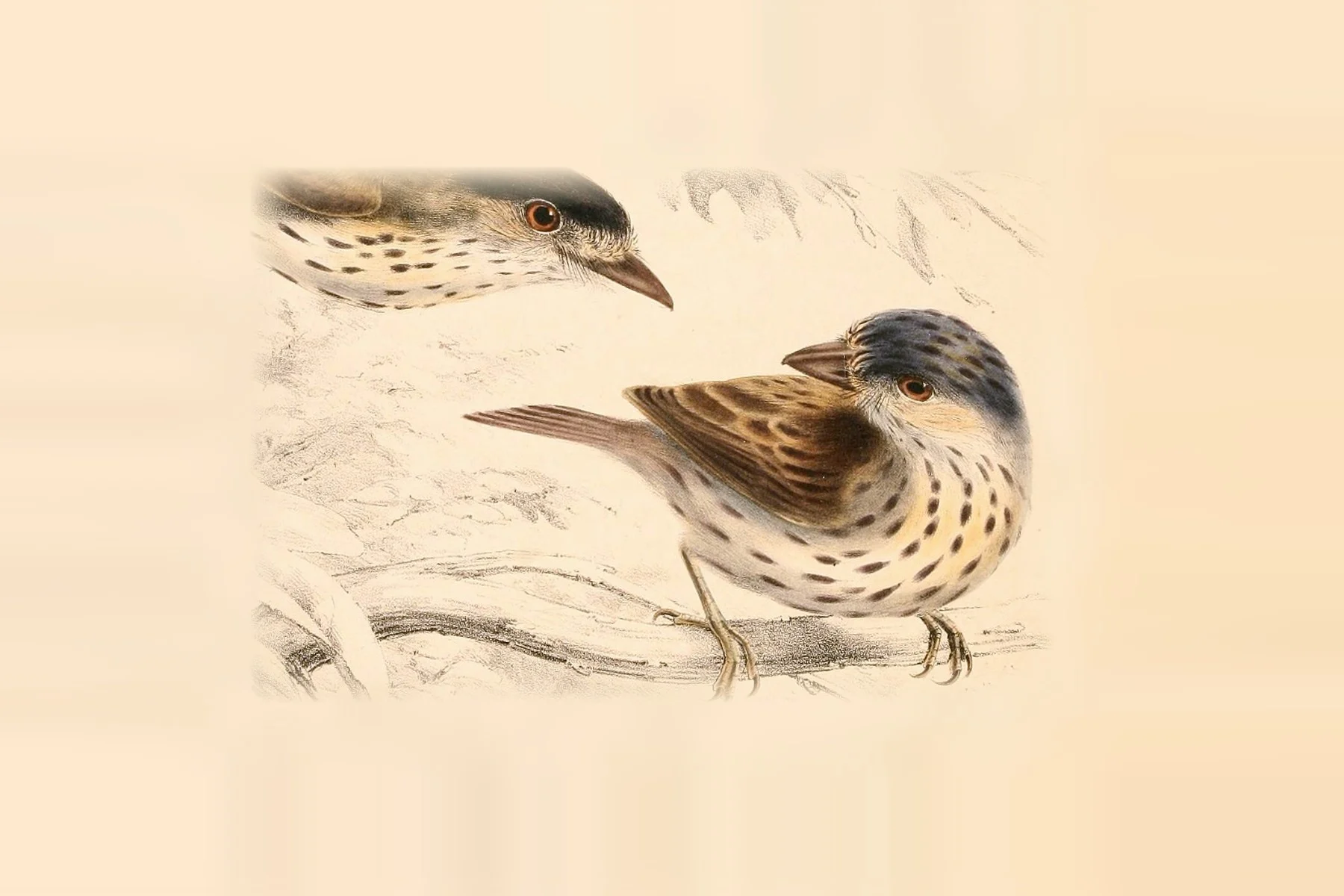
The nominate race, Smithornis capensis capensis, the one Andrew Smith painted for the plate at the top of this page, has had a hard time. SANBI says it appears to have disappeared from much of its former range around Durban and along the KwaZulu-Natal south coast, and was recorded at only 4 isolated localities during the second bird atlas project (SABAP2): Oribi Gorge, Vernon Crookes, Entumeni and Nhlabane. The 1997 atlas had already named habitat destruction in heavily populated KwaZulu-Natal as the main threat.
Entumeni is the one with a birding trail. GoBirding’s page on the Prince Dadulamanzi Trail describes the forests around Entumeni, 13 km from Eshowe, as almost entirely coastal scarp forest, managed by the Eshowe-Entumeni Conservancy’s farmers in partnership with Ezemvelo KZN Wildlife, and lists African Broadbill as a key species with Orange Ground Thrush, Yellow-streaked Greenbul, Eastern Bronze-naped Pigeon and Chorister Robin-Chat. Birds of Paradise Bed and Breakfast in Eshowe is BirdLife South Africa Recommended, offers custom birding tours and points guests to the Entumeni and Dlinza forest trails. The Zululand Birding Route loop links Eshowe with the sand forest further north.
The outliers: Limpopo and Eswatini
In Limpopo the bird is a comeback story. SANBI notes it was not recorded there at all during the first atlas, and was rediscovered in 1999 near the Luvhuvu River. That population appears to be confined to the Luvhuvu catchment and is known from Roodewal, Entabeni, Luvhuvu and Golwe. In Eswatini, the only recent records are from Hlane Royal National Park.
Further north it becomes more widespread. SANBI gives its southern African range as running from the Okavango and the Caprivi east through the middle Zambezi Valley and the eastern slopes of Zimbabwe’s Eastern Highlands to southern Mozambique. The atlas adds that it has probably been under-recorded in the Zambezi Valley, which says a great deal about how easy it is to walk past one.
Where to stay
The places named in this guide, all within reach of broadbill forest in KwaZulu-Natal:
| Place to stay | Where | For birders | From |
|---|---|---|---|
| Malkoha Lake St. Lucia | Kwa-Nibela Peninsula, Lake St Lucia | BirdLife Recommended, guided walks, African Broadbill named | Ask the lodge |
| Emdoneni Lodge | Bushlands, near Hluhluwe | Farm walks, nearby sand forest, African Broadbill named | R1,215 pp sharing, bed and breakfast |
| Rhino Ridge Safari Lodge | Inside Hluhluwe-iMfolozi Park | BirdLife Recommended, inside the park’s Important Bird Area | R4,650 pp sharing, full board (May to June 2027) |
| Bushwillow Collection | Kuleni Game Park, near Hluhluwe | Specialist bird guide for the sand forest, on request | R6,000 for 2 for 3 nights (Digital Detox package) |
| Sodwana Bay Lodge | Sodwana Bay | Guided forest bird walk, African Broadbill named | Ask the lodge |
| Birds of Paradise Bed and Breakfast | Eshowe | BirdLife Recommended, custom birding tours, Entumeni nearby | Ask the lodge |
A broadbill is never guaranteed, and rates change each season. Facts were checked on 15 November 2026 with BirdLife South Africa’s 2026 checklist and GoBirding site guides, SANBI’s Red List assessment, the Atlas of Southern African Birds, Clark and others in the Journal of Experimental Biology (2016), and each place’s listing on Birding Dispatch.
More from the Journal
 Woodpeckers of Southern Africa, Including the One That Doesn’t Need TreesSouthern Africa's woodpeckers, from the Cardinal in every bushveld tree to the Ground Woodpecker that lives on treeless mountain slopes and eats almost nothing but ants.
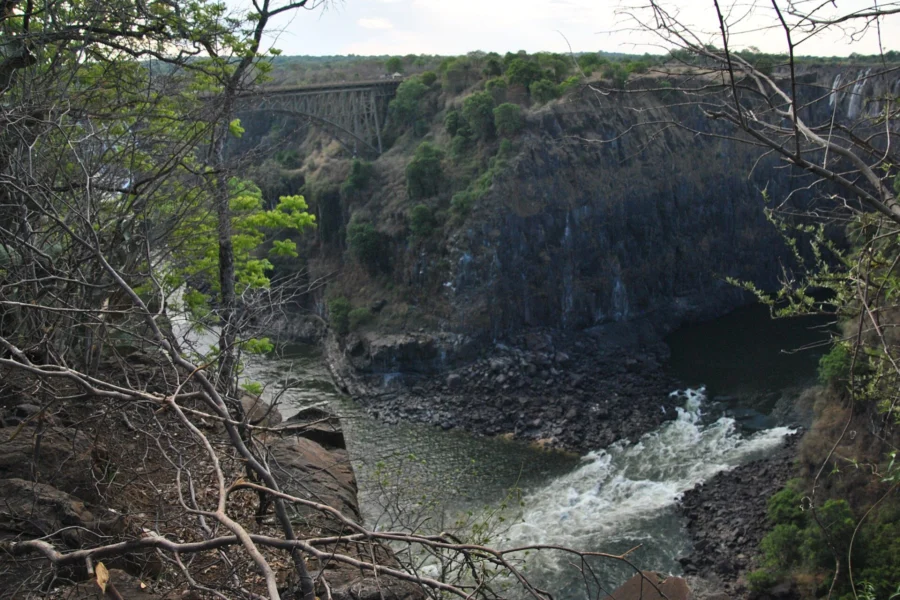 Where to See a Taita Falcon: the Strijdom Tunnel, the Blyde Cliffs and the Batoka GorgeA stocky falcon smaller than a pigeon, a handful of cliffs and surveys that keep coming back empty. Where it still nests, how to look, and the 2 roosts beside its cliffs.
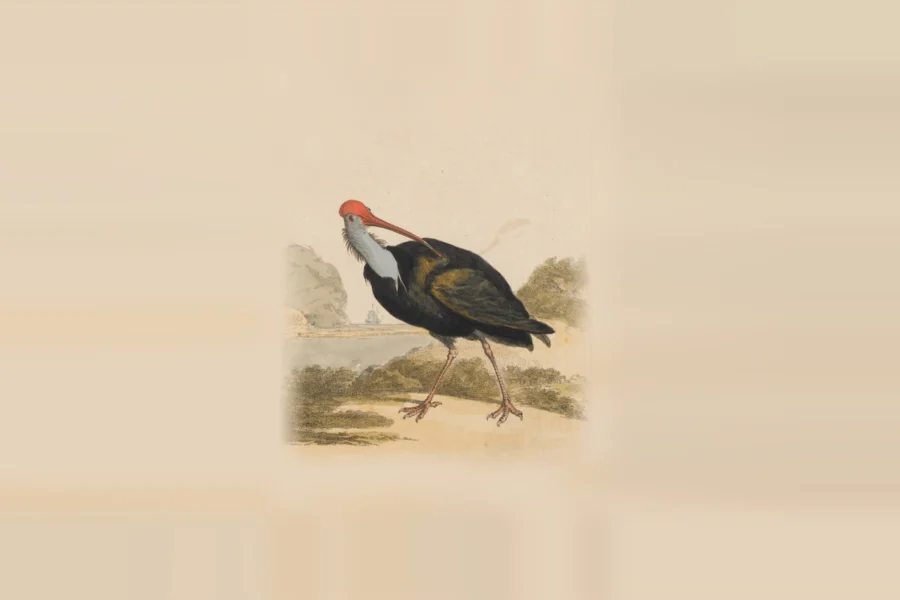 Where to See a Southern Bald Ibis: the Breeding Cliffs, Dullstroom, Wakkerstroom and LesothoA red-capped grassland ibis that nests on cliffs over waterfalls and feeds on burnt veld and maize stubble. The colonies you can watch, the fields to scan, and where to stay.
The Pigeon Post
Every Thursday: 1 bird, 1 place to go and 1 place to stay, by email. Sign up and get our printable checklist of the 163 endemics of southern Africa.